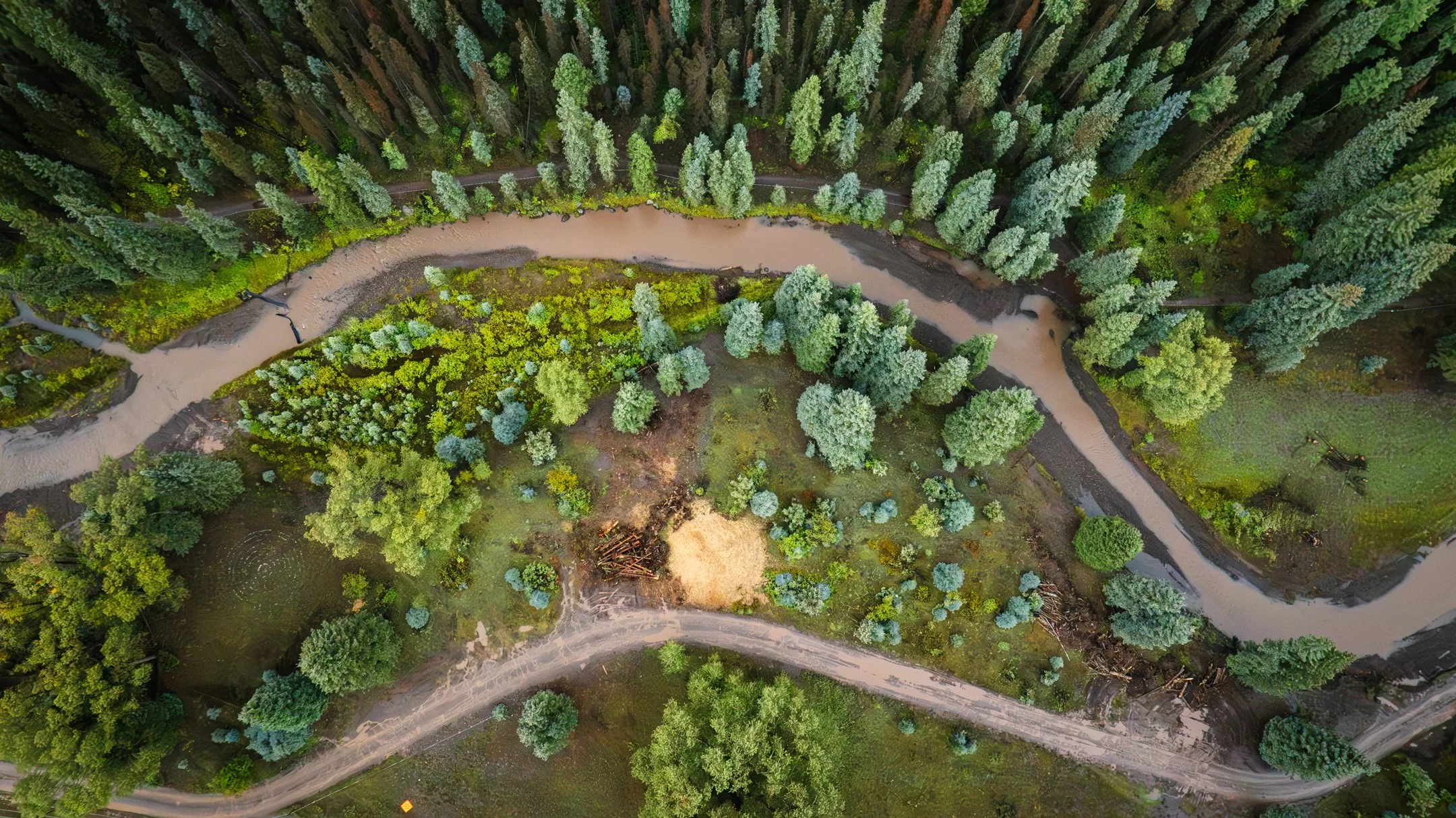
Drought, Fire, and Low Rivers Are Testing Colorado’s Watersheds

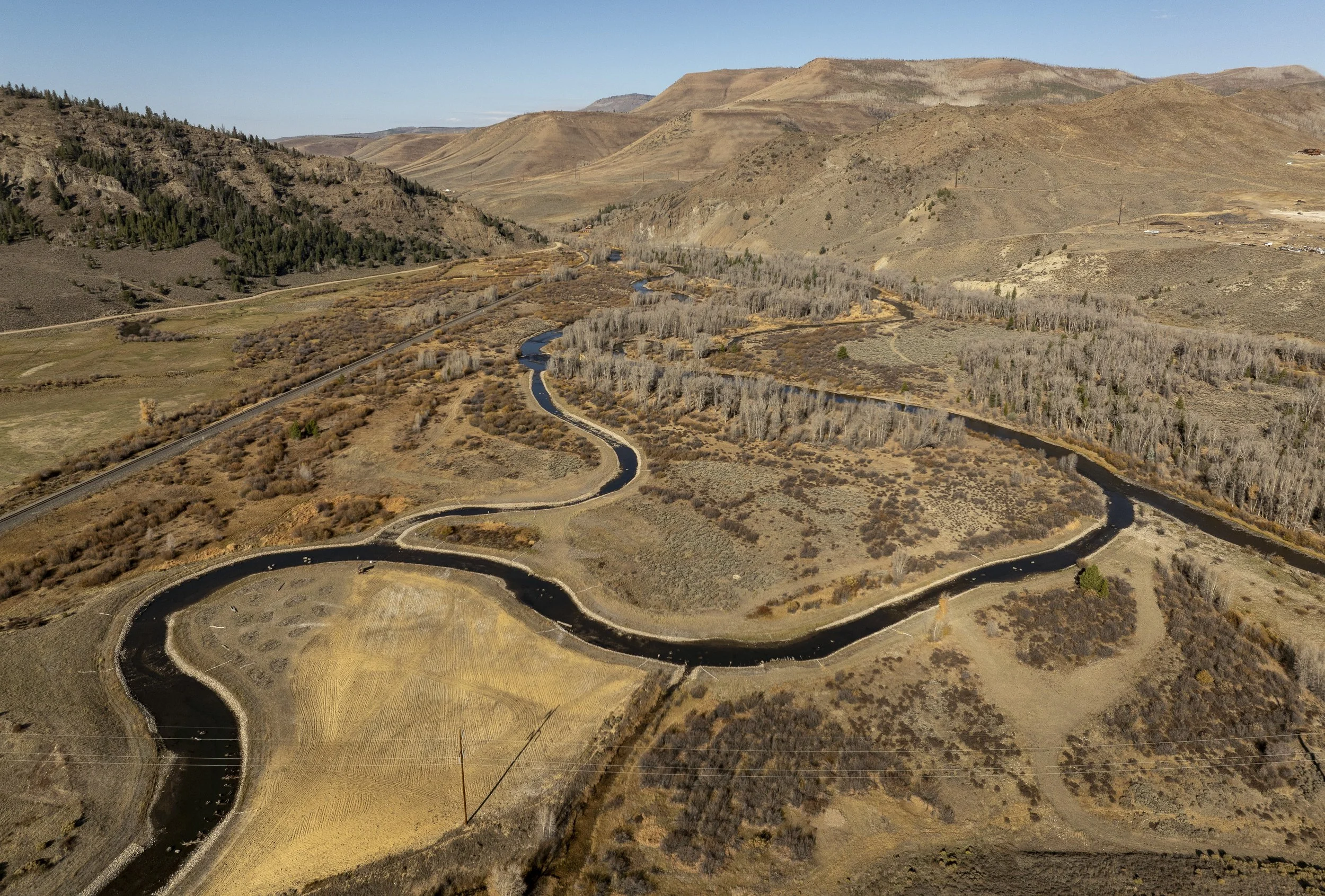
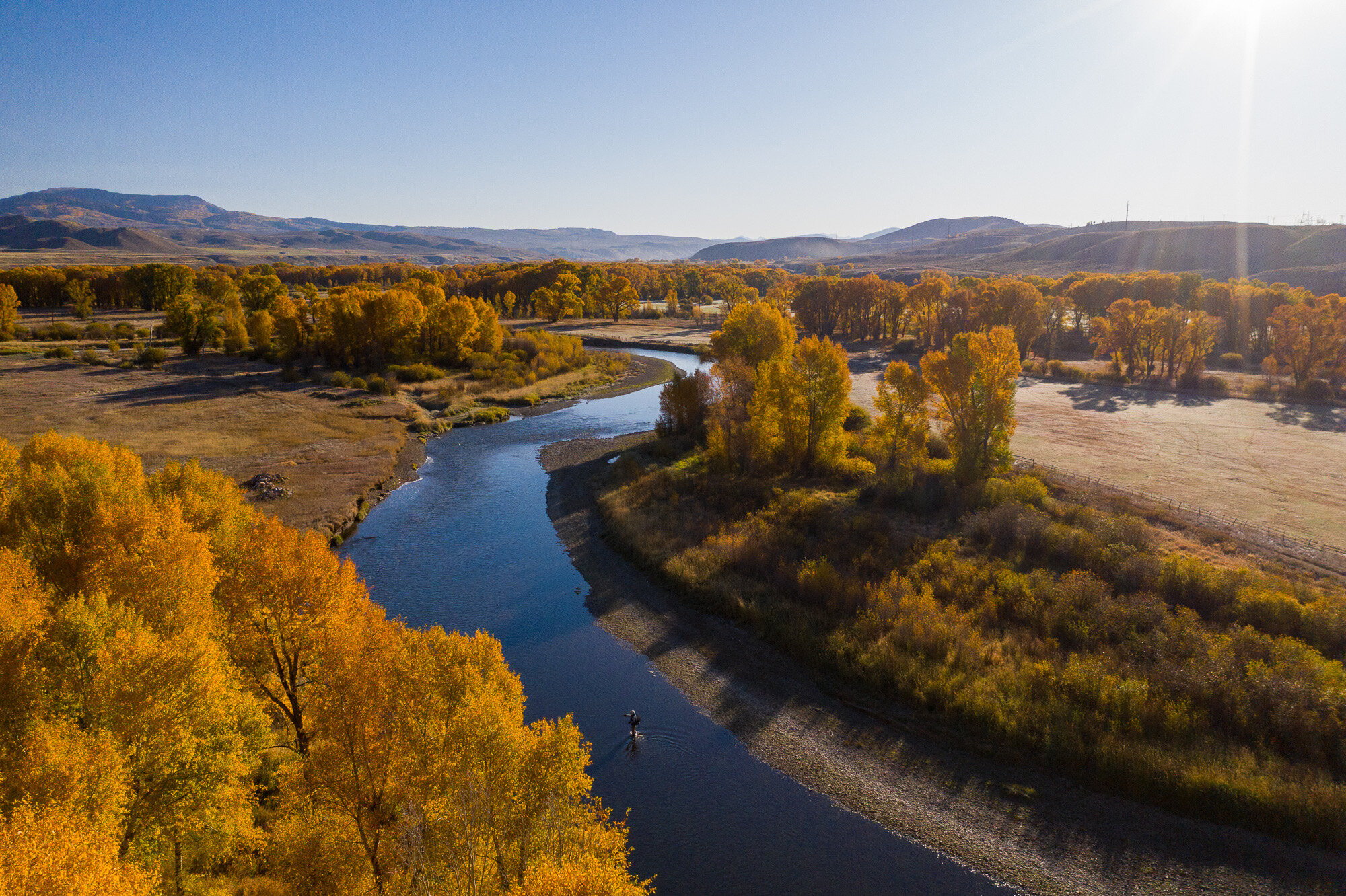
Colorado’s rivers are showing the strain of a hot, dry summer.

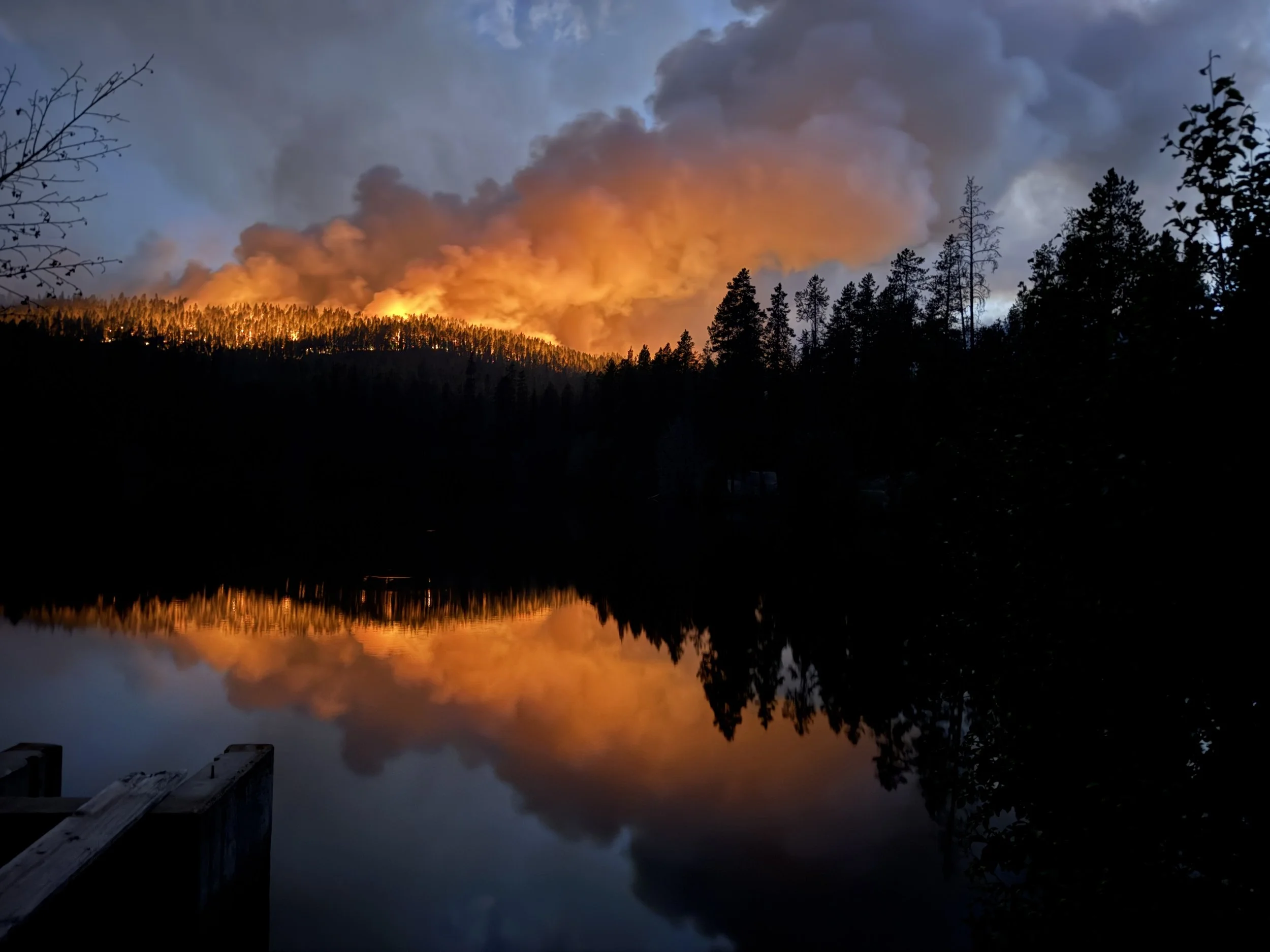
After months of drought, low snowpack, and persistent heat, the impacts are visible across the state. Rivers and streams are running low. Water temperatures are rising. Reservoir levels are dropping. Wildfires are burning across Colorado. These conditions affect more than recreation. They put pressure on water supplies, agriculture, wildlife, local economies, and communities that depend on healthy watersheds.

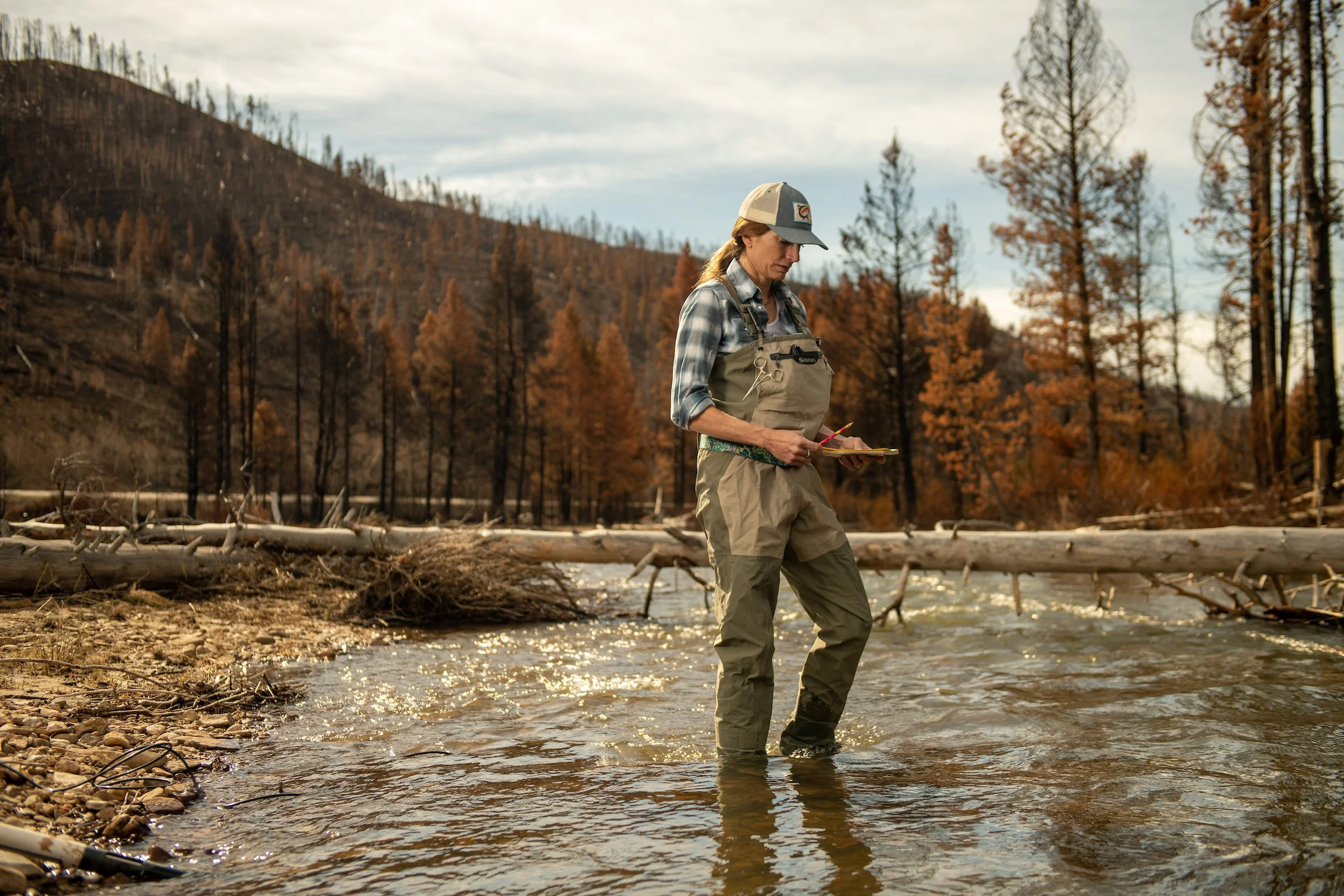
When streamflows drop, rivers warm more quickly. Warmer water holds less dissolved oxygen, making conditions harder for fish and other aquatic life. Low flows also reduce the ability of a stream to buffer heat, dilute pollutants, and support healthy habitat through the hottest part of the year.

Those conditions are already affecting how people use Colorado’s rivers. Colorado Parks and Wildlife has implemented voluntary fishing closures on several waters, including portions of the Yampa River, the Lake Fork of the Gunnison River, Cochetopa Creek, and Tomichi Creek. These closures are a signal that some rivers need extra care right now, especially during the hottest parts of the day when water temperatures peak and fish are under the most stress.

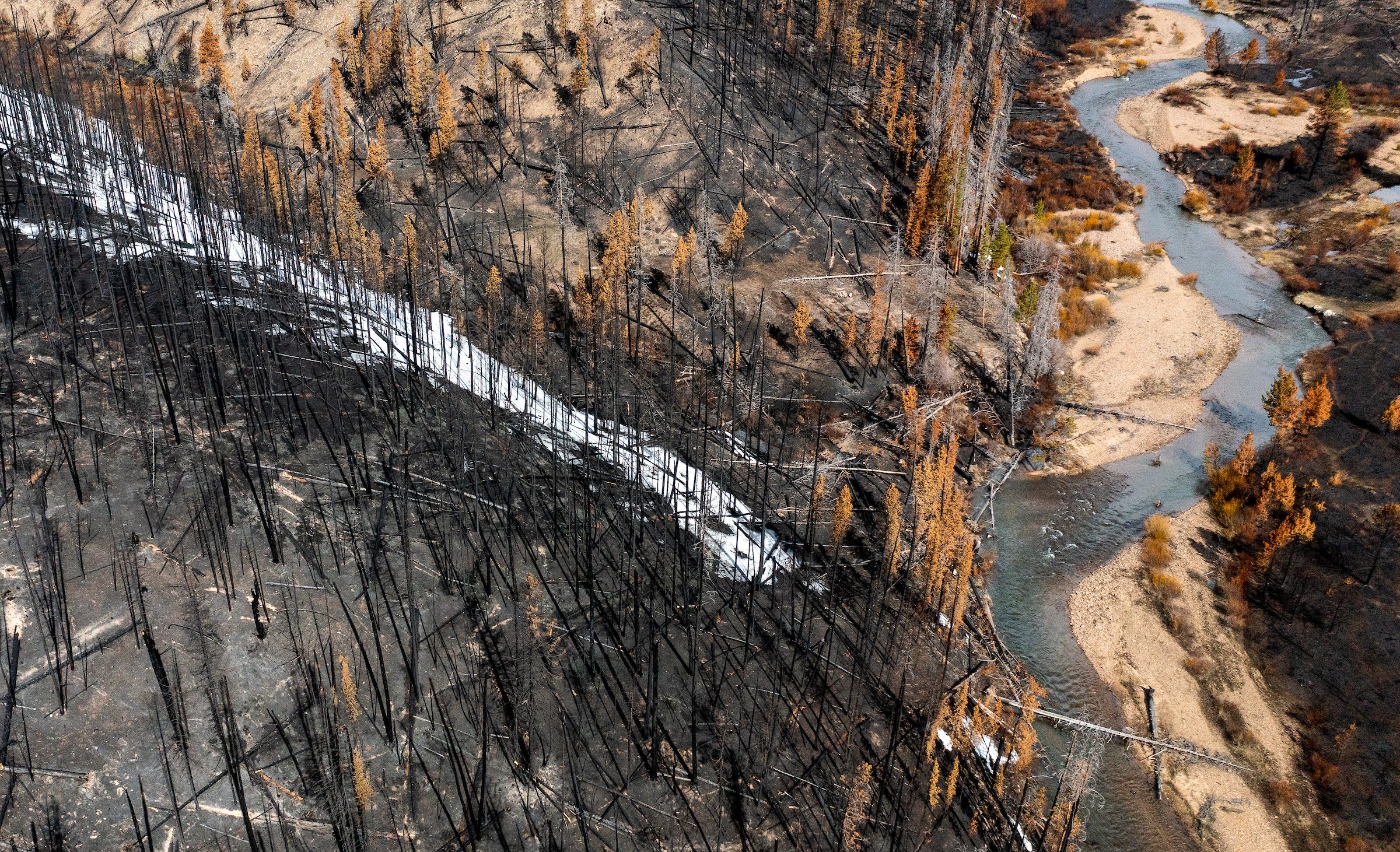
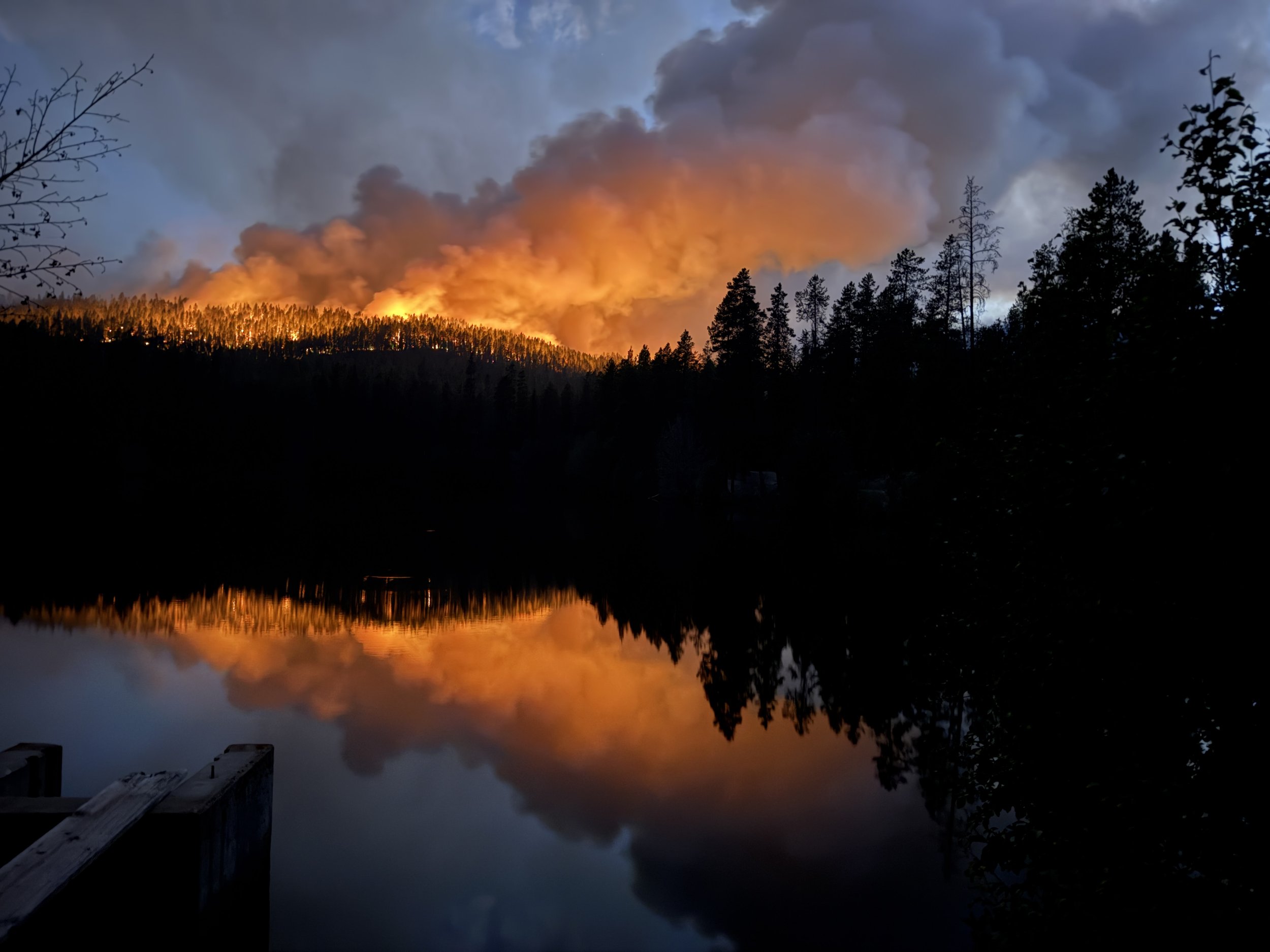
Drought is also tied to what is happening beyond the riverbank. Dry soils, stressed vegetation, and hot weather can increase wildfire risk across the landscapes that feed our rivers. Fires like Aspen Acres and Gold Mountain are reminders that watershed health includes both land and water.

The full impact of an active fire on stream habitat is not always known right away. But the risk is clear. When rain falls on burned hillsides, ash, sediment, and debris can move into streams and reservoirs. That can affect water quality, aquatic habitat, infrastructure, and downstream communities long after the flames are out.

This is a summer for paying attention.

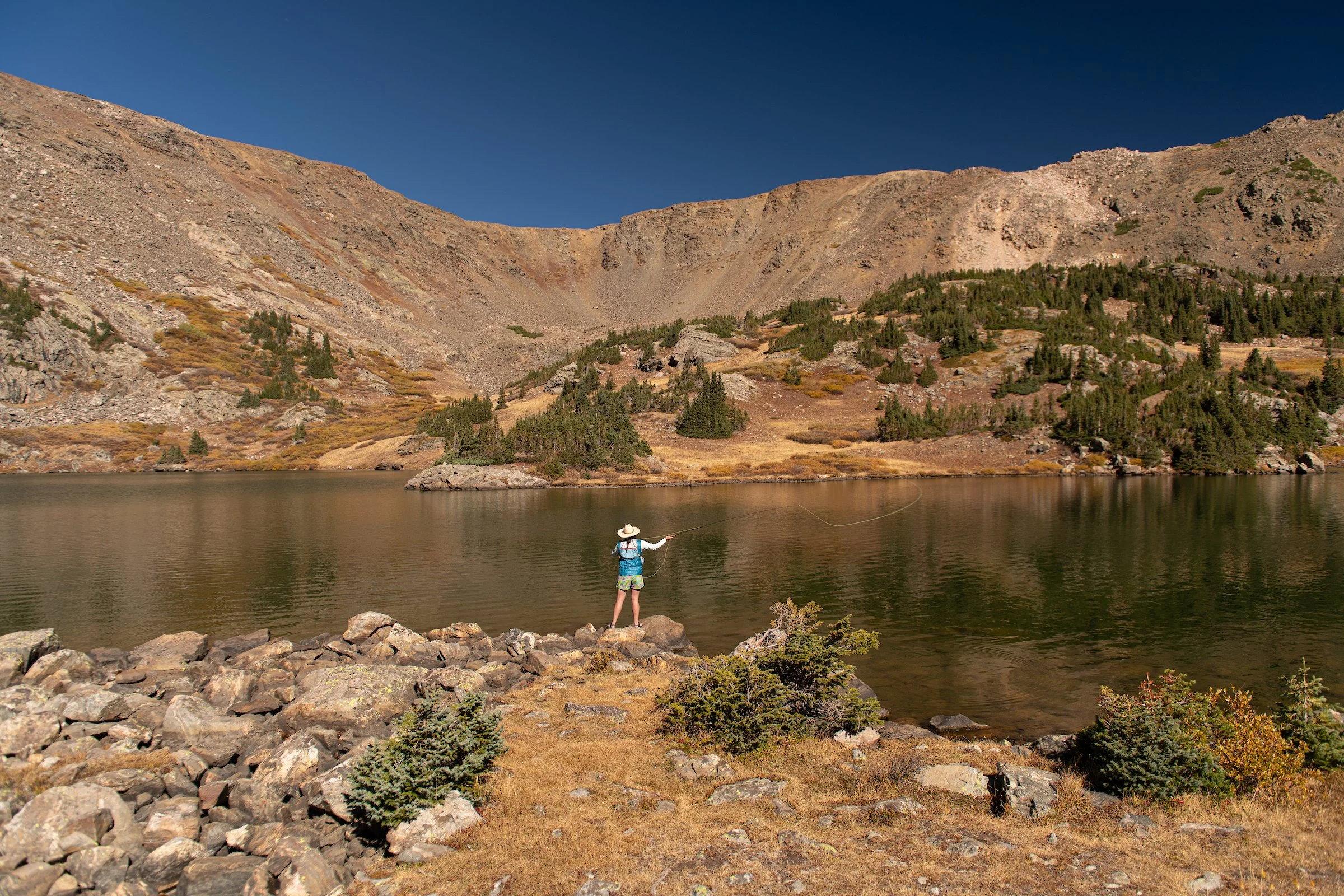
Before heading outside, check current fire restrictions, local closures, stream conditions, and water temperatures. Respect voluntary and mandatory restrictions. Use water wisely at home and in your community. If you are fishing, go early, handle fish carefully, and be willing to change plans when water is too warm or flows are too low. Consider waters with more favorable conditions, such as higher-elevation lakes, tailwaters with stable cold releases, or warmwater fisheries where appropriate.

For Colorado Trout Unlimited, this moment reinforces why long-term river conservation matters.

Healthy watersheds are more resilient. Reconnected floodplains, restored wetlands, shaded stream corridors, intact headwaters, and healthy riparian areas can help stabilize flows, reduce erosion, improve water quality, keep stream corridors cooler, and support habitat through difficult conditions.

Restoration work led by TU staff and chapters does not make drought disappear or stop every wildfire. But over time, projects that restore floodplains, protect headwaters, improve riparian areas, and reconnect rivers with their natural corridors can help watersheds function more naturally and recover more effectively under drought, heat, fire, and low-flow conditions.

Colorado’s water story started with snow this year. Now, in July, it is showing up in low rivers, hot afternoons, dry forests, active fires, and communities watching conditions closely.

Colorado Trout Unlimited and our chapters will continue working across the state to protect and restore the watersheds that sustain Colorado’s rivers, communities, wildlife, and way of life.

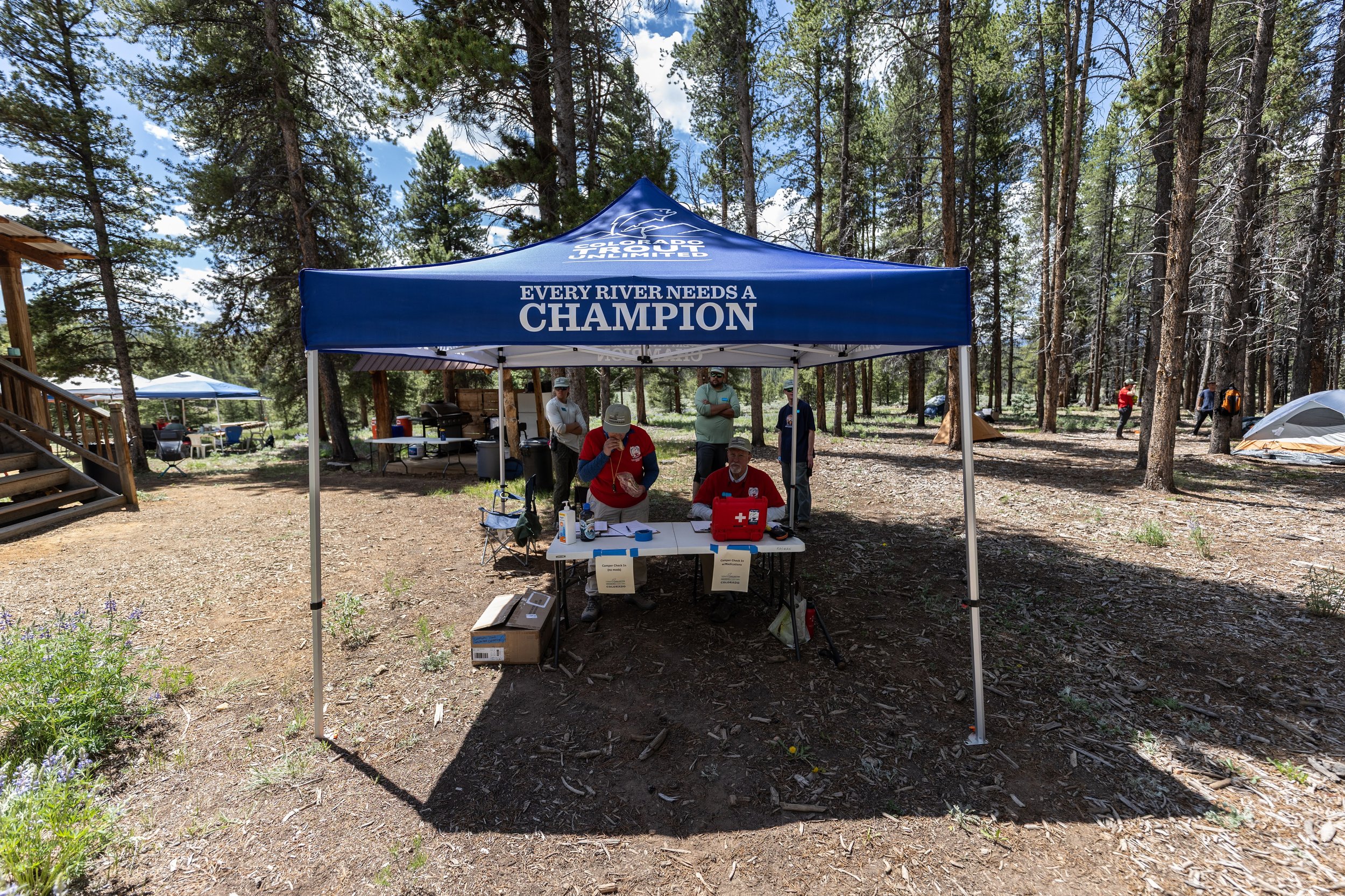
Every river needs a champion, especially in a summer like this.

Shoshone Water Rights Project Takes Major Step Forward With $40 Million Federal Funding Release

A major step forward for the Colorado River is now in motion.

Photo Courtesy of The Colorado River District

On May 22, the Department of the Interior released $40 million in federal funding to the Colorado River District for the Shoshone Water Rights Preservation Project. The funding brings the River District to $97 million of the $99 million needed to purchase and permanently protect the water rights tied to the Shoshone Hydropower Plant in Glenwood Canyon.

For Colorado’s rivers, Western Slope communities, agricultural producers, recreation economies, and everyone who depends on the Colorado River, this is a significant milestone. The Shoshone water rights are some of the largest and most senior non-consumptive water rights on the Colorado River. They include senior 1902 and junior 1929 rights that have long helped maintain flows in the Colorado River headwaters down through Glenwood Canyon and on to downstream communities.

The Shoshone water rights are some of the largest and most senior non-consumptive water rights on the Colorado River. They include senior 1902 and junior 1929 rights that have long helped maintain flows from the Colorado River headwaters through Glenwood Canyon and on to downstream communities. Because the water used for hydropower returns to the river, the rights have supported river flows that benefit agriculture, local economies, recreation, aquatic habitat, and the coldwater conditions wild and native trout need.

Colorado Trout Unlimited has long supported the effort to permanently protect the Shoshone water rights because this project is about more than one stretch of river. It is about long-term water security for Colorado’s namesake river and the communities, ecosystems, and future generations that rely on it.

In 2023, the Colorado River District entered into an agreement with Public Service Company of Colorado, a subsidiary of Xcel Energy, to purchase the Shoshone water rights for $99 million. One of the major conditions of that agreement was securing the funding needed to complete the purchase. With the release of this federal award, that goal is now nearly complete.

Another major step came in November 2025, when the Colorado Water Conservation Board unanimously approved accepting the Shoshone water rights into the state’s instream flow program. That approval was a critical milestone in the broader effort to allow the rights to continue supporting hydropower production while also protecting flows in the Colorado River.

Important work remains. The project now moves into the contracting phase, where the Colorado River District will work with the Bureau of Reclamation to finalize the terms of the federal award. The River District, the Colorado Water Conservation Board, and Public Service Company of Colorado have also filed in Colorado water court for a change of water rights that would add instream flow use to the Shoshone rights while allowing continued hydropower production. The transaction must also receive approval from the Colorado Public Utilities Commission before it can close.

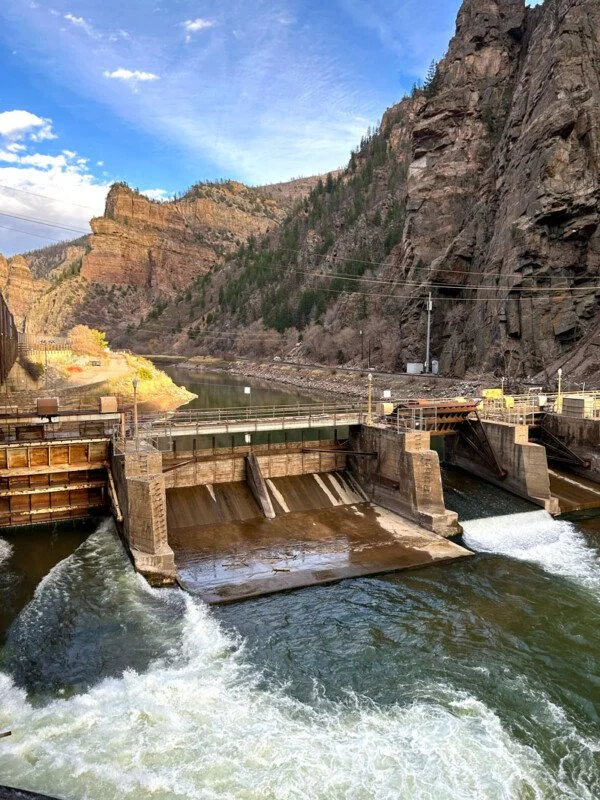
Shoshone Dam, seen here on August 13, 2021, near Glenwood Springs, generates electricity through its turbines on the Colorado River. The dam and power plant near the Hanging Lake parking area was constructed in the early 1900s. (Hugh Carey, The Colorado Sun)

The Shoshone Water Rights Preservation Coalition includes more than 100 water providers, local governments, regional entities, conservation groups, the State of Colorado, and bipartisan elected officials. That broad support reflects what makes this project so important: it brings together diverse interests around a shared commitment to the future of the Colorado River.

Protecting Shoshone is one of the most meaningful river conservation opportunities in Colorado. It helps preserve historic flows, strengthens resilience in a changing climate, and supports the health of the Colorado River from the Western Slope downstream.

For Colorado TU, this moment is a reminder that durable conservation takes partnership, persistence, and a shared belief that healthy rivers matter to all of us.

Trout in the Classroom: A year of Conservation, Connection, and Lasting Impact

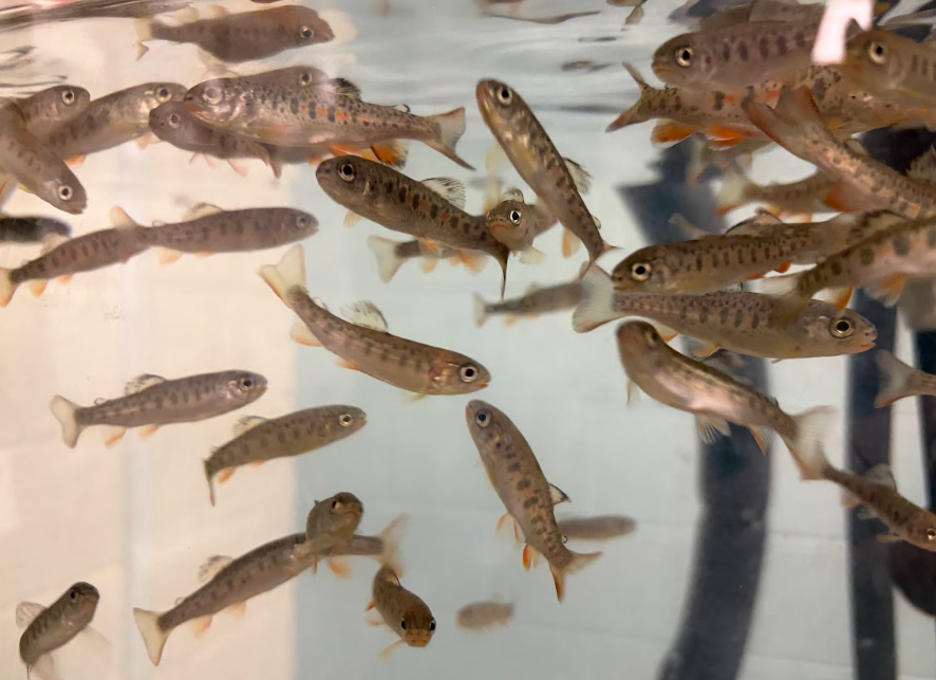
This year has been nothing short of memorable for Trout in the Classroom across Colorado. With 85 tanks in classrooms statewide, thousands of students experienced conservation education in a way that can stay with them for years.

Trout in the Classroom is far more than a science project. It is a hands-on journey that creates a personal connection between students and the natural world. Throughout the year, students learned firsthand what trout need to survive. By raising trout in their own classrooms, students gained a deep understanding of how sensitive these fish are and why protecting our waterways matters. Education is conservation and this program has proved exactly that.

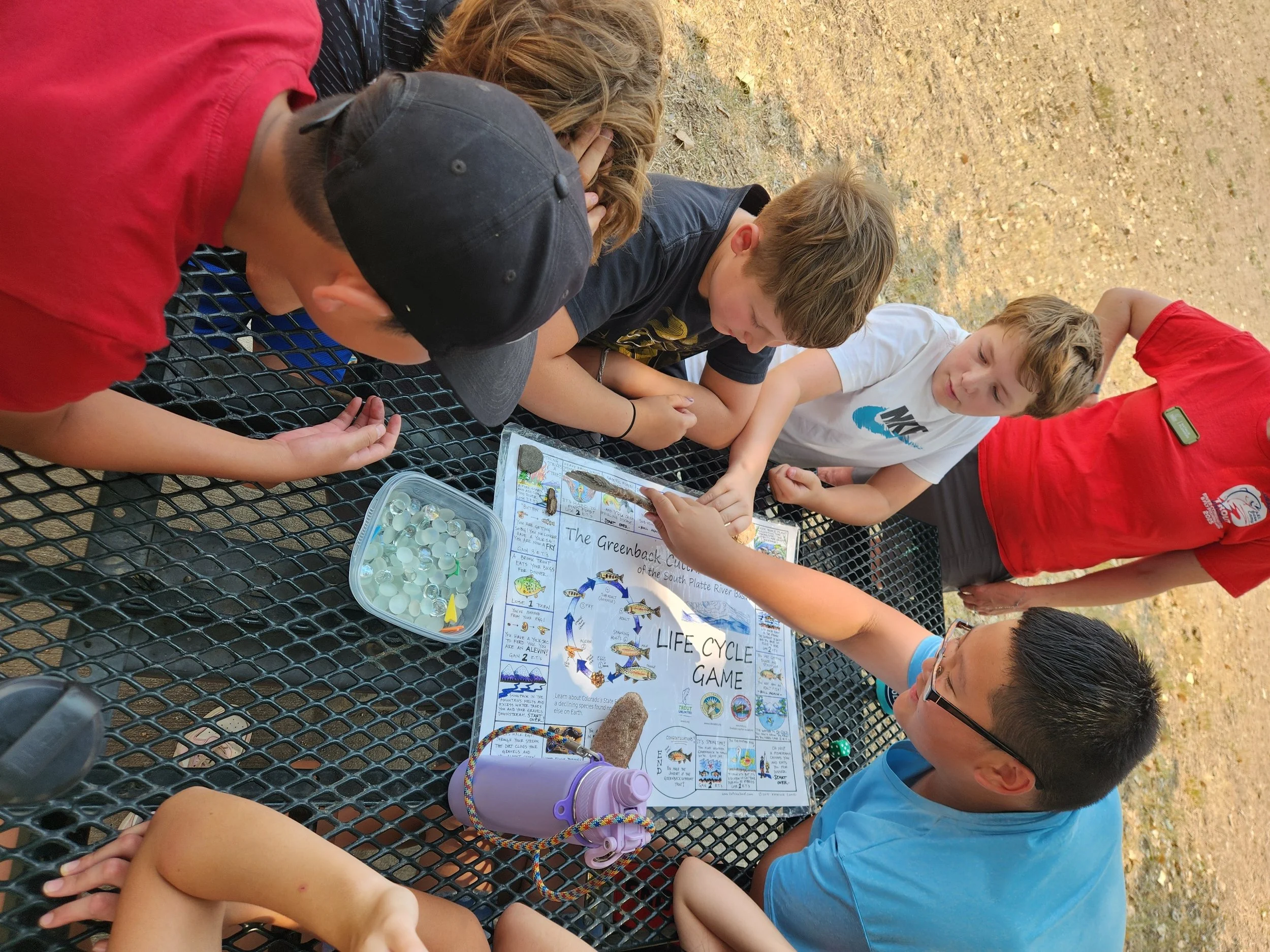
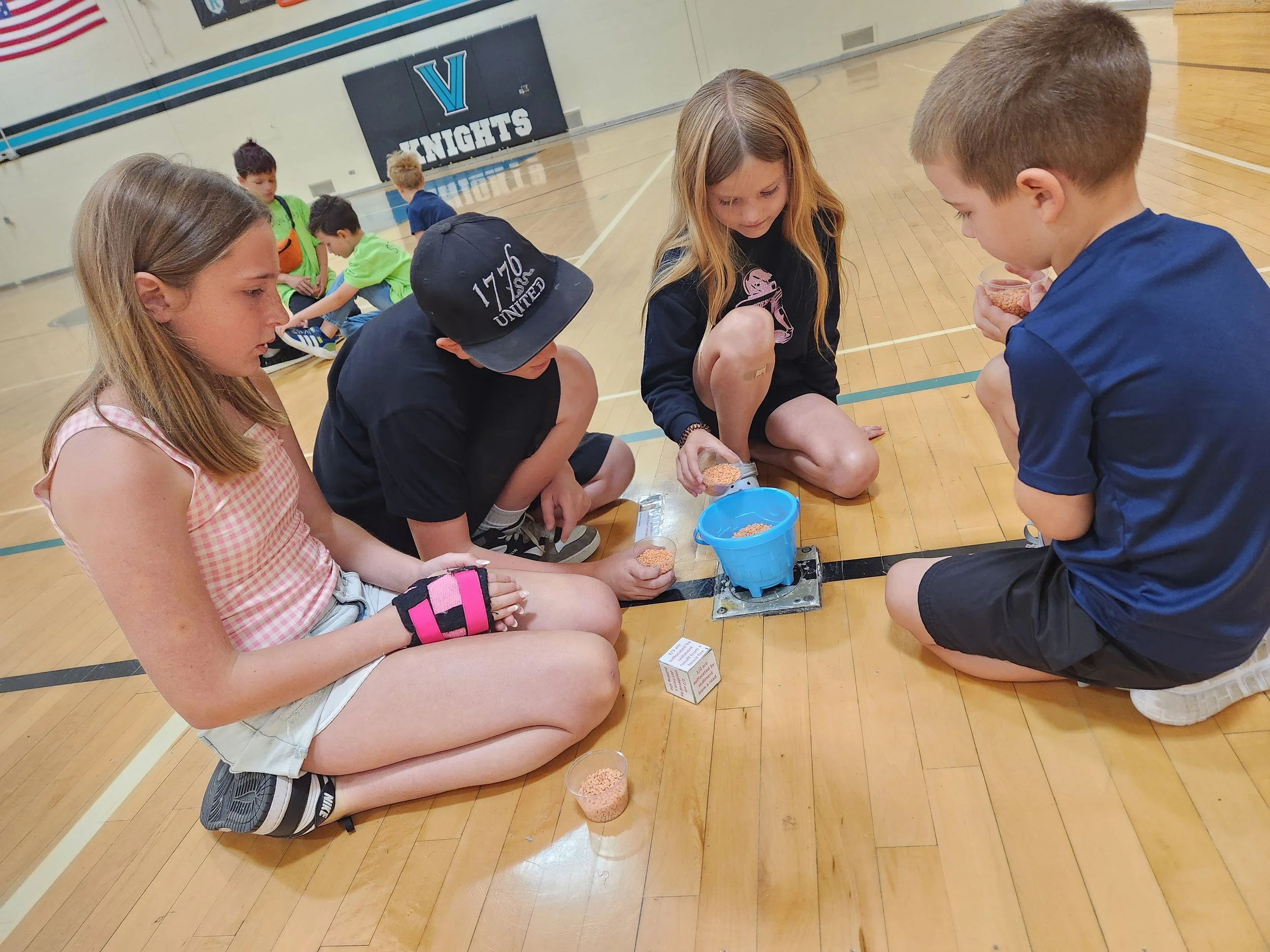
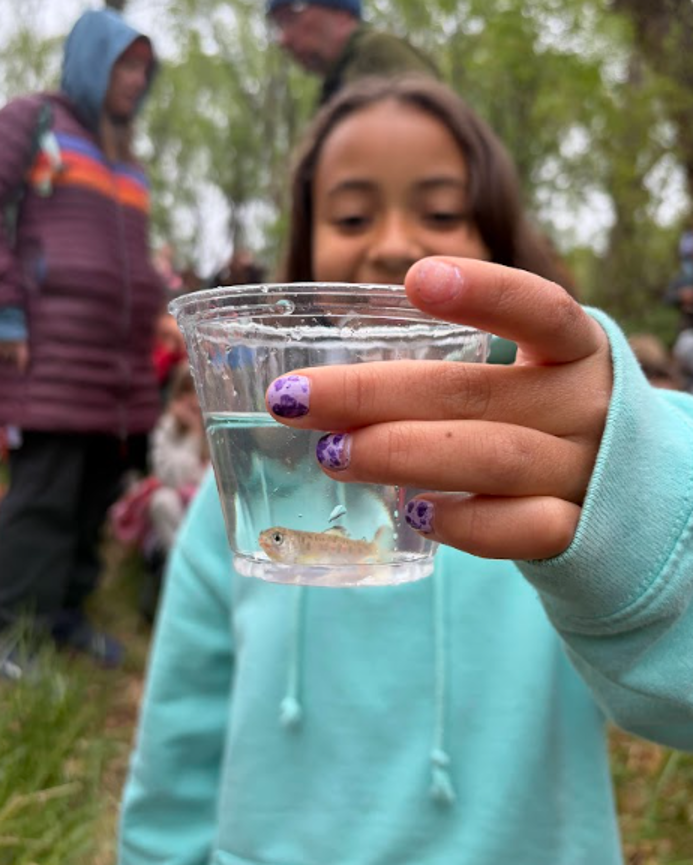
Students didn’t just learn from textbooks. They stepped into rivers, lakes, and even hatcheries. They connected with Trout Unlimited chapter members who generously shared their passion and knowledge. Many students across the state learned how to fly fish, tie flies, monitor water quality, and responsibly care for trout throughout their life cycle. These experiences transformed learning into something unforgettable.  For many students, this was their first true connection to conservation. Watching trout grow from eggs into fish ready for release gave students ownership, responsibility, and pride. Those moments created lasting memories and inspired future stewards of Colorado's rivers and streams.
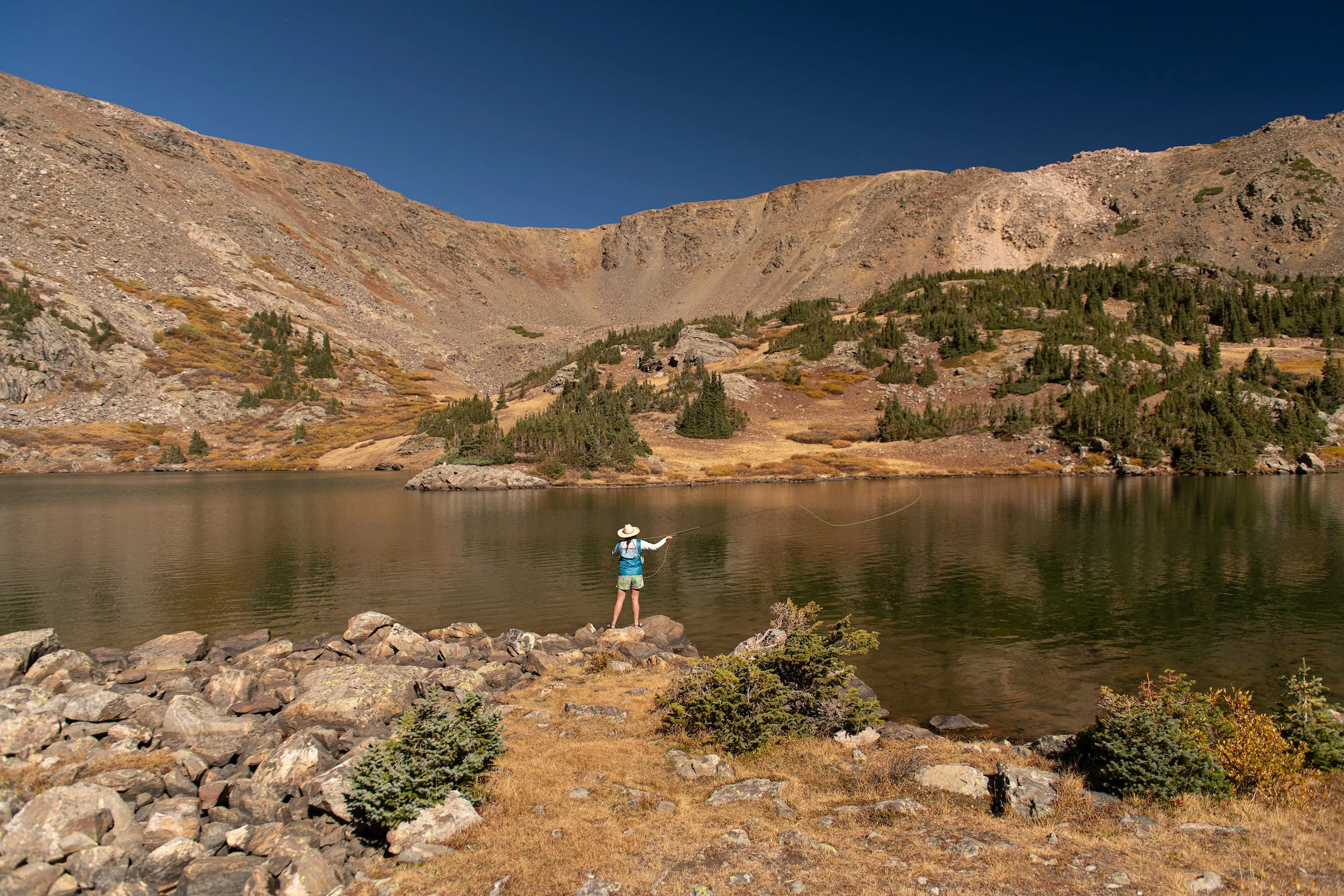
The success of Trout in the Classroom would not have been possible without the incredible leadership and dedication behind the scenes. Natalie Flowers has led a truly remarkable team of coordinators who continually supported teachers, students, and Trout Unlimited chapters throughout the year.

Martin Harris, Audrey Kenney, and Haley Collinsworth worked to keep in communication with classrooms and chapters to help ensure the success of this growing program. Their passion, commitment, and support created meaningful experiences for educators and students alike while strengthening the impact of Trout Unlimited across Colorado.

Programs like Trout in the Classroom demonstrate why conservation education is essential to the future of Trout Unlimited. By investing in young people today we are building the next generation of river advocates, anglers, conservationists, and leaders. The impact of this program reaches far beyond the classroom. It lives on in every student who now understands the importance of healthy rivers. As this school year comes to a close we celebrate not only the trout these students got to release into Colorado Parks and Wildlife (CPW) approved waters, but also the thousands of students whose lives were changed through this incredible experience. We are looking forward to having over 100 sites next year and the continued success of this program that reaches more and more students each year.

Restoring the San Miguel River Through the Telluride Valley Floor

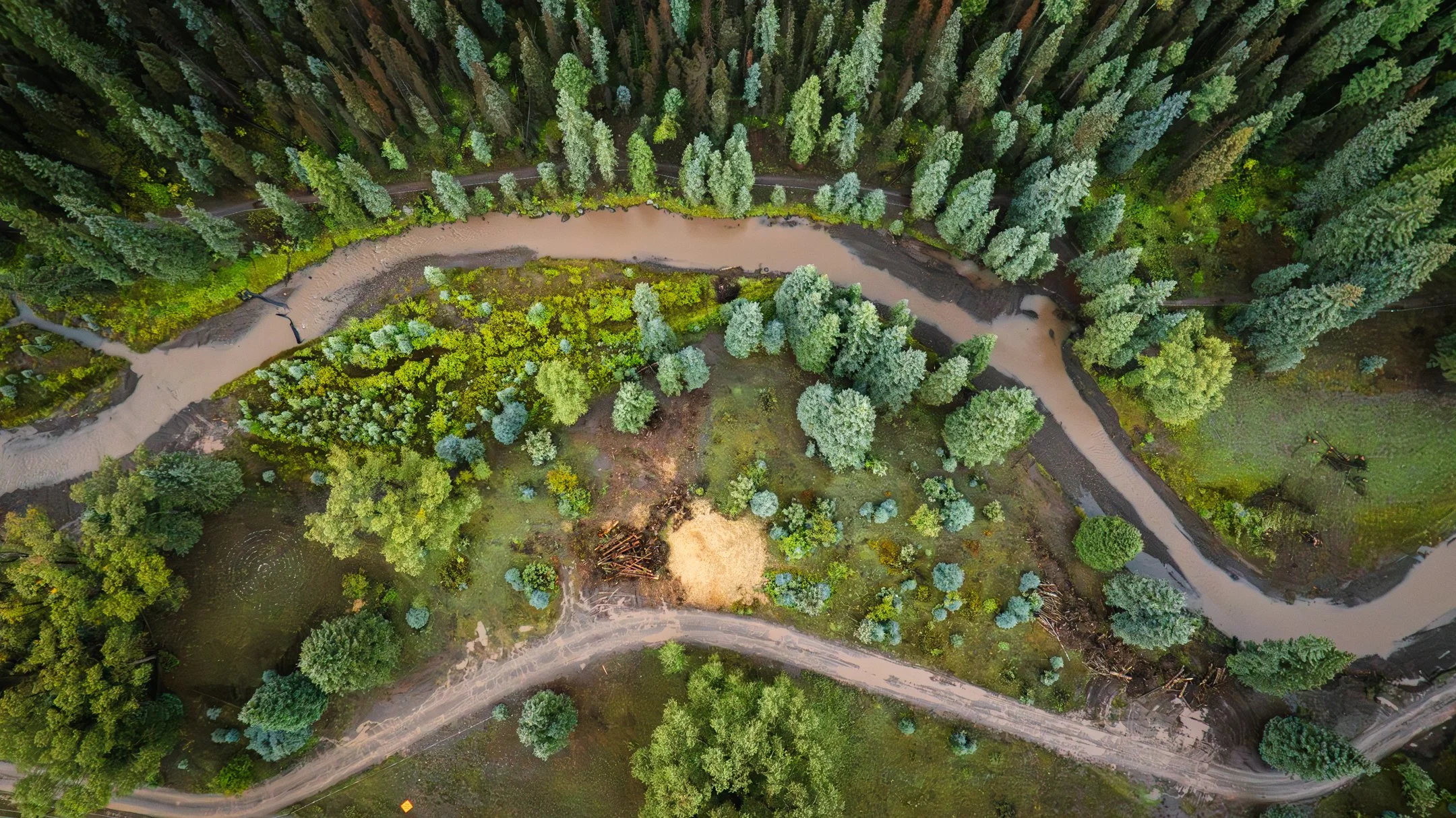
Near Telluride, a major river restoration effort is bringing new life to the San Miguel River corridor, showing how clean water, healthy forests, local leadership, and strong partnerships all connect.

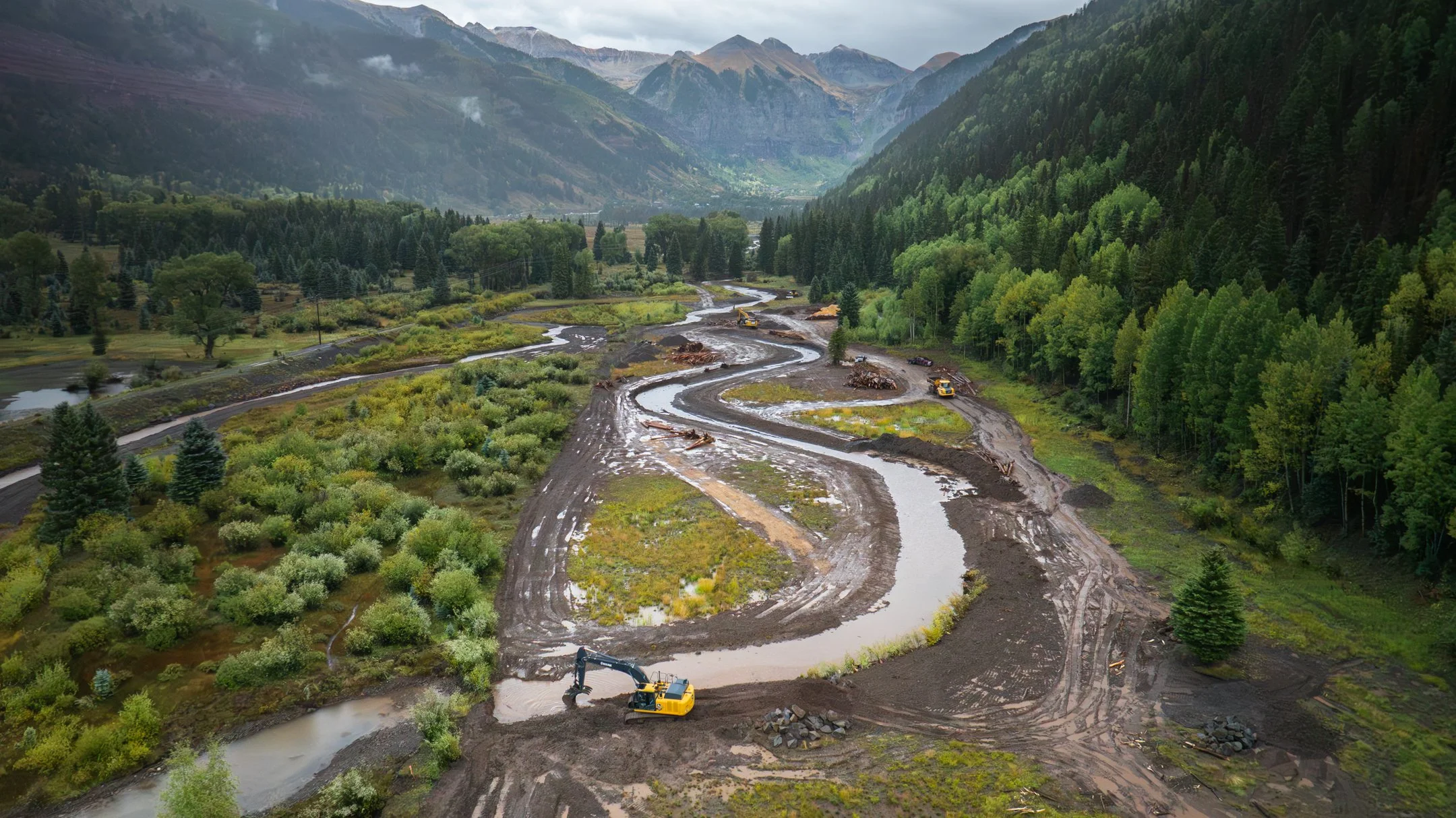
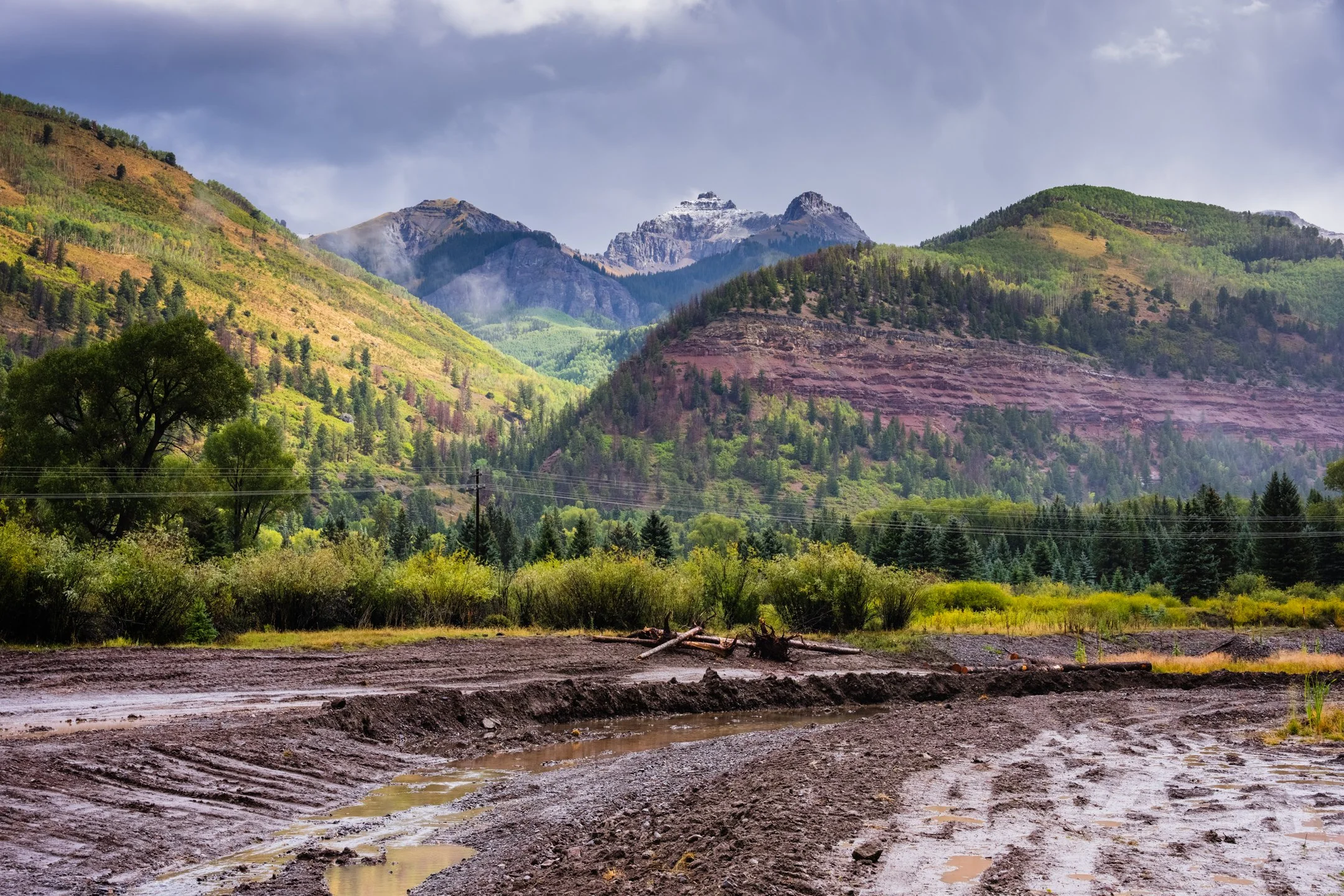
The Telluride Valley Floor project is revitalizing a 23-acre project area along the San Miguel River downstream of the Valley Floor open space. Led through a partnership between Trout Unlimited, the U.S. Forest Service, the Town of Telluride, and other partners, the project builds on years of work to restore a river corridor shaped by historic mining impacts, channel changes, and a lack of natural habitat complexity.

For Colorado Trout Unlimited and our local Gunnison Gorge Anglers chapter, this project is also a reminder of what local conservation can make possible. Local chapters are often the force that helps important river projects move from idea to impact. On the San Miguel River, Gunnison Gorge Anglers has helped champion this work alongside partner Telluride Outside, supporting a project that benefits the river, the surrounding landscape, and the broader Telluride community.

From mine reclamation to river restoration

The foundation for this work began with major mine reclamation. Between 2020 and 2022, the Environmental Protection Agency removed approximately 60,000 cubic yards of mine tailings contaminated with arsenic and lead from the site. That cleanup created the opportunity for the next phase: restoring the San Miguel River itself.

In 2024, Trout Unlimited and the U.S. Forest Service also reconstructed Boomerang Bridge, reducing constriction on the river and tripling the bridge’s capacity to handle high flows. That improvement helps the river move more naturally through the corridor while better protecting local access and infrastructure.

Together, these efforts are helping shift the Valley Floor from a legacy impact site toward a healthier, more resilient river landscape.

Restoring wood, water, and wildlife habitat

A key part of the restoration is bringing natural wood back into the river and floodplain.

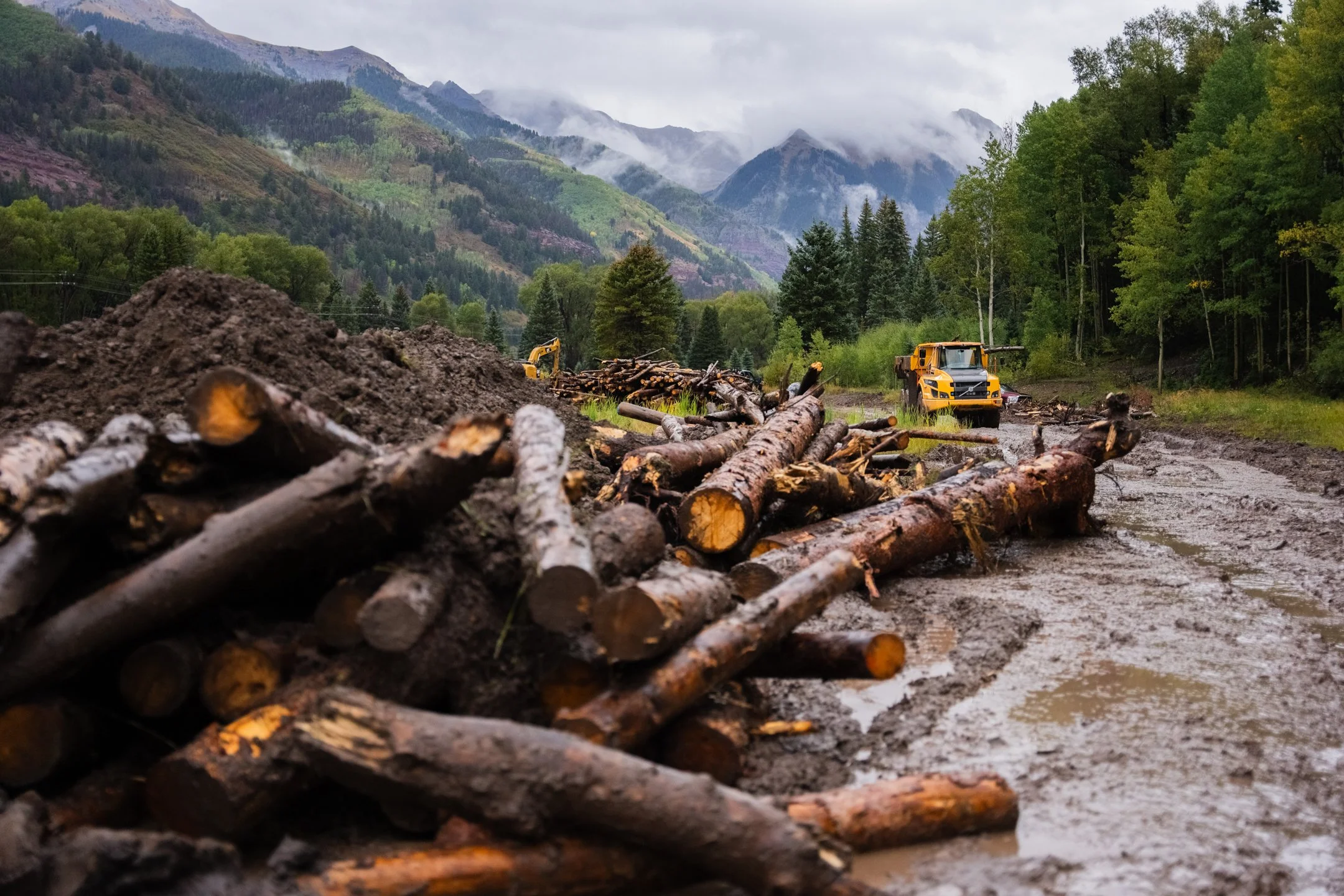
Nearly 2,000 logs, sourced from forest health and fuels reduction work on adjacent mountain slopes, were hauled to the site by helicopter over a field season. Those logs are being used for bank stabilization, in-stream habitat, and floodplain roughness, helping rebuild the kind of structure that a healthy river system needs.

In a natural stream, wood slows water, creates pools and riffles, improves cover for fish and wildlife, reconnects floodplains, and helps a river hold onto moisture. In the San Miguel corridor, those improvements will help create more complex habitat and a more resilient stream channel.

The project also connects river restoration with forest health. The logs come from thinning work that reduces wildfire risk by clearing diseased and overcrowded forest stands, improving forest conditions, and creating defensible space around the community. That same work helps protect long-term water quality by reducing the risk of severe wildfire impacts to the watershed and nearby infrastructure.

Native plants and the return of beavers

Restoration does not end with the stream channel. More than 41,000 native plants will also be installed throughout the project area. Thousands of those plants were grown from seed collected on National Forest System lands, then sown by local and regional nurseries and planted by local contractors and volunteers.

Those plantings will help stabilize the corridor, improve riparian habitat, and support the long-term recovery of the river’s natural processes. They will also help encourage beavers to recolonize a reach that currently lacks enough vegetation to support them.

Beavers are a keystone species because their dams and ponds can improve water storage, create wetlands, reconnect floodplains, and provide habitat for fish, birds, amphibians, and other wildlife. Encouraging their return is one more way this project is helping rebuild a healthier, more self-sustaining river corridor.

A stronger San Miguel River

When complete in October 2026, the Telluride Valley Floor project will create 1,320 linear feet of new meandering river channel downstream of the Valley Floor open space. The restored corridor will improve habitat, support cleaner water, help protect critical infrastructure from wildfire risk, and create a more resilient San Miguel River for the community and wildlife that depend on it.

The project area is accessible from Boomerang Road and by trails from the Town of Telluride, giving the community a direct connection to the restoration taking place in its backyard.

This is connected conservation in action: healthier forests, safer communities, stronger river habitat, cleaner water, and a more resilient future for the San Miguel River.

Colorado TU is grateful to Gunnison Gorge Anglers, Telluride Outside, the U.S. Forest Service, the Town of Telluride, the Town of Mountain Village, the Environmental Protection Agency, local contractors, volunteers, and all partners helping bring this work to life.

Photos by Kellon Spencer.

Trout Unlimited Chapters Tie and Donate 2327 Flies for the Tie-4-The Future Challenge

Colorado Trout Unlimited launched the Tie-4-the-Future Challenge at the 2025 Fall Rendezvous, inviting Trout Unlimited chapters across Colorado to tie and donate flies during the winter and early spring months in support of Colorado TU’s education programs.

Each donated fly helps connect young people with rivers, science, conservation, and the joy of angling. Along the way, chapters hosted fly tying nights, welcomed community members beyond Trout Unlimited, and encouraged individual members to contribute their own flies. The effort even reached beyond Colorado, with a donation from the Little Red River Action Team in Arkansas.

By April 1, 2026, chapters and volunteers had donated 2,327 flies.

Flies by Chapter

Little Red River Action Team, Arkansas 60

Eagle Valley 188

Evergreen 290

Cutthroat 332

St. Vrain Anglers 441

San Luis Valley 1,036

The San Luis Valley Trout Unlimited Chapter donated the most flies, with 1,036 total, earning the Colorado TU Tie-4-the-Future Trophy for the year, along with some well-earned bragging rights.

As the chapter shared on Facebook when the trophy arrived:

“This one wasn’t won by a couple people… it was a full community effort. From the brewery tie-ins, to the Project Healing Waters crew, to ASU students and everyone who sat down and tied a few — this is what happens when the Valley shows up.”

The trophy is now proudly displayed at Colorado Farm Brewery in Alamosa, where many of the chapter’s fly tying gatherings were hosted.

Congratulations to the San Luis Valley Trout Unlimited Chapter, and to every chapter, volunteer, and community member who tied and donated flies in support of Colorado’s youth education programs.

The Tie-4-the-Future Challenge will return in fall 2026 for the 2027 challenge, with even more chapters invited to take part.

Speak Out to Oppose or Limit the CPW Commission’s Fur Ban

At the March 2026 Colorado Parks and Wildlife (CPW) Commission meeting, the Commission approved on a 6-4 vote advancing into rulemaking on a citizen petition calling for the ban of sale, trade or barter of furbearer fur and products. The petition was promoted by many of the same interests who brought forward the Denver Fur Ban ballot measure in 2024. The petition lacked scientific evidence showing that furbearer harvest or sale of fur in any way jeopardized sustainability of furbearer populations, and CPW staff recommended against the petition. Unfortunately, they were overruled by the Commission in a hearing and vote marked by significant confusion.

“Furbearers” under CPW regulations refer to the species traditionally hunted or trapped with fur of commercial value, such as mink, badger, beaver, coyote and fox. The petitioners’ proposal includes an exemption for finished hand-tied flies, but not for artificial lures nor for fly tying materials. As written, the proposal would ban something as simple as a legal hunter trading harvested fur with a fly-tying friend in exchange for some of the completed flies, or a Colorado fly-tyer purchasing a strip of mink fur sourced from out-of-state to use in tying streamers.

CPW is now working on an issue paper to present to the Commission as the first step toward adopting final rules for the fur ban. The paper will be presented at the Commission’s July meeting, with the final rulemaking hearing potentially taking place in September. To inform the issue paper, CPW is seeking public comment through May 3, through their web portal at: https://engagecpw.org/commercial-fur-sales

CPW staff have suggested that the fur ban be limited to the sale of furs hunted or trapped in Colorado and not applied to imported fur or materials. Consistent with statutory requirements allowing trapping and sale of fur from ‘nuisance’ animals taken by or on behalf of landowners to protect their property (under Title 35 and section 33-6-107(9) of the Colorado Revised Statutes), CPW also suggests that the rule not apply to fur harvested under those authorities.  Unfortunately, it does not appear that the Commission is inclined to accept these recommendations so public comment on these matters is very important. 

CTU opposes the proposed fur ban rule as it represents an anti-hunting, angling and trapping position without any basis in science and sound wildlife management. The ban is not needed to support sustainable furbearer populations, as Colorado’s harvest levels are an order of magnitude below those that the scientific literature indicates are sustainable. Simply put - the rule is not based on the conservation needs of Colorado wildlife. If the rule proceeds, however, we support the limitations proposed by CPW staff, and also suggest that the exemption for finished flies be broadened to include artificial lures and the materials used in making flies and lures.

You can weigh in with CPW through their Engage CPW portal to offer your comments. Points to consider raising:

·         CPW staff indicate that best available science shows that harvest is not threatening sustainable furbearer populations in Colorado, making this rule unnecessary and inappropriate

·         Natural furs have a long history of use in flies and lures used in fishing, and those uses should be exempted from any ban on sale of fur and fur products

·         Any CPW restriction on the sale of fur should be limited to fur harvested in Colorado; applying it to imports would do nothing to benefit Colorado wildlife

·         A fur ban cannot legally be applied to animals taken under Title 35 and section 33-6-107(9) of the Colorado Revised Statutes; asking wildlife officers to distinguish between fur taken under those authorities and those taken under recreational licenses poses an impossible enforcement challenge for CPW staff

·         In your comments, include any personal experience you have with furbearer furs and products as an angler or fly-tyer


Born in the Classroom, Back to the Current

By Haley Collinsworth, Colorado Western TIC Coordinator

The Trout in the Classroom program is more than just a science project. It is a first step for students toward stewardship that is supported by passionate volunteers from local Trout Unlimited Chapters. As students raise trout and release them into local streams, they experience the responsibility of protecting something real and fragile. In that moment, learning becomes personal and students begin to see themselves not just as participants but as the next generation of river champions.

Students gather at the CSU Spur to get one last look at their trout before releasing them back into their local stream.

The March 12 release event at CSU Spur centered on engaging homeschool students and families in hands-on environmental learning. CSU Spur’s Water Education Coordinator, Stefan, led interactive discussions that helped participants better understand conservation practices and aquatic ecosystems. Members of the Denver Trout Unlimited Chapter were also on hand to support the event and share their expertise. The on-campus trout tank, which is open to the public, serves as an ongoing educational resource and is surrounded by informative displays highlighting the importance of Colorado’s headwaters.

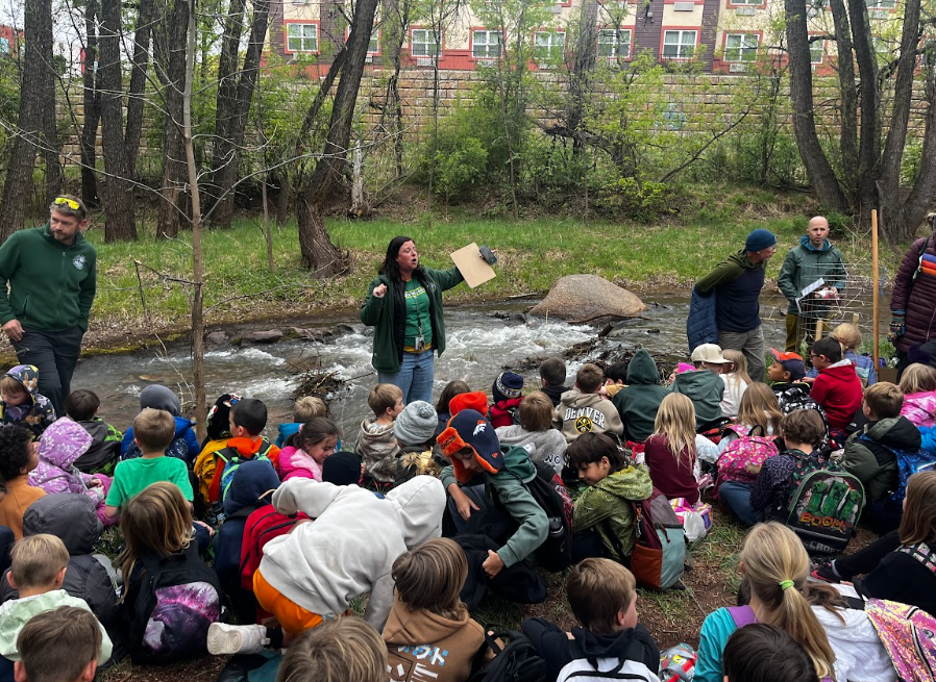
Students from across the San Luis Valley gathered March 12 at Del Norte Town Park to release almost 800 fish.

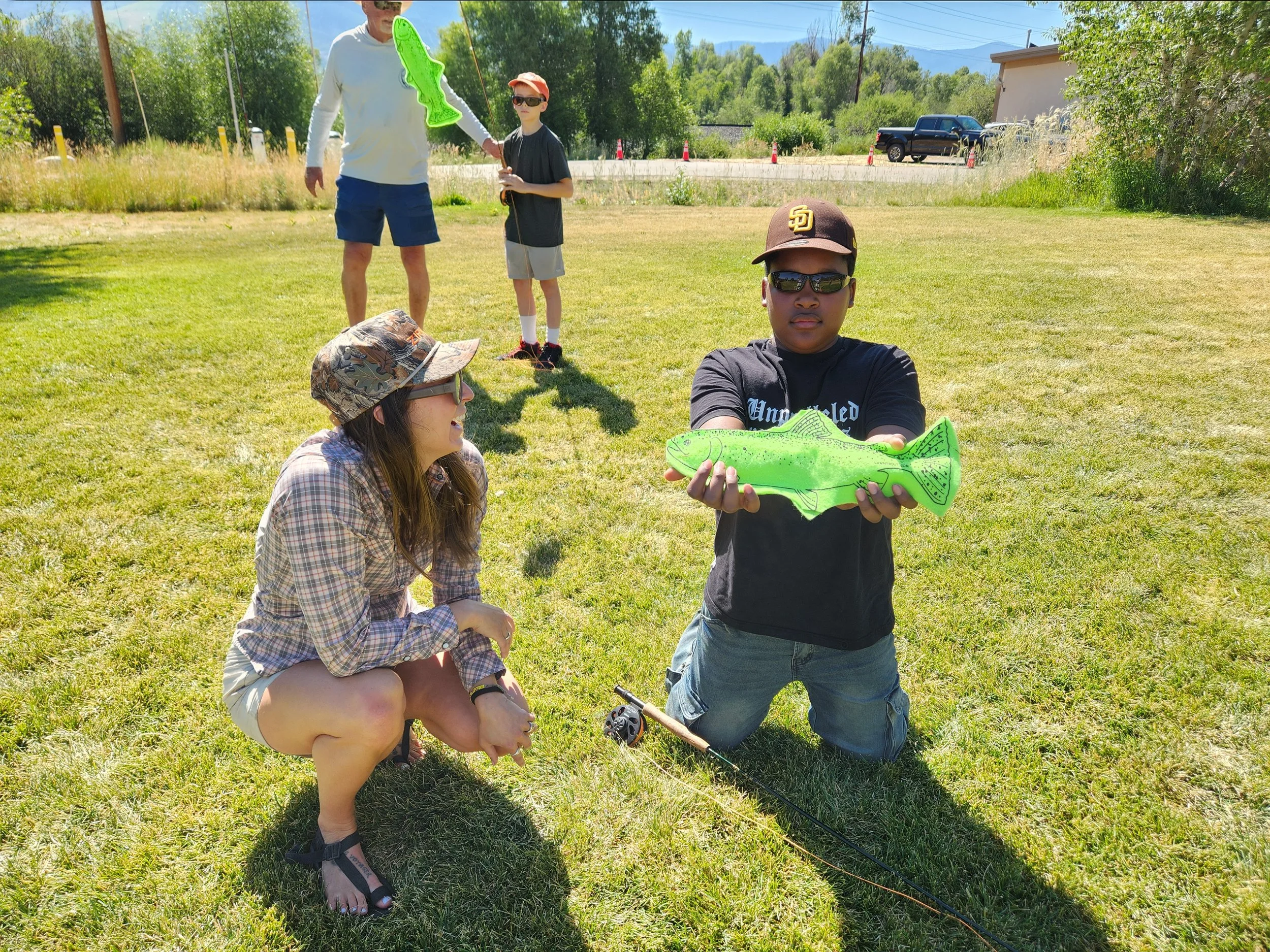
The March 12 fish release in the San Luis Valley brought together a strong network of community partners, including Rio Grande Hospital, Colorado Parks and Wildlife, the Division of Water Resources, the U.S. Forest Service, Rio Grande Headwaters, and the Rio Grande Water Conservation District. Watershed Ambassadors played an important role throughout the day, guiding younger students in fly casting and offering hands-on support during activities. Watching high school students mentor younger participants highlighted the growing conservation leadership pipeline the program is working to build. Kevin Midler the Youth Education Chair in the San Luis Valley chapter said, “Programs like Trout in the Classroom go far beyond raising fish they are helping cultivate the next generation of conservationists in the San Luis Valley.”

A student from Independence Academy reads his goodbye letter to the trout.

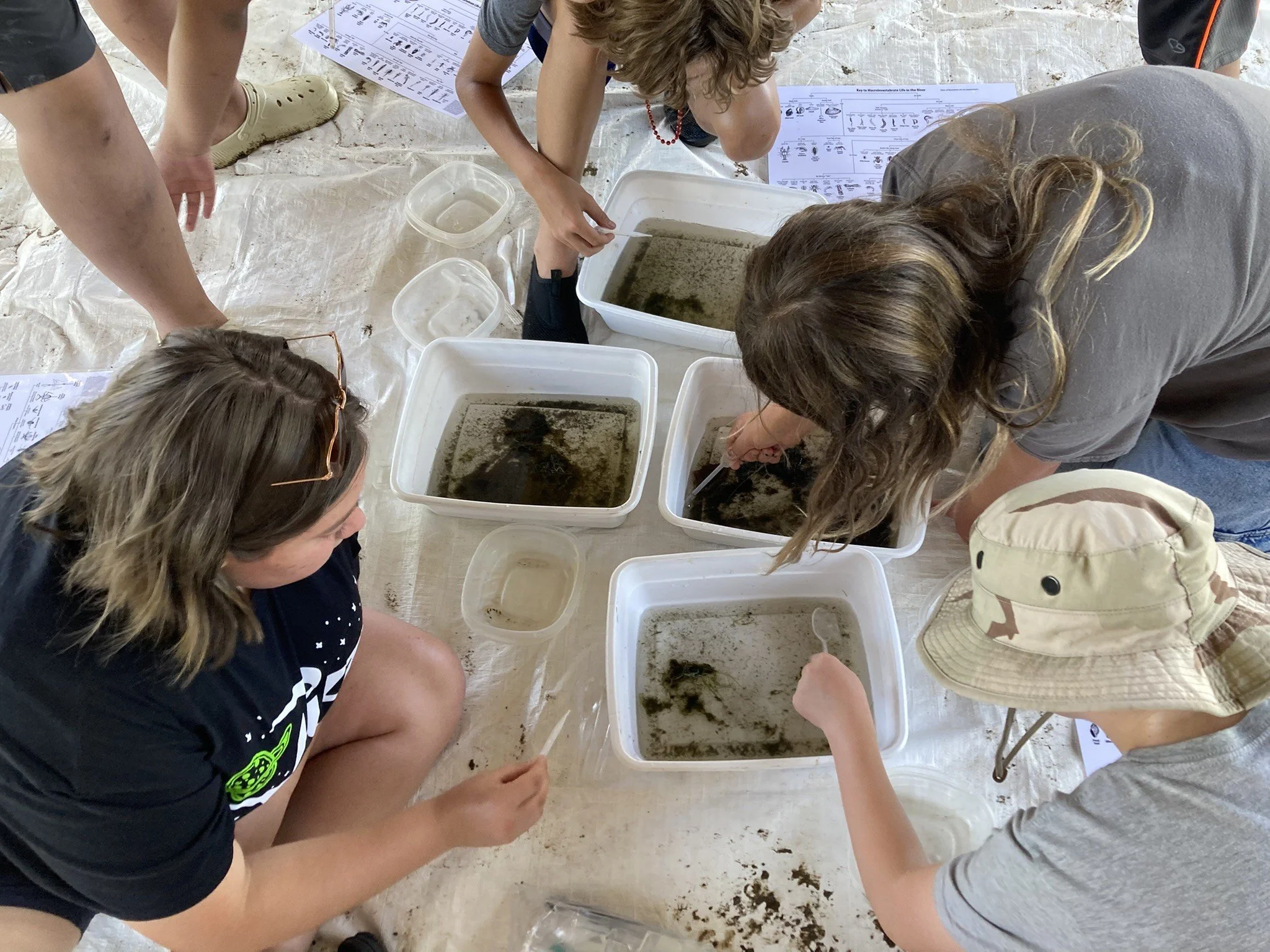
On March 5, we held our first school release of the year at Corn Lake in Grand Junction. Students from Independence Academy released 271 trout into their local pond. Members of the Grand Valley Anglers joined the event, bringing a hands-on macroinvertebrate kit that helped students explore the ecosystem their fish would be entering. While saying goodbye was difficult, it was also a rewarding and meaningful conclusion to their time with the trout.

Trout in the Classroom continues to expand across the state, with release events taking place from Denver to the San Luis Valley and west to Grand Junction. This growth is fueled by dedicated teachers, supportive Trout Unlimited chapters, and, most importantly, the students who become deeply connected to the experience. Throughout the school year, classrooms raise trout while collecting data, studying life cycles, and gaining a deeper understanding of aquatic ecosystems. Along the way, they create lasting memories that help shape how they see and care for the natural world. Keep Trout in the Classroom on your radar—you may soon find the next generation of conservation leaders making an impact in your own community.

The New Spring 2026 Issue of High Country Angler is Live!

The New Spring 2026 Issue of High Country Angler is Live!

Check out the Winter 2026 issue of High Country Angler e-zine, including these stories:

  • Landon Mayer with Still Water Seasons Greetings;

  • Brian LaRue with Cimmaron River;

  • Hayden Mellsop with A Great Day for the Birds;

  • Colorado TU Staff with Colorado’s Water Story Starts With Snow;

  • Other columns by Barbara Luneau, Timothy Gablehouse, Colorado TU Staff, and Joel Evans.

Colorado’s Water Story Is Taking Shape This Spring

Much of Colorado’s water starts as snow in the mountains.

Each winter, snow builds up at higher elevations and stays there until spring. As it melts, that water feeds rivers, refills reservoirs, and supports communities, agriculture, and recreation across the state. That cycle is what most of Colorado depends on year to year.

This year, there is a lot less snow to work with.

Statewide snowpack is sitting around 22 percent of average heading into the time of year when it usually peaks. Snow accumulated slowly through the winter, and recent warm temperatures have reduced what was already a limited snowpack. In some places, it has also peaked earlier than usual, which changes how that water moves through the system.

Snowpack isn’t just a winter metric. It’s the water supply for the months ahead.

As it melts, that water moves through entire watersheds, flowing into streams and rivers, recharging groundwater, and eventually reaching reservoirs and communities across Colorado. That same system supports drinking water, agriculture, local economies, ecosystems, and the ways people spend time on the water.

When there is less snow stored in the mountains, there is less water moving through that system. You don’t see that all at once. It plays out over time, affecting how much water runs off in the spring, how long flows hold into the summer, and how rivers look and feel later in the season.

This year is also about timing, not just total snowpack. Snow has started melting earlier and more quickly than usual. When that happens, runoff can move through the system faster, which can lead to a longer stretch of lower water later in the summer if conditions continue.

The data reflects that pattern. Snowpack is well below average across all basins in Colorado, with some areas at a fraction of what is typical for this point in the year. Drought conditions are also expanding across the state. All of this points to the same thing: less water moving through the system.

Spring weather will still play a role in how things develop. Additional precipitation and cooler temperatures can help, and conditions will vary depending on where you are. But the starting point going into runoff is lower than usual, and that shapes what comes next.

Snowpack, rivers, and water supply might feel like separate issues, but they’re all connected. What happens in the mountains carries through watersheds, into rivers, and across communities statewide.

That connection also shows up in how people experience rivers. Lower or shorter runoff can change the timing of boating, fishing, and other recreation. Conditions will vary from place to place, but they all tie back to the same source.

Colorado’s water story will continue to develop through the spring and into summer. We’ll keep sharing updates that help connect what’s happening in the mountains to what people are seeing across rivers and communities throughout the state.

Understanding how that system works is one of the most important steps in taking care of the places we all rely on.

In Memory of Cheyenne Gililland

We are heartbroken to share the news that Cheyenne Gililland, Colorado Trout Unlimited’s Philanthropy Director, passed away last week.

Cheyenne was a friend and a deeply valued part of this community. Her loss is devastating, and it is hard to put into words how much she meant to so many people across Colorado TU.

She cared deeply about conservation and was passionate about fundraising that helped support healthy rivers, clean water, and the people and communities connected to them. She believed in the mission, in the people behind it, and in the importance of bringing others into that work in meaningful ways. She built real relationships across our community and brought so much care, warmth, and dedication to everything she did.

In her role, Cheyenne helped build the relationships that sustain this work, connecting donors, partners, chapter leaders, and supporters to the care and recovery of Colorado’s rivers and streams. She had a genuine gift for making people feel welcome, valued, and part of this community.
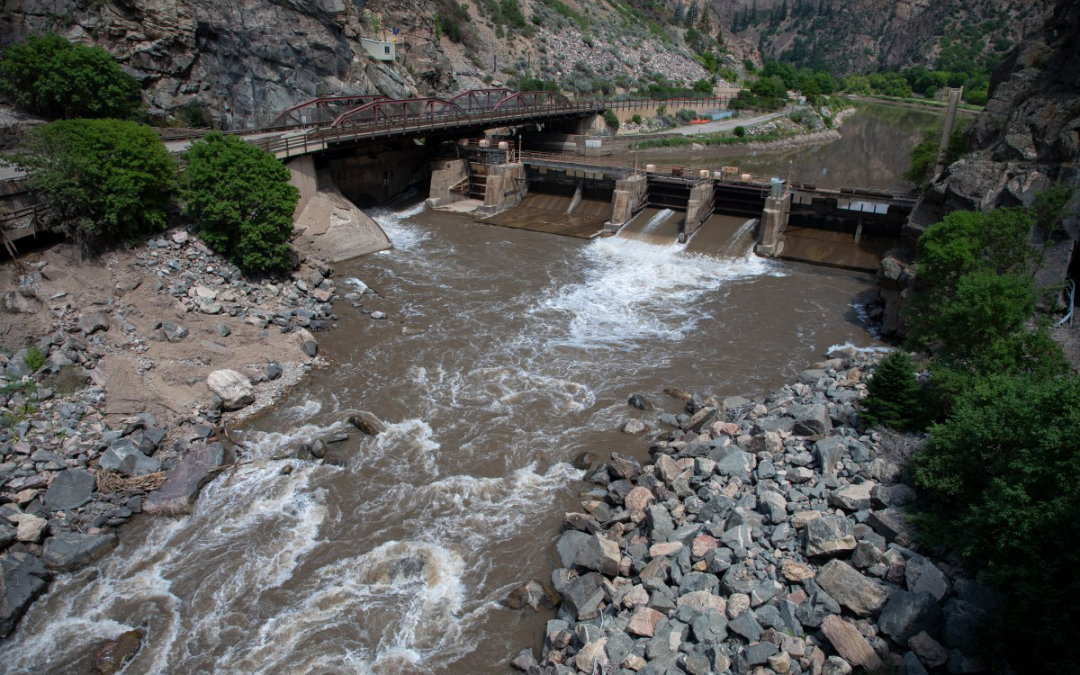
Cheyenne also had an infectious personality and a presence that lit up the room. She brought joy, humor, and heart to the people around her, and she made this community better simply by being part of it.

Our thoughts are with Cheyenne’s family, friends, and everyone who had the privilege of knowing her. She will be deeply missed.