Near Telluride, a major river restoration effort is bringing new life to the San Miguel River corridor, showing how clean water, healthy forests, local leadership, and strong partnerships all connect.
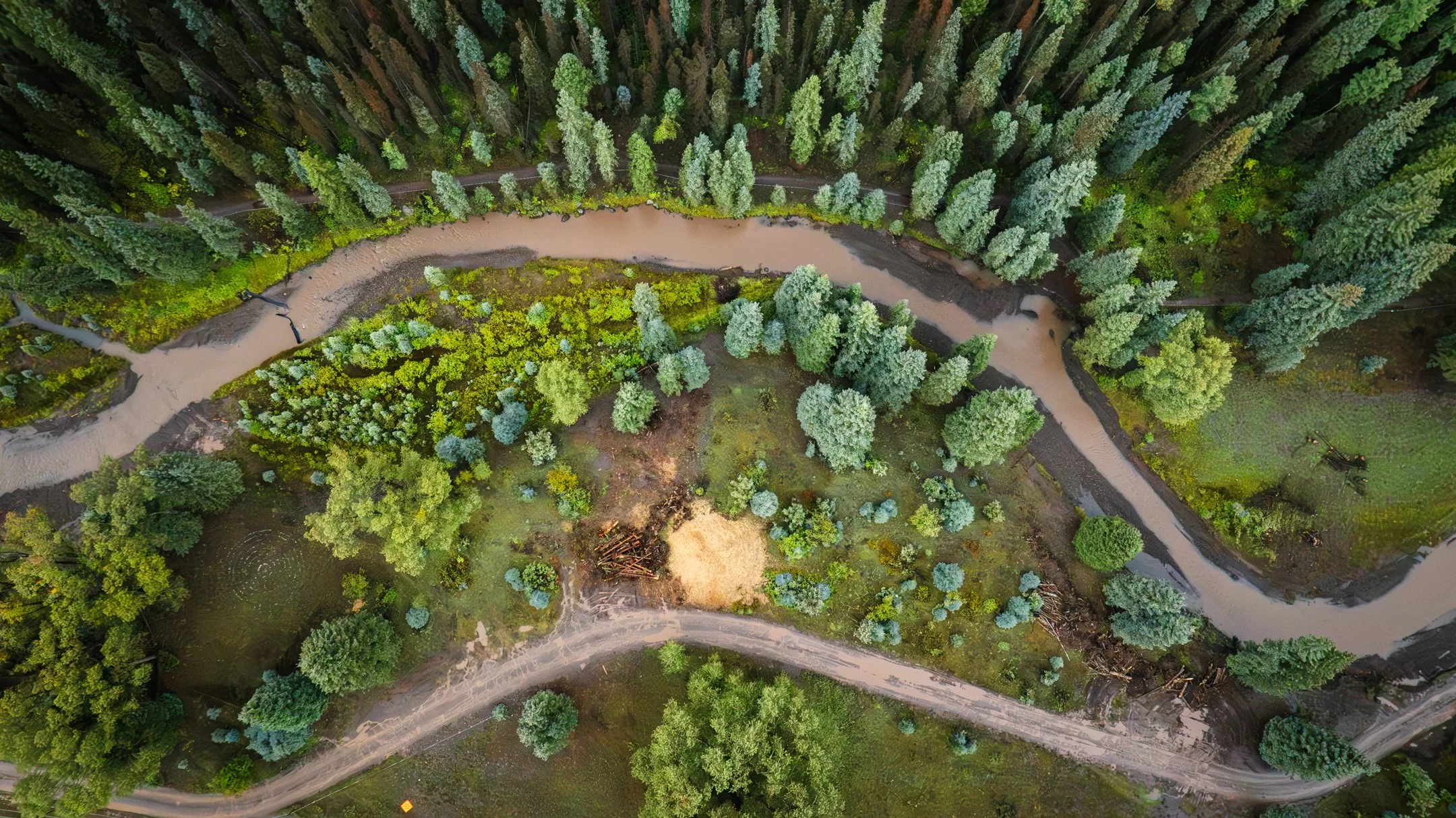
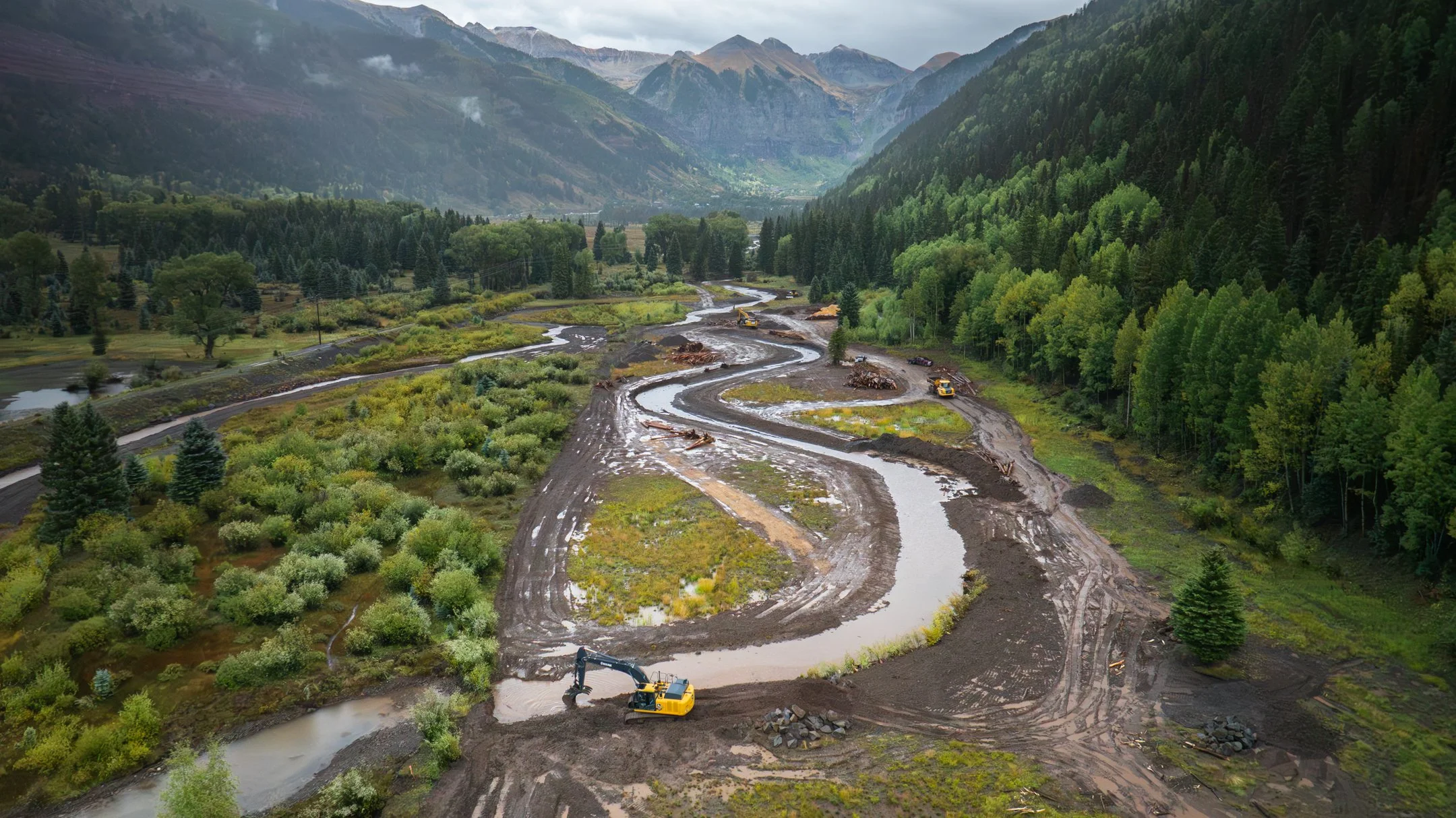
The Telluride Valley Floor project is revitalizing a 23-acre project area along the San Miguel River downstream of the Valley Floor open space. Led through a partnership between Trout Unlimited, the U.S. Forest Service, the Town of Telluride, and other partners, the project builds on years of work to restore a river corridor shaped by historic mining impacts, channel changes, and a lack of natural habitat complexity.
For Colorado Trout Unlimited and our local Gunnison Gorge Anglers chapter, this project is also a reminder of what local conservation can make possible. Local chapters are often the force that helps important river projects move from idea to impact. On the San Miguel River, Gunnison Gorge Anglers has helped champion this work alongside partner Telluride Outside, supporting a project that benefits the river, the surrounding landscape, and the broader Telluride community.
From mine reclamation to river restoration
The foundation for this work began with major mine reclamation. Between 2020 and 2022, the Environmental Protection Agency removed approximately 60,000 cubic yards of mine tailings contaminated with arsenic and lead from the site. That cleanup created the opportunity for the next phase: restoring the San Miguel River itself.
In 2024, Trout Unlimited and the U.S. Forest Service also reconstructed Boomerang Bridge, reducing constriction on the river and tripling the bridge’s capacity to handle high flows. That improvement helps the river move more naturally through the corridor while better protecting local access and infrastructure.
Together, these efforts are helping shift the Valley Floor from a legacy impact site toward a healthier, more resilient river landscape.
Restoring wood, water, and wildlife habitat
A key part of the restoration is bringing natural wood back into the river and floodplain.
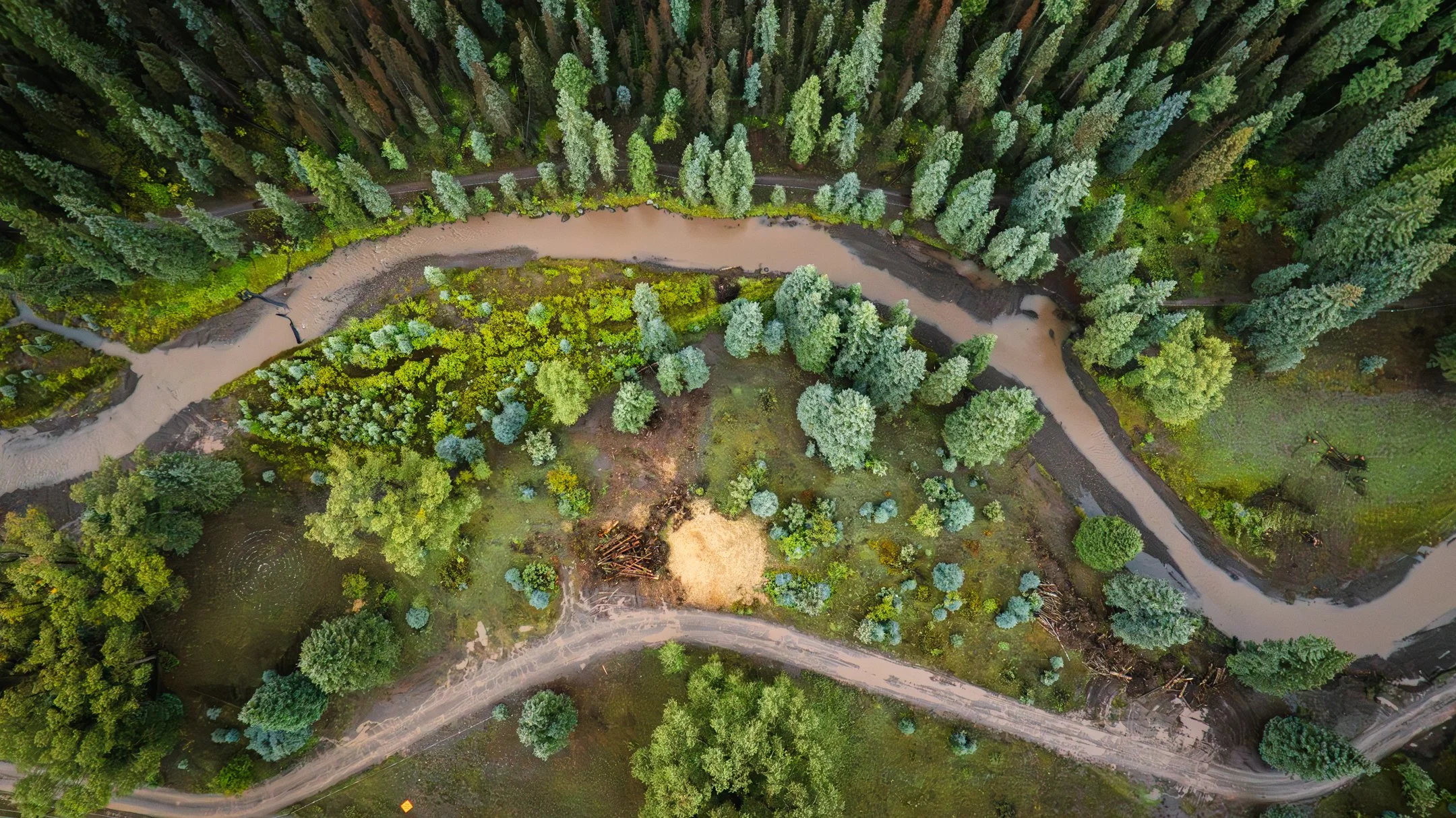
Nearly 2,000 logs, sourced from forest health and fuels reduction work on adjacent mountain slopes, were hauled to the site by helicopter over a field season. Those logs are being used for bank stabilization, in-stream habitat, and floodplain roughness, helping rebuild the kind of structure that a healthy river system needs.
In a natural stream, wood slows water, creates pools and riffles, improves cover for fish and wildlife, reconnects floodplains, and helps a river hold onto moisture. In the San Miguel corridor, those improvements will help create more complex habitat and a more resilient stream channel.
The project also connects river restoration with forest health. The logs come from thinning work that reduces wildfire risk by clearing diseased and overcrowded forest stands, improving forest conditions, and creating defensible space around the community. That same work helps protect long-term water quality by reducing the risk of severe wildfire impacts to the watershed and nearby infrastructure.
Native plants and the return of beavers
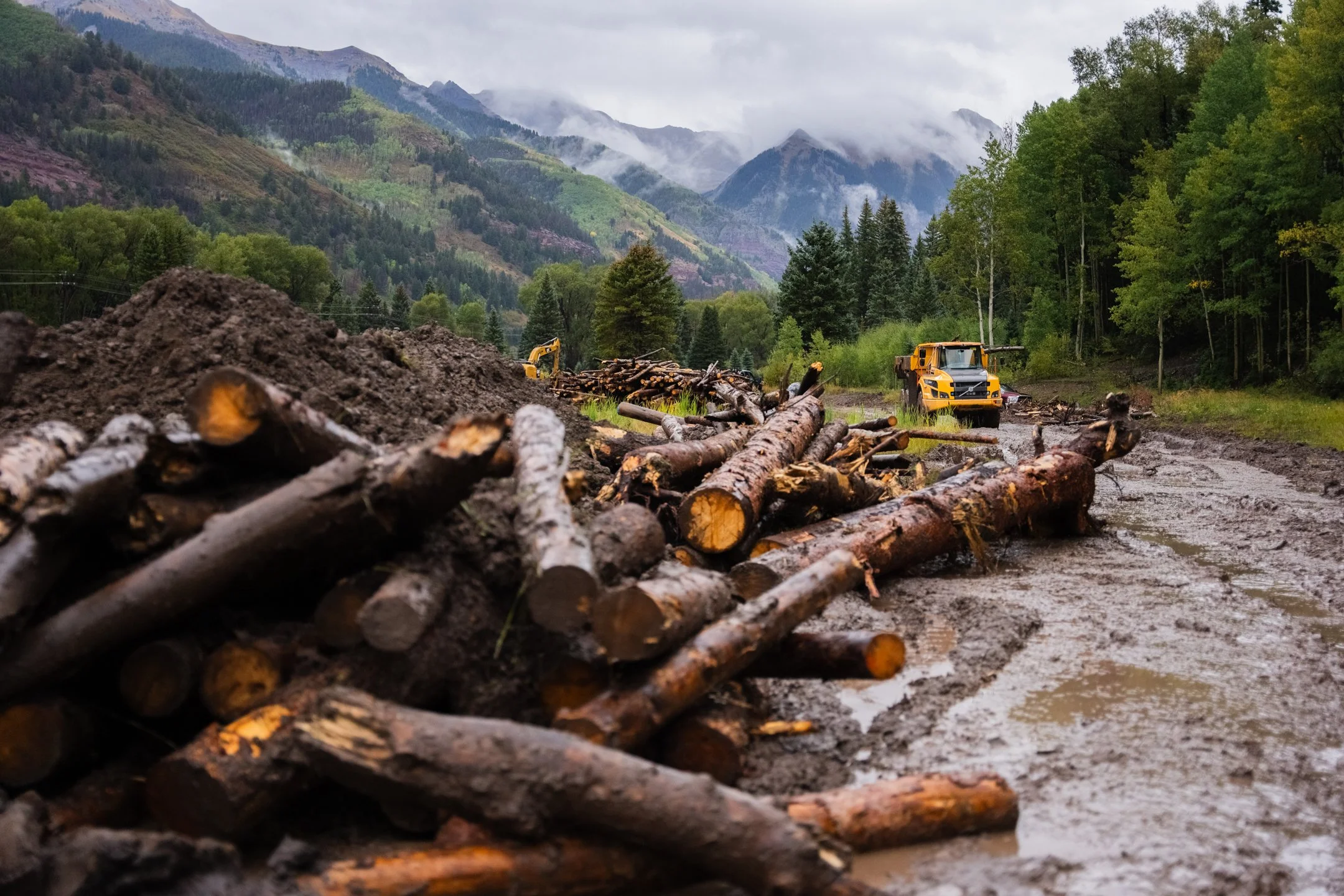
Restoration does not end with the stream channel. More than 41,000 native plants will also be installed throughout the project area. Thousands of those plants were grown from seed collected on National Forest System lands, then sown by local and regional nurseries and planted by local contractors and volunteers.
Those plantings will help stabilize the corridor, improve riparian habitat, and support the long-term recovery of the river’s natural processes. They will also help encourage beavers to recolonize a reach that currently lacks enough vegetation to support them.
Beavers are a keystone species because their dams and ponds can improve water storage, create wetlands, reconnect floodplains, and provide habitat for fish, birds, amphibians, and other wildlife. Encouraging their return is one more way this project is helping rebuild a healthier, more self-sustaining river corridor.
A stronger San Miguel River
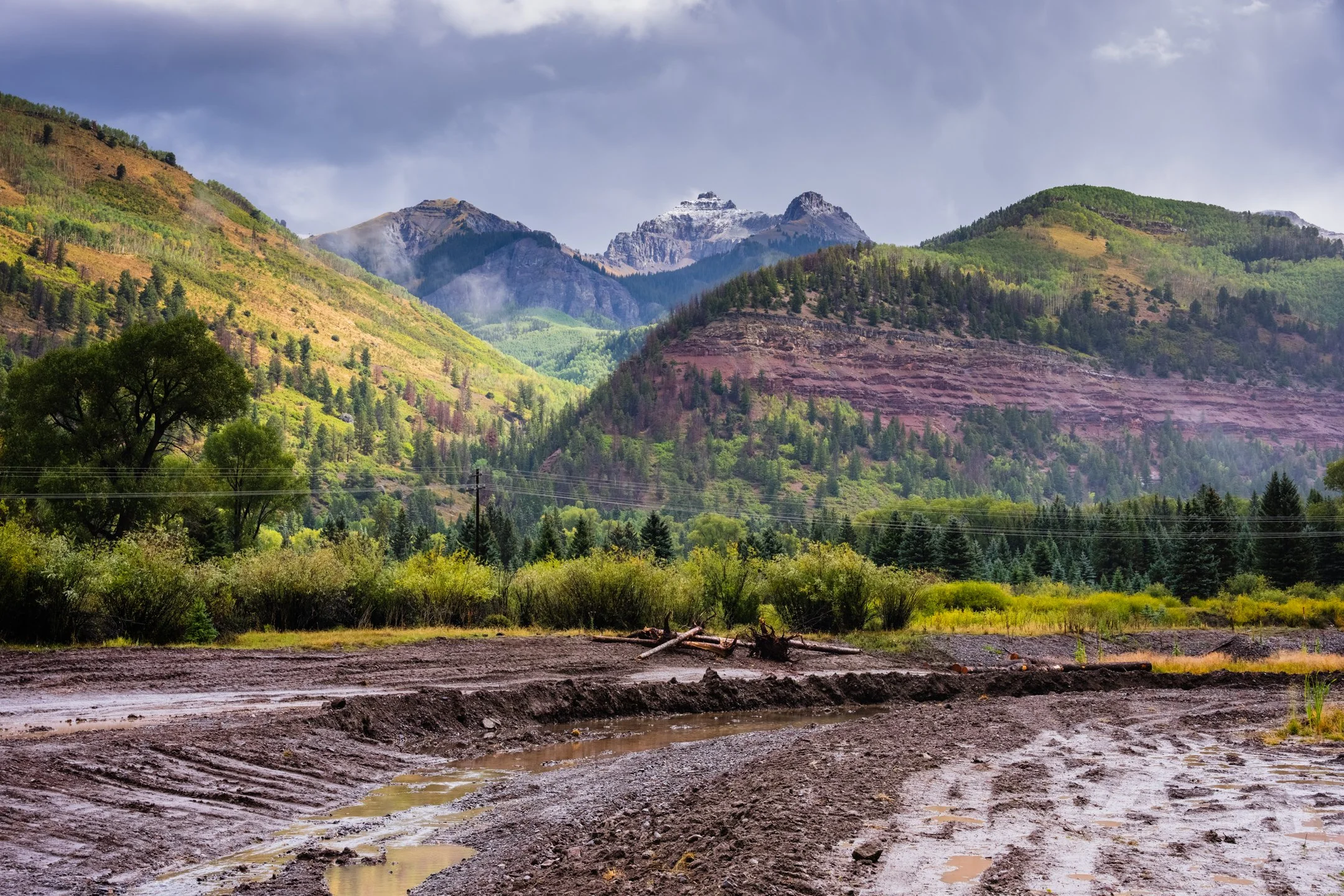
When complete in October 2026, the Telluride Valley Floor project will create 1,320 linear feet of new meandering river channel downstream of the Valley Floor open space. The restored corridor will improve habitat, support cleaner water, help protect critical infrastructure from wildfire risk, and create a more resilient San Miguel River for the community and wildlife that depend on it.
The project area is accessible from Boomerang Road and by trails from the Town of Telluride, giving the community a direct connection to the restoration taking place in its backyard.
This is connected conservation in action: healthier forests, safer communities, stronger river habitat, cleaner water, and a more resilient future for the San Miguel River.
Colorado TU is grateful to Gunnison Gorge Anglers, Telluride Outside, the U.S. Forest Service, the Town of Telluride, the Town of Mountain Village, the Environmental Protection Agency, local contractors, volunteers, and all partners helping bring this work to life.
Photos by Kellon Spencer.