Coming Soon: A Home for Greenbacks in the Poudre Headwaters

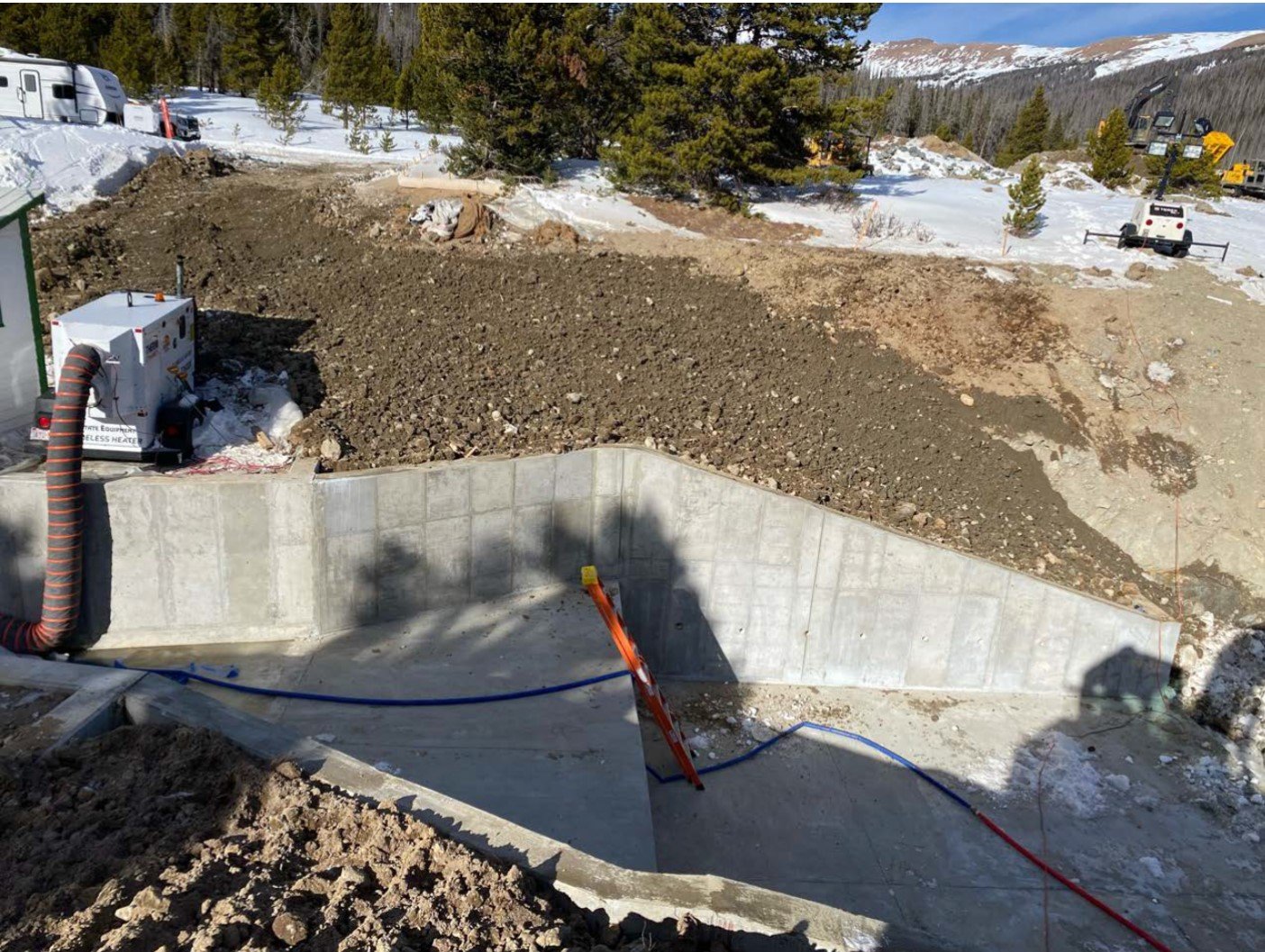
This first major construction work for the Poudre Headwaters Restoration Project was largely completed just before the end of 2021. Contractor L4 Construction installed a fish barrier at the terminus of the Grand Ditch by La Poudre Pass. The barrier will isolate the planned Greenback cutthroat trout recovery area in upper La Poudre Pass Creek and Long Draw Reservoir from western slope waters intercepted by the Grand Ditch.

The Poudre Headwaters Restoration Project is an ambitious multi-year effort to create a stronghold for Greenback cutthroat trout in the headwaters of the Cache la Poudre River on the Arapaho-Roosevelt National Forests and Rocky Mountain National Park. The project includes establishing permanent barriers to safeguard the native trout recovery waters from invasion by non-native species, as well as temporary barriers to help break up the nearly 40-mile total project into smaller manageable pieces for reclamation and reintroduction of greenbacks. With completion of the Grand Ditch barrier, the first phases of fish reclamation to remove existing non-native fish can proceed in 2022-23 in collaboration with Colorado Parks and Wildlife, and then stocking of Greenback cutthroat trout can proceed in a first section of recovery habitat that will include Long Draw Reservoir and Neota Creek.

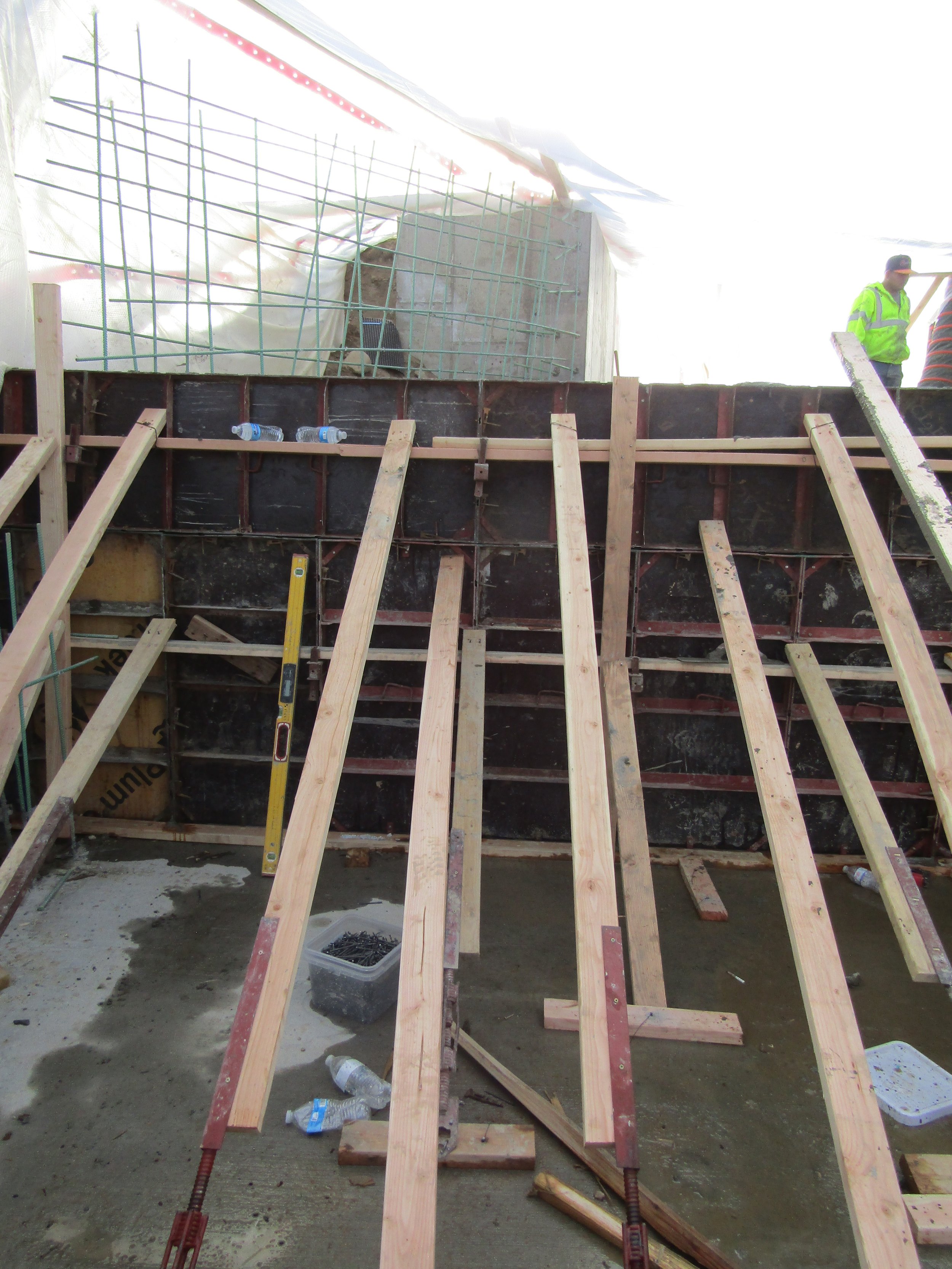
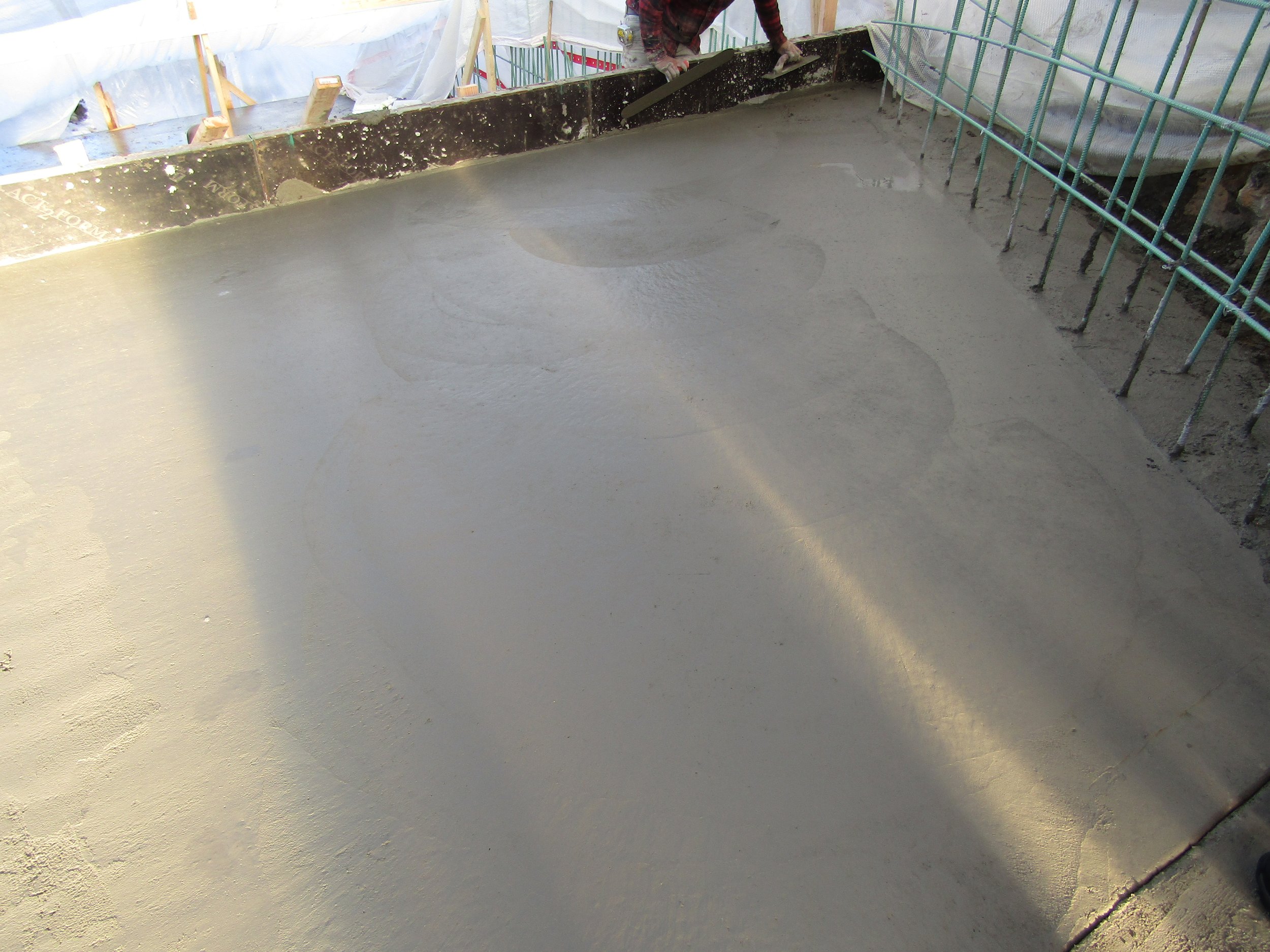
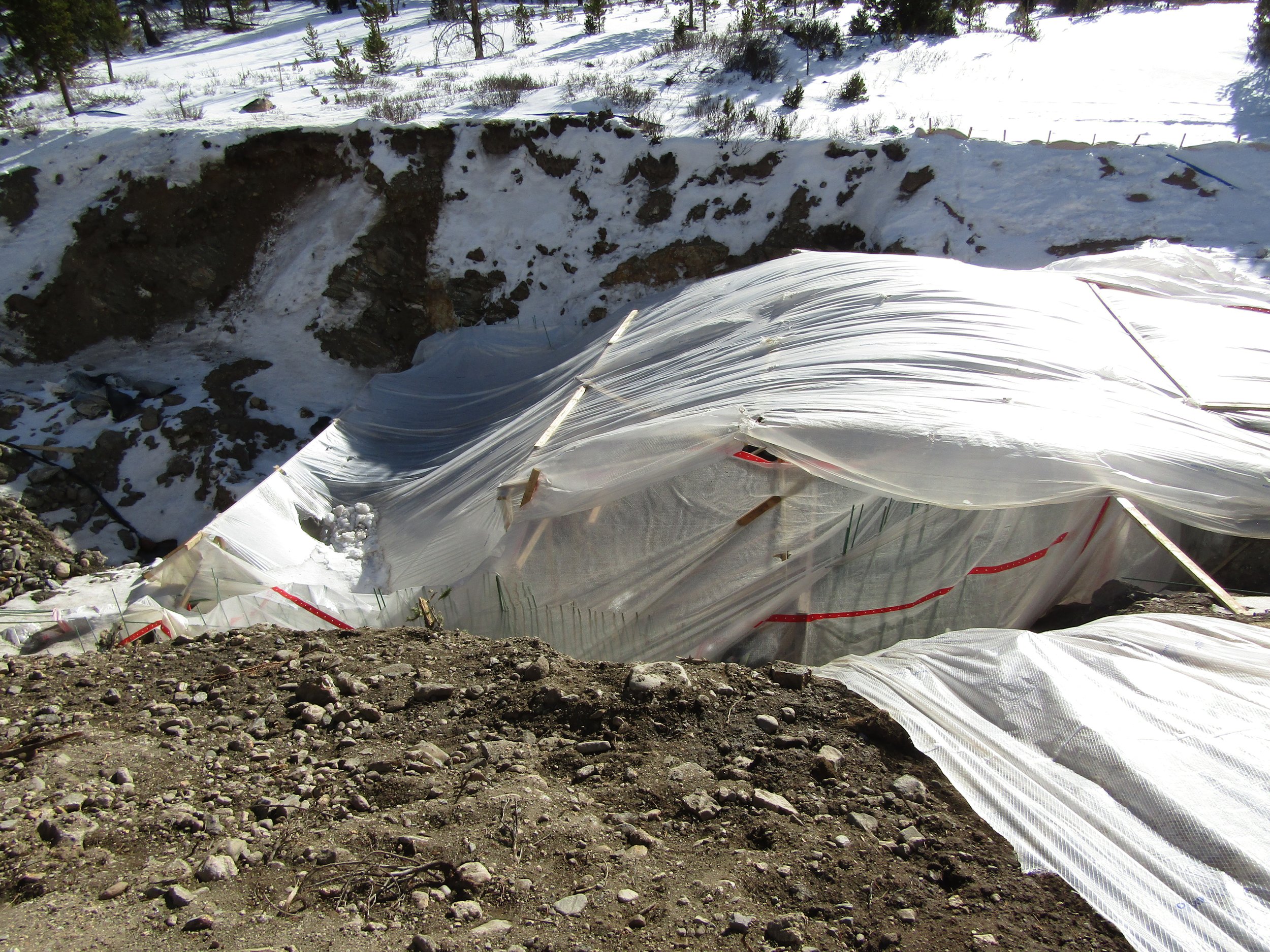
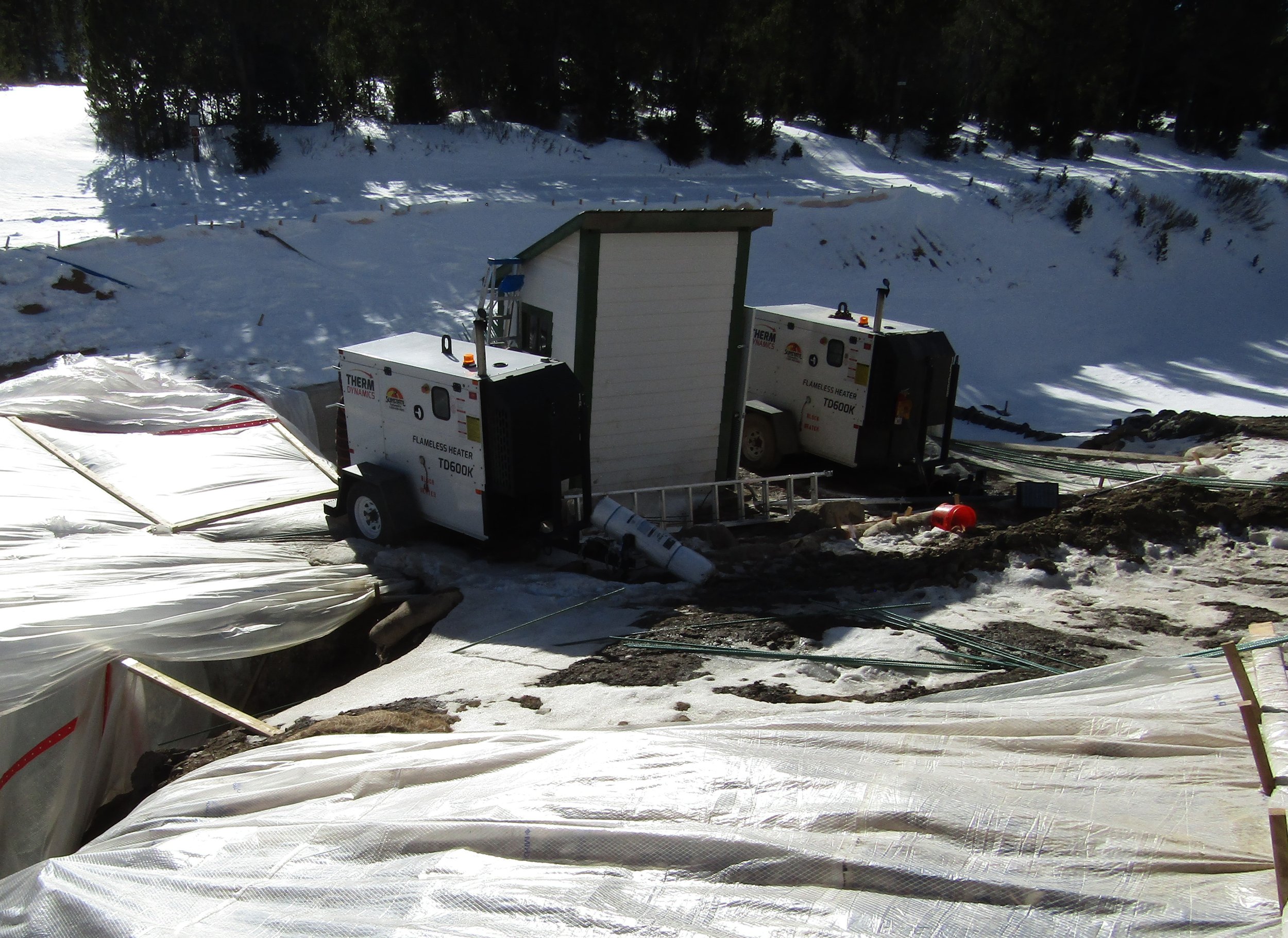
Installation of the Grand Ditch barrier created some real challenges as winter weather began to set in at the project site over 10,000 feet in elevation. L4 crews had excavated the area for the barrier installation to specifications from US Forest Service engineers who designed the barrier. Pouring the concrete for the barrier - in a series of three different pours for different portions of the structure - required both keeping the work area dry by blocking inflow above the site and pumping water, and maintaining temperatures for the concrete to cure properly by building a large tent over the site and using large heating units to blow warm air into the tent. Plowing snow to keep road access to the site safe for work crews and trucks delivering the concrete was another challenge.

Work on the concrete barrier was ultimately completed in the final week of December. Additional channel work is planned in 2022, and efforts will also begin on other aspects of the larger Poudre Headwaters Restoration Project. In addition to the Forest Service, Rocky Mountain National Park, and L4, key partners and funders for the barrier installation included Water Supply and Storage Company’s Long Draw Reservoir Mitigation Trust (providing mitigation funding for impacts of their reservoir), the Colorado Water Conservation Board, and the Bass Pro Shops and Cabela’s Outdoor Fund. Partners in the broader project also include Colorado Parks and Wildlife and the US Fish and Wildlife Service. Colorado TU is grateful to all of those who are making this ambitious native trout recovery program possible.

Images below show the tented area and construction process, culminating in backfill material placed behind one of the wing walls for the new fish barrier.
Farewells to TU stalwarts

As 2021 wound to its close, Colorado TU lost two committed long-time volunteer leaders, both recipients of the prestigious Silver Trout award. In December, Michael McGoldrick and John Trammell passed away - but both left important conservation legacies.

Michael McGoldrick first engaged with Trout Unlimited in the midwest near his then-home in Chicago, but once settled in Colorado he stepped up and served as Colorado TU’s treasurer for multiple terms including at a critical juncture - through the market crash and recession of 2008. Michael’s background in finance equipped him well to provide leadership, and having earlier in his career seen financial debates distract other nonprofits from their core mission, he worked hard to ensure that CTU’s finances were stable and not a source of disruption from the organization’s mission. His wise and thoughtful financial stewardship ensured that CTU did not see its assets undermined by the market crash of 2008.

Michael had diverse charitable interests from the arts to conservation, and his most lasting legacy with Colorado TU was in creating a stronger culture of philanthropy. With his encouragement, the annual auction was upgraded into a Gala with a greater emphasis on charitable support, sponsorships, and celebration of leaders in river conservation.

Michael was also a founder of CTU’s charitable donor society for those giving $1000 or more, the River Stewardship Council. From its humble beginning with Michael’s initial contribution, the River Stewardship Council has grown into a key sustaining funding source for trout conservation work in Colorado. Michael encouraged the RSC program to offer opportunities for donors to connect and engage, building a deeper connection with the work they supported through activities such as tours and fishing trips to experience waters benefiting from CTU’s work. He was a regular participant in RSC activities, and from his contribution as the first RSC donor through all of the years following, he remained a committed donor and conservationist.

Michael’s kindness and good spirits made him a well-loved presence through all of the many TU programs in which he took part. As his long-time partner Terry Galpin-Plattner said, he lived a life that was lively, loving, and curmudgeonly.

Michael McGoldrick - photo courtesy of Terry Galpin-Plattner.

************************

Over three decades, John Trammell provided volunteer leadership at all levels of the Trout Unlimited organization - from his local Grand Valley Anglers chapter to the National Resource Board providing the grassroots voice on TU’s national conservation agenda.

John’s professional background was as a geologist, and he brought a science-based approach to his efforts as a conservation volunteer and advocate. A prime example was the stream characterization study he conducted with his friend and colleague Dan Powell on West Creek in Unaweep Canyon – a highly detailed assessment that proved invaluable baseline data when a truck spill led to a fish kill in the creek some years later. His scientific knowledge and approach similarly helped inform a wide range of TU advocacy efforts.

John had a special passion for native trout. As an angler, he set out to catch all of the west’s native trout subspecies and add them to his ‘lifetime list’. As a volunteer, he worked tirelessly on projects to help restore Colorado River cutthroat trout in nearby home waters on the Grand Mesa and the Roan Plateau. From fencing and riparian planting projects along Trapper Creek to installing Whitlock-Vibert boxes in a converted refrigerator to jump-start cutthroat populations on the Grand Mesa, he brought commitment and creativity to native trout recovery.

In all that he did as a conservation leader, John worked with good humor and a kind spirit that earned the confidence and affection of all those who were fortunate enough to cross his path. He will be deeply missed, but his legacy lives on in the memory of those he helped inspire – including his daughter, native fish biologist Melissa Trammell – and in the home waters where his efforts helped secure native trout for future generations.

You can see some reflections on John’s involvement with TU native trout conservation in the short film Decades (available here) issued on Colorado TU’s 50th anniversary.  The segment featuring John and Melissa begins at 6:30.

John Trammell with a greenback cutthroat trout from spawn-taking at Zimmerman Lake.

One Step Forward in Protecting the Denver South Platte

Local residents and advocates for the Denver South Platte received an early holiday gift last week, as the Colorado Water Quality Control Commission agreed to set a hearing in September 2022 to reconsider its 2020 decision rejecting a strengthening of water quality protections for the improving Denver South Platte and lower Clear Creek. A coalition of groups from Green Latinos to Denver Trout Unlimited to Conservation Colorado joined in requesting the re-hearing of this issue; their petition was approved by the Commission last week. (You can read more coverage with the Colorado Sun here.)

Many of the community and conservation partners who petitioned for this rulemaking also took part in an earlier statewide rulemaking, where they defeated a broader proposal to weaken “antidegradation” protections for a range of Colorado waterways. While the Commission rejected the rollback proposed earlier this year, they did not at that time agree to revisit the standards applying to the Denver South Platte and Lower Clear Creek - even though the level of protection on those reaches was inconsistent with the Commission’s statewide policies.

The issue arose in 2020 when the Commission rejected antidegradation protections for the reaches, despite them qualifying under the statewide rules and being recommended by staff. Community members and allies were particularly upset by the Commission’s rationale which said such water quality protection was appropriate for “pristine mountain waters” – raising significant pushback from urban river advocates and local communities on environmental justice grounds.

“So much work has gone into improving the Denver South Platte – with even more to come – and it makes no sense to allow weakened water quality protections to jeopardize all that progress,” said Sam Agnew, President of Trout Unlimited’s Denver Chapter. “We’re grateful that the Commission recognized the need to take a fresh look at this issue and hope the new rulemaking will give the river the stronger protections it deserves. Denver TU will stay vigilant in monitoring this issue in 2022 and any other plans that arise that could possibly negatively impact our home water.”

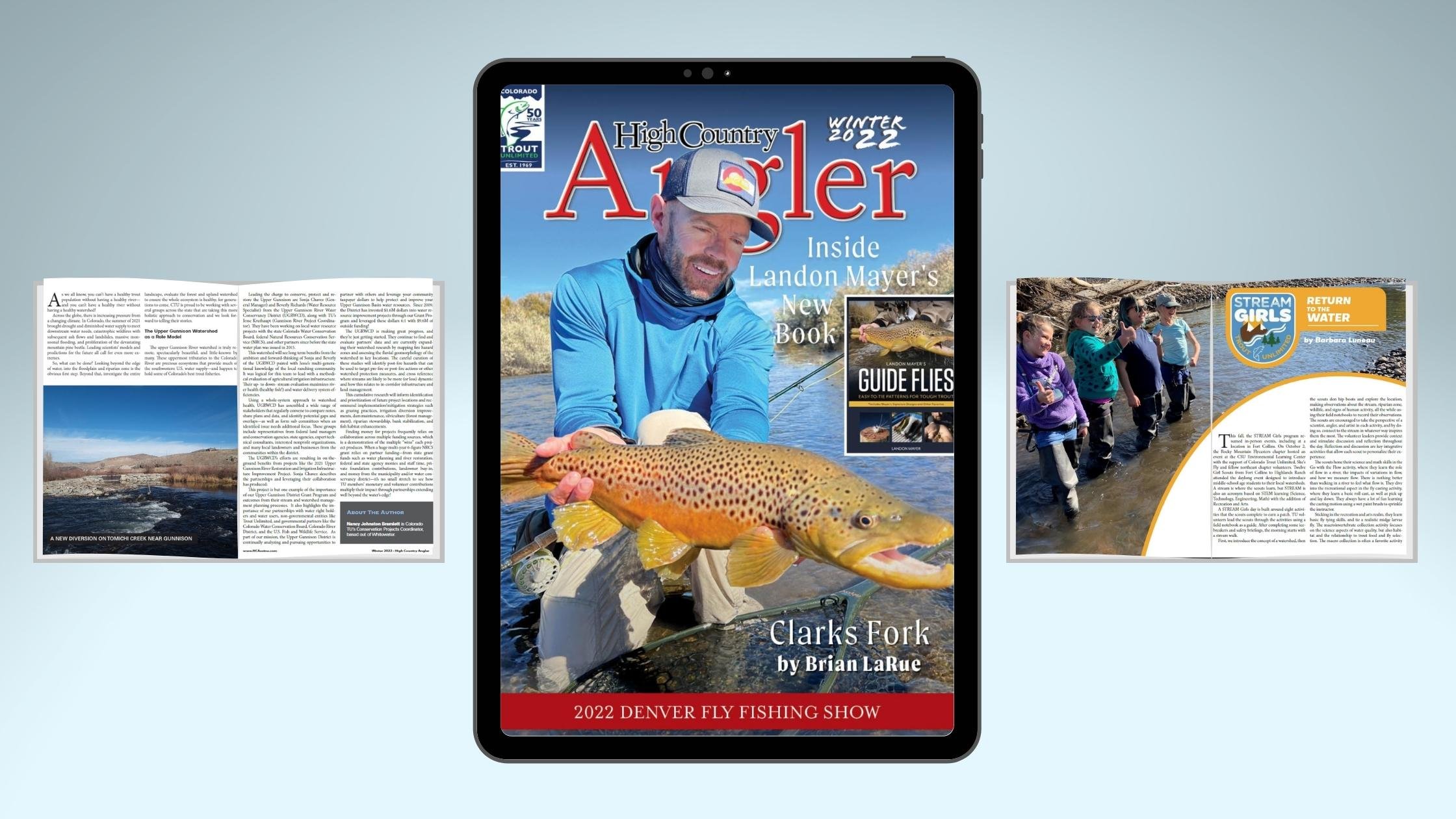
The new Winter 2022 issue of High Country Angler is live!

Check out the new Winter 2022 issue of High Country Angler e-zine! Featuring these stories:

  • DENVER FLY FISHING SHOW BY BENNETT J. MINTZ

  • Q&A WITH LANDON MAYER BY THE ARTICULATE FLY

  • CLARKS FORK OF THE YELLOWSTONE BY BRIAN LARUE

  • OF ELK, ICE, AND ANGLING BY HAYDEN MELLSOP

  • TROUT HEALTH BEYOND THE WATER’S EDGE BY NANCY JOHNSTON BRAMLETT

  • WINTER FLY FISHING HOT SPOTS BY PETER STITCHER

  • STREAM GIRLS RETURN TO THE WATER BY BARBARA LUNEAU

  • FIT TO BE TIED BY JOEL EVANS

  • A CONVERSATION WITH EMMA BROWN BY HCA

  • THE LAST CAST BY JOHN NICKUM

December Currents: A voice for Colorado's Rivers!

Check your inboxes! This month’s Currents newsletter includes stories such as:

  • Thank you for your support during Colorado Gives Day!

  • RareWaters Membership Gives Back

  • Cabin Creek Aquatic Organism Passage Project

  • Get Hooked on Winter Fishing in Colorado

  • Improving the Canyon Creek Fish Passage

Infrastructure bill a win for Colorado land, water

Repost from the Daily Sentinel

By MATT MOSKAL

Last month the American people and Colorado sportswomen and men got a big and long-awaited win with the signing of the Infrastructure Investment and Jobs Act. This truly bipartisan infrastructure legislation makes major investments in helping the nation and our state create high-paying jobs, invest in our rural communities and address the impacts of drought on our coldwater fisheries.

Thanks to the critical leadership of Senators Michael Bennet and John Hickenlooper, we have the single largest investment in our nation’s physical infrastructure and waterways in more than a generation.

In a big state like Colorado, it is easy to see just how desperate the need is for strong investments in our infrastructure. Colorado anglers, thank Senators Bennet and Hickenlooper for their foresight and initiative in getting this legislation across the finish line.

Bill will benefit fish habitat

Colorado Trout Unlimited lauds provisions of this legislation that will deliver major benefits for coldwater fish and their habitats, including abandoned mine restoration, removal and rehabilitation of obsolete dams, forest and watershed restoration, replacement of old culverts and fish passage barriers and increased efficiency of water management and transport systems.

It reflects the understanding that our rivers and streams are as much a fundamental part of the nation’s infrastructure as bridges and dams.

The infrastructure bill also comes with commonsense solutions for climate and drought impacts to our fish and wildlife. For instance, it funds the Legacy Roads and Trails program. This program provides millions in dedicated funding for repairing, upgrading and sometimes removing 375,000 miles of roads, 12,000 bridges and 143,000 miles of trails managed by the U.S. Forest Service, in the service of reducing sediment or fish barriers in our public waters.

This is a high priority for us due to the widespread adverse impacts of poorly maintained roads and trails on wild and native trout streams. By reducing habitat fragmentation, investments through this program will also make fishery habitat more resilient in the face of climate challenges.

Improving water security

The agreement recognizes the critical role of our water infrastructure and watershed health in improving water security as climate change makes conditions hotter and drier. It invests $400 million in the WaterSMART program, $100 million of which is dedicated for watershed restoration projects, and dedicates another $250 million for aquatic ecosystem restoration and protection projects.

Another $100 million supports local action through funding watershed groups’ planning and project development, to help ensure the infrastructure bill’s funding makes possible the best multi-benefit projects for improving watershed health, fish and wildlife habitat, and clean drinking water for Coloradans for generations to come.

Reducing wildfire risk

The deal also helps reduce wildfire risk in Colorado by investing in risk reduction and ecosystem restoration. It includes $3.37 billion for projects that reduce wildfire risks on U.S. Forest Service lands, with $100 million of that funding allocated for collaborative, science-based ecosystem restoration projects.

Another $2.13 billion is dedicated to ecosystem restoration, with $80 million specifically for a collaborative, aquatic-focused, landscape-scale Aquatic Restoration Program to restore fish passage or improve water quality on federal and non-federal land through voluntary, cooperative agreements.

These provisions will help Colorado mitigate the risk of catastrophic wildfires while also ensuring that our valuable coldwater fisheries can prepare for, withstand, and recover from fires.

The far-reaching provisions of the infrastructure bill help protect Colorado’s water resources in the face of hotter summers and drier winters. And, it will help secure the fishing and outdoor heritage of many working-class Colorado families.

Thanks to bipartisan leadership from pragmatic House and Senate members including Senators Bennet and Hickenlooper, we have an actual governing win for the American people.

Matt Moskal is the President of Colorado Trout Unlimited and is based in Denver. Colorado Trout Unlimited is a member of the Water for Colorado Coalition.

Colorado River District Celebrating Partnerships & Innovation

Ballot Measure 7A passed with bi-partisan support in November 2020, and the Community Funding Partnership began. It was great to see voters joining together to support our Western Slope waters and the River District’s vital role in sustaining them. And Trout Unlimited is proud to have been a part of those efforts in building common ground around healthy and productive rivers and watersheds across western Colorado.

Now with $4.2 million in grant money available for Western Slope water projects every year, the Colorado River District has worked hard to identify multi-benefit projects, streamline the application process, and get your tax dollars right back to work in the community. Over $3 million has already been awarded this year to 23 diverse projects! Learn more about the Community Funding Partnership and awarded projects here.

The video above previews a few of the outstanding projects which have been awarded grant funding through the Community Funding Partnership. Stay tuned for more videos in the year to come as the Community Funding Partnership shares project stories that showcase Colorado's beautiful West Slope.

November Currents: New look, still great content!

We have a new look coming to your inbox! This month’s Currents newsletter includes stories such as:

  • Reconnecting the Colorado River

  • Your voice matters for Colorado's rivers - DEADLINE IS NOVEMBER 15, 2021

  • A work of art for river conservation

  • 5 streamer fishing myths

  • COLORADO GIVES

  • And upcoming events across the state!

Not enough water to go around: the Colorado River Basin

This is a repost from the CBS News 60 minutes segment all about the Colorado River. The Colorado River has been hitting record low volume as seven states and 30 Native American tribes lying in the Colorado River Basin prepare to make hard choices as water levels plummet due to a 22-year drought. Bill Whitaker reports. Check out the full video segment below.

This is why it's so important to be involved in Colorado's Water Plan, as the Basin Implementation Plans are being updated and we need YOUR input right now thru Nov. 15. It’s time to make your voice heard: What do you think needs to happen in your local watershed for the health of your local rivers, the environment, and water supply?

TAKE ACTION

Reconnecting the Colorado River

Repost from TU.org by Kara Armano

What is so important about a connected river? Well, to trout, there is an obvious answer: connectivity gives them the ability to survive when adversity strikes. To anglers, there is also an obvious answer: a healthy fishery translates into a better experience on the water. But there is much more to a connected river, and the Colorado River, near its headwaters, is just about to be reconnected. It’s been a long time in the making.  

The Colorado River Connectivity Channel is an effort by Trout Unlimited and many other partners to reconnect a mile of the river near its headwaters. Also known as the Windy Gap Bypass Project, TU and partners aim to improve this section of river near Granby, Colo., for the benefit of trout and aquatic insects, the community and its recreation-based economy. Anglers, will also enjoy the fruits of the project, and the river will be more resilient to the impacts of climate change and wildfires along the way.  

The Windy Gap Reservoir blocks the movement of fish and other aquatic organisms and degrades the downstream habitat. The health of the river below this reservoir has declined continuously since it was built in the mid-1980s, with documented losses of 38 percent of macroinvertebrate diversity — including the complete loss of giant stoneflies, the loss of native sculpin populations and the decline of trout biomass in this state-designated Gold Medal trout fishery.  

The upper Colorado River flows into Windy Gap Reservoir inhibiting a healthy ecosystem and a strong fishery, but the Colorado River Connectivity Channel will repair that and reconnect the river for a multitude of benefits.

Owned and operated by Northern Water, the Windy Gap reservoir collects water high in the Colorado River drainage and delivers it across the Continental Divide to provide water for more than half a million customers on Colorado’s northern Front Range. With partners across the divide and years of working to find solutions to the many problems with this system, conservation groups, local governments and local businesses among many others, took the challenges to heart to realize how this channel project will benefit many.  

The goal of the CRCC is to establish a natural river channel around Windy Gap reservoir to reconnect the river and eliminate the reservoir’s negative impacts. The channel is the lynchpin connecting multiple restoration efforts including removal of fish barriers, $6 million worth of channel improvements upstream of the reservoir and floodplain reconnection projects downstream, and a series of projects designed to restore both irrigation and aquatic habitats in the town of Kremmling. These projects are expected to benefit over 30 miles of Colorado River, and they couldn’t be realized without many partners, including agricultural producers as well as the efforts of Grand County’s Learning By Doing.  

Over $26 million has been committed to the project from various sources, including Northern Water, the Colorado Water Conservation Board, the Natural Resources Conservation Service, Grand County, the Colorado River Water Conservation District, GOCO, National Fish & Wildlife Foundation, Gates Family Foundation, Colorado River Alliance, and corporate and private donors. Trout Unlimited and its partners are working hard to raise the additional funds and expect to see construction starting soon and last through summer of 2023.  

When complete, the project is expected to restore lost and declining aquatic species and improve the river’s resiliency in the face of increasing water diversions and climate change. The channel will be open to the public, providing over a mile of Gold Medal trout quality waters for public fishing, providing significant economic benefits to the small Grand County communities that rely on recreation.  

We’ll be sharing photos and information along the progress of this massive undertaking, so be sure to follow along for updates on the project.