Colorado’s rivers support our communities, our ecosystems, and the ways people connect with water across the state. Every river needs people willing to pay attention to what’s happening upstream and why it matters, especially in low snow years.
This winter, Colorado has seen unusually low snowpack. According to data from the Natural Resources Conservation Service, statewide snowpack is currently about 58 percent of median levels. Conditions vary across the state, but overall snow accumulation is well below what is typical for this time of year. These conditions raise important questions about what this year may mean for rivers, watersheds, communities, ecosystems, and recreation as the season unfolds.
Snowpack is not just part of winter. It is the foundation of Colorado’s water system.
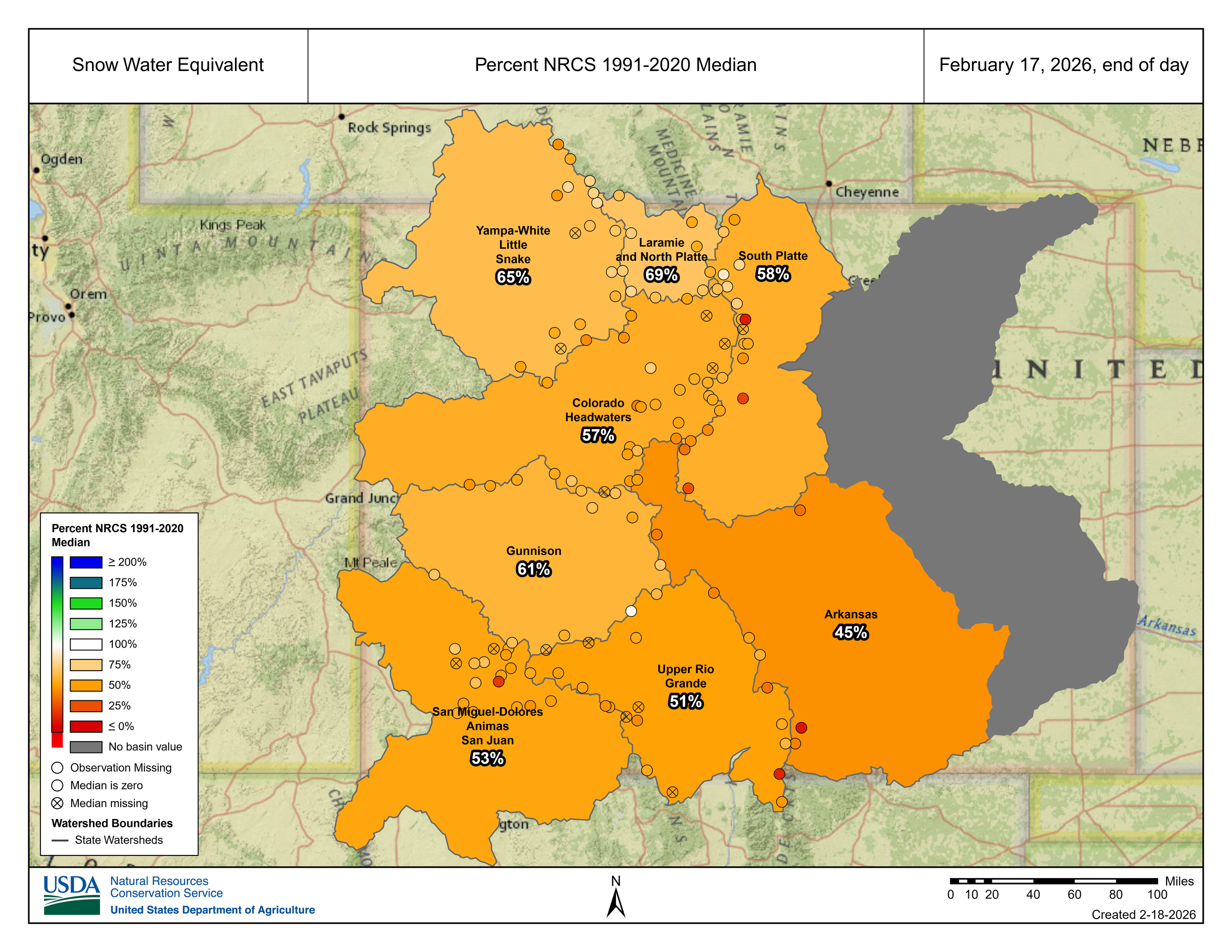
Colorado snowpack as a percent of the 1991–2020 median, February 18, 2026. Source: NRCS.
Why Snowpack Matters
Snowpack acts as Colorado’s natural water storage. It holds water through the winter and releases it gradually as temperatures rise, sustaining rivers and streams through spring and summer.
When snowpack is low, there is less water stored for later in the year. That can mean reduced runoff, lower river flows, and warmer water during the hottest months. Those changes affect more than rivers alone. They influence drinking water supplies, agriculture, wildlife habitat, energy production, and the local economies and recreation that depend on healthy rivers.
Low snow years make these connections more visible across the state.
Rivers Reflect Watershed Health
Rivers tell the story of the watersheds around them. When conditions change across the landscape, rivers often show it first.
Scientists monitor watershed health in many ways, including tracking macroinvertebrates, the small aquatic insects that live in streams and rivers. Because they respond quickly to changes in flow and water quality, shifts in these communities can offer early insight into broader watershed stress.
Healthy watersheds support clean water, resilient ecosystems, and more reliable water supplies for communities across Colorado. Caring for rivers means paying attention to the systems that support them.
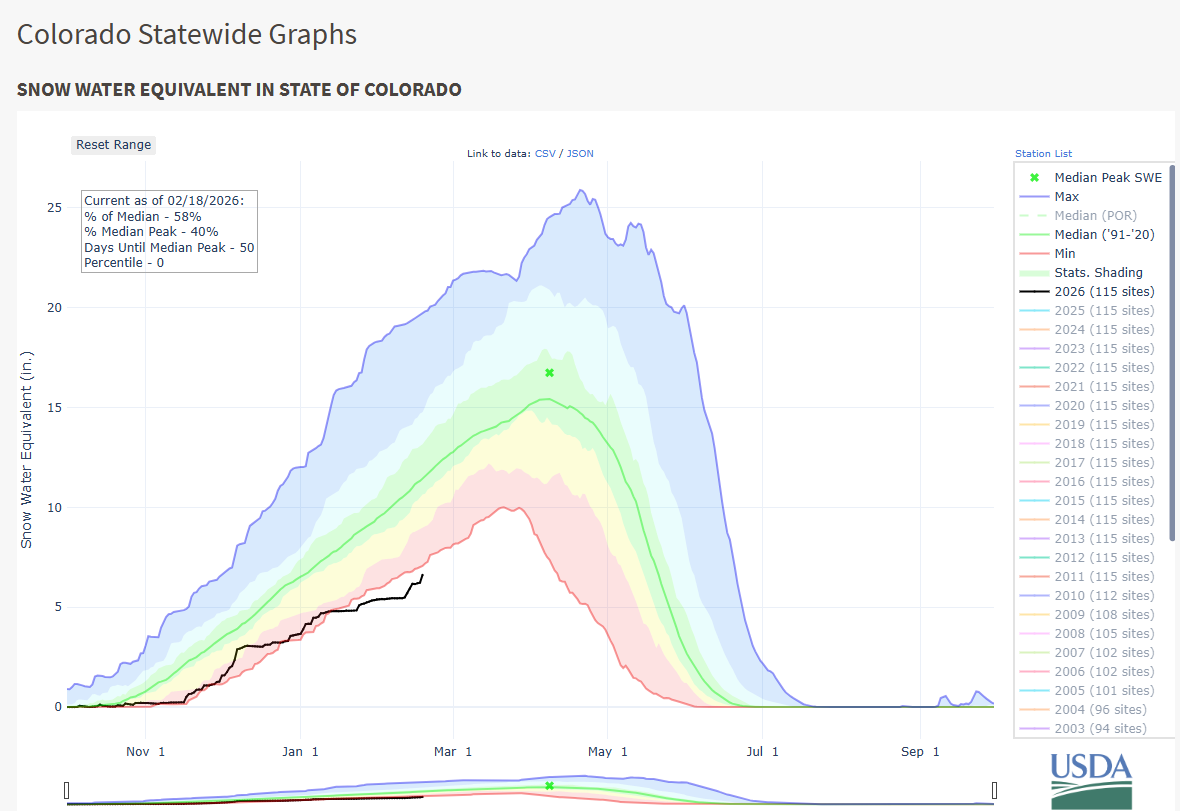
Statewide snow water equivalent trends in Colorado, February 18, 2026. Data shown relative to the 1991–2020 median.
What This Means for Communities and Recreation
Low snow years can change how rivers function across Colorado. Lower flows and warmer water later in the season can affect river conditions and influence when and where people recreate.
These impacts are not limited to one activity. Boating, paddling, angling, and other river uses can all be affected, depending on location and timing. Conditions vary widely across the state, and staying informed about local river conditions helps people make thoughtful decisions throughout the season.
At the same time, low snow years can place added pressure on water supplies that support communities, agriculture, and local economies. Rivers connect all of these uses.
What Comes Next
Snowpack sets the stage, but river conditions continue to change through spring and summer. Colorado Trout Unlimited will be monitoring snowpack, watershed conditions, and river health as the season unfolds and sharing updates to help members and local communities better understand what’s happening and why it matters.
This work will focus on clear, science-based information that supports public understanding and shared stewardship across Colorado.
Being a River Champion This Year
Being a river champion does not always mean taking action on the ground. In low snow years, awareness itself matters.
Understanding where our water comes from, how snowpack supports rivers, and how watershed health connects to daily life helps build shared responsibility for Colorado’s water future. Informed conversations and thoughtful choices support healthier rivers over the long term.
Healthy rivers support Colorado communities, wildlife, and recreation. Especially in low water years, understanding Colorado’s water story is one way we can all help care for the rivers we depend on.