Angler Conservation: An Interview With TU’s Senior Scientist

Conservation-interview-featured-image.jpg

Repost from Anchor Fly, story by Chuck Lee, Published September 29, 2021

Our team wanted to understand the crucial challenges facing our watersheds, and what steps anglers can take to protect our fisheries.

Anchor Fly has recently had the honor and great fortune of sitting down with Dr. Helen Neville, Trout Unlimited’s senior scientist. Helen is a leader in conservation science for native trout and in April of 2020  was recognized by the Western Division of the American Fisheries Society (AFS) with the Award of Merit.

Interview With Dr. Helen Neville

Q: What do you see are the top threats facing our watersheds?

Helen-Neville.png

A: Climate change, non-native species (here for their impacts on trout in particular) and the cumulative impacts of on-going habitat destruction and degradation.

Q: If you had the resources to implement one solution tomorrow—what would that be?

A: Halt and reverse the impacts of climate change, yesterday

Q: Besides educating oneself and offering donations, what are things an average angler can do to help with the problem of climate change, habitat degradation or other overarching conservation efforts?

A: There are several prongs to this in my view.

First, anything we can do to reduce our legacy of habitat degradation improves life for us all, and the ability of fish to handle climate change – so generally restoring habitat condition and connectivity is key.

This could involve things like joining on with restoration projects to restore flows, reconnect streams to their floodplains, reduce runoff, re-vegetate stream banks, and reconnect streams through culvert or other barrier removals so fish can get to different habitats they need. Some of those are pretty big endeavors, of course, but simpler actions like participating in riparian tree plantings help on various fronts: riparian vegetation provides shade that reduces stream temperature and restores structure and food sources for the stream (wood, leaf litter, terrestrial bugs, etc). It also stores carbon.

There is also no doubt that we simply need to reduce our emissions of greenhouse gases, like carbon dioxide and methane – and the latest science shows we need to do it urgently. There are things we can do as individuals to reduce our own carbon footprint, of course, like reducing energy use, driving less, eating less meat, etc.

But, the bottom line is that to get where we need to be will take broad-scale policy and legislation. We all need to be pushing on that front, including by public education and outreach on the issue. Anywhere we can communicate our observations or help influence someone to think more directly about climate change, helps.

So, I think we all need to talk about it: have conversations with other anglers when you’re out fishing about what you’ve observed, talk to your family and friends, and talk to your representatives!

One of our (TU’s) Climate Change Working Group members recently asked his Congressional representative what degree of outreach he needed from his constituency to take action on an issue; the representative responded that if he hears from around 100 people, that’s meaningful and elevates an issue to him.

That was remarkable to me, 100 people! That’s not many, it’s something we can all organize around as a personal or group goal.

Also, do recognize that the voices of anglers (and hunters), in particular, go a long way with politicians. TU has action sites where you can voice your concern, and we’ve also aligned with the Citizen’s Climate Lobby, a national non-profit with local chapters, that is pushing timely legislation on carbon pricing.

Q: How do non-native species including non-native trout impact current fish populations?

A: This is a really important one, as it’s a tough issue for anglers I know. But you’re right in asking about this, in that non-native trout can have real, negative impacts on native trout.

Luckily, where you are in North Carolina these non-natives don’t breed with brook trout and present a hybridization threat, like some do for our cutthroat trout out west. But rainbow trout and brown trout compete with your native brook trout for resources like food and spawning sites – and there’s been some good recent research showing they can push native brook trout out of cold-water habitats as well. So while non-native trout have been considered a conservation threat to native trout for a long time, they should be an even greater concern with climate change.

Q: Do you think it’s too late to save certain waterways from climate change and habitat degradation?

A: Hmmm, that’s a tough one. I’d hate to say it’s too late generally, as it depends on your scope. There will always be benefits to restoring habitats for various reasons, including to improve the situation for all types of fish and wildlife (and humans!). Anything we can do to reduce stream temperature, sediment and other pollutants, attenuate flooding effects, and restore summer flows to reduce effects of drought (as both flooding and drought will be increasing under climate change, in NC and elsewhere) – that’s all good for all of us, no matter what. But yes, I think (based on the science) in the future there will be some places that unfortunately will no longer sustain trout.

Q: Can you talk a bit more about how habitat destruction and degradation impacts watersheds?

A: That’s a broad one! But it’s a good question, as it is important to think about things at a watershed level, because things upstream ultimately impact what happens downstream, and vice versa. So, allowing development that erodes stream condition upstream, through adding sediment or other pollutants, increasing temperatures, etc, will impact conditions downstream, too – and in a cumulative fashion. That is, the footprint of each impact might be small, but when there are many impacts throughout a watershed their collective effect can be big. This is why broad protections even for the smallest of streams, like through the Clean Water Act, which we at TU work on a lot, are so important.

When downstream habitats are eroded – so where mainstem rivers have lower flows, are full of sediment, are warmer, contain non-native species, etc., – they can become inhospitable for trout. And these downstream habitats are important for trout, as you know, for growing and overwintering – even if they spawn in the tributaries. Losses there can mean populations upstream become more disconnected from each other, which is bad for their long-term survival.

Basically, it’s all interconnected. From a trout perspective, the more trout can access all types of different, healthy habitats, the better they will do.

Just For Fun!

Q: Do you have any pets?
A veritable farm: 2 guinea pigs, a snake and a dog …

Q:What is your favorite winter activity?
Skiing! We love to ski and are lucky to have great access to it here in ID

Q: What is the last book you read? Or what are you currently reading?
I’ve been choosing books lately through a diversity, equity and inclusion lens.

I just finished one of the most impactful books I’ve read in a long time, one of those books that just changes your entire world view: a collection of essays called Braiding Sweetgrass: Indigenous Wisdom, Scientific Knowledge, and the Teachings of Plants by Robin Wall Kimmerer. She’s a botanist and professor, member of the Citizen Potawatomi Nation, and a mother, and I am grateful that she wrote this book (and others I have yet to read), allowing me and all of us to access her multi-faceted wisdom and world view – highly recommended!

Want To Help The Cause? 

Join Dr. Neville And Get Involved With Trout Unlimited’s Programs

Dr. Helen Neville

Helen has been with Trout Unlimited since 2006 and now serves as the organization’s Senior Scientist. She received her undergraduate degree in biology from Brown University, a Master’s degree in Ecology, Behavior and Evolution from the University of California, San Diego, and her Ph.D. in Ecology, Evolution and Conservation Biology from the University of Nevada, Reno.

Helen specializes in applying genetic tools to improving our understanding of the ecology and conservation needs of salmon and trout. She especially loves collaborating with her TU colleagues and outside science partners with entirely different skills on a broad array of conservation needs, including understanding impacts and planning opportunities related to climate change. Within TU she is also working to increase science capacity, improve connections among TU science staff, and deepen science integration across the organization. Helen lives in Boise, Idaho, with her husband and two daughters, and loves having wonderful, wild Idaho as her backyard.

CPW surveys fish, gears up for movement study around Windy Gap

Repost: https://www.skyhinews.com/news/cpw-surveys-fish-gears-up-for-movement-study-around-windy-gap/

For the fifth year in a row, Colorado Parks and Wildlife biologists, technicians and volunteers waded along the Colorado River with electrified poles and fishnets in hand.

The group followed a roughly 600-foot stretch of the Colorado River behind River Run RV Resort on Tuesday. The poles sent a field of electric current into the water, stunning the fish and making them easier to scoop up into nets.

Colorado Parks and Wildlife Aquatic Biologist Jon Ewert explained that since Granby purchased the section of river in 2016, CPW has been conducting fish population surveys for two spots on the Colorado.

There is a similar survey on the Fraser River. Trying to control for variability, the annual surveys occur at the same time each year.

While Ewert is interested in the fish population for any given year, the work also documents long-term trends.

“(A trend) really only becomes obvious once you’ve been doing it for several years and you have kind of a baseline data set established,” he said.

A CPW biologist collects captured fish along the Colorado River on Tuesday. Once all the fish along the 600-foot sample have been collected, the scientists collected population data and then implanted electronic tags for a separate study on fish movement. Amy Golden/Sky-Hi News

A CPW biologist collects captured fish along the Colorado River on Tuesday. Once all the fish along the 600-foot sample have been collected, the scientists collected population data and then implanted electronic tags for a separate study on fish movement.
Amy Golden/Sky-Hi News

Ewert does not have any reason to expect a major population difference this year, but he’s being extra vigilant following the East Troublesome Fire. He said that reach of the Colorado has been “off color” all year because the water coming through Willow Creek Reservoir has carried material from the burned area.

“One thing I will be watching for is, did we have less successful reproduction? Are there fewer juvenile fish?” Ewert said. “That’s the place I would expect to see that, is if there’s fewer juvenile fish as a result of the extra sediment in the water. I don’t know if that’ll be the case, but that’ll be one thing I’ll be looking closely at.”

Ewert added that he won’t know the results of this year’s population survey until he crunches the numbers later this year.

That’s not all the surveyors were doing Tuesday, though. After catching hundreds of fish and recording the data, the CPW scientists implanted each one with an electronic tag.

Separate from the population study, CPW is beginning work on a large-scale fish movement study for populations around the Windy Gap Reservoir in anticipation of the Colorado River Connectivity Channel.

The channel would loop around the reservoir and be capable of passing water, fish and sediment, thereby reconnecting miles of the Colorado and Fraser rivers, according to Northern Water.

Antennas have been installed in beds of rivers at different places, along with hundreds and hundreds of tags placed in the bodies of fish. The antennas will detect when fish pass, both before and after the planned Windy Gap bypass is installed.

The Windy Gap dam has been a barrier to fish movement since it was built in the 1980s. The bypass as envisioned will slightly shrink the size of the Windy Gap reservoir and allow for a river corridor to reconnect between the Colorado and Fraser rivers east of the reservoir and the Colorado River west of the reservoir.

The long-anticipated connectivity channel is expected to be built in the next few years.

“We’re very excited about the Colorado River Connectivity Project,” Ewert said. “We think it’s going to be a huge benefit to the ecological health of the Colorado River in Grand County. When you reconnect a habitat that’s been fragmented, that’s a huge benefit to all the critters that live in the river.”

The study will record fish movement all around the Windy Gap, establishing a baseline of patterns as they exist now to compare to the movement following the creation of the bypass.

“Hopefully what we’ll be documenting is a lot more fish movement,” Ewert said.

See the full article here: https://www.skyhinews.com/news/cpw-surveys-fish-gears-up-for-movement-study-around-windy-gap/

Your Voice Matters for Colorado's Rivers!

As leaders across the state in nine "Basin Roundtables" work to update their local water and river management plans, or "Basin Implementation Plans (BIPs)", they're taking public comment from community members. It’s time to make your voice heard: What do you think needs to happen in your local watershed for the health of your local rivers, the environment, and water supply? To help you do this, Water for Colorado is collecting comments, which will then be submitted on your behalf to your local Basin Roundtable once the public comment period ends on Nov. 15.

WATER FOR COLORADO HAS COMPILED SIX KEY RECOMMENDATIONS YOU CAN USE IN YOUR COMMENTS:

  • Ensure healthy, flowing rivers

  • Prioritize resilient watersheds

  • Center equity

  • Support for irrigated agriculture

  • Include water conservation and efficiency

  • Plan for sustainable Funding

Learn more about these recommendations here.

Get to your your river basin here.

A work of art for river conservation

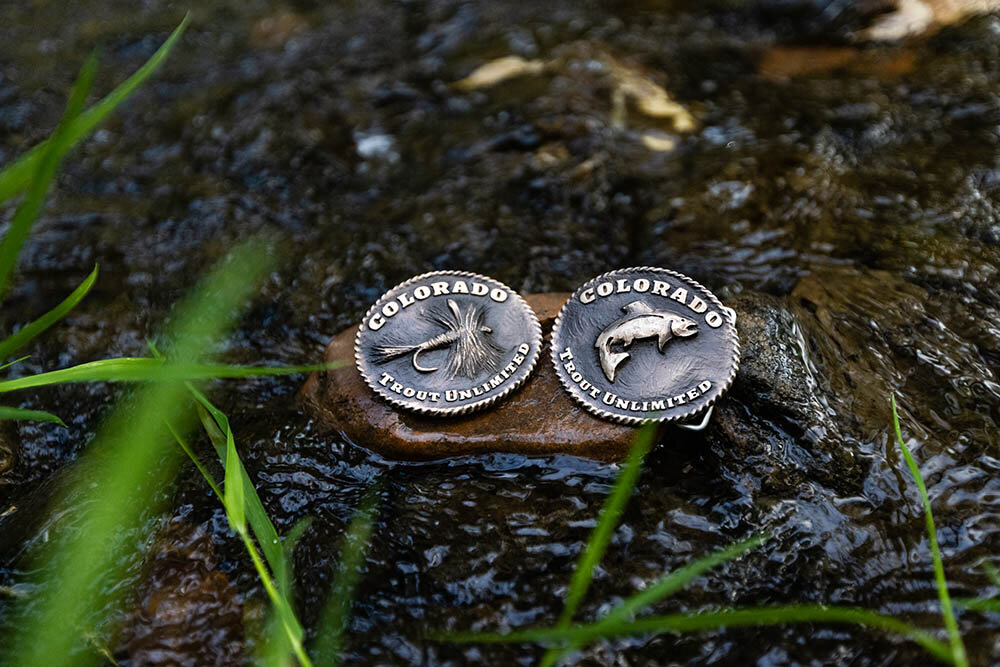
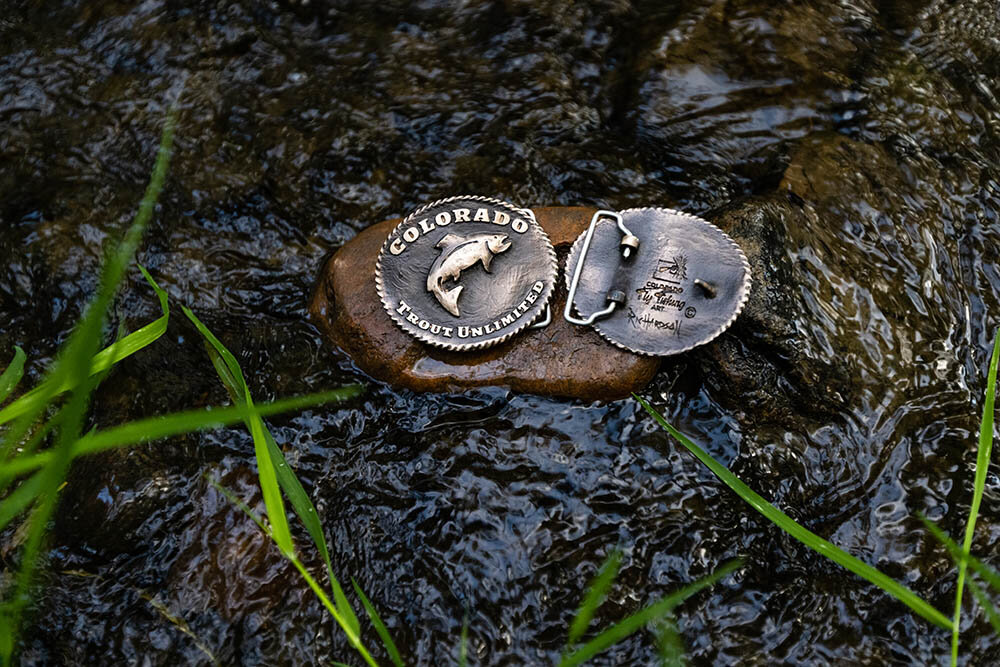
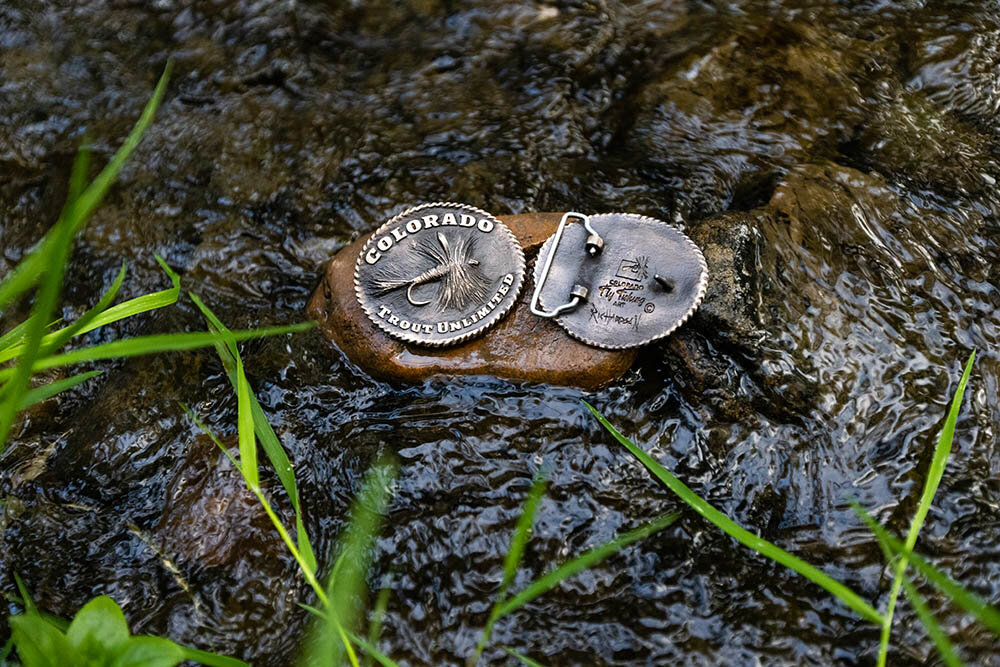
The wait is over! The custom Colorado Trout Unlimited hand-sculpted, bronze belt buckles are available for presale. There are two versions, one featuring a cutthroat trout and the other an Adams dry fly. Both are custom pieces made by local sculptor, Dave Richardson. A portion of the proceeds will go directly to support Colorado Trout Unlimited. Click the button below to order your own or purchase it as a gift! Thank you for your support of local businesses and river conservation in Colorado.

The artist, Dave Richardson, is a native Coloradan, a dedicated fly angler and a professional full time sculptor. Learn more about Dave and his work here.

Watch to learn more about the story behind the belt buckles and the artist, Dave Richardson.

TU supports bills to modernize and improve oil and gas leasing

Image courtesy of Trout Unlimited/Josh Duplechian

Image courtesy of Trout Unlimited/Josh Duplechian

Repost from TU.org:

WASHINGTON, D.C.—Trout Unlimited today voiced support for legislation that would help modernize the federal oil and gas leasing system and facilitate responsible energy development on public land.

The Competitive Onshore Mineral Policy via Eliminating Taxpayer-Enabled Speculation Act (COMPETES Act), introduced by U.S. Sen. John Hickenlooper (D-CO) and co-sponsored by U.S. Sens. Martin Heinrich (D-NM) and Jacky Rosen (D-NV), would require the Bureau of Land Management (BLM) to end the practice of non-competitive leasing.

In the leasing process, lands are offered to oil and gas companies, which bid on them during competitive auctions. Public lands that do not receive bids—often areas with no marketable oil/gas—are offered later at rock-bottom prices, needlessly encumbering public lands. Many of these lands provide important fish and wildlife habitat and are places where public land users hunt, fish, float and hike.

“Here in Colorado where the practice has become commonplace, non-competitive leasing has direct impacts on outdoor recreation and our quality of life,” said Scott Willoughby, Colorado field coordinator for Trout Unlimited. “Agencies like the Bureau of Land Management are already stretched beyond capacity, and increasing that workload for essentially no return needlessly diverts staff resources away from other priorities, like fish and wildlife conservation, outdoor recreation, and managing oil and gas development where it can be done responsibly. We want to thank Senator Hickenlooper for his work on this important legislation and express our support for ending this outdated practice.”

“Non-competitive leasing encourages speculation on public lands at taxpayers’ expense.” Senator Hickenlooper said in a press release. “Westerners lose out when large swaths of land are set aside for speculation instead of conservation or recreation.”

Non-competitive leasing has occurred throughout Colorado, including in North Park adjacent to the Arapaho National Wildlife Refuge, upstream of the famed Gold Medal stretch of the North Platte River. (Learn more about Gold Medal fishing waters at Colorado Gold). Elsewhere throughout the West, non-competitive leasing creates similar conflicts with fish and wildlife, spurring controversy as the public weighs the risk of speculative oil and gas exploration against the values of healthy habitat and outdoor recreation.

“Of the 2.5 million acres offered for lease since 2017 in Nevada, less than 10 percent of the acreage offered has been sold at competitive auction, ” said Pam Harrington, Nevada field coordinator for Trout Unlimited’s Angler Conservation Program. “Anonymous entities nominate thousands of acres, and the agencies must act on these frivolous proposals. Overwhelmed, both the agencies and interested public try to provide productive input, but in the end, the sales are offered and largely nobody bids. A month later, parcels are purchased non-competitively at $1.50 an acre, which creates unnecessary paperwork and ties up our public lands from its multitude of other uses.”

The COMPETES Act would help turn the BLM and Forest Service’s attention away from needless paperwork and lease reviews and toward critical fish, wildlife and recreation needs.

In addition to introducing the COMPETES Act, Senator Hickenlooper has co-sponsored other legislation to modernize public lands energy development, including the Oil and Gas Bonding Reform and Orphaned Well Remediation Act (S.2177) introduced by U.S. Sen. Michael Bennet (D-CO), and the bipartisan Fair Returns for Public Lands Act (S. 624), sponsored by U.S. Sens. Chuck Grassley (R-IA) and Jacky Rosen.

“With the introduction of the COMPETES Act and his co-sponsorship of S.624 and S.2177, Senator Hickenlooper is promoting a comprehensive package to modernize oil and gas leasing and promote responsible stewardship of our public lands,” said David Nickum, executive director of Colorado Trout Unlimited. “We fully support his efforts and we look forward to helping advance these proposals through Congress and into law.”

Trout Unlimited is asking its members to tell Congress how important this issue is to anglers and public land users. Learn more at TU.org.

###

Trout Unlimited is the nation’s oldest and largest coldwater fisheries conservation organization dedicated to caring for and recovering America’s rivers and streams so our children can experience the joy of wild and native trout and salmon. Across the country, TU brings to bear local, regional, and national grassroots organizing, durable partnerships, science-backed policy muscle, and legal firepower on behalf of trout and salmon fisheries, healthy waters and vibrant communities.

October Currents: A voice for Colorado's rivers

Copy of CURRENTS.jpg

This month’s Currents features stories such as:

  • Rare cutthroat rescued from fire and now back home

  • EPA announces reinstatement of Clean Water Act protections for Bristol Bay, Alaska watershed

  • State of Colorado Trout Unlimited Livestream Event, October 6, 2021 at 7:00pm

  • JOIN THE TEAM: We are hiring a Youth Education Coordinator!

  • Trout Week Recap and Videos

  • Five Flies for October - Fly Fishing the Colorado River

  • Slideshow: An homage to fall

  • *NEW* Fall 2021 High Country Angler and more!

Partners stock greenback cutthroat trout into the West Fork of Clear Creek

Members from Colorado Parks and Wildlife, Trout Unlimited, US Fish and Wildlife Service, the USDA Forest Service, Rocky Mountain National Park and the Greenback Cutthroat Trout Recovery Team meet up by Jones Pass before stocking 6,000 greenback cutthroat trout into the West Fork of Clear Creek (photo courtesy of CPW)

Members from Colorado Parks and Wildlife, Trout Unlimited, US Fish and Wildlife Service, the USDA Forest Service, Rocky Mountain National Park and the Greenback Cutthroat Trout Recovery Team meet up by Jones Pass before stocking 6,000 greenback cutthroat trout into the West Fork of Clear Creek (photo courtesy of CPW)

Repost of CPW press release

EMPIRE, Colo. - The USDA Forest Service, Colorado Parks and Wildlife, Trout Unlimited, and a host of volunteers stocked 6,000 greenback cutthroat trout fry into Upper West Fork Clear Creek near Jones Pass on Wednesday, Sept. 22.

This is the third location in the Clear Creek drainage where the Greenback Cutthroat Trout Recovery Team has stocked greenbacks into, joining Dry Gulch and Herman Gulch.

“Greenback cutthroat trout reintroductions such as the West Fork Clear Creek are really only able to occur due to the coordination and efforts of each cooperating agency and non-profit partners such as Colorado Parks and Wildlife, Trout Unlimited, US Fish and Wildlife Service, the USDA Forest Service and the Greenback Cutthroat Trout Recovery Team to name a few,” said Valerie Thompson, South Zone Fisheries Biologist for the Forest Service. “Each partner contributes in unique ways that enable the success of major conservation projects such as this one on West Fork Clear Creek, where over fourteen years of stream health data was collected, an old mine site was remediated, and stream banks were restored to allow for habitat that is suitable to sensitive aquatic life and now a new home to the Colorado State Fish, the Greenback Cutthroat Trout.”

The fact that this tributary was fishless to begin with made it a good candidate for the greenbacks, among other factors.

“We’ve done temperature monitoring and the temperatures are conducive to support natural reproduction,” said Paul Winkle, Aquatic Biologist for CPW. “It is a goal to get another population of fish on the landscape, so this is definitely an important thing for the recovery of greenbacks.”

This stretch of stream was fishless due to downstream barriers, such as a quarter-mile-long culvert underneath the Henderson Mine Site, among other natural barriers. That saved some heavy lifting, not requiring a reclamation of the stream to remove other non-native species of fish. Removal of all other species is necessary to ensure the successful reestablishment of greenbacks, which are native to the South Platte River basin.

“We knew that there were no fish in that section of Clear Creek and what a great thing to be able to put fish in without having to do a reclamation,” Winkle said. “The more streams of greenbacks we stock along the Front Range drastically improves the conservation status of the species.”

Today, the greenbacks are listed by the U.S. Fish and Wildlife Service as a threatened species. Greenbacks have previously been stocked into Herman Gulch, Dry Gulch, the East Fork of Roaring Creek and Zimmerman Lake. Those all reside within the South Platte River drainage. The sixth body of water in Colorado where the official state fish currently resides is in Bear Creek outside of Colorado Springs.

These rare fish, twice believed to be extinct, are descendants of the last wild population of native greenback cutthroat trout. Researchers from CU Boulder in partnership with CPW discovered in 2012 that the cutthroat in Bear Creek were the last remaining population of greenback cutthroat trout.

CPW’s Mount Shavano Hatchery in Salida is responsible for rearing and delivering all greenbacks that get stocked. They hatch fertilized eggs in its Isolation Unit. Extra milt collected from male greenbacks in Bear Creek goes to the U.S. Fish and Wildlife Service's Leadville National Fish Hatchery to fertilize eggs from the greenbacks in its brood stock.

The eggs are then taken to Salida to be hatched and eventually stocked onto the landscape at various sizes. Sometimes those fish are of fingerling lengths (one to two inches), sometimes they are fry. Fry is a recently hatched fish that has reached the stage where its yolk-sac has almost disappeared and its swim bladder is operational to the point where the fish can actively feed for itself.

“Trout Unlimited and our West Denver Chapter have a long history of supporting the Forest Service and Colorado Parks and Wildlife in stewardship of the Clear Creek drainage," said David Nickum, executive director of Trout Unlimited. “We are so pleased to see those efforts coming to fruition with our volunteers working side by side with our partners to finally return greenbacks to their home waters in the West Fork headwaters.”

Check out the 9News video coverage on this story.

The new Fall 2021 issue of High Country Angler is live!

Check out the new Fall 2021 issue of High Country Angler e-zine!

The new Fall 2021 issue of High Country Angler e-zine is here! Featuring CTU's Annual Report, a recap of this summer's CTU youth programming and your favorite regular columns:

  • Predator on the Fly by Landon Mayer

  • Friends of the Fish by Joel Evans

  • Popper Fishin' for Bass by Brian LaRue

  • Bookends on the Boulder by Hayden Mellsop

  • Instars by Peter Stitcher

  • The Last Cast by John Nickum

Hiring: Youth Education Coordinator

2017-Youth-Camp-2-225x300.jpg

Youth Education Coordinator

Colorado Trout Unlimited (CTU) is Colorado’s leading fisheries conservation organization with a mission to conserve, protect, and restore coldwater streams and their watersheds. CTU has state offices located in Denver and 24 local chapters throughout Colorado. CTU’s focus is on effective grassroots advocacy for river conservation, coupled with on-the-ground volunteer efforts that directly contribute to stream habitat improvement, native trout restoration, and youth education.

Position Summary: CTU seeks an energetic, self-starter with strong communications and interpersonal skills to manage the Headwaters Youth Program statewide. The successful candidate will work with our 24 local chapters and other education partners to engage young people from elementary school through college-age groups with watershed education, conservation, and angling. The position benefits greatly from experience in managing volunteers. The Youth Education Coordinator is a full-time position developing capacity for delivery of established Stream of Engagement educational programs to target audiences, assisting chapters in strengthening their programs for youth education, cultivating educational partnerships, and identifying and developing funding partnerships to support these programs. The Youth Education Coordinator reports to Colorado TU’s Executive Director and may supervise interns and/or seasonal employees. The position can be based at TU’s Denver office with opportunities for remote work.

The position work plan includes:

Manage established programs: Manage communications and scheduling for existing programs among chapters and other educational partners. Identify program needs, develop outreach information, trainings, and maintain standardized program materials. Build chapter capacity to support existing programs through outreach, volunteer management support, and training. Flagship programs include:

Trout in the Classroom (TIC). Function as Colorado TIC Coordinator. Support existing sites by coordinating logistics between participating schools, chapters, partners, and agencies. Develop resources to support TIC sites with educational curriculum, equipment maintenance, and troubleshooting. Recruit prospective new sites for TIC in Colorado. Facilitate fish health testing and TIC release events with sites. Coordinate statewide evaluations on TIC program outcomes.

STREAM Girls/Keepers. Function as state-wide CTU coordinator with program partners, including Colorado Girl Scouts Council for STREAM Girls. Facilitate program liability and risk management requirements. Coordinate event scheduling. Develop volunteer leaders to support program delivery in person or virtual. Train and manage regional volunteers for program implementation. Conduct chapter outreach and volunteer recruitment. Identify and cultivate new volunteer partners. Inventory, maintain, and prepare equipment and supplies.

RiverWatch. Work with chapters and school RiverWatch sites to advance outreach of both watershed education and water quality monitoring. Complete training for RiverWatch trainer

certification to assist in training of new participants/sites and in conducting site visits for QA/QC purposes. Support River Watch educational outreach through special projects.

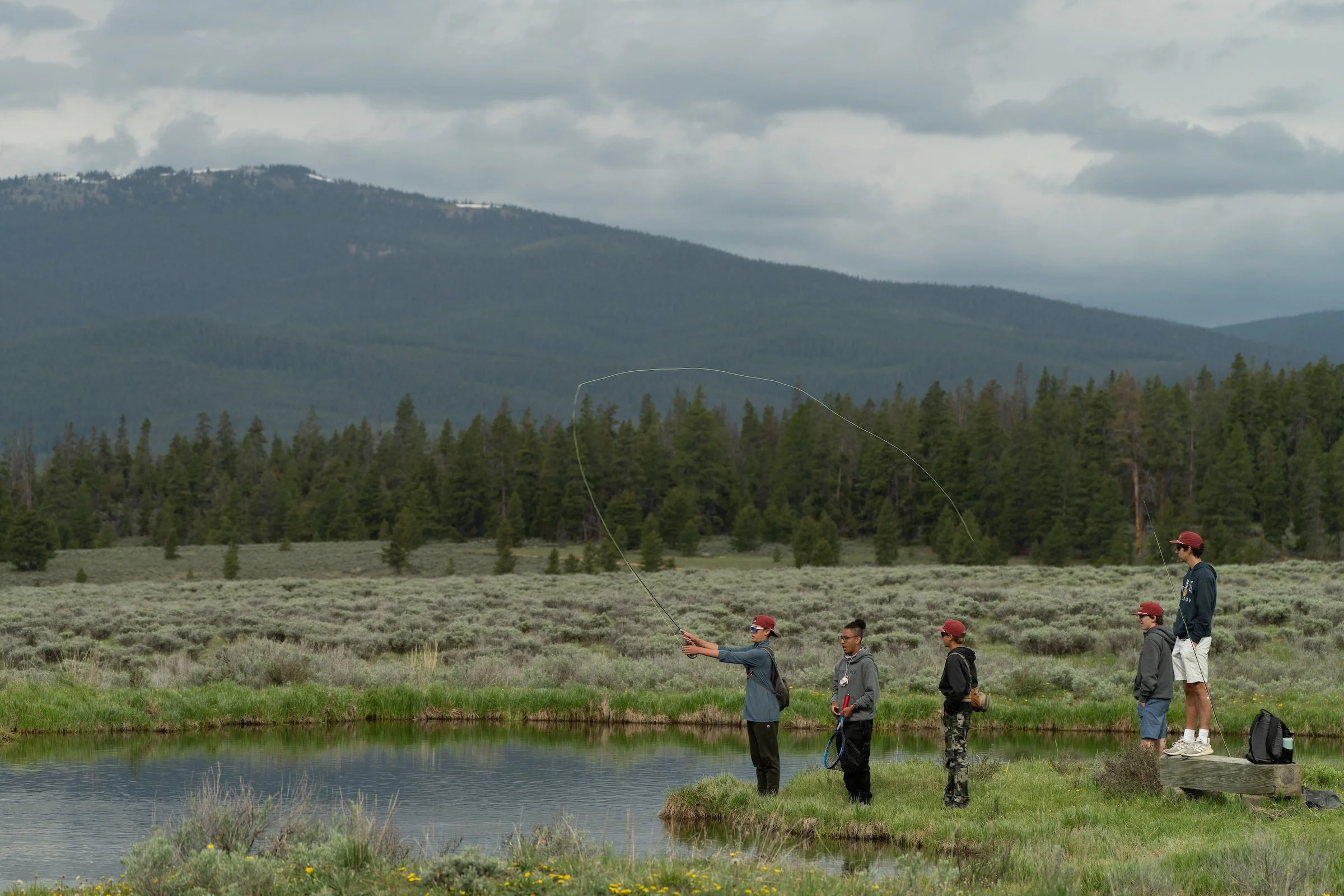
Youth camps. Manage existing and future recruited volunteers to ensure successful youth conservation camps on an annual basis including our high-school one-week summer camp. Facilitate partnership with camp site and coordinate any associated state licensing requirement. Assist with camp administration, records tracking, outreach and camper recruiting. Provide assistance to chapters that wish to establish localized camp programs for youth in summer.

Program evaluation. Manage systematic and consistent education evaluation tools for use both in tracking and improving Colorado TU programming and as a resource for local chapters, partner groups, schools, and fundraising. Maintain database of volunteer and participant evaluations. Serve as a central point for evaluation data collection, entry and analysis.

Grant writing and donor cultivation. Support fundraising efforts, in coordination with CTU development staff and Headwaters Committee, to cultivate potential donors for youth education programs. Identify, prepare and submit grant applications to prospective foundation and corporate giving programs for youth education efforts. Develop and maintain a management information system of quality information about grants, foundations, revenue sources, and donors. Prepare written reports on youth programs for grant and funder reporting. This position is funded primarily through successfully sustaining restricted fund sources.

Recruit and assist new sites for Trout Unlimited educational programs. Develop relationships with mentoring organizations, schools, and other youth-focused partners in order to bring Trout Unlimited Stream of Engagement youth programming to new audiences. With new sites, assist in building capacity for delivering appropriate Stream of Engagement programs (Stream Explorers, Trout in the Classroom, Outdoor Mentors, National Fishing in Schools Program, etc.) using a “gradual release” method by which CTU would provide appropriate levels of support initially while local volunteers, teachers, etc. would gradually take on more responsibility for continuing programming. Refine curricula for these programs based on experiences from participating sites.

Other duties. Provide content relevant to the above program areas for the Colorado TU blog, website, social media outlets and High Country Angler e-zine; participate in core Colorado TU events such as the Annual Gala, Rendezvous, and Spring Meeting (including volunteer training opportunities); collaborate in other Colorado TU campaigns and initiatives, especially where there are crossover opportunities with youth education efforts.

Qualifications:

  • Bachelor degree in environmental science, science education, natural resources, wildlife biology, or related field.

  • Experience or demonstrated ability with development and/or delivery of youth education programs.

  • Ability to recruit, train, and manage volunteers.

  • Experience in managing partnership programs or projects (e.g., relationships with agencies, nonprofits, etc.)

  • Background knowledge of watershed and fishery issues and dedication to conservation; specific experience with water quality monitoring is a plus.

  • Experience coordinating special events for community engagement

  • Experience with budget development and management

  • Fundraising and/or grant writing experience strongly preferred.

  • Strong communications, interpersonal, and organizational skills.

  • Ability to travel statewide and to work weekend and evening hours when needed.

  • Proficiency with Microsoft Office and Google suites.

  • Must have reliable transportation statewide.

  • Ability to lift and carry objects weighing up to 30 pounds.

  • Candidates must pass a background check for involvement with youth programs.

This position is based from Colorado TU’s Denver office, but with the opportunity for remote and/or hybrid work from an in-state location with comfortable travel access to the Front Range and other program locations statewide. The position will report directly to the Executive Director.

Staff and leadership at TU understand that life outside of work is important to personal health, and we strive to create a healthy and family-friendly atmosphere. This is a full-time position with a generous benefits package. The approximate salary range is $40,000 – $50,000 depending on experience.

At TU, we value a diverse representation of staff, and we encourage candidates for this position who come from communities that have been historically under-represented in conservation and those who have been most impacted by degraded rivers and streams. We are committed to building space for all people to participate in our work to care for trout and their watersheds. We are proud to be an equal opportunity employer and welcome you to read more about TU’s equity practice and values at tu.org/equity.

How to Apply: Please upload a cover letter, resume, and names and contact information for three references to TU’s applicant system by visiting the website link below. We will begin reviewing applications on October 15; position is open until filled. Apply here

Take action to protect trout fisheries and watersheds from the impacts of climate change

Photo courtesy of Trout Unlimited/Josh Duplechian

Photo courtesy of Trout Unlimited/Josh Duplechian

We are at a critical moment. Congress is now considering major infrastructure and spending bills that would have far-reaching impacts on America’s rivers and streams, wild and native trout and salmon, and all of us who care about them.

Trout Unlimited is asking you to take action today by contacting your elected officials and urging them to responsibly address the risks posed by a changing climate. Legislation under discussion this month could shape how our country responds to the threat facing rivers, communities, and fish and wildlife. Please urge your lawmakers to prioritize policies that address the root causes of climate change, as well as legislation that funds projects to help our lands and waters adapt to warmer temperatures and more frequent drought, wildfire, and floods.

In Colorado and throughout the west we’ve seen these impacts first hand, from the ongoing serious Colorado River basin drought to last year’s record wildfire season in Colorado. Now is the time to act, and targeted investments in watershed stewardship and promoting clean energy can help secure a future for our imperiled fisheries.

Trout Unlimited has set up a page where you can learn more and take action at tu.org/climate. Please take a moment to visit the site and use the action alert to reach out and convey your interests to your members of Congress.

Thank you for engaging on this vital issue, and for all you do for Trout Unlimited!