
EPA announces reinstatement of Clean Water Act protections for Bristol Bay, Alaska watershed

fXB7O1uQ.jpeg

Following Ninth Circuit ruling in favor of Trout Unlimited, EPA moves to vacate unlawful 2019 decision to withdraw the Proposed Determination for Bristol Bay and reinstate longstanding proposed protections.   

ANCHORAGE, Alaska—Today, the U.S. Environmental Protection Agency (EPA) announced that it would move to vacate its 2019 decision to withdraw proposed protections for Bristol Bay and reinstate the agency’s earlier 2014 Proposed Determination.  These proposed protections would limit the amount of waste water and mine waste discharge that could be released in to Waters of the United States in the Bristol Bay region. The announcement comes in the wake of a lawsuit brought by Trout Unlimited against the withdrawal decision and recent ruling in favor of TU by the Ninth Circuit Court of Appeals. TU looks forward to working with the EPA to finalize these protections, which are critical to protecting Bristol Bay’s world-class fisheries. 

“This is a smart and significant step toward putting more durable safeguards in place for Bristol Bay’s fish, clean water, communities and businesses,” said Nelli Williams, Alaska director for Trout Unlimited. “This is an important layer of protection that makes it much more difficult for the Pebble Partnership, or any other companies in the future, to mine the Pebble ore deposit. Now is the time to get these much-needed protections across the finish line, and we look forward to working with EPA and Congress to get it done. Let’s put the Pebble mine proposal in the review mirror for good so we can focus on a bright, prosperous and fish-filled future for Bristol Bay.” 

“Today’s announcement by the EPA represents a victory for common sense. Blocking industrial-scale mining from Bristol Bay is the right thing to do for the Alaska Native Peoples who have depended on the fishery for millennia,” said Chris Wood, president and CEO of Trout Unlimited. “It is the right thing to do for the 17,000 family wage jobs that the $1.6 billion commercial fishery provides. It is the right thing to for a place that provides half of all of the world’s wild sockeye salmon. Congratulations to the EPA for making the right call and to the thousands of people who fought tirelessly to protect Bristol Bay.” 

In 2019, the EPA under the previous administration moved to withdraw the 2014 Proposed Determination for Bristol Bay—a sudden decision based on politics, not the robust scientific record demonstrating the potential for unacceptable adverse effects. Trout Unlimited sued, challenging the EPA’‘s decision as arbitrary and capricious and contrary to the Clean Water Act’s governing standard. In July 2021, the Ninth Circuit Court of Appeals ruled in favor of TU, finding that the EPA could withdraw a proposed determination only if the discharge of materials would be unlikely to have an “unacceptable adverse effect.” Today’s decision by the EPA recognizes that the agency could not meet, that stringent standard, and fully vindicates TU’s legal challenge. TU looks forward to vigorous engagement in the 404(c) process to ensure that strong and lasting protections are established for Bristol Bay. 

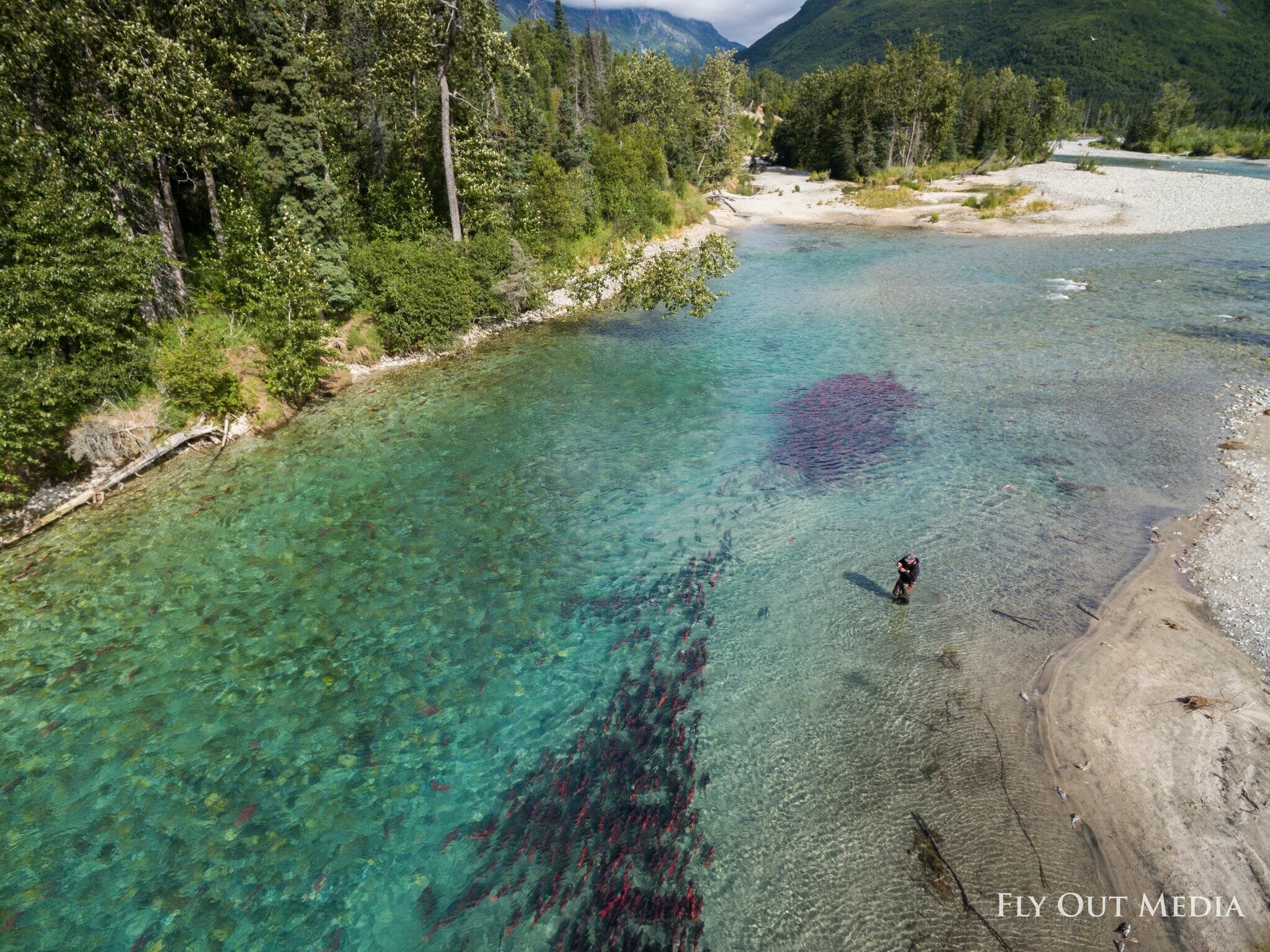
Courtesy of Fly Out Media

Courtesy of Fly Out Media

In November 2020, the U.S. Army Corps of Engineers denied a key federal permit for the proposed Pebble mine, concluding that the project could not comply with Clean Water Act standards and that the mine would be “contrary to public interest.” In the wake of that decision, Bristol Bay Tribes, business owners, sport anglers and hunters, tourism operators, commercial fishermen, and thousands of advocates from across the country have called on the Biden Administration to establish permanent safeguards for the southwest region of Alaska.  

As wild salmon populations decline globally, Bristol Bay’s prolific wild salmon runs and the economies they support make it a place of international importance. This summer, over 65 million sockeye salmon returned to Bristol Bay, making it a record-breaking year for the world’s largest sockeye fishery. Healthy salmon runs underpin the Bristol Bay region’s economic, social, cultural and ecological well-being. More than 30 Alaska Native Tribes in the region depend on salmon to support traditional subsistence ways of life. 

### 

Trout Unlimited, the nation’s oldest and largest coldwater fisheries conservation organization, is dedicated to caring for and recovering America’s rivers and streams, so our children can experience the joy of wild and native trout and salmon. Across the country, TU brings to bear local, regional, and national grassroots organizing, durable partnerships, science-backed policy muscle, and legal firepower on behalf of trout and salmon fisheries, healthy waters and vibrant communities.  In Alaska, we work with sportsmen and women to ensure the state’s trout and salmon resources remain healthy far into the future through our local chapters and offices in Anchorage and Juneau. 

Contacts:  

  • Nelli Williams, Alaska director, Trout Unlimited, (907) 230-7121, nelli.williams@tu.org

  • Chris Wood, CEO and president, Trout Unlimited, chris.wood@tu.org

September Currents

Copy of CURRENTS (3).jpg

This month’s Currents features stories such as:

  • A Big Win for Small Streams

  • CTU Develops New Partnerships with STREAM Keepers Programs

  • FY21 Colorado Trout Unlimited Report

  • RareWaters and Colorado Trout Unlimited are teaming up!

  • State of Colorado Trout Unlimited Livestream Event on October 6, 2021

  • Late Summer Fly Fishing Tactics and more!

CTU Develops New Partnerships with STREAM Keepers Programs

by Geoff Elliot, Youth Education Coordinator, Colorado Trout Unlimited

Summer 2021 brought a return to in-person programming and opportunities! With the recent success of the STREAM Girls program in reaching new audiences of elementary through middle-school girls and their families, CTU sought opportunities to adapt the program to reach new, diverse audiences. Fortunately, we were not alone in seeing this opportunity and could build off the STREAM Keepers resources developed by other TU volunteers and staff.

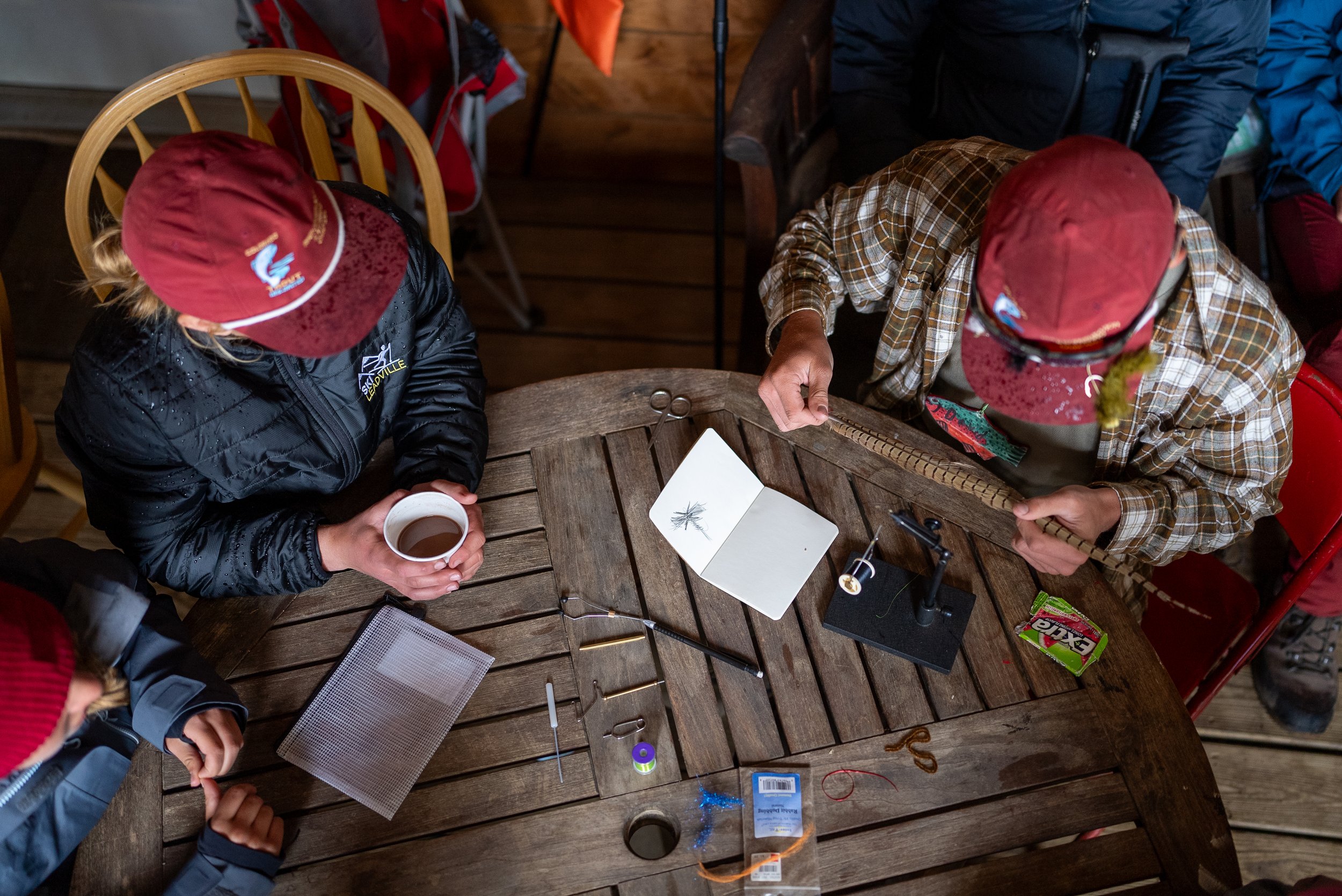
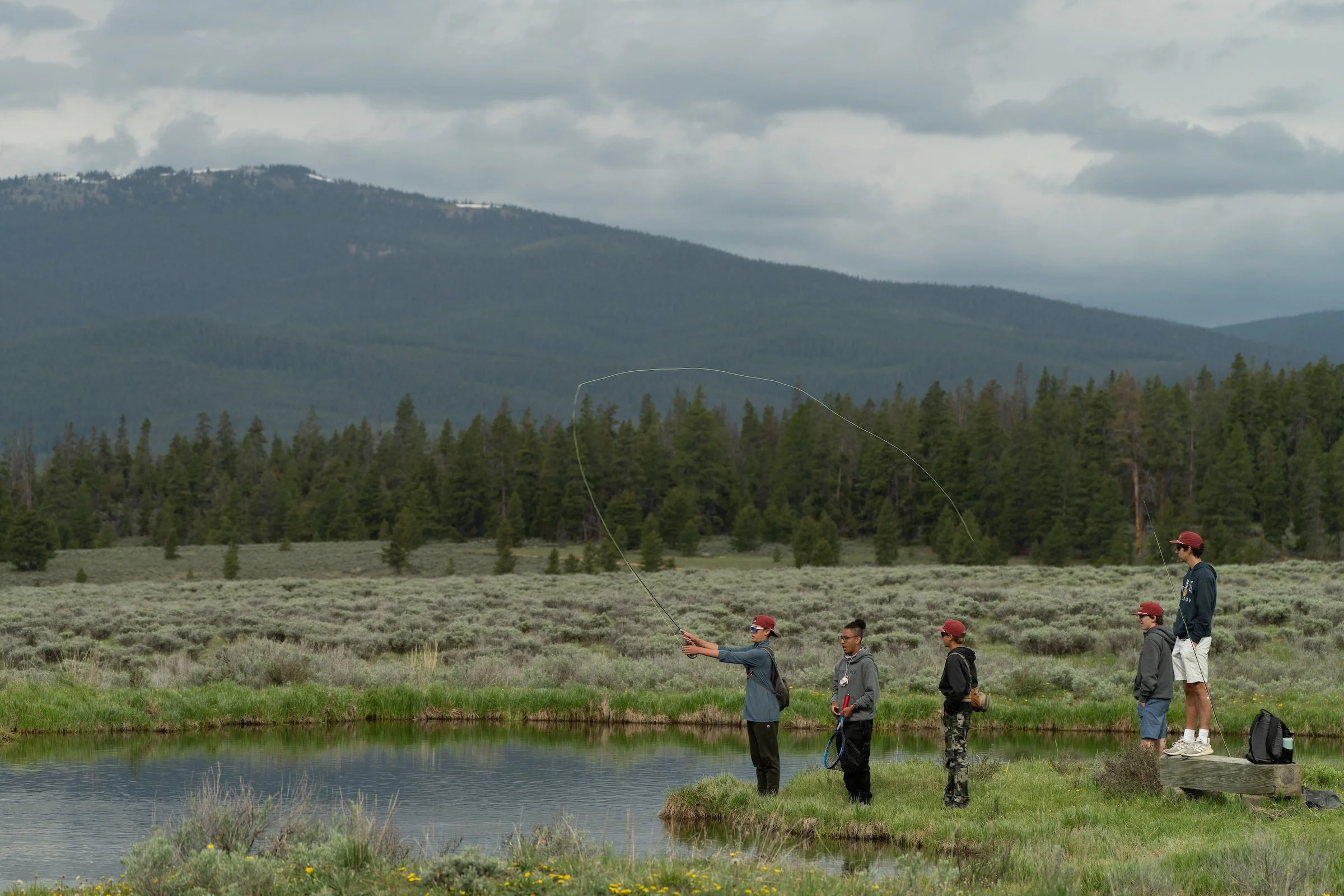
With the goal of reaching new and diverse audiences, we knew this effort could not be achieved alone. To help us build the STREAM Keepers program in Colorado, we collaborated with youth serving organizations, community coalitions, and school districts. In partnership with these groups, CTU worked to refine the curriculum and identify suitable locations to connect participants with their watersheds. In the end, the STREAM Keepers program focused on watershed exploration, fly casting/fishing, macroinvertebrate sampling, and fly tying (if time allowed).

In June and July, CTU hosted three STREAM Keepers events in partnership with Littleton Public Schools Extended Middle School, Eagle Valley Outdoor Movement – A GOCO Generation Wild Coalition, and Lincoln Hills Cares. Across these three collaborations, CTU connected with 100 youth and families. This included students who struggled amidst the pandemic, Spanish-speaking families, and youth from immigrant communities. With Littleton Public Schools, students explored Lee Gulch, competed in a casting olympics, and learned to tie a midge pattern. In partnership with Lincoln Hills Cares and Eagle Valley Outdoor Movement, youth and families enjoyed on-site fishing opportunities (with some participants catching fish) and macroinvertebrate sampling in small stream! At the conclusion of these STREAM Keepers programs, participants expressed their excitement to continue fly fishing and share their appreciation for local watersheds.

A big THANK YOU goes out to the volunteers who led and facilitated activities during each program, as well as the partners who recruited and provided space for these events! Colorado Trout Unlimited is excited to continue to build the STREAM Keepers program by cultivating new partnerships and further developing existing ones to provide increased access to watershed exploration experiences and fly fishing opportunities! If you are interested in learning more about STREAM Keepers, other opportunities in the Headwaters Youth Program, or how to support CTU’s youth education program, please contact youth@coloradotu.org!

A Big Win for Small Streams

unsplash-image-9fqMbeny89c.jpg

In a decision that restores critical Clean Water Act protections for small headwater streams and wetlands across the country, a federal judge has vacated the 2020 “Navigable Waters Protection Rule” developed by the previous administration. That rule had stripped Clean Water Act protection from ephemeral streams, which are critical tributaries to larger streams.

Responding to a case brought by the Pascua Yaqui Tribe, Tohono O'odham Nation, Quinault Indian Nation, Menominee Indian Tribe of Wisconsin, Fond du Lac Band of Lake Superior Chippewa, and the Bad River Band of Lake Superior Chippewa. U.S. District Judge Rosemary Márquez found that the 2020 rule illegally and unscientifically put these waters at risk of destruction.

“This is a big win for common sense, science, and clean water,” said Chris Wood, president and CEO of Trout Unlimited. “It is especially fitting that six Tribal nations, the representatives of peoples who have relied on clean water for millennia in North America, were the plaintiffs who won this landmark victory.”

Over the past two years, Trout Unlimited scientists have documented how drafters of the rule failed to assess its potentially devastating impacts on “ephemeral” streams, which are critical tributaries to larger streams.

Streams that do not flow year-round, but instead flow seasonally as “intermittent” streams, or in direct response to precipitation events as “ephemeral” streams, are the backbone of every watershed and had largely been protected for decades under the Clean Water Act. The 2020 rule categorically removed Clean Water Act protections for all ephemeral streams, which in Colorado represent greater than 25% of the state’s more than 350,000 miles of streams as mapped by the US Geological Survey.  Those figures are conservative; TU scientists determined that nationally ephemeral streams account for almost 50 percent of stream miles in the lower 48 states when accounting for other ephemeral stream channels not included in USGS maps.

“It seems like basic common sense, but for the Clean Water Act to protect our rivers it needs to prevent pollution and protect watershed health at the source – the many small headwater streams that feed our larger rivers,” said Colorado Trout Unlimited Executive Director David Nickum.

“Pollution and degradation in ephemeral streams will make its way downstream to the rivers that support our fisheries, farmlands, and communities. Thankfully the District Court recognized how the illegal and ill-informed 2020 rule ignored that most basic connection.”
— David Nickum, Colorado Trout Unlimited, Executive Director
unsplash-image-4aX78nRd7mo.jpg

The court’s ruling is good news for river conservation, which was already suffering from weakened Clean Water Act protection on the ground. By examining the Environmental Protection Agency’s Clean Water Act Approved Jurisdictional Determinations (JDs) database, TU determined how many streams and wetlands were no longer receiving Clean Water Act protection.  Of the 14,224 waterbodies evaluated under the 2020 rule between June 22, 2020, and June 9, 2021, TU found that 6,266 wetlands were determined to be no longer covered by the Clean Water Act, along with 3,096 ephemeral stream reaches. Many of these were in watersheds that support trout and salmon.

With large-scale damage to the nation’s waterways now averted by this week’s federal ruling, the EPA and the U.S. Army Corps of Engineers can turn to the critical job of developing a new “Waters of the United States” rule that is scientifically sound and durable.  Both Nickum and Montana TU Executive Director David Brooks recently provided comments on that rulemaking effort at EPA/Corps Town Halls, highlighting the importance of protecting headwaters and ephemeral streams.

FY 21 Colorado Trout Unlimited Annual Report

We’re excited to bring you a new report looking back at another great year! Thank you taking the time to see what we have accomplished and are looking forward to.

Submit your opposition to the Zephyr gold mine near Grape Creek

unsplash-image-iw6NqKcqnkE.jpg

DEADLINE: Wednesday, September 1, 2021

To learn more about the proposed gold mine please read The Colorado Sun article.

For the latest information on this issue please visit https://www.savefremontcounty.org/. That is the website for the main group opposing the application for a new gold mine near Grape Creek, by Canon City. Our chapter has filed an opposition letter with the Fremont County Commissioners and also with the DRMS.

Sample letter:

I am writing to voice my opposition to the Zephyr Minerals application for a gold mine near the Grape Creek wilderness. I am concerned that this proposed mine poses too high of a risk to the neighboring creek and river. As an avid angler, I fish the Arkansas river below the Grape Creek confluence, and am worried about any possible water contamination and pollution. A few of my particular concerns:

WATER: The mine site, at 6,500 feet elevation, is 1,000 feet higher elevation than Grape Creek and the Arkansas river. It is upstream from the water plant intake for Fremont County. Any discharge from mining operations will find its way to the aquifers underground and/or the water flows. The mining operation would use approximately 65 million gallons of water per year and an unspecified amount of chemicals. With the site just 1,000 feet above the Grape Creek and Arkansas River area, this creates the potential for pollution of the water for present and future generations. The demand on underground aquifers has been estimated in the permit as “insignificant” but there is no monitoring or measures to be sure that the demand is having an “insignificant” impact.

FIRE RISK: Zephyr claims: “Not a single forest fire in the USA has been traced back to or been attributed to a modern mining operation.” and “The mine operation will manage process water and storm water. The mill process water will flow through a closed recycling system with very little discharge if any.” How many unexpected disasters have resulted from mining? It is certainly possible that the proposed Dawson Gold Mine could be yet another disaster in the making.

The permit is non-specific in the amount of water reserved for fire mitigation. It states “sufficient.” There is no Fire Protection plan associated with the current application. How could government entities approve the permit without an assurance of being able to mitigate a fire before it becomes a wildfire? The mine location is in a juniper forest, semi-arid climate which is essentially a tinder box. There would be “approximately 13,000 pounds of explosives onsite for up to a week of blasting activity… replenished weekly”. Adding explosives to an area already a tinder box for a wildfire could create a wildfire that wipes out the entire region particularly without an established fire protection plan. Why incur this risk?

RECLAMATION FUNDS: Only $261,813 has been reserved for reclamation of the “affected area” when the mine shuts down. For 82 acres? With no inflation factored into the figures? Even without structures, concrete pads, holding ponds, etc., 82 acres could not be professionally landscaped for $261,813. The reclamation allocation is too small and is not adjusted for inflation.

EMERGENCY FUNDS: There is no allocation funds to address an unexpected fire, explosion, pollution leakage, or power outage. Zephyr has to seek additional funding to operate a mine or sell off to a larger concern. Without a requirement for a “problem reserve”, where would money come from to mitigate a significant problem?

The application does not have sufficient assurances that a long-term disaster will not happen or that short term significant problems can be resolved. I am strongly opposed to it. I respectfully request that you deny this application.

To submit the letter, you’ll need to follow these steps:

  1. Go to the DRMS website: https://dnrlaserfiche.state.co.us/Forms/DRMS_Comment

  2. set “Contact Type” to “Individual

  3. enter your name in “Persons Represented” field

  4. enter your name, address, email, phone number in the appropriate fields

  5. set “Connection to Operation” to “Concerned Citizen

  6. In the “Comment/Objection Narrative” enter the sample text above and edit as desired.

  7. “Permit Number” is M2021046

  8. “County” is “Fremont

  9. “Site Name” is “Dawson Gold Mine

  10. Permittee/Operator Name” is “Zephyr Gold USA Ltd

  11. Select “Objection

That’s it — click “Submit” and you should receive an email confirmation that your object was submitted.

It should look like this:

August Currents: A voice for Colorado's rivers

screenshot-coloradotu.salsalabs.org-2021.08.11-11_23_11.png

This month’s Currents features stories such as:

  • Multiple volunteer opportunities around the state

  • Getting the Blue back to GOLD

  • Rendezvous Save the Date and Award Nominations are open

  • Macro of the Month

  • We’re Hiring: Development Director

  • Fishing in Colorado: Great Places to Drop a Line

  • Colorado Gold Medal Waters

  • Summer 2021 High Country Angler

  • Business Partner Highlight: Trouts Fly Fishing and more!

Volunteer opportunities at a river near you!

unsplash-image-fiTX39X8mIw.jpg

We have some exciting opportunities that will get you outside and at the rivers! Check out this list of opportunities and click to sign up. With your help, we can get our rivers cleaner, healthier, and ready for restoration projects. Thank you and please share with friends and family!

CTU IS HIRING: DEVELOPMENT DIRECTOR

unsplash-image-KAS6xID7UFE.jpg

Colorado Trout Unlimited (TU) is Colorado’s leading fisheries conservation organization with a mission to conserve, protect, and restore coldwater streams and their watersheds. Colorado TU has state offices located in Denver and 24 local chapters throughout Colorado. Colorado TU’s focus is on effective grassroots advocacy for river conservation, coupled with on-the-ground volunteer efforts that directly contribute to stream habitat and watershed improvement and to native trout restoration.

Position Summary: Colorado TU seeks a candidate with successful development experience, strong interpersonal skills, and a deep commitment to coldwater conservation to serve as the organization’s Development Director. With a budget in the high six figures, Colorado TU relies on a diversified mix of funding including grants and other restricted gifts (~50%), unrestricted individual and corporate giving (~25-30%), and events including an annual gala (~15-20%). The Development Director will be engaged across each of these funding areas but with greatest focus on unrestricted revenue from individuals, corporate gifts, and the annual River Stewardship Gala.

The position work plan includes:

Individual donor cultivation and management. Oversee Colorado TU individual donor giving programs including annual established giving levels (River Stewardship Council and Century Club), as well as larger planned gifts. Recruit, build and maintain direct relationships with key donors and prospective donors. For high-potential donors develop and implement cultivation plans. Coordinate with Executive Director and Communications Coordinator to ensure timely and compelling recurring contact with donors to maintain and enhance their long-term support. Help plan annual donor fishing and outreach events as part of overall engagement program. Work with communications coordinator to develop and execute online giving campaigns including crowdfunding initiatives and annual Colorado Gives Day campaign.

Corporate donor cultivation and management. Help manage existing relationships and recruit new corporate partnerships, for both restricted and unrestricted support. Recruit, build and maintain direct relationships with existing and prospective business supporters. Significant focus – but not exclusive – will be on outdoor/fishing industry partners. Coordinate with Executive Director and Communications Coordinator to ensure timely and compelling recurring contact with donors to maintain and enhance their long-term support.

Donor events. Plan and oversee key Colorado TU fundraising events, most notably the annual River Stewardship Gala. Working with the TU volunteer Gala committee, secure sponsors and auction item donors of goods and services for use with the event and manage all aspects of event execution. Collaborate on other potential engagement and fundraising events including but not limited to Fly Fishing Film tour showing(s).

Grant writing and cultivation. Assist Colorado TU program staff in identifying, pursuing, and managing grants supporting conservation projects and initiatives. This includes researching and cultivating relationships with prospective funders; program staff are expected to take the lead in follow-up reporting on grants, but in communication with the Development Director.

Chapter fundraising support. Lend expertise and technical assistance (e.g. in using Colorado TU fundraising program tools) to local Trout Unlimited chapters in support of their community fundraising efforts. May include advising on local fundraising events, assisting with identification of community grant opportunities, and nurturing local business partnerships.

Other duties. Provide relevant development content for the Colorado TU blog, website and social media outlets; assist with development-focused grassroots training and support as part of the Chapter Advisory and Support Team (“CAST”) initiative; contribute to Colorado TU’s equity practices, promoting a welcoming, inclusive culture on-the-ground, in our communications and in conservation engagement; participate in core Colorado TU events including the (fall) Rendezvous and Board of Director meetings.

Qualifications: Excellent communication and interpersonal skills. Demonstrated experience and success in donor development, including both individual donor cultivation and grant writing. Ability to recruit and effectively engage with volunteers. Dedicated commitment to conservation. Ability to travel statewide (~15% of time) and to work weekend and evening hours when needed.

This position is based from Colorado TU’s Denver office, but with the opportunity for remote and/or hybrid work from an in-state location with comfortable travel access to the Front Range and other donor/partner locations statewide. The position will report directly to the Executive Director.

Staff and leadership at TU understand that life outside of work is important to personal health, and we strive to create a healthy and family-friendly atmosphere. This is a full-time position with a generous benefits package. The approximate salary range is $50,000 – $60,000 depending on experience.

At TU, we value a diverse representation of staff, and we encourage candidates for this position who come from communities that have been historically under-represented in conservation and those who have been most impacted by degraded rivers and streams. We are committed to building space for all people to participate in our work to care for trout and their watersheds. We are proud to be an equal opportunity employer and welcome you to read more about TU’s equity practice and values.

How to Apply: Please upload a cover letter, resume, and names and contact information for three references to TU’s applicant system by visiting the website link below. We will begin reviewing applications on August 20; position is open until filled.

Apply here: https://recruiting.paylocity.com/recruiting/jobs/Details/664002/Trout-Unlimited-Inc/DEVELOPMENT-DIRECTOR---COLORADO-TU

Latino Conservation Week

LCW FB Graphic 1.png

July 17 kicked off #LatinoConservationWeek, a time where communities will be celebrating and rejoicing in the connections they have with this nation’s diverse landscapes. Organizations across the country will be amplifying and participating in some of the events taking place to support conservation efforts in Latinx communities. Please check them out here:

8b45ef96-abfd-2364-d876-70a9bdbd0b41.jpg

Latino Conservation Week: Disfrutando y Conservando Nuestra Tierra is an initiative of Hispanic Access Foundation (HAF). Latino Conservation Week was created to support the Latino community getting into the outdoors and participating in activities to protect our natural resources. Read More

In-person and virtual events will take place from July 17 - 25, 2021. To find an event, go to LatinoConservationWeek.com

Calling all emerging Latina/o photographers! The second annual #LatinoConservationWeek Photo Contest begins on July 17 & ends on July 25! Find guidelines, important dates, & more at LatinoOutdoors.org/photo-contest  #LCW2021

Calling all emerging Latina/o photographers! The second annual #LatinoConservationWeek Photo Contest begins on July 17 & ends on July 25! Find guidelines, important dates, & more at LatinoOutdoors.org/photo-contest  #LCW2021