Bring in up to $10,000 dollars to support a conservation project in your watershed! Have an idea for a conservation project, community education program, or public lands campaign? The Embrace-a-Stream grant program can help your chapter raise up to $10,000 dollars for the initial implementation of efforts that promote healthy coldwater fisheries in your area. Chapters must contact their regional Embrace-a-Stream representative (Bill Schudlich, highmesa@gmail.com) with their project ideas by APRIL 15 in order to qualify. You do not need to have specific project details for the initial conversation, but you must inform your representative that you are interested in pursuing this funding source!
A Quick Overview
Embrace-A-Stream (EAS) is a matching grant program administered by TU that awards funds to TU chapters and councils for coldwater fisheries conservation. Since its inception in 1975, EAS has funded more than 1,000 individual projects for a total of $4.4 million in direct cash grants.
The Details
Who Can Apply?
A TU chapter or council must be the primary applicant, but government agencies, non-profits, and other groups are strongly encouraged to partner with TU. There must be significant TU involvement in the planning and execution of the project to warrant funding, and projects which include strong chapter capacity and/or community building components are highly encouraged.
What It Will Fund
- On-the-ground restoration, protection, or conservation efforts that benefit trout and salmon fisheries and their habitats
- Education or outreach projects that increase the awareness and support of coldwater conservation among a non-TU audience.
- Applied research, assessment, or monitoring that addresses the causes of fisheries or watershed problems and helps develop management solutions
- Advocacy efforts that will positively influence government planning or policy to benefit coldwater resources, including coalition building with other partner organizations
- Feasibility studies, campaign planning, or other tools that will directly contribute to TU’s imminent ability to benefit coldwater resources
- Projects that increase the internal capacity of the chapter or council to directly benefit coldwater resources.
- Any other well planned and feasible project that will provide direct benefit to coldwater resources
How Projects Are Evaluated
Applications will be evaluated based on four key criteria:
Conservation Impact
Strengthening overall TU Impact in the community or watershed
Public education, engagement, and outreach (especially for non-TU members)
Technical Merit
Timeline
Successful applicants will have two years to implement their Embrace-a-Stream project.
Matching Requirements
Chapters must provide a 1:1 match for requested funds. Matching dollars can be cash and/or volunteer hours ($23.07/hr.).
Important Deadlines
April 15, 2017: Deadline for chapter/council to make initial contact with EAS Committee Representative about proposed project
May 15, 2017: Deadline for draft application to be sent to EAS Committee Representative. This step is intended to help chapters address shortcomings in and improve their applications prior to the final submission deadline.
July 15, 2017: Final deadline for applications
Sept. 29, 2017: Embrace-A-Stream Committee grant selection meeting
October 2017: Grant announcement letters are mailed
October 2017: Grant checks will be deposited in the chapter or council bank account. Please ensure that your bank routing information is on file with TU. Contact Kyle Smith (ksmith@tu.org) to update your information, if needed.
Important Next Steps
For more information, visit: http://www.tu.org/conservation/watershed-restoration-home-rivers-initiative/embrace-a-stream
Contact your Embrace-a-Stream Representative for Colorado:
Bill Schudlich
Southern Rockies
505-470-4878
For additional questions or for more information, contact:
Dan Omasta
Colorado Trout Unlimited, Grassroots Coordinator
720-354-2647
 I first joined TU in order to learn. I wanted to learn how to be a better fly fisher. I also wanted to learn more about the local fisheries and waters that sustain them. Having moved to two different states prior to settling my family in Basalt, Colorado in 2013, becoming a member of TU taught me about the pursuit of trout and the local streams in each state more than I ever could have expected. Through TU, I’ve connected with and befriended many veteran anglers that know the craft and know the issues and challenges facing our watersheds as intimately as anyone.
 Lately, given the short days and a demanding work schedule, it’s been teaching my 2 year-old son, Henry to roll cast in the house with his toy training rod. His favorite thing to say after casting is, “It’s a whopper!”
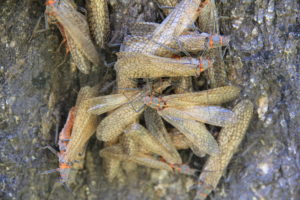 Parking lot to the River - Matching the hatch starts when you park the truck and continue on your way to the water's edge. While not the most appetizing script to read, plastered to your windshield and the grill of your car is a record of the bugs that were flying and hopping along the lake or river that you are planning to fish. The fragile wings of mayflies and sturdy grasshopper legs act like braille to the astute angler and are the first clues as to what flies they might fish that day. As you leave the parking lot and work your way down to the water, observe what is hopping and flying around you. Grasshoppers frantically leaping off the trail ahead of you, the wayward beetle landing on your shoulder, and the shrilling of the cicada, and caddis flies stirring into flight as you push through streamside trees are all indicators of food that might be falling or landing on the water.
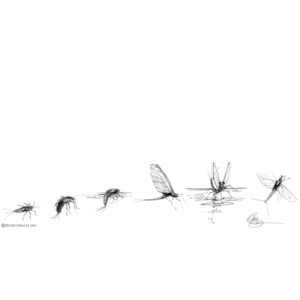 Under the Water - It is beneath the surface of the water that trout do 75% of their feeding, and that's where the angler's most important information will be found. Using an Invertebrate Seine along the streambed and pulling rocks from the current to observe what is holding onto their surface will give you a detailed menu of which bugs are most abundant, as well as their size and color so that you can lay your fly box alongside and choose the closest match.
 Recycle water: