Buy your Colorado 2017 fishing license now

From Colorado Parks and Wildlife Coloradans can purchase a 2017 fishing license starting March 15 through Colorado Parks and Wildlife. An annual license is good starting April 1, 2017 through March 30, 2018. CPW provides a range of options for anglers from the annual fishing license to the one-day fishing license as well as educational opportunities for those new to angling.

“Colorado provides outstanding fishing across the state for an amazing diversity of species ranging from cutthroat trout and kokanee to walleye and bluegill,” said Doug Krieger, CPW’s aquatic section manager. “I encourage experienced anglers to introduce a friend or family member to fishing this season. Fishing is a great activity to share with someone else and a great chance to get outside and enjoy Colorado’s natural resources.”

CPW stocks 90 million fish annually into waters throughout Colorado in order to ensure good angling opportunities. CPW does not receive general tax dollars and fishing license fees support all statewide hatchery and fish-stocking operations.

Buy a license online at CPW’s secure license application portal or by phone at 1-800-244-5613.

For individuals aged 18 through 64, a $10 Habitat Stamp is required with the first license purchase for the year. For more information, read about the Habitat Stamp.

Youth under age 16 can fish for free and CPW provides opportunities throughout the season to learn how to fish. Check the calendar on the CPW website for upcoming clinics.

Don’t forget to buy a state park pass when you buy your license. Colorado state parks offer 37 places to fish, 365 days of the year.

Get tips and stay up to date on Colorado fishing regulations by reading the 2017 Colorado Fishing Brochure. CPW also sends customers that sign up through the secure license application portal emails providing updated fishing conditions, tips, news and upcoming events as well as regulation updates.

Meet the TU Staff- Brian Hodge

Brian Hodge is an aquatic restoration biologist with Trout Unlimited’s Western Water and Habitat Project. He lives outside of Steamboat Springs and works on projects in the White and Yampa river basins. In 2015, Brian received the prestigious Rise to the Future Award from the U.S. Forest Service in recognition of his work in protecting watershed resources in the Routt National Forest.  We recently caught up with Brian and asked him a few questions: Tell us about your work and its goals.

My work is anything related to fishery restoration—from identifying, designing, and fundraising for restoration projects, to implementing and monitoring those projects.  I typically partner with private landowners and agencies, and I’m especially interested in conserving native fishes.  One of my primary goals is to plan and implement projects that benefit coldwater fish and landowner alike.  By helping to improve irrigation efficiency, for example, we might improve stream flows for trout and operational efficiency for ranchers.

What motivates you to conserve coldwater fisheries--why do the fish matter?

The fisherman and father in me hope to conserve fisheries so that I have opportunities to catch fish in the future and my son has opportunities to catch fish in the distant future.  And in my opinion, there’s a difference between catching wild and hatchery fish.  But fishing is only a piece of it—for me, conservation is about more than preservation of fishing.  The scientist in me knows that removing or replacing one piece of an ecosystem might set off a string of dominoes, with undesired results.  I see the logic in conserving the original pieces.  Finally, some part of me is, and always has been, drawn to fish.  I can explain why I like working on lakes and streams and why fish fascinate me, but not necessarily why it was fish—and not deer or football—that captured my interest 25-30 years ago.  Fortunately, I found a way to build a career around my interest.

What do you do for fun apart from work?

When I’m not working, I like to spend time with my son.  We ski, fish, and hunt, among other things.

What’s something people don’t know about you?

I coached junior ski racers for 12 years.  Ski racing is a great sport and, in my opinion, among the best for developing the mind, body, and spirit of young athletes.

Favorite book?  

I couldn’t choose just one favorite book, though a book I read about once a year is Indian Creek Chronicles by Peter Fromm.  It’s a true story about a 19-year-old who skips a semester of college to guard salmon eggs on the Selway River in Idaho.  It’s a great read on a camping or backpacking trip.  Other books I like are River of Renewal by Stephen Most and Totem Salmon by Freeman House. There’s definitely a fish theme.

Do you have a conservation hero?

I don’t know that I have a hero, but I know that I’m constantly motivated and inspired by the people I work with.  I work with an outstanding group of conservation biologists in northwest Colorado and, of course, I don’t have to look too far within TU to find conservation leaders.  If TU’s Chrysten Lambert and Brian Johnson (among others) succeed in removing four dams from the Klamath River, they’ll be my conservation heroes.

Mike Clark: Bamboo Master

By Randy Scholfield, TU communications director for the Southwest.  When he started making split-cane bamboo rods 40 years ago, Mike Clark had no idea he could make a living from his hobby.

“I built them to satisfy my fishing interests,” he says.

Then, one day, a man wandered into his heated garage workshop and asked to buy one of his rods. He offered to pay $250 for it, which kind of blew Mike away.

“I thought, ‘Wow, I can actually sell these?’”

That was 40 years ago, and Mike Clark has been steadily making traditional bamboo rods—and amassing a legendary reputation for craftsmanship—ever since. His South Creek Ltd. cane rods now sell for thousands of dollars, and there’s a long waiting list.

From his workshop in downtown Lyons, Colo.—a comfortable, rustic space filled with displayed rods and the tools of his trade—Mike makes handcrafted rods, about 40 of them a year. He estimates that he’s made more than 1,000 rods in his career.

A few years ago, there was so much demand that he had a five-year waiting list—that’s right, five years. Mike stopped taking orders for several years just to catch up.

The good news: in 2012, he started taking orders again. Almost immediately, he had more than 80 orders to fill.

He’s tried to find ways to speed up the process and turn out more rods, he says. But it can’t be done—not without sacrificing quality. And he’s not about to do that.

He’s one of those craftsmen for whom tradition means doing things the right way. No shortcuts.

Why bamboo? “It’s natural. It’s simple. It works,” Mike says. The slower, smoother action appeals to many anglers, as does the allure of tradition: bamboo rods got their start in America before the Civil War and reached a high point in the last century, when Colorado rod manufacturers such as Granger, Wright-McGill and Phillipson produced high-end cane rods that are still prized by collectors.

With his finger, he traces the grain down—each grain line is straight as an arrow and matches the grain on the next piece, all down the rod length. You won’t find that on machined rods, he says, where the grain oftectun veers out of alignment. Under stress, that piece can pop out. Hand-planing throughout the process gives the rods more uniform strength and stability.

Mike has designed his rods in the popular taper style of those Colorado companies, but he’s taken that tradition to another level with handcrafted details and exceptional finish.

“People are fascinated that someone is still making bamboo rods by hand, not someplace in China,” says Kathy Jensen, Mike’s longtime assistant and office manager. “What Mike is doing here is a 130-year old technology. He’s still making rods the traditional way.”

He starts with culms of Tonkin cane—the strongest and straightest grained bamboo species—stacked and aged for years in his shop. He then splits them and shaves the strips into equilateral triangles tapered down to precise tip dimensions, using metal forms and block planes. It takes a steady arm and good eye.

That’s a key to his craft: unlike the (still very fine) mass-produced bamboo rods on the market, which are machined, he hand planes each rod strip down to exacting specs. Then he glues the strips together into blanks and adds nickel silver hardware, exotic woods and other finishes.

While there are many amateur and professional cane rod builders out there, few of them plane by hand at every step. Instead, they do “rough cuts” with a machine and then finish planing by hand.

Mike allows that you can make very good rods that way, but the difference of a true custom rod is in the details.

He shows me one of his rod sections. With his finger, he traces the grain down—each grain line is straight as an arrow and matches the grain on the next piece, all down the rod length. You won’t find that on machined rods, he says, where the grain often veers out of alignment. Under stress, that piece can pop out. Hand-planing throughout the process gives the rods more uniform strength and stability.

For Mike, “custom” also means designing rods to the exact specifications of each angler. He likes to spend time with them to learn their casting styles and fishing preferences. “I can tweak a taper for them,” depending on their individual needs. He also follows their lead on aesthetic finishes and materials, from choosing the color of silk threads to adding ivory with scrimshaw or jade reel seats and diamond inlays.

He makes clear, though, that he’s primarily interested in making great fishing tools, not art pieces—he wants his customers to fish with his rods, not hang them on a wall.

Over the years, he’s slowly built his business, largely through word of mouth. He’s friends with local fly-fishing author John Gierach, who has written about South Creek rods and put his own name on a couple of signature rods. He also sells the flies of another famous friend—A.K. Best.

That cachet has attracted bamboo buyers from around the world, including celebrities like guitarist and fly-fishing enthusiast Eric Clapton, whose letter of thanks for a rod hangs on the wall, among many other testimonials.

While Kathy has made a few rods under his supervision, she wouldn’t feel comfortable putting the South Creek Ltd. name on one of her rods.

“Our clients pay for Mike’s high level of craftsmanship and years of experience—you can’t duplicate that.” It’s one reason why, when Mike retires, the South Creek Ltd. name and business will be retired, too.

While Mike’s not planning to retire any time soon, he’s planning to cut back on the number of rods he makes, to about 30 a year.

“We want to slow down and go fishing a bit,” he says.

He’s devoted to his local water, the St. Vrain, and in recent years has worked with the local Trout Unlimited chapter to raise thousands of dollars to restore the river habitat, which was badly damaged by extreme floods a couple years ago.

“We’re getting our fishery back to health,” he says.

Then he excuses himself to get back to his workbench. He has orders to meet.

For more info on South Creek Ltd. rods, go to www.southcreekltd.com.

Meet Dan Omasta, CTU Grassroots Coordinator

Let me begin by saying how honored and excited I am to be a part of the Trout Unlimited family as the new CTU Grassroots Coordinator.  Joining this team of dedicated staff, passionate volunteers, and avid sportsmen and women is a dream come true. 2014-01-22 04.50.03Growing up on the dirt roads just east of Parker, Colorado, I was fortunate enough to explore the many streams and lakes that this great state has to offer. In particular, I often found myself hiking up small creeks in the Gunnison Basin in search for the pockets of eagerly-feeding brookies that never once questioned my poor presentation or choice of fly.  By the time I was twelve years old, I had my own fly rod and I was hooked.
After graduating from the University of Colorado with a political science degree focused on land management and environmental policy, I did what any young conservation professional would do – I told my parents that I was moving to Crested Butte to be a ski bum.  This was certainly not the big life decision they were expecting, but (as parents do) they understood my deep connection to the mountains and rivers of Colorado.

While backcountry skiing and raft guiding in the Gunnison Valley certainly had their perks (and still do), after two years into my ski-bum career, I felt a strong drive to get out and do more.  That’s when the second “big life decision” phone call happened: Mom, Dad, I am moving to New Zealand to go fishing.  What started out as an adventure on the other side of the globe quickly turned into a vision for my future.  While living on the North Island, I was lucky enough to work for an outdoor adventure company that paired rafting and fishing with conservation efforts to protect a native species of duck.  The work was more than simply taking clients out for a fun day on the water or getting them into some big fish (and yes, they are big!) – we were out there to check traps, monitor mating pairs, and discuss the effects of the local hydropower regime on the native ecosystem.  This was what I wanted to do when I returned home.

Dan Omasta 2After moving back to Gunnison in 2013, I worked with a team of fellow raft guides and conservationists to start a non-profit rafting company.  River Restoration Adventures for Tomorrow (RRAFT) is a small outfitter dedicated to protecting critical watersheds through community engagement and hands-on restoration work.  Over the past three seasons, our team has worked with over 400 community volunteers and youth to conduct various conservation projects on over 300 miles of riparian corridor throughout Colorado and Utah.  Our trips ranged from cottonwood planting projects with Delta and Cedaredge High School youth, to overnight trips with the Adaptive Sports Center and Peace of Adventure, to 10-day surveys of invasive plant species along the Colorado River in Cataract Canyon with the National Park Service and the Southwest Conservation Corps Ancestral Lands crews.  Not only were we making a difference for the rivers, we were helping to inspire and engage the next generation of stewards.
Rivers hold a special place in my heart.  They are the lifeblood of our public lands and the key to healthy communities.  As we enter this new era of water management, a changing climate, and significantly increased demand for flows, our rivers and headwater streams will need our help now more than ever.

I am excited to be a part of the Colorado Trout Unlimited family as we all work together to protect and restore these critical ecosystems.  I am optimistic in Coloradoans’ abilities to find common ground and their ability to build bridges that allow for mutual benefit.  And I am looking forward to working with all of you – the driving force of TU – to protect our watersheds for the generations to come.  Thank you all for the hard work, resources, and time that you give for our public lands.  I am looking forward to meeting you and seeing you out on the river!

Behind the Fin: Marge Vorndam

How long have you been a TU member?  Since 1987.  I joined the Cheyenne Mountain Chapter of Trout Unlimited when I lived in Colorado Springs. I was on the Board there as Communications Chairman/Newsletter Editor (before e-mail and computers, we sent out paste-up hard copies every month) and helped with fundraising and projects with everyone there.

Marge 3After moving South in the early 1990s I transferred to the Southern Colorado Greenback Chapter of TU. After several years, I was on the Board again, serving mainly in the capacity of Communications Chairman. I will be retiring this year, but plan on maintaining an active role in the chapter. Hubby Paul and I are Life Members, and proud of that.
Why did you become a member and what chapter are you involved with?

My Master’s degree is Environmental Studies. Back when I joined TU, my personal interest was to see improvement in and preservation of water quality health across our landscape. The then-NTU mission was directed to that same theme.  NTU decided to change its mission several years ago to focus more on cold-water fisheries, but since I love to fish, it wasn’t a tough choice to stay with TU’s stance on fisheries and watershed conservation and water quality improvement.

What made you want to become involved with TU?

At the time that I chose to join and support organizations with a mission like my interests, TU was front and center!  I embraced their overall action agenda, and still can buy into it as  foremost of the conservation organization on my list.

What is your favorite activity or project that you have done with TU?

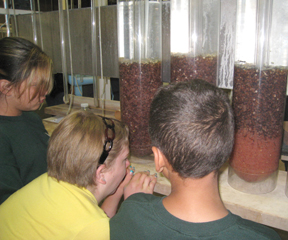
Marge 2Kids’ education.  Several years ago, Jenny Kedward from the local Sierra Club, Pat McGraw, then-President of our Chapter, and I collaborated to do a two-day summer camp program for 12-14 year olds in our community that concentrated on water education and fishing. We conducted it for four years in a row. Our chapter’s Frostbite Fish-Off Tourney, held for several years, is a close second.
I know you won’t tell me your top spot, so what is your second favorite fishing spot or favorite fishing story?

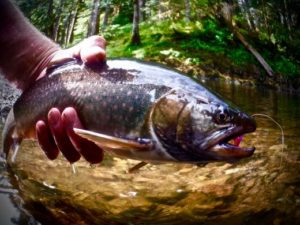
Lake Michigan and Michigan Rivers remain a favorite destination of mine, with my uber-fishing nephew, Kevin Dieleman. He takes me fishing for the BIG fish every time that I’m in MI. While big-fish fishing is a super-charged experience, I really appreciate the fly-fishing scene in Colorado  anywhere.

What does being a part of TU mean to you?

It’s an ultimate experience in helping to preserve the water resource. With a growing human population, more attention must be focused on water and how it is used and abused.  I appreciate what I can do to facilitate that experience for future generations. I was really proud to be part of the development of Colorado’s Water Plan for our area.

What else do you do in your spare time or for work?

I teach online courses for students at various colleges in Colorado and elsewhere related to Environmental Science.  It’s an integral part of what is important to me – getting students excited about what we all can do to support a better world for now and into the future.  Additionally, I am a Colorado Master Gardener and a Colorado Native Plant Master, both of which further my educational goals

Winter is Tenkara Time

By Jack Bombardier, Confluence casting Most anglers put their rods away once the snow starts to fall, and break out their skis or retreat to the tying bench. But a new tool has emerged over the past few years which has to potential to revolutionize the way we think about fishing during the “off season,” and that is the tenkara rod. Tenkara-style rods are usually around 12 feet long, with a fixed line and leader combination of 14 to 20 feet that comes straight off the tip of the rod. Tenkara setups use no reel whatsoever, and make fly fishing even easier than spin fishing. I guide float-fishing trips on the Upper Colorado River and have had days where novice anglers using tenkara rods have out-fished more experienced fishermen using conventional rods.

By now you’ve probably already heard about tenkara, and maybe even tried it yourself. The rods were brought to America by Daniel Galhardo of Tenkara USA, but there are now several different companies selling them at various price points and levels of quality. It is true that there are situations in which tenkara setups aren’t optimal, and that would include wade fishing big rivers, angling for large prey, and windy days.

Tenkara FishBut there is one scenario where tenkara rods really shine, and that is for winter tailwater fishing. Colorado is home to many productive winter fisheries, most located below big dams. Tailwaters include the Blue River below Dillon Reservoir, the Frying Pan below Ruedi, the Yampa below Stagecoach, and the Taylor, to name a few. What these waters have in common is a steady flow of (relatively) warm water flowing all winter that is conducive to insect hatches, and in turn to feeding fish. Waters like this are justifiably famous for the big trout they produce, but fishing them during the high season usually means casting right beside many others doing the same thing. The nice thing about visiting them in the winter when everyone else is on the slopes, or inside nice and warm and dreaming of April, is that you can often have these normally busy waters all to yourself.
The two main obstacles to winter fishing are rod guides that ice up and freezing hands, but tenkara rods solve both problems. (Freezing feet can also be a problem, but if you stand in the 40 degree water instead of the 10 degree air on the bank it helps!)  Tenkara rods have no guides to accumulate ice, so that’s one problem completely eliminated.  As for your hands, a tenkara only requires the use of one to hold the rod, so the other hand can stay warm in your pocket.  The hand holding the rod can be clad in a snowmobile mitten if conditions dictate, since tenkara rods don’t need delicate hand coordination to fish with. The only time you’ll get your hand wet is when landing a fish, but using barbless hooks can greatly reduce the amount of fish handling necessary when you do land one.

Flows coming out of dams are usually low, but low water like that is perfect for tenkara. Tenkara rods are mostly promoted as a way to fish small streams and headwaters, and they are great for that. But the more I use them, the more other situations I realize they are good for. Beginning fisherfolk? Check. Kids, or the elderly who no longer have good hand-eye coordination? Check. Backpackers, or people fishing from horseback or mountain bike? Check. Fishing from a boat, where casts are often fairly short? Check. But of all the varied uses of tenkara rods, there is none where they give you a bigger edge than for winter fishing. Once you’ve used a tenkara rod on your favorite tailwater, you’ll never take your regular rig out again when temperatures dip below freezing.

Jack Bombardier is a fly-fishing guide and TU member who owns and operates Confluence Casting on the Colorado River. 

TU on Clean Water Act Executive Order

Feb. 28, 2017 President Trump signed an executive order today that will begin to unravel protections included in the Clean Water Rule.

In response to the order, Trout Unlimited released the following statements from Colorado TU executive director David Nickum and from TU CEO/President Chris Wood.

David Nickum, executive director, Colorado Trout Unlimited

“The President promised to drain the swamp; instead, this shortsighted decision opens the door to drain our wetlands.  Colorado’s incredible outdoors quality of life depends on healthy, clean watersheds, and anglers know that starts at the source: the small, unassuming streams, headwaters and wetlands that the administration’s order has now put at risk. Even streams that don’t run year-round – which represent about 75 percent of Colorado’s stream miles – directly impact the health of the downstream rivers that we depend on for drinking water, irrigation, and our recreation economy. If we degrade and pollute those headwaters, it is only a matter of time until the next snowmelt or rainstorm sends those impacts down into our larger rivers and water supplies.

The Executive Order disregards the rule of law by proposing a standard that was rejected by a majority of the U.S. Supreme Court, and it disregards the laws of nature by pretending that downstream rivers can be protected without protecting their upstream sources.

As EPA and the Corps begin to apply this Executive Order, you can expect Colorado sportsmen and women to be aggressively involved, fighting for the headwater streams and wetlands that are essential for healthy fish and wildlife habitat.”


Chris Wood, President and CEO of Trout Unlimited

“Today, President Trump signed an executive order that begins to unravel the protections of the Clean Water Act for small headwater streams.

The Clean Water Rule was finalized in 2015 after more than one million public comments and extensive scientific review. It provides protection to streams and rivers including 60 percent of the stream miles in the U.S. that flow seasonally. Protecting these headwaters is important not only to anglers, but also to the one in three Americans whose drinking water comes from small seasonal streams.

The Executive Order directs the Army Corps of Engineers and the EPA to rescind and revise the Clean Water Rule. It also directs the agencies to use former Supreme Court Justice Antonin Scalia’s minority opinion that said seasonal streams do not merit protection, as a basis for the revision. If Justice Scalia’s direction is followed, 60 percent of U.S. streams and 20 million acres of wetlands would lose protection of the Clean Water Act; an unmitigated disaster for fish and wildlife, hunting and fishing, and clean water.

Sportsmen and women have a simple question for the President and EPA Administrator Pruitt: are we going forward or backward on clean water? Today’s announcement is a big step back. Legally, scientifically, and logically a reliance on Justice Scalia’s opinion is wrong-headed—but there’s still time, working through the new rulemaking process, to make it right.

When the new Administration replaces the Clean Water Rule, it must listen to the voices of tens of millions of sportsmen and women who want more clean water, more fish and wildlife habitat, and more hunting and angling opportunities. The Trump Administration can change direction on this Rule but they can’t change the fact that clean water is not a political issue. It is a basic right of every American.

Gravity works cheap, and it never takes a day off. The Administration cannot stop water flowing downhill—and we all live downstream. To be effective, the Clean Water Act must be able to control pollution at its source, upstream in the headwaters and wetlands that flow downstream through communities to our major lakes, rivers, and bays. The Administration’s action places the health of 60 percent of the stream miles in the U.S. at risk. Trout Unlimited intends to work with our hundreds of thousands of members and supporters to reverse course on this misguided direction.”

For more information, go to http://standup.tu.org/stand-up-for-clean-water/

Contact:

David Nickum, dnickum@tu.org, (720) 581-8589

Randy Scholfield, Southwest Region Communications Director, rscholfield@tu.org, (720) 375-3961


Trout Unlimited’s mission is to conserve, protect and restore North America’s coldwater fisheries and their watersheds. www.tu.org

Stand Up for Clean Water

Whether you fish or just simply understand the value of clean water, there is no law more important than the Clean Water Act. In 2015, the EPA developed a rule that affirmed Clean Water Act protections for “intermittent and ephemeral streams.” Protections for these streams had been threatened by two splintered Supreme Court decisions in the 2000s. These streams —the headwaters of our nation’s rivers —provide us the fisheries we cherish and the clean drinking water we require. But this essential rule is now under threat of being revoked.

Urge your state representatives to stand up for clean water!

Nearly 60 percent of all of the stream miles in the United States are classified as small, intermittent or headwater.

Protecting these waters is essential to ensuring that adjacent or downstream waters remain clear, clean and healthy for fish, wildlife and communities. Trout Unlimited members work hard to protect our headwaters. We understand that keeping our waters healthy is much more effective than trying to repair a stream after it is damaged or destroyed.

Take a stand and speak up for clean water!

Voices from the River: A winter respite

By: Randy Scholfield, communications director for TU’s southwest region. Here on the Front Range, where plains meet mountains, winter weather is always unpredictable, a hit-and-run affair. We might get a foot of snow—and three days later, it’s 70 degrees and you get a hatch of Boulder dudes in shorts and flip-flops.

For the past week, we’ve been having one of those almost surreal winter respites. While it’s been lulling me into expectations of equatorial warmth in February, I know deep down that this is an illusion, a fleeting sideshow. And after weeks of indoor torpor and unhealthy levels of binge TV, I know I need sunshine and a quick fishing fix.

So, on short notice, I grab my rod and head out to seize the unseasonable afternoon.

One of my New Year’s resolutions is to explore more of the miles of creek waters close to home. Boulder Creek, for one, is 15 minutes from my house, and I sometimes neglect it in the search for farther-flung adventures. Through downtown Boulder, the creek is a surprisingly reliable fishery throughout the year.

But my real interest this afternoon is in exploring new (for me) and less-pressured areas of Boulder Creek on the edge of town, where the creek meanders through open space and pastures, often hidden behind a suburban facade of office buildings and warehouse yards.

I park at a post office close to a major intersection, clogged with afternoon traffic, and follow a nearby footpath to the wooded creekline. I’ve heard that what this outlying area of Boulder Creek lacks in quantity it makes up for in quality—while it’s hit and miss, larger browns are sometimes pulled out of these unassuming waters.

Today, the creek through most of its length has a ditchy, diminished look—I’m looking for deeper, tanky holes where trout are likely stacked up against the lower flows. I walk along the creekbank toward the large bridge overpass, the steady hiss of commuter busyness and frantic schedules sounding louder.

Heading upstream into trees, I come up on a long deep holding run below a riffle. The water is a clear, greenish hue with cobbled depths, with several fishy tailouts below the riffles and meandering lines of foam near the far bank.

A few casts into the head of the riffles brings quick confirmation of what I suspect. Through the drift, I see white flashes in the depths as the fish turn in striking at the nymph rig. I quickly bring in a couple of small browns and have a few more strikes. They’re going for a small flashback prince.

Taking a break, I sit on the bank for a minute, where a stream of sunlight slants through the trees. The midday sun is piercingly warm on my neck and lulls me into a happy summerlike reverie. This is February? I should have brought a beer, I think. Hot and thirsty, I take some long swigs of water and drift away, watching the stream.

Then a man appears by my side, almost startling me. He is wearing glasses, a button-down work shirt and one of those government-issue looking name ID tags around his neck. He looks like a bureaucrat.

He introduces himself and says he fishes this stretch regularly on work breaks. Through the trees, I see the outlines of a large glassy building across the highway.

“I caught an 18-inch brown just past the bridge there,” he offers, nodding upstream. He caught it on a Tenkara rod, he says, and pantomimes the battle that ensued, trying to follow the fish up and down the stream with no extra line or drag help.

After a few minutes of angling chat, he wishes me luck and ambles upstream, stopping at different points to lean over and inspect the water.

He, too, is a fellow escapee, chasing this summer lark of an afternoon.

I walk upstream, fighting thick brush to get to glimpsed holes and runs, hoping to find the secret redoubt of one of those big brown outliers.

At one bend along a cutbank, I catch another small fry. And then a few casts later I break off my rig on a submerged inner tube—flotsam of lost summer fun. Maybe it’s a sign that I’ve pushed the day and my luck far enough. The sun is fast sinking in the sky, as I clamber through the brush and make my way back to the creek trail and then the concrete footpath, bicyclists whizzing past.

Tired, I walk lazily back to the car, across a major intersection, feeling the eyes of the lined-up commuters in their machines, seeing the cold blue clouds gathering in the mountains and eclipsing the retreating sun.

The big brown never reveals himself. Not today. And winter will return with a vengeance soon enough.

But that’s OK. Driving home, I know this afternoon is a stolen gift. I’ll take it.

A Climate Plan on the Dolores

By: Randy Scholfield, communications director for TU's southwest region. Like many rivers across the West, the Dolores River in southwestern Colorado is on the front lines of climate change impacts. As the climate warms, the river will face lower flows, higher temperatures, and increasing stresses on fish and aquatic life.

How can we more effectively address these changes on a watershed scale? That’s the question driving a recent study by Trout Unlimited and other groups of the Dolores River basin.

“We know there will be change. The question the study addresses is what kind of change can we expect, the approximate timing and what are the impacts,” Duncan Rose of the Dolores River Anglers chapter of Trout Unlimited told the Durango Herald in a recent article.

To find those answers, the TU study—conducted in partnership with Mountain Studies Institute of Silverton—looked at climate models and trends between 1949 and 2012 that showed wetter periods of higher temperatures followed by longer periods of intense drought.

In projecting those trends into the future, some sobering results emerged: based on worst-case drought scenarios, the 46 trout streams in the Dolores Basin could lose some 44 percent of their flows in the next 50 to 70 years. Some streams, especially at lower elevations, might be lost causes to fish habitat, becoming intermittent or vanishing entirely.

But the study found that other middle- and higher-elevation streams could be made more “resilient” against the worst impacts of climate change through adaptive strategies such as habitat restoration, including improving in-stream structure such as boulders and pools to create cooler refuge areas for trout, and restoring streamside vegetation to provide more shade.

As important, the study field-tested an analytical model to determine which stream miles would best lend themselves to these efforts and provide the most “bang for the buck” for conservation outcomes.

“This is a framework that can be used across the West,” says Garrett Hanks, TU's Southwest Colorado field coordinator. “The issues in the Dolores are similar to many of our coldwater fisheries, and if we're going to be active in managing our coldwater watersheds into the future, this framework can inform many levels of TU’s strategy, such as how to identify and prioritize our protect, reconnect and restoration work.”

TU’s stream resilience work gives hope that many of our best trout waters can survive the worst impacts of climate change. The Dolores study could give TU another science-based tool for deciding where and how to dial in this adaptation work in watersheds across the West.