Snowpack and Our Rivers

By: Danielle Adams For Colorado, the snowpack levels don't only affect recreation, they affect our way of life. While the accumulation may wreck havoc on commutes, the snow provides Colorado with some much needed moisture during the hotter, dryer months.

Thanks to a strong El Niño winter, the buildup of snow accumulation throughout the state has increased each basin's snowpack to above average.

winter streamSnowpack is a seasonal accumulation of slow-melting snow, which becomes compressed in layers by its own weight over time. As there is more snow accumulation in a region, the snowpack becomes more dense. The denser the snow, the more water storage capability it has--a hard layer will have around a 40% water to 60% air ratio.

According to Denver Water, collection in the Upper South Platte watershed is 126% of normal and the Upper Colorado River watershed is 118% of normal. If snowfall can continue to build snowpack in the coming months watersheds across the state will be in much better shape than previous years. In an article by CBS Denver, Noah Newman with CSU's Colorado Climate Center said, “March is our biggest month for snowfall. If we don’t see the expected March snow then these numbers will go down."

The total amount of snowpack is essential to Colorado's freshwater ecosystems because it serves as frozen water storage. The accumulation of water in the river basins and watersheds across the state is in direct correlation with the amount, and melt-rate of the basin's snow total.

Trout species as well as the bug life and standing stock in every ecosystem require Browns Canyon KPwatersheds to be at normal levels in order to flourish. Dissolved oxygen (DO) is fundamental to aquatic life. With higher levels of snowpack, there is more capability for dissolved oxygen in water due to higher water levels and colder temperatures. Cold water can hold more DO than warm water. Higher DO levels are achieved when water levels and flow rates are high and where the water is aerated in the rapids.

Most species of trout requires 5-6 times more DO when water temperatures reach 75 degrees compared to when they are at 41 degrees. "Species that cannot tolerate low levels of DO - mayfly nymphs, stonefly nymphs, and beetle larvae - will be replaced by a few kinds of pollution-tolerant organisms, such as worms and fly larvae. Nuisance algae and anaerobic organisms (that live without oxygen) may also become abundant in waters with low levels of DO," according to Brian Oram with the Water Research Center. Fish reproduction can also be hampered if there is not sufficient snowpack because eggs and fish in immature stages require much higher DO content in water.

So what do low levels of snowpack mean for us on a conservation level?

2013 JUL 21: A look into the Hermosa Watershed Protection Action of 2013.There are a few things to keep in mind in the event that snowfall patterns slow, and snowpack fails to develop as extensively as predicted. As the spring and summer months draw nearer, lower snowpack levels brings strained trout populations. In these circumstances, trout will be trying even more desperately to conserve energy in order to utilize less oxygen. This means, that even with all steps taken to properly handle a fish, under these already stressful environmental factors, the fish has less of a chance for survival. In order to keep our fish populations strong and growing even under preexisting environmental stress, catch and release tactics must be carried out even more delicately than usual.

Next time you're stuck in traffic due to a snowstorm and the stress levels are rising, keep in mind that the snow is good for our waters and trout. The higher levels of snowpack mean higher watershed levels and lower water temperatures, leading to higher levels of dissolved oxygen- making bugs and fish, and ultimately the angler happier.
What's Up With Women

Hey LADIES!! Trout Unlimited is working hard to create opportunities for women to get involved in both our conservation work, and getting out on the river to fish!!

Read the latest Women's Initiative Newsletter to find out what has been happening across the country!!

February Women's Newsletter IMG_0859

Are you a women but do not feel like you have connected with Trout Unlimited yet? If so, we have the perfect weekend planned for you!! Come to our annual Rendezvous. We have an entire weekend planned just for women!! Find more information at this link:


http://coloradotu.org/2016/02/rendezvous-registration-now-open/

The women's workshops and agenda at Rendezvous are a big part due to the great work by CTU's First Lady, Beckie Pendergrass.

Beckie has been a Real Estate broker in Montrose for the past 25 years except for an eight year's break doing development and humanitarian work overseas in Thailand and Ghana, Africa. She is also a "Trout Bum's Widow" being married to Marshall - an avid fly-fisherman and current President of Colorado Trout Unlimited. Being married to the president of an organization could possibly be a busy and exhausting role, however Beckie has taken the role of first lady and embraced it!!

Beckie PendergrassBeckie has been involved with local TU chapter activities in Montrose & Telluride the last 8 years since returning from Ghana - coordinating banquets, fund-raiser events, etc. Her and Marshall have been traveling across the country attending National TU regional and annual meetings learning all about the great work TU has going on. Her biggest impact in Colorado has been her involvement in the CTU Rendezvous by coordinating the Women's Weekend. She not only initiated this program but has been the key to its continued expansion. The ladies that connect with Beckie always leave wanting more! Come meet Beckie this year at our Rendezvous at Hotel Colorado.
SVATU Chili Night and Gear Swap

By: Danielle Adams SVATU Chili Night is Coming in February!

Did you buy too much at the fishing show and need to off load some neglected, under-used gear? Do you have old fishing equipment laying around taking up space? Is there new or used gear that you have been looking to add to your repertoire? Then the SVATU gear swap is for you, and you don’t want to miss it!

396725_127731590715852_355757329_nThe St. Vrain Anglers Chapter of Trout Unlimited is hosting a Chili Night, and first ever SVATU Gear Swap at 6:30 pm on Thursday February 18 at the American Legion. The event is still open for volunteers to bring their favorite chili! Please contact Mark Rayman (stvraintu@gmail.com) if you’d like to bring your award winning chili to share.

SVATU GEAR SWAP:

If you have equipment you want to sell or trade, pull your fishing gear and fly tying kits out while the weather is cold, decide what you no longer need, and bring it to Chili Night! There will be tables set up with ample space to display your gear, and help you convert it to something else. This is not fundraiser, and SVATU isn’t involved with any money, but it will be a great community event where you can meet new people, and learn more about the conservation, protection, and restoration efforts of the Saint Vrain Anglers Trout Unlimited chapter. Come be a gear-hound, and eat lots of scrumptious food!


Thursday February 18, 6:30pm – 9:30pm

American Legion

315 South Bowen Street,

Longmont, CO 80501


CPW Receives Prestigious Fisheries Award

On January 13, the American Fisheries Society presented the Aquatics Research Section of Colorado Parks and Wildlife with the prestigious Sport Fish Restoration Outstanding Project award for 2015. The award was given to CPW for their efforts in restoring rainbow trout populations throughout the state- specifically for a research project completed in 2014.  In this project, CPW scientists and researchers determined the best ways to breed and maintain stocks of whirling disease resistant rainbow trout in hatcheries and in wild populations in Colorado.

For more than 20 years, since the early 1990s when whirling disease was discovered in Colorado, CPW aquatic scientists have been studying the disease and developing strains of rainbow trout that are resistant.

CPW_SiteLogoThe research was conducted in the CPW Fort Collins hatchery by aquatic research scientist Eric Fetherman, and aquatic wildlife research chief George Schisler. Also contributing significantly to the work was Brad Neuschwanger, research hatchery manger, and Tracy Davis and Chris Praamsma, research hatchery technicians.

"This award provides national recognition for the work the research staff has done on whirling disease issues," said Doug Krieger, acting aquatics section manager. "We lead the nation in whirling disease research, and states throughout the West are interested in what we're doing."

Grants from the U.S. Fish and Wildlife Service helped fund the research with money collected through excise taxes on fishing and boating gear and fuel. In 2015, Colorado's share of the grant funds totaled $8.3 million.

Although the work over the past 20 years has been difficult, the work has paid off and Colorado is home to some of the leading research regarding Whirling disease. Hatcheries have been restored and wild populations of rainbow trout are thriving.


Windy Gap Bypass in the Works

Known for carving majestic canyons, millions of years ago the headwaters of the mighty Colorado River carved through the rocks west of Granby and created a small riparian valley where air currents blow through- earning a well-deserved name- Windy Gap. Although the wind continues to gust, the quality of the water has diminished over time.

In the 1980's, Windy Gap Reservoir was built directly inline with the river's east to west flow. Because of this placement, the river velocity drops as it enters the reservoir, resulting in increased sediment buildup. Currently, reservoir permits require building off channel to avoid the problems found in Windy Gap.

TU-CO-201009128-0028

Because of the sediment build up, the Gold Medal status of the Colorado is in jeopardy. Over the years, as the sediment builds, Colorado Parks and Wildlife has seen a decrease in bug life and feeder fish. One of the feeder fish that has almost vanished in the river is Sculpin- a small fish species that not only do trout rely on, but the health of the river relies on too.

“We have looked and looked, but we do not find any sculpin in that section of the river, all the way to Gore Canyon," said Colorado Parks and Wildlife Aquatic Biologist John Ewitt to Sky-Hi Daily News in Grand County. Sculpin are sensitive to environmental impacts and the levels of sculpin are often used to gauge overall river health.

CPW has also noted a decrease in mayflies, caddisflies, and stoneflies- three of the main food sources for trout in the area.

But the solution to the problem is near. With help from Trout Unlimited and local organizations, a project to bypass the Windy Gap reservoir is in the works.

Over the last 15 years, Trout Unlimited and local landowners have been lobbying with Northern Water to find a solution to this problem. The groups became known as the Upper Colorado River Alliance (UCRA) and comprised the idea of bypassing the reservoir.

Northern Water was intrigued by the idea as they were looking for a similar way to expand their water storage capabilities. In a project they are calling the Windy Gap Firming Project (WGFP), they would build Chimney Hollow Reservoir to solve the storage problem. When Northern Water went to the Grand County government for a permit on Chimney Hollow, there was a condition for the Windy Gap bypass.

The long-term project will include digging a portion of Windy Gap and using the dirt to build a berm in the current reservoir to create a smaller, adjacent body of water. This will create a new channel for the Colorado River to flow through. Preliminary engineering is expected to be completed this summer.

The total price for the project will be around $9.6 million- and a little under half of that, 4.1 million, has already been secured for the project. Along with $2 million towards the project, Northern Water has contributed around $300,000 towards environmental studies below the reservoir. The state of Colorado has also contributed $2 million to the project.

The Colorado River Headwaters chapter of Colorado TU has been on the forefront of this problem and has been a major part in helping get the bypass underway. With more help from volunteers and members, the bypass can be completed and the 20 miles of Gold Medal waters along the Colorado can thrive.

President vetoes bill to block headwater protection

Yesterday, President Obama vetoed SJ Res 22, which would have nullfied rules adopted last summer by the Environmental Protection Agency and Army Corps of Engineers to clarify that Clean Water Act protections apply to the small headwater and feeder streams and not just the downstream perennial waters.  Click here to read a response supporting these Clean Water rules, from Colorado TU and the Rocky Mountain Farmers Union. The President's veto message appears below and echoes TU's argument that protection of our larger downstream rivers depends on protecting them from their source in the headwaters. Colorado TU would also like to thank Senator Michael Bennet, who voted against SJ Res 22 and in support of anglers and water quality protection.  (Update: the Senate voted today 1/21/16 and the President's veto was upheld.  Thank you to Senator Bennet and all those who stood up in defense of water quality.)

The President's Veto Message follows:

I am returning herewith without my approval S.J. Res. 22, a resolution that would nullify a rule issued by the Environmental Protection Agency and the Department of the Army to clarify the jurisdictional boundaries of the Clean Water Act. The rule, which is a product of extensive public involvement and years of work, is critical to our efforts to protect the Nation's waters and keep them clean; is responsive to calls for rulemaking from the Congress, industry, and community stakeholders; and is consistent with decisions of the United States Supreme Court.

We must protect the waters that are vital for the health of our communities and the success of our businesses, agriculture, and energy development. As I have noted before, too many of our waters have been left vulnerable. Pollution from upstream sources ends up in the rivers, lakes, reservoirs, and coastal waters near which most Americans live and on which they depend for their drinking water, recreation, and economic development. Clarifying the scope of the Clean Water Act helps to protect these resources and safeguard public health. Because this resolution seeks to block the progress represented by this rule and deny businesses and communities the regulatory certainty and clarity needed to invest in projects that rely on clean water, I cannot support it. I am therefore vetoing this resolution.


BARACK OBAMA

THE WHITE HOUSE,

January 19, 2016.


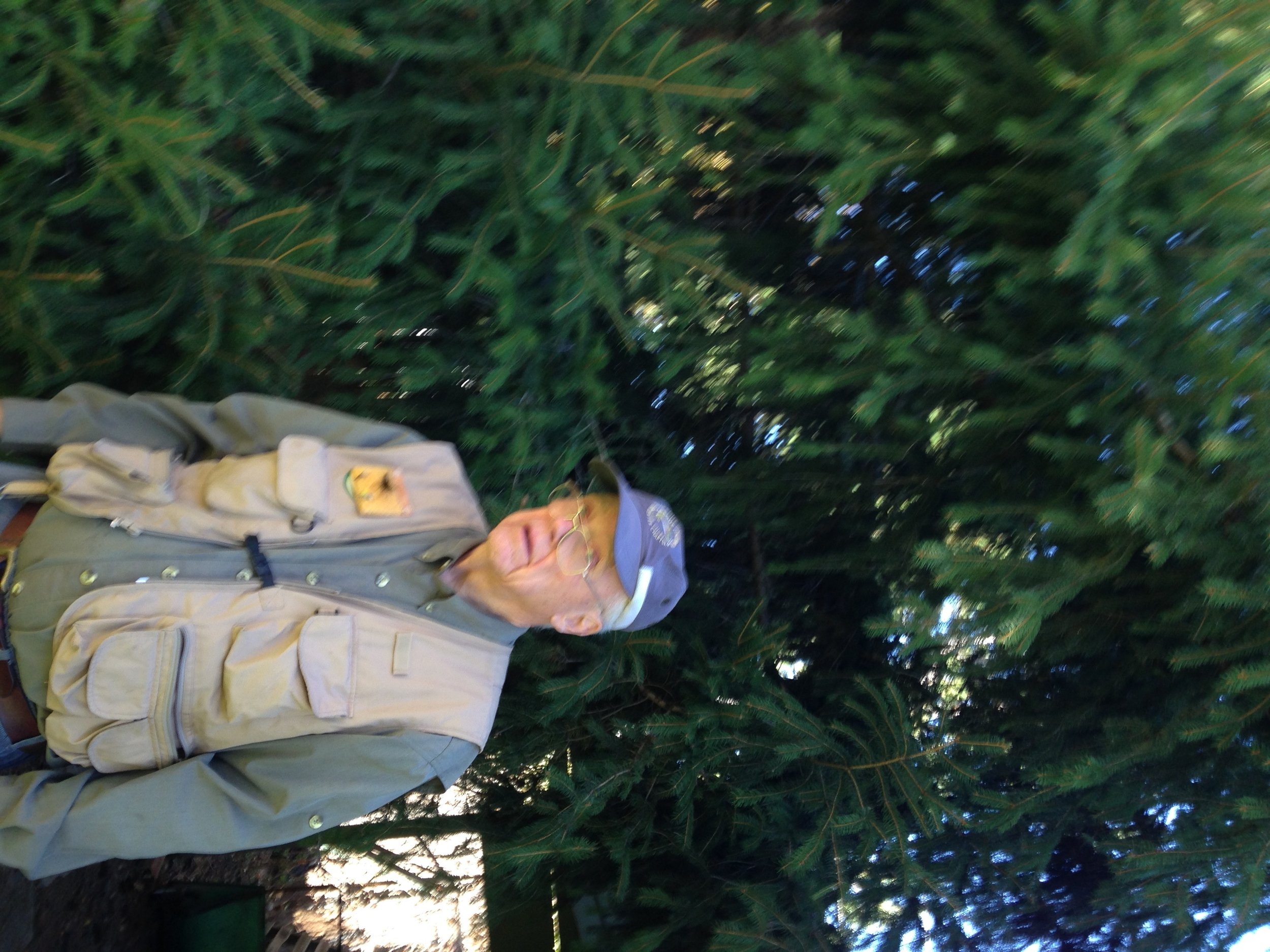
Behind the Fin: Rick Tarr

  • Name: Rick Tarr
  • Member of West Denver Chapter
  • TU Member for 15 years
  • Retired Faculty of Political Science Department at Metro State
  • Best Quote from Rick: “A number of years ago, the Chapter established a fully equipped fly tying classroom where we teach the kids (two sessions of ten each) how to tie two simple flies and then help them fish in the stocked pond.  We also make them aware of the many challenges facing the task of maintaining healthy trout habitat.”

How long have you been a TU member?

I’m not sure of the exact time that I joined.  But I’d say, about 15 years.


Why did you become a member?

After retiring from the faculty of Metro State in 1997 in the Political Science Department, I had time for volunteer activities.  In addition to TU, I have a weekly volunteer activity with Project Cure, which collects donated medical supplies that are then shipped overseas where needed.


IMG_0597What made you want to become more involved with TU and which chapter are you currently involved with?

As a long time trout fisherman I was naturally interested in the trout habitat conservation and restoration activities put on by TU- Especially in our "home water" of Clear Creek. The West Denver Chapter is closest to my home in Lakewood.


What is your favorite activity or project that you have done with TU?

I have enjoyed the various educational activities of our Chapter.  Most importantly our fly tying, fly fishing and conservation program for sixth graders at the Jefferson County Outdoor Education Lab School (near Bailey) for 6th graders.  We do this whenever it is requested by their teachers as an optional activity during their week at Windy Peak.  A number of years ago, the Chapter established a fully equipped fly tying classroom where we teach the kids (two sessions of ten each) how to tie two simple flies and then help them fish in the stocked pond.  We also make them aware of the many challenges facing the task of maintaining healthy trout habitat.


What is a favorite fishing spot and favorite fishing story?

I've had a number of enjoyable days fishing in California (home state), Wyoming, Oregon, Montana, Alaska, British Columba and Argentina.  But trout fishing in New Zealand is the most memorable.


To you, what is the best tactic or fly for catching trout?

My favorite fly is gold ribbed hare's ear.


Beyond being an awesome angler, what else do you do in your spare time or for work?

My other hobbies include: wood working, kayaking, aviation, travel.

Benefits to Tying Your Own Flies

For many fly fishermen, the winter months are the best time to sit under a desk lamp in the basement with nothing but their fly tying tools and their imagination. Why?

Because fly tying offers benefits that cannot be achieved through purchasing flies.

For many, the cold, winter nights are spent in front of the bench because they feel it completes their fishing experience. According to the folks at Trroutfitters "There is no better feeling than catching a fish on a fly that you yourself have tied – period. When I can catch a fish on a fly that I have made myself, I feel as though I am completing the circle of casting, catching, thinking and preparing.  In the scheme of things, what else is there?"_MG_0006

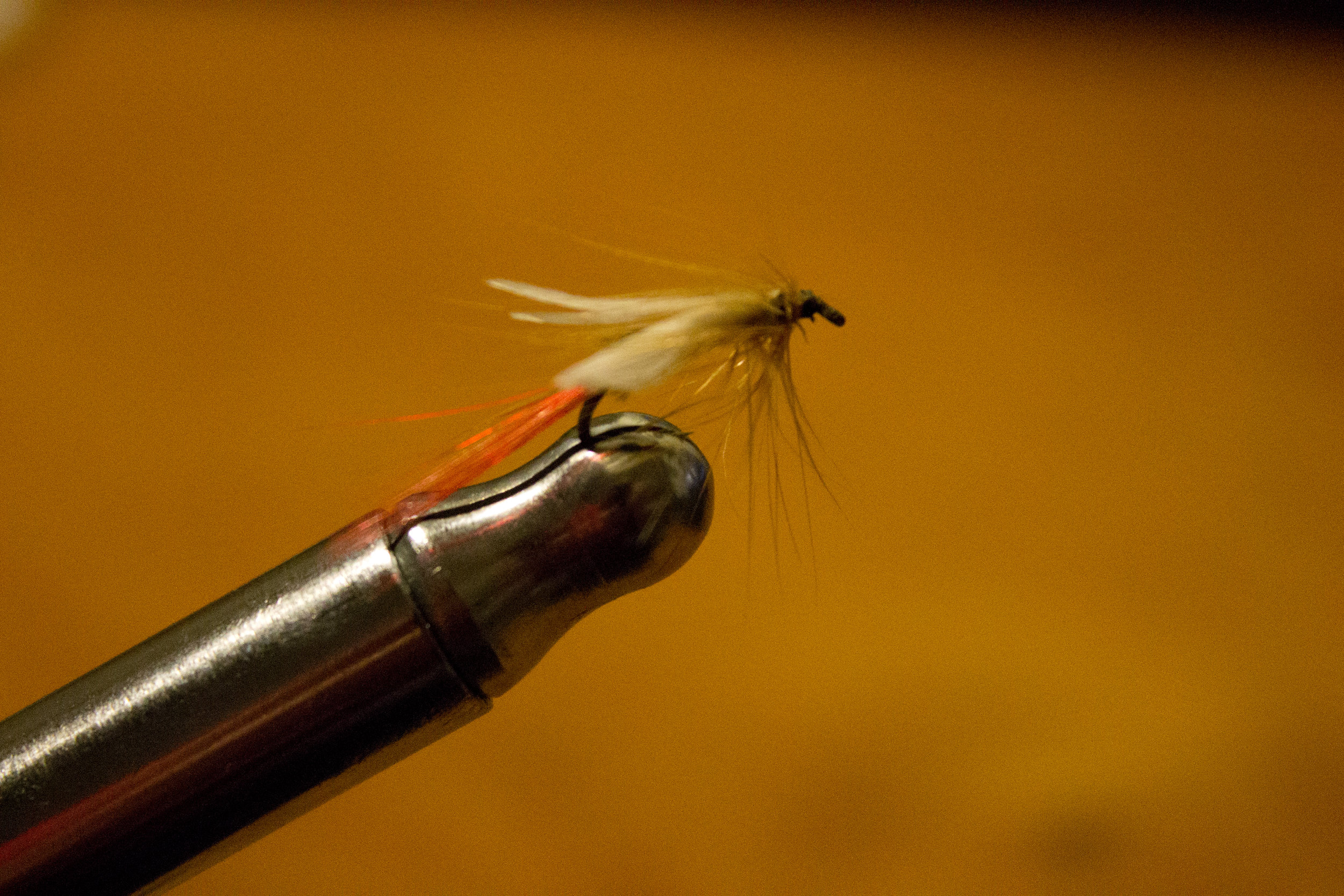
When an angler ties their own fly, they are creating the pattern, size, color and style. All of these factor in to catching a fish. It's one thing to catch a fish on a fly that was tied by a professional, but when it's your own product in the lip of that rainbow, it provides overall satisfaction.

When an anger is tying their own fly, it allows their imagination to run wild. There are countless numbers of patterns in the world and this allows tiers to try something that probably can't be found in a local fly shop. It also provides tiers opportunities to learn more about the entomology of their local waters.

Through tying, anglers can get a chance to pick the brains of their local fly shop guides, their friends and other anglers about what patterns and colors work best in each area. There are also opportunities for amateur tiers to meet and tie next to some of the top tiers in the area and learn different tips and tricks.

It's a common thought that tying flies vs. buying flies is also a Dry Flygreat way to save money. And like most things, the correct answer is, "It depends." The initial cost of purchasing the tools and materials can range anywhere from $50-200+ but, again, this depends on the quality and quantity of materials.
For someone to tie 25 wolly buggers, it would roughly cost them $18. Include this to the initial cost of around $100 (basic beginner tools), and it's going to be $118 for 25 flies. Maybe even less if the first few are no good.

But, if you look at the initial cost as an investment (which it is), then it could be cheaper to tie flies over time. If the average quality fly costs around $2 then 25 flies would be $50 each purchase, whereas it would be around $20 for each set of 25 flies after the initial, start-up cost.

Some people prefer to purchase flies for simplicity sake. It's certainly easier and more time efficient to go into the local fly shop and ask the outfitters which flies work best and they'll point them to a few perfectly tied flies that will catch fish.

But while the fishing may not stop in winter, those long winter nights are perfect for those who long for sitting in front of the bench and letting their imagination and hands run wild because of the benefits offered through fly tying.

And who knows? That strange fly that only you have, may just catch a few fish.