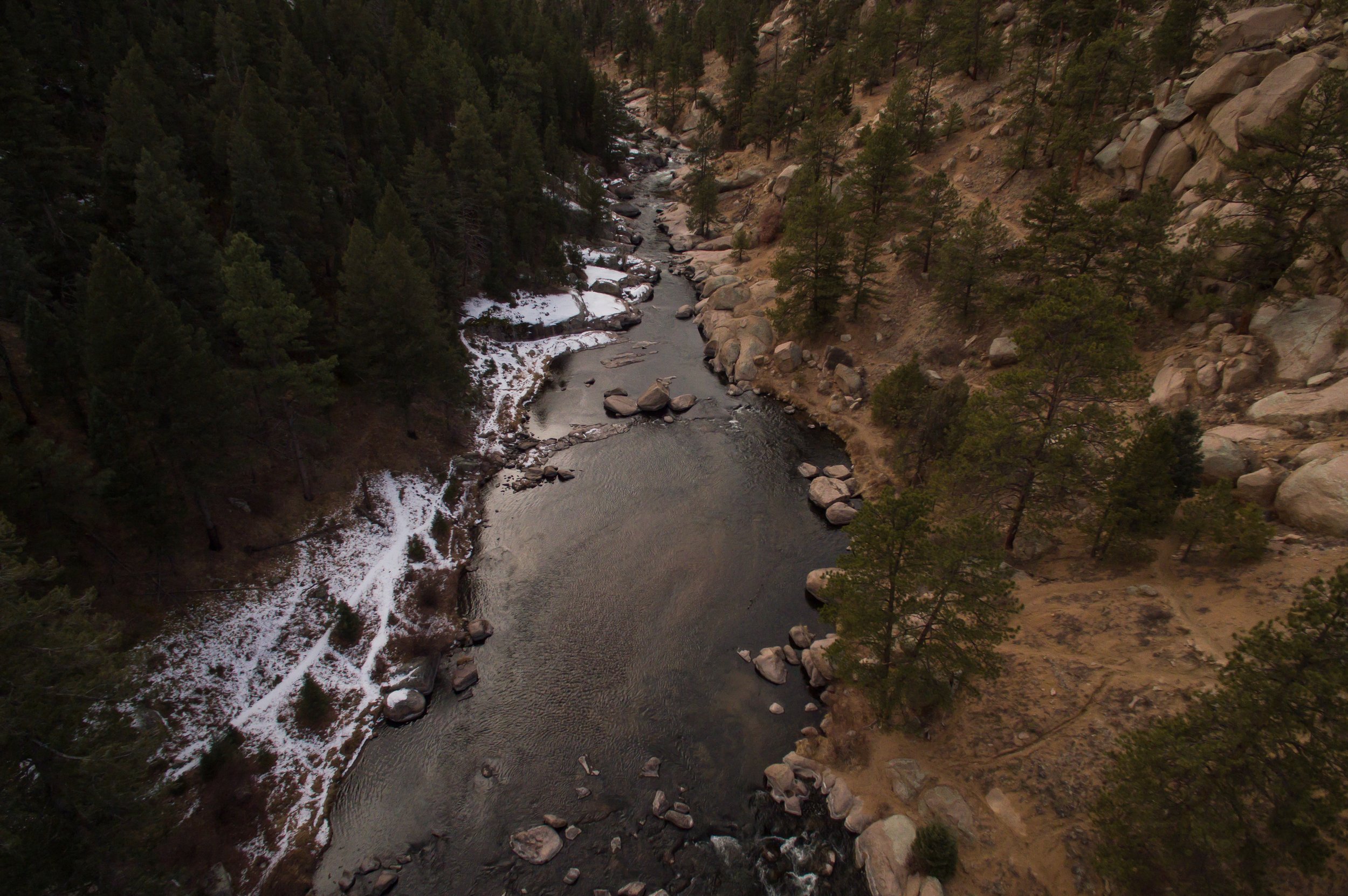
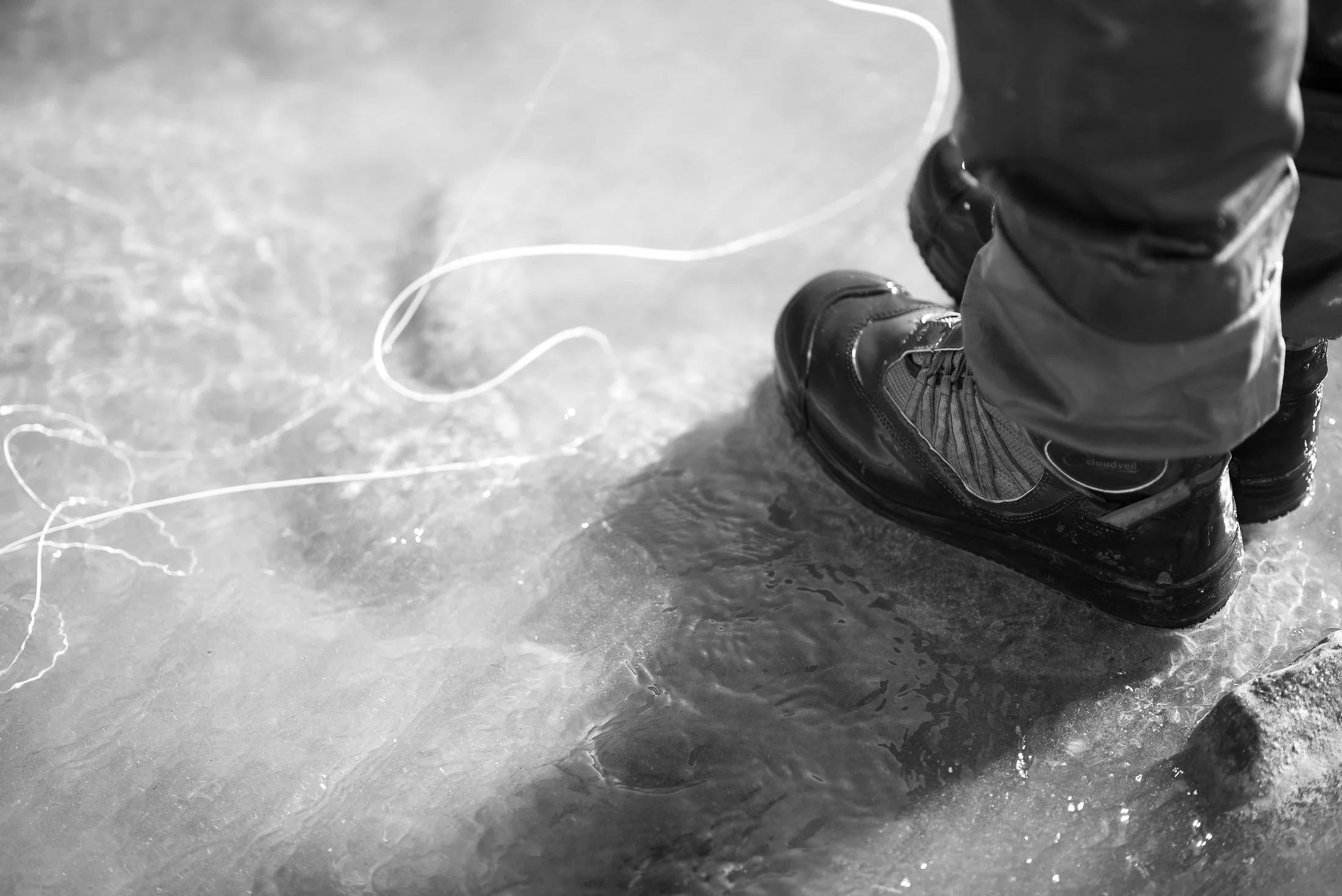
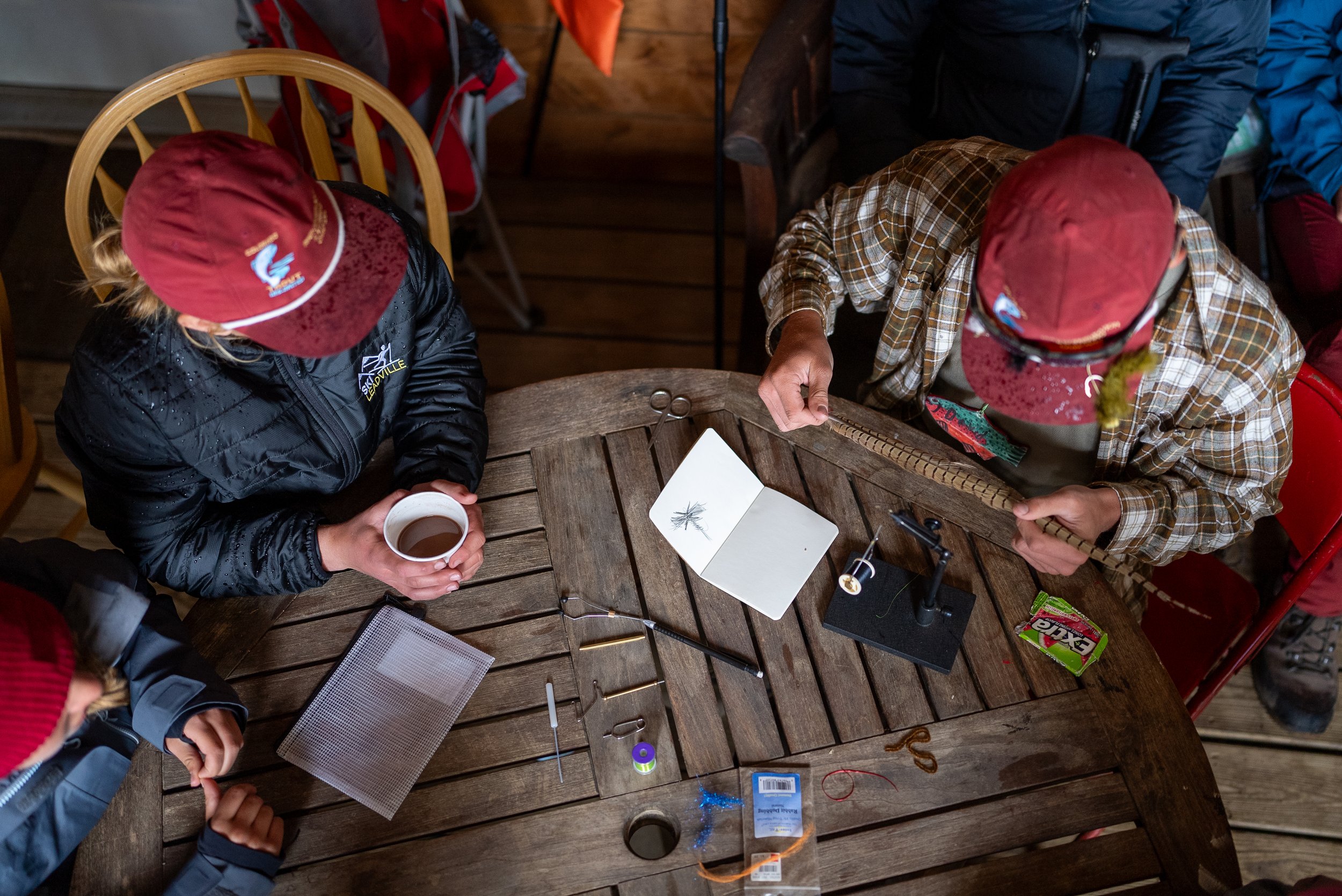
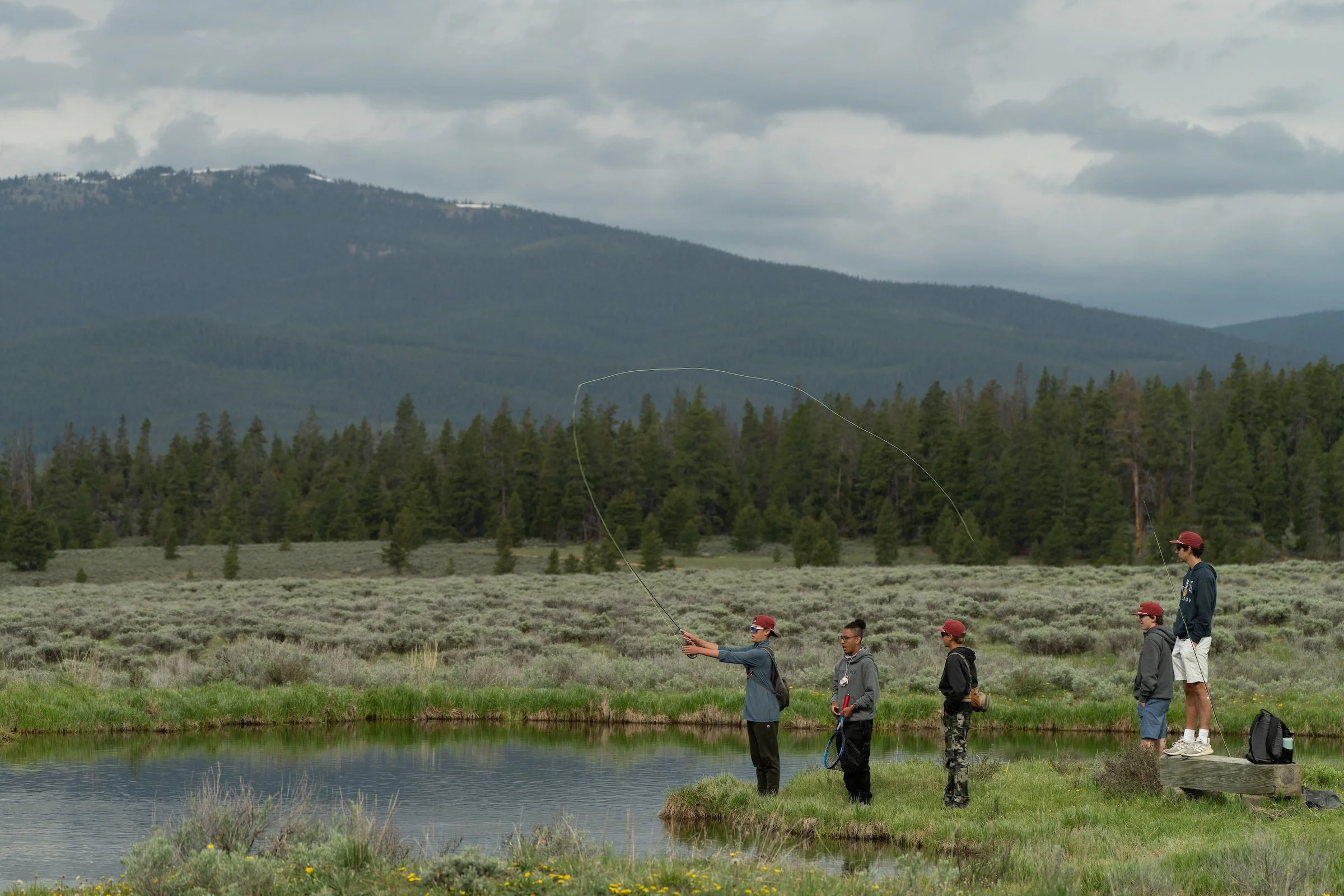
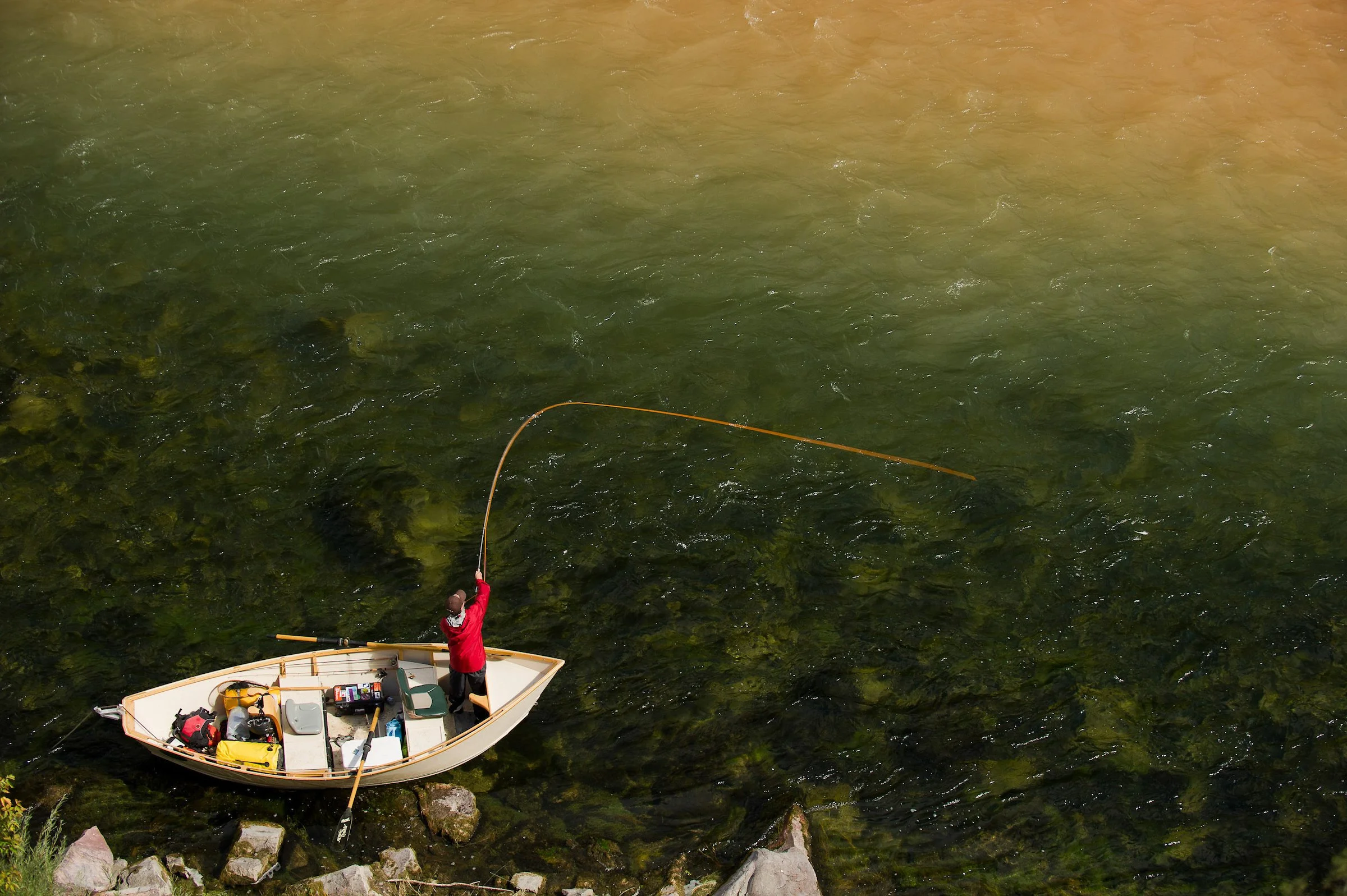
Over the week of June 11 to June 16, campers from all over the state joined at the Bar N I Ranch in Stonewall, CO for the 2017 Colorado TU River Conservation and Fly Fishing Youth Camp. For the entire week, 15 campers between the ages of 14-18, joined Colorado TU staff, volunteers and camp counselors for a week of camping, learning, and fishing- for some of the kids, it was their first time ever fishing. The kids took part in various activities teaching them all about river conservation, native trout species, Western water issues, and of course, all things fly fishing.
The students arrived on Sunday, June 11 and right away the fun started. After the campers got their tents set up, the camp staff and counselors went over basic information about the camp, rules, and an overview of what to expect. After the orientation, the kids then got a chance to know one another. Finally, they learned about some basic fly fishing techniques including how to tie knots and when to use them and the basics to casting. The first day also covered some of the current river and water issues in Colorado.
 Monday was the first full day of camp and after waking up, the kids went to the stream and pond at the ranch to learn about the entomology of the watershed. The kids took bug samples to learn about what the fish would be eating in the area and took water samples to determine the health of the stream and pond. After the sampling, students ate lunch and headed to nearby North Lake to fish for the afternoon. It wasn't long before kids started hooking into fish and in the first day over half of the kids had landed their first fish of the camp and for some, their first fish ever.
On Tuesday, June 13, the campers and camp staff headed to Alamosa to visit the Sand Dunes National Park. While at the Sand Dunes, the campers visited with National Park staff and Trout Unlimited's Kevin Terry to learn about the Rio Grande Cutthroat Trout and how climate change is affecting the habitat of this species. During the trip to Alamosa, students also visited the Native Aquatic Species Hatchery, a facility based around the restoration of Colorado’s native species. Here, campers were exposed to the science behind genetics, and were able to see what it takes to bring back a species from endangerment. Tuesday wrapped up with a lesson on western water law and the issues affecting the region's most valuable resource.
 Over the first few days the kids had free time to tie flies and practice their fly fishing skills and on Wednesday they had a chance to hone in those skills and use the flies they have tied. The day started off by traveling to North Lake for the morning. While at North Lake kids were catching fish left and right and by halfway through the morning, everyone had caught a fish. After returning to the camp, the kids ate lunch and broke up into teams of three for some additional fishing. One group headed to some beaver ponds, another group fished the stream, and the third group fished a lake on the ranch property.
Thursday, the last full day of the camp, consisted of a lesson from Colorado Parks and Wildlife on aquatic nuisance species and how anglers can do their part to protect our watersheds from these invasive species. Colorado Parks and Wildlife also lead a trout dissection for campers to learn about the biology of trout. Later in the afternoon, the National Resources Conservation Service (NRCS) brought a soil trailer to demonstrate watershed issues on a smaller scale. The students were able to see how issues of erosion, wildfires, and flooding can affect an entire watershed. After dinner on Thursday the campers watched the 2017 Fly Fishing Film Tour at the local Pinion Valley Lodge.
On the last morning of the camp, the campers helped pick up the fly tying and fishing material and break down their camps. Soon, parents were arriving for the closing ceremony. Campers, staff, and parents had a chance to comment on their experiences with the camp.
 When the 15 campers arrived on June 11, there were nervous faces and uneasy feelings about what to expect for the upcoming week. But just a few days later on June 16 the campers had a hard time leaving one another. The friendships formed, the lessons learned, and the memories made will carry on forever and many students mentioned coming back in 2018.
Colorado TU wants to thank the campers, parents, volunteers, chapters, and all of the guests who helped make this camp a great success. The camp could not have been done without your support and we look forward to working with you all next year! CTU also wants to thank the Bar N I Ranch for their hospitality during the course of the week!
We hope to see many new and old faces at the camp in 2018!
 This Spring, he graduated from Western State University in Gunnison majoring in Chemistry with an emphasis in Biochemistry. But he's leaving behind an incredible legacy of coldwater conservation leadership. In 2013, Adam founded The Gunnison Sockeyes, the first TU Costa Five Rivers collegiate club in the nation to found their club based on conservation rather than fly fishing. The club boasts over 160 members and has logged in excess of 220 man hours of service work in the Gunnison Watershed in the fields of Lake Trout Removal, Kokanee Salmon Spawning, Electroshocking, Stonefly Reintroduction and River Clean Ups.
 Growing up on the banks of the Mississippi and experiencing its periodic floods gave me no background for understanding the water scarcity issues of the west. When the mighty Miss and its tributaries flooded they used to let us older boys out of school and permit trustee crews from the state prison to help sandbag. It was usually a problem of too much water, so I was fascinated by the complexity of water law created by the scarcity of water and the mission of TU to conserve and correct the mistakes of the past just seemed to me to make manifest sense.
 My favorite fishing spot is any spot I happen to be in which harbors fish. I advocate carrying a flyrod in every vehicle because you never know when you will run into a fishing emergency! Although exotic locales beckon to many I have trouble getting too far away from my home rivers - and ponds. I flyrod a lot of local natural area ponds for warmwater species too. Also take a trip to Canada each June with a couple of RMF's founding fathers, but home waters are the preferred locales since they are close.
 In the South Platte basin, Colorado TU and chapters worked to engage young, inner city, girls through the great outdoors by introducing them to fly fishing and conservation; CTU worked with Colorado Parks and Wildlife to reintroduce the Colorado state fish, Greenback Cutthroat Trout, to it's native watershed along the Front Range; Trout Unlimited tackled abandoned mine issues, and various chapters worked to repair their homewater streams from the devastating floods of 2013.
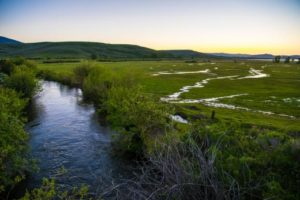 In the Colorado River basin, TU helped secure protections for the Roan Plateau and Thompson Divide from harmful oil and gas development, worked with local ranchers and farmers to improve the health of the Upper Colorado while enhancing agriculture water usage. TU also helped lead the Learning by Doing initiative that, among other things, secured $8 million in funds to protect and restore the Upper Colorado River.
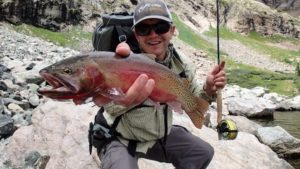 In the Rio Grande basin, Trout Unlimited worked to protect the Great Sand Dunes Cutthroat from potential changes in the environment. The Rocky Mountain Flyathlon came to Saguache for the annual race and fishing events that help raise money for Colorado TU's work in protecting native trout and their habitats. The local chapter and Trout Unlimited also worked to repair sections of the Conejos and ensure that winter flows were hospitable for trout.
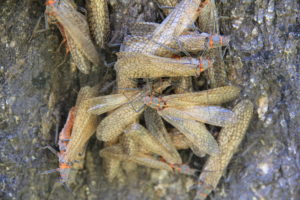 Parking lot to the River - Matching the hatch starts when you park the truck and continue on your way to the water's edge. While not the most appetizing script to read, plastered to your windshield and the grill of your car is a record of the bugs that were flying and hopping along the lake or river that you are planning to fish. The fragile wings of mayflies and sturdy grasshopper legs act like braille to the astute angler and are the first clues as to what flies they might fish that day. As you leave the parking lot and work your way down to the water, observe what is hopping and flying around you. Grasshoppers frantically leaping off the trail ahead of you, the wayward beetle landing on your shoulder, and the shrilling of the cicada, and caddis flies stirring into flight as you push through streamside trees are all indicators of food that might be falling or landing on the water.
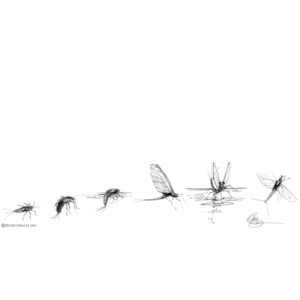 Under the Water - It is beneath the surface of the water that trout do 75% of their feeding, and that's where the angler's most important information will be found. Using an Invertebrate Seine along the streambed and pulling rocks from the current to observe what is holding onto their surface will give you a detailed menu of which bugs are most abundant, as well as their size and color so that you can lay your fly box alongside and choose the closest match.
 Recycle water:
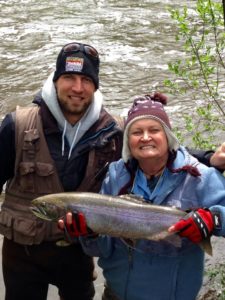 After moving South in the early 1990s I transferred to the Southern Colorado Greenback Chapter of TU. After several years, I was on the Board again, serving mainly in the capacity of Communications Chairman. I will be retiring this year, but plan on maintaining an active role in the chapter. Hubby Paul and I are Life Members, and proud of that.
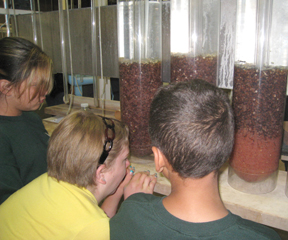 Kids’ education. Several years ago, Jenny Kedward from the local Sierra Club, Pat McGraw, then-President of our Chapter, and I collaborated to do a two-day summer camp program for 12-14 year olds in our community that concentrated on water education and fishing. We conducted it for four years in a row. Our chapter’s Frostbite Fish-Off Tourney, held for several years, is a close second.