Conservation

White River Best Wild Places - Part I

By Aaron Kindle Trout Unlimited staffers and Field and Stream writer Kirk Deeter ventured into the White River Basin last week for the Best Wild Places field tour.  TU and Field and Stream partner for Best Wild Places to highlight some of the best places across the nation to hunt, fish, and enjoy the outdoors and to examine the issues related to conservation in those areas. After heading down to the Dolores River Country earlier in the summer, it was time to head for the White.

Along with Kirk Deeter, TU staffers in attendance were Chris Herrman, Colorado Plateau Land Protection Coordinator; Brian Hodge, Yampa/White Basin Project Coordinator; and myself, Aaron Kindle, Colorado Field Coordinator. The three of us were amply prepared to give Kirk an earful about the various public and private land issues of the basin.


The first day started out with some logistics but quickly progressed into some fishing on the main stem of the White River just after the North and South fork meet. We fished a Colorado Parks and Wildlife property right off the road. Upon arriving at the river, we immediately spotted feeding trout and the tour had officially begun. All of us caught a few rainbows and browns. The weather was spectacular and the camaraderie was already building. We all knew we were in for a few days of fishing, learning, and enjoying some spectacular country. After a great dinner that night and providing Kirk with an overview of the basin we were ready for day two.


Trappers Lake on the edge of the Flat Tops Wilderness was our first destination on day two. After a short walk to the lake, we were greeted with large cutthroats cruising the shores. Within minutes of arriving, everyone had a fish on the line. The fish were if nice size – all in the 14-20 inch range - and everyone was enamored by the beauty of this pristine lake. During this portion of the tour we talked about the various threats facing the roadless areas surrounding the Flat Tops Wilderness including HR 1581, insufficient provisions of the Colorado Roadless Rule, and the pending 10th Circuit Court’s decision on the 2001 Roadless Rule. These roadless backcountry lands are critical to maintaining the wild and primitive character and the fish and wildlife in the area including the largest elk herd in N. America and hundreds of coldwater streams. The White River National Forest is also working through and Oil and Gas Environmental Impact Statement and we talked at length about the need for protecting key habitats and fish populations when and if drilling moves into the upper White River Basin.

On the way to our afternoon destination we had the pleasure of meeting up with Jeff Hastings, a TU staffer that works in the Driftless area of the upper Midwest. He and a buddy came clear from Wisconsin to the White River basin to elk hunt, as they have for the past five years. It was great to hear about his hunt and meet a fellow TU’er. The afternoon found us fishing to the south on the South Fork of the White River. This stop gave Chris Herrman a chance to talk more about working on conservation easements with private landowners, the advantages of the easements, some of the hurdles to protecting these areas, and what more can be done. The lower section of the South Fork is mostly privately owned and TU is working with private landowners in that type of setting across the basin to keep their lands productive for fish and wildlife.  Brian Hodge also took this chance to provide an overview of the restoration projects he is planning in the basin and the state of the fishery. Kirk Deeter landed the fish of the day, a beautiful 18” cutthroat in a nice hole along a cliff wall.


Stay tuned for Part II of this amazing trip!


Denver Post: Colorado's South Platte River a viable fishery

Denver Post Will Rice

Tyler Kendrick stalked the water slowly in front of me, about 40 feet ahead in clear shallow water. His lime-colored fly line trailed behind like a tail.

I squinted against the hot sun and scanned the far bank looking for tails and fish. They were there; we just had to find them. Tyler suddenly stopped and stood dead still. His body language, like a cat stalking a mouse, indicated he spotted a fish. He stripped out a few more feet of line and took a half step forward.

It was going to be a longshot. Tyler made two powerful back casts and punched his cast to the right into the faster current moving downstream.

Kendrick and I had teamed up for Denver Trout Unlimited's fifth annual Carp Slam, a fishing tournament created to raise money for improvements on the battered and bruised metro section of the South Platte. Sixteen amateurs and 16 professionals competed last month and raised more than $30,000 for projects intended to improve the river as a fishery and a recreational waterway.

"We want to expose people to angling opportunities close to home and provide an opportunity for youth to take the first cast," said Todd Fehr, president of Denver Trout Unlimited. "First-time casters grow up to be future conservationists and stewards of our state's water resources."

Click here to read the full article.

TU now accepting Embrace-A-Stream grant applications

Trout Unlimited is pleased to announce that it is now accepting Embrace-A-Stream (EAS) grant applications for eligible coldwater fisheries conservation projects. Embrace-A-Stream (EAS) is the flagship grant program for funding TU's grassroots conservation efforts. Since its inception in 1975, EAS has funded over 980 individual projects for a total of more than $4 million in direct cash grants. Local TU chapters and councils contributed an additional $13 million in cash and in-kind services to EAS funded projects for a total investment of more than $17 million. In 2011, EAS funded 25 projects in 15 states, with an average grant award of $5,000. View the list of projects funded by EAS last year. Please be sure to read each section of the application for funding carefully so that you understand the guidelines, proposal format and submission requirements. EAS committee members and staff are able to provide advice and guidance on potential project applications. Even if you do not have questions about preparing your proposal, applicants are required to contact their EAS committee representative to discuss proposal ideas by November 14, 2011. The deadline for submission is December 12, 2011. For further information or to request additional copies of the application, please contact Rob Roberts at 406-543-1192. To participate in a webinar training on November 2 at 8 p.m. EST, please RSVP to Rob Keith at 703-284-9425.

Update on "Over the River"

"Over the River" is a proposed art installation by the artist Cristo which would drape large fabric covers over wires installed across the Arkansas River. The project as proposed would cover about 5.9 miles of the Arkansas, in segments spread over a 42-mile reach of the stream. Colorado TU has raised concerns about the project - particularly in terms of potential impacts from sedimentation created by the construction and installation, and in ensuring that designated "Areas of Critical Environmental Concern" are protected. The BLM's Final EIS suggests that harmful impacts to these critical environmental areas are OK, so long as they are ultimately reversible. Colorado TU disagrees with that approach, and believes that Areas of Critical Environmental Concern need to be managed to protect those critical values for which they were designated, not to damage and later repair them. A full copy of our recent comment letter can be read here.

The American Sportfishing Association, which represents members of the sport fishing industry, has developed an action alert on Over the River. If you would like to learn more about their concerns or take action by sending an email to key decisionmakers, click here to visit their action site.

West Denver Chapter wins National TU Award

The West Denver Chapter of Trout Unlimited was presented with the "Silver Trout" award at the National Trout Unlimited Awards Luncheon in Bend, Oregon on Friday September 16.  The Silver Trout award recognizes the outstanding chapter within its region.  West Denver was recognized for its consistently excellent programs in youth education and conservation.  Highlights include:

  • a partnership with the Jefferson County Schools' Windy Peak Outdoor Lab where the chapter teaches entomology and fly tying, as well as providing fishing opportunity, to sixth graders from across the County;
  • completion of the "Golden Mile" stream restoration project on Clear Creek in Golden, along with ongoing work for further restoration in the "Canyon Reach" project several miles upstream on Clear Creek;
  • statewide leadership with Trout Unlimited participation in the RiverWatch program and with engagement on stream protection and mitigation with Department of Transportation project;
  • community service and engagement through programs such as river cleanups and fly fishing classes for adults with the Lookout Mountain Nature Center,


Chapter leaders were unable to make it to Bend personally, but Colorado TU President Sinjin Eberle accepted the award on behalf of West Denver and will present it to the chapter at an upcoming meeting.

Congratulations, West Denver!

Sportsmen Ride Right

While it may not be completely natural to think of ATVs and healthy streams in the same thought, the reality is that many people use ATVs to access their favorite fishing or hunting areas.  But with the rapid increase in the number of ATVs being used in the back-country, widespread negative impacts from renegade trails and illegal use are being seen throughout our last remaining roadless areas.  This can lead to widespread erosion, stream sedimentation, and general degradation of the habitat for all species in the forest. But recognizing that MOST sportsmen ride their ATVs responsibly has spawned a new effort to recognize and encourage those people who stay on authorized trails, and turn off their machines at the end of the road.  Organizing these people to be representative of the responsible use of ORVs is a good approach to helping to rein in those who abuse the privilege of ORV use on our public lands.

Colorado Trout Unlimited has signed on in support of this new initiative - I hope you give it a look.

http://sportsmenrideright.org/

Special Campaign Update: Protecting the Upper Colorado River

With the largest snowpack in recent memory and high flows sustained far into summer, 2011 has been a banner year for the Colorado River. In times like these, it’s difficult to think of the Colorado as a river on the brink, threatened by low flows and temperature problems – but that is exactly the situation facing our state’s namesake river and its tributaries, particularly the Fraser River. The headwaters of the Colorado River have been tapped heavily for generations. Front Range water providers permanently remove water from the Colorado River basin by pumping it across the Continental Divide through a series of tunnels, pipes, and diversion structures. The most notable of these ‘trans-basin’ diversion projects are the Colorado-Big Thompson Project, which transports water from Granby Reservoir below Rocky Mountain National Park to cities and farms in northern Colorado, and the Moffat Collection System, which draws water from 30 creeks and streams throughout the Fraser River watershed and delivers it to Denver via the Moffat Tunnel. The result? More than half of the rivers’ historic flows are permanently removed and rerouted to the Front Range rather than sustaining important trout and wildlife populations downstream. Indeed, even in this year of epic snowmelt, existing trans-basin diversions are causing low flows and high water temperatures on streams in the Upper Colorado watershed.

Today, the Colorado headwaters face an uncertain future in the face of two proposed expansions: the Windy Gap Firming Project (WGFP) and Moffat Firming Project (Moffat Project).  If completed, these projects would leave the Upper Colorado with only 25% of its native flows and the Fraser with only 20%.

These fragile river ecosystems that once teemed with native cutthroat trout may be approaching a tipping point, where further losses could destroy one of Colorado’s most valued gold medal fisheries and decimate the local communities and economies that depend on them. Warning signs are widespread. While the Colorado has raged for much of this summer, only a few years ago it was nearly bone-dry in September. The Colorado, Fraser, and Ranch Creek have seen excessively high water temperatures – putting trout populations at risk and violating state water quality standards designed to protect fish and wildlife. In the Colorado below Windy Gap Reservoir, we have seen the near-total loss of sculpin and stoneflies – the bedrock layer of the food chain. We cannot continue the status quo – much less tap the Colorado more heavily – unless we take real, concrete actions to restore the river.

TU has identified four key actions to secure the future health of the Colorado and Fraser Rivers in the face of future water diversion proposals:

  • Keep water temperatures within a range that support fish. When additional diversions remove more water from streams, it can raise water temperatures above levels where trout can survive. When stream temperatures become dangerous, diverters need to cut back in order to protect fish.
  • Provide flushing flows.  Heavy flows during snowmelt and spring runoff are needed to flush sediment from streambeds and keep fish habitat healthy year in and year out, but we can’t count on 2011-magnitude snowpack every year.  The project proponents must commit to providing adequate spring flushing flows every year.
  • Take Windy Gap off-channel.  Windy Gap Reservoir blocks fish, disrupts sediment and gravel movement, and harms water quality in the Colorado River. A “bypass” to direct the Colorado River around Windy Gap, reconnecting the river, would help to solve these problems.
  • Restore river habitat. Instream projects can help restore habitat for fish in stream reaches currently too wide and shallow. Independent estimates put costs for restoration at $7.1 million for the Fraser and $10 million for the Colorado. While large, these numbers are achievable.  For example, if such project costs were distributed among ratepayers, Denver Water could contribute its “share” at a cost of only about $1 per household per year.


While these strategies will help rivers, it is also important that monitoring and adaptive management are also in place, to respond to changing conditions or unexpected challenges.  Simply put, if the measures being used to protect the river aren’t working, we need to have the means to change direction.

A Not-Quite-Global Agreement

A highly-publicized agreement between Denver Water and West Slope governments earlier this year made some meaningful progress in addressing existing issues for the Colorado River. The agreement offers promise for the future of Front Range and West Slope cooperation on water issues. However, despite the shorthand name that some gave it – the “global solution” – it is neither global nor a complete solution.

The agreement includes provisions that are worth celebrating:

  • Future water projects using Denver's facilities (notably the Moffat and Roberts tunnels) will require approval from the West Slope and will need to address concerns on both sides of the Continental Divide.
  • Safeguards are included for the Shoshone water rights in Glenwood Canyon, which will help maintain year-round flows in the Upper Colorado.
  • Denver agrees to provide 1,000 acre-feet per year of water to help address low flow concerns in both the Fraser and Williams Fork systems.
  • Denver will provide $2 million to assist with river habitat restoration in the Upper Colorado basin.
  • Water and funds (including an additional $2 million) will be managed through a partnership effort, called "Learning by Doing," designed to adapt to changing conditions  Notably, TU is the sole conservation organization that has been included in the management committee for Learning by Doing.

These tools are valuable in helping address past impacts that have put the Colorado River at risk, and TU looks forward to participating in the “Learning by Doing” process and helping make it as successful as possible.

But the agreement is not global – notably, it does not include the largest user of Upper Colorado River water, the Northern Colorado Water Conservancy District (which is the recipient of the Windy Gap project water).  Additionally, by its own terms, the agreement does not address new impacts from the proposed expansion of the Moffat and Windy Gap projects at all.

Unfortunately, the media attention around the agreement gave many people the false impression that the Colorado River’s problems - past and future - had been solved.  As Drew Peternell, Director of TU’s Colorado Water Project said, “Denver deserves credit for taking a step in the right direction with the global agreement, but there is a large hole that needs to be filled.  We urge Denver and Northern to finish the job of protecting the Colorado River from the impacts of current and future trans-basin diversions.”

Mitigation efforts to help protect rivers

The next step in working to defend the Colorado River headwaters – and to actually address impacts of the new projects – came this past spring as the Colorado Wildlife Commission (Commission) and Colorado Water Conservation Board (CWCB) considered “mitigation and enhancement plans” for the WGFP and Moffat Project. TU staff, including the Colorado Water Project’s Mely Whiting and Rob Firth, and local volunteer leaders like Kirk Klancke brought information and recommendations forward to the Commission.  We offered not only our perspectives, but also a strong scientific assessment of in-stream habitat needs for the Colorado and Fraser Rivers which was made possible through generous support from Bob Fanch and Devil’s Thumb Ranch.  From the original draft plans, Division of Wildlife staff negotiated changes that would improve the plans and better address the needs of the Colorado headwaters. Ultimately, these efforts resulted in progress – particularly at Windy Gap – but fell short of adequately addressing the rivers’ needs.

First the good news: the Windy Gap Firming Project mitigation plan includes a requirement for the project to stop diversions when stream temperatures exceed acute temperature standards (where trout begin to immediately die); and it increased the existing Windy Gap flushing flow requirement from 450 cfs to 600 cfs (a step in the right direction, though true channel flushing requires much more water).  Proponents of both projects also made offers of “enhancement” plans to help conduct habitat restoration on the Colorado River.

Yet notable gaps remain.  The Colorado River plan provides $4 million less than recommended for restoration.  While there was an offer to study the Windy Gap bypass, there is no commitment to fund its construction even if the study documents its value.

The shortcomings on the Fraser were even greater – of the $7.1 million identified need for Fraser basin habitat restoration, only $750,000 was pledged. Denver pledged water to help address temperature issues associated with its expanded diversions in August – but offered no similar measures for the month of July.

Despite these gaps, the Commission and CWCB approved the mitigation plans (and the associated “enhancement” plans). Colorado TU appreciates the efforts made by the Wildlife Commission and Department of Natural Resources to move the ball forward, but these plans fall short of what is needed to keep the rivers from further decline.

The fight continues

The state mitigation process is only “advisory” – ultimately, federal agencies including the US Army Corps of Engineers and Environmental Protection Agency, as well as the Federal Energy Regulatory Commission (for Moffat) and Bureau of Reclamation (for Windy Gap), will decide whether to approve permits for the projects.  If approved, these agencies also will define what requirements are included with those permits. As federal agencies evaluate these projects, Colorado TU will continue to communicate our concerns and provide recommendations backed by science, urging them to ensure that any permits that are issued include adequate protections for the rivers.

Ultimately, the future of the Colorado headwaters – and all of our western rivers – depends upon a strengthened commitment to managing our water resources wisely – addressing the need for a reliable water supply on the Front Range without sacrificing the needs of fish, wildlife and West Slope communities that depend on healthy rivers.  Colorado TU believes that all Coloradoans, both on the Front Range and the West Slope, value healthy rivers and want to see an intact Colorado River preserved for their children and grandchildren. In the coming months, we will work to build more visibility and awareness of issues facing the Colorado, encouraging citizens to engage as stewards of these places.  From understanding the reasons to reduce personal water use, to lending a voice in calling on Denver Water and Northern to take responsibility for the impacts they are causing, to sharing the story of our rivers with friends and neighbors – Coloradoans can make a difference.

Colorado TU will not give up our fight for the Colorado headwaters until we can truly say that we have successfully protected the river for future generations to experience and enjoy.

Colorado TU welcomes new staff: David Thompson and Jake Lemon

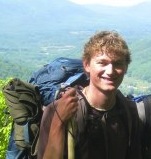
Colorado Trout Unlimited would like to welcome the two newest members of the Trout Unlimited Family. Jacob Lemon and David Thompson have joined the staff as AmeriCorps Vista Volunteers focused working with local chapters and communities across Colorado to strengthen our youth conservation education and RiverWatch water quality monitoring programs. David Thompson joins the TU team as the River Watch Field Coordinator. “I’m so excited to have this opportunity. Not only do I get to work in the water quality field but I get to do it while working for Trout Unlimited,” says David.

David comes to TU from Thurmond, West Virginia where he served as a Vista Volunteer for the New River Gorge National River as a water quality specialist. He worked on many projects in the area including the State of the New River Report and participated in the Park’s Long Term Monitoring Program for the New River and its’ tributaries. Before starting his service in West Virginia, David earned his Bachelor’s of Science degree in Civil Engineering from the University of Portland in Portland, Oregon. He is a native of Billings, Montana.

As Youth Conservation Education Coordinator Jake will be working to develop and strengthen the Youth Conservation Education Program. Hailing from Indiana, he recently graduated from Indiana University at Indianapolis with a degree in Environmental Science. During his undergraduate years, he was involved in water quality research and outreach through his internship with a non-profit research center.  Jake has been fishing with a spinning rod all his life and is very excited to get a fly rod in his hands.  In his free time he enjoys hiking, kayaking, and traveling. He is a foodie of sorts and loves trying new restaurants and dishes. As a newcomer to Colorado he is excited to explore and take advantage of the outdoor recreation activities it provides!

AmeriCorps VISTA is a national program coordinated in Colorado by the Western Hardrock Watershed Team that matches highly enthusiastic and skilled volunteers with local and national non-profits in hopes of creating long term impacts on the communities they serve.

Based out of our Denver office, both David and Jake will be reaching out to Colorado TU chapter leaders in the coming months. They can be reached by emailing david.thompson@coloradotu.org and jake.lemon@coloradotu.org, respectively.

What's the Weirdest Thing You've Found Fishing?

Field & Stream Fly Talk by Tim Romano

This past Saturday I competed in the 5th Annual Carp Slam here in Denver that benefits the Denver Chapter of Trout Unlimited. I didn't win, but did raise a ton of money to help the restoration of our home river here in D-town.

The South Platte that runs through Denver is, as you can imagine quite the urban fishery and as such we find quite the litany of weird crap in the river. A friend of a friend even found a dead body fishing one day. This past Saturday was no exception as documented here.

Read the rest here...

Then post the strangest thing you've found while fishing on The Greenbacks Facebook page for a chance to win a Simms headwaters waist pack.

Note: He's a modest guy and didn't mention in his post - but a big tip of the hat to Tim Romano for raising the most $$ of any competitor for South Platte river restoration as part of Carp Slam 2011. Congrats, Tim!

Slamtastic! The Denver Carp Slam

Gink + Gasoline By Louis Cahill

When was the last time you attended a Trout Unlimited event where a bottle rocket fight broke out? That was the scene last weekend when I attended the Denver Carp Slam, as an observer, not to fish. The Carp Slam is a carp tournament started five years ago by the Denver Chapter of Trout Unlimited. It takes place on the South Platte in downtown Denver and the proceeds pay for stream improvements on the river. The Platte, at least the stretch that runs through Denver, is truly a challenged river. OK, that’s too polite. It’s severally F’ed up. Full of trash, dead animals, murder weapons, and amazingly, fish. Carp of coarse but also walleye, smallmouth bass, catfish, and to my surprise, trout. Not in big numbers but pretty good size. That’s where TU comes in. They’re using the carp, to save the trout.

It’s a great cause and a great time but most of all, a great bunch of guys. The group is young, energetic and energized about their mission but not taking life too seriously. The experience renewed my faith in TU. I am particularly interested in a group who call them selves The Greenbacks. A group of young TU members on a mission to preserve Colorado’s native fish, and have a good time doing it. Their enthusiasm is contagious. It’s awesome to see a great old institution alive with wish youthful vigor. Hats off to the Denver chapter of TU.

Read the full article and check out some awesome pics on the Gink and Gasoline Blog...