Trout in the Classroom Biggest Release Year Yet!

Over 45 Trout in the Classroom (TIC) Sites have released the rainbow trout, they raised since October, into local watersheds. This year we had over 60 sites/schools participate in the TIC program, and thus far 2,865 trout have been released. We still have a few more schools set to release, but overall, the program has been a huge success and our biggest year yet.

Some schools even made the local news and made videos of their TIC Release Events!

Ute Pass Elementary TIC Release Event

Shepardson STEM Elementary TIC Release video.

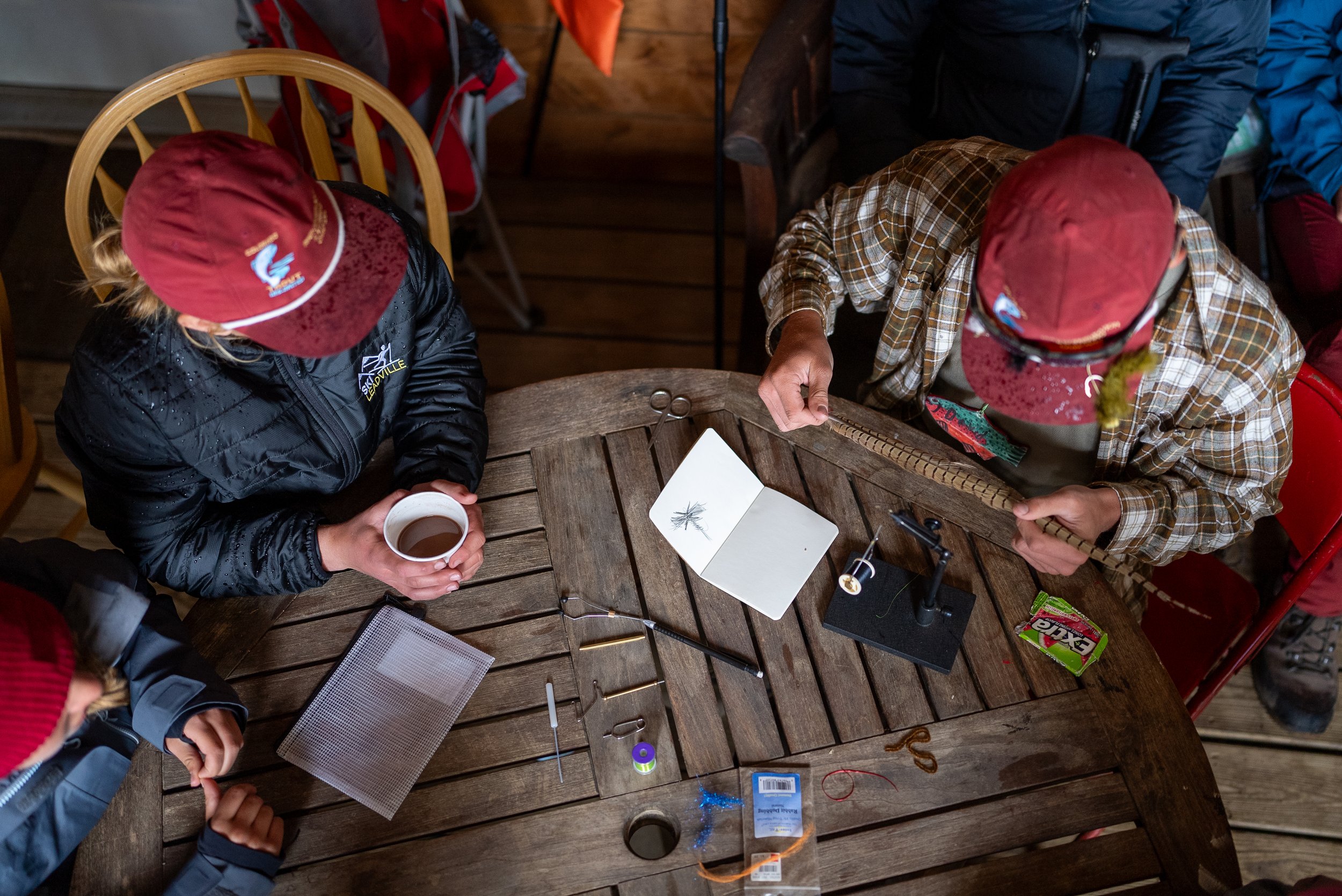
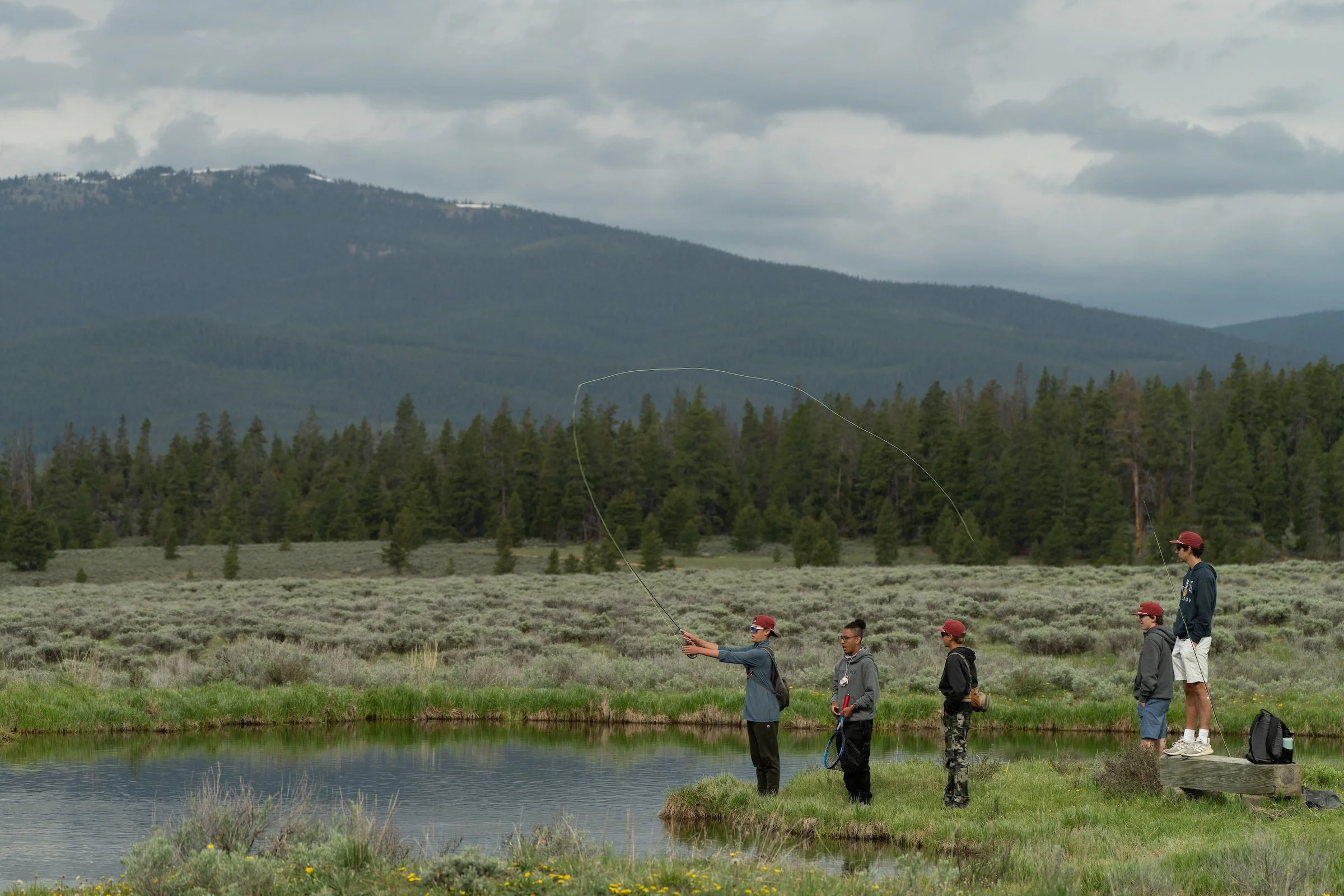
We are excited to announce some additional capacity and training that will be added to the 2024/25 TIC Program. This summer we will be offering three (possibly more) TIC trainings for educators and TU Chapter Coordinators/Volunteers. Check out our dates and events below.

Charles Hay Wood TIC Release Event

Grand River Academy TIC Release Event

Outdoor Wilderness Lab TIC Release Event

To help with this training we have hired a part-time seasonal employee (who will be starting in late May/early June) and we will be hiring two part-time TIC Seasonal Coordinators (one from the Front Range and one for the Western Slope). These new TIC Coordinators will help coordinate the TIC program during the school year, support our TIC Sites and Educators, and connect the program more with CTU, TU, and TU Chapters.

Colorado Legislature Steps Up to Protect Wetlands and Water Quality

In 2023, the U.S. Supreme Court authored the largest rollback of protection under the Clean Water Act in that law’s history through their decision on the Sackett case. While Colorado had strong state-level protections for point-source discharges such as from an industrial or water treatment facility, the decision potentially left many Colorado wetlands and seasonal streams at risk of being dug out or filled in – Colorado had no program equivalent to Section 404 of the Clean Water Act that handled permitting for dredge and fill activities in waters of the United States.

Now, thanks to a dedicated coalition of conservation interests and some true legislative champions, Colorado has become the first state to pass new state-level laws to restore protections lost under the Supreme Court’s decision. This is great news not only for the seasonal streams (as shown on the map below) and wetlands that will be protected, but for downstream water quality, which is fundamentally shaped by the health of those sources higher in the watershed.

Recognizing that getting major water legislation passed through the General Assembly was more than any group could tackle alone, CTU joined with many other conservation-minded partners including Conservation Colorado, Earthjustice, Green Latinos, and the National Wildlife Federation, to create the “Protect Colorado Waters” coalition. We came into the legislative session benefiting from grant support from the nationwide Protect Our Waters campaign, and brought on strong professional expertise from Mark Eddy (TU volunteer, communications consultant and former Denver Post reporter) and National TU’s Mely Whiting (who delayed her retirement to help with policy and legal support).  Hundreds of TU members also lent their voices to the effort, reaching out to urge their Senators and Representatives to support wetland and water protection.

Perhaps most importantly, we were blessed to find strong champions for water quality protection with the Polis Administration and its Department of Public Health and Environment, and with three key legislators who sponsored HB 24-1379:  Speaker of the House Julie McCluskie, House Ag Committee Chair Rep. Karen McCormick, and Senate Ag Committee Chair Sen. Dylan Roberts. These leaders for water quality worked tirelessly to advance legislation that would ensure protection of Colorado waters.

Legislative sponsors held extensive discussions with stakeholders from all sides of the issues in the bill and worked through multiple iterations of amendments along the way. Our coalition reached out with various other interests that were open to discussion about mutually agreeable solutions. Ultimately, a number of important compromises were reached that helped pave the way for the bill’s ultimate passage. 

  • The program will be housed with the Water Quality Control Division/Commission but with measures in place to ensure the agency secures additional staff and funding if needed to ensure the timely processing of permits. Opponents had proposed creating a costlier (and slanted toward polluters) commission and division to be housed in the Department of Natural Resources.

  • The standard of protection would be as strong as previously existing federal criteria and could be made stronger if the Commission determined through public rulemaking that more protective criteria were needed to maintain the physical, chemical, and biological integrity of Colorado waters.  Opponents had sought to make federal standards a hard ceiling rather than a floor for state protection.

  • The program will protect waters of Colorado broadly, not excluding (as opponents had sought) those wetlands beyond 1500 feet from rivers. This was a key issue given the important role such wetlands play as natural filters maintaining downstream water quality. Under the compromise developed by our colleagues at the Colorado River District, those more distant wetlands will be handled under a statewide ‘general permit’ with appropriate best management practices to protect waters of the state. This provides needed protection for those waters while also offering regulated users a streamlined and reliable permit system they can rely on in planning activities around such wetlands.

The end result is a model for other states to step up in the aftermath of the Supreme Court’s decision and is arguably the most significant water quality legislation that Colorado has seen since the original 1973 passage of the Colorado Water Quality Control Act. Colorado TU thanks Speaker McCluskie, Rep. McCormick, and Sen. Roberts for their exemplary work in protecting headwaters, wetlands, and water quality for Colorado.

Blue Valley Ranch land exchange in Colorado proceeds to next steps

Organization

Bureau of Land Management-Colorado

Media Contact:

JD Emerson

BLM_CO_NWD_Media_Contact@blm.gov

(970) 826-5101

Steve Hall

sbhall@blm.gov

(303) 239-3672

May 3, 2024

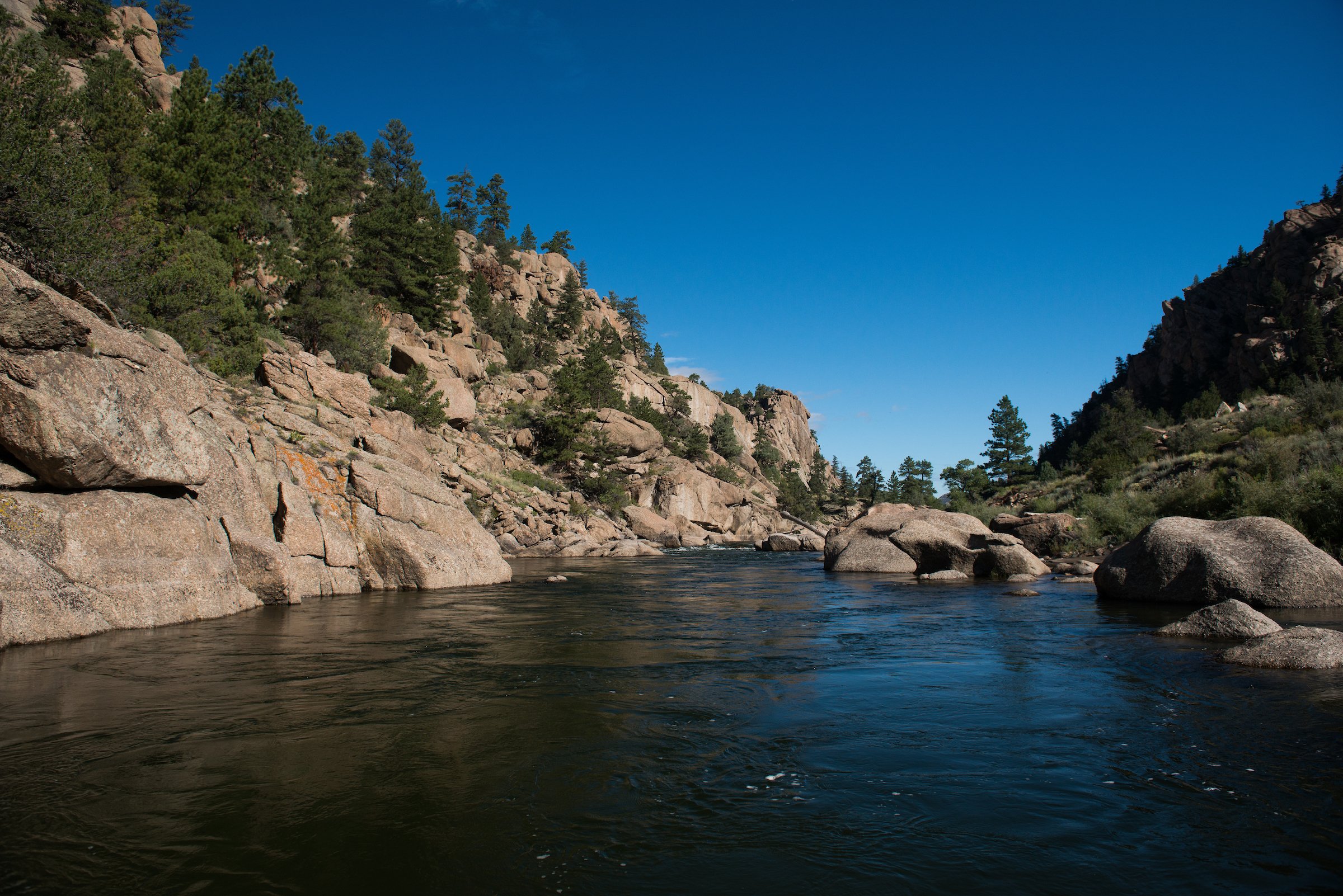
KREMMLING, Colo. – The Bureau of Land Management is completing a proposed land exchange with the Blue Valley Ranch in order to increase public access for fishing, hunting, and other recreation in Grand and Summit counties, Colorado.

“I spent many days over the past 20 years enjoying the Blue River in my kayak and with my fly rod. I am excited that access to this magnificent stretch of river will be improved for people of all abilities who wish to visit the area to enjoy the scenery, boat, fish, hike, or hunt,” said BLM Colorado State Director Doug Vilsack. “We coordinated closely with local governments, other agencies, and the public to ensure that this land exchange provides benefits for all.”

The Blue Valley Ranch land exchange decision authorizes the BLM to exchange nine parcels of federal land totaling 1,489 acres in Grand County for nine parcels acres of private land totaling 1,830 acres in Grand and Summit counties.

The exchange expands access along about a mile of the Blue River near its confluence with the Colorado River, plus an additional 1.66 miles of hike-in access to the Blue River that is currently inaccessible except by floating. The exchange consolidates public land and transfers small, isolated public land parcels that have little to no public access, and results in a net gain of 341 public land acres.

“Access to and preservation of our outdoor spaces remains a high priority for Summit County, which is why we continue to be a strong supporter of this exchange.  We are anxious to see it get underway so that our citizens and recreationalists may enjoy the many benefits, including river restoration, public open space, and more walk-in access to the Blue River,” said Summit County Board of Commissioners Chair Tamara Pogue.

Grand County commissioners stated the county continues to strongly support the exchange and local communities look forward to the many public benefits it will bring, including the new Confluence Recreation Area near Kremmling funded by Blue Valley Ranch.

Colorado Department of Natural Resources Executive Director Dan Gibbs said, “We appreciate the work of the Colorado Bureau of Land Management and other local stakeholders in enabling this new access and recreation opportunity along the Blue River. The Blue River is treasured by Summit and Grand County residents and all Coloradans. This Land Exchange will provide new improvements along the river benefiting our wildlife, increased access to the river for rafts and kayaks, include wheelchair access, and other amenities to ensure Coloradans can enjoy this fantastic stretch of the Blue River for generations to come.”

“The Headwaters Chapter of Trout Unlimited has supported this land exchange because the Blue Valley Ranch has given up so many concessions that are either good for fishing access or for the Blue and Colorado Rivers. The most important concession for us was the almost 1 mile of river improvement project just before the confluence of the Blue and Colorado Rivers,” said Trout Unlimited Colorado River Headwaters Chapter President Kirk Klancke. “This project will have positive impacts on the aquatic ecosystem in this stream and reach downstream on the Colorado River. We are a project-based organization and raising funds and overseeing projects consumes most of our effort. We applaud the BVR for helping us with this work by improving this stream reach. This puts the headwaters of the Colorado River one mile closer to returning to a healthy aquatic ecosystem.”

Land ownership and public access at Blue Valley Ranch will not change until the BLM and ranch owner Galloway Inc. formally close on the exchange. More information and maps of the proposed land exchange is available at the BLM National NEPA Register.

The BLM manages more than 245 million acres of public land located primarily in 12 western states, including Alaska, on behalf of the American people. The BLM also administers 700 million acres of sub-surface mineral estate throughout the nation. Our mission is to sustain the health, diversity, and productivity of America’s public lands for the use and enjoyment of present and future generations.

"Protect Colorado Waters" coalition praises House passage of House Bill 1379

Groups urge Senate to pass House Bill 1379, reject the weaker and more expensive Senate Bill 127

The Colorado House of Representatives today passed House Bill 1379, Regulate Dredge & Fill Activities in State Waters, to protect Colorado’s vulnerable wetlands and seasonal streams. The legislation now moves to the state Senate for consideration.

House Bill 1379 establishes protections for wetlands and streams that were previously in place under the federal Clean Water Act, but were eliminated by the Supreme Court last year. Without these protections, Colorado’s waters are currently at risk from pollution and degradation from industry and developers.

“We are supremely grateful to Speaker McCluskie, Representative McCormick and their House colleagues who passed House Bill 1379 today to restore protections for Colorado wetlands and seasonal streams,” said Josh Kuhn, Senior Water Campaign Manager, Conservation Colorado. “We worked with other stakeholders to pass more than 25 amendments to this bill. Now, we urge the state Senate to pass House Bill 1379 and reject the weaker and less protective Senate Bill 127.”

“We applaud the House members who voted in support of House Bill 1379, which creates a new program to protect vulnerable state waters from mining, development and other polluting industries. Protecting wetlands and small streams is vital to safeguarding the headwaters of Colorado’s nine major river basins, which are sources of drinking water for millions of people,” said Jennifer Peters, Water Policy Advisor, Clean Water Action.

“House Bill 1379 enjoys support from a broad range of environmental conservation organizations representing more than 275,000 residents, local elected leaders and Governor Polis. We urge the Senate to quickly pass this bill to show Coloradans they understand how important protecting wetlands is to our health, safety, wildlife and way of life,” said Suzanne O’Neill, Executive Director, Colorado Wildlife Federation.

“Colorado’s hunting and fishing community thanks Speaker McCluskie, Representative McCormick and all the House members who voted in support of House Bill 1379 which provides important safeguards for Colorado’s sporting heritage and economy, and fish and wildlife habitat,” said Alex Funk, Director of Water Resources, Theodore Roosevelt Conservation Partnership.

The coalition also voiced its strong opposition to
Senate Bill 127, which is backed by the mining industry and other big polluters. Unlike the well-defined safeguards included in House Bill 1379, Senate Bill 127 lacks the parameters needed to protect Colorado’s waterways and wetlands. Instead, Senate Bill 127 creates loopholes and exceptions that could be exploited by industry, opening the door to pollution, threatening Colorado’s drinking water and increasing the likelihood of flooding as more wetlands would be destroyed.

“Water is our state’s most valuable natural resource. House Bill 1379 provides real safeguards to ensure those waters can safely benefit our economy for generations to come. As where Senate Bill 127 leaves much of Colorado's waters unprotected allowing industrial entities to destroy critically important wetlands and streams without an environmental review,” said Margaret Kran-Annexstein, Director, Colorado Sierra Club. “I think we all agree, and public polling demonstrates that Coloradans want real protections for their water, not a law that is riddled with loopholes that benefit industry.”

“Protecting water quality for our communities, fisheries and outdoor economy must start at the source: the wetlands and seasonal streams that shape the health of everything downstream. We are grateful to Speaker McCluskie, Rep. McCormick and all those who supported House Bill 1379 to ensure protection for our Colorado headwaters,” said David Nickum, Executive Director, Colorado Trout Unlimited.

“House Bill 1379 would restore critical protections to the state’s wetlands and streams. It ensures that Colorado has the ability to protect its water supply and wildlife habitat while also building resilience to climate change. We thank legislators in the House for passing House Bill 1379 and ask the Senate to do the same,” said Joro Walker, Senior Attorney, Western Resource Advocates.

The Protect Colorado Waters coalition urges the Senate to quickly pass House Bill 1379, and to vote against Senate Bill 127.

About the Protect Colorado Waters coalition:

The Protect Colorado Waters Coalition consists of 17 environmental conservation organizations, representing more than 275,000 Coloradans, who have come together to pass legislation in Colorado in response to the U.S. Supreme Court’s Sackett decision. The coalition’s goal is to restore the level of protections that existed prior to this decision, ensuring creation of a permitting program allowing for responsible development activities to occur without irreparable harm to Colorado’s wetlands and streams.

Members of the coalition include:

  • Alamosa Riverkeeper

  • Animas Riverkeeper

  • Audubon Rockies

  • Clean Water Action

  • Conservation Colorado

  • Colorado Sierra Club

  • Colorado Trout Unlimited

  • Colorado Riverkeeper

  • Earthjustice

  • Green Latinos

  • Hispanics Enjoying Camping, Hunting, and the Outdoors (HECHO)

  • Natural Resources Defense Council

  • San Juan Citizens Alliance

  • Theodore Roosevelt Conservation Partnership

  • The Nature Conservancy

  • Upper Green River Network

  • Western Resource Advocates

April 2024 Currents

THIS MONTH’S ISSUE OF CURRENTS FEATURES New Oil and Gas Protections for Thompson Divide, Appeal of Suncor Water Permit, Tell the BLM to Protect Trout Habitat, and More!

Tell the BLM to Protect Trout Habitat in New Western Solar Plan

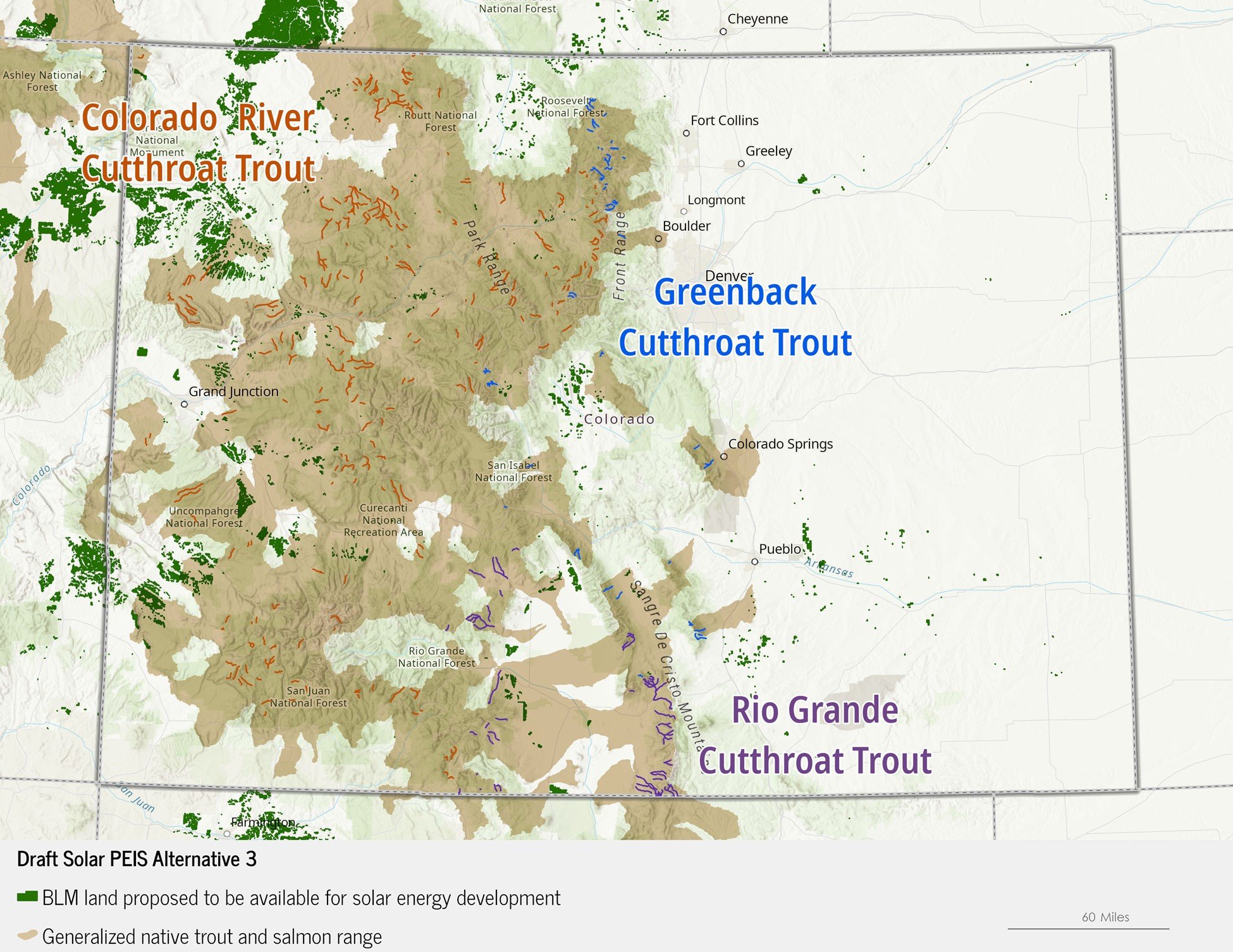
The U.S. Bureau of Land Management (BLM) recently released its draft plan for utility-scale solar siting on public lands in the western states. This plan is critical for our country to meet ambitious renewable energy goals, and we are encouraged by BLM taking a programmatic approach to determining which areas are open to development and which are not. However, siting of these projects can have a massive impact on trout habitat and must be done in a thoughtful manner.

Across the West, the draft plan could open up as much as 22 million acres to solar development. Here in Colorado, prospective areas available for project siting could overlap with nearly 117,000 acres of native and wild trout habitat, mostly in the western part of the state, including in the Colorado and Gunnison River basins.

The push for increased renewable energy production on public lands doesn’t need to come at the expense of native and wild trout. It is important for the BLM’s final plan to adopt programmatic level exclusions for trout habitat. In the draft plan, aquatic resources were not included in the BLM’s exclusion criteria.

We get one chance to get this right, and it is essential to balance resource management and conservation needs with new renewable energy demands on public lands. Go to the comment portal to any of the ‘Participate Now’ links and tell the BLM to adopt programmatic level exclusions for native and wild trout habitat in the final western solar plan. You can also submit comments via email at solar@blm.gov.

New Oil and Gas Protections for Thompson Divide

Contacts:

WASHINGTON, DC – The U.S. Department of Interior (DOI) and the U.S. Department of Agriculture (USDA) announced that nearly 225,000 acres of public land in the Thompson Divide has been withdrawn from all forms of mineral entry, appropriation, and disposal for the next twenty years.

“The Thompson Divide is home to the headwaters of some of Colorado’s most storied trout streams including the Roaring Fork, the Crystal, and the North Fork of the Gunnison,” said Jay Chancellor, Colorado Advocacy Campaigns Manager for Trout Unlimited. “Trout Unlimited has worked for over a decade to secure long-term protections for one of the largest expanses of roadless forest land in Colorado and we are encouraged by the Administration’s decision to prohibit new mineral development in this area for the next twenty years.”

The mineral withdrawal excludes all prospective oil and gas operations in Thompson Divide for a twenty-year period but recognizes pre-existing leases and allows those activities to continue. The public land order includes protection for the White River and Grand Mesa, Uncompahgre, and Gunnison National Forests – public lands that bring over 10 million visitors to the state each year. The 20-year withdrawal is authorized by the Federal Land Policy and Management Act, but only Congress can legislate a permanent withdrawal.

“This is a historic step in preserving critical habitat in one of the last wild places in Colorado. While permanent protections are still needed for the Divide, a twenty-year withdrawal will not only support fish and wildlife, but will also boost Colorado’s outdoor recreation economy, which generates over $37 billion in consumer spending annually,” said Steve Kandell, Director of National Campaign Support Center at Trout Unlimited.

Colorado TU Spring Meeting Set for April 26th - 28th in Salida

Join CTU in Salida April 26th through the 28th for the annual Spring Meeting! It’s a weekend filled with fun events, a Saturday board meeting, and a river cleanup. If you come on Thursday, the 25th, Collegiate Peaks chapter is co-hosting a showing of the International Fly Fishing Film Festival in Buena Vista.

Details:

Thursday, the 25th - Collegiate Peaks chapter is co-hosting a showing of the International Fly-Fishing Film Festival in Buena Vista at the Surf Hotel & Chateau at 7pm.  You can see details (and reserve tickets) for the film showing at: https://www.flyfilmfest.com/buena-vista-co/

 Friday Fishing, the 26th –Come for fishing on Friday the 26th and take a chance to chase the caddis or BWO hatches on the Arkansas.   

Board Meeting location for Saturday April 27th will be at the Scout Hut, located in the town park in downtown Salida at address:  210 East Sackett Avenue, Salida, 81201.  Full day on Saturday, with meeting starting 8:15 am and chapter sharing/lessons workshops in the afternoon till 5pm.  Lunch will be in the meeting space.  

Dinner Fri/Sat - TBD 

Sunday Service Event - the Collegiate Peaks chapter is planning to participate in in the Keep Bewnie Buena clean event on Sunday April 28 – 1-3 pm.  You can sign up here: https://www.buenavistarec.com/program/keeping-bewnie-buena/ 

Ask Your Representative to Protect Colorado's Wetlands and Waters - Vote YES on HB 24-1379

Speaker Julie McCluskie, with co-sponsors Senator Dylan Roberts and Representative Karen McCormick, has introduced state legislation (HB 24-1379)  that would restore critical protections to Colorado’s at-risk wetlands and waters.  The legislation was drafted in direct response to a U.S. Supreme Court decision last year to impose the biggest rollback of the Clean Water Act since its inception in 1972. The Court’s decision essentially eliminated protections for certain wetlands and other critically important waters, including streams that don’t flow consistently year-round.

Without state-level protections, many of Colorado’s critical wetlands and streams could be polluted, filled in, paved over, and destroyed without abiding by the Clean Water Act pollution control and mitigation requirements that have protected them for the past 50 years. Degradation of these wetlands and waterways can jeopardize fisheries, drinking water supplies, and other ecosystem benefits such as flood mitigation, wildfire resilience, and wildlife habitat.

HB 24-1379 will:

  • Restore protection for critical Colorado wetlands and waters undermined by last year’s Supreme Court decision;

  • Require impacts to be avoided, and only if they cannot be avoided, to be minimized and mitigated, with clear and consistent guidance for compensatory mitigation to ensure that watershed values and functions are maintained;

  • Establish a fair and transparent permitting process, including general permits that can streamline approval for classes of activities (such as restoration) that have no or minimal adverse impacts; and

  • Secure clear mechanisms for strong enforcement to protect Colorado wetlands and streams.

Colorado has lost about 50% of its wetlands to development since statehood, so protecting what remains is a necessity. Under the US Supreme Court decision, many of those wetlands could be lost or degraded, along with the approximately 24% of Colorado streams that run seasonally (intermittent) and 45% that flow only in response to rain or snow (ephemeral).

Please take a moment today to contact your State Representative and ask them to support HB 24-1379, and to oppose any amendments that would weaken its protection for Colorado’s wetlands and waters.  You can use the provided email template to send your comments, including editing to incorporate your own personal experiences with Colorado wetlands, headwaters, and feeder streams.

Help Good Samaritans Restore Mine-Impaired Streams

Nationwide there are an estimated 500,000 abandoned mines - mines with no one remaining that is responsible for clean-up – 33,000 of which are known to be causing environmental damage. More than 110,000 miles of streams are listed as impaired for heavy metals and/or acidity, and abandoned mines are a major source of these impairments due to acid-mine drainage with toxic metals, such as mercury, lead and arsenic.  Many willing partners could bring expertise and resources toward restoring these mines sites as Good Samaritan project managers, but are unable to do so because they could become liable for the underlying pollution from those mines - even though they were not responsible for creating the problem, only helping to improve it.

Under current law, Good Sams, including Trout Unlimited, can and do voluntarily undertake projects to clean up “non-point-source” abandoned mine pollution, such as moving contaminated waste rock piles away from streams. However, under the Clean Water Act, groups wanting to take on “point-source” mine cleanups—where toxic drainage is discharging directly from the mine opening —face daunting obstacles, including complicated permitting and long-term legal and financial liability for any remaining mine pollution. This has slowed Good Sam projects for such draining mines to a virtual standstill.

Fortunately, bipartisan leaders in the House of Representatives are working to enable Good Sams to tackle restoration without taking on such perpetual, open-ended liability.  Representatives Maloy (R-UT) and Peltola (D-AK) have introduced bipartisan legislation – HR 7779, the Good Samaritan Remediation of Abandoned Hardrock Mines Act of 2024 – which would establish a pilot program for the Environmental Protection Agency to issue permits to qualified nonprofit groups and other third parties to tackle cleanups of abandoned mine sites, in part by providing targeted, limited liability protection. Permits would make Good Sams responsible for their own actions and for completing cleanup work to the standards in their permits – but shield them from the large and perpetual liability for the mine’s pollution itself. This legislation mirrors a bill in the Senate that has 33 bipartisan cosponsors, including Senators Bennet and Hickenlooper.

The challenge of abandoned mines is very significant for Colorado. A study by the State Division of Reclamation Mining and Safety showed over 250 draining mines in Colorado with 148 likely degrading downstream water quality. The pilot program represents a vital first step in empowering Good Sam partners to help address these sites and improve water quality for the benefit of fish, wildlife, and downstream communities.

Please ask your Representative to support HR7779 and to cosponsor this bipartisan, common-sense legislation to help watersheds in Colorado and across the nation.  You can use our email template to share your comments, and customize your note if you wish by adding reference to specific waters that are important to you.