Comments needed to protect the Roan Plateau!

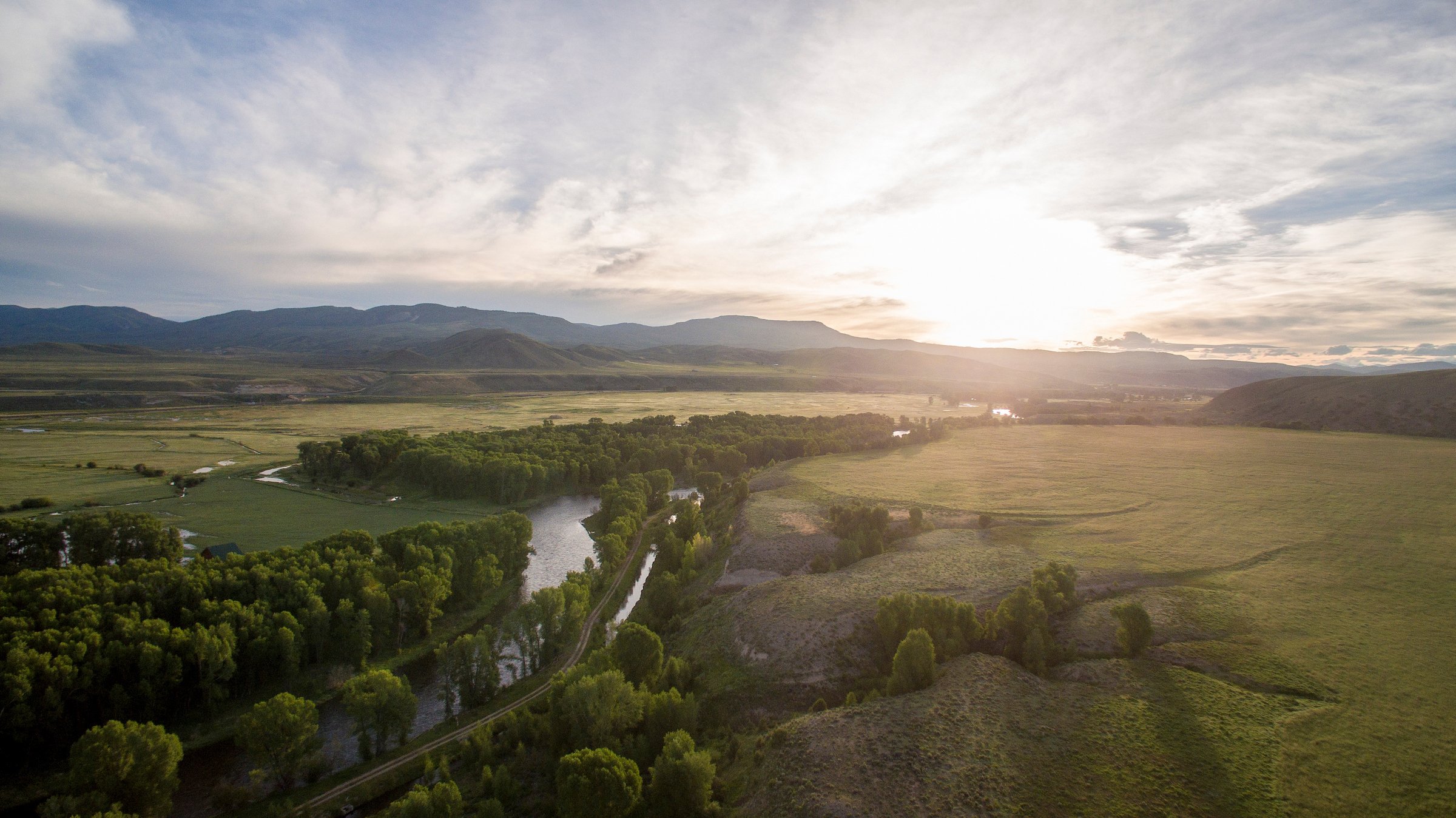
The BLM’s Colorado River Valley Field Office (CRVFO) recently released its Notice of Intent to Prepare a Supplemental Environmental Impact Statement and Resource Management Plan Amendment for the Roan Plateau. Colorado Trout Unlimited, along with national TU, has invested hundreds of hours and almost a quarter of a million dollars in the protection of Colorado River Cutthroat Trout (CRCT) in Trapper Creek, Northwater Creek, East Middle Fork of Parachute Creek (below the confluence of Trapper and Northwater Creeks) and the East Fork on the top of the Plateau.

You have probably heard about TU’s efforts to support responsible energy development. On the Roan, we are seeking a balanced solution that protects TU’s interests and the native trout that call streams there home.

We ask that our members help us spread the word and submit comments (by March 30th) to influence the BLM into developing a plan that is most protective of TU’s and Sportsmen’s interests on the Roan Plateau.

Key points to include in your comments:

  1. New roads, well pads and pipelines should not be constructed in cutthroat trout drainages on top of the Roan;
  2. Undisturbed big game winter range at the base of the plateau should not be developed;
  3. Big game migration corridors need to remain intact and undisturbed by drilling and development; and,
  4. Where drilling is allowed, it should be done using state of the art practices (such as directional drilling and water and advanced waste management technologies) that will protect sensitive trout and wildlife habitat at the top, along the sides and at the base of the plateau.
  5. To protect sensitive resources including trout and wildlife habitat, the BLM should retain the option of lease cancelation.

Submit Comments to: 

roanplateau@blm.gov

Attn: Roan Plateau Comments

For additional information please contact:

Bob Meulengracht

Coordinator Sportsmen for Responsible Energy Development – Colorado

Trout Unlimited

303-232-3909 (W) or 303-514-8227 (C)

rmeulengracht@tu.org


Sneak Peek into 2013 Rendezvous

We know you are all anxious to hear what presenters we have lined up for Rendezvous this year, so here is a sneak peek into our Rendezvous weekend. The theme for Rendezvous 2013 is SUSTAINABILITY. We tend to think first about the sustainability of Colorado's rivers, when in fact the sustainability of our organization is what allows us to "conserve, protect, and restore." Ongoing fundraising programs help us fund restoration projects. Succession planning helps us ensure continuity and board effectiveness. Youth education programs help us groom future members and leaders. And so we sought to achieve a balance of presentations that address the sustainability of both our rivers and our organization.

This year we have something very special planned for the Saturday night banquet:

Sustain This! The Many Landscapes of Trout

Presented by Mark Lance

This program captures a photographer's view of the most spectacular landscapes in the world of fly fishing.  Though his compelling images, Mark takes the audience on a fly fishing journey from the heights of the Patagonian Andes, to hallowed fisheries of the Rocky Mountain West, to forbidden rivers of the Kamchatka peninsula. “Rivers are a key force in shaping the landscape,” says photographer Mark Lance. “Rivers are inseparably entwined with the surrounding ecosystem, the people, culture and development of a place.”

Mark Lance has been fly fishing for over 40 years and wielding a camera for nearly as long. He is the Rocky Mountain Field Editor for Southwest Fly Fishing Magazine. He shoots for many outdoor manufacturers and travel companies and is a frequent contributor to fly fishing magazines including Grays Sporting Journal, Fly Rod and Reed, Trout Magazine, American Angler, Saltwater Fly Fisherman, and the Contemporary Sportsman. His photography can be viewed at riverlightimages.com.

Below are some of the other presenters and topics that they will be presenting:

Healthy Rivers Sustaining Rural Communities

Richard Van Gytenbeek, Trout Unlimited’s Colorado River Basin Outreach Coordinator is responsible for enlisting support for healthy rivers in the Colorado River Basin from local agricultural interests, sportsman groups and river dependent businesses. The “Healthy Rivers Sustain Rural Communities on Colorado’s West Slope” presentation is an integral part of TU’s “Our Colorado River” campaign. The program examines the importance of healthy rivers to agricultural and recreation on Colorado West Slope and the vital economic role they play in their communities. The presentation additionally covers the essential physical components of healthy rivers, threats to the river and strategies to mitigate those threats. The presentation concludes by highlighting some examples of TU’s work on the West Slope through restoration, irrigation infrastructure improvements and water sharing.

Colorado Fish and Wildlife Service Funding Programs

Pam Sponholtz, Project Leader, Colorado Fish and Wildlife Service Conservation Office, will be providing an overview of the Service's funding programs and how TU can effectively partner with CFWS on different projects.  With a focus on sustainability, she will be discussing various programs, the nuances of each, how to apply and some examples of completed projects.

Responsible OHV Recreation and Habitat Protection on Public Lands

Garrett VeneKlasen, Southwest Regional Director for TU’s Sportsmen’s Conservation Project (SCP), and Aaron Kindle, Colorado Field Coordinator for the SCP will present on Sportsmen Ride Right and how TU works to promote responsible Off Highway Vehicle recreation. Sportsmen Ride Right is a TU developed program that asks sportsmen to lend their energy to ensuring habitat protection and viability while using OHVs. We believe that all sportsmen who recreate on public lands use some form of an OHV to access their favorite hunting and fishing spots and that problems are not confined simply to ATV users. Mismanagement of motorized recreation and irresponsible use is a growing problem on our public lands and sportsmen need to play a large role in creating solutions. Join Garrett and Aaron as they talk about TU’s efforts both nationally and here in Colorado.

Energy Development in the Thompson Divide and What it means to Sportsmen

The Thompson Divide is right across the highway from Redstone and feeds numerous rivers important to anglers. The area also holds several conservation populations of cutthroat trout and is known as one of the best elk hunting areas in Colorado. The Thompson Divide is currently largely undeveloped but proposals for large scale development have been submitted. Aaron Kindle, Colorado Field Coordinator for TU’s Sportsmen’s Conservation Project, will present on TU’s efforts to work with sportsmen, surrounding communities, Colorado’s congressional delegation, and energy companies to find solutions and protect this magnificent area.

Want to visit the Thompson Divide and see what is going on?

Aaron Kindle, TU’s Field Coordinator, will be leading an optional field trip into the Thompson Divide for Rendezvous attendees. Topics will include proposed energy development, cutthroat trout conservation, sporting opportunities and an overview of Western Colorado energy development. You are encouraged to attend if you have not followed this issue and would like to learn more.

TU will provide transportation and will be departing from the front entrance of the Redstone Inn on Friday the 19th of April. Please meet there at 8:30 AM. The trip will last approximately two hours, running from 8:45 – 10:45 AM. Please RSVP for this trip with Stephanie Scott 720-354-2647 or sscott@tu.org.

For more information about 2013 Rendezvous please click on the link below:

www.coloradotu.org/event/colorado-tus-rendezvous-at-redstone/


Colorado: Corps of Engineers pushes back decision for Denver Water’s Moffat Collection System expansion project

Summit County Citizens Voice by Bob Berwyn

The Fraser River already contributes a disproportionately large share of its water to transmountain diversions. Without adequate mitigation, increased diversions are likely to lead to unsustainable degradation of aquatic ecosystems, according to Colorado Trout Unlimited Director David Nickum.

“We assume this means they recognize they need to get more analysis into the assessment,” Nickum said. “The draft was badly flawed. It failed to address a lot of the impacts,” he added.

Read more...

Colorado TU welcomes the Dolores River Anglers!

Please join us in welcoming our 24th Chapter, the Dolores River Anglers (DRA).  Serving the counties of Dolores and Montezuma as well as the community of Egnar, DRA began out of a group of dedicated Five Rivers Chapter members who in October of 2009 met to see if enough interest existed to support a TU chapter “on this side of the mountain.” While they only became an official chapter in February 2013, DRA has already built an impressive record of conserving trout and educating kids over the past three years.  In 2010, the DRA had three members become certified to teach the National Fly Fishing in Schools Program curriculum and the group's name officially became the Dolores River Anglers.  The group partnered with Cortez Parks and Recreation and the Cortez Rotary Club to conduct a Kids Fly Fishing Clinic and Community Fishing Derby at Parque de Vida in Cortez.  Later that summer, DRA conducted an Upper Dolores River Road Trip to show members where to go to fish on the Upper Dolores River, assisted the then CDOW with fish counts on the Dolores River both above and below McPhee Reservoir, and conducted a Dolores River Cleanup.

By 2011, DRA was holding evening fly tying classes at the Cortez Cultural Center.  The summer brought the Kid’s Fly Fishing Clinic and Community Fishing Derby again at Parque de Vida, a second Dolores River cleanup in June, and the second annual Upper Dolores River Road Trip to find new places to fish.  In August of 2011, DRA members joined Five Rivers Chapter members in assisting as mentors for injured soldiers involved in a visit by Project Healing Waters participants from Ft. Huachuca, Arizona and Ft. Carson, Colorado.

In 2012, DRA conducted their Third Annual Kids Fly Fishing Clinic, First Annual Adult Fly Fishing Clinic and Third Annual Community Fishing Derby.  The DRA partnered with the Dolores River Whitewater Advocates in their annual Dolores River Cleanup.  In July and August, DRA, in partnership with CPW, collected DNA samples from over 40 suspected individual native cutthroat trout on Stoner Creek and Taylor Creek.  In September 2012, the DRA worked to designate three tributaries to the Dolores river as Outstanding Waters - Little Taylor Creek, Spring Creek, and the Rio Lado.

Dolores River Anglers are currently working with the Dolores District of the San Juan National Forest to repair damage to the banks of Taylor Creek adjacent to the Little Taylor Creek Trailhead, and they continue to expand their youth education programs through fly fishing clinics and by helping local libraries in their summer reading programs with aquatic entomology.

Congratulations to the Dolores River Anglers!  Keep up the great work!


In rural Colorado, valuing water - and neighbors

Growing up in the rural West is a sure-fire way to gain a strong appreciation for the value of water. One of my earliest memories is of our local community getting together every spring to repair the rudimentary dam — resembling something built by beavers more than a work of modern engineering—that diverted water from the creek to the irrigation ditch that we all drew our water from.

My family lived next to that small creek, too warm for trout but with plenty of minnows, suckers, crawdads, and the occasional catfish to chase.  As children, we pursued our work and play mostly outside—the two pursuits were closely intertwined. We learned the worth of our labors and how to enjoy our days by always finding some part of the natural world to marvel at. Most importantly, we learned respect for that world and all of its inhabitants, which collectively provided us with our livelihood, kept us warm, and fed us. While I didn’t seriously fall in love with fishing and hunting until later in life, I’m certain a life spent immersed in the landscape led me to it.

Now as someone who has sat on both sides of the table when discussing appropriate uses of natural resources, I can assure you it’s never an easy conversation. However, at the end of the day I find that most people would like to help each other and their little patch of the world out if they have the opportunity.

We recently had such an opportunity when a multi-generational landowner on the Dolores River approached me about an eroding side channel on her land and how small fish were being trapped in the channel following high water.  For a very modest amount of money, we were able to complete a project that restored functional fish-rearing habitat and reduced sediment loads in the river, both of which will benefit anglers up and down the Dolores, as well as address the concerns and needs of the landowner.

While the big challenge is always how to balance the flow needs of rivers and people, successfully working together on small problems makes it easier to imagine tackling the larger ones.

While I still sometimes hear, “Why do work on private lands?” from anglers and “Why should I care about fish?” from water users, it seems like the more we try to be real neighbors, the easier it gets to search for solutions together and the less those kinds of questions define our discussions.

---by Matt Clark

Matt grew up on a farm and ranch in southwest Colorado and now hunts, fishes, and forages with his family all over the San Juan Mountains.  He is TU’s Backcountry Coordinator in southwest Colorado and also oversees on-ranch restoration partnership work in the Dolores and Mancos river systems.


And the winner is...

Congratulations to Jim Buckler of Summit County, the winner of the Colorado TU Spring Raffle! Jim won a weekend getaway for two to the luxurious Madison Valley Ranch, located along one of the cathedrals of fly fishing, the legendary Madison River in Montana.

Thank you to everyone who purchased tickets!  You helped Colorado TU to raise over $10,300 in support of our work conserving, protecting, and restoring Colorado's rivers and watersheds, and connecting youth with the great outdoors.


North Fork gets reprieve from O&G leasing

February 6 -  Colorado Trout Unlimited and other sportsmen's groups welcomed news that the Colorado Bureau of Land Management is withdrawing proposed oil and gas leases that include big game habitat and trout fisheries along the North Fork of the Gunnison River. The decision announced Wednesday follows protests and letters from several Colorado hunters, anglers and wildlife enthusiasts concerned about selling leases using a 23-year-old resource management plan.

The 20 parcels covering a total of 20,555 acres in western Colorado were to be offered in the BLM’s Feb. 14 sale.

``We’re glad the BLM pulled the leases from the sale. It doesn’t make sense to push forward with selling leases in such an important wildlife and agricultural area, against the wishes of the community and using outdated planning materials and information,’’ said Suzanne O’Neill, executive director of the Colorado Wildlife Federation.

In a Jan. 7 letter, seven sportsmen’s groups asked the BLM to finish revising the area resource management plan before offering more oil and gas leases.

Hunters and anglers look forward to working with the BLM field office as it updates the resource management, identifies where leasing is suitable and considers the necessary safeguards, said Bob Meulengracht of Trout Unlimited and the Colorado coordinator for Sportsmen for Responsible Energy Development.

Signing onto the Jan. 7 letter were Trout Unlimited; Colorado Trout Unlimited; Colorado Wildlife Federation; Bull Moose Sportsmen’s Alliance; Theodore Roosevelt Conservation Partnership; Backcountry Hunters & Anglers; and the National Wildlife Federation. The organizations represent thousands of Colorado hunters and anglers and other wildlife enthusiasts.

For more background on TU's concerns with the proposed leases in the North Fork valley, click here to read a previous post.


BLM Reopens Roan Plateau Plan

The Bureau of Land Management has announced that it is reopening environmental review on its plan for development on and around the Roan Plateau near Rifle. The new review comes following a legal victory by Colorado TU and other conservationists, where the federal District Court found that the BLM had not properly reviewed environmental impacts and considered alternatives that would have been more protective of the Roan. The Roan has special significance for trout conservation (click to read more) because it harbors rare populations of native Colorado River cutthroat trout, including in Trapper Creek where TU volunteers from the Grand Valley Anglers have conducted projects to benefit native trout habitat. The Roan also supports outstanding big game habitat including key mule deer areas.

Through scoping, the BLM solicits public input on the types of issues and impacts they should address in their environmental review, as well as the alternatives they should consider. One of Colorado TU's main criticisms of the original, flawed Roan Plateau plan was BLM's failure to consider alternatives that would have allowed for energy development while better protecting the Roan's outstanding fish and wildlife resources - for example, through greater use of directional drilling to avoid disturbances in more sensitive habitats. The new process gives BLM - and all of us - a second chance to "get it right" for the Roan.

The Denver Post added its voice to the chorus calling for a more balanced approach to development on the Roan Plateau in a recent editorial.

You can also add your voice!  As part of scoping, BLM will be hosting two public meetings (each run as open house formats from 4 to 7 pm):

  • Feb. 27 in Silt at the Colorado River Valley Field Office, 2300 River Frontage Road;
  • Feb. 28 in Grand Junction at the Clarion Inn 755 Horizon Dr.

You can also submit comments electronically by emailing to: roanplateau@blm.gov by March 30.

Senator Udall's 2013 Sportsmen's Agenda

Sportsmen and women are a vital thread in the fabric of the West. They fuel a significant part of the Colorado economy - generating more than $3 billion each year in Colorado and supporting 34,000 jobs, especially in rural communities. And sportsmen are some of our greatest conservationists, proudly carrying on the traditions of Colorado's first settlers. It is a valuable tradition to pass along to the next generation, as well, because it teaches healthy lifestyles, responsible gun ownership and our Western heritage. As I look ahead to 2013, I will do everything I can to support our hunting and angling heritage and ensure it remains a vital part of our state.

For starters, I plan to complete work on my bill to expand safe public shooting ranges. This common-sense and bipartisan piece of legislation doesn't cost taxpayers a dime, gives states greater flexibility regarding federal money they already receive, provides sportsmen a better return on investment for the fees they pay on ammunition and sporting goods and results in better, safer places for shooters to practice their sport responsibly.

We were very close to U.S. Senate approval of my legislation last year as part of a bipartisan package of bills benefiting sportsmen. Sadly, the bill failed to pass when a minority of senators objected to an unrelated provision on duck stamps - during the "lame duck" session of Congress, no less. I will be back again to take up the fight this year.

I also will continue fighting for common-sense access to our public lands for sportsmen. For example, we should fund the Land and Water Conservation Fund fully and set aside a portion of it for sportsman access. This critical fund uses natural resource extraction royalty payments to reinvest in conservation, wildlife habitat and outdoor recreation for future generations. Unfortunately, this program rarely has received the full funding it deserves. As a result, the program moves forward in fits and starts.

Moreover, I plan to continue my work to protect and enhance conservation and quality wildlife habitat. Last year, I began a community-driven, ground-up process to designate new protections for public lands in Colorado. Backcountry wilderness is beneficial for hunters and anglers for obvious reasons: Cleaner water and undisturbed wildlife corridors make for more robust game populations and quality hunting and angling opportunities.

And I will continue to develop proposals in 2013 to protect Brown's Canyon on the Arkansas River, the San Juan Mountains in southwest Colorado and pristine areas in Eagle, Pitkin and Summit counties. These efforts will strengthen rural communities whose economies depend on hunters and anglers and reinforce Colorado's position as a top destination for sportsmen and women from across the world.

In a related victory, late in 2012, I secured a major positive step in the cleanup of abandoned mines. These mines pose big environmental problems for Colorado, poisoning thousands of miles of rivers and streams, killing aquatic life and hurting water quality. At my urging, the U.S. Environmental Protection Agency developed a new policy encouraging cleanup of this pollution using third-party groups who volunteer to clean up the sites - so-called good Samaritans, like Trout Unlimited. I will continue to fight for cleanup funding and to remove any remaining legal impediments to good Samaritans willing to help preserve our streams and waterways.

Lastly, any sportsman's agenda must acknowledge that the status quo on gun violence is unacceptable. Hunters represent the model of responsible gun ownership and can offer valuable advice about how to protect our children while respecting citizens' constitutional right to own guns.

And we all too often have endured the nightmares of mass shootings, here and across our nation, perpetrated by deranged individuals outfitted with equipment designed for the battlefield. There is no single solution to curbing gun violence, and everything must be on the table for discussion, but we have an obligation to promote policies that will keep guns out of the hands of criminals and the mentally ill. I will be seeking input from sportsmen and many others on any measure designed to curb gun violence.

Taken together, these measures will bolster our sportsman legacy and outdoor economy as well as benefit all Coloradans who enjoy the outdoors. I look forward to continuing to work directly with Coloradans on these issues and advancing their views in Washington, D.C.

Mark Udall serves on the Senate Energy and Natural Resources Committee and is Colorado's senior senator.

Originally printed here in The Steamboat Pilot.

Tell Denver Water: Don't Kill The Fraser River!

Denver Water already sucks 60% of the annual flows from the Fraser River, and they now want to take more: another 15%.  Sign the Defend the Colorado petition today and tell Denver that before they take more water, they need to protect the Fraser River.  Tell Denver Water:  Don't Suck the Fraser River Dry!  

If you see a lost-looking trout walking the streets of downtown Denver in coming weeks, don’t be alarmed. He’s just looking for some water. Any water.

He urgently needs your help.

We recently filmed this trout’s sad dilemma. Left high and dry in the Fraser Valley, where Denver Water is sucking the life out of the Fraser River and its tributaries, our refugee trout hitchhiked to Denver to try to find out who moved his water and where he can get a few drops.

Check out the short video– it’s a lighthearted effort to highlight a serious problem: Denver Water is diverting the Fraser River to death.

You can make a difference by sending a message to Denver Water: sign the petition telling Denver Water to protect – not kill – the Fraser River.

You might not know that much of Denver’s water comes from across the Continental Divide, in Grand County, where the Moffat pipeline each year drains 60 percent of the Fraser River’s annual flows, leaving dozens of tributaries sucked completely dry. Denver Water’s proposed expansion of that pipeline would take another 15 percent of flows, leaving an already damaged river on life support.

It’s not just trout and wildlife at risk—our mountain towns and state tourism economy are also threatened. If you love to fish, ski, raft, hike, camp or otherwise recreate in the mountains, this hits you where you live.

We simply can’t keep sucking the lifeblood out of the Fraser and expect it to remain a living river.

If Denver Water is to move forward with the Moffat expansion, they must take steps to ensure it is done in a way that won’t destroy the Fraser River. For months, a coalition of conservation organizations, landowners, and recreation businesses have been calling on Denver Water to take a few responsible, cost-effective steps to protect the Fraser:

  • ensure healthy “flushing” flows in the river to clean out silt and algae.
  • avoid taking water during high water temperatures, when trout and aquatic life are vulnerable.
  • monitor the river’s health and take action as needed to prevent further declines.

We’ve presented these concerns to Denver Water, but so far they’ve been unwilling to work with us to adopt this common-sense package of protections.

This is where you come in. Denver Water  will listen to their customers. We need Denver-area residents—and anyone who cares about Colorado’s rivers and wild places—to  tell Denver Water that you want them to “finish the job” of protecting the Fraser River.

Please—go right now to the Defend the Colorado webpage to sign a petition asking Denver Water board members to protect the Fraser. We know they will respond to public pressure—but that means you need to take a few minutes and sign the petition. It will make a difference for the Fraser River and for our homeless trout, but only if you act now.

Denver Water won't act if they think Coloradans don’t know enough or care enough to demand a higher level of river stewardship.

So do something good for our rivers today. Sign the petition and tell Denver Water: don’t suck—protect the Fraser River.