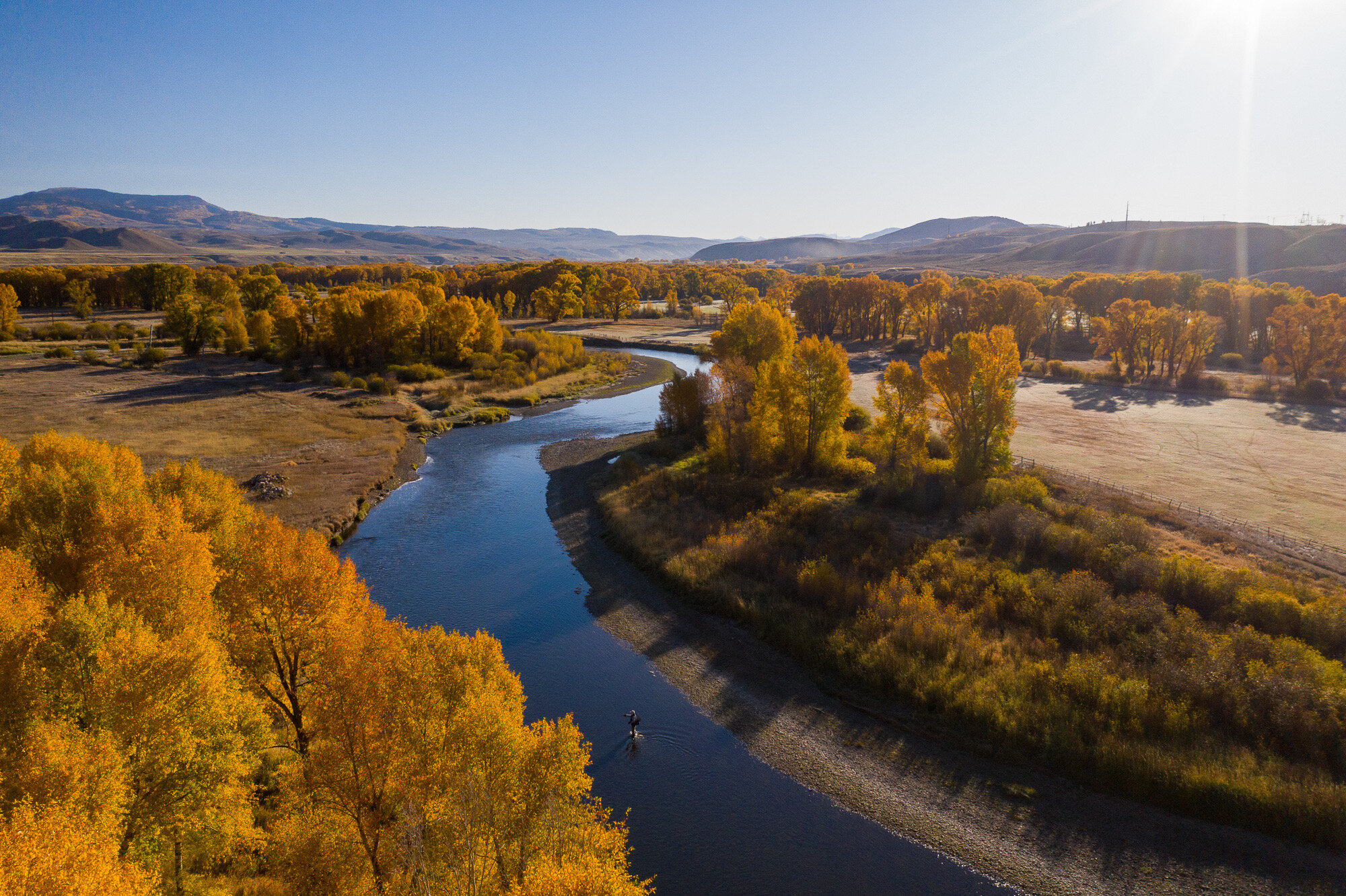
ARLINGTON, Va. — Trout Unlimited will celebrate its 50th anniversary as the nation's largest and oldest coldwater conservation organization throughout 2009. Started in 1959 by 16 fishermen in Michigan who wanted to protect their local river, TU has grown to 140,000 members in 400 local chapters throughout the country, including a Green Bay chapter. TU has been instrumental in restoring more than 10,000 miles of rivers and streams around the country. Trout Unlimited will host a number of events to mark its 50th anniversary, including an August celebration at its annual meeting in Traverse City, Mich., located near the Au Sable River where TU was founded.
Former energy worker lends support to rules
Saturday, March 14, 2009
Former Grand Junction resident Jim Ives has worked in Alaska’s oil fields and on the former Colony oil shale project near Parachute.
In 1997-98 he served as executive director of the Rocky Mountain Oil & Gas Association, the predecessor of the Colorado Petroleum Association.
Today, he’s lending what might seem to be an unlikely voice on behalf of Colorado’s new oil and gas rules, which have been largely criticized by the industry as being costly and burdensome.
“I think basically the regulations represent a balance that is both socially responsible as well as commercially viable,” Ives said in an interview.
He conceded the rules — scheduled to take effect this spring if approved by the state Legislature — do add some expense. But he called them “a necessary cost of doing business.”
The Centennial resident, 61, is retired and active with Trout Unlimited. Trout Unlimited supports the new rules, which aim partly to protect fish and other wildlife habitat. Ives cites his industry background in expressing his belief that oil and gas companies can comply with what he considers to be flexible, fair and balanced rules.
http://www.gjsentinel.com/hp/content/news/stories/2009/03/14/031509_3aenergyguy_backs_rules.html
River rescue
Local groups unite to rehabilitate river Durango Telegraph
by Missy Votel
The Animas River is getting a facelift. This week, the City of Durango was awarded an $86,000 grant from the Colorado Division of Wildlife for habitat improvements and bank stabilization for the stretch of river between 9th Street and the Highway 160 bridge. The project, which is planned for August, is meant to improve fish habitat while restoring riparian areas along the western river bank. With the high flows and increased use of the area in recent years, a number of native cottonwoods and shrubs along the banks have disappeared, leading to further erosion and habitat damage.
“Over the last several years, we’ve lost a lot of our big cottonwoods into the river,” said Ty Churchwell, of the Five Rivers Chapter of Trout Unlimited. “Every time we lose a 150-year-old cottonwood, it takes that long to replace it.”
Churchwell said the trees are important because, in addition to providing bird habitat and cover for fish, their massive root systems help to hold the soil in place. Without them, the bank erodes, causing further undercutting. “The root structure is what keeps the soil from washing away. Every big run-off we have, the problem perpetuates itself.”
Trout Unlimited along with Animas Riverkeepers was instrumental in securing the grant and getting the City of Durango on board with the project. The area to be worked on, which runs adjacent to Roosa Avenue, is city owned, making city cooperation crucial. The west side of the river, versus the east side adjacent to the River Trail and Doubletree, is being pinpointed because that is where the river takes a natural lefthand turn, scouring the west bank especially hard as a result.
http://www.durangotelegraph.com/telegraph.php?inc=/09-03-05/coverstory.htm
Yampa River water plan hits wall of foes
Posted: 03/09/2009 12:30:00 AM MDT
A water war is brewing on the Yampa River.
A bid by the Shell Exploration and Production Co. for a 15 billion- gallon water right has sparked opposition letters from 25 federal, state and local agencies, along with businesses and environmental groups.
The battle runs from Parker, which is seeking more water amid Front Range suburbs, to Dinosaur National Monument, where National Park Service officials worry that Shell's plan to divert water for oil-shale development may hurt the park.
Other objections filed with the Steamboat Springs water court came from a coal company, a power company, an agricultural ditch company and Cross Mountain Ranch, a hunting resort.
The Shell application and the opposition letters will be reviewed by the water court, a process that water lawyers say could take a year.
The Shell bid is provoking such a strong reaction because the Yampa is Colorado's last river with unclaimed water.
The environmental groups filing include the Sierra Club, the Wilderness Society, Trout Unlimited and the Colorado Environmental Coalition.
PAWSD Conjures $357 Million Project in Dry Gulch, Part Five
Pagosa Daily Post
Bill Hudson | 3/3/09
When District 7 Water Court Judge Greg Lyman approved the water rights for a proposed 35,000 acre-foot reservoir in Dry Gulch in 2004, that decision was appealed to the Colorado Supreme Court, by national fishing organization Trout Unlimited. The Supreme Court objected to Lyman’s decision and remanded the case back to him for additional “findings of fact.” The Supreme Court’s objections were based on three main issues.
In 2003, Pagosa Area Water and Sanitation District engineer Steve Harris had designed the Dry Gulch Reservoir at 35,000 acre-feet for one simple reason: that was the largest reservoir that would fit in Dry Gulch. Harris admitted this in court, and at public PAWSD meetings. In order to justify such a large reservoir — almost 18 times current Archuleta County use — Harris had used estimates of 100 years of astronomical community growth.
Polluted mines as economic engines? Obama admin says 'yes'
Pipeline scheme hijacks credible water planning
Pueblo Chieftain,
By DREW PETERNELL TROUT UNLIMITED
Regarding "Pipeline developer says project being hijacked by water group" in the Feb. 5 Pueblo Chieftain: What's really in danger of being hijacked in this competitive rush to build a pipeline is a credible, consensus-based plan for meeting Front Range water needs.
The idea of pumping water from the Flaming Gorge Reservoir to the Front Range sounds simple and attractive. The reality is much more complicated and uncertain.
The push by developer Aaron Million, the Parker Water and Sanitation District and other Front Range (often conflicting) water interests to build a wildly expensive pipeline project raises a flood of questions that haven't yet been adequately addressed:
How would this water diversion affect the ecological attributes of the Green and Colorado Rivers, including their invaluable sport fisheries and federally listed endangered species? What are the realistic costs - both monetary and in terms of energy use - of transporting water 400 miles from Flaming Gorge to the Front Range?
And what about the impact of the pipeline on other Colorado water users who would like to make use of our state's remaining share of the Colorado River?
A pipeline scheme of this magnitude could decimate important natural resources, become a costly boondoggle and exhaust Colorado's entitlement to the Colorado River. Front Range water users should proceed with caution.
Before endorsing any pipeline scheme, Front Range communities need to engage in comprehensive, regional water planning that evaluates how we can best meet water needs.
Drew Peternell of Boulder is director of Trout Unlimited's Colorado Water Project Trout Unlimited.
http://www.chieftain.com/articles/2009/03/01/editorial/doc49aa0307a89c2958757598.txt
New Address for Coyote Gulch
John Orr's Coyote Gulch blog has new URL and RSS addresses. Want to know how the snowpack's doing? Learn about groundwater recharge? The Taylor Park Dam retrofitting? If you're addicted to water, save these links.
New URL: http://coyotegulch.wordpress.com/
Colorado due to receive more than $7.5M from Fish and Wildlife Service
The funds are money returned to the individual states from two federal excise taxes on sportfishing equipment and archery, guns and ammunition sales...
Farming was driving force for water law
By Chris Woodka - Pueblo Chieftain
“The mineral wealth brought people to Colorado,” said Colorado Supreme Court Justice Greg Hobbs, recounting the gold rush of 1859 on Friday at the annual meeting of the Ditch and Reservoir Company Alliance at the Pueblo Convention Center. “The persons who remained were the farmers who dug the ditches to feed the miners. The cities grew out from the ditches.”