Chapters

Gift Ideas for the Angler in Your Life

This time of year is often called the "most wonderful time of the year" but for a lot of folks, it can also be the most stressful time of the year. Figuring out gifts for anyone is tricky enough, but figuring out a gift idea for an angler? Forget about it. Anglers become attached to their own styles of flies, their own line weights, tippet sizes, etc. Unless they buy it for themselves, it's impossible to know what they want (and even then, it may not be the right thing).

So to make the holiday season easier for everyone, here are some gift ideas from local, Colorado based companies for that angler in your life.


SScreen_Shot_2014-01-20_at_6.44.26_PM_1024x1024portsman Bumper-  $19.99

The Sportsman Bumper is the perfect stocking stuffer for the angler or hunter in your life. With three small clips for fishing poles and two larger clips for shotguns or rifles, the Sportsman Bumper attaches to the side of any car with strong embedded magnets to keep paint safe. From now until January, use the promo code "TUholiday" to receive %10 off and a dollar from your purchase will be donated to CTU.


Rep Your Water Circle Fly Hat - $25

As a Colorado founded and based company, Rep Your Water captured the essence of fly fishing in Colorado with this hat that features a resemblance to the state flag with a fly around it. The back of the hat is made of mesh to keep anglers cool on hot days. Rep Your Water also donates at least %1 of all sales to Colorado Trout Unlimited and it's chapters.


IMG_2642RodCuffs - $15.99

Rodcuffs were designed to hold the rod and reel while they're not in use. This allows the angler to free up his hands to tie on a different fly, change the tippet, hold the fish they just landed, or traverse over different terrain to get to the best fishing hole. The two strap system allows for adjusting the size of the cuffs to fit where it's most comfortable.


Boat CaddieFishpond Boat Caddie - $99.95 Although the name suggests it only works with a boat, the Fishpond Boat Caddie can also attach to a cooler, chair or even a nearby tree. With two top hooks that latch on to the boats gunwales, the Boat Caddie will hold all of the essential fishing tools including a receptacle for cut line, tippet and leader holders, fly storage and a beverage holder.


IWANA Tenkara Rod - $157

Tenkara USA features the IWANA rod, a 12ft ultra-light weight rod that's great for all around fishing. Tenkara rods are different than typical fly rods because they don't include reels. The line is tied to the end of the telescoping rod that is moved back and forth as casting.

Behind The Fin: Barbara Luneau

  • Name: Barbara Luneau
  • Conservation Chair for St Vrain Anglers Chapter
  • TU Member for 8 years
  • Works as a Petroleum Geologist
  • Best Quote from Barbara: “Some of my favorite stories don't involve trout, the story that stands out in my mind right now is the 9lb bonefish that I landed this past spring in South Andros Island, Bahamas. A clean, long distance cast onto a white sand flat in front of an easily spooked dark shadow that jumped on the fly and immediately took the line into the backing...magic when it all comes together.”


How long have you been a TU member?

I've been a TU member for about 10 years and I've been an active member of our chapter's board for the past 8 years.

Why did you become a member and what chapter are you involved with?

When I started to get serious about fly fishing, I purchased a Winston rod that included a certificate for a complimentary 1-year membership. I sent in the form and started attending chapter meetings and volunteer events. My chapter is St. Vrain Anglers, representing communities within the St. Vrain Creek drainage, Longmont, Lyons, Riverside, Raymond, Erie, Frederick, Dacono, Berthoud.

What made you want to become more involved with TU?

I became involved with TU at a time when I was looking to become more engaged in my community.

What is your favorite activity or project that you have done with TU?

My favorite part of our chapter's activities is helping kids learn to tie flies in our Kids Learn to Fly Fish program.

What is a favorite fishing spot and favorite fishing story?

My favorite spot changes with the season; it is the location where it all comes together:  perfect flow, perfect temperature, lots of bugs, feeding fish, and the perfect drift.  Some of my favorite stories don't involve trout, the story that stands out in my mind right now is the 9lb bonefish that I landed this past spring in South Andros Island, Bahamas. A clean, long distance cast onto a white sand flat in front of an easily spooked dark shadow that jumped on the fly and immediately took the line into the backing...magic when it all comes together.

To you, what is the best tactic or fly for catching trout? 

The best tactic is the one that works on any given day. Most often that's a reach or J-cast using my husband's APD (All Purpose Dry) design, a CDC dry fly that imitates midges, baetis, or even small caddis.

Beyond being an awesome angler, what else do you do in your spare time or for work?

If we're not out fishing on a weekend, we're cooking and entertaining friends and family. For the past 30 years, I've worked in the energy industry as petroleum geologist.

Colorado Introduces It's First Ever Water Plan

In 139 years of Colorado being a state, it had never had a water plan- until today. On Thursday, November 19 the Colorado Water Conservation Board unveiled the State's first ever water plan. The plan will help keep rivers and streams healthy that will continue to support Colorado's economy and quality of life.

“We’re pleased that the Colorado Water Plan recognizes that healthy rivers are central to Colorado’s quality of life and help drive our booming, $13 billion recreation economy,” said David Nickum, executive director of Colorado Trout Unlimited. “If we want a future of Gold Medal trout rivers and outdoor opportunities, we need to plan for that future—and this plan is a step in the right direction.”animas back to normal

Colorado Trout Unlimited supports three main components of the plan. The first being that irrigation throughout the state needs to be modernized, communities need to create stream management plans, and lastly, the plan establishes the base work for evaluation trans-mountain water diversion.

Primarily on the Western Slope, TU is working with farmers and ranchers on modernizing their irrigation techniques. The new water plan and Colorado General Assembly help fund the transition and provide incentives and support to farmers and ranchers changing their techniques.

The community Stream Management Plans will help local communities better understand the importance of flows that support a healthy river as well as recreational and other usage.

“Steam management plans bring local water users together to determine how best to use limited water resources,” Said Drew Peternell, director of TU’s Colorado Water Project. “They are an exercise in collaboration.”

Black Canyon of the GunnisonTU has opposed trans-mountain water diversions unless there is a large focus on conservation, shows that water is available for the project, and guarantees against environmental or economic harm to the basin of origin.

The Colorado Water Plan is just a beginning. The true test will be the implementation of the proposed ideas.

“The Final Water Plan is a beginning not an end,” said Nickum. “The key to Colorado’s water future will be actual on-the-ground collaboration to meet our water needs while protecting our state’s rivers and agricultural heritage.”

Fishing Doesn't Hibernate in Winter

Winter in Colorado generally means ski gear is taking up most of the space in your car. But be sure to leave a little room for your waders and rod. Although the weather is colder, fly fishing remains hot. Fishing during the colder months is possibly the most rewarding time of year to fish. Not only does catching a fish justify the hours spent in the cold and wind, and give you a reason to spend more time in some of the best fisheries in the country, but winter trout require much more precise technique and skill than any other time of year.

When the air temperature drops, the water temperature drops with it. Like most fish, trout cannot regulate their body temperature and therefore operate at the same temperature as the water around them. When fish get too cold, they become sluggish and dormant.

winter streamTrout prefer temperature between the ranges of 45-65 degrees Fahrenheit- also known as the Trout Zone. This is no problem for summer days in Colorado when the water remains in this range, but during the winter, the temperature can drop below freezing. In order to survive, trout will find holes or eddies where the water may be warmer and stay low in the water.

In order to catch the fish in these spots it's best to use a nymph. Fish won't move more than a few inches to catch food. When their body is cold and metabolism is low, it's not worth the risk to waste energy by moving for a small reward that a bug might offer. Therefore, drop nymphs to the bottom of the stream where they can see it and move slightly to eat it.309455_10150416663638665_1273972731_n

When fishing in these winter streams, remember that trout are still alert and they know what it is worth wasting energy for and what is not. Every single move they make and bite they take is a gamble. If they strike and miss, that's a lot of energy wasted for no reward.

Winter streams are generally lower and clearer. Trout will be able to see your tippet if it's too big. Try to use one tippet smaller than what you'd normally use on that body of water. If you use a 5x tippet in spring and summer, drop to a 6X tippet in the winter months. This will not only help that the trout won't see the line, but that the nymph is presented more realistically.

low_snowpackFor the same reason that the tippet should be shortened, it's also important to stay low. Because the water is clearer and lower, it gives the fish a better chance at seeing you.

While nymphing is the best tactic for winter trout, don't put all of your dry flies away quite yet. Keep a view on your vest because in deeper pools trout may still rise. This generally occurs in tailwaters (rivers that flow from bottom-released dams). In these tailwaters, the water is moving out of the dam fast enough that the water temperature generally remains in the Trout Zone year round.

During the winter trout will also eat minnows and crayfish, but remember they won't move too far for them to conserve energy. Fishing streamers is a good tactic but just like everything else, they need to be presented next to the trout ensuring they don't need to move as much.

Remember to keep fish in the water as long as possible, especially in the winter as the outside temperature can harm and possibly kill them. Use the fundamentals of proper handling when fishing.

So don't take that fly rod out of your car just yet- or ever. Because fly fishing never hibernates. And when you're stuck in ski traffic, there's no better way than to wait it out by wading out.


Hardrock Mining Bill Looks to Fund River Cleanup Costs

A bill introduced by Colorado and New Mexico legislators was introduced to Congress last week that would require a collection of royalties from companies mining on federal lands to provide funds for cleaning up abandoned mines. Senators Tom Udall, D-NM, Martin Heinrich, D-NM, and Michael Bennet, D-Colo unveiled the Hardrock Mining and Reclamation Act of 2015 that would reform the 1872 Lagoa_vermelha_na_Mina_do_Losal_05Mining Law.

The Hardrock Mining and Reclamation Act of 2015 would require companies mining on federal land to pay royalties that go towards the cleanup and restoration of spills and abandoned mines. Currently, the 143 year old Mining Law does not require companies to pay royalties of any kind to fund the clean up of past and present mining projects. This is unlike the oil, coal, and gas industries which have been required to pay cleanup and restoration royalties for decades.

“It just makes sense to create the same kind of clean-up fund for hardrock mines,” said Brad Powell, director of Trout Unlimited’s Sportsmen’s Conservation Project for the Southwest region. “Mining companies that benefit from development on public lands should play a key role in the cleanup and not leave the bill for taxpayers.”

The bill was introduced exactly three months after the Gold King Mine spill that dumped 3 million gallons of toxic sludge into the Animas River near Durango. Fortunately there was no massive fish kill from the spill and the Animas is recovering nicely.

But the Gold King Mine is the tip of a very grim iceberg. Throughout the entire American West- from Colorado to Montana to California- abandoned mines pose an imminent threat to water quality and fisheries. According to the Environmental Protection Agency, 40 percent of headwaters in the West are affected by abandoned hard rock mines.

Although the Animas was the mostAnimas Spill notable spill, the same tragedies are happening throughout the west. The Uncompahgre River near Ouray is lifeless until the metals fall into the depths of Ridgeway Reservoir. The upper Animas River suffers mine waste that steadily drains into the river at a volume equal that of the Gold King Mine spill once a week.

Senator Cory Gardner and Representative Scott Tipton are also working to introduce legislation for "Good Samaritans" like TU that would provide legal protection to those parties that voluntarily clean up abandoned mine sites and spills.

Behind the Fin: Allen Adinoff

  • Name: Allen Adinoff
  • Chapter President for Cutthroat Chapter
  • TU Member for 10 years
  • Semi-retired allergy and asthma doctor
  • Best Quote from Allen: “We put in below the dam, and our oarsman told me we’d half to catch a fish before crossing under the cable.  As I was telling him he was full of bull... boom there she was!

- How long have you been a TU member? I've been a member for 10 years, give or take.

- What made you want to be President of the Cutthroat chapter? I thought the opportunity of Chapter president would give me a chance to further the TU mission, and become further involved with our members and Board. There was an opening, as our current President Cam Chandler was moving up to Vice-president of CTU. Allen Adinoff 3

- What are some of your plans and goals for the Cutthroat Chapter?

We want to find ways to engage more members in becoming interested in the Chapter and it’s mission.  We have 1500 members, but the same 50 or so are the ones who consistently show up at the meetings and participate in the conservation projects. We have plans to initiate a “local fishing trip” program that would involve trips within an hour or less of south metro Denver. The goal would be to interest less experienced fishers to be “mentored” by the more knowledgeable. Hopefully this will interest newer, younger members to be more involved with the Chapter in general. We also want to expand our fundraising efforts, finding novel ways of bringing dollars into the Chapter. Two new programs initiated this year have been King Soopers gift cards and Amazon Smile.

- What is a favorite fishing spot and favorite fishing story? I love the Deckers area. The river canyon is gorgeous. It has really come back since the Hayman fire and is “home waters” for the Cutthroat Chapter. My favorite story is from fishing the Bighorn. We put in below the dam, and our oarsman told me we’d half to catch a fish before crossing under the cable.  As I was telling him he was full of bull... boom there she was!

- To you, what is the best tactic or fly for catching trout? Totally focusing on what you’re doing.  When you’re “in the zone”, good things will happen. Allen Adinoff- Beyond being an awesome angler, what else do you do in your spare time or for work? I’m semi-retired, still working a couple of days per week as an allergy and asthma doctor in a practice I’ve been devoted to for over 25 years. I love to hunt elk, deer, and pheasant. I also play drums with a weekly jazz group, cycle regularly, and still cut my lawn and own several chainsaws to keep in shape.

Colorado's Gold Medal Waters

Recently on our Facebook page we posted about Colorado's Gold Medal waters. Colorado is home to 322 miles of Gold Medal Fisheries that include 11 different rivers and three lakes. In order to qualify as a Gold Medal water, the area must be able to produce a minimum of 12 "quality trout" (14+ inches) per acre. It also must be able to produce 60 pounds of standing stock (the amount of living organisms in the ecosystem- including fish, plant life and micro invertebrates) per acre, and can only be designated Gold Medal if the water is accessible to the public.

The newest section of the Gold Medal list is 102 miles of the Arkansas River that was designated in 2014. Although the Arkansas is the longest stretch of Gold Medal river, all offer fantastic fishing opportunities. Make sure to check out the local fishing regulations and the locations of some private lands before heading out!

Animas River brown trout post spill

Animas River (4 miles)

Despite the spill back in August, the Animas River near Durango remains a Gold Medal fishery as there was no massive fish kill resulted from the spill and the fishing remains strong. The Gold Medal stretch is between Lightner Creek to Rivera Crossing Bridge and holds plenty of rainbow and brown trout between 14-18".

Arkansas River (102 miles)

In 2014, after 20 years of cleaning up mining pollution in the river, Colorado Parks and Wildlife designated a 102 mile stretch between the Lake Fork Confluence and the U.S. 50 bridge as the newest and largest stretch of Gold Medal waters in Colorado.

Blue River (34 miles)

The Blue River flows north out of Dillon Reservoir and follows Highway 9 until the water meets with the Colorado River in Kremmling. The entire stretch of the Blue River segment is artificial fly and lure only. Various species of trout and Kokanee Salmon call this water home.

labrador brook trout

Colorado River (20 miles)

20 miles of the Colorado River between the US 40 bridge (approx three miles west of Hot Sulphur Springs) to the confluence with the Williams Fork River east of Kremmling is designated as a Gold Medal river. This stretch holds brook, brown and rainbow trout. Regulations vary along this stretch.

Fryingpan river (14 miles)

Below the Ruedi Dam downstream to the confluence with the Roaring Fork River, about 14 miles of the Fryingpan has achieved Gold Medal status. The section of the river is catch and release only and contains brown and rainbow trout.

Roaring Fork River (22 miles)

Where the Fryingpan meets the Roaring Fork, the water remains a Gold Medal section until it meets the Colorado River in Glenwood Springs. Mountain whitefish, brown and rainbow trout are in this stretch.

Gore Creek (4 miles)

One of the smallest sections of Gold Medal waters in Colorado is Gore Creek. The section is about 4 miles between the confluence with Red Sandstone Creek downstream to the confluence with the Eagle River. Primarily brown trout are caught in this water.

Black Canyon of the Gunnison

Gunnison River (27 miles)

Rainbow and trophy brown trout can be found in the Gold Medal section of the Gunnison River between the Crystal Reservoir dam downstream to the confluence with the Smith Fork. The section of the Gunnison flows through Black Canyon of the Gunnison National Monumnet.

North Platte River (5 miles)

Another small section of Gold Medal waters is the North Platte River. The section flows from the southern boundary of the Routt National Forest downstream to the Wyoming state line. Although the section is smaller in distance, the brook, rainbow and brown trout are anything but small.

Rio Grande River (17 miles)

West of Del Norte, the Rio Grande river holds wuality brown and rainbow trout, making it a Gold Medal waters. The 17 mile stretch flows from the Colo 149 bridge at South Fork downstream to the Rio Grande Canal diversion structure.

Middle Fork South Platte

South Platte River (37 miles, 3 sections)

Two sections of the South Plate River make up Gold Medal streams. The first is about 20 miles from the Colo 9 bridge downstream to Spinney Mountain Reservoir. The second section is below Spinney Mountain to the inlet of Eleven Miles Reservoir, about 4 miles. This section is commonly known as the "Dream Stream." The third section is from the lower boundary of the Wigwam Club downstream to Scraggy View Picnic Ground

Spinney Mountain Reservoir

Spinney Mountain is a 2,500 surface acre lake formed by the South Platte River. The body of water separates two sections of the South Platte Gold Medal waters and is a gold medal section in itself. Trophy rainbow and brown trout as well as northern pike can be caught in this water.

Steamboat Reservoir

"Outstanding water" designation for Bear and Severy Creeks helps protect the threatened greenback cutthroat trout, Colorado's state fish

At 1,053 surface acres, Steamboat Reservoir offers trout of various kinds including the Snake River cutthroat trout. Along with great fishing, the lake offers fantastic views with Hahn's Peak forming part of the scenery.

North Delaney Lake

Near Walden, Colorado, sits North Delaney Lake, another Gold Medal body of water. The lake is 160 surface acres but offers great fishing for rainbow, brown and cutbow trout.

Behind the Fin: John Bocchino

  • Name: John Bocchino
  • Fly Fishing Guide for Rifle and Rise Outfitters in Gunnison
  • Life time member of TU
  • Web designer and communications for Gunnison Angling Society 
  • Best Quote from John: “I really wanted to contribute in any way I could to protecting our coldwater fisheries. We face constant challenges and I believe TU plays a major role in protecting what I love the most. I just want to do my part."

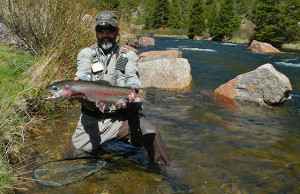
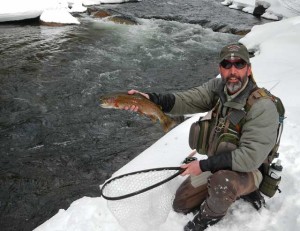
Member of the Gunnison Angling Society Chapter of TU, John Bocchino lives for fishing. His passion for fly fishing has led to the creation of a successful business, Rifle and Rise Outfitters. John has been a board member, vice president, and president of his chapter and currently works on the website and communications. The term Good Enough may fit nicely with his band name, but as a volunteer and member of TU, John is so much more than just "good enough."

- How long have you been a TU member?

I joined TU sometime in the 90s and then became a life member shortly after that. My business, Riffle and Rise Outfitters, is a registered TU endorsed business as well.

- Why did you become a member and what chapter are you involved with?

I joined TU and got involved because I wanted to try to make a difference with regard to coldwater conservation efforts. Fly Fishing is my passion, and I wanted to do my part totaylor_bow1_blog_060415 protect the resource. I was getting back into fly fishing in a big way while living in northern VA in the 90's. I became very involved at the state level in Virginia and helped with web development efforts and other projects for the VA Council of TU. In 2006, I moved to the Colorado Rockies for the mountains, rivers, and trout. I am an active member of our Gunnison Chapter of TU, the Gunnison Angling Society. I served on the Board, and was also VP and President. I built a new website for the chapter and continue to manage that, as well as chapter communications. - What made you want to become more involved with TU?
I really wanted to contribute in any way I could to protecting our coldwater fisheries. We face constant challenges and I believe TU plays a major role in protecting what I love the most. I just want to do my part.

- What is your favorite activity or project that you have done with TU?

I enjoy the web development work I’ve done for my local chapter, and I also enjoy helping to promote youth education as it relates to TU. I’ve been very involved in helping to raise funds and send kids to the CTU youth camp for several years now. I also recently managed two college interns from Western State Colorado University here in Gunnison, who worked for our chapter this past spring.taylor_bow1_blog_030215
- What is a favorite fishing spot and favorite fishing story?

It’s tough to identify just one favorite spot for fishing. My favorite river here in Colorado is the Lake Fork of the Gunnison River. Between guiding and fishing, I probably spend about 150 days per year on the water. I remember my early days fishing the Catskills back in the 90s and early 2000s, where my friends and I would spend a week up on the Beaverkill and the West Branch during May, June, and September. We called it fish camp and really looked forward to those trips. I got into the hatches in a big way and started tying flies and calling out bug names in Latin while on the river. One day, one of my buddies came up to fish with us and he was just a beginner. He really didn’t fish much. Well, he proceeded to out-fish us in a major way and when I asked him what he was using, he said, “I don’t know. A big gray fuzzy thing.” So much for all the years of studying hatches and learning Latin.
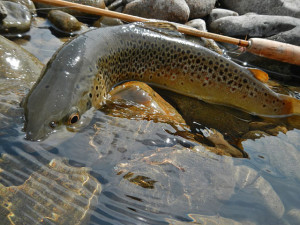
brown1_era_blog_082515- To you, what is the best tactic or fly for catching trout? The most important thing is patience. That is the key word for fishing and definitely for guiding as well. You need to move slow, concentrate, and have a lot of patience and just enjoy the ride. It’s not brain surgery. We’re just catching fish. I definitely don’t have just one top fly that I use. I enjoy dry fly fishing the most, and when I can’t do that, I love to streamer fish. So chasing big trout with a streamer is one of my favorite things to do. And for that, I like a size 4 Sculpzilla.

- Beyond being an awesome angler, what else do you do in your spare time or for work?

I have an outfitting business, Riffle and Rise Outfitters, which I set up last year so I could work for myself. This was my second season on my own and it was great. I like guiding for myself and having total control over what I do and how I can take care of my clients.  When I’m not working/guiding or fishing, I enjoy playing music. I play guitars, dobro, and harmonicas, and I’ve been playing in a little band here for the past few months. I have a small recording studio in my house and we get together to record music every now and then. We’ve also performed live a few times this year. We’re not all that great and try not to take it too seriously, but we have a good time messing around with music. (I’m a fly fishing guide, not a rock star!) We go by the name Good Enough. I guess that says it all!

Herman Gulch Trout Salvage

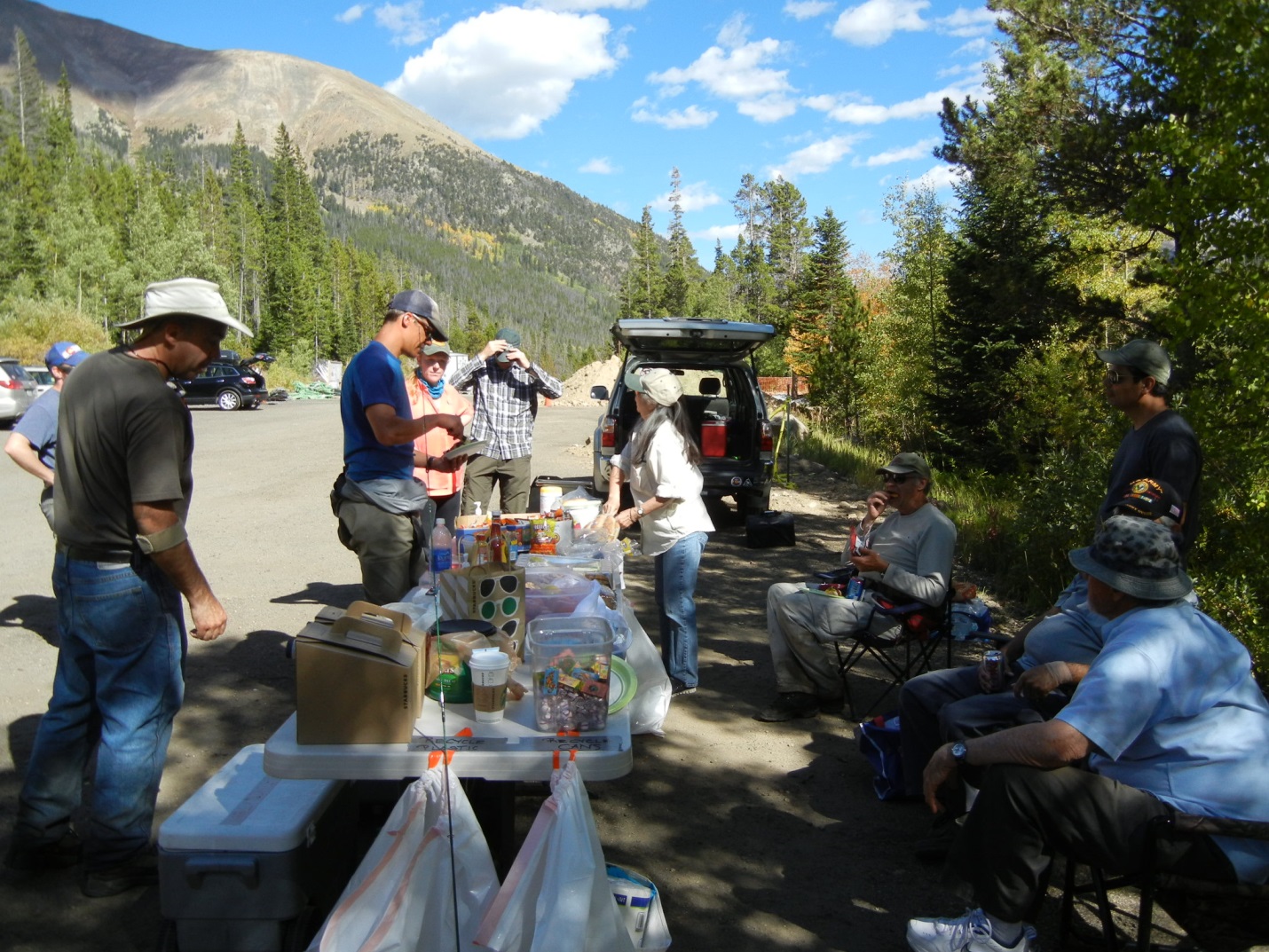
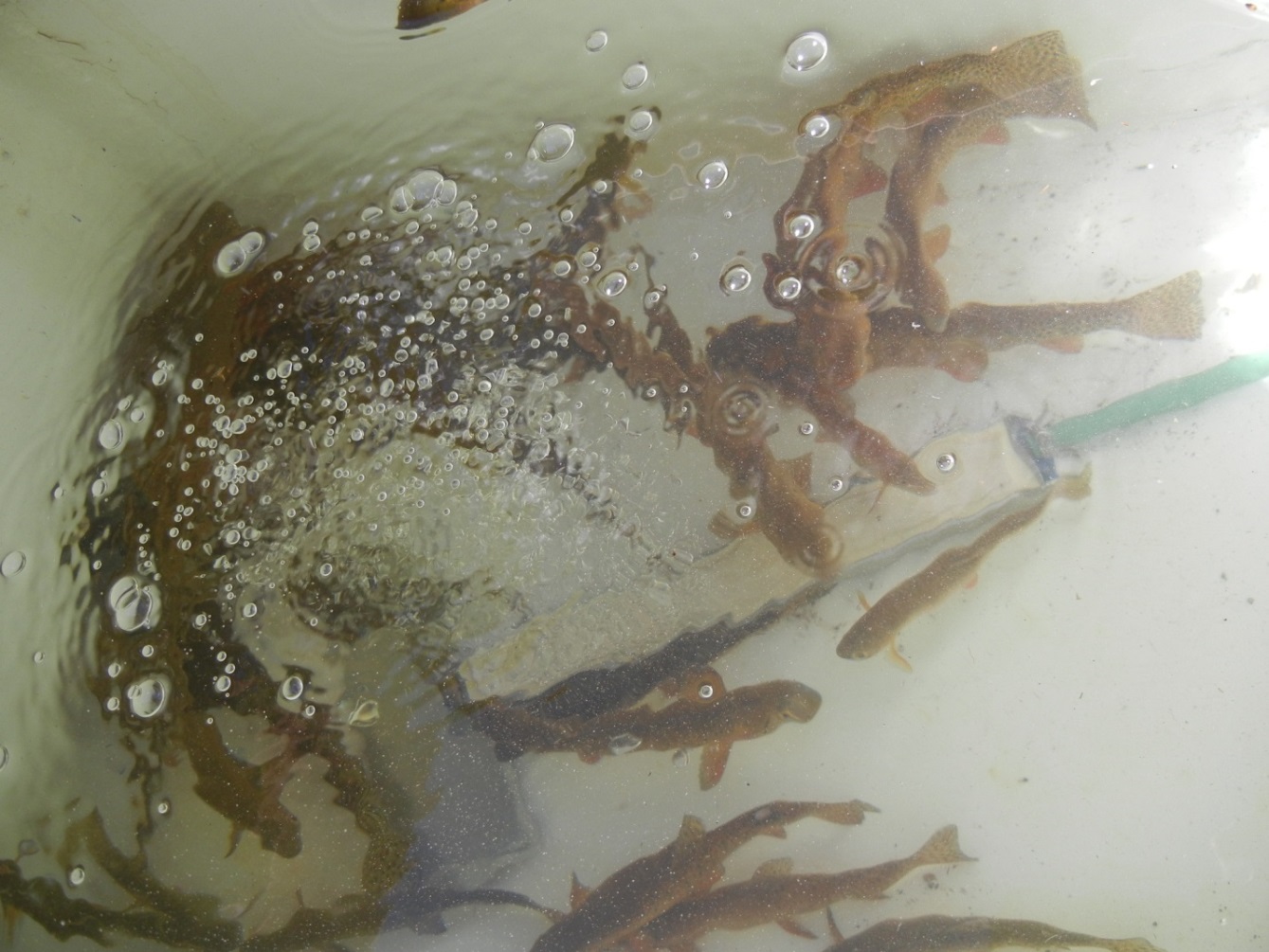
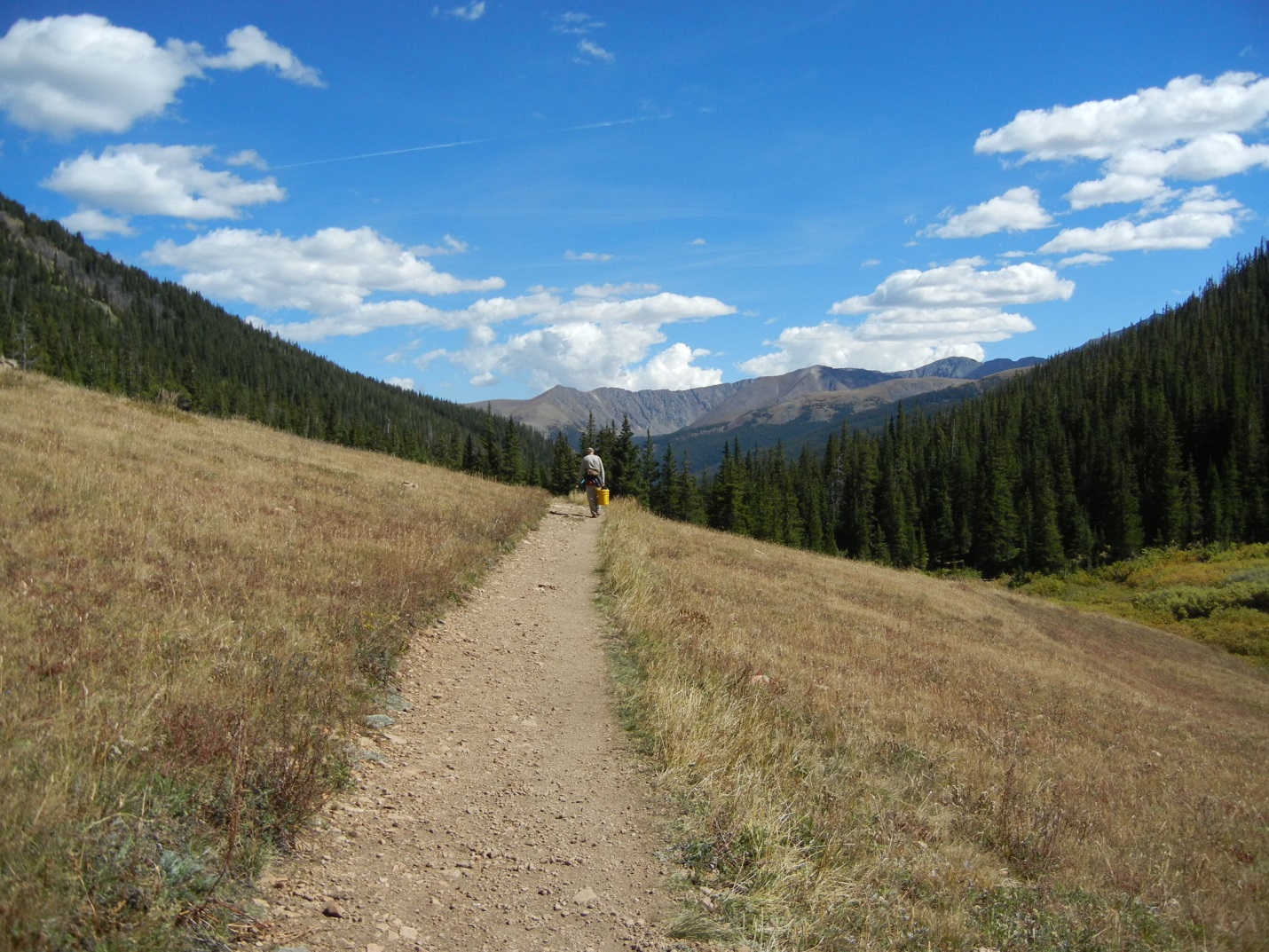
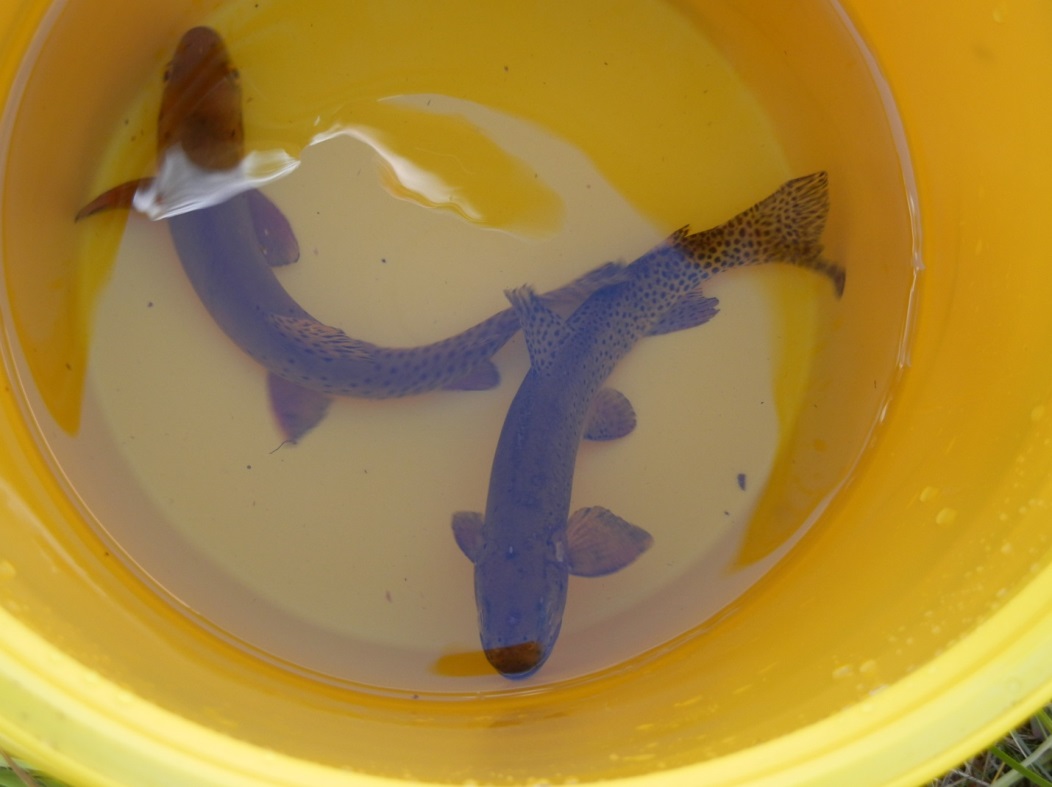
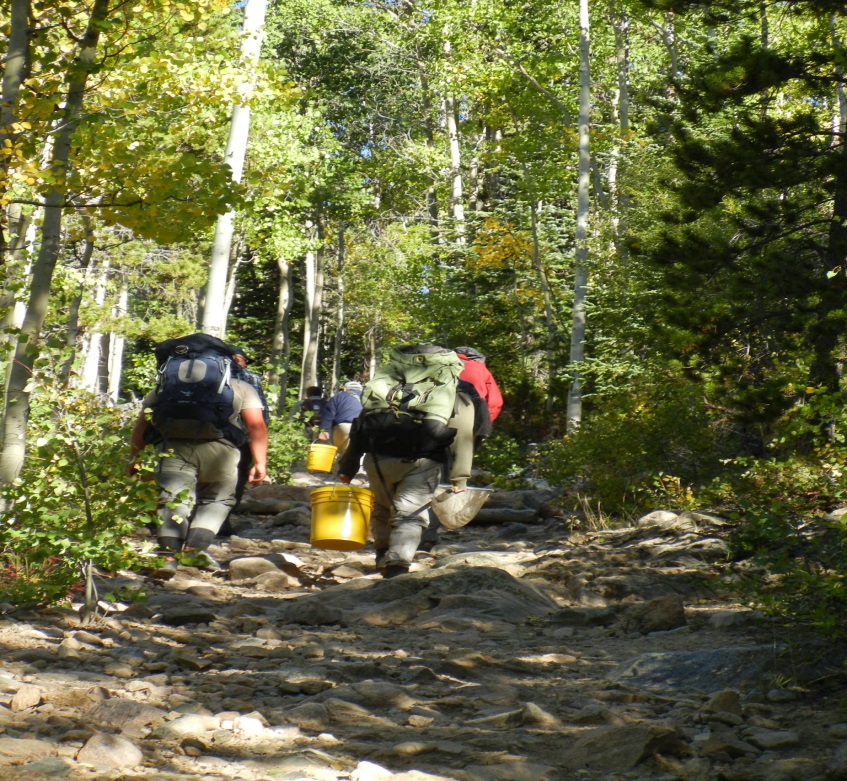
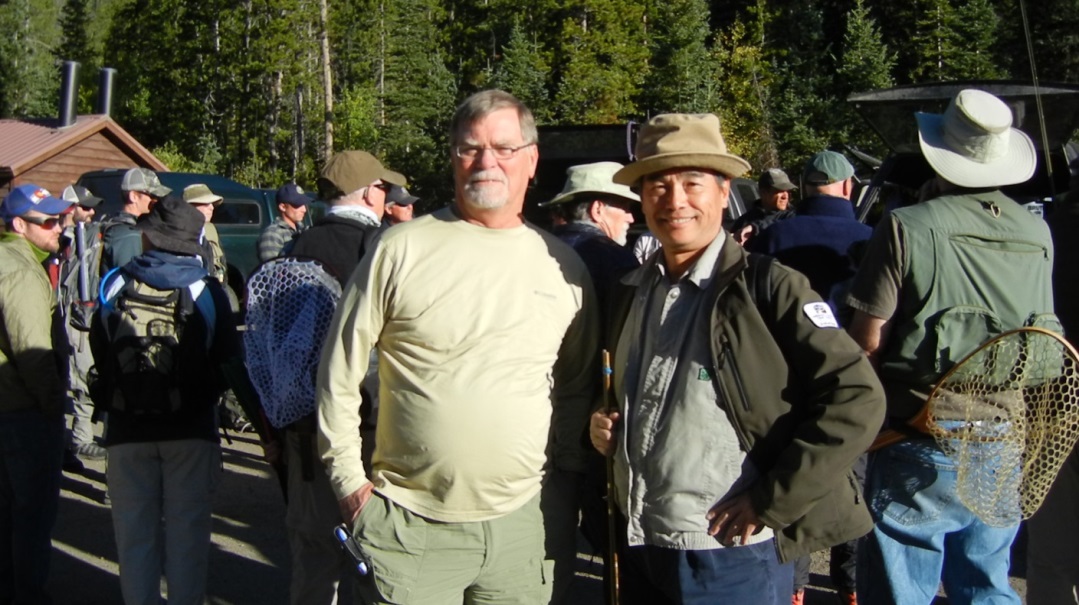
The creek along Herman Gulch may not seem like much, and in some places it’s no more than two feet wide. But it’s still able to maintain a strong ecosystem that allows cutthroat trout to survive. After much consideration by Colorado Parks and Wildlife, it was decided, based on monitoring data from the West Denver TU Chapter, the creek was a great spot to reintroduce native greenback cutthroat trout. On September 11, the West Denver Chapter joined forces with The Greenbacks and Colorado Parks and Wildlife and set off to Herman Gulch to catch as many trout they could and transport them into Clear Creek.Fishing 005

Volunteers split the stream into five sections with each section getting two buckets and four anglers. At the end of the day, the groups successfully caught and transported over 100 healthy trout into holding pens downstream.

Future plans from CPW include shocking and removing the remaining non-native trout before winter. Native greenback reintroduction is set to begin in early spring of 2016.

Below are more photos from the event. Courtesy of Tim Toohey of West Denver Chapter.


Herman Gulch 013 Herman Gulch 012 Herman Gulch 011 Herman Gulch 010

Cutthroat

Cutthroat

Cutthroat

Herman Gulch 006 Herman Gulch 004 Herman Gulch 003 Herman Gulch 002 Herman Gulch 001

2015 Colorado TU Fall Raffle

YOUR CHANCE TO WIN A GLENWOOD SPRINGS FISHING GETAWAY - AND HELP COLORADO'S RIVERS!When you purchase a ticket in Colorado Trout Unlimted's statewide raffle, you'll have the chance to win a trip for a lodging, dinner and soak package in the beautiful Glenwood Springs area, while providing funds to support river conservation across the state.

One winner will receive a package featuring a full day float trip for two on the "lower upper" Colorado River with Confluence Casting, plus one night's lodging in a Classic Victorian room at the historic Hotel Colorado in Glenwood Springs, and a $25 gift card for an evening soak at the Glenwood Hot Springs.  Total package value is $709.

Raffle tickets are $5 each, or $20 for five.  The drawing will take place at 1 pm on November 5 at the Denver Athletic Club (14th & Glenarm, Denver) - at the Denver Angling Society luncheon.  You need not be present to win.

https://org2.salsalabs.com/o/7023/t/12607/shop/shop.jsp?storefront_KEY=643