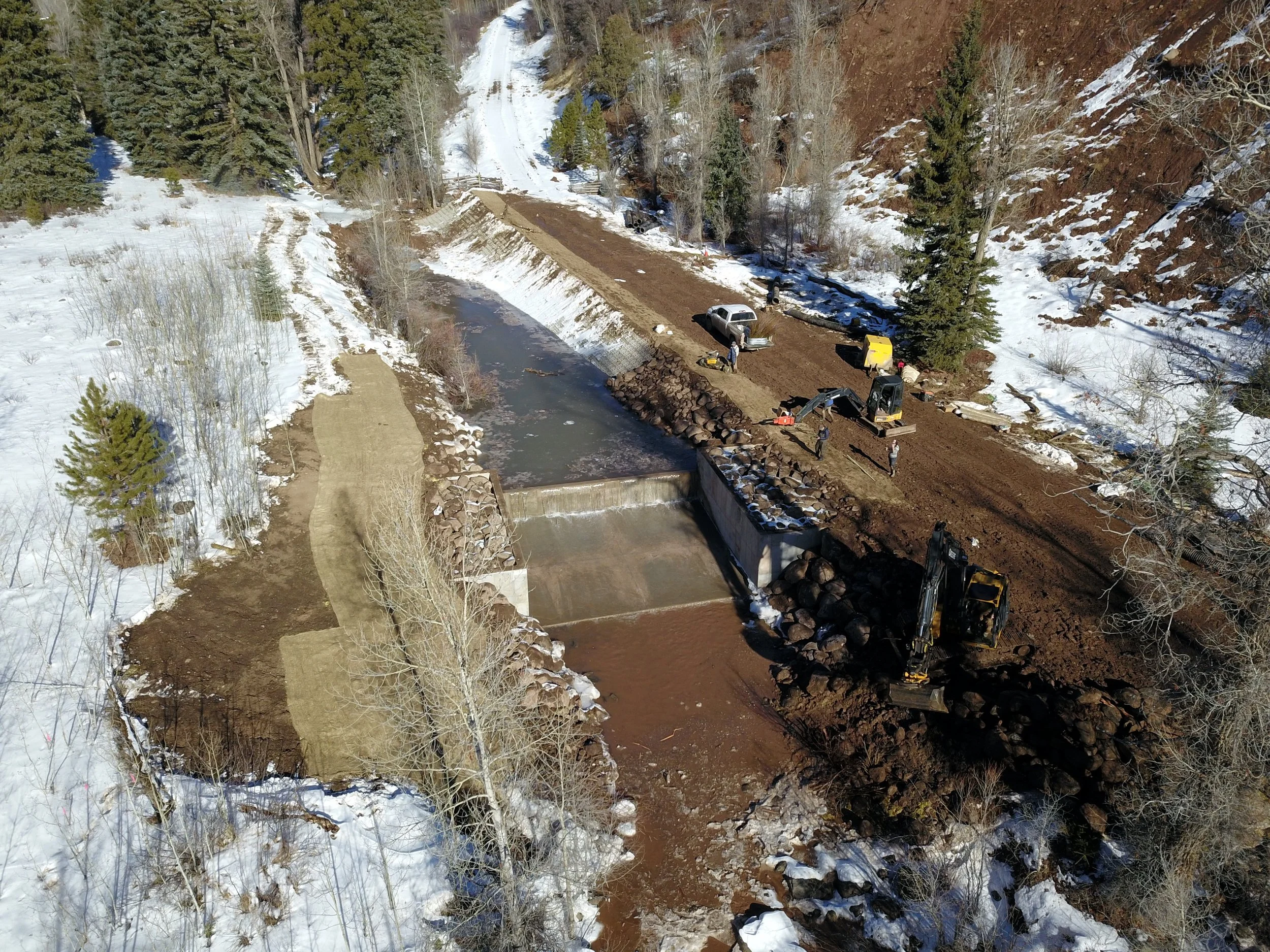
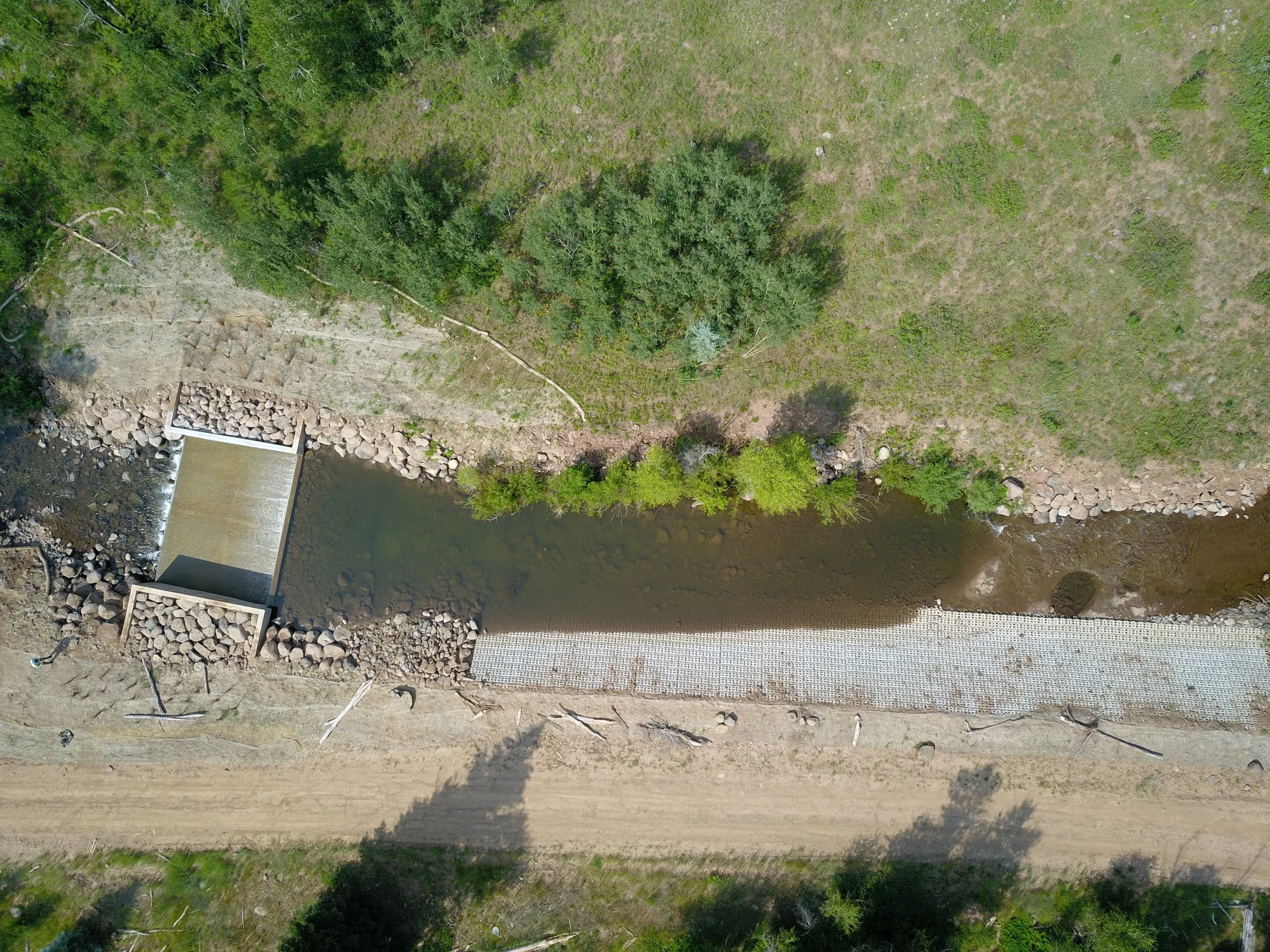
The emergency response was not the first effort to protect Wildcat Creek. In 2023, Dolores River Anglers TU, Colorado Parks and Wildlife, the San Juan National Forest, and the Upper Dolores Stream Protection Working Group collaborated on a project to strengthen the creek and create better fish habitat.
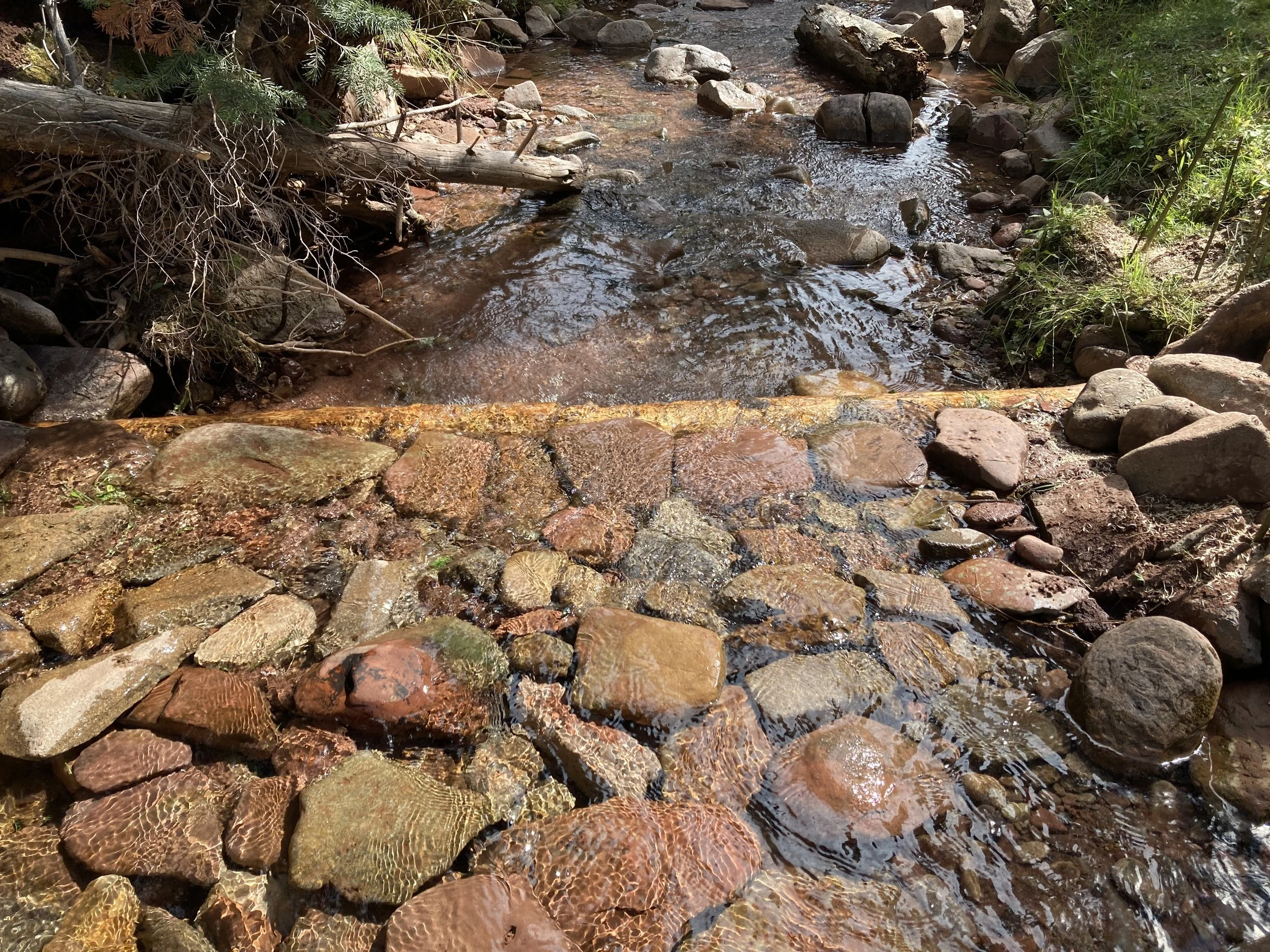
They installed log pour-over structures at four sites along the stream. These structures mimic what happens naturally when a tree falls into a creek. They create deeper pools and pockets of refuge where fish can survive during periods of low water.
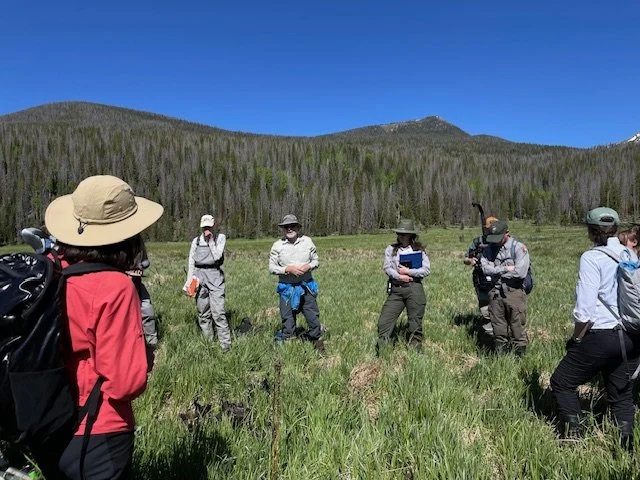
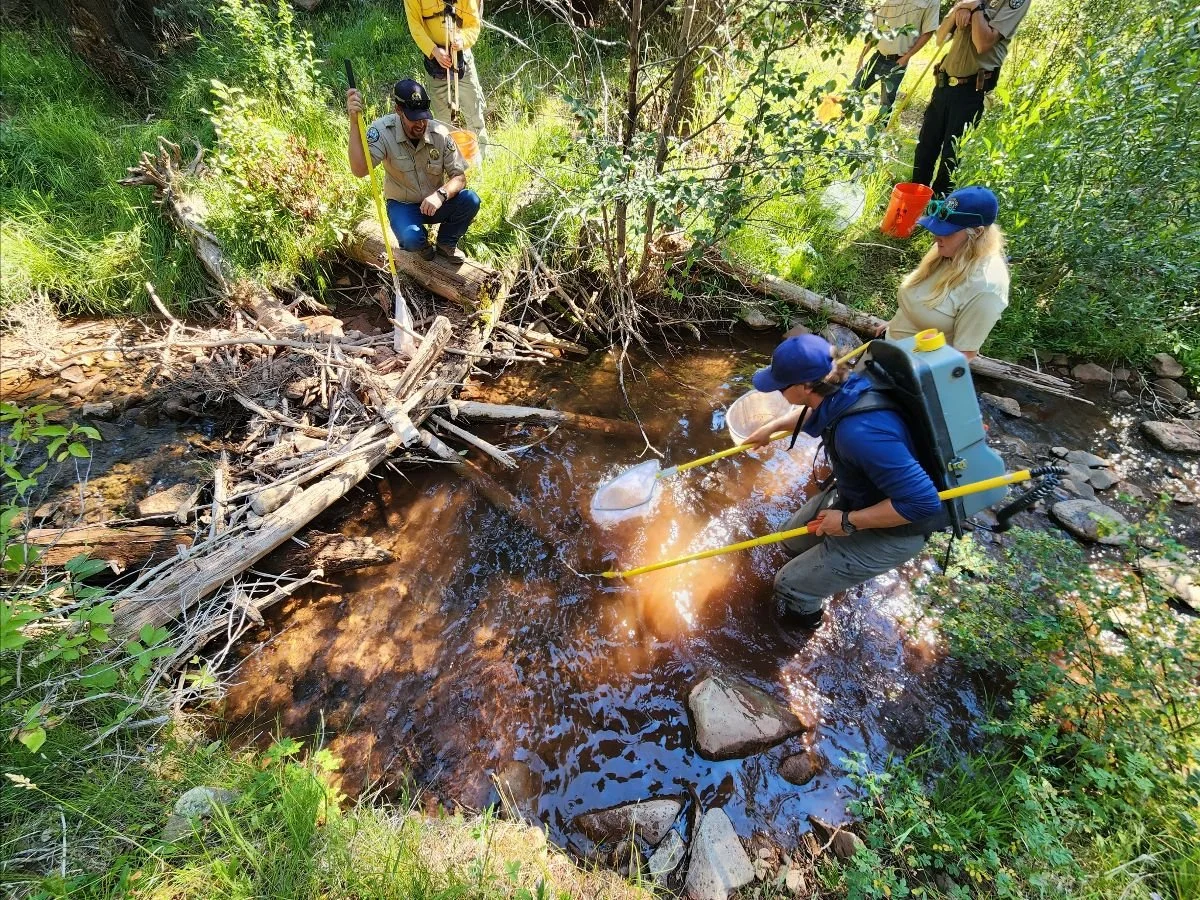
The project required seven days of hands-on work, with help from volunteers, Forest Service staff, and the Southwest Conservation Corps. The goal was straightforward: give this unique lineage of cutthroat trout more places to thrive. Those improvements proved valuable when fire threatened the watershed a year later.
Conservation in Context
Colorado’s native cutthroat trout face many pressures. Habitat loss, competition with non-native trout, hybridization that dilutes their DNA, and wildfire can all put small populations at risk. Emergency rescues during fire are sometimes the last line of defense. In 2018, CPW rescued the last known San Juan cutthroat trout from the 416 Fire. Hatchery propagation has since restored that lineage and created new wild populations.
The Wildcat Creek rescue follows the same principle: act quickly, protect the genetics, and create options for the future.
Next Steps
The Wildcat Creek cutthroat will remain at Roaring Judy Hatchery until the fire threat has passed and water quality in the creek can support their return. Some may be reintroduced to Wildcat Creek, while others could be used to establish populations in nearby streams where non-native trout have been removed.
Why This Matters
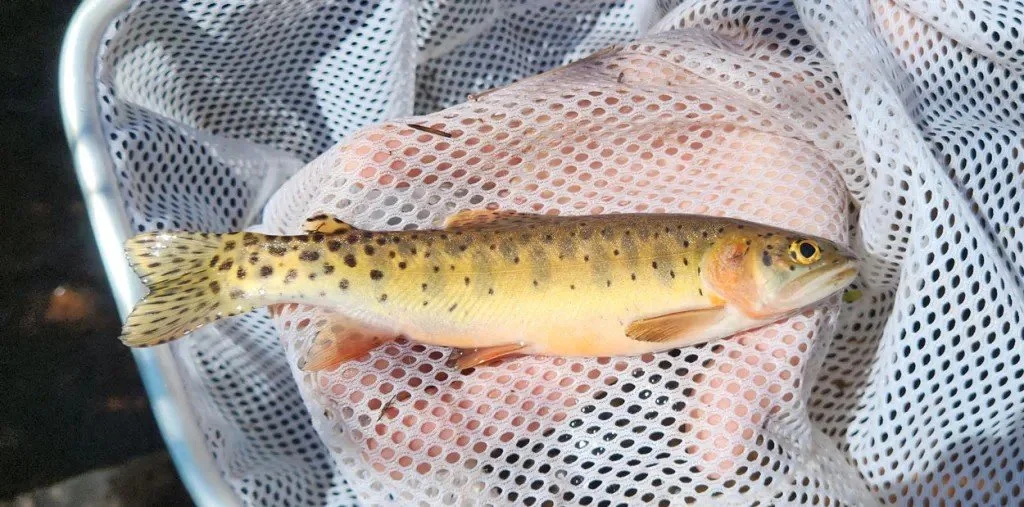
Every lineage of native cutthroat trout tells a part of Colorado’s ecological story. The Wildcat Creek fish represent unique DNA that connects the past to the present. Safeguarding them ensures that future generations can continue to experience wild trout that are truly native to this place.
Protecting these fish is not about a single rescue. It is about building healthy streams, responding when emergencies strike, and working together across agencies and communities to preserve Colorado’s natural heritage.