Vote YES on Question 7A

Image from: https://yeson7a.org/

Dear Trout Unlimited Members and Supporters,  

We are writing to urge you to vote in support of Question 7A on the November 3 ballot in 15 western Colorado counties. 

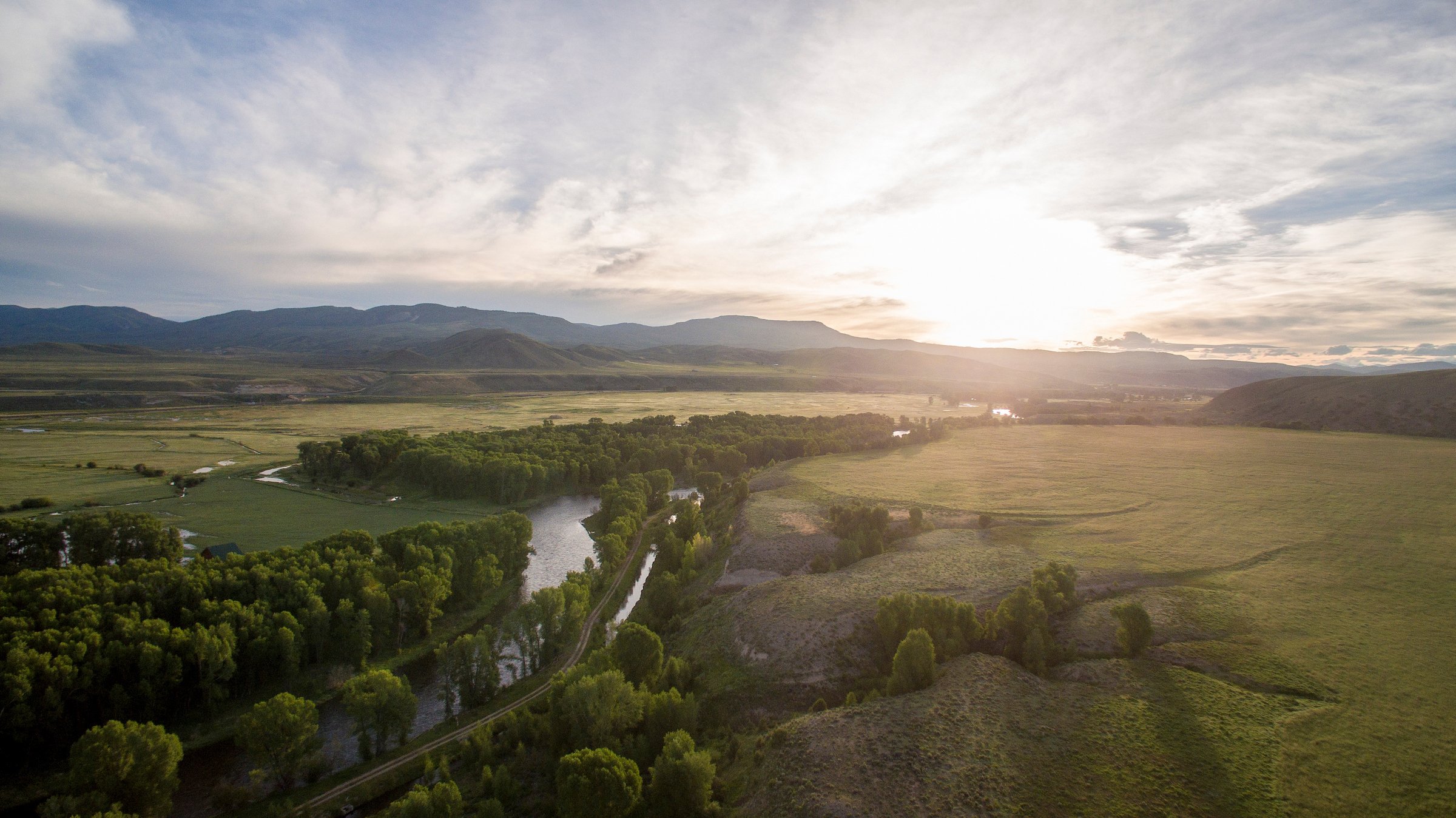
Often referred to as the hardest working river in America, the Colorado River originates on Colorado’s West Slope and provides water supply to western Colorado families, businesses and farms and ranches.  The Colorado River and its tributaries also offer endless environmental and recreational benefits enjoyed by locals and visitors alike. The Colorado River is the economic driver for western Colorado, and it is the foundation of the high quality of life we enjoy on the West Slope.  

Though not widely known, the Colorado River Water Conservation District provides a hugely important service to western Colorado. Put simply, the River District works to protect the waters of the Colorado River for the benefit of Colorado’s West Slope. For over 80 years, the River District has delivered wide-ranging benefits to water interests in the 15 West Slope counties it serves.   

But because of Colorado’s tax laws – which severely limit the ability to raise taxes, even for important purposes like protecting Colorado water – the River District has been forced to scale back its services to western Colorado in recent years. Without additional resources, the River District will need to make additional cuts.      

Question 7A would allow the River District to increase its mill levy from .252 to .5 mills – or $1.90 per $100,000 of residential property value – with the median residential property tax increase sitting at just $7.03 per year. Expected to raise $4.9 million per year, Question 7A directs the River District to spend the new revenues for four specific purposes: 

  • Fighting to keep water on the West Slope; 

  • Protecting adequate water supplies for West Slope farmers and ranchers; 

  • Protecting sustainable drinking water supplies for West Slope communities; and 

  • Protecting fish, wildlife and recreation by maintaining river levels and water quality. 

Trout Unlimited and its local chapters across western Colorado strongly support Question 7A. We have worked with the River District in the past on projects that provide mutual benefits to river health and agricultural producers.  Some of these projects have involved modernizing irrigation infrastructure, while others have created programs that allow for innovative and flexible irrigation water use, with coincident benefits for stream flows or water quality. Question 7A will allow us to build on our past successes with the River District and provide even greater benefits to West Slope rivers in the future.  

Please vote YES on Question 7A. 

Best Regards,  

Drew Peternell                                                                                                 David Nickum

Director, Trout Unlimited Colorado Water Program                         Executive Director, Colorado TU

Q&A with Colorado’s U.S. Senate Candidates

screenshot-issuu.com-2020.10.02-14_02_25.png

High Country Angler and Colorado Trout Unlimited had the chance to pose a series of questions to the major-party candidates for U.S. Senate – current Senator Cory Gardner, and former Governor John Hickenlooper. Both campaigns were given up to 250 words to answer each question; their answers appear exactly as submitted. We encourage you to read through their responses, to take time to get educated on the candidates and issues on this year’s ballot, and to vote by November 3!

HCA: What do you see as the top 2-3 issues you would like to tackle over the next 6 years as Colorado’s US Senator?

Gardner: As millions of Americans struggle with the public health and economic crisis occurring as a result of the coronavirus, we must continue to focus on the steps necessary to keep people safe and get Americans back to work. Prior to COVID-19, Colorado’s economy had seen record job growth, wage increases, and its lowest unemployment rate in history. Colorado’s outdoor recreation economy in particular, employed 229,000 workers and added $11 billion to the economy annually. As a result of the coronavirus, Colorado’s economy is suffering, leaving countless communities and families vulnerable in this time of need.

The CARES Act I helped craft and pass earlier this year provided hundreds of billions to keep small businesses open and their employees on payroll. It also expanded testing, bolstered the availability of critical PPE, and delivered resources for state and local governments. But more needs to be done. Ensuring my Great American Outdoors Act is fully implemented remains critical. This bipartisan bill fully funds the Land and Water Conservation Fund, revitalizes our National Parks by addressing critical maintenance shortages, and creates 100,000 jobs at a time when millions are struggling. I also remain committed to passing the TEST Act, which I introduced with my colleague Senator Michael Bennet to ramp up testing and streamline detection for future infectious diseases. Together, these actions can help us defeat the coronavirus, giving Americans the certainty and confidence they need to return to work and the great outdoors Colorado is known for.

Hickenlooper: Health care, climate change, and the economy (and in Colorado, especially the outdoor economy).

HCA: Defining what waters are or are not protected under the Clean Water Act has been a contentious issue, and a moving target, over recent years. What is your view on how best to define the scope of what waters are covered under the Act?

Gardner: Every Coloradan knows how critical water is to life in the Centennial State. Former Colorado Congressman Wayne Aspinall once said, “When you touch water in the West, you touch everything.” Whether we are addressing drought, wildfire, agriculture, streams, or clean drinking water, I believe that a critical balance of federal and state policy is a must. 

As the only state where all of our water flows out rather than through, I have made it my mission to ensure that federal policy protects every corner of Colorado’s economy and constituency. That’s why I worked to get $28 million in federal funding for the Arkansas Valley Conduit, a project that will deliver clean drinking water to 50,000 Coloradans. And that’s why I was proud to help secure passage of the Colorado River Drought Contingency Plan that will provide stable funding and laws to advance Colorado Water Policy for generations to come.  I also secured passage of two critical endangered species laws, extending work on fish recovery in the South Platte and Colorado River. 

Hickenlooper: Hickenlooper will follow the recommendation of scientists in determining which waters and wetlands have a clear connection to maintaining flow and quality of “navigable waters” - the standard used to justify regulation under the Clean Water Act. It is a high priority for Hickenlooper to keep pollutants out of our waters.

HCA: What is your proudest accomplishment as a public servant over the past 10 years?

Gardner: The recent passage of my Great American Outdoors Act into law is a once-in-a-lifetime accomplishment that permanently funds the Land and Water Conservation Fund (LWCF), fixes the crumbling infrastructure in our National Parks System, and will create 100,000 jobs in the process.

The LWCF is the crown jewel of conservation programs, using revenues from offshore oil and gas operations to fund critical public lands projects across the country, giving people from all walks of life more opportunity to fish, raft, recreate, and more. 

The second piece of the bill is aimed at addressing the $12 billion funding shortfall for maintenance projects within our National Park system, $275 million in Colorado alone. Home to four National Parks and eleven National Forests, Colorado welcomes millions of visitors each year to these historic and protected areas, providing much needed economic stability for the towns in the surrounding areas. For every $1 invested in National Parks, $10 is returned to the economy. The funding commitment we secured in the Great American Outdoors Act will help solve this crisis and ensure that future generations can enjoy our public lands.

Hickenlooper: As Governor, Hickenlooper expanded health care under the Affordable Care Act to half a million Coloradans and led Colorado out of the Great Recession by taking it from 40th in job creation to the number one economy in the country.

HCA: Colorado has extensive public lands – National Parks, National Forests, Wildlife Refuges, BLM Lands – that face increasing pressure from many competing uses as well as from factors such as wildfire risk. What do you see as the Federal role – including any needed legislation – in conserving those lands for future generations?

Gardner: Defending and protecting Colorado’s public lands has been a priority of mine since day one. I believe the federal government’s role must include sufficient funding, innovation, and accountability in order to combat climate change and protect public lands for future generations.

99% of the approximately 250 million acres managed by the Bureau of Land Management (BLM) resides West of the Mississippi River, which is why I spearheaded moving BLM’s headquarters to Grand Junction, Colorado. This will give Western states more accountability and access to BLM because the decision makers will now live in the communities their policies impact.

For years I have been working on legislation to allow for the cleanup of orphan mine sites by Good Samaritans such as Trout Unlimited. Across Colorado and the West we have needed a permanent solution to the dangerous problem of abandoned mines. The opportunity to clean up the environment around these sites is crucial and Good Samaritan programs will finally allow for the long overdue process to begin. I have also worked extensively on wildfire legislation that fixed fire borrowing and brought our first responders into the 21st century with innovative technology. Coloradans are all too familiar with wildfires and I was proud to champion efforts that have provided real solutions to these tragic natural disasters. 

But much more has to be done. Commonsense regulations and policies must continue to ensure Coloradans’ access to clean, safe, and prosperous public lands is not hindered.

Hickenlooper: The Trump Administration continues to diminish the federal lands estate, shrinking national monuments and repealing sensible protections for fish and wildlife habitats in National Forests and Bureau of Land Management lands. As Senator, Hickenlooper will work to pass the CORE Act, which will protect over 400,000 acres of public lands and create new wilderness. He will fight any efforts to diminish the scope and quality of our land, water, and outdoor resources.

HCA: If elected, you may be working with a Senate majority and/or a President from the other major party. How would you approach working across the aisle to serve Colorado’s interests?

Gardner: I am ranked the third most bipartisan member of the US Senate. Bipartisanship is a duty I aspire to uphold and it's the only way to be truly effective for the entire state. Since being elected to the Senate, I have authored ten bills that have been signed into law; that’s more than the entire Colorado delegation combined. Of those bills, five were signed by President Obama, five were signed by President Trump, and many passed with unanimous support. I have and will continue to work with any member of Congress or President that is interested in moving this country forward and ensuring more prosperity for all Coloradans. 

I look forward to continuing that work and ensuring Colorado has a strong bipartisan voice in Washington, DC.

Hickenlooper: As Mayor and Governor, Hickenlooper worked to bring people together to deliver change. As Mayor, Hickenlooper brought mayors from across the Denver metro area to build one of the nation’s most ambitious transit projects. As Governor, he expanded health care to half a million Coloradans on a bipartisan basis. Hickenlooper has a proven record of bringing people together to get results, and that’s exactly what he’ll do in the Senate to solve our biggest challenges.

HCA: Is there anything else you would like High Country Angler readers to know about you and how you would approach service in the U.S. Senate over the next six years?

Gardner: As a fifth-generation Coloradan born and raised in a rural community, I believe strongly that Colorado’s best is yet to come. We are a unique Western state and strongly independent. Here in Colorado, we work across party lines, we roll up our sleeves and get the tough job done. It’s a part of our history, our culture, our values. The Pioneer spirit lives on in each and every one of us and it again falls on us to address the most gripping challenges of our time. Whether it involves coming together to support small businesses and protect our most vulnerable in the time of COVID-19, or finding common ground to protect our public lands, Coloradans will continue to lead the way. 

Hickenlooper: Like most Coloradans, Hickenlooper enjoys the outdoors and highly values the quality of our environment – our air, water, wilderness, and other open spaces. After four years of Donald Trump and the Republican Senate, Hickenlooper believes we have much work to recover from all the efforts to abandon federal responsibility for protecting these natural resources. He will actively seek opportunities to promote legislation that helps solve the pressing issues like climate change, improving water conservation and quality, designating new wilderness, and supporting the outdoor industry. Hickenlooper looks forward to working with partners such as Trout Unlimited.

 This is an article from High Country Angler Fall 2020 Issue. You can read the whole e-zine for free here.

 

Fall High Country Angler is out!

HCA Lead Image.jpg

Check out the new Fall 2020 issue of High Country Angler e-zine!

Featuring articles on fishing still water with Landon Mayer, the CTU president reflecting on a historic public lands win, a Q&A with Colorado's U.S. Senate candidates, Colorado’s energy future, CTU's Annual Report and much more, including the regular columns:

  • FALL FLING by Joel Evans

  • A DAY ON THE CONEJOS by Hayden Mellsop

  • YOU ARE WELCOME TO FISH WITH ME by Peter Stitcher

  • THE LAST CAST by Dr. John Nickum.


Download the PDF here.

High Country Angler is published 4 times a year by High Country Publications, LLC., in cooperation with Colorado Trout Unlimited. HCA is there to keep you up-to-date with all the latest news and advice from some of the high country’s most skilled and knowledgeable fly fishers. The articles are written by anglers, for anglers, about high country fishing!

Clint Packo from Freestone Aquatics in Littleton, CO

clintcarp.jpg

by Walt Gasson posted here.

Clint Packo. If you don’t know him, you should. He was one of the first people I met back when I first started with TU. I liked him from the get-go. He was sharp, a no-nonsense guy who clearly loved fish and fish habitat. His outfit, Freestone Aquatics, Inc. in Littleton, CO became a TU Business member almost immediately. And in time, we became friends.

The old saying goes that they don’t care how much you know until they know how much they care. Clint Packo and the staff at Freestone know fish and fish habitat. And they care deeply. Take stream restoration, for example. The whole thing starts with an evaluation to find the hidden potential within any piece of property. Whenever considering a project related to stream restoration, it’s extremely important to understand the present conditions and dynamics of the aquatic ecosystem. This can be as simple as taking a few samples or it may involve a more intensive analysis that can take several seasons. The primary consideration of Freestone Aquatics on any ecosystem evaluation is to understand the goals and vision of the project, large or small. Once the goals of the project have been clearly established, Freestone Aquatics can then provide a plan to meet those goals that is economically viable and biologically sound.

Design comes next. This is crucial to the success of any stream restoration project. Different projects require different objectives including improved riparian habitat, waterfowl habitat, or trout habitat. The design phase is about the tiered collaboration of landowners, fisheries/wildlife professionals, hydrologists, engineers, and permitting agencies to produce a comprehensive stream design for a sustainable aquatic ecosystem.

Then the exciting part begins – real work, in stream habitat construction. Again, Freestone Aquatics does it. They provide general contractor, and construction management services to make the design a reality in the stream and remain one of the only fims in the country whose staff designs, permits and builds all phases of the aquatic ecosystem. Their goal throughout this phase is to promote long-term sustainability while maintaining the integrity of the natural environment. Their trademark is a light hand on the land and in the stream. A year post-construction, you might not ever be able to tell they were there. But the fish will know. With habitat enhancement structures, streambank stabilization and the creation of new habitats, the fish will most definitely know. And what’s more, you’ll know you’re doing the right thing.

Clint Packo always goes the extra mile. That’s just who he is. That’s why he’s a Gold Level TU Business member. That’s why he serves on the board of Colorado TU. That’s why he’s a well-known and respected member of the fly-fishing community across the West. Freestone Aquatics – they’re the real deal.

Freestone Aquatics, Inc.               

Clint Packo

Littleton, CO 80127

(303) 807-7805

clint@freestoneaquatics.com

www.freestoneaquatics.com

September Currents

Copy of CURRENTS (2).jpg

This month’s newsletter features these stories:

  • Public Lands Month and activities to do

  • STREAM Girls goes virtual

  • TU in Colorado’s FY20 year in Review Report

  • Digital Rendezvous Sign up

  • Fishing Your Home Waters with John Davenport, from Denver Trout Unlimited

  • Former opponents now partners working to restore the upper Colorado River

  • Ken's Crazy Ant

  • Take Action: Ensure Responsible Energy Development with safeguards for wildlife, fish and their habitat

and more!

‘Hunters and Anglers for CORE’ Call for More Access and Habitat Protections

CoreCurecanti2.jpg

‘Hunters and Anglers for CORE’ Call for More Access and Habitat Protections

Pending public lands legislation would open miles of fishing and conserve big game habitat

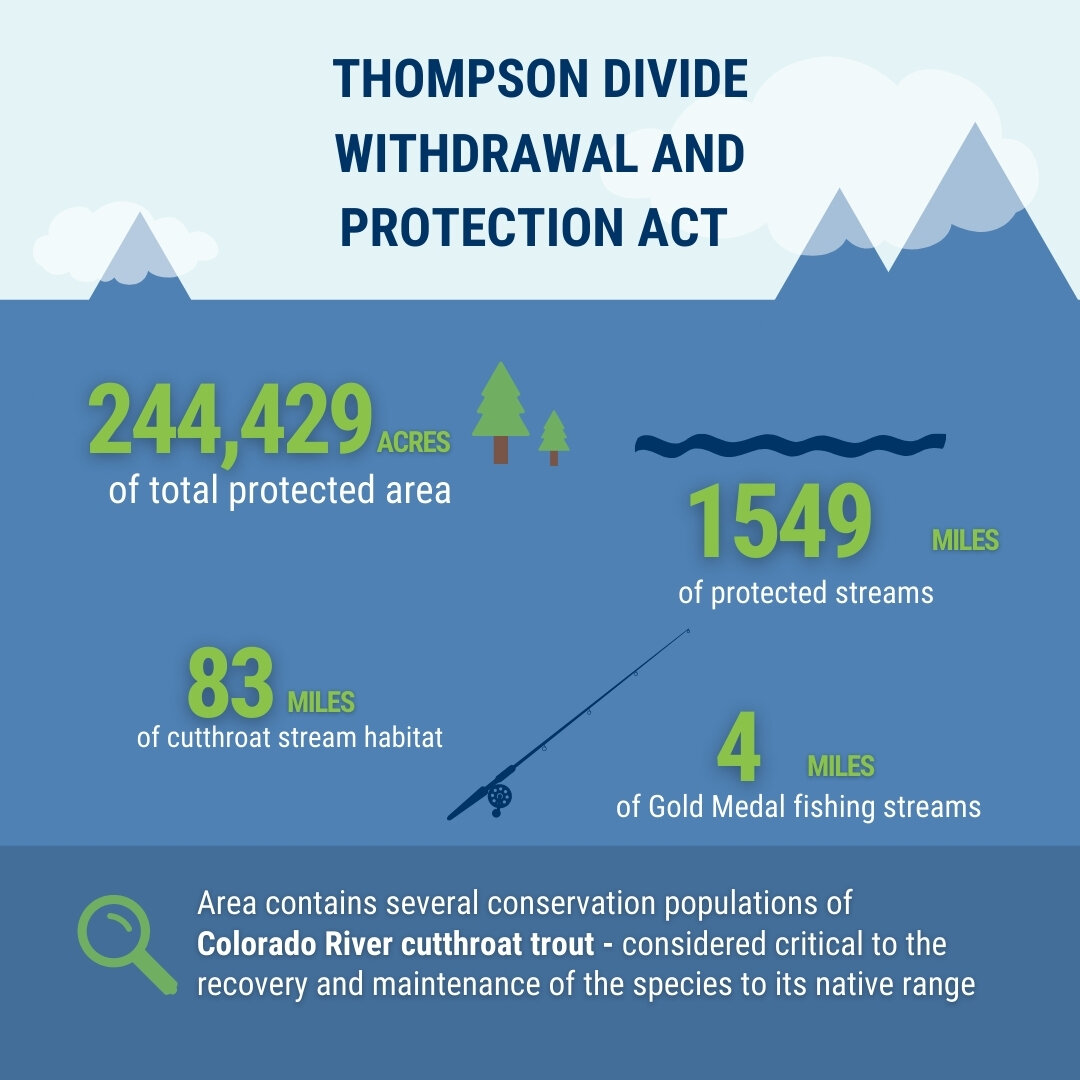
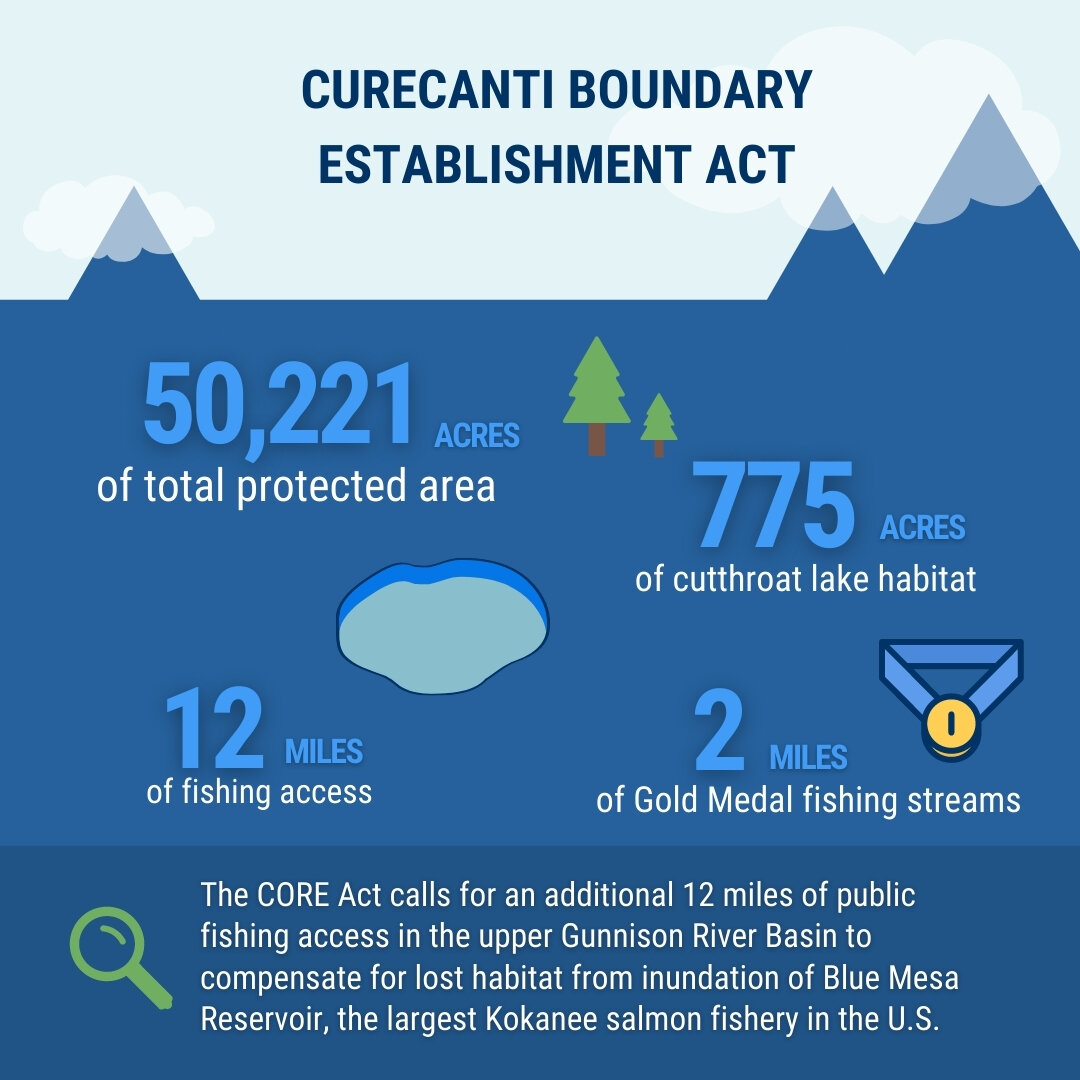
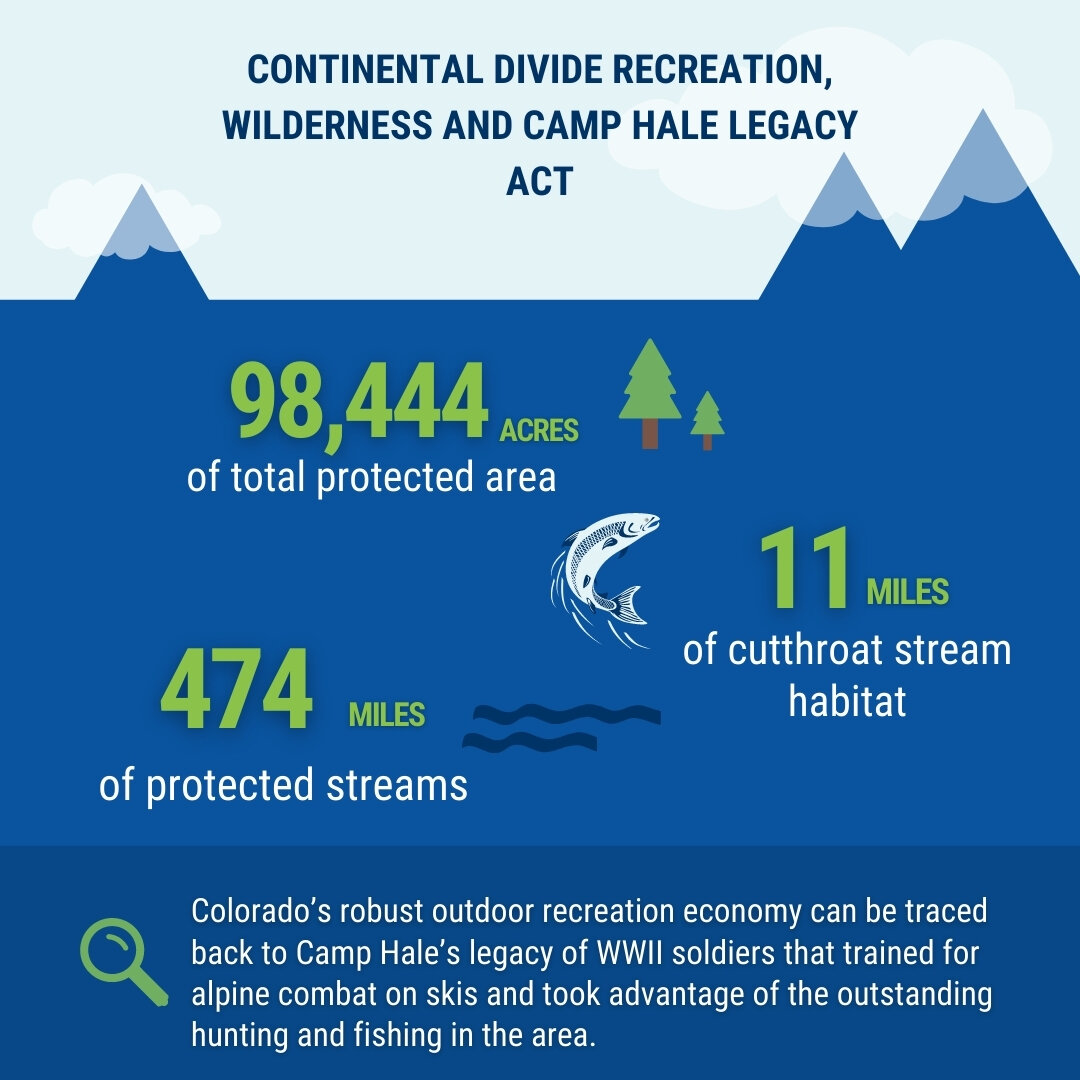
Gunnison, CO—Hunter and angler advocates gathered on the banks of the Gunnison River today with Senator Michael Bennet to talk about sporting protections in the CORE Act. The four-part legislation would protect more than 400,000 acres of public lands and waters in Colorado, including significant protection for the fish and wildlife habitat most valued by the sporting community.

Representatives from Trout Unlimited, National Wildlife Federation, Theodore Roosevelt Conservation Partnership, Artemis, and Backcountry Hunters and Anglers joined Sen. Bennet in Gunnison to proclaim their unified support for the legislation under the banner of “Hunters and Anglers for the CORE Act.”

“Hunters and anglers in Colorado and throughout the nation recognize the importance of protecting the unique landscapes the CORE Act represents and the fish and wildlife that depend upon them,” said Scott Willoughby, Colorado Public Lands Coordinator for Trout Unlimited’s Angler Conservation Program. “As we continue to see habitat deteriorate and public access to quality fishing and hunting areas decline, it has become painfully obvious that passing the provisions found in the CORE Act is long overdue. ‘Hunters and Anglers for CORE’ wants to put an end to that and calls on the Senate to push this legislation over the finish line.”

Contact:

Scott Willoughby/TU (970) 390-3676

Aaron Kindle/NWF (303) 868-2859

Nick Payne/TRCP (720) 369-5499

Take Action: Ensure Responsible Energy Development with safeguards for wildlife, fish and their habitat

66432cbe-2a53-4b5c-8101-93697f81728d.jpg

Please take a moment to give your voice and urge the Colorado Oil and Gas Conservation Commission (COGCC) to ensure responsible energy development through providing safeguards for wildlife, fish and their habitat. Both the outdoor economy and our Colorado quality of life depends on it.

August Currents: A voice for Colorado's Rivers

Copy of CURRENTS (1).jpg

This month’s issue of Currents features these stories:

  • A Landmark win for our Great Outdoors

  • You’ve Got Backpacks, We’ve got Greenbacks

  • Leave No Trace: An Educational Opportunity

  • What do YOU want at Digital Rendezvous

  • Meet our Match VICTORY!

  • The Green Drake is a summer staple

  • Summer 2020 HCA

  • Introducing Geoff Elliot, CTU’s new Youth Education Coordinator

  • Featured Business: Upslope Brewing

  • CCTU 2020 Raffle with a 1 in 4 Chance to Win & MORE

You've got backpacks, we've got Greenbacks

+.png

On July 28, 2020 over 700 native Greenback Cutthroats were released into the East Fork of Roaring Creek, representing the first population restored in Poudre Canyon tributary since the Greenback species was rediscovered in 2012.

The effort looked a little different this time around due to mandatory social distancing requirements. 43 volunteers and 15 agency staff (CPW & USFS) managed a series of staggered start times, social distancing, groups of less than 10 people each, and a much more strenuous trek to complete the 1st stocking of Greenbacks into new habitat on an important Poudre River tributary was a success. Thanks to all of the volunteers and agency partners, the effort was a huge success!

This project is adjacent to a much larger effort called the Poudre Headwaters Projects (PHP) that is planned to be the largest Greenback Cutthroat recovery project in the history of Colorado. The goal is to restore these native fish back into a part of their historic range on the upper Poudre - including 40 miles of small streams and Long Draw Reservoir. The PHP will create a “metapopulation” of Greenback Cutthroats that will be able to survive future impacts of climate change and catastrophic events.

A big thank you goes out to the volunteers who took time out of their week to help these fish return home!

thumbnail_image2.jpg
screenshot-www.youtube.com-2020.08.04-13_32_46.png

To learn more about this effort, please check out the Poudre Headwaters Project page.


Videos from Volunteers

On July 28, 2020 Colorado Trout Unlimited organized 6 groups comprised of 8 volunteers and 2 team leaders to transport the Colorado state fish - The Greenbac...
Greenback Cutthroat Trout were stocked in the East Fork of Roaring Creek July 28, 2020. 43 volunteers, 15 agency staff (CPW) and over 700 Greenbacks helped o...

Video taken by volunteer, Bob Fielding. On July 28, 2020 over 700 native Greenback Cutthroats were released into the East Fork of Roaring Creek. The effort w...

A Landmark Win for our Great Outdoors

GAOA Blog Graphicsa.jpg

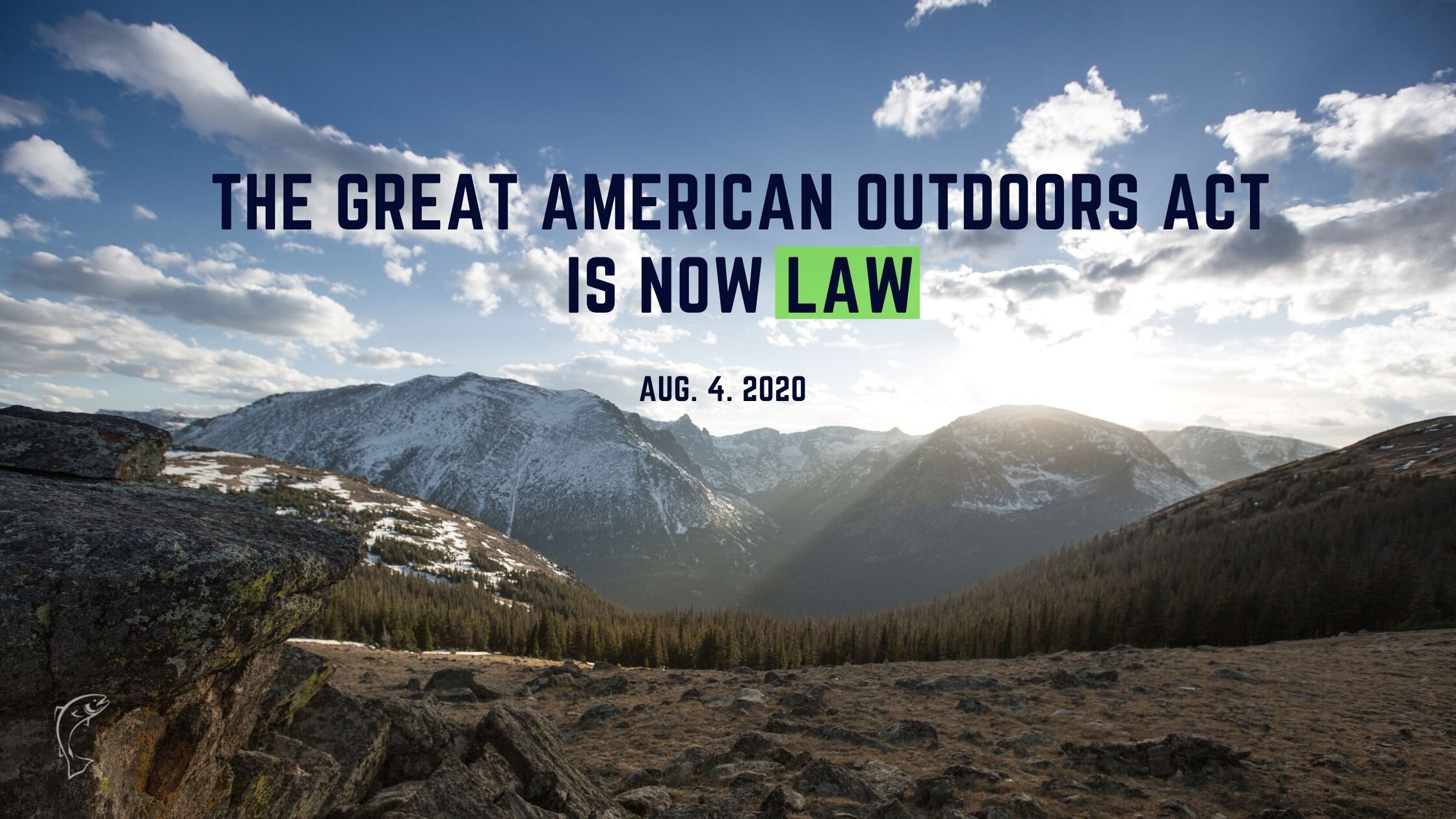
Today, the President signed into law the Great American Outdoors Act (GAOA), which previously passed both the House and Senate with strong bipartisan support. The most significant national conservation legislation passed in a generation, the GAOA permanently secures funding for public lands and outdoor recreation under the Land and Water Conservation Fund (LWCF) as well as providing much needed funding to address the maintenance backlog on our National Parks and other public lands.

For more than 50 years, LWCF has set aside and protected special places in Colorado and nationwide. With LWCF funds invested statewide, from iconic landscapes like the Great Sand Dunes, to boat launches on the Colorado River, to community parks and trails in our own backyards – there’s a good chance you’ve enjoyed lands or facilities that LWCF helped provide.

LWCF doesn’t rely on your tax dollars, but rather is funded by an earmarked portion of royalties paid on offshore oil and gas development. Unfortunately, that dedicated stream of revenue has been regularly raided for other purposes in the annual politics of the appropriations process. More than $22 billion has been diverted from LWCF over its history – but it won’t happen again. With the GAOA now the law of the land, the funds committed to LWCF are permanently dedicated. And that is great news for our public lands and the multi-billion outdoor recreation economy they help sustain.

The other key portion of the GAOA originated as the Restore Our Parks Act and will provide $9.5 billion in dedicated funding toward our public lands deferred maintenance backlog. TU played a key role in ensuring that this maintenance funding included public lands beyond just the National Park facilities – funding partnership projects like replacing undersized culverts that are blocking trout and salmon migrations, and fixing roads that are bleeding sediment into streams.

Corinne Doctor, David Nickum, and Barb Sheedlo traveled last fall to Washington, DC to advocate for LWCF with our legislators.

Corinne Doctor, David Nickum, and Barb Sheedlo traveled last fall to Washington, DC to advocate for LWCF with our legislators.

Passage of the GAOA is a victory that has been many years in the making, the result of hard work from countless TUers and conservation allies. From volunteer advocates who reached out to their elected officials and wrote letters to their local papers – to staff and interns who helped us research LWCF projects in Colorado and prepare publications telling the program’s story – to grassroots leaders who flew in to Washington, DC to make the case for LWCF in person.

In Colorado, we’re blessed to have elected officials who have shown their deep commitment to our public lands as well. In particular we’d like to extend our gratitude to: Senator Gardner, lead Senate sponsor of GAOA whose tireless efforts were essential in creating the bipartisan support needed to move this legislation; Senator Bennet, a GAOA co-sponsor who has been among the strongest advocates for LWCF and public land conservation throughout his years in the Senate; and Representatives DeGette and Neguse, whose work on behalf of LWCF as Colorado’s members on the Natural Resources Committee helped secure the support needed for GAOA’s passage within the House of Representatives.

Today is a great day for all of us who value our public lands. In the midst of some very challenging times, it is especially rewarding to have something to celebrate – so please join us in toasting a great conservation victory and all of those who have made it possible!