We Are Public Lands

A note from Chris Wood, CEO of Trout Unlimited:

This is not a dispassionate report.

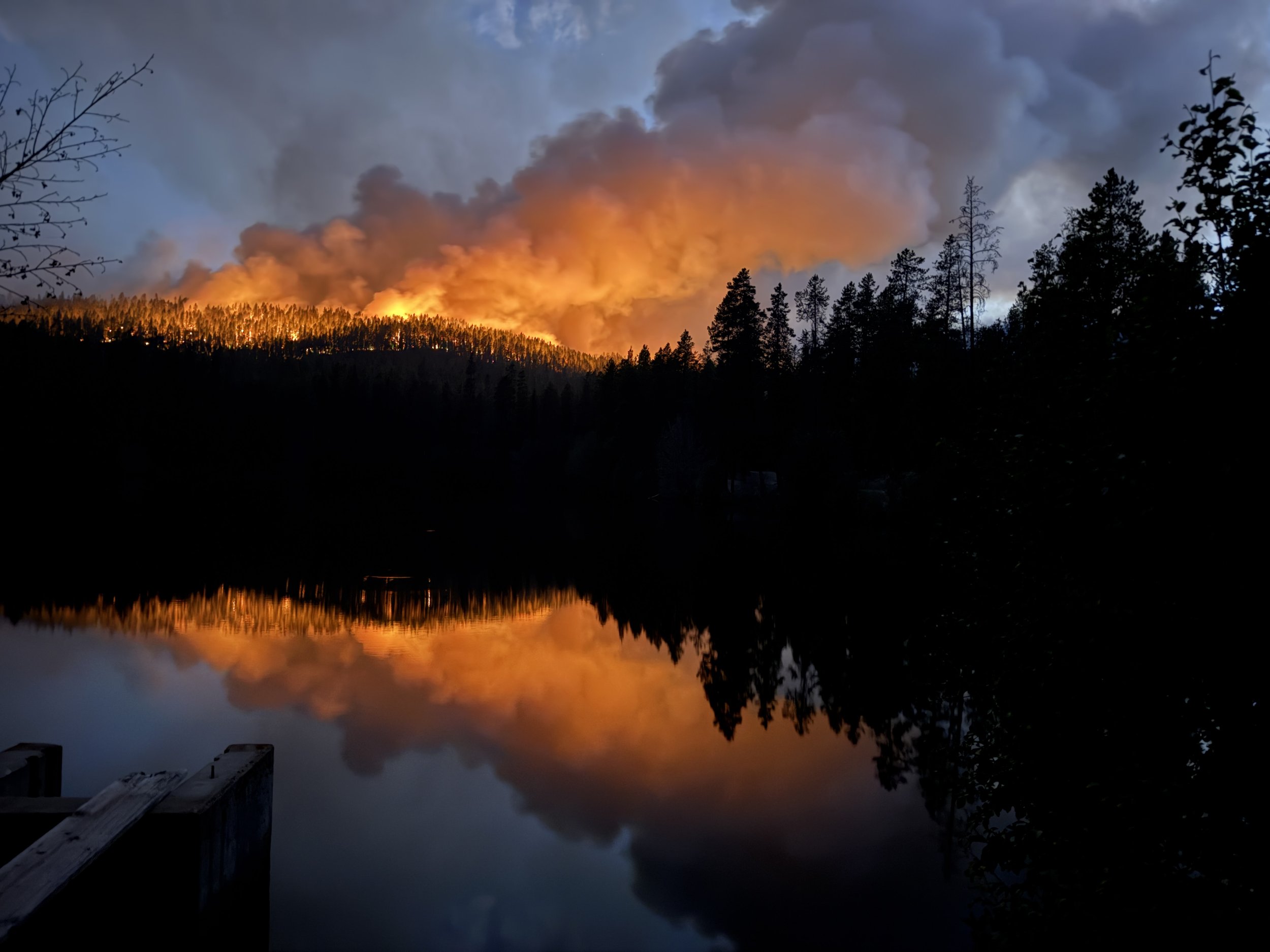
The threat of losing our public lands looms large. That threat grows, passing like wildfire through halls of Congress and state capitols, spreading its invasive rhetoric in our communities. People with soft hands and expensive suits tell us

TU-CO-20100912-0189“It’s just transfer. It’s not like we’re selling them.”

It’s not just transfer. And it is a big deal.

The truth is that the distance between the effort to “transfer” public lands and to sell them is very short. Many of the states that would manage these lands have already sold significant portions of their formerly public state land to the highest seller. And we, as a country, have nothing to gain by such actions.

We have nothing to gain. And everything to lose.
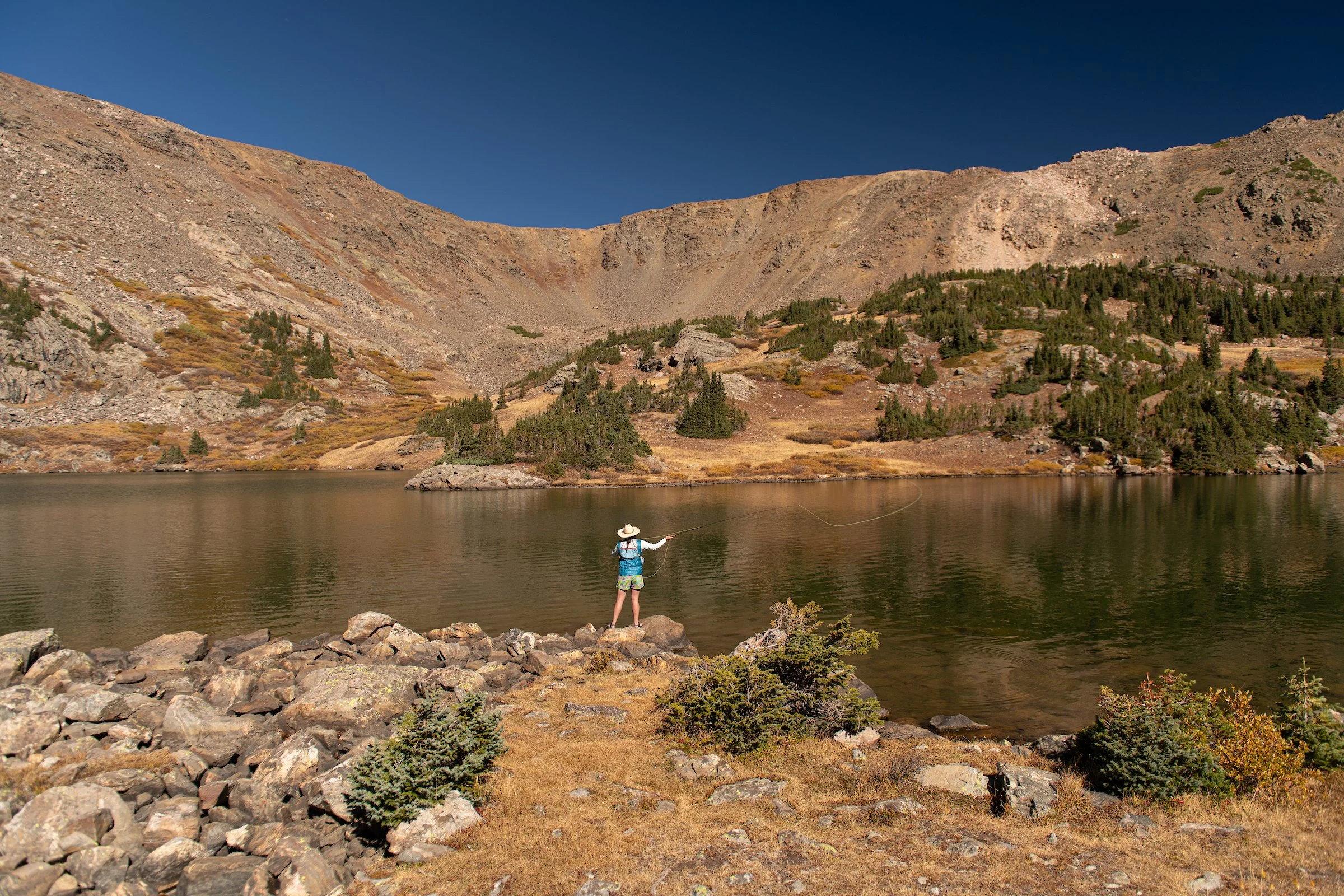
ElkPublic lands are for anglers, hunters, hikers, campers, backpackers, energy producers, mountain climbers, berry pickers, ranchers, horse packers, birders, timber operators, miners, snowmobilers, ATVer’s, mountain bikers.

Nature’s enthusiasts. Advocates of open space and the guardians of our right to use it.

We are public lands. Public lands are our birthright as American citizens. And we will not give them up.

Statistics make the point. More than 70 percent of hunters use public lands in the West. Nearly 70 percent of native trout strongholds are on public lands. A growing majority of hunters and anglers oppose the sale of public lands.

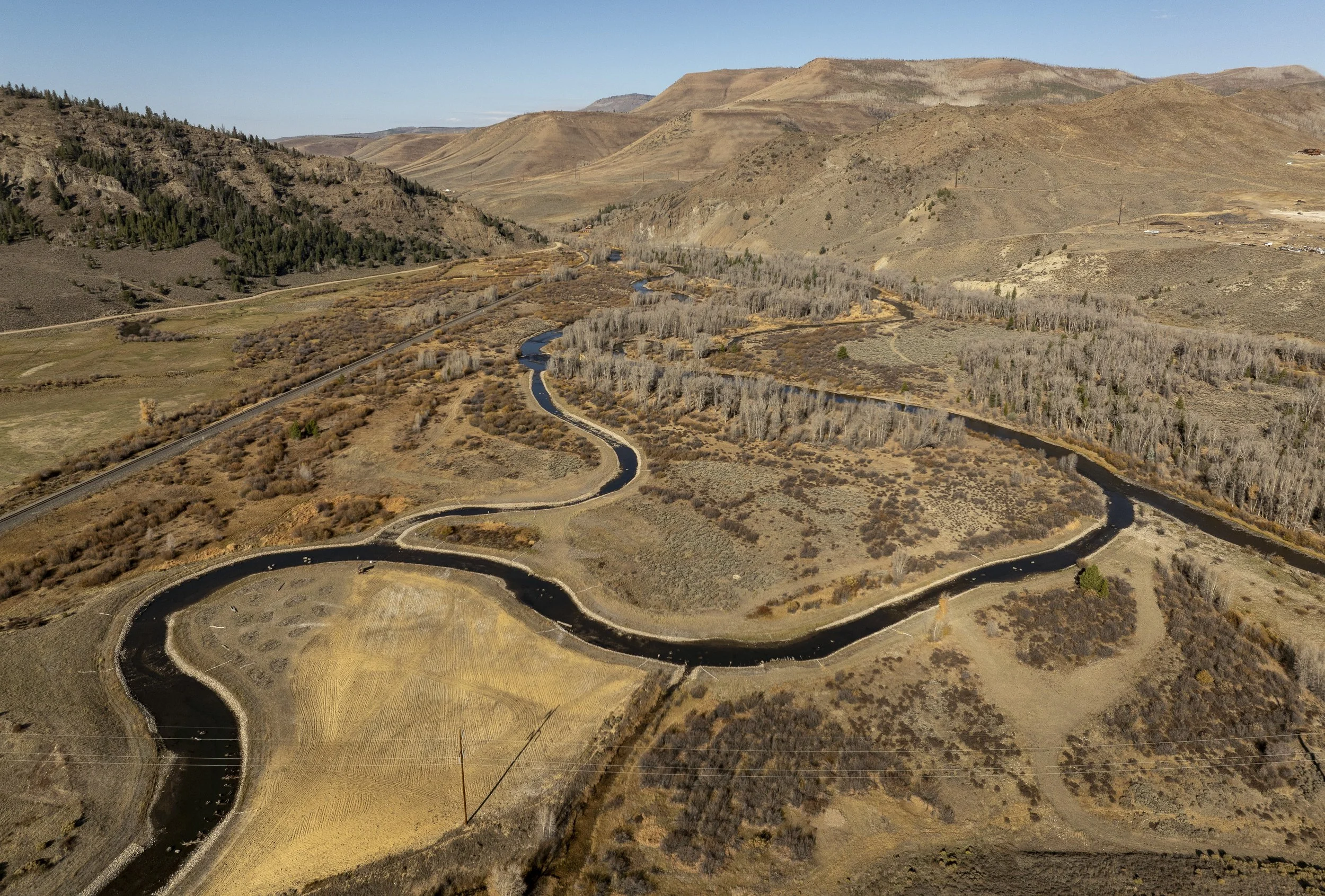
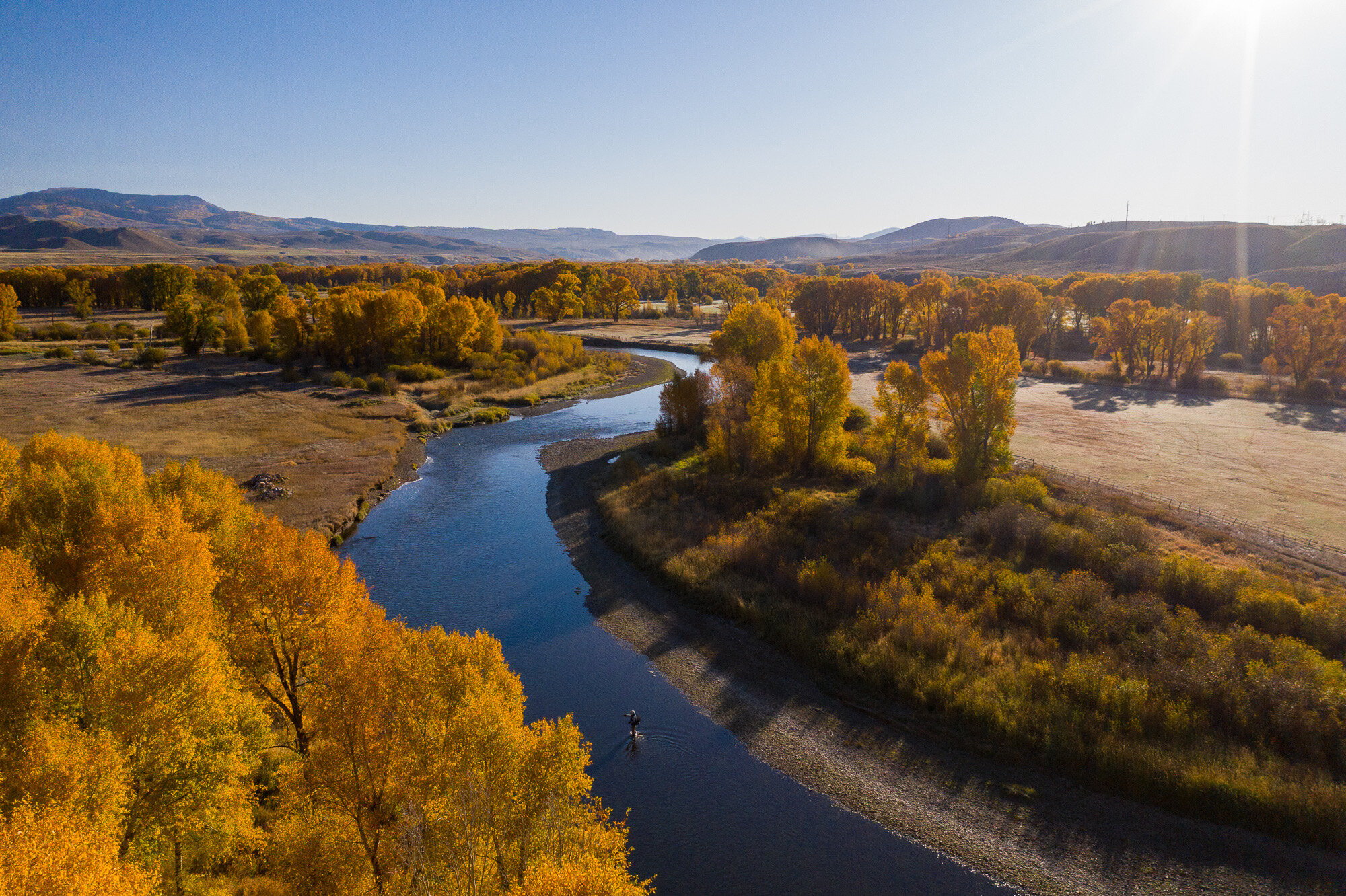
Public lands create strongholds of important fish and wildlife habitat. Public lands provide important sources of clean water for tens of millions of people. Public lands are some of the last pristine places in the country.

Sure, these things are important.

But the bottom line is these are our lands. Yours. Mine. Ours. And a greedy few are trying to steal them from us.

Muench 01Public lands are part of what define us as Americans. They are what remain of the great westward migration of the nation. They are the crucible upon which the character of the nation was formed. Our forebears left these lands to us, not so we could sell them to the highest bidder. They left them to us as an heirloom to pass on intact to the next generation. These lands are our birthright. They are a beacon of blinding and unwavering light on what it means to be free.

Whether you call it sale, transfer, or divestiture, allowing public lands to fall from public ownership would represent the triumph of cynicism over democracy. We — you and me, all of us who own these lands by virtue of our citizenship — can make sure that never happens.

We are public lands. And we will not step aside.

World Fly Fishing Championship In Vail

Last year we saw the World Youth Fly Fishing Championships come to Colorado. This year, the adults came to compete on the waters in Colorado's Eagle Valley. Team USA finished in third place, earning a bronze medal after catching 289 fish. While France (302 fish) and Spain (293 fish) won Gold and Silver, respectively. Throughout the event, 3,802 total fish were caught and safely released.

USA team member, Lance Egan placed with the individual bronze medal with 60 fish caught.

The teams fished on sections of the Blue River, Eagle River, and Colorado River. As well as one "loch" sector at Sylvan Lake state park. "Loch means lake and signifies still water fishing.  Anglers fish in pairs on drift boats," according to the FIPS website. "The term “loch-style” is used to describe a method of still water fishing where the flies are cast, presented, and retrieved ahead of the drift of a boat, as it’s blown across the surface of a lake."

Teams were allowed practice sessions in the three days prior to the event starting to get  a feel for the water, fish, and tactics to use while on the water.

The event also featured a conservation symposium, hosted by Colorado Trout Unlimited and sponsored by Eagle Valley TU. The symposium featured a screening of Patagonia's Dam Nation Film. Following the film was a speakers panel, including representatives from CTU and Colorado Parks and Wildlife, that talked about different conservation issues going on in Colorado and throughout the United States.

Colorado Trout Unlimited is a proud sponsor of Team USA Fly Fishing and is proud of the team's accomplishments and achievements during the Fly Fishing Championships in Vail.

Fishing Through the Fall

For sportsmen, fall means opening day and stalking elk through the Colorado back country. The decrease in anglers (and football on the tube) generally lead to less crowds, but just because there are fewer people fishing, the fish are still there for the taking! As the weather cools, bugs and insects don't hatch as often as in the spring or summer. Making fall fly fishing a little more difficult, but that doesn't mean the fishing has stopped. Brown trout and kokanee salmon spawn in the fall and are moving to find the best place to make their redds,

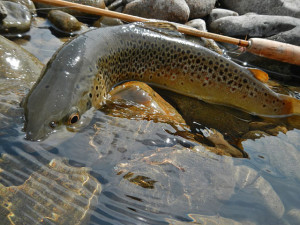
brown1_era_blog_082515Because of this, fishing where feeder streams and tributaries confluence with larger streams is a good place to look as trout will be moving into these areas to spawn. "While we never advocate fly fishing for actively spawning fish that are on shallow gravel redds, these tributaries allow anglers to predict where to find larger fish," according to Vail Valley Anglers. "Fish in deeper water that aren’t on beds are fair game and with a quick, gentle release they will be free to continue their mission to propagate the species. Be aware some small tributaries are closed during the spawn because the trout are simply too vulnerable in these tiny creeks."
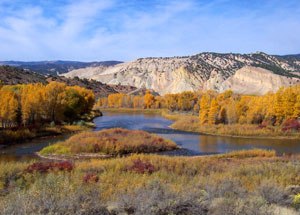
Trout will also start to develop predictable eating patters when the summer hatches dwindle down. With fall approaching, the blue wing olive mayflies and midges are now the primary food source. Under the right circumstances, trout will still feed heavily as they prepare for the colder, winter months ahead.

Upper Colorado RiverWith blue wing olives as the primary food source, blue wing fly patterns are a primary "go-to" for fall anglers. But according to Vail Valley Anglers, size is more important than pattern, "Flies mimicking these bugs (BWO) should range from #18-24. This is more important than the actual fly pattern. Choose flies in olive or grey such as the trusty Parachute Adams, Sparkle RS-2, CDC Loop Wing Emerger or JuJu Baetis."
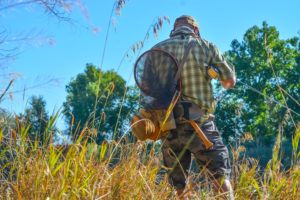
But going smaller isn't always the best, especially if you're after the monster brown trout. As the brown trout are moving around looking to spawn and are becoming more territorial, using larger streamers may help you catch the largest fish.

For more information on a list of flies to use in the fall and techniques for these flies, check out Vail Valley Anglers, Colorado Fly Fisher Blog, or Orivs,


Denver TU Carp Slam

carp-slam-2016-2370For the last 10 years, Denver Trout Unlimited has hosted the Carp Slam. A fishing event on the South Platte River right through Denver. Proceeds from the event go towards the continuing efforts of improving the South Platte. This year over $16,000 was raised that will be used to seed Denver South Platte River restorations, habitat studies, water temperature monitoring and helping secure water for the Chatfield expansion Environmental Pool.

carpslamx-team-bever-24 Chris Galvin, defending champion, hooked into one of the Mile High Stadium carp under the I-25 bridge and carefully moved it downstream in order not to disturb the pod. Ten minutes later, he tricked another for a masterful 2 fish within a few minutes. He added another only ten minutes before the morning session ended to take the lead going into the lunch break at Black-Black Cafe.

In the afternoon session he left his amateur, James Davis, alone while he scouted for more carp. When he returned he found that Davis, the last slamateur to register and initially classified as an alternate, had landed two carp! With 5 carp for a total of 113.75 inches, the Galvin/Davis team defended the title and brought home the coveted Carp Cup awash in Upslope beer. The total inches of carp was the largest team total since Carp Slam record keeping began.

muchow-rivoir-by-jon-wright-5Second place was snatched by Trevor Tanner and Kyle Richards. Third place went to the team of Frank Smethurst and rookie Vernon Naake with 3 fish for 70.38 inches.

Awards also went to the individuals that raised the most funds. Ronnie Crawford with DTU won this gold scale custom carp reel as the top crowd source fundraiser.

ronnie-crawford

Volunteer Opportunity

Colorado Parks and Wildlife is looking for help to stock Rock Creek on September 21 from 8:00 am - 3:30 pm. Volunteers will be meeting in Jefferson CO in between Bailey and Fairplay on 285, but exact location is still being determined. Volunteers will be packing their backpacks full of Greenback Cutthroat Trout and hiking about 5 miles to stock them in Rock Creek, their new home. This is part of a larger Greenback Recovery effort being led by Colorado Parks and Wildlife.

Volunteers will need:

  • Water
  • Hiking Boots (no waders)
  • Lunch
  • Large Pack/Backpack for hauling fish
  • Sunscreen

If you are interested in participating or want more information on this project please contact Stephanie Scott. sscott@tu.org or 720-354-2647. Volunteers who sign up will be given more detailed information about the volunteer day upon sign up.


Fish-friendly irrigation: flood or sprinkler?

By Brian Hodge In Trout Unlimited’s work with ranchers and farmers of the Upper Colorado River Basin, we often hear arguments about the relative benefits of flood and sprinkler irrigation for stream flows and fish.

Proponents of flood irrigation note that it requires a producer to divert more water from a stream than the crop can consume, and that unused irrigation water provides a benefit to fish because it returns to the stream when flows are otherwise low.

Meanwhile, proponents of sprinkler irrigation note that it requires a producer to divert little more from a stream than the crop demands, and that water left instream provides a benefit to fish because it maintains flows when water would otherwise be diverted.

But which is correct—in other words, does flood or sprinkler irrigation provide a greater benefit to fish in the Upper Colorado River Basin?

The short answer is, it depends.

In some cases, return flows from flood irrigation provide delayed benefits to streams and fish.  A research group from the University of Wyoming recently concluded, for example, that late-summer return flows from flood irrigation are critical to the brown trout fishery in the New Fork of the Green River (Blevins et al. 2016).  Moreover, the authors posited that if ranchers in the watershed improve efficiency by converting from flood to sprinkler irrigation, late-season streams flows will drop, and with them, the density (pounds/mile) of brown trout.  The authors also suggested that perpetuating flood irrigation in the Upper Green River Basin might be an effective way to maintain its healthy trout streams.

Although flood irrigation return flow can provide delayed benefits to fish, not all return flows reach streams at a time and in an amount necessary to confer a benefit.  An important assumption in the New Fork study was that water diverted in early-summer returned to streams later that season.  Our own analyses suggest that lag time on the western slope of Colorado can range from as little as days or weeks to as much as months or more.  Lag time on surface return flow (e.g., water flowing across a saturated field) is typically very short, whereas lag time on sub-surface return flow is highly variable and largely dependent upon the groundwater flow rate and distance between field and stream.  In some cases, return flows are intercepted and used by other irrigators.

In our thinking, fish- and flow-related benefits are intimately tied and dependent on a number of variables.  A 25% boost to flows in August, for instance, when flows are typically low and temperatures warm, could be quite meaningful for fish.  In contrast, a 5% increase in discharge in mid-fall or early-spring, when flows are low to moderate and temperatures cool but not cold, could go undetected by fish.  In short, the fish-related benefits of return flow (or lack thereof) depend on a number of factors, including the timing and amount of return flow, stream conditions, and the biology of the fishes in the stream.

Irrigation efficiency improvements, such as conversions from flood to sprinkler irrigation, can provide fish-related benefits where the short-term effects of leaving water instream outweigh the long-term benefits of taking it out.  Consider an example where the current regime is flood irrigation and the lag time on return flows is on the order of days or weeks.  In this case, there is little if any delayed benefit: water leaves from and returns to the stream in relatively short order.  In the meantime, more water is diverted from the stream than is required to meet crop demand, and consequently, stream flows and fish habitat are reduced between the point of diversion and point of return.  Also, return flow water—especially that on the surface—is likely to be warmer and more nutrient-rich than the source stream.  Here, a simple efficiency improvement could improve flows and water quality below the point of diversion.

Because each agricultural operation and watershed is different, TU tends to avoid generalizations about flood and sprinkler irrigation. The truth is, fish-related goals might be attained with flood irrigation in one watershed, and with center pivot sprinklers in another.  At the end of the day, the best solution is the one that works for both agricultural producers and fish.

Brian Hodge is a fisheries biologist and restoration coordinator for Trout Unlimited in the Upper Colorado River Basin.

Going Home to Public Lands

By Randy Scholfield Communications director for the Southwest region.

A couple weeks ago, my son and I decided on a last-minute camping outing and picked a popular area of high-country lakes in the Indian Peaks Wilderness, a short 30-minute drive above Boulder. He’s going to China soon to teach for a year, and this was a chance to get away, catch our breath and compare notes on life.

Want to know if America’s public lands are valued? Just try camping in them during a summer weekend in Colorado. The Indian Peaks, just south of Rocky Mountain National Park, is one of the most heavily used backcountry areas in the lower 48 because of its proximity to a large urban population.

I grew up in Kansas, which has one of the lowest percentages of public lands in the nation—only 1.9 percent of the state’s lands. My family was lucky to have access to some private places to hunt and fish, but for many people, their options were limited. They were locked out of the larger landscape.

Here on Colorado’s Front Range, there’s an embarrassment of public land riches in your backyard: Rocky Mountain National Park, Indian Peaks Wilderness, Arapahoe and Roosevelt national forests, and on and on. You couldn’t explore it all in a lifetime. It gives a sense of infinite possibilities.

blog-rscholfield-photoMore than a century ago, John Muir extolled the virtues of wild nature as a place of renewal for city folk: “Thousands of tired, nerve-shaken, over-civilized people are beginning to find out that going to the mountains is going home; that wildness is a necessity; and that mountain parks and reservations are useful not only as fountains of timber and irrigating rivers, but as fountains of life.”

Most Americans these days are urban or suburban dwellers. We need these places more than ever—as the summer crowds in public lands attest. When we arrived, we had to sit in a line of cars at the entrance for 10 minutes. Grouchiness ensued, and I nursed dark thoughts about how our public lands were being loved to death. We did manage to find a good tent site, in a developed campground near some hiking trails that led to a string of high-altitude lakes we wanted to explore and fish.

After setting up camp, we grabbed our rods and hit the trail and, for the first half-mile, walked bumper to bumper with a phalanx of chattering hikers. Again, I felt annoyed by the interlopers infesting our trail. But as we put trail behind us and the landscape opened up, my crabbiness gave way to fellow feeling.

These adventurers, with their daypacks, floppy hats and kids in tow, were there, like us, in search of their share of respite and adventure. In truth, this amazing place was big enough for all of us. Overhearing foreign accents, I even had a flash of patriotic pride: They had travelled far to experience this place that Americans enjoy as our common playground and birthright.

How lucky are we?

As the afternoon clouds built, we fished bracingly cold, sky-hued lakes and held small jewelled brookies in our hands before a late-afternoon squall jumped the jagged peaks and drove us back to camp.

That night, my son and I sat in camp amid the enclosing dark pines—a glittering canopy of stars overhead—and talked and laughed and connected in a way we hadn’t for a long time.

When he’s half-way around the world, I’ll remember this.


Gold King Mine Added to Superfund List

The Environmental Protection Agency (EPA) placed the Gold King Mine and 47 other nearby sites on the Superfund cleanup list. These sites, all within the Bonita Peak Mining District, deposit an estimated 5.4 million gallons a day of heavy metal drainage into creeks within the Animas and San Juan river basins. The Superfund cleanup is a federal program that would allocate funds for the investigation and cleanup of some of America's "ticking time bombs" that would hinder human health and the environment.

San Juan Logo"The Bonita Peak Mining District site consists of 48 historic mines or mining-related sources where ongoing releases of metal-laden water and sediments are occurring within Mineral Creek, Cement Creek and the Upper Animas. Near Silverton, Colorado, these drainages join to form the Animas River, which is used for drinking water, recreation and agricultural purposes," according to the EPA listing. "Contaminants found in these sources and in the surface water include arsenic, cadmium, copper, manganese, zinc, lead and aluminum. These contaminants impact fisheries that are harvested for human consumption, as well as wetlands and habitat for the threatened Canada lynx."

The Bonita Peak Mining District being added to the Superfund list is a step in the right direction that would help protect headwaters from mine drainage. Currently 40 percent of headwaters in the Western United States are affected by hard rock mining drainage. The TU-led San Juan Water Coalition has been fighting to address this issue by pushing for Good Samaritan legislation that would help clean up even more abandoned mines not addressed by the Superfund.

“Anglers and sportsmen strongly support this process,” said Trout Unlimited San Juan Mountains coordinator Ty Churchwell in a Denver Post article. “We’ll monitor the progress in the months and years to come to ensure the cleanup is done right and supports a high-quality fishery in the Animas. It’s our hope that Congress appropriates adequate funding to begin the cleanup soon." The town of Silverton, previously hermosa creek fishing by tyopposed to the Superfund program, now supports the listing along with local communities and law makers. “I’m hopeful that with this designation the EPA will continue to collaborate with local, tribal and state officials and work to protect the local economy, maximizing local employment opportunities where possible, and providing adequate funding to ensure the cleanup begins as quickly as possible,” said US Rep. Scott Tipton.
“Listing the Bonita Peak Mining District on the National Priorities List is an important step that enables EPA to secure the necessary resources to investigate and address contamination concerns of San Juan and La Plata Counties, as well as other downstream communities in New Mexico, Utah, and the Navajo Nation,” EPA regional administrator Shaun McGrath said in a statement.

“We look forward to continuing our efforts with the state of Colorado, the Bureau of Land Management, the U.S Forest Service, tribal governments and our community partners to address the impacts of acid mine drainage on the Animas River.”

South Platte River Revival

The South Platte River once supported the growth of an entire region. Cities and civilization all along the river’s shoreline sprang up, igniting the West’s development. Now, everything from shopping malls to fields of corn relies on the water in the South Platte River. Today, the South Platte Basin is tasked to support over 2.8 million people in a three-state area—and roughly 95 percent of those people live in Colorado. This is largest population density in the Rocky Mountain region and has led to the overuse of the crucial South Platte water supply.

But the communities that have used, and at times severely depleted, the resource are now working to restore it and bring the river back to health.

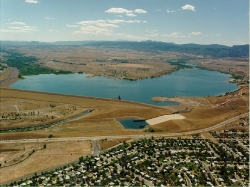
ChatfieldReservoirIt was announced last week  that Denver Water, with help from Colorado Parks and Wildlife has obtained the rights to an additional 2,100 acre-feet of water that will be stored in Chatfield Reservoir and will be released downstream during times of low flow. The additional water will address the river's fishery and the populations of trout.

With the additional flows during low water periods, the water temperature will remain lower and deeper pools will be created, allowing a more hospitable environment for rainbow trout.

Increasing water flows is just one step of many that has been done to help revive the river. The Denver Trout Unlimited Chapter has been working on restoring the South Platte for many years. The chapter has recently installed water temperature sensors from Chatfield Reservoir upstream through Downtown Denver and all the way to Commerce City. These monitors will allow the chapter and agencies to see how the sometimes unreliable flows affect the temperature of the South Platte and influence the fishery.

The river also benefits from the CarpSlam- an annual fundraiser that focuses on anglers catching carp through Denver. The funds raised by the CarpSlam go directly towards the South Platte and restoring the health of the river. Over the years, the CarpSlam has resulted in anglers catching Carp, Walleye, Bass, and Trout in a river that some believe isn't able to hold a healthy population of fish.

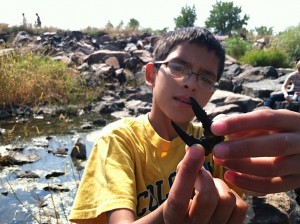
child inspecting a crawfishProjects like Stream Explorers have also helped the South Platte by teaching students about the river and how it is used for both human and aquatic needs. Learning how a city can impact the health of a river and how the river plays such a vital role to our way of life is important to teach to the next generation of river stewards.
Through all of these initiatives by Denver TU, Colorado Parks and Wildlife, and Denver Water, the South Platte River is returning to a healthy river. One that not only provides water for municipal uses but one that offers enough cool, clean water for a healthy population of trout and other fish species.