by Colton Gully
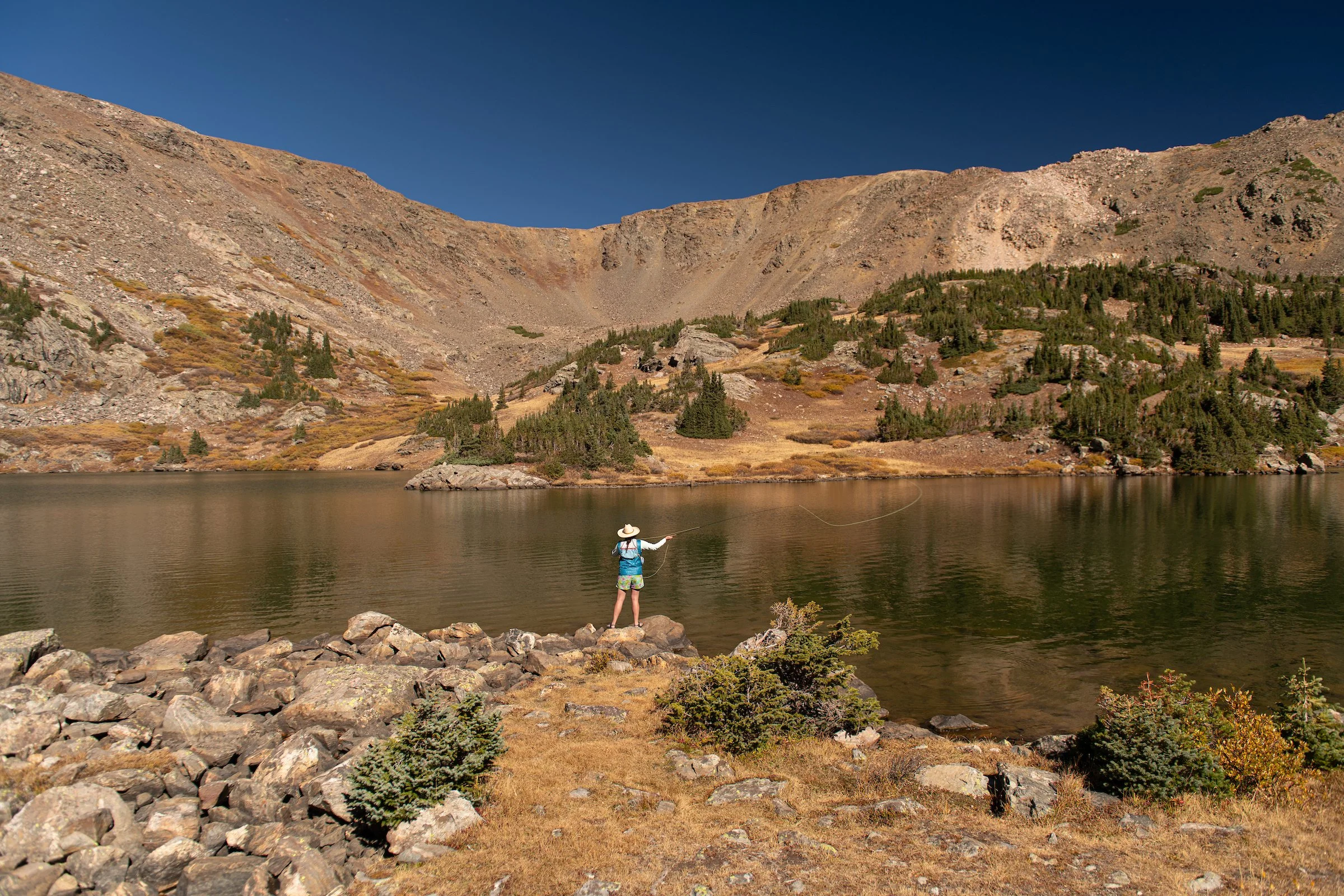
As the Colorado Parks and Wildlife (CPW) black, Dodge Ram and green F-150 pulled up to our campsite early in the morning on Wednesday July 6, 2016, the damp cold of early morning began to fade. Volunteers from the Denver area- Darian and Jack, CPW Biologists and their seasonal techs, along with staff from CTU stepped out of the trucks to be greeted by members of the Cheyenne Mountain Chapter of Colorado Trout Unlimited Bob, Rick and I. Boyd Wright, leading biologist on the team, greeted us kindly as he put on his waders, his colleagues did the same. As we made our way down to the lake we talked niceties but once we reached a gray tarp marked “CPW” the business began.
Boyd took time to brief the group on the objectives of the day. The main goal was to extract as many eggs as possible from the trapped greenbacks and fertilize them with milt so they could be taken to the Mt. Shavano Hatchery to be reared. In the process we would take samples of ovarian fluids, a pinkish soup that discharges with the eggs, to test for a virus dubbed VHS.
We broke from the brief. Seasonal techs ran to fill five gallon buckets of cold, clean water to be used for temporary holding of fish, volunteers Darian and Jack hopped in a boat with head of Native Aquatics at CPW Harry Crockett to retrieve traps filled with greenbacks.
The trap consists of a curtain like net suspended vertically in the water column by buoys. The curtain reaches out from the bank to the center of the lake perpendicular to the shore. Cruising greenbacks, on their way to spawn, stumble upon the curtain, follow it towards the center of the lake, and enter a series of diminishing cylindrical mesh barrels that when entered fully do not allow the fish to swim out. The night before CPW techs set up two nets on opposite sides of the lake.

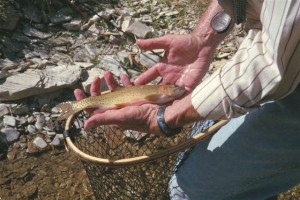
Both traps were filled with greenbacks. Because this was a spawning day, not just a catch and count day, the greenbacks were sorted by sex, year class and cross types. Fish put into Zimmerman in 2014 were born in a hatchery in 2013, as follows fish stocked in 2015 were born in 2014. All greenbacks, before they are stocked have a PIT tag inserted into their gut and a VI tag attached behind their gill plate almost like an earring. The VI chip indicates the age of the trout and its cross type. Different colors correspond to one of three cross types, WildXWild, HatcheryXWild, HatcherXHatchery. These crosses, along with data gathered from testing ovarian fluid, factor into research being done to quantify the fitness of greenback cutthroat trout by CPW Biologist Kevin Rodgers. Once quantified the data will be used, among other things, to bring about increased genetic diversity through improved spawning methods.
The commotion that came with sorting fish was scientific to say the least. Boyd and his fellow biologists stood waist deep in the lake around a submerged contraption built out of rebar and mesh laundry baskets. Each basket was marked as male or female, year class, and assigned one of the three cross types. As they sorted fish into the appropriate laundry basket they called out the color of the VI tag, year of birth, and weather the fish was ripe, ready to spawn, or not. The rapidity of the shouting was mind numbing. I thought “who could possibly be taking all of that down so fast?” Nobody but seasonal tech Ace Riverman. He recorded accurately and precisely all fish captured. Later Boyd would joke “Always good to have an Ace in the hole”.
Once all trout were recorded it was time to spawn them out. Greenbacks were methodically removed from the laundry baskets, males by cross type, females at random, and placed in the five gallon holding buckets mentioned earlier.
Love filled the air as eggs started spilling out of ripe females. The tiny, salmon colored orbs came out the consistency of tapioca. Once the ovarian fluid was drained off of the eggs and captured, milt was squeezed onto the eggs out of two different males and the bowls were handed from fish handler to decontaminators. Once the eggs were clean they were transferred to coolers filled with a dilute iodine solution that kills bacteria and viruses but does not affect the health of the eggs. After 30 minutes the iodine solution was decanted and replaced with cold clean water. The egg coolers were then individually labeled and transferred to a larger cooler destined for Mt. Shavano Fish Hatchery.
Spawning all of the fish, from capture to cooler, took about 3 hours. Clean up followed the science and time to talk followed cleanup. The team of CPW biologists lead by Boyd Wright are a riot. Boyd’s smile is charged with youth and he radiates the excitement of a young father. The atmosphere he and his team create is infectious. They invite intrigue, sponsor team work and they laugh a lot. Their excitement stems from a genuine passion for the species that make our state unique; their hospitality can only come from a deep connection to the people strive to keep it that way.

Throughout the day we volunteers were included in key aspects of the event. From brining in traps to decanting eggs, the willingness of CPW to include volunteers in their work made us feel needed and appreciated. Not only did we feel good, our help was visibly quantifiable. Without us the spawning may have taken 3/4’s of the day instead of a couple of hours. This including the fruits of our labor, over 15,000 fertilized eggs, made the early morning commute worth every hour of missed sleep.
 Groups all over the state worked together to protect our state's water quality and our trout's quality of life. CTU hired water quality expert, Ashley Rust, as a consultant to provide technical support. Her work demonstrated flaws in the data selection and analysis used for the WQCD’s proposal. TU also worked with Colorado Parks and Wildlife scientists along with other organizations including Sierra Club, Colorado Wildlife Federation, CPW and EPA.
 "Big thanks to John Woodling, who's testimony was a turning point in the hearing," said Whiting. "To Robin (Knox) who in 5 minutes conveyed a lifetime of experience- I loved the example of all the poor fish huddling in a small pool in the Yampa to avoid the hot water in response to the Division's callous assertion that if it's too hot, fish can just swim away. Big thanks to Dennis Buechler, who very softly and meekly brought in the impacts of these decisions on small businesses."
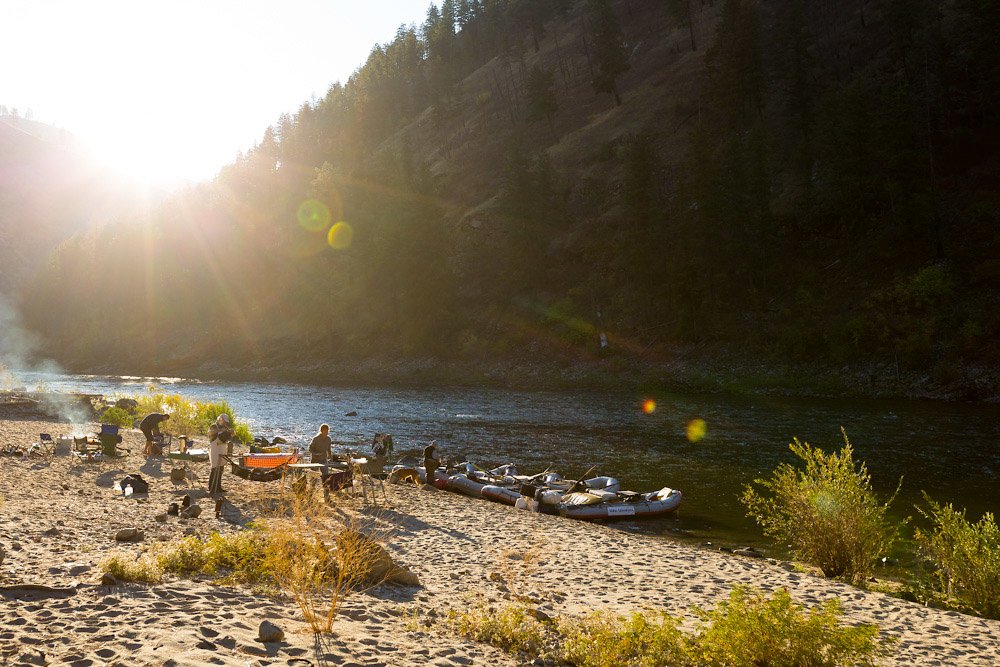
 Colorado River float trip: a full day float trip for two on the "lower Upper" Colorado River, above Dotsero. This float trip is with Jack Bombardier and Confluence Casting, who lives alongside the river and loves to share his "home waters" with new and returning visitors. Jack will take you on the Colorado River as it flows through one of the most colorful and beautiful canyons anywhere. On a typical float you might see bighorn sheep, eagles, dinosaur tracks, waterfalls and course lots of feisty trout. Best of all, since this section sees very little river traffic,there a good chance you 'll have it to yourselves! Learn more at the
 Upper Gunnison River walk/wade trip: a full day walk/wade trip for two on public water in the upper Gunnison basin, operating from Three Rivers Resort in Almont with Willowfly Anglers, in the heart of one of Colorado's great fishing meccas picking up world-class angling options with the Gunnison, East, and Taylor Rivers. Operating for over 30 years, Willowfly offers experienced fly fishing guides, excellent private water options (available for an additional fee), as well as a full service fly fishing shop. Willowfly Anglers is the only Orvis Endorsed Outfitter in the Almont area and was recently named one of the top five Orvis Endorsed Outfitters in North America. Learn more at the
 Mely Whiting, lead negotiator for Trout Unlimited:
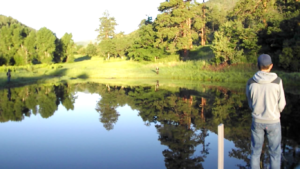 With many fish to be caught and much to be learned, the campers settled in to the barn that they would call home for the coming days. As the week progressed the campers gained experience in the worlds of conservation and fly fishing and made new connections with others who shared similar passions for the outdoors.
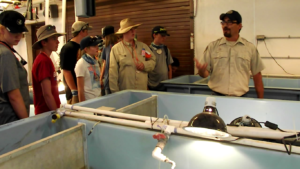 behind genetics, and were able to see what it takes to bring back a species from endangerment. Though the camp focuses on trout conservation, the hatchery harbors nothing but native species (meaning no trout), thus enabling campers to realize that conservation goes further than just the species most popular in Colorado rivers.
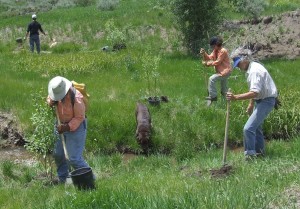
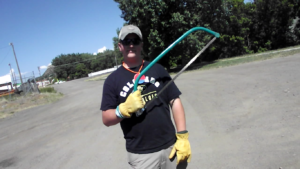 restoration project in collaboration with the Purgatoire River Anglers Chapter of CTU out of Trinidad. The Purgatoire River runs through Trinidad and has seen many restoration efforts in the past few years. Campers assisted in the removal of a fern called Russian olive- an invasive plant that consumes large amounts of water, taking it away from the river system. A day was spent using tools and chainsaws to cut down many of these large plants to better the fishery that the anglers of Trinidad value greatly.
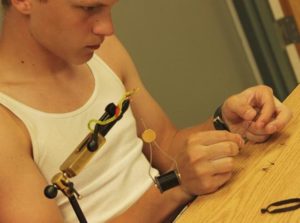
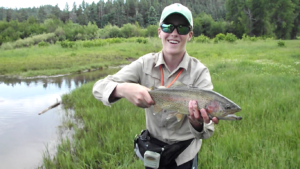 each day, and instruction from experienced guides and fishermen, campers enjoyed testing newly tied flies on eager fish. Astoundingly, at the end of five days, every young angler, regardless of skill level was able to successfully land a fish, with dozens of healthy trout seeing the net.
 The water from the Upper Colorado flows from Lake Granby (which acts as the storage facility), then it is is pumped into Shadow Mountain Reservoir where it then flows down into Grand Lake. From Grand Lake, the water then is pumped through the 13.1 mile long Alva B. Adams Tunnel under the Continental Divide and flows into the Big Thompson River. From there, the water drops into power plants that supply the pumps on the western slope.
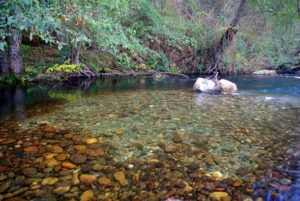 As the flows of the Upper Colorado are depleted by the diversion projects, the natural cleansing of the river fails to occur. Each spring, rivers experience flushing flows- an increase in water flow that breaks up sediment buildup along the stream bed. When the river isn't able to clean itself from sediment buildup between cobblestone, it doesn't allow for insects to hatch or fish to spawn.
 The West needed water to expand. Currently, 80 percent of Colorado's population is on the east of the Divide while 80 percent of the water is on the west side. This means that in order to thrive, water needed to be diverted. The C-BT opened the door to other transmountain diversions- including the Moffat Tunnel from the Fraser River, another tributary of the Upper Colorado headwaters.