Colorado TU Gets Families Outdoors

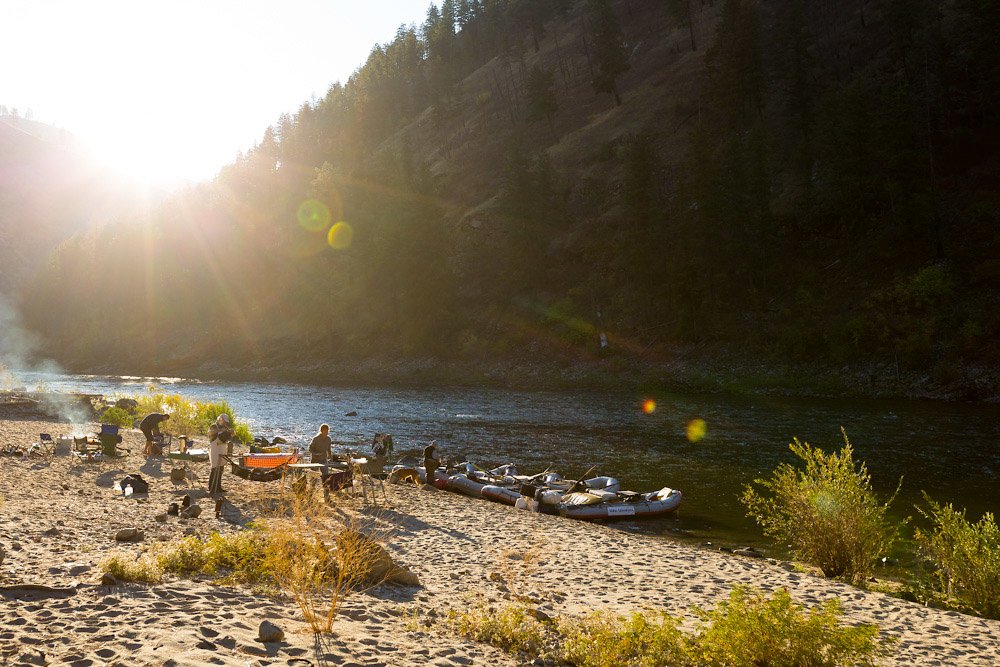
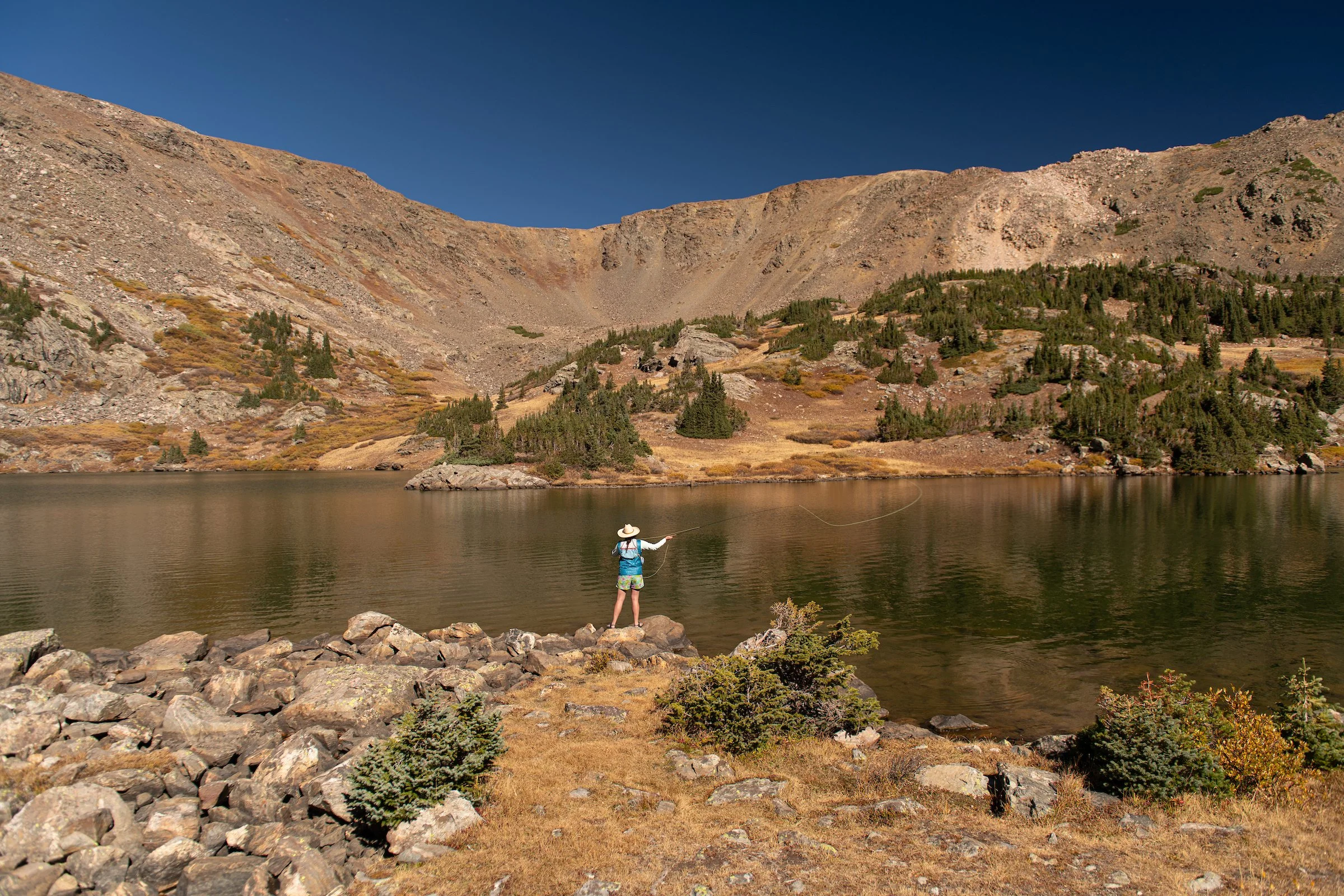
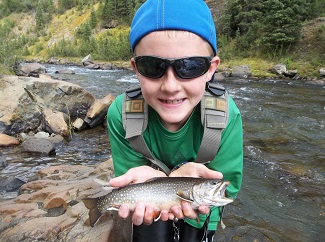
The first annual Family Fly Fishing Camp was held in early August in beautiful Gilpin County, Colorado. At this camp several families had the chance to spend a weekend camping and learning about the beauty and fun of fly fishing! With the help of TU volunteers, participants were introduced to fly casting, aquatic macroinvertebrates, fly tying, and fly fishing. The program was open to youth age 9-13 and a responsible adult mentor (parent, grandparent, etc). There were some great memories made as several kids caught there first fish on a fly rod! Continuing participation for children who are exposed to outdoor opportunities often depends upon having a trusted adult who can share in those activities. By engaging entire families, we are planting the seeds for them to continue to experience the outdoors together. By encouraging families to share their enjoyment of the outdoors on a regular basis we can make a significant impact on their perception of our natural resources.

If you are interested in learning more about the family fly fishing camp model and how to bring it to your community, please contact Jake Lemon at jake.lemon@coloradotu.org or 720-354-2646.

Touring Kerber Creek

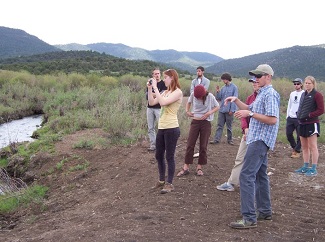
“I didn’t know that Trout Unlimited did that!” This was the phrase I heard mentioned by a couple of students and professors during a tour I conducted of the Kerber Creek Restoration Project on June 4, 2013. The tour focused on various stream restoration projects and techniques that have been on-going in the watershed since 2008. Several students from the University of Colorado, Colorado Springs (UCCS) and Colorado College (CC) visited Kerber Creek outside of Villa Grove, Colorado as part of their course curriculum, and were accompanied by a professor from each school. I was contacted earlier in the year by one of the professors to conduct a watershed tour of Kerber Creek so I developed a plan that would give the students a good overview of the legacy mining issues that created the problems existing today throughout the watershed. Back to the initial phrase. You would be surprised how many people think TU is “just a fishing club.” However, TU’s national staff is composed of 183 passionate individuals that strive to conserve, protect, and restore North America’s coldwater fisheries and their watersheds, most of whom also love fishing. My program specifically targets Colorado watersheds affected by legacy hard-rock mining, like Kerber Creek, Lake Fork of the Arkansas, and Clear Creek.

KerberCreekJWillis2I started the tour at the Cocomongo Mill/Mine in the upper watershed, which provided a good representation of where and how historic mining operations took place, and the mine wastes/tailings commonly left behind. I explained the mining and milling processes and provided background information about the Bonanza Mining District. The setting included a large mill structure surrounded by piles of multicolored mine wastes within the Kerber Creek corridor. The students were captivated by the site and eager to learn more about the restoration techniques used to improve these conditions.

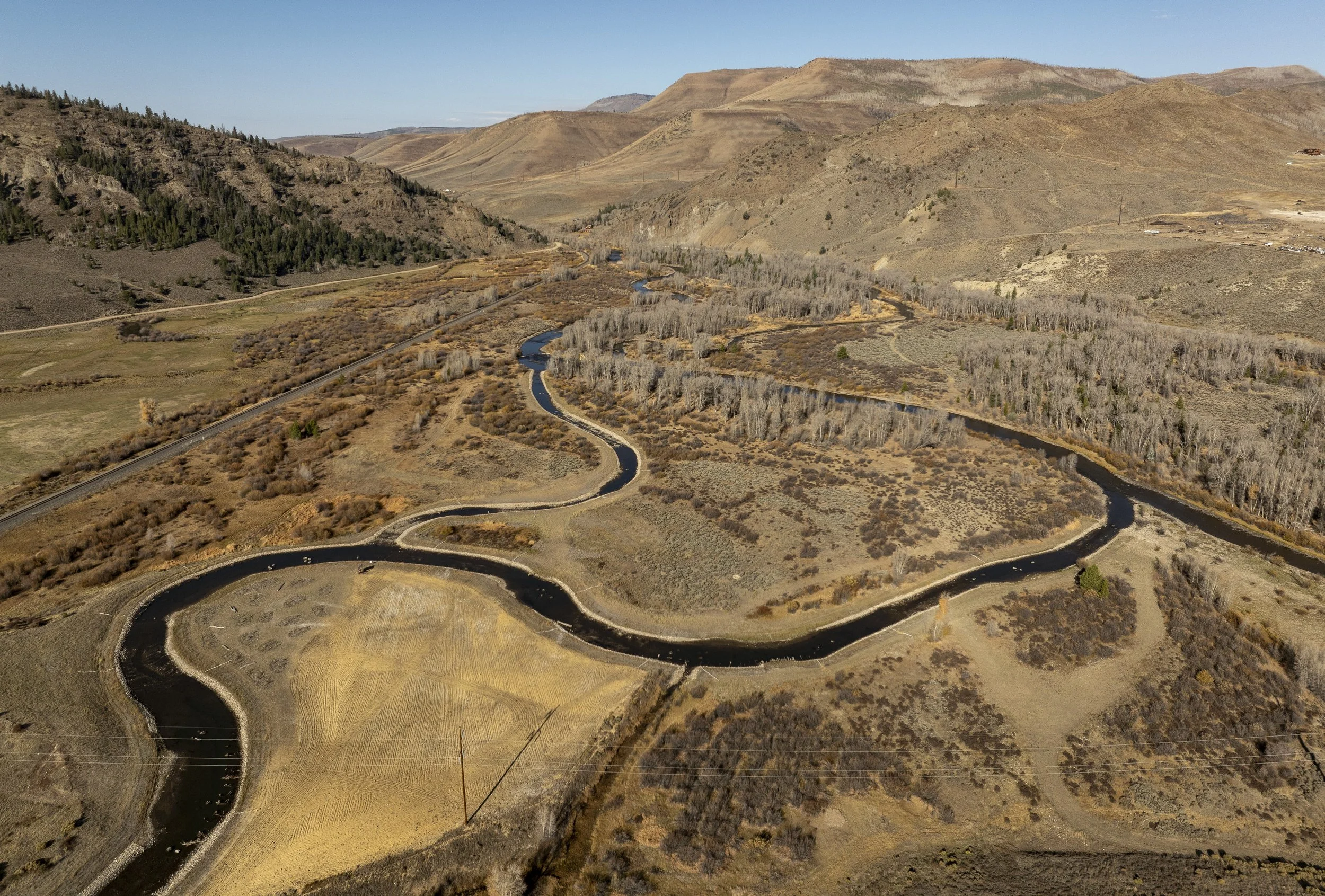
The next stop was near the confluence of Brewery Creek and Kerber Creek where 32 in-stream rock structures and 2.14 acres of mine waste reclamation had taken place the year prior. This site showcased what is possible when local stakeholders work together with government agencies and non-profit organizations. The students enjoyed seeing the finished structures and had countless excellent questions regarding rock structure type and purpose, soil amendment quantities and mixes, and grazing management techniques.

On the way down through the watershed we stopped at several sites, such as the repository that was completed in 1999, as well as past and future locations that exemplify the work accomplished through the Bonanza Stakeholder Group partnership, which is a collaboration of 16 federal, state, and local agencies, non-profit groups, and mKerberCreekJWillis4ore than 20 local landowners. The final stop was at one of the largest private landowners in the lower watershed where work is taking place this fall. This site provided examples of existing mine waste deposits that were distributed throughout the floodplains during high flow events when tailing dams were breached in the 1900’s. The toxic mine waste deposits contain little to no vegetation and cannot sustain the high flows associated with spring runoff and summer storm periods.  This leads to unstable banks that erode, widening the stream, and eventually disconnecting the floodplain from the stream.

Conditions present at this site provided the students with a “before and after” glimpse of stream restoration. The entire site was walked from the degraded section, downstream to a recently restored segment that included in-stream rock structures and willow transplants.  I was impressed by the quality of questions and general interest of the students. I could tell that they were genuinely interested in the project and excited to be in the field observing actual conditions. The tour concluded with a question and answer portion that included questions about the history of the watershed, background information, and restoration procedures. Each correct answer yielded praise from fellow students and the grand prize of a………TU t-shirt!

KerberCreekJWillis3The tour consisted of a unique group of students in that a majority of them were pursuing different forms of environmentally based degrees. In my opinion, this proved for a well-rounded tour and a broader range of questions asked by the students. It was great to see that they really appreciated the tour and the opportunity to see actual stream restoration. TU would like to thank both programs of CC and UCCS for the opportunity to help educate and inform the students about the importance of preserving our local ecosystems and watersheds. If the group that attended this tour is any indication of the quality of future ecologists, engineers, biologists, and scientists then I feel inclined to say that successful efforts to conserve, protect, and restore North America’s coldwater fisheries and their watersheds should continue for years to come.

- Jason Willis, Mine Restoration Field Coordinator Colorado Abandoned Mines Project, Trout Unlimited


Poudre River benefits from Xcel's Day of Service

On September 7, 2013, Xcel Energy and CBS4 sponsored a Day of Service in which volunteers from all over Colorado participated in various environmental stewardship projects from 9:00 am until noon. There were nine total projects that all took place at the same time, and Trout Unlimited was fortunate to be one of the nine projects selected for the Day of Service. Colorado Trout Unlimited, Rocky Mountain Flycasters (Fort Collins TU Chapter) and the Poudre Learning Center (PLC) in Greeley partnered together to organize our event on September 7th. The Poudre Learning Center borders a three mile section of the Poudre just west of Greeley and includes meeting areas, a pond, paved biking trails, trails through the willows, and access to the river. Schools in Greeley use the PLC for outdoor education opportunities.

More than two dozen voluPLC Day of Service 8nteers arrived at the Poudre Learning Center to participate in the Day of Service. In the short three hour period the volunteers managed to do an impressive amount of work. One of the big projects was clearing vegetation along the river bank to create trails that thousands of schools students and the public will use starting in a couple of weeks to learn about rivers and their ecosystems. The volunteers cut and cleared six large trailer loads full of vegetation. WOW!! The volunteers also threw on waders and got into the river to help improve river access for students. There were three new sets of stairs built out of large rocks found along the river to make getting to the river safe for the students. Volunteers also removed invasive weed species and placed logs along the bank of the river to help guide students to safe walking trails.

All in all the Day of Service was a total success. The work that was done at the Poudre Learning Center was more than we could have hoped for. This day of service was perfect timing for the center because as the school year starts, thousands of students will soon be walking these freshly manicured trails.

This year access to the river will be more important than ever for the Poudre Learning Center because Colorado Trout Unlimited has partnered with them to begin a new program called Exploring and Restoring Colorado’s Rivers. Thanks to the Xcel Energy Foundation, which is separate from the corporation that sponsored the Day of Service, who has awarded CTU funds to grow this program in Greeley.

Exploring and Restoring Colorado’s Rivers is an innovative program offering vertically connected, standards based environmental education experiences. This program provides opportunities for students to learn outdoors along rivers and empowers them to be critical thinkers, stewards of the environment and fosters a conservation ethic that keeps the students invested in the future of the rivers. TheBefore and After program will give Weld County youth the opportunity to learn about aquatic ecology through place-based science investigations. This program engages students when they are in 4th grade, 7th grade and high school in environmental education experiences that are vertically aligned. In 4th grade the students will start a “River Explorers Science Journal” and keep it with them documenting data, thoughts, and pictures year after year. This student-centered program is designed to encourage investigative thinking and problem solving from the students while also meeting Colorado State Science Education Standards. Programming at each grade level engages youth in both STEM fields and outdoor recreation.

We want to thank Xcel Energy and CBS4 for the opportunity to participate in the Day of Service. We hope to be able to participate in the future and grow this event next year.

Also, we want to thank the Xcel Energy Foundation for the funding to grow the Exploring and Restoring Colorado’s Rivers program at the Poudre Learning Center. We can’t wait till we get the students out of the classroom and on the river!

"Day of Service Draws Thousands To Help Mother Nature" - read CBS4's report here. 

Visit this link to see the photo gallery from Xcel Energy's Day of Service.

TU and Tipton - together on Hermosa

Last week TU staff and members of the ‘Sportsmen for Hermosa’ coalition had the great pleasure of spending the day in the Hermosa Creek area withloneangler staff from Representative Tipton’s DC office.   Representative Tipton is the sponsor of the Hermosa Creek Watershed Protection Act in the House.  The group toured the area, enjoyed a wonderful hike while fishing for native cutthroats.  We continue to be grateful for Mr. Tipton’s support. Join in the support by visiting - https://www.facebook.com/SportsmenForHermosa.

Castle Rock - turning wastewater into drinking water

Kudos to Castle Rock for continuing its strong efforts to use water efficiently.  The more we can do with conservation and reuse, the better we can protect healthy flows for our rivers. Check out the full story from 9News.


"Riverstock” raises awareness about Fraser River threats

Beer? Check. Barbecue? Check. Bands? Check. What more do you need for a good time? The steady stream of people who turned out for Trout Unlimited’s “Riverstock” event Aug. 17 at the Crooked Creek Saloon in Fraser enjoyed a full day of good vibrations and cold libations in celebration of peace, love and local rivers.

Between sets, they also learned about the looming threats to the Fraser River’s health posed by Denver Water’s proposed expansion of its Moffat diversion project.

Kirk Klancke, president of TU’s Colorado River Headwaters chapter, organized the event with help from local volunteers, as well as the dozen bands (including BlueCat, Hippie Sideshow Hootenanny and Gary Key) who donated their time and talent to the cause.Riverstock2

The Fraser, a key tributary of the Upper Colorado, is the lifeblood of the Fraser Valley, supporting angling, wildlife, outdoor recreation and local communities. But decades of water diversions have left the river depleted and degraded. Already, some 60 percent of the river is diverted to the Front Range for municipal uses. Denver Water’s Moffat expansion would remove another 15 percent, putting the river system on the brink of disaster.

“Unless these projects include adequate protections for our rivers, we could lose our outdoor quality of life and the reason many of us live here in the first place,” said Klancke. “Riverstock sends a message to the big utilities that local people care about our rivers and streams.”

Inside the saloon, a blues guitarist was shredding some serious Stevie Ray Vaughn licks.  Outside, in the back courtyard, an acoustic duo held forth with their spin on Simon and Garfunkel.

There was something for everyone.

Also playing were short videos about the Fraser and Upper Colorado rivers and their importance to the recreational businesses and overall quality of life of Grand County. Free bumper stickers, posters, and other educational materials went fast, as well as some far-out tie-died t-shirts.

RiverstockFraserOutside at the curb, facing traffic, a giant green trout (Fraser the Trout, Colorado Trout Unlimited’s mascot) waved a sign that read “Save the Fraser River,” eliciting a steady stream of honks from passing motorists.

Fraser Valley residents “get it,” notes Klancke, and they’re generally well-informed about the details of Denver Water’s project. They understand the depleted Fraser River is on life support, and they want the river protected from more diversions.

TU is asking Denver Water for three basic protections: - adequate peak spring flows to help flush the river and keep its riverbed and aquatic habitat healthy and free of choking sediment; - standards that would prevent Denver Water from diverting water if the river temperature reached levels lethal to fish; - ongoing monitoring and “adaptive management” that requires Denver Water to adjust its operations if the river shows significant signs of decline in the future.

So far, Denver Water has rejected those commonsense protections.

All proceeds of Riverstock will help benefit TU’s campaign to protect and restore the Fraser River.  Go to www.DefendtheColorado.org for more information.

- Randy Scholfield, Director of Communications Western Water Project, Trout Unlimited

Top of the Town!

From 2010 through April of this year, we at Colorado TU had the good fortune to have a knowledgeable and committed supporter at the helm - Board President, Sinjin Eberle.  A lover of rivers, fishing, bike riding, and more, he has been a tireless volunteer leader on efforts from the Buffalo Peaks habitat restoration project to the ongoing campaign to defend the Colorado River headwaters in the face of growing transbasin diversions. We've always appreciated Sinjin's efforts, but we're proud to say that his work has also been noticed by others!  In 5280's annual "Top of the Town" issue, Sinjin was recognized as the "Readers Choice" for Top Environmentalist.  Congratulations on this well-deserved honor, Sinjin - your hard work is making a difference for Colorado!

http://www.5280.com/tott2013/Personalities/10981

Our Colorado River: Cooperation, not conflict

For well over a decade, Trout Unlimited’s Western Water Project has partnered with the agricultural community and local TU chapters to improve habitat, upgrade aging irrigation infrastructure and boost stream flows throughout the West. In Colorado, TU’s field staff live and work in each of the major West Slope river basins that comprise the upper Colorado drainage. They work on projects that improve habitat, increase flows and help keep western Colorado streams and rivers healthy and productive. Their success is a direct result of cooperation with the agricultural community, not conflict. Agriculture is the primary user of water on the West Slope. Farmers and ranchers use the water to grow and send crops and animals to market each year. Their farms and ranches protect important riparian and aquatic habitats, winter range, migration corridors and the iconic western landscapes. This agricultural way of life is sustainable and deeply woven into the fabric of our communities and their economies. Like agriculture, recreation and tourism also rely on healthy flows in our streams and rivers. These uses are also sustainable and have also become critical to West Slope communities and their economic health. When agriculture and recreation-tourism clash over the use of water, the community, the economy and the river all suffer. When they cooperate, flows, communities and economies all benefit. To help tell this story and take it to a new level, TU this summer launched the Our Colorado River program, which has three primary goals:

1) Highlight our successful partnerships with agriculture in restoring habitat, upgrading irrigation infrastructure, and other efforts to boost healthy flows in our West Slope streams and rivers. 2) Promote cooperation between agriculture and recreation-tourism interests to protect the water resources that are the lifeblood of our West Slope communities. 3) Encourage that cooperation by asking West Slope residents, businesses, elected officials and organizations, to endorse some common “core values” on water, including cooperation, not conflict; modernizing irrigation; and maintaining open spaces.

We believe the Core Values are the centerpiece of the Our Colorado River program and provide the starting point for forging consensus on how to protect water resources in western Colorado. While West Slope residents won’t agree on everything regarding water, we are confident most can agree on these five commonsense values.  The goal is to encourage a wide diversity of river users and community members to show their unity and resolve in protecting West Slope water resources as we move towards a Colorado Water Plan by December 2014.

When it comes to keeping our rivers healthy, we’re all in this together. Please help us out by going to www.ourcoriver.com and signing the core values and supporting our West Slope rivers.

- Richard Van Gytenbeek, Colorado River Basin Coordinator Colorado Water Project, Trout Unlimited

Coming together for Hermosa Creek

A bipartisan, legislative effort is underway in DC to protect the Hermosa Creek watershed just north of Durango, Colorado.  Senator Michael Bennet and Representative Scott Tipton have joined forces to sponsor companion bills in both houses of Congress.  When successful, this federal bill will protect an entire, intact watershed as a whole unit – a first in the US! The Hermosa Creek Watershed Protection Act of 2013 represents ten years of exhaustive work by both TU volunteers and staff.  In true “One TU” spirit, the Hermosa Creek area has long-been a focus area for TU.  In fact, it is the Hermosa Roadless Area which prompted the formation of TU’s national public land division, the Sportsmen’s Conservation Project (SCP, formerly the Public Land Initiative) in 2004.  At that time, the ‘Roadless Rule’ was more than controversial.  Hermosa Creek contains Colorado’s largest, unprotected roadless area.  For this reason, SCP was born, then employing just two staff.  Today, SCP continues to be headquartered in Durango and has grown to 29 staff in twelve western states.

HermosaCreekkidTChurchwellWhile Hermosa Creek is a favorite among all types of backcountry recreationists (mountain bikers, OHV enthusiasts, backpackers, campers etc.), the basin is particularly important to sportsmen.  The upper third of the basin is home to CPW’s largest and most important native Colorado River cutthroat trout reintroduction areas.   The remaining two-thirds of the basin is loaded with hungry rainbows, cutthroats and brookies, eager to take a summertime dry fly.    In 2010, Hermosa Creek was featured in an episode of TU’s ‘On the Rise’, highlighting the cutthroat fishery.    Furthermore, the western half of the basin contains some of SW Colorado’s most productive and spectacular elk habitat.  In 2009, Hermosa Creek received a state designation of ‘Outstanding Waters’ for its exceptionally high natural water quality.  Hermosa Creek is vital to diluting acid mine drainage from mines above Silverton into the headwaters of the Animas River.  This recognition of water quality was a first for an area not designated as a wilderness area.

The proposal to protect Hermosa Creek was the result of an open, all-inclusive, stakeholder-driven process initiated by Five Rivers TU chapter president, Chuck Wanner, in 2008.  The ‘Rivers Protection Workgroup’ met for 22 months and enjoyed participation by everyday citizens, conservationists, water development advocates, federal and state agencies, county governments, a tribe and representatives from every Hermosa recreational user group.   In the end, the workgroup reached overwhelming consensus that the Hermosa Creek area is worthy of federal protection.  Senator Bennet’s staff took the recommendations of the workgroup and created legislation, which was adopted by Representative Tipton in April of 2013.  The Hermosa Creek Watershed Protection Act has received unanimous support locally, across the region and the state.

Sportsmen have unified and spoken as one in support of protections for Hermosa’s exceptional backcountry.  The ‘Sportsmen for Hermosa’ is a coalition of sportsmen’s conservation groups, fly shops, guide/outfitter services, hunting retailers, rod manufacturers and more.  Learn more about the TU-led coalition and proposal at:  www.facebook.com/sportsmenforhermosa or www.hermosacreek.org.

In a time when Americans can’t seem to agree on anything, it is refreshing to see a community, its elected officials and every user group can come together around a very special place, ensuring out sporting heritage is passed down to the next generation of anglers and hunters.

- Ty Churchwell, Backcountry Coordinator Sportsmen’s Conservation Project, Trout Unlimited

 

Fish and Wildlife Deserve It - Sportsmen Demand It

Sportsmen for Responsible Energy Development (SFRED) is a coalition led by Trout Unlimited (TU), the National Wildlife Federation (NWF) and the Theodore Roosevelt Conservation Partnership (TRCP) and includes over 500 businesses, organizations, and individuals who are working to strike a balance between all forms of energy development and conservation in the West. Our goal is to reform the laws, regulations, and policies that ensure protection of important fish and wildlife habitats.

The guiding principles for the coalition are outlined in the Sportsmen for Responsible Energy Development Bill of Rights.  This document was created by hunters and anglers who want to ensure that our rights to hunt and fish on public lands are protected in the future. We recognize that our country needs energy and we know it is possible to develop resources and protect vital fish and game habitat at the same time.

TU’s goal for 2013 is to increase the SFRED coalition by a minimum of 100 business and organizations.  Additionally we want to add a minimum of 1000 individuals.  As a supporter of Colorado TU, you are encouraged to visit www.sfred.org to read and sign-on to the SFRED Bill Of Rights.  You are also encouraged to get your local Colorado TU chapter signed on.  Once you are signed-on, please encourage a local business to become part of the SFRED coalition.  Our strength is in our numbers.

Should you have any questions, please contact Bob Meulengracht at rmeulengracht@tu.org or 303-514-8227.  Bob is available to attend a Chapter meeting to discuss SFRED and other energy issues affecting Colorado.  Thank you for your support and together we can conserve valuable habitat while developing energy resources responsibly.