CPW Issues Fishing Closure on Yampa

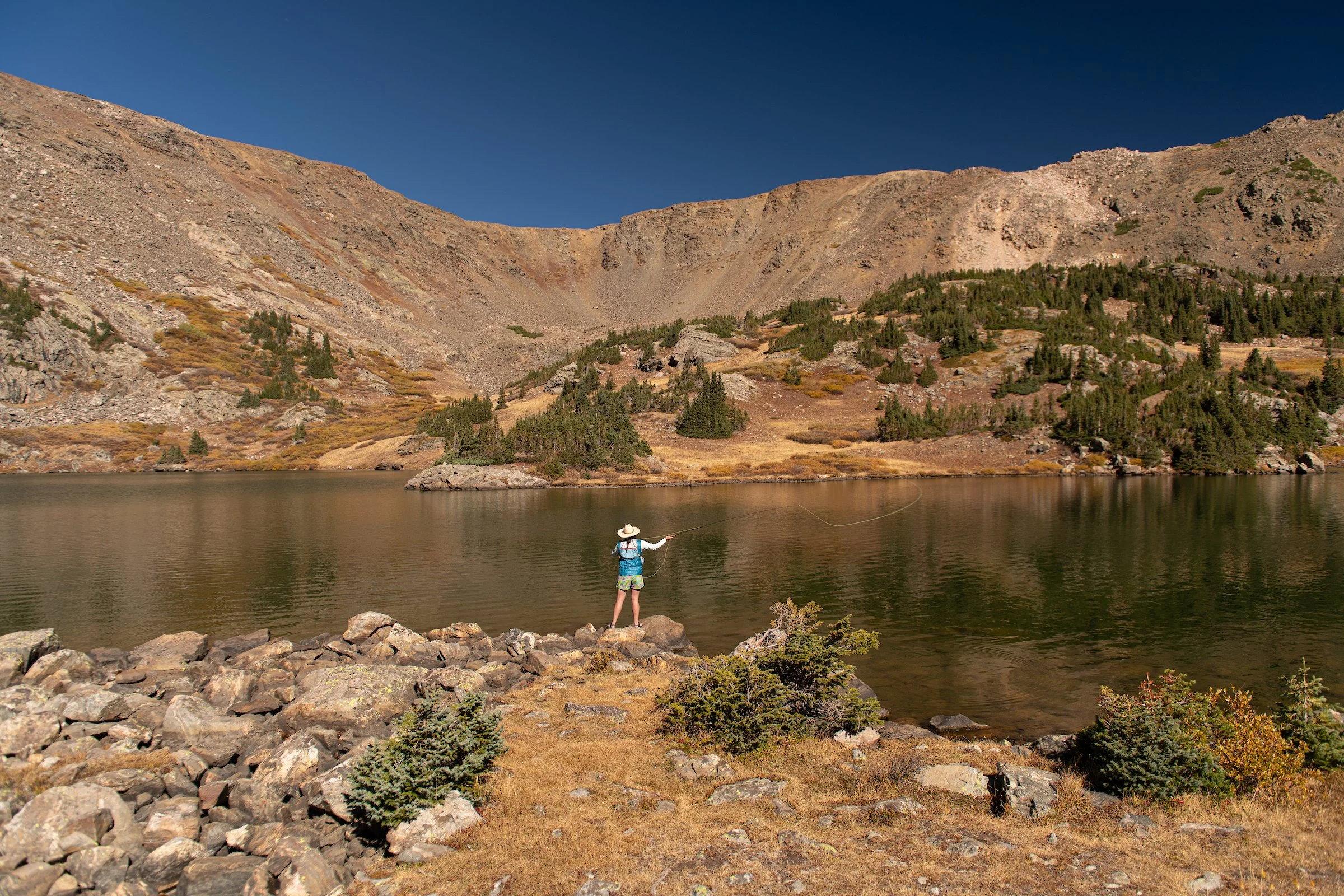
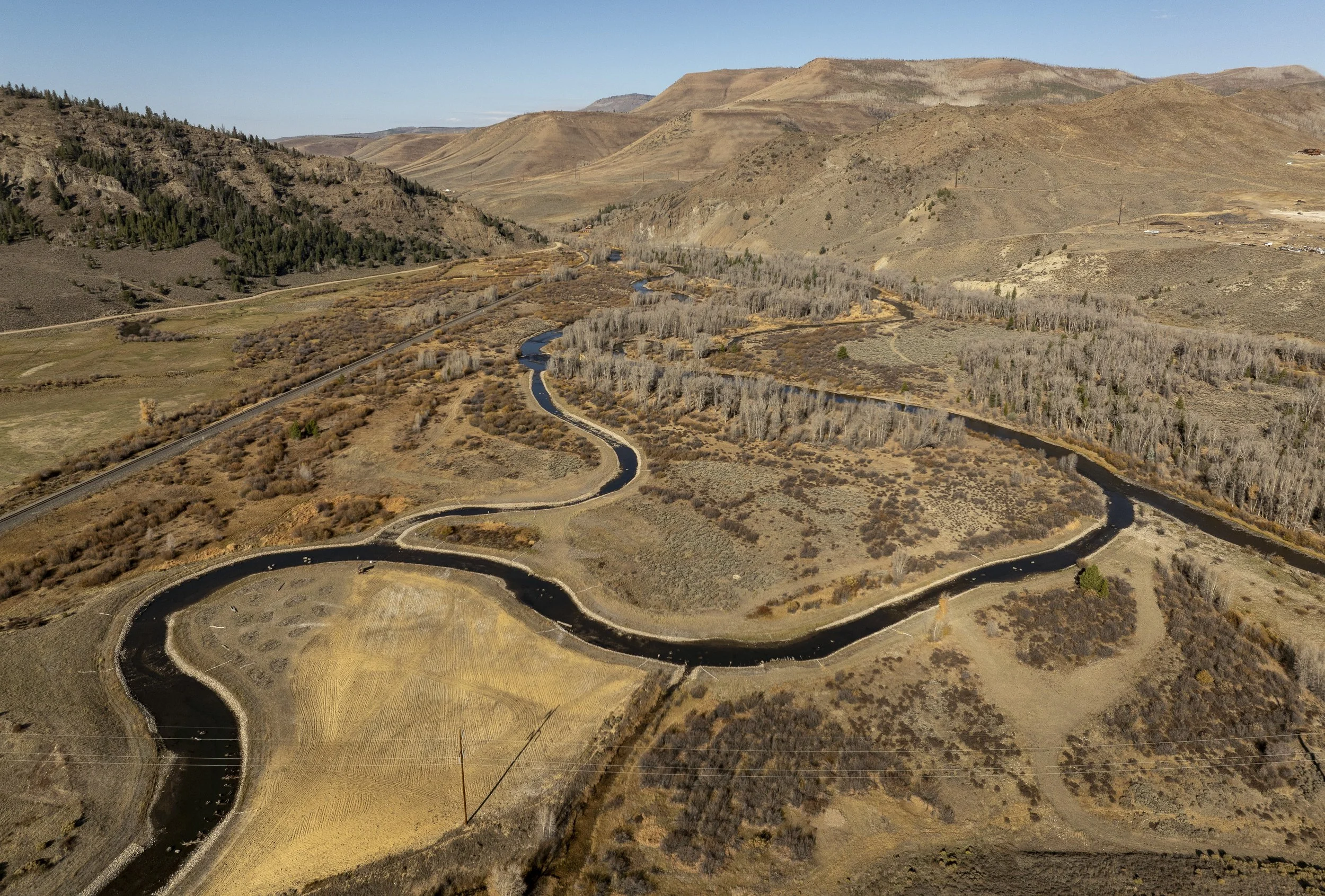
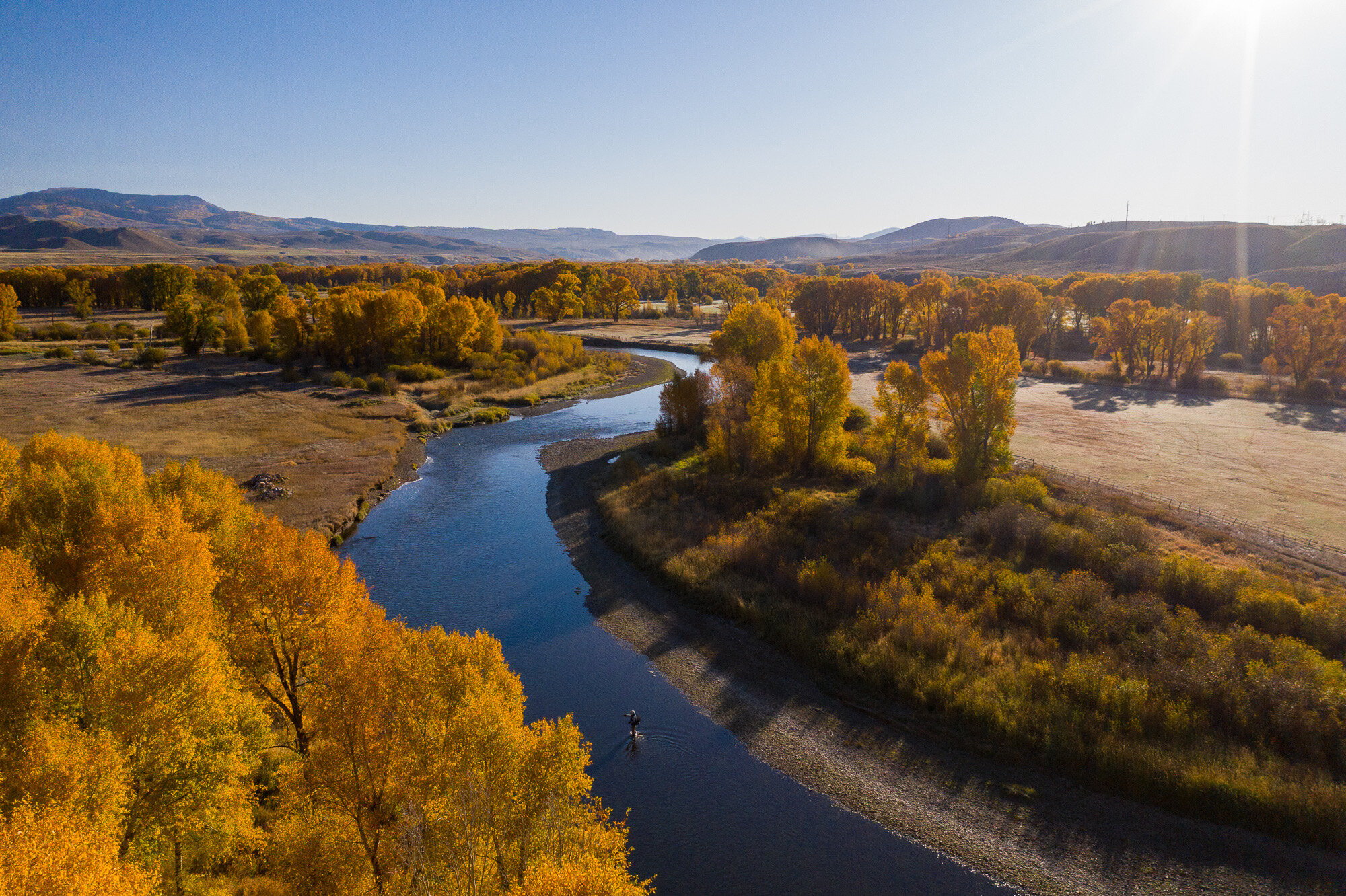
Extremely low flows and rising water temperatures have prompted Colorado Parks and Wildlife officials to implement a voluntary closure to all fishing in the Steamboat Springs section of the Yampa River. The closure will be in effect from the upstream boundary of the Chuck Lewis State Wildlife Area downstream through the city limits of Steamboat Springs, and anglers are asked to avoid this area.

News from Colorado Parks and Wildlife Contact Name: Mike Porras Contact Phone: 970-255-6162

Minimal spring snowmelt and lack of significant rain so far this year has led to very low flows and high water temperatures for many rivers and streams throughout the state. In Steamboat Springs, wildlife managers observed Yampa River water temperatures at 71 degrees on June 20 and the current flow of 81 cubic feet per second is well below the minimum 85 cfs established to trigger the voluntary closure.

In these conditions, already severely stressed fish weakened by warm waters often die when caught, even if they are quickly released back into the water.

"There appears to be little chance of precipitation adding measureable volume to the stream flow in the immediate future," said Senior Aquatic Biologist Sherman Hebein. "In this section of the Yampa River, median historical flows for this date are slightly over 1400 cfs, and the most current reading is well below that rate."

Diligent monitoring of rivers across western Colorado has been ongoing this year due to concerns about little to no moisture so far, and if current conditions continue, other rivers may see similar voluntary closures this summer.

"We ask the public for their cooperation to help us preserve our state's fisheries," said Northwest Regional Manager Ron Velarde. "We do not know how long this voluntary closure will remain in effect, but as soon as conditions are once again favorable, we will lift it and the public can once again enjoy world-class fishing in the Yampa River."

Velarde stresses that the Yampa River closure is voluntary for now and anglers are asked to avoid fishing there during the hottest part of the day, or preferably, to fish in other areas. However, if conditions worsen and several criteria established by regulation are met, a strict emergency closure enforced by law may become necessary.

For more information about the voluntary closure, please contact the Colorado Parks and Wildlife office in Steamboat Springs at: 970-870-2197

For more information about fishing in places not affected by extremely low flows, please visit: http://wildlife.state.co.us/Fishing/Pages/Fishing.aspx

Colorado Parks and Wildlife was created by the merger of Colorado State Parks and the Colorado Division of Wildlife, two nationally recognized leaders in conservation, outdoor recreation and wildlife management. Colorado Parks and Wildlife manages 42 state parks, all of Colorado's wildlife, more than 300 state wildlife areas and a host of recreational programs.

To learn more about Colorado's state parks, please see: http://www.parks.state.co.us

To learn more about Colorado's wildlife programs, please see: http://wildlife.state.co.us

For more news about Division of Wildlife go to: http://wildlife.state.co.us/NewsMedia/PressReleases

For more information about Division of Wildlife go to: http://wildlife.state.co.us.
Golden Milestones

In May 2009, West Denver Trout Unlimited dedicated its Golden Mile project---a $300,000 value-added improvement of a stretch of Clear Creek running through the city of Golden that greatly enhanced cold-water fishing for anglers living in the immediate area. It was lauded at the time by leaders of the City, Jefferson County, the Colorado Division of Parks and Wildlife, and the U.S. Fish and Wildlife Service as an exemplary public-private partnership.

The Clear Creek Comeback

Since the completion of the project, angler use and success is up markedly for the Golden Mile stretch, and is drawing national attention as an important urban fishery.

The Chapter believed that while it was extremely important to improve trout habitat on a section of the stream that runs through the city of Golden, a corresponding value of the Golden Mile project was to increase public awareness of Clear Creek's potential as a recreational resource, and to serve as a catalyst for new partnerships and future improvements.

WDTU also - correctly - envisioned successful completion of the Golden Mile as a means for angler conservation interests to secure a place at the table when future decisions were made that might impact Clear Creek.

Success Spawns Success

There has been a remarkable increase in trout habitat improvements on Clear Creek since the dedication of the Golden Mile, including a “Fishing is Fun” project just upstream of Idaho Springs, another habitat remediation project in downtown Idaho Springs, and plans for a large habitat enhancement effort as part of the CDOT's Highway 119 improvements below the town of Black Hawk. Although it may be a stretch to attribute these subsequent endeavors to the success of the Golden Mile, the chapter  is encouraged by the levels of commitment and cooperation among private and public entities.

Extending Their Reach

The success of the Golden Mile project encouraged WDTU to plan and execute a second, major Clear Creek restoration effort—the Canyon Reach project—west of Golden. This project, completed in September and dedicated in October, 2011, breaks new ground in its special attention to people with restricted ability to access and appreciate what the river has to offer.

The restoration was done in three sections, chosen especially to provide safe access to and from both the highway and river for young families and marginally mobile anglers. The downstream section is located at Mayhem Gulch, near the Highway 6 Mile Marker 262; the middle section is upstream at a large unpaved parking area near Mile Marker 261; and, the upper section is at a paved parking area further upstream near Mile Marker 260 (the top of the project is a short distance below the junction of Highways 6 and 119).

Classic structures like cross vanes, J hooks, and boulder clusters provide winter habitat, bank stabilization, feeding lanes, and improved access.

Two innovative toe-wood structures provide large organic masses to encourage riparian growth in extremely rocky terrain.

Major contributors to the Canyon Reach project include Jefferson County, the Colorado Parks and Wildlife’s “Fishing is Fun” program, the Alfred Frei and Sons quarry, the Colorado Water Conservation Board, Henderson Mine, the Trask Family Foundation, and a Colorado Trout Unlimited Gomo Grant (named for former Colorado TU staffer Leo Gomolchak). Capital outlay to date is approximately $300,000, exclusive of both past and future volunteer hours and planned signage.

The reality is that Clear Creek is becoming a respectable urban fishery. In this economic climate, with high gas prices, high unemployment and people who may be working extra hours or holding down two jobs to make ends meet, many people simply don’t have the time or the wherewithal to travel long distances to fish. They’re looking for fishing opportunities in close proximity to where they live. And, if they live along the northern Front Range, those opportunities may reside in Clear Creek.

West Denver believes there’s value in providing an improved, accessible fishery to a very large urban demographic group. And, the Chapter is hopeful that the success of the Canyon Reach project serves as a rallying point for community pride as well as a testament to Clear Creek's potential that inspires further efforts on the river.

Steamboat's 11th Golf/Trout Tourney

The Yampa Valley Stream Improvement Charitable Trust in cooperation with the Yampa Valley Fly Fishers chapter of Trout Unlimited invite you to beautiful Steamboat Springs and the Yampa Valley to join in the 11th annual Golf/Trout Tournament, a fun, two-day fund raising event. COME JOIN US FOR A FUN WEEKEND IN STEAMBOAT SPRINGS, CO SEPT 7-9

Proceeds go toward the preservation and improvement of coldwater fisheries in the Yampa Valley and Northwest Colorado.

THE EVENT

It all begins with a Friday evening kick-off (location TBA) featuring refreshments and a buffet dinner. The evening also features a live auction for some very special water, after which teams will be paired with their guide to assess equipment needs and determine winning strategies.

Saturday consists of a fully guided fly fishing adventure on some of Steamboat Springs’ finest private trout water along with one or more public water options where teams of four and a guide will compete for top honors in the fishing category. After fishing, teams meet for a festive evening that includes food, fun, beverages and a silent auction at the Three Peaks Grill in Steamboat Springs.

Sunday the same groups of four and their guide will meet at the world-class Tom Weiskoph championship Catamount Ranch and Club course. There will be a shotgun start using the “best ball format” with all the traditional opportunities to make or lose money along the way – remember, this is for a good cause. Following the golf tournament, the final awards and prizes will be presented. (more schedule details below)

THE COST

Registration for the entire weekend is $700 per participant or $2800 for a team of four. Groups of four can register at a reduced rate of $2600 if paid in full by June 30TH. For registration information, please contact Jim Zuccone at 970 846-8677 or email jjzuccone@yahoo.com

SPONSORSHIPS

There are several sponsorship opportunities available. For more information, please call or email Bruce Carta at (970) 819-3633 or logovudu@gmail.com. Click here for a sponsorship form.

SCHEDULE OF EVENTS

Friday, September 7th  

Arrive early and fish the Yampa River Thursday evening or Friday morning to tune up. The three local sponsoring fly shops can help you with current fishing conditions and fly selections. The fly shops are: Bucking Rainbow Outfitters (970) 879-8747, Straightline Outdoor Sports, (970) 879-7568 and Steamboat FlyFisher, (970) 879-6552 and don’t forget to mention the tournament when calling.

Official check-in and registration is from 5-7 p.m. at a yet to be determined location. Refreshments and buffet dinner will be served. Members of the YVSICT and TU will be on hand along with the guides to assist participants with any questions and to welcome teams to this great event.

Saturday, September 8th.

Each team will meet their guide at 8:00 a.m. at a location mutually agreed upon. Fishing officially starts at 9:00 a.m. and runs until 5:00 p.m. The guides will be the official judge and scorekeeper. Scores will be turned in to the tournament directors by 6:30 p.m. After everyone is assembled at dinner at Three Peaks Grill, Steamboat Springs and liquid refreshments will be served. As in years past everyone will have a chance to purchase raffle tickets for a fabulous array of fine fishing, and golf equipment, outdoor gear, clothing; gift certificates for great dining, lodging and other fishing opportunities.

During dinner, the days winning teams for the fishing portion of the tournament will be announced.

Sunday, September 9th.

The day begins at 8:30 a.m. at the Catamount Ranch and Club where donuts and coffee will be served. During coffee teams will be able to hit some practice balls and to purchase “Mulligans” that may come in handy in the final scoring. At 9:30 AM we will tee off with a “shotgun” start using a best-ball format. On the course, opportunities exist to compete for the longest drive and closest to the pin and other fun events. Lunch consisting of hamburgers and brats will be served on the course at two locations on the course.

Following the golf competition the final awards for the golf tournament and the overall Golf/Trout winner will be named.

Show Your Support for the Farm Bill

We need your help. The Farm Bill protects great fishing by putting more water into rivers and creating quality stream habitat through improved agricultural management practices. It is one of our nation's most cost-effective and successful conservation programs. And it is in jeopardy.

Some lawmakers are using today's budget climate to threaten conservation programs in the Farm Bill.  You can help by contacting your members of Congress today and urging them to support the Senate Agriculture Committee proposal that includes reasonable reductions to conservation programs without undermining their effectiveness entirely.

Please visit our online action center now to support the Farm Bill.

Why we care

Simply put, the Farm Bill's conservation programs improve agricultural land and water management and that means better fishing. With the support of Farm Bill programs, TU works tirelessly with ranchers and farmers to upgrade irrigation systems, adopt stream-friendly management practices, and enhance both habitat and agricultural operations. This means more water in rivers, better riparian habitat, and strong rural communities which are the backbone of the places we love to fish.

In short, these programs work – for ranchers and farmers, for rural communities, for anglers and hunters, for all Americans who care about reviving our economy and keeping our lakes, wetlands, and rivers and streams healthy. They're proof that conservation works for America.

WHAT YOU CAN DO

  1. Visit our online action center now and send an email to your state congressional delegation expressing your support for Farm Bill conservation programs. This is an easy action step—and your email will make a difference!
  2. Or feel free to use the model letter and information you find there as a basis for your own personal letter or email explaining why sportsmen care about Farm Bill provisions.
  3. Learn more about Why TU Supports the Farm Bill.
  4. Thank you for taking a stand to protect our ranches, farms and outdoor heritage! To learn more about TU’s work on farms and ranches, go to www.tu.org/waterpartners.

Sincerely, Russ Schnitzer Agriculture Policy Advisor Trout Unlimited rschnitzer@tu.org

Experience Life on the Yellowstone

The Greenbacks present a screening of Where The Yellowstone Goes, a documentary from award-winning filmmaker Hunter Weeks, at the Denver Film Center on Tuesday, June 12 at 7 p.m. Click here to purchase tickets. Where The Yellowstone Goes, which had its debut at the Newport Beach Film Festival, follows a small crew down the Yellowstone from Gardiner, Mont., to the confluence of the Missouri River at Fort Buford, N.D., a nearly 600-mile journey.

The Yellowstone is the longest un-dammed river in the lower 48 states and one of the world's most renowned trout angling destinations.

The trip down the river is led by fourth-generation Montanan and fly fishing guide Robert Hawkins. His crew explores fly-fishing, conservation, and the type of clarity that can only be found upon slowing down to meet and gain insight from the people who live along the river.

In July of 2011, an ExxonMobil pipeline running beneath the river ruptured, spilling an estimated 63,000 gallons of oil into the river. The film captures some of the clean-up effort less than two months after the spill.

“People are becoming more aware of how important our nation’s waterways are,” said Weeks, who will attend the screening and conduct a Q&A session afterward. “I think this film will really resonate and help people understand that they can do something. This isn’t just about fly fishing and conservation, this is a real story of life.”

Advance tickets for the June 12 showing are $12 ($10 for Denver Film Society members) and $15 at the door. Click here to purchase tickets. (The film runs 88 minutes.)


Learn more at Where the Yellowstone Goes.


For more information, or to view the trailer, go to www.WhereTheYellowstoneGoes.com.

The Governor Can Help

Despite a recent agreement, the Upper Colorado and Fraser are still threatened.

On May 15, Denver Water and Grand and Summit counties ratified the Colorado River Cooperative agreement, touted in the Denver Post as a "framework to avoid conflict." Denver Water will kick-in 25 million for water projects in western Colorado and the signers, including Eagle county, won't oppose DW's expansion of gross reservoir and will have a say in future water projects that affect the west slope.

The following is the text of a letter by Mely Whiting, a staff attorney for Trout Unlimited's Colorado Water Project, that was recently published as a Denver Post e-letter.

Denver Water and Western Slope water stakeholders deserve credit for forging this cooperative agreement, a new, collaborative approach to managing our water that recognizes the value of protecting our natural resources while meeting our water needs.

But let’s remember that the Upper Colorado and Fraser rivers remain on the brink of ecological collapse. Two looming diversion projects — Denver Water’s Moffat Tunnel expansion and Northern Colorado Water Conservancy District’s Windy Gap Firming Project — collectively will take another 15-20 percent of the already depleted flows of the Upper Colorado. The Moffat expansion will leave less than 25 percent of the Fraser River flows.

The cooperative agreement does not address the impacts of those two major projects. The fact is, these rivers will continue to decline unless they receive additional protections, as the state’s own recent studies attest. As long as adequate protections are not provided, opposition to the projects will continue.

Gov. John Hickenlooper should use his influence and the good will generated by this agreement to finish the job of protecting the Upper Colorado.

Mely Whiting, Denver

Help ensure that the Upper Colorado River gets the help - and the water - it deserves. Visit: Defend The Colorado.org/

Help TU Protect Bristol Bay

Trout Unlimited has long opposed the proposed Pebble Mine, which would be situated in the headwaters of two river that feed into Alaska's famed Bristol Bay.

We are joined in that opposition by a diverse group of fishermen, guides, lodge owners, Alaska Natives, scientists - and even chefs, restaurant owners and seafood lovers.

One of the world's most productive wild salmon strongholds, Bristol Bay supports a $500 million commercial and sport fishery. Few places like it remain. It is unspoiled, and it is vulnerable.

The Pebble Mine would be one of the largest in the world, spanning more than 20 square miles. Because of its size, geochemistry and location, there is a high risk that pollution from acid drainage and metal leaching will foul Bristol Bay.

In light of the recent release of a draft watershed assessment by the Environmental Assessment Agency, Chris Wood, President and CEO of trout Unlimited, has written a letter to TU members asking them to take action to protect Bristol Bay.

Here's his letter:

The EPA has released its draft watershed assessment for Bristol Bay. EPA, not surprisingly found that the rivers of Bristol Bay support the world’s largest sockeye salmon runs (46% of the “global abundance” of sockeye) and its Chinook runs are near the world’s largest every year. Did I mention the fact they also have 30” plus native rainbows?

The study notes that the fishery supports 14,000 sustainable jobs every year, and generates more than $600 million in total economic impact. And while the EPA makes no pronouncements or decisions through this document, one fact becomes very clear in reading through the document. Bristol Bay is the wrong place to allow industrial scale mining.

The Alaska program, led by Tim Bristol and Shoren Brown, has done a fantastic job of building support for protecting Bristol Bay. Unlike most Alaska conservation issues, the support for protecting the area starts with the affected Native Alaska villages, and resonates throughout the state. In fact, the strongest allies for protecting Bristol Bay are the native villages in the region and commercial fishermen.

Just yesterday, the Republican President of the State Senate called for EPA to do what is necessary to protect the area from industrial scale mining.

The job of convincing the Obama Administration to take action before January 20, 2013, now begins in earnest. Please take 5 minutes and go to...

http://www.capwiz.com/savebristolbay/issues/alert/?alertid=61010161&type=ML

... and ask the President to initiate the Clean Water Act process that will enable EPA to limit industrial scale mining in Bristol Bay.  Ask your friends and family to do the same.

Chris Wood President and CEO Trout Unlimited

We Agree: Leave the Green Alone

The Salt Lake City Tribune isn't the most conservative paper in the west, or even Utah for that matter. And they're not above borrowing a a bit from the Green With Envy tour sponsored in part by Trout Unlimited. But we have to give them a lot of credit for their editorial position on the Green River that states:

The prudent thing is to call a halt to further development of its waters and leave them for the wildlife and humans who already depend upon them.

In other words, no pipeline to the front range and no diversions to cool a nuclear plant.

Read Leave the Green River Alone on the SLC Tribune website.

Sending Young Trout to School

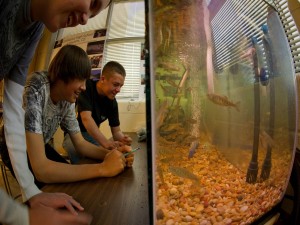
Seven Colorado schools are taking part in Trout Unlimited's Trout in the Classroom program this year. While raising trout from eggs to fingerlings in a tank right in their classroom, students learn about water quality monitoring, stream habitat and water resources. TIC also provides lesson plans and web-based resources for teachers.

It's a great experience for students, as the following letter from a Thompson Valley High School student clearly shows.

Trout in the Classroom - By “JC”

Various questions I get throughout the day are, “Hey, How are the fish doing”, or “Are all of these fish still okay?”

This has been a product of Mr. Hewson teaching students about the life-cycle of the trout as well as the chemical balance in the tank. Most kids aren’t really interested from a chemical standpoint but that plays a big part. That’s where I come in, so the fish can survive and stay healthy. I do a 5-15 gallon water-change daily to make sure the nitrites and ammonium don’t build up in the tank and kill the fish.

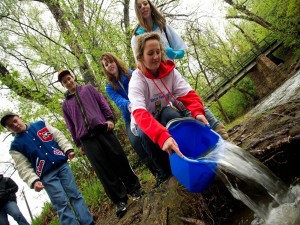
I need to do what I do so that, come next spring, we can transport our fish to the Big Thompson River happy and healthy. But last year, for fear of the fish not being big enough to survive against the river’s larger and more aggressive brown trout, we decided to hold them at a nearby water-treatment plant where they have two 55-gallon tanks with a constant flow of Big Thompson River water moving through them. So the fish get an extra year to grow and learn to eat river insects before having to make it on their own in a harsh river.

I have learned that, yes, we are doing it to help restock the “Big T” with rainbow trout and, yes, to help Mr. Hewson teach. But kids have lots of interests and they just need to find the right one; if the option isn’t there how can they figure that out by themselves?

When kids walk in to Mr. Hewson’s room, sometimes they stop at the door to talk to me about how the fish are doing, or just sit there and watch them swim around. It’s a great feeling for me to actually help them get interested in the fish. It helps me carry on in doing my work so that they can enjoy the fish being healthy and the water is as clean as I can get it. Sometimes they’ll see me changing the water and ask, ”Why are you doing all this?” and I’ll respond, “So we can learn about fish and chemical cycles.”  And before you know it they are taking a mini-lesson from me, and Mr. Hewson, if he’s there.

By the end of this year, our fish will be more than fifteen inches long. We plan to release them into the tanks at the water plant right after we release last year’s fish into the Big Thompson.

Visit the ColoradoTU Trout in the Classroom page.

Learn more about National Trout Unlimited's Trout in the Classroom program.

LAFF is for Ladies

Ladies About Fly Fishing (LAFF) is (july 21) workshop for women to learn from Paula Fothergill, a renowned guide and teacher for Casting for Recovery who has also served as president of the Ferdinand Hayden Chapter in the Roaring Fork Valley. The LAFF workshop is sponsored by Purgatoire River Anglers and will be held Saturday, July 21, 2010, from  8am – 4pm at Monument Lake Resort in Weston CO. (Monument Lake is about an hour west of Trinidad CO). Download a workshop flyer.

In addition to Purgatoire River Anglers volunteers, Paula will be assisted by Ken Neubecker, immediate past president of Colorado TU and Executive Director of the Western Rivers Institute, who will provide instruction in entomology.

Workshop Agenda 8:00 – 9:00 Registration, continental breakfast and introductions 9:00 – 12:00 Basic fly fishing, knot tying, entomology, wading safety 12:00 – 1:00 Lunch 1:00 to 4:00 Fly casting instruction

The registration deadline is June 15th, but class size is limited so register soon!

To register, contact: Joanie Muzzulin ( jmuzzulin@gmail.com) 719-846-7307

Fly fishing equipment will be provided, but please bring:

  • A Colorado fishing license (required)
  • Your own fly rod if you have one "ready to go"
  • Polarized sunglasses
  • Insect repellent & sunscreen
  • Hat
  • Bandana
  • Layered clothing for varying temperatures

(Make check payable to: Purgatoire River Anglers)

To arrange for a carpool from Trinidad, leaving at 7 a.m,, contact Sara Ferguson at 719-859-0814.