U. bioengineer unravels how caddisfly silk remains sticky when wet

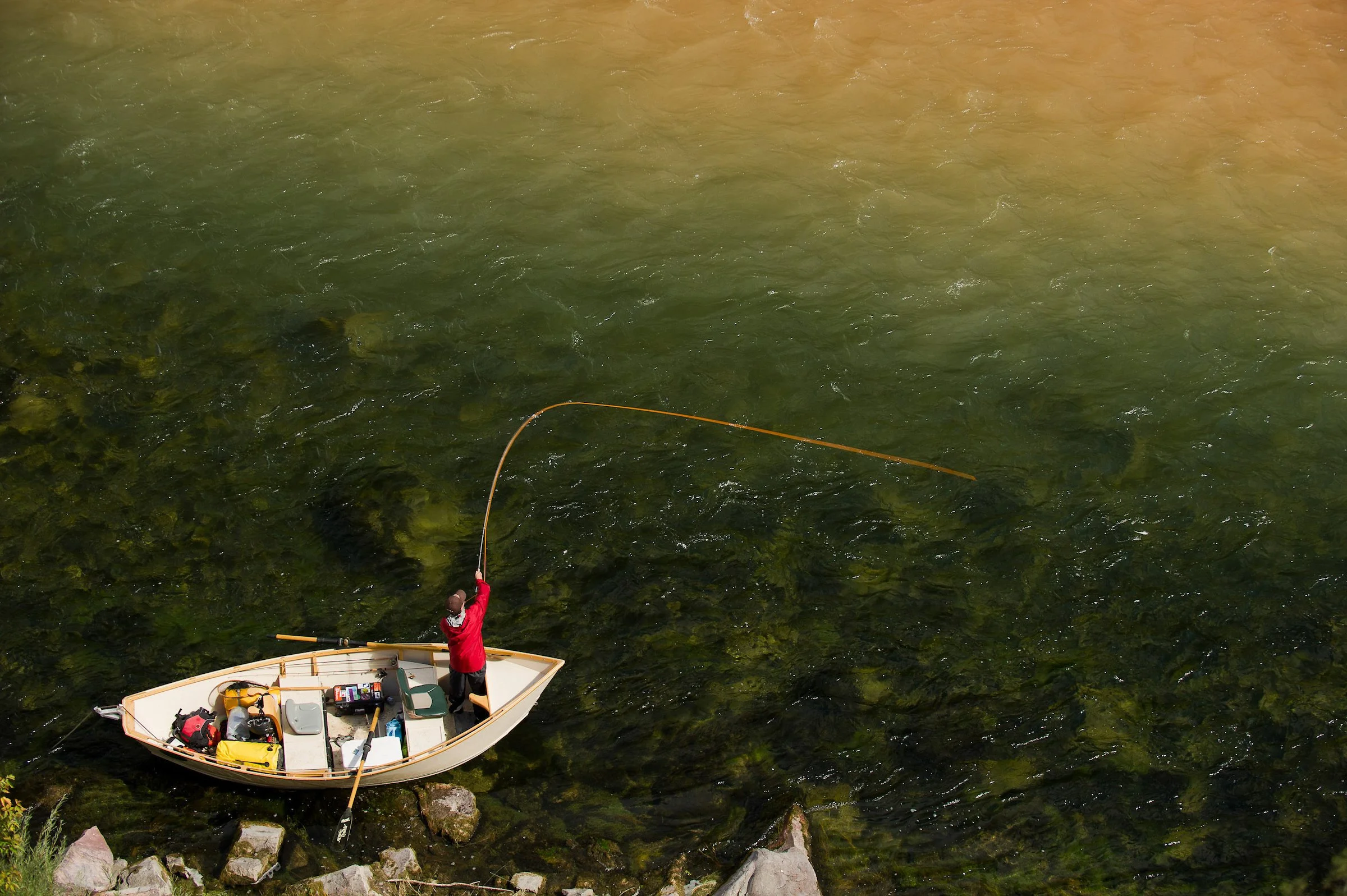
Courtesy - Salt Lake Tribune A new University of Utah study has pinpointed why the silk spun by caddis fly larvae remains sticky underwater, raising the possibility that one of nature's most remarkable adhesives could someday be replicated for surgical use. Western fly fishermen, who look for caddis fly hatches in their quest for hungry trout, call these round, silk-covered larvae "rock rollers."

The insects begin life in streams, using larval silk to build protective cocoons, and U. bioengineer Russell Stewart is exploring potential applications of this material and other natural adhesives in medical contexts.

"I picture it as sort of a wet Band-Aid, maybe used internally in surgery, like using a piece of tape to close an incision as opposed to sutures," said Stewart, an associate professor of bioengineering, in a news statement. "Gluing things together underwater is not easy. Have you ever tried to put a Band-Aid on in the shower? This insect has been doing this for 150 million to 200 million years."

Stewart's study, funded by the National Science Foundation, will be published this week in Biomacromolecules , a journal of the American Chemical Society.

"The caddis flies' successful penetration into diverse aquatic habitats is largely due to the inventive use by their larva of underwater silk to build elaborate structures for protection and food gathering," the study reports.

Stewart and his co-author, Ching Shuen Wang, began their study in trout streams, examining Brachycentrus echo , one of thousands of caddis fly species, which belong to an order related to butterflies and moths.

"There's just a fascinating diversity of these insects. Their adhesive is able to bond to a wide range of surfaces underwater: soft and hard, organic and inorganic," Stewart said. "If we could copy this adhesive, it would be useful on a wide range of tissue types."

The team gathered larvae from the Provo River and kept them alive in lab aquariums lined with glass beads instead of sand. The researchers harvested silk fibers from these beads for chemical analysis. They discovered the silk was made of large proteins known as fibroin with a heavy loads of phosphates, which are used in dentures and water-soluble latex paints to promote adhesion.

bmaffly@sltrib.com

Pitkin County looks to beef up oil and gas regulations

Janet UrquhartAspen correspondent [Glenwood Springs] Post Independent

Most notably, say county officials, the proposed new regulations would strengthen the water-quality standards and monitoring requirements that would be applied to oil and gas operations. The application process would also become more detailed and demanding. Read more

Parker reservoir ready for water

The Denver Post Parker Water & Sanitation District officials announced that construction of the Rueter-Hess Reservoir — which is 180 feet deep and spans 1,400 acres — has reached a stage where water can be received.

http://www.denverpost.com/headlines/ci_14481144

Denver Angling Society Luncheon

Featured Speaker Kerry CaragharMarch 4th @ the Denver Athletic Club

Join fellow anglers and downtown Denver professionals for "Fishing Within an Hour of Denver." Kerry Caraghar, Fishing Manager at Orvis Cherry Creek, will share some of the best fly fishing day-trips within an hour of the Denver metro area.

$25 includes lunch and keynote presentation. Space is limited, but please forward this announcement to colleagues and friends! RSVP by clicking here or contact Erica Stock estock@tu.org (303) 440-2937.

Denver Angling Society Luncheons are hosted by Colorado Trout Unlimited and occur on the first Thursday of every month from 12-1pm at the Denver Athletic Club.  Visit www.cotrout.org for more information regarding future speakers and events.

And don't forget to also JOIN US NEXT MONTH on April 8th for "Great Colorado Hatches," a riveting presentation by Bill Dvorak of Dvorak Expeditions.  Bill will speak about two of Colorado's most legendary hatches: the Arkansas Caddis hatch and the Gunnison Salmonfly hatch.

Travelers Notebook: Time really flies at fishing camp

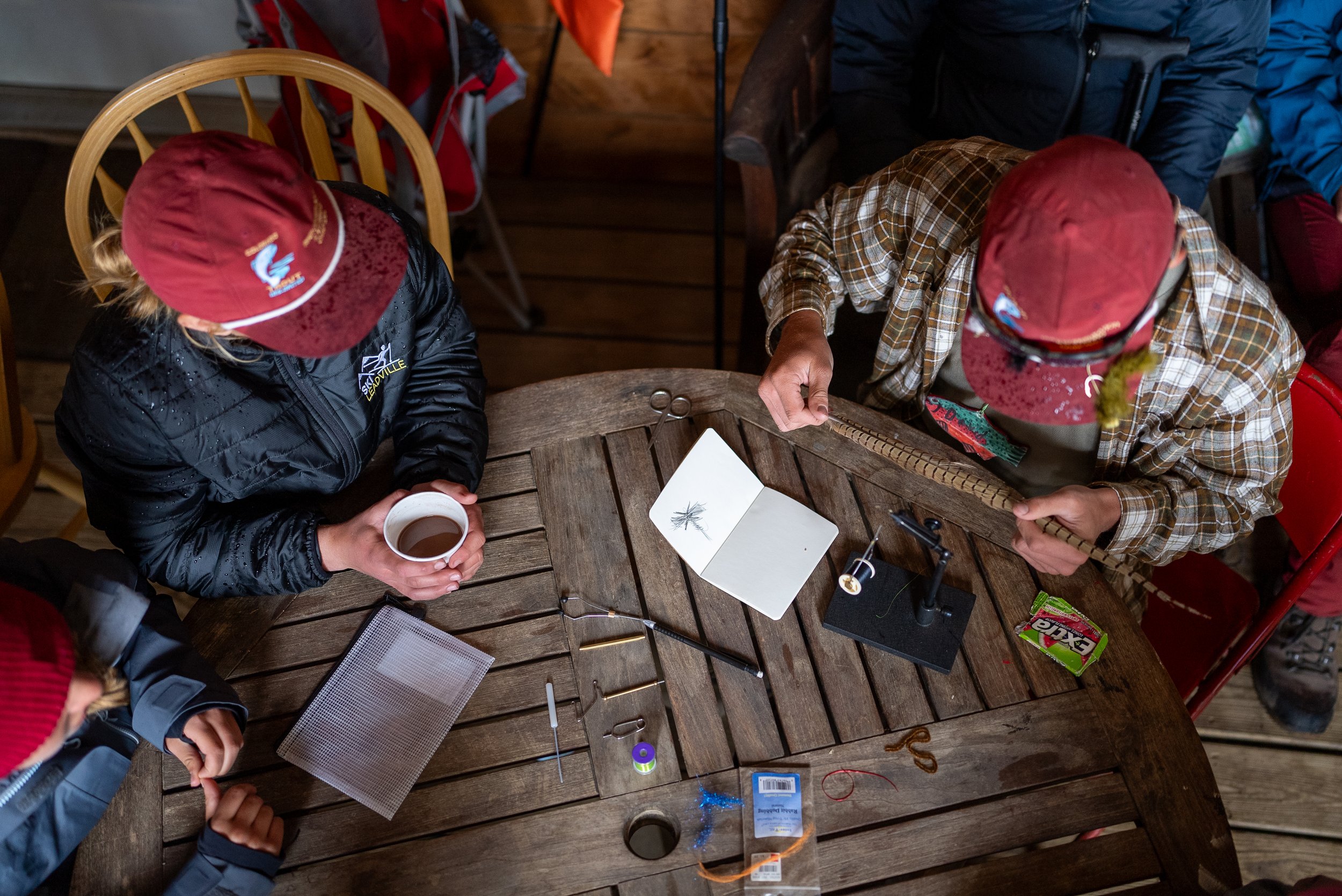
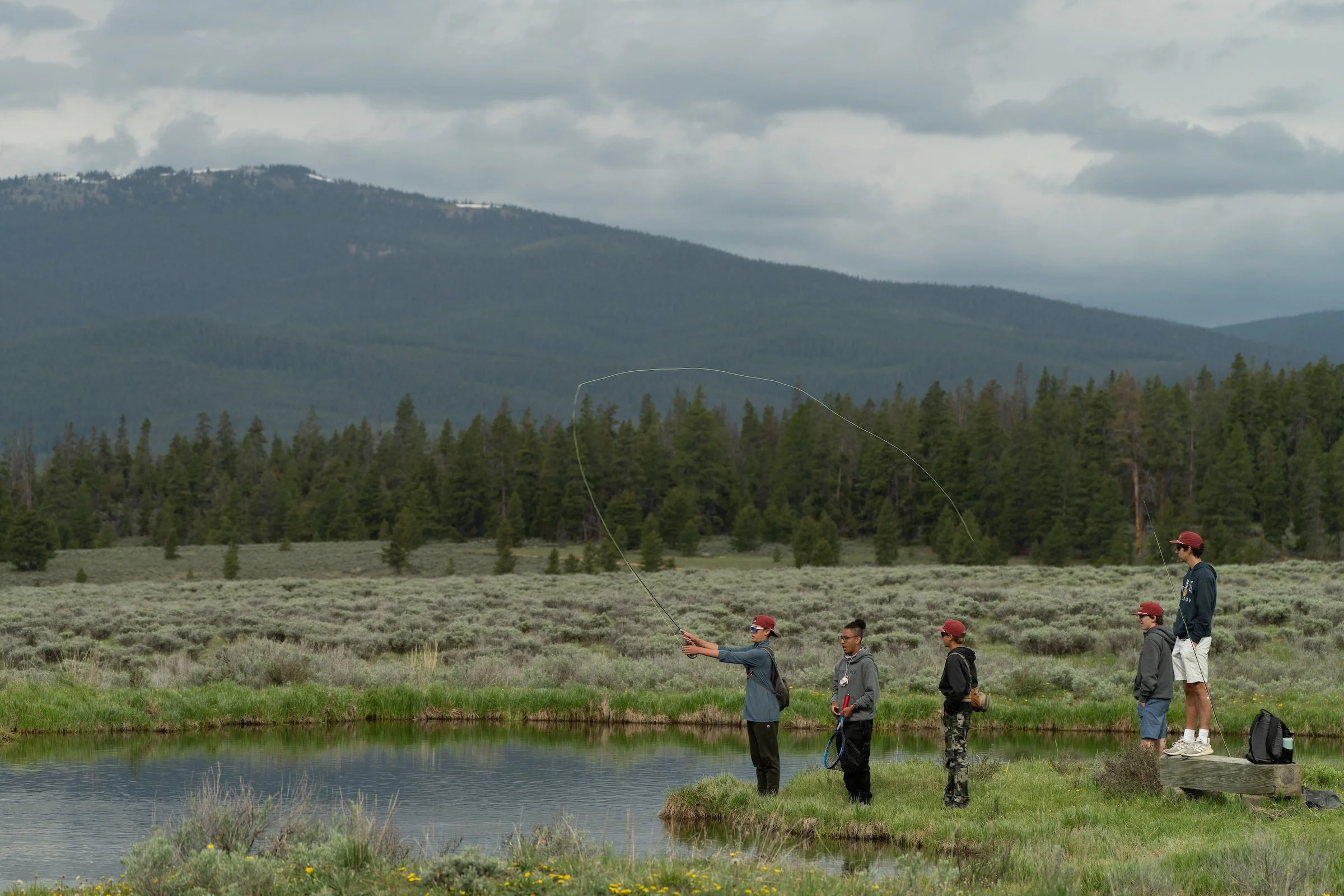
"Sweet", "incredible," "awesome," "the most fun I've ever had" all come to mind when I think of my time at the Colorado Trout Unlimited River Conservation and Fly Fishing Youth Camp. The TU camp has been held in summer annually at a private ranch near Basalt for several years. If every one who attends in coming years has as much fun as I did, it will be around for decades to come. The camp's main focus is to teach coming generations about the importance of conservation through many really fun activities, not the least of which is fly fishing.

http://www.coloradoan.com/article/20100221/ENTERTAINMENT06/2210307

‘Islands of moisture’

Groups work to restore wildlife protection in wetlands The groups support federal legislation, S.787, which was introduced last year to clarify the Corps role in enforcing the Clean Water Act, said Jim Murphy of the National Wildlife Federation.

The bill, as introduced, would give the Corps permit authority over habitats like those of concern to the wildlife groups.

“The legislation would get regulation back to where it was,” said Steve Moyer of Trout Unlimited.

http://www.chieftain.com/articles/2010/02/10/news/local/doc4b724b9c061a8133501943.txt

Colorado Trout Unlimited Launches Raffle for Buddy Trip of a Lifetime!

Drawing on June 30, 2010. Trip dates are Sat. Sept. 18 - Tues. Sept. 21, 2010. Ticket price is $20. Raffle Winner and Each of Three Guests Receive:

  • Flights to Denver International Airport (continental U.S. only)
  • $1,000 shopping spree to Charlie's FlyBox (American Angler's 2009 Retailer of the Year)
  • Private flight to Wyoming Guest Ranch
  • 4 days premier fishing with a personal guide
  • 3 nights lodging and all the amenities at the ranch
  • Gourmet meals and hospitality beyond compare
  • Commemorative Memory Book and DVD

For more information about the raffle or to purchase a ticket, visit www.cyoraffles.com.

Stream Update From St Vrain Anglers

The St vrain Anglers TU Stream Committee recently met with Boulder County Open Space officials to check in on the status of three Rubicon gates that are being installed on major ditches along the St. Vrain river drainage. Rubicon gates are designed to insure that water, purchased by the cities of Longmont and Lyons to maintain minimum flows in the St. Vrain river, actually flows down the main river channel. A scientific evaluation of the St. Vrain river done by our TU chapter in 2005 to 2006 found that sections of the river were going dry during the winter months due to major ditches diverting the entire river flow. In conjunction with the St. Vrain Corridor Committee, three Rubicon gates were purchased to insure that minimum flows in the river channel were maintained.

We are pleased to announce that one of the rubicon gates is fully operational on the Oligarchy Ditch and the remaining two are partially installed on the Palmerton and Highland Ditches. The ditches should be fully operational by late Spring if all goes well. Maintaining consistent flows in the St. Vrain river is the first step in strengthening the health of the river and the fish and animal life that depend upon the St. Vrain.