Wyoming trying to satisfy EPA’s coalbed methane concerns

DUSTIN BLEIZEFFER Casper Star-Tribune | Posted: Thursday, December 3, 2009

The EPA recently put a hold on a handful of water discharge permit applications with the Wyoming Department of Environmental Quality.

In a series of recent letters, the EPA has noted that Wyoming regulators appear to be using a permit scheme that does not meet Wyoming’s own water quality standard intended to protect agricultural uses. That criticism follows a September report by two New Mexico scientists also indicating that Wyoming’s water discharge permit scheme is based on flawed science. Read more

WATER DIVERSIONS: Colorado moves mountains to bring water to Front Range

The Pueblo Chieftain - Chris Woodka

Likewise, the Fryingpan-Arkansas Project is shifting toward more municipal use. In the first 30 years of diversions, beginning in the early 1970s, nearly three-fourths of the water was used on farms. Now, as cities realize more need, more than half is being allocated for municipal use, as required by a water court decree. Twin Lakes, the first large-scale diversion through a tunnel under the Rockies, was built by farmers in the early 1930s to provide ample water for crops in Crowley County. The tunnel and shares in the lakes were sold to municipal interests, and the lakes were enlarged as part of the Fry-Ark Project in the 1970s.  Read the article

There's a water war on the Colorado-Wyoming border, and Aaron Million is quick on the draw

From Westword - By Joel Warner - Published on November 24, 2009

In 1874, two farming coalitions came together in a schoolhouse in the town of Eaton to hash out control of the Cache la Poudre River. Tempers flared, and one farmer called out, "Every man to his tent, to his rifle and to his cartridges!"

Now, 135 years later, the region's precious water supplies continue to bring people together and drive them apart. And there's still the threat of violence.

Read more

Trout provide hands-on lessons at Thompson Valley High School

By Carl McCutchen • Loveland Connection Anyone walking into Tom Hewson’s chemistry class at Thompson Valley High School might disregard the 55-gallon fish tank near the doorway as home for a class pet, but for most of the students at TVHS, it’s far more than that.

The fish tank, currently full of about 85 infant rainbow trout, is an experiment, a project and a learning tool.

“We raise trout from eggs to small fingerlings to then be stocked in a local watershed,” Hewson said.

 The project, which Hewson said wouldn’t be done until later this year, started when he received a phone call from officials with the Denver chapter of Trout Unlimited last spring.

http://www.coloradoan.com/article/20091221/LOVELAND02/91221002

Williams looks to help repair Clear Creek

By Charlie Meyers - The Denver Post -From Oct 20 2009

.... First, as a board member of West Denver Trout Unlimited, he [Miles Williams] served as director of the heralded Golden Mile project that breathed a $250,000 revival into the creek just upstream from the town of Golden. Work was completed last year....

River, Fooses Creek receive restoration

By Audrey Gilpin - Salida Mountain Mail Oct. 20 2009 (Better late than never! ed.)

Collegiate Peaks Anglers and Cheyenne Mountain chapters of Trout Unlimited donated $5,000, Xcel Energy contributed $50,000 and the Colorado Division of Wildlife made in-kind donations to the project.

"Trout Unlimited really came to the rescue," Gaines said.

Read more

A water solution that bridges Divide

Denver Post Guest Commentary - by Drew Peternell - director of Trout Unlimited's Colorado Water Project in Boulder. 12/20/2009 Re: "Dividing line over diverting water," Dec. 9 news story.

The Denver Post story casts Denver Water's proposed Moffat Tunnel project as yet another divisive standoff between conservation interests and water developers.

It's true that many conservation groups oppose Denver's Moffat project as it is currently envisioned — and for good reason. Denver already takes 65 percent of the natural flow of the Fraser River. Under the Moffat proposal, Denver would take another 20 percent of the Fraser's water, and several tributaries would be sucked dry. The Moffat project could, in short, drive the Fraser to the brink of collapse.

It's also true, however, that the Moffat project offers an opportunity for Denver to embrace a balanced water solution, one that meets the needs of Denver's citizens while preserving rivers and communities on Colorado's Western Slope.

Trout Unlimited, a sportsmen's group committed to preserving Colorado's rivers and fisheries, can accept a Moffat project if Denver agrees to responsible measures to protect western Colorado. That means, at a minimum, guaranteeing healthy year-round stream flows in the Fraser, Williams Fork and upper Colorado Rivers.

That also means improving Denver's track record on water conservation. Denver has implemented some meaningful conservation measures, but there is much more it can do — such as offering incentives for households to replace water-thirsty turf with drought-tolerant landscaping.

The projections Denver uses to justify Moffat are based on unconstrained use — that is, no watering restrictions even during severe drought. Denver residents clearly are prepared to do more. In a 2005 survey, 73 percent of Denver's citizens agreed they should conserve water to reduce impacts on mountain regions of the state.

What's at issue in the Moffat plan is our willingness on the Front Range to accept a modest tradeoff to preserve Colorado's magnificent outdoor resources. With smart resource management, we have enough water to sustain both our home places and our wild places — we don't need to choose between the two. If it respects diverse needs, Denver Water can find pragmatic water supply solutions that work for everyone, on both sides of the Divide.

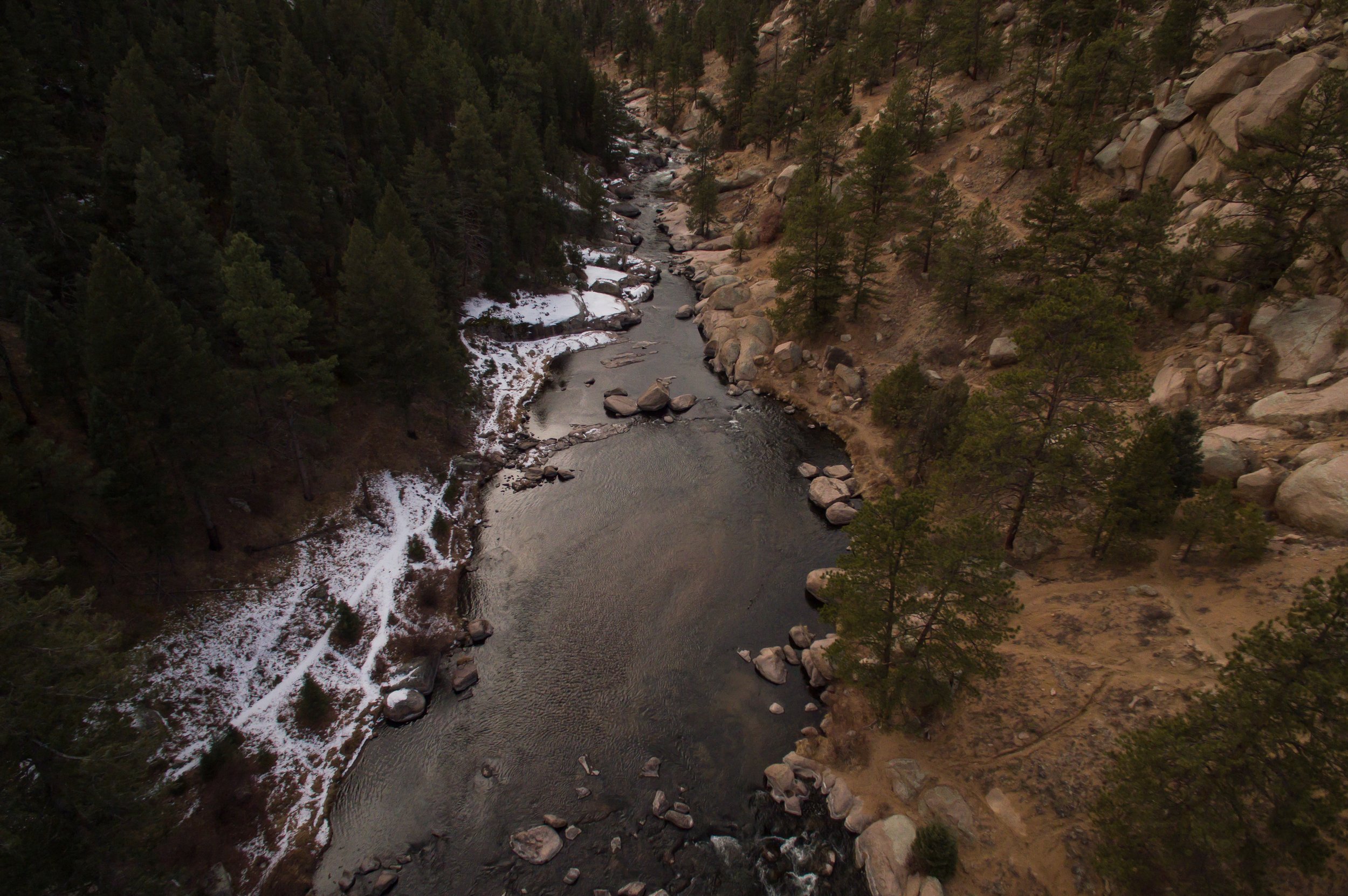
Winter fly-fishing? Try below the Pueblo Dam

Environmentalists oppose Denver project to divert more water from Western Slope

By Bruce Finley The Denver Post

Denver has not managed to push through a project on this scale since construction of Dillon Reservoir in 1963. The Environmental Protection Agency's 1990 veto of Denver's proposed $1 billion Two Forks Dam still looms in water-authority boardrooms. That project, backed by developers and opposed by environmentalists, also was aimed at preventing shortages.

The $225 million cost is already covered by a recently approved rate hike for Denver Water customers, which will raise typical water bills by about $40 a year.

Denver already owns rights to the water it would divert from the upper Colorado River basin — from the Blue River in Summit County and from the Fraser and Williams Fork rivers and dozens of streams in Grand County.

But Trout Unlimited sportsmen's advocates said that stream flows there already are dangerously low, threatening aquatic life, with algae increasing and once-clear Grand Lake turning cloudy. Boulder-area residents warned of harm to wildlife and lifestyle disruptions during construction to raise the dam and clear trees in expanding Gross Reservoir.

http://www.denverpost.com/ci_13956553

Colorado & Western Water Project Notes

December 2009 We attended a national staff communications meeting in Santa Fe, NM, and brainstormed with the group on a range of communications issues, including how to better coordinate messaging themes across programs, how to make better use of video and social media, and new ideas for the Web site and Trout magazine.

TU staff continues to provide environmental perspective on several large cooperative endeavors including the Halligan Seaman Shared Vision Plan and the Colorado River Wild and Scenic Management Plan Alternative. TU  is also continuing to evaluate and/or monitor the progress of several Environmental Impact Statements for various water development projects around the state such as the Windy Gap Firming, Denver Moffat Expansion, and Northern Integrated Supply Project. The deadline for submitting comments on Denver’s Moffat Expansion is currently set for the end of January 2010.

TU staff continues to work with state and local governments, water providers and other environmental groups to draft an Upper Colorado River Wild and Scenic Management Plan Alternative (MPA). Most recently, the east slope and west slope water users have been trying to finalize a concept for protecting the outstandingly remarkable recreational fishing and floatboating opportunities.

We have been working with several other conservation groups and a contractor on an analysis of the gap between water supply and demand on Colorado’s Front Range. We submitted two letters to the state – one on future water demands and the other on tools for meeting that demand.

TU staff and local chapter members are working within the Chatfield Reservoir Reallocation process to negotiate winter baseflows in the South Platte River below Chatfield Reservoir.

We have had several discussions with other conservation groups, the Yampa Valley Agricultural Alliance and faculty of Colorado State University about designing a study of opportunities for making irrigation water available for stream flows without requiring the complete dry-up of irrigated lands.

TU and the Forest Service completed a number of culvert removal projects in Colorado River cutthroat trout habitat in the South Fork Slater Creek basin. We will be removing a number of additional barriers in cutthroat habitat in the Elkhead Creek drainage next summer. We recently submitted a pre-proposal for an exclusionary fencing project to benefit cutthroat on the South Fork Little Snake River.