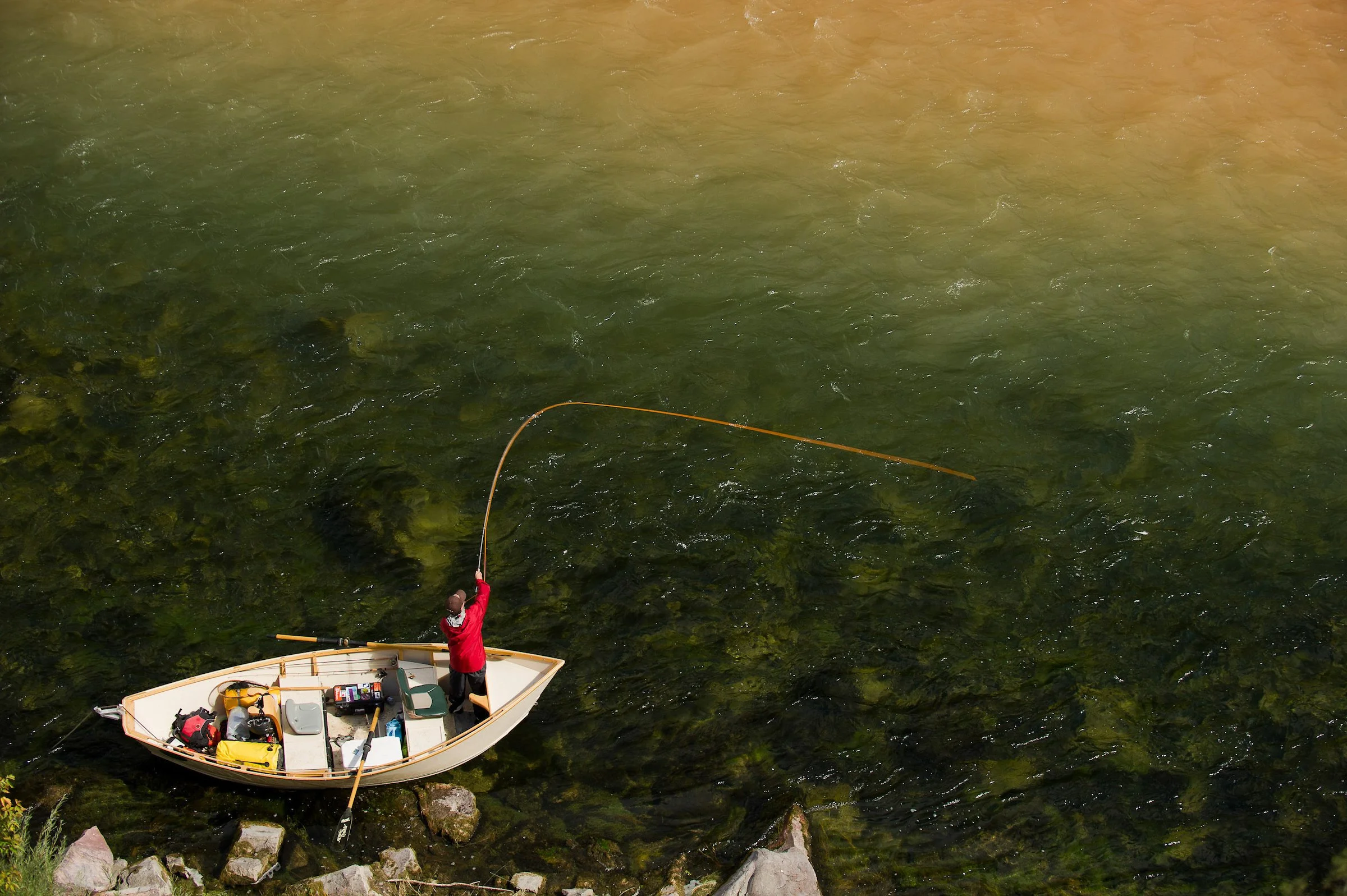
Trout habitat now on the line

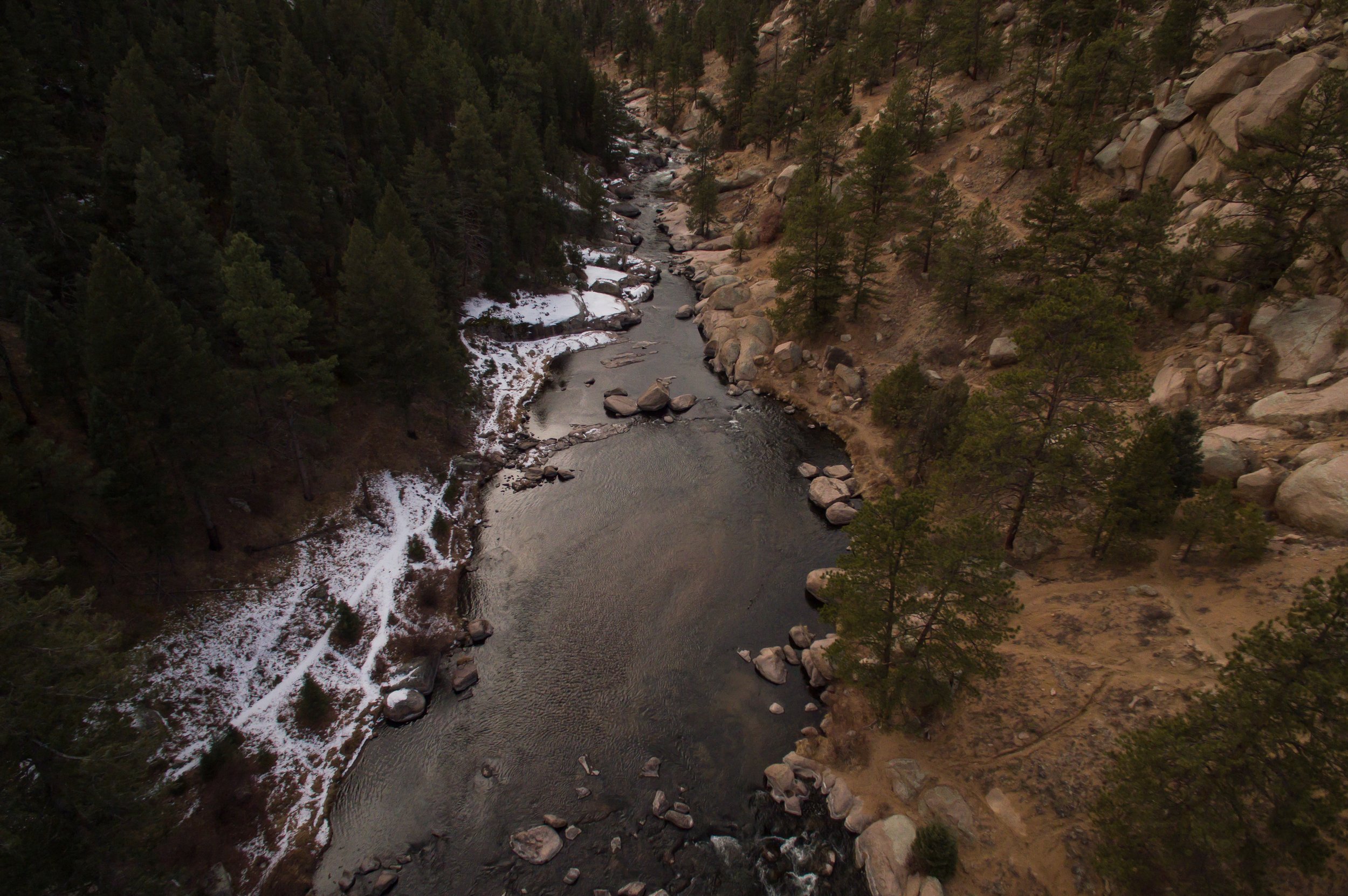
BY BOBBY MAGILL The new plan requires a compromise: Keep La Poudre Pass Creek dry during the winter, but restore more than 43 miles of trout habitat in the Poudre River Watershed, mostly in Rocky Mountain National Park.

"It's something scientists have been pushing for, for a long time," said David Nickum, director of Colorado Trout Unlimited. "The chance to try to put that science in action and do what would be the largest native cutthroat trout restoration project ever in Colorado - we're excited about that prospect."

http://www.coloradoan.com/article/20091207/NEWS01/912070310/1002/CUSTOMERSERVICE02/Trout-habitat-now-on-the-line

Moffat Public Hearings Begin

By David Nickum - Colorado Trout Unlimited Executive Director Around 80 concerned citizens gathered at the Boulder Country Club last night (Dec. 1) for the first of the Army Corps of Engineers public hearings on the proposed Moffat Firming Project / Gross Reservoir enlargement.  The attendees included a mix of conservation-minded citizens with general concern, residents from the vicinity of Gross Reservoir, a mix of west slope residents & second-home owners, and a few local government officials.  About 1/4 of those in attendance spoke during the hearing.

Grand County Commissioner James Newberry led off the evening by expressing concern over cumulative impacts from past and proposed projects, which collectively could divert about 72% of the Colorado River's headwaters above Windy Gap.  He referenced their ongoing efforts to develop a mitigation plan with Denver and others, and urged the Corps to recognize that plan.

Bob Crifasi from City of Boulder Open Space and Mountain Parks described their work with Denver and Lafayette in developing an "environmental pool" proposal for Gross Reservoir - a measure to provide 5,000 acre-feet of storage to Boulder and Lafayette to be used with flow management efforts to assure minimum winter flows in South Boulder Creek.  TU's Larry Quilling and David Nickum also voiced support for this concept, while noting the need to include safeguards so that the environmental pool does not lead to any additional depletions of west-slope water.  TU also supported Commissioner Newberry's call for meaningful mitigation to address cumulative impacts to the Colorado headwaters.  This theme was further reinforced by a number of west-slope residents and Front Range residents with second-homes or other interest in the Upper Colorado watershed.

Representatives and residents of Grand Lake expressed concern over water quality impacts associated with Colorado-Big Thompson and Windy Gap project pumping of more nutrient-rich waters into Grand Lake; by reducing dilution flows in the Fraser that would normally flow into Windy Gap, they fear that the Moffat project will worsen this problem.

There were numerous calls for more aggressive conservation efforts by Denver and its customers - recognizing that Denver has some good conservation programs in place, but could do much more (particularly in terms of outdoor water use).  As one citizen, Derek Turner put it, Denver is certainly a state leader with water conservation but they should be a national leader.

Turner also noted that the EIS indicates that Denver will completely divert 100% of the flow from eight different streams in Grand County, and called for at least SOME protection of those resources.

Numerous residents of the Magnolia and Coal Creek Canyon areas - which would be impacted by the proposed multi-year constructon of the enlarged dam for Gross Reservoir - raised concerns about effects on the community, including heavy construction traffic on small rural roads, noise, and development of numerous quarries.

Several individuals highlighted the need to look beyond large engineering solutions for water supply and to instead look at options for conservation and water marketing opportunities including further leases of agricultural water.  One witness emphasized that the rationale for the project was not based on basic water supply needs, but rather was based on the reliability standard - in other words, how severe of a drought should supplies provide for without the need for customers to go under restrictions (such as those that were used in the 2002 drought)?  He noted that Denver planned to have far more water (and rarer need for restrictions) than did the City of Boulder, and suggested that the entire project supply might be unnecessary if Denver simply adjusted its planning expectations on this point.

The evening included an exclamation point from physicist Michael Thomason who noted the presence of Gross Reservoir along one of only two major wildlife migration corridors in Boulder County from the subalpine to the plains - suggesting that, given its role in blocking historic wildlife migrations, the question should be how to remove Gross Reservoir rather than how to enlarge it.

Overall, the evening included a wide range of concerns expressed by citizens coming from a variety of different perspectives.  There were no major supporters/champions for the project who spoke during the public hearing.

Meyers: No easy solution for fish kill

By Charlie MeyersThe Denver Post

Help may be on the way in a Denver Water plan to boost West Slope diversion through the Moffat Tunnel, boosting storage in Gross Reservoir. A companion arrangement would allow the water suppliers for the cities of Boulder and Lafayette to utilize storage in the reservoir.

The potential to use this to enhance winter flows has caught the attention of Trout Unlimited, which long has sought a solution to the South Boulder Creek puzzle.

"If we can use this increased storage to boost flows in the creek," this would be something we could support," said Drew Peternell, director of TU's Western Water Project.

But Peternell's concern also extends to a larger matter, which is a Denver Water push to acquire more water from the upper Fraser River basin, then deliver it through the Continental Divide via its Moffat Tunnel complex.

http://www.denverpost.com/sports/ci_13904847

Trout Unlimited revives Vail Valley chapter

Scott N. Millersmiller@vaildaily.com Vail, CO Colorado

VAIL VALLEY, Colorado — Rivers may look alike on maps, but the people who fish those Vail Valley streams know better. That's one reason the Eagle Valley has its own Trout Unlimited chapter again.

Trout Unlimited, an organization dedicated to preserving and protecting coldwater fisheries around the county, has had a presence in Eagle County almost since its founding 50 years ago. In fact, the local chapter was among the first 10 created in the country.

Public input sought on Gross Reservoir expansion

By Laura Snider Camera Staff Writer Denver Water plans to make up almost half of its projected water shortfall in 2030 with water conservation methods, which is laudable, according to Drew Peternell, director of Trout Unlimited's Colorado Water Project.

"I think Denver deserves credit for good conservation," he said. "But more can be done."

Peternell said Denver Water should look at other ways to meet its growing demand -- including more water-reuse projects and agriculture water-sharing arrangements -- before sucking more water out of tributaries to the Colorado Rivers, including the Fraser.

"The Fraser River is the river in Colorado that is the most heavily depleted," Peternell said. "It's just really beat up."

http://www.dailycamera.com/boulder-county-news/ci_13885451

Citizens urged to weigh in on Denver proposal to divert more water from Fraser River

By Tonya BinaSky-Hi Daily News Grand County, CO Colorado

“Multiple water diversions have pushed the Fraser River to the brink of collapse,” said Kirk Klancke, president of the Colorado Headwaters Chapter of Trout Unlimited.

TU, the Colorado Environmental Coalition and a broad group of conservation organizations warn that a proposal to divert more water from the Fraser, a tributary to the Colorado River, poses a serious risk to the ecological health of the river system.

Denver Water looks for more mountain water

By Bob Berwynsummit daily news

“Front Range residents must recognize the connection between our water use and the health of our rivers and streams, fisheries and wildlife habitat,” said Colorado Trout Unlimited director Dave Nickum. “We can't continue to take and take from these rivers without accounting for our impacts. The glass is not even half full. It's almost drained dry.”

http://www.summitdaily.com/article/20091128/NEWS/911279987/1078&ParentProfile=1055

Study shows possible coalbed methane effects

Craig Daily Press - By Collin Smith

An ongoing study into the possible effects of coalbed methane production in the Sand Wash Basin now shows the area has deep faults potentially connecting coal seams and near-surface water reservoirs.

This would mean activity in those coal seams could affect water resources used by local residents. Read more

McInnis, Maes promise an oil and gas rig in every pot if elected governor

The Colorado Independent - by By David O. Williams

The two remaining GOP gubernatorial candidates won’t even wait to see how new, environmentally tougher oil and gas drilling regulations work during an actual gas boom, according to the Grand Junction Daily Sentinel, instead promising to yank the regs as quickly as possible if elected.

Why bother to Read more ?

Oil and gas industry slams Salazar for yanking drilling leases near Utah parks

the Colorado Independent - by By David O. Williams 11/20/09 3:31 PM

Salazar, who outright pulled eight of the leases near critical national parks like Arches and Canyonlands and deferred 52 others for more study, said they were sold at the direction of Bush administration officials trying to push them through on their way out the White House doors. Read more