Western & Colorado Water Project Staff Notes

February 2008  We gave two more presentations on the bog of Clean Water Act jurisdiction, and while it's clear that everyone thinks the system is a mess, we do not all agree on what the fixes are, which is one reason that the Clean Water Restoration Act is not moving in the House. The courts, meanwhile, have not been uniform in their rulings, but have ruled in a way that would harm the environment in only a very few cases (most recently in the 11th Circuit regarding Avondale Creek, but early on in one case in the 9th Circuit, which has otherwise done a pretty good job). 

TU and the other parties to the Colorado water court proceedings to quantify the Black Canyon reserved water right are engaged in mediation. The court has stayed proceedings until April to allow negotiations to continue. 

TU and others from the conservation community have helped to draft a bill that would that would more closely tie land use development (growth) to sustainable water supplies. 

The water court judge in the Dry Gulch remand has ordered the parties to submit briefs outlining positions on how the case should be decided. 

We have been preparing written testimony on Bear Creek, a semi-urban trout stream in the transition of the South Platte that is going to be removed from the 303(d) list. This stream is particularly prized by the local chapter of TU who have done extensive restoration work on the stream. Our testimony focuses on the need for continued vigilance on the part of the state, especially given that the improvements that have been observed in the fishery since the stream was originally listed have been short-lived. 

We are evaluating available information on the Windy Gap Firming process in anticipation of the upcoming draft EIS. 

We will be advocating for three bills to strengthen the instream flow program in the 2008 legislative session. The press release for the bills can be found at: http://www.cotrout.org/News/MediaRoom/TULegislativeAgenda/tabid/249/Default.aspx 

We are working on sheepherding last year’s Instream Flow (ISF) proposals through the Colorado Water Conservation Board (CWCB) and preparing to bring 5 more streams forward in conjunction with the Colorado Department of Wildlife at the CWCB’s February ISF workshop.

Carbondale man named to new state forest panel

 http://www.postindependent.com/article/20080213/VALLEYNEWS/98654861 Staff Report Glenwood Springs, CO Colorado February 13, 2008 CARBONDALE — Colorado Gov. Bill Ritter named Ken Neubecker, a Carbondale resident and vice president of Colorado Trout Unlimited, to a newly created state group called the Colorado Forest Health Advisory Council.

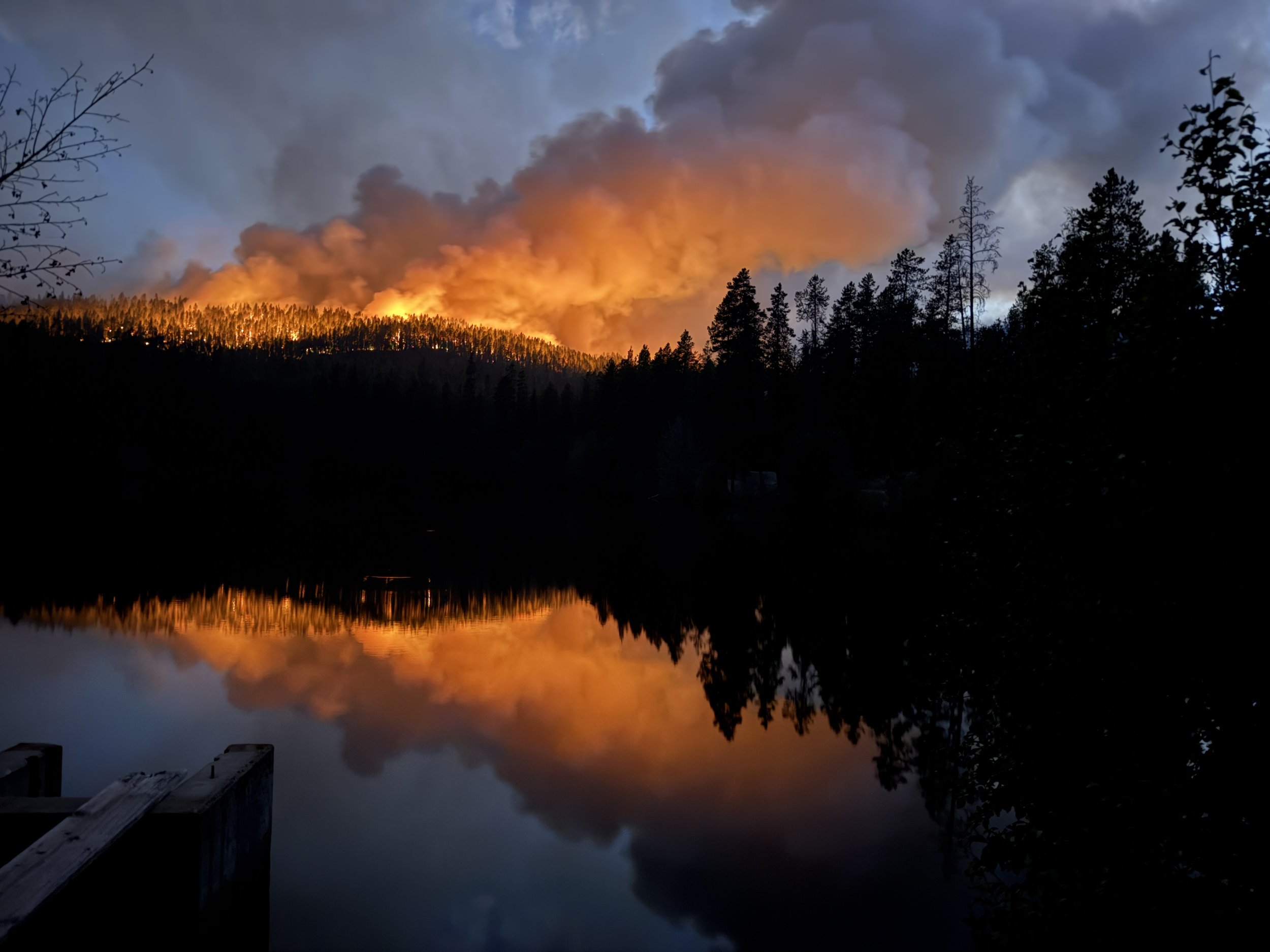
The multi-agency group will help “coordinate and lead efforts to address the mountain pine beetle epidemic” and other threats to forest lands in Colorado, according to a statement from the governor’s office.

“Colorado’s forests are vital to our environment, to our communities, to our economy and to our overall quality of life,” Ritter said in a prepared statement. “But our forests are at risk, and one of the biggest risks is the mountain pine beetle. This epidemic has decimated more than 1.5 million acres of mature lodge-pole pines over the past decade and could wipe them out in another three to five years.”

The council will develop a short-term action plan and will address many issues, including the implementation of priorities identified in community wildfire protection plans, methods to encourage establishment of forest improvement districts, and implementation of landscape-scale stewardship projects. The council will also establish long-term strategies for sustainable forest health that will address a “state-wide vision to protect communities from fire and restore forest health,” according to the governor’s statement.

The council will report back to the governor and the legislature annually. If recommendations require legislative action, those recommendations will be submitted by Oct. 1 prior to the January start of the legislative session, according to the statement.

Harris Sherman, executive director of the Colorado Department of Natural Resources, and Jeff Jahnke, state forester and director of the Colorado State Forest Service, will co-chair the council.

Well Pits Draw Citations

 State and Federal officials have issued 80 citations to oil and gas companies for oil coated waste water pits that spell doom for wildlife. Article by Todd Hartmann of the Rocky Mountain News

http://www.rockymountainnews.com/news/2008/feb/11/well-pits-draw-citations/

League of Women Voters Takes on Water

From the Fort Collins Coloradoan (Monday - 2/11) On Monday, LWV of Larimer County is presenting AWARE Colorado, a statewide program to educate local communities about the impacts of land-use choices on water quality. The program provides information to help protect Colorado's water and natural resources from polluted runoff through innovative land-use strategies.

Residents can learn about what they and local decision-makers can do to protect water quality and prevent pollution. The free meeting is scheduled 7 to 9 p.m. at Plymouth Congregational Church, 916 W. Prospect Road.

The Monday program will include water-quality specialists to discuss what government entities are doing to minimize water quality problems.

LWV of Larimer County on Saturday is inviting interested residents to learn about the organization's history and structure as well as the education and advocacy efforts it is pursuing. An informal coffee gathering will be 10 a.m. to noon at 1002 Alexa Court just south of the Harmony Library. RSVP by calling 377-9568

Grand County locals among proponents of instream flow laws

By Tonya Bina Sky-Hi Daily News February 7, 2008
   Efforts are being made on the state level to establish instream flows in rivers as a “beneficial use” under Colorado law, and a few locals are getting behind the legislation.    Kirk Klancke of Trout Unlimited and manager of a local water and sanitation district, endorses HB 1280, introduced last week, for making instream flows a “beneficial use to mankind.”

    Klancke, along with Mitch (Mo) Kirwan of Mo Henry’s Trout Shop, participated in a press conference introducing the legislation recently. They talked about the economic impacts of low flows.

    Not only are river flows necessary to the recreation and tourism industries helping to drive Colorado’s economy, they said, but are critical to sustaining fish, wildlife and healthy river corridors.

    In accordance with Colorado water law, Klancke said his district must prove beneficial use of water rights in order to protect those rights. The district’s water rights are secured for future growth, but at present, are not being fully utilized for the purposes of the district.

    Therefore, because of the “use it or lose it” component in Colorado water law, the remaining water to which the district has rights is pulled out of the river to irrigate a field that no longer gets hayed, he said.

    “It seems like a foolish use of water when leaving it in the stream has more beneficial use,” he said.

    And as more and more water gets diverted from the Fraser River, low flows are driving the cost of waste water and water treatment upward, he said.

    The concentration of pollutants is greater when flows are lower, resulting in higher expenses related to treatment operations, maintenance and construction, Klancke said.

    The Colorado Environmental Association has teamed up with other instream flow advocates, such as Trout Unlimited, the Environmental Defense Council and the Colorado Water Conservation Board, to create the Healthy Rivers Campaign in support of three legislative solutions proposed at the Statehouse.

    Groups such as the Rocky Mountain Farmers Union have also endorsed the bills, according to Water Caucus Coordinator Becky Long of the Colorado Environmental Coalition.

    “Colorado water law is many things, but logical and simple aren’t on the list,” Long said.

    The proposed bills are not in any way designed to reconstruct the existing water authority already worked out in statute, she said. Among the chief merits of current water law is that it has “an infrastructure built around it that people agree to,” she said.

    But what the proposed laws are designed to do is “provide protection for water right owners who want to do the right thing and keep water in the river.”

    Water right owners would do this by working with the state through the Colorado Water Conservation Board, an entity that since 1973 has been the only body allowed to acquire water rights for the sole purpose of letting water continue to flow downstream.

    The conservation board acquires these rights in a number of ways, by grants, purchases, donations or leases.

    HB 1280, dubbed the “Protect Lease Instream Flow Water Right Bill” among supporters, has been crafted to ensure protection of water rights if a rights owner chooses to donate or loan water to the Colorado Water Conservation Board.

    A Healthy Rivers Campaign fact sheet states that “by protecting the value of the owner’s water right for the future, this bill will allow individuals and cities to donate or lease water to the state without fears of future penalties.”

    The Colorado Legislature passed a similar bill, HB 1012, last year which allowed for a temporary loan or donation of water without penalty to the conservation board during drought times when the health of a river is in jeopardy.

    “This year’s legislation, in my opinion, is a natural progression of that,” Long said.

    Two pieces of companion legislation are set to follow HB 1012. One, sponsored by Rep. Kathleen Curry and Sen. Jim Isgar, would create a $1 million fund to assist the instream acquisition program. The other, sponsored by Rep. Jack Pommer and Sen. Dan Gibbs, is meant to create tax incentives for water-rights owners who choose to leave their water in local streams and rivers. The latter was written to offset costs that come along with each step of the process, such as the need to hire a professional hydrologist, for example, to provide documentation of rights.

    “This bill allows (water right owners) to take tax incentives up to 50 percent of the current use value of a water right capped at $100,000 per water right owner,” Long said.

    The tax incentive program would have a limit of $2 million per year starting out, she said, but it is hoped the program would have a chance to grow as participation grows.

    — Tonya Bina can be reached at 887-3334 ext. 19603 or e-mail tbina@grandcountynews.com.

Life Support? Pipelines challenge valley's ag future

The Pueblo Chieftain's Chris Woodka has written extensively and well about Arkansas Valley Water and the various entities who want to exploit it. This is a great, "everything you want to know" article that describes all of those proposed projects in detail. http://www.chieftain.com/metro/1202022922