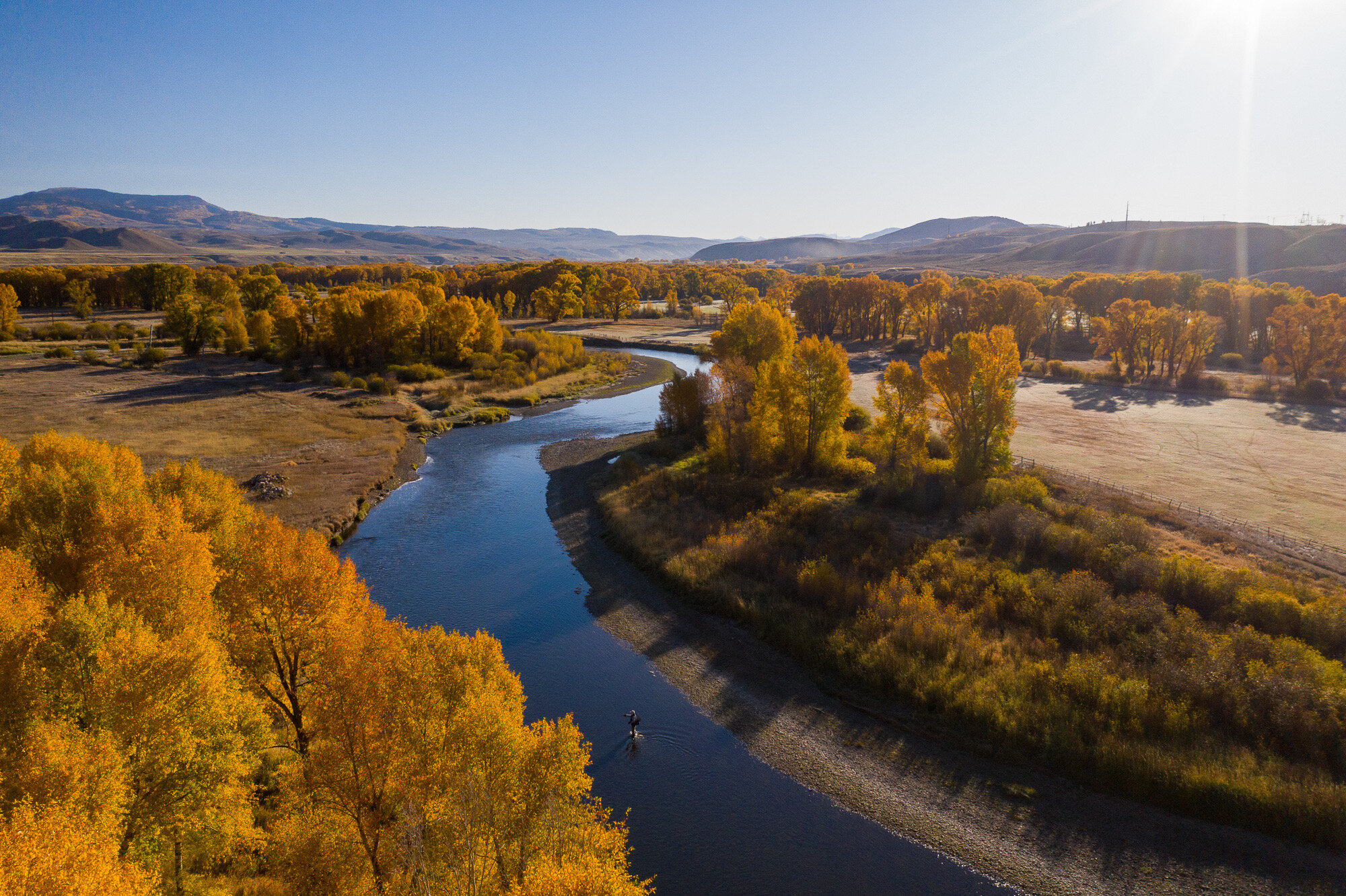
Charlie Meyers writes aabout the Hofer trout - and the prospect for bringing rainbows back to Colorado streams. http://www.denverpost.com/outdoors/ci_8151501
Life Support? Pipelines challenge valley's ag future
The Pueblo Chieftain's Chris Woodka has written extensively and well about Arkansas Valley Water and the various entities who want to exploit it. This is a great, "everything you want to know" article that describes all of those proposed projects in detail. http://www.chieftain.com/metro/1202022922
Water Troubles in the West May Worsen
From the Los Angeles Times: http://www.latimes.com/news/local/la-sci-water1feb01,1,7686108.story?ctrack=1&cset=true A study finds that man-made global warming has been steadily reducing man-made global warming has been steadily reducting snowpack along mountain ranges. States must make plans now to adapt, scientists say....
Colorado looks at water leases, donations to increase river flows
Article Last Updated: 01/30/2008 05:54:30 PM MST
DENVER—Colorado lawmakers are looking at ways to encourage people to donate or lease water rights they're not using to increase the amount of water in the state's rivers. The aim is to make rivers and their fish healthier and support the state's recreation industry.The current law isn't clear on whether people would forfeit their water rights by leasing extra water to the state so it can flow downstream when they don't need it. To encourage leases, Rep. Randy Fischer introduced a bill Wednesday to clarify that they won't give up their rights.
Lawmakers are also working on bills that would give tax credits to people who let their unused water flow downstream and to give the state water conservation board $1 million to buy or lease rights to water that it can then allow to flow rather than be diverted.
The board is the only body allowed to hold such instream rights, as opposed to water rights in which water is taken out of the river to irrigate crops or support cities. Currently, it doesn't have any money to buy the rights or pay the legal fees for people who want to donate or lease their unused water.
All three bills are backed by Trout Unlimited and Environmental Defense, which released a study Wednesday saying that increasing instream flows would add another $4.4 million a year to the state's economy because of increased rafting and fishing. The study was paid for by Environmental Defense.
Mitch Kirwan, co-owner of Mo Henry's Trout Shop in Fraser, said it will become more difficult for fish to thrive in the Fraser River, especially in warm weather, if more water is diverted to the populous Front Range.
Kirk Klancke, who manages the water district for a nearby subdivision, said the development has rights to water it needs to provide for future development but doesn't need now. He said the district would like to let the water flow downstream to help fishermen and others who use the river but, fearing the district would lose its rights, each year he uses the extra water to irrigate part of an old ranch.
Kirwan said adding more water to mountain rivers like that would help his business besides helping the environment.
"It's a huge boon for the economy of the mountain areas," Kirwan said.
Groups (TU too) back bills to boost flows in state waterways
According to a report by Environmental Defense, more water in streams means more dollars for local economies... Todd Hartman, Rocky Mountain News
http://www.rockymountainnews.com/news/2008/jan/31/groups-back-bills-to-boost-flows-in-state/
Common Sensical
The Pueblo Chieftain supports HB 1141, which would require local governments "to determine whether a developer of any project larger than 50 units can demonstrate there is sufficient water available to meet peak demands." Read the editorial at: http://www.chieftain.com/editorial/1201683357/1
Sportsmen can voice concerns on Roan
"We would have liked Gov. Ritter's proposal to be more protective," said Chris Hunt of Trout Unlimited. "Why Northwater Creek isn't included is a mystery."
Article Last Updated: 01/29/2008 11:32:01 PM MST
Conciliation has its perils, particularly when the other side has no inclination to budge. When this occurs, the result borders on surrender — a condition that, pending a lawsuit and change of administration, seems to be the state of affairs for Colorado's imperiled Roan Plateau.
When Gov. Bill Ritter made a proposal late last year urging the Bureau of Land Management to expand protection of the Roan, it was with full understanding that he had no real authority to make it stick. Which makes one wonder why an avowed wildlife-friendly governor wouldn't ask for the broader safeguards the habitat really deserves, if for no other reason than good public relations.
After all, his counterparts to the north and south — Dave Freudenthal in Wyoming and Bill Richardson in New Mexico — had made what seemed like grandstand plays on resource protection involving federal oil and gas leasing and pulled it off.
The Roan issue involves 67,000 acres of public land sought for lease by various energy companies in concert with a massive leasing initiative in the fading months of the George W. Bush administration.
Ritter's request to increase the Areas of Critical Environmental Concern (ACEC) excluded an important refuge for a remnant population of Colorado River cutthroat trout on Northwater Creek, a puzzling omission considering the Division of Wildlife is busily promoting restoration of this threatened species.
It should be noted that Roan public lands represent just 1.5 percent of the land base in the greater Piceance Basin. Further, half the BLM's Roan Plateau Planning Area already is owned or leased by the natural gas industry. Drilling already is occurring on many of these lands.
"We would have liked Gov. Ritter's proposal to be more protective," said Chris Hunt of Trout Unlimited. "Why Northwater Creek isn't included is a mystery."
The overall thrust by the omnibus group Sportsmen for the Roan Plateau is for balance. The notion is that preserving this relatively small part of Colorado's Western Slope would help bring at least some measure of environmental equilibrium to an area already torn apart by energy development.
"They can get to 80 percent of the gas without disturbing the ridges or key watersheds," Hunt said.
It might be argued that the Roan — and other energy-rich areas around the nation — was toast when the nation pulled the lever for George W. Bush more than three years ago. Politicians almost always choose their fading term to repay the most contentious campaign debts without fear of retribution from an electorate denied the use of tar and feathers.
One potential avenue for Trout Unlimited and other wildlife groups is to file a lawsuit that might stall Roan leasing pending a change in administration in Washington.
While the state of Colorado has no official leverage in the granting of BLM leases, it isn't without clout when it comes to enforcing certain regulations concerning the impact of energy development on public health, safety and welfare.
Last year, the Colorado General Assembly passed legislation requiring the Colorado Oil and Gas Conservation Commission to revise its rules by July 1, 2008, to reflect these concerns, as well as set standards to minimize impacts on wildlife resources.
Through this process, sportsmen have the opportunity to comment or endorse the guidelines established by the Colorado Wildlife Federation and Colorado Mule Deer Association and endorsed by Trout Unlimited.
Submit these to: COGCC Rulemaking, c/o Department of Natural Resources, 1313 Sherman St. Room 718, Denver, CO 80203.
Clean Eagle River May Mean More Trout
by Matt Terrell / Vail Daily "A set of new standards, being proposed by the Colorado Department of Public Health and Environment, would require a stretch of the Eagle River to be clean enough for sculpin, that now rare fish that’s very sensitive to zinc." Read the entire story at http://www.vaildaily.com/article/20080129/NEWS/583429316
Guard the Verde
[Editors's note] This article is about Arizona - at first blush. But eventually, it leads to the Colorado River, which leads to you-know-where. And it involves the connectivity between surface flows and groundwater that western communities keep trying to ignore. So, just as water flows downstream, problems such as the one in this article, will utimately arrive at our doorstep. http://www.azcentral.com/arizonarepublic/opinions/articles/0124thur1-24.html
Anglers, hunters, wildlife would suffer from HB 1137
Legislation would limit public access to important fisheries and hunting units
DENVER—Sportsmen would become victims of short-sighted politics should the Colorado Legislature approve an ill-conceived bill that would forbid the state Division of Wildlife from acquiring new lands for hunting and fishing, and for protecting important fish and wildlife habitat in Colorado, said Dave Petersen, the Durango-based state field director for Trout Unlimited’s Public Lands Initiative.
“This bill is simply counterintuitive,” Petersen said. “With all the development happening in our state, and with all the wildlife habitat we’re losing, it’s important the Division of Wildlife be allowed to function on behalf of hunters and anglers, as well as on behalf of wildlife. If the DOW can’t acquire new lands, we will have lost the ability to add vital habitat as well as hunting and fishing opportunities, as we continue to lose those assets elsewhere.”
The bill, HB 1137, would forbid DOW from acquiring new land or water rights without first giving up the equivalent of the new acquisition. Additionally, the bill would require the division to pay fees to local governments—essentially a new tax on public lands—in an attempt to compensate these communities for lost property tax revenue. This “no net gain” approach to governing DOW, Petersen said, hamstrings an important state agency that works to protect and enhance wildlife habitat and ensure the thousands of Coloradans who hunt and fish the opportunity to do so.
“The bill’s authors fail to realize that hunting and fishing provide a huge economic benefit to small communities all over the state,” Petersen said. “By acquiring new fish and game habitat and allowing hunting and fishing access, the DOW is providing an economic boost to these communities that will far exceed any lost tax revenue.”
There were 265,000 licensed hunters in Colorado in 2006, and 571,000 licensed anglers. Each year, in small communities all over Colorado, these sportsmen spend money on food, lodging and services. Increasing the opportunities for sportsmen in Colorado is a good thing, Petersen said, and shouldn’t be discouraged by an out-of-touch fringe element of the state Legislature.
“In a time when we’re seeing more and more pressure put on our public lands from things like oil and gas drilling, residential development, escalating motorized abuse and overuse, and other incursions into Colorado’s wild heart, the last thing we need is a cap put on the amount of acreage available to wildlife and sportsmen,” Petersen said. “Hunting and fishing is part of Colorado’s heritage. We’ll lose that heritage if we don’t protect it, and I suspect our lawmakers will be hearing from hunters and anglers all over Colorado who’ll be sharing that same message.”