By: Kyle Wilkinson, Trout's Fly Fishing Marketing and Brand Manager Whether we like it or not- Winter is here. That pretty much gives us two choices- quit fishing, or keep fishing. I’m always of the opinion to ‘keep fishing’. One of the best parts about living in Colorado- and particularly on the Front Range- is the abundance of Tailwater fisheries that lie within an easy drive of our homes. That said, I still believe many anglers aren’t catching as many fish as they should be. If you’ve ever found yourself struggling with your success on winter tailwaters, give these 5 tips a try next time you decide to bundle up and get the boots wet in the months to come:
 1. Use Yarn- many of you reading this may have heard this recommendation before, but it bears repeating. I feel that strongly about it. Simply put, yarn indicators are WAY more sensitive than plastic bobber-style indicators. Fish this time of year can be pretty lethargic (compared to summer) and typically won’t eat your flies with much aggression. Oftentimes your yarn won’t even dunk underwater but rather just ‘pause’ or ‘lean over’ when a fish strikes. If you’ve never used yarn indicators before, be prepared to be amazed with the sensitivity you’ll get. Side note- tips for yarn success- carry several and liberally apply some fly floatant before starting the day. Be prepared to dry off your indicator every couple hours and reapply. If you decide that your indicator is too waterlogged after a few hours, simply swap it out for a fresh one. While I realize these do require a little more maintenance than a thingamabobber, the fact that it leads to more fish in the net throughout the day is always worth it to me.
2. Putty and Split Shot- if you’re not using both split shot AND putty, you’re really missing out. Flows are at their lowest levels of the year and being able to dial in the weight on your nymph rigs is paramount to success. Any of the commercially made tungsten putties will work great so don’t get too caught up on which ‘brand’ to buy. Here’s how I put both split shot and putty to use for me this time of year. To start, select the size of split shot that will get you by in the shallowest water you’ll be fishing. Anytime you come to deeper water, simply pull out a little putty and apply it directly on top of the split shot, rolling it into a nice round ball. Voila. That’s it! Throughout the day you can add and remove putty as necessary to make sure you’re always getting your flies right down into the fishes faces. When you decide you need to take off a little (or all) of the putty you added, simply peel it off and place back in the original container. You can use and reuse tungsten putty for months on end before running out. The best part of using tungsten putty is that it avoids having to constantly pinch and remove split shot throughout the day. This will help protect your light tippets and is also just a whole heck of a lot faster way to make weight adjustments!
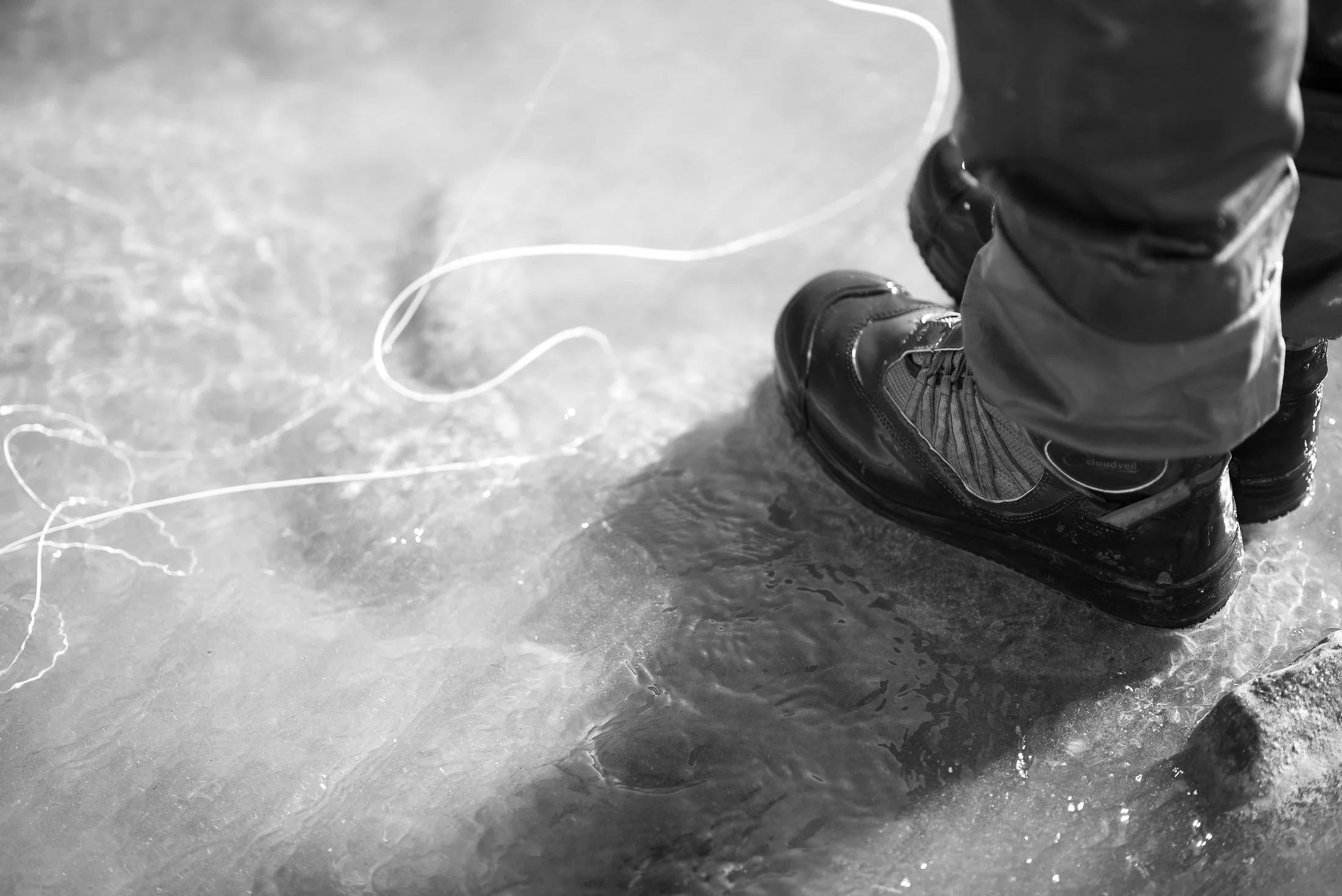
3. Never make a cast standing in the water that you could have made standing on dry ground. This is another HUGE one for me, but is a mistake I see anglers make time and time again.  Whenever you approach a likely looking area, always make it a point to fish it while keeping your wading boots on dry ground. Avoiding splashing around, crunching rocks, and in general- disturbing the water with your steps- is always going to leave the fish feeling much more at ease and in turn- more eager to eat your flies (this rule should actually be applied year round).
4. Tighten up your flies- If you don’t fish your flies spaced closely together during winter, I’m confident you’re missing out on a few fish throughout the day. I always like to say that a wintertime tailwater trout lives in a shoebox. (i.e. if you put a trout in a shoebox, it doesn’t have much room to move side to side). If I’m not getting my flies in this ‘shoebox’ zone, my confidence in getting an eat goes down drastically. My rule for spacing my flies during winter is to make a fist, and then extend my thumb and pink in opposite directions. This is the spacing you should be using- approximately 10” or so. If you’ve never fished your flies this close together, consider yourself warned- it’s probably going to seem a little weird at first. One thing I can promise you though is that you’re going to need your net more throughout the day if you give it a try!
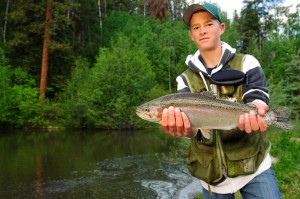 5. Watch the bubbles- we’ve already talked about indicators and weight, and I firmly believe that one of the biggest reasons people don’t catch as many fish as they should is that they’re simply not getting down to them. Next time your nymphing make sure to keep an eye on the bubbles on the surface. What are they doing? Are they moving the same speed as your indicator? If so, this is a dead giveaway you’re not getting down to the fish. Most fish this time of year are sitting very close to the bottom. The water on the bottom of the river is moving slower than the water on the surface. If you’re indicator is floating the same speed as the bubbles on the surface, this means that you’re not getting down to the fish. Simple as that. The goal is to always have your indicator floating SLOWER than the bubbles on the surface. This can quickly be achieved by adding a little more depth and/or weight to your rig. If you’ve never paid attention to this before I think you’ll be amazed at how much of a difference it makes and how quickly you are now able to dial in your rig, ultimately achieving a perfect drift to the fish!
Trouts Fly Fishing is a full service fly shop located in the heart of Denver, CO between Downtown and Cherry Creek North. A second location was established in Frisco, CO located right on Main St. In addition to selling fly fishing goods, Trouts also offers a wide selection of fly fishing classes, guided trips and destination travel options. Some of their trips include both float fishing and wade fishing on the Blue River, Colorado River, Williams Fork River, Eagle River, Roaring Fork River, Frying Pan and Arkansas River. Trouts has been proudly serving the angling community for over 15 years.
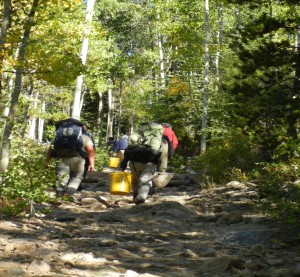
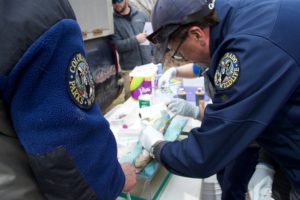
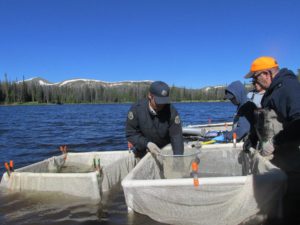 Colorado TU teamed up with Colorado Parks and Wildlife to reintroduce Greenback Cutthroat trout into their native watersheds all along the Front Range. Efforts this past year including spawning
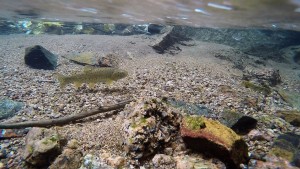
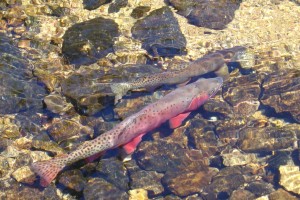
  The Roan Plateau is home to outstanding big game habitat and unique native trout like those pictured here. Trout Unlimited has been hard at work on the Roan for more than two decades, with many hundreds of volunteer hours invested by the Grand Valley Anglers chapter on habitat protection and improvement projects from instream structures to riparian fencing and replanting. TU also helped install a fish barrier to protect native cutthroat trout habitat being restored by Colorado Parks and Wildlife.
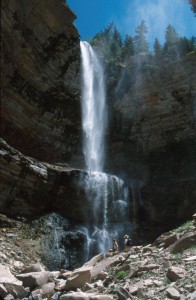
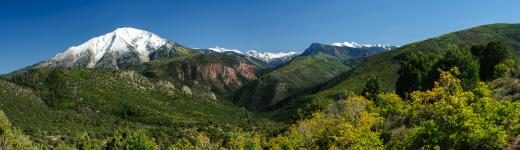
 The Thompson Divide (including Thompson Creek pictured here) makes up more than 220,000 acres of federal land in Pitkin, Garfield, Gunnison and Mesa counties and contains some of Colorado's most productive habitat for big game, cutthroat trout and numerous other native species. The area is used by more than 10,000 resident and nonresident big game hunters every year and serves as the headwaters to some of Colorado’s most popular fisheries including the Roaring Fork, North Fork of the Gunnison, and Crystal River.
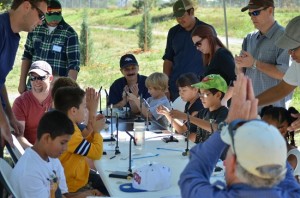
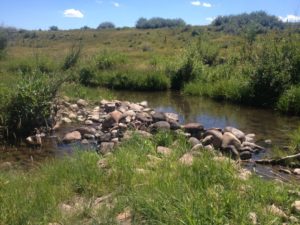 A small creek in southwest Wyoming just got a big upgrade. This November, a push-up style diversion was improved to a fish-friendly rock vane structure with a head-gate, reconnecting approximately 6 miles of habitat for the native Colorado River cutthroat trout that reside there. This project was unique in that it all began with the local school. Trout Unlimited partnered with the McKinnon Elementary School to study their home water, the Henry’s Fork River, through the Adopt-a-Trout program. This particular program involved tagging Colorado River cutthroat trout with telemetry tags and tracking their movement from 2014-2016. The students each got to “adopt” their own fish and follow it throughout the year. They learned a variety of river ecology lessons, including fish anatomy, macroinvertebrate identification, applying the scientific method, riparian ecosystems and many more. They also had to map where their fish moved using Google Earth.
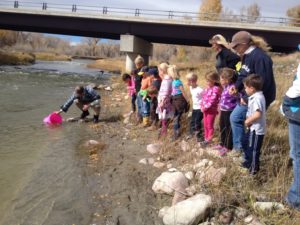 Using two years of the Adopt-a-Trout data and an instream flow study that TU conducted on Beaver Creek, a major tributary, we discovered that there was a push-up dam near the confluence to the Henry’s Fork that was not allowing fish passage for a critical part of the year. None of the students’ fish were able to pass that point during the summer months. So, TU collaborated with the Lonetree Ranch to develop a fish-friendly diversion that would still allow them to receive their irrigation water, but would allow for fish passage during low flows. A head-gate was also installed so that they could turn the ditch off when they no longer needed to irrigate, leaving more water instream for the trout. Thanks to the funding provided by the Wyoming Landscape Conservation Initiative, the Wyoming Wildlife Natural Resource Trust and the Natural Resources Conservation Service, the project was able to be completed November 2016.
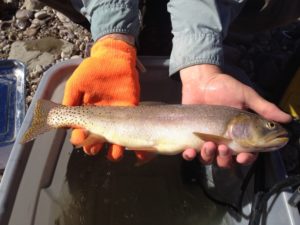 This is just the first of many projects that will be done along Beaver Creek to benefit native trout. Over the next year, the McKinnon students will be assisting with vegetation planting and monitoring on several sections right above the diversion to provide better cover and reduce stream temperatures during the summer months. Projects like these are not only reconnecting populations of native trout, but reconnecting kids to “their” fish and river.
 Over the last decade population studies on the Animas have shown a decline. Although this year there wasn't a turn around, CPW Biologist Jim White told the Durango Herald, "It's been a really nice fish year. It’s definitely been more abundant than years past.”
 While the Animas is improving, the future of Cutthroat Trout in Hermosa Creek also have a bright future as stream improvements have been made to prepare for Colorado River Cutthroat reintroduction.
 The Western Native Trout Initiative (WNTI) has granted Colorado Trout Unlimited and the Cheyanne Mountain Chapter of Trout Unlimited $6000. Two $3,000 grants will be used to help bring public awareness to native trout and help further greenback genetic studies at Mt. Shavano Fish Hatchery. Western Native Trout Initiative is an organization dedicated to protecting native trout. They offer many different grant opportunities that provide conservation organizations with a means to realize their native trout projects.