Conservation

Volunteer and protect Colorado's only greenback stream

 A new genetics study revealed that Bear Creek, near Colorado Springs, holds the only remaining wild population of greenback cutthroat trout - and TU volunteers with the Cheyenne Mountain Chapter are already rolling up their sleeves to help protect the creek with an October 6 workday!

To help reduce the sediment entering Bear Creek, restoration work will focus on soil decompaction, seeding, transplanting, naturalization, split rail fence installation, and sign installation. We have a lot to do in one day, so we need a big turnout of volunteers. We need 40+ volunteers!

In conjunction with the Bear Creek Roundtable, CMCTU's partner, Rocky Mountain Field Institute ("RMFI"), recently completed a site visit on the lower section of Bear Creek and has developed the Roundtable's "plan of attack" for closing multiple sediment producing social trails and campsites located on the City of Colorado Springs property adjacent to Bear Creek.Interested in participating in this important restoration work?  Want to actively get involved with protecting the threatened Greenback Cutthroat Trout in Bear Creek?  Then join us on October 6.  Please contact RMFI's Liz Nichol at 719-471-7736 or rmfi @ rmfi.org to sign up!

 
Where & When

Saturday, October 6, 2012

8:00AM-4:00PM
 
Starting from the caretaker's House at the bottom of High Drive in Colorado Springs (intersection of Gold Camp Road and High Drive/Bear Creek Road)


Redrawing the map on native cutthroats

A new study just released from the University of Colorado, published in the peer-reviewed journal Molecular Ecology and funded in part by Trout Unlimited, will redraw the map on Colorado's native cutthroat trout and has shone a spotlight on a small tributary of the Arkansas River near Colorado Springs. The study, conducted using historic fish samples from the 19th Century, attempted to shed light on what native trout lineages were found in Colorado - and where they were found.  Among the most notable findings:  the fish generally believed to be greenback cutthroat trout and native to the Front Range are in reality from native trout lineages west of the Contintental Divide, while one remaining greenback population remains in Bear Creek on the flanks of Pikes Peak.  Trout Unlimited is actively working to protect habitat and address issues with trail impacts and sedimentation in Bear Creek.

The Denver Post has reported on the study and its implications for cutthroats and for Bear Creek.  Trout Unlimited also issued a press release on the study.

Does this mean that the work done to date on greenback restoration is for naught?  Fortunately, that is not the case. First - the restored populations are still valuable native Colorado trout albeit of a different lineage and their conservation is important, just as is that of the greenbacks themselves. Moreover, work that has been done in preparing sites for successful relocations (such as planning efforts in the Poudre headwaters for large-scale greenback restoration) as well as general TU efforts in improving habitat and watershed health, will help create a better home for the greenbacks in those locations where they are reestablished going forward. Our work to date provides a solid foundation for our future restoration efforts with the greenback.

Of course having to push the "reset" button on our native trout restoration strategies is a disappointment, but the flip side of any disappointment is opportunity. It has been said that "extinction means it is too late."  The good news for greenbacks is that we are not too late and our efforts in the years to come will help ensure that our children and grandchildren can have the opportunity to fish for this unique Colorado native. 


Q&A about the new genetics study on Colorado’s native cutthroat trout

What are the key findings from the new University of Colorado genetics study?

By looking at DNA from historic fish samples as well as stocking records, the study’s authors – led by principal investigator Dr Jessica Metcalf – have identified six different genetic lineages of native trout for Colorado (compared to the four previously identified) and have in some cases suggested that the lineages have a different historic range than was previously thought.  Specifically, they identify lineages for the Arkansas drainage (Yellowfin – now believed extinct), the South Platte drainage (Greenback – now found in one small stream in the Arkansas basin, Bear Creek), the Rio Grande drainage (Rio Grande), the Green/Yampa basins (Colorado River), the Colorado/Gunnison basins (previously unnamed), and the San Juan basin (previously unnamed – now believed extinct).

So if there’s only one population left in the Arkansas basin, then what are the “greenbacks” I’ve caught in places like Rocky Mountain National Park?

Based on the genetic markers identified by Dr. Metcalf and her colleagues, it appears that most such populations are likely a different Colorado native trout – from either the Green/Yampa lineage or the Colorado/Gunnison lineage.  So you have caught a real Colorado native – just not a greenback.

Can I catch a true greenback in Bear Creek?

No.  Because the population is small and susceptible to hooking mortality, it has been – for several years – closed to fishing.  We hope that as new sites are restored with these fish that anglers will again have the opportunity to fish for native greenback cutthroat trout.

Does this mean that the fish previously thought to be greenbacks are no longer protected under the Endangered Species Act?

No.  The U.S. Fish and Wildlife Service will be initiating a review of cutthroat trout in Colorado to examine the genetic results as well as results from an ongoing study looking at physical characteristics of the different fish and any other relevant science.  To assist in that process, they will convene a group of leading experts in the field to help advise them on proper classification among the different cutthroats – and on the question of which lineages are imperiled and warrant continued Endangered Species Act protection.  From those results, they will then begin a formal rulemaking process to make any changes.  Until that rulemaking takes place, all populations previously protected as “greenbacks” will remain protected under the Endangered Species Act.

What is TU doing to protect the one remaining greenback population in Bear Creek?

The one population of greenbacks still known to exist are found in Bear Creek near Colorado Springs – ironically, the result of an early stocking effort by a local hotelier that believed that cutthroat fishing would help draw tourists.  The Bear Creek watershed is suffering from sedimentation and the impacts of both motorized and non-motorized trails, as well as from an existing gravel road (High Drive) that parallels the lower part of the stream.  Trout Unlimited, with leadership from our local Cheyenne Mountain Chapter and in partnership with federal, state, and municipal agencies and local stakeholders, is working on volunteer projects to help address sediment impacts and to rehabilitate unauthorized user-created trails that are impacting the stream.  At the same time, Trout Unlimited has reached out to mountain bikers and motorbike users to collaborate on assessing and relocating sections of trail that are creating impacts on the stream.  With support from this diverse group of stakeholders, the Forest Service is currently completing a trails assessment that will clearly identify problem sections of trail and options for relocating those sections away from Bear Creek to eliminate those impacts.  We anticipate work will begin on trail relocation in 2013.  We also applaud CH2MHill, which is donating its services for a road assessment on High Drive to help guide efforts to modify the road so as to reduce its significant impacts on sedimentation in the lower reaches of the cutthroat habitat.  We are working with the Forest Service and other partners to seek funding for road improvements as well.

So what will be the future for greenback restoration?  Will populations of the Colorado/Gunnison fish be removed and replaced?

That decision will rest with the Colorado Division of Parks and Wildlife and the U.S. Fish and Wildlife Service, along with their agency partners on the Greenback Recovery Team.  Fish from the Bear Creek lineage are now being raised in multiple hatcheries for restocking into appropriate waters, and we expect that efforts to establish new populations using those fish will take place fairly soon.  There are locations that have been identified as potential restoration sites that could be used in this effort without removing cutthroats from previously “restored” waters, and those may be the logical first places to move with restoration.  That will provide the agencies with more time to come up with answers for the long-term question of what to do with cutthroats that have been re-established in waters outside their native range.

Watershed: The Movie

Narrated by Robert Redford, this award winning film that explores "a new water ethic for the new west" is coming to Colorado. WATERSHED tells the story of the threats to the once-mighty Colorado River and offers solutions for the future of the American West.

Here are some local screenings:

Unfortunately, the September 27 Denver screening at the Denver Film Center is sold out, but you can try these:

October 18, 7:00pm at the Third Street Center in Carbondale. Contact the Roaring Fork Conservancy for availability.

October 16, 7:00pm at the Glenwood Springs Community Center. Contact the Roaring Fork Conservancy for availability.

Watch the trailer.

Buy a copy for your non-profit.

Abandoned Mines and Our Water

Colorado mining authorities have dug through a mountainside and reopened the dark granite shaft of an abandoned mine that turned deadly — trying to find options for dealing with one of the West's worst environmental problems.

The Pennsylvania Mine, perched above timberline, discharges an acidic orange stream moving 181 pounds per day of toxic metals into Peru Creek and the Snake River, which flow into Denver Water's Dillon Reservoir.

The poisoning of the watershed has gone on for more than 60 years.

Yet state officials say the risk of lawsuits prevents cleanup of this mine and thousands of other abandoned mines that have impaired 1,300 miles of Colorado streams and, according to federal estimates, the headwaters of 40 percent of Western rivers.

Today's digging reflects growing frustration. Colorado county governments recently resolved to lobby for congressional action as water quality and healthy mountain fisheries are increasingly important to the Western economy.

Read the rest of Bruce Finley's article in The Denver Post.

Dolores basin cutthroat streams win water quality protection

The Water Quality Control Commission has voted to adopt "Outstanding Water" designations - which apply water quality standards designed to preserve the high-quality condition of some of Colorado' best and most important waters - for three native cutthroat trout streams in the Dolores basin. The new designation will ensure that water quality is maintained without degradation for the native Colorado River cutthroat trout in the Little Taylor, Rio Lado, and Spring Creek drainages.  The Commission found that the waters supported high-quality water and had "exceptional recreational or ecological significance."  Thanks to the Commission's decision, these fisheries will continue to thrive in the high-quality water that has kept them healthy in the past.

This success story was made possible through the efforts of the Dolores River Anglers committee of the 5 Rivers Chapter, with help from TU's Backcountry Coordinator Matt Clark.  The Dolores River Anglers will soon be becoming a stand-alone chapter - TU's 24th in Colorado - and with this important victory for their local waters, they are already off to a great start.  Congratulations!

New Hope for Roan Cutthroats

The Roan Plateau near Rifle is one of Colorado’s gems – a scenic backcountry area supporting some of Colorado’s best big game habitat and providing a home for populations of native cutthroat trout that have a unique local adaptation – the ability to withstand warmer water temperatures than most other cutthroats.

The Roan’s outstanding fish and wildlife values led Field & Stream magazine to name it one of their “Best Wild Places.” The Colorado Water Quality Control Commission has designated several key streams on the Roan as “Outstanding Waters,” deserving of unique water quality standards. And the Colorado Natural Heritage Program at Colorado State University – a source of information on the state’s rarest and most threatened species and plant communities – has recognized the Roan as one of Colorado’s top four locations for biologic diversity. Of those four places, only the Roan does not benefit from the protective management of the National Park Service.

It’s clear that there is broad recognition that the Roan is a special place. But over the past decade it has become an island of quality habitat in the vast sea of energy development taking place throughout the Piecance basin.

In the final months of the Bush administration, the Bureau of Land Management (BLM) approved a wide-ranging plan for oil and gas drilling atop the Roan Plateau that seemed indifferent to appropriate protections for fish and wildlife. And in short order, leases for energy development were auctioned off.

Remarkably, even BLM acknowledged dire impacts on fish and wildlife. Its own analysis projected that the agency’s drilling plan would result in a 33% decline in mule deer herds and could even eliminate rare native trout populations. And as troubling as these projections might have been, it’s likely the study grossly understated the real impacts. While BLM worked under the assumption that 300 wells would be drilled on the plateau, the Bill Barrett Company, which holds the leases atop the Roan, plans to drill 3,000 wells - more than ten times the BLM estimate.
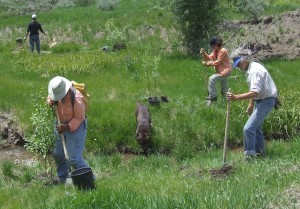
Trout Unlimited is no “Johnny-come-lately” when it comes to protecting the important resource values of the Roan Plateau. The Grand Valley TU Chapter has been engaged in on-the-ground efforts to protect and restore habitat atop the Roan since the 1990s, constructing fence to keep cattle off of important stream reaches, installing in-stream habitat features, planting riparian vegetation, and monitoring water quality.

Trout Unlimited accepts the need for responsible development of natural gas resources. In fact, Colorado TU supported an alternative drilling plan for the Roan that would have allowed development of the vast majority of its natural gas without having to disturb key fish and wildlife habitats. Unfortunately, drilling on the scale approved by BLM threatens to wipe out native trout populations and habitat that TU volunteers and professional staff have worked for decades to preserve, and defies any interpretation of “responsible.”

And so, with the future of the Roan’s trout on the line, Colorado TU joined other conservation-minded groups to challenge BLM’s ill-conceived plan in federal court. TU and its partners were represented in that effort by an outstanding legal team from the environmental legal group, Earthjustice.

There has been some recent good news for the Roan campaign: First, the presiding federal district court judge ruled in favor of our challenge to the BLM plan, by directing the agency to revisit its environmental analysis and decision. The very same afternoon, TU was approved for a foundation grant of more than $100,000 to support restoration work atop the Roan Plateau – improving stream crossings, fencing riparian habitat, and restoring cutthroats into new waters. In less than 24 hours, we went from facing the prospect of losing the Roan’s native trout to the opportunity to protect and restore their habitat on a larger scale than ever before.

The legal ruling favored TU and its partners on three key issues. The first two related to the need for improved air quality and ozone analysis. The third, and perhaps most significant, was a finding that BLM erred when it neglected to consider alternatives such as those supported by Colorado TU, which would have allowed for gas development while preserving key habitats on the Roan.

The judge’s decision is an important victory for the Roan Plateau and those who care about its future. It gives the BLM a second chance to “get it right” for the Roan, by coming up with a plan that allows responsible development while protecting the unique and valuable habitats both atop the Roan and along its base. But it is only a chance – the ruling does not assure that BLM will adopt an improved plan, only that it properly consider alternatives and analyze impacts. It will be up to Coloradoans to weigh in with BLM to ensure that the agency does adopt a new and better plan for the Roan. Colorado TU and other sportsmen’s groups will be a key part of these efforts.

Doing right by the Roan is about more than just advocating for responsible development. TU is also working on-the-ground to help protect and improve habitat for native trout. This year, we are working to complete a fish barrier on the East Fork of Parachute Creek that will help protect cutthroat habitat from invasion by brook trout, which can displace the native populations. We are also completing habitat improvements on Trapper Creek, home to a unique population of cutthroats that have managed to adapt to the somewhat warmer water temperatures found on the plateau. These improvements will help create new pools - holding water - that provides a safe haven for the fish during times of low streamflows.

TU’s habitat restoration work is carried out through the generosity of many key funding partners, including Colorado Parks and Wildlife and the National Fish and Wildlife Foundation. But oil and gas companies have also been important supporters of on-the-ground restoration through the Colorado Department of Public Health and Environment’s “Supplemental Environmental Project” (SEP). SEP allows companies facing fines for pollution violations to invest that money to improve habitat and environmental quality.

Besides engaging our established members in habitat protection and restoration in one of Colorado’s best wild places, the Roan also represents an opportunity for Colorado TU to connect with young people and help them develop their own “conservation ethic.” We have teamed up with the Rocky Mountain Youth Corps to deploy a youth conservation corps atop the Roan. One recent project involved planting cottonwood trees and willows along Trapper Creek to help improve riparian conditions in the watershed.

The efforts of the Youth Corps are supported The Greenbacks, a recently formed group of Denver area TUers in their 20s and 30s. In addition to fund raising efforts, the Greenbacks organized their own volunteer day to plant willows along another Roan cutthroat stream, Northwater Creek. And the Grand Valley Anglers chapter continues its decades-long commitment to the Roan by participating as funding partners and volunteers in virtually all the work taking place on the Roan’s native trout streams.

Of course, it can be argued that there are plenty of so-called special places, and that our need for jobs and new sources of energy require trade-offs. We can’t preserve everything. Sacrifices have to be made.

To be sure, there’s truth in that argument, especially in light of a growing population and struggling economy. But there is also a profound truth in the fable of the goose that laid the golden egg. Wouldn’t it be much more prudent to enjoy some economic benefit from the resources beneath the Roan without being so greedy as to kill it?

Over the past 50 years, TU has built a reputation for advocacy based on sound science and successful restoration projects build with the sweat equity of a hundred thousand volunteers. Protecting and restoring places is why we exist as an organization, even if it’s not always the perfect fit for the faint of heart. Sometimes, there’s no choice but to put up a fight. In the case of the Roan, more than ever, it is looking like a fight we can win.


Background on the Roan Plan

On June 8, 2007, the Bureau of Land Management issued its Record of Decision for the Roan Plateau management plan, giving approval to move forward with oil and gas development atop the Roan. CTU had numerous concerns with the plan - including the BLM's own conclusion that their proposal could result in elimination of rare native cutthroat trout populations atop the Roan. An overview of CTU's concerns with the BLM plan appears on a separate page on this site.

Windy Gap - Still Controversial

To say things are heating up around Windy Gap Reservoir isn't just a figure of speech. But the controversial pond pausing the flow of the upper Colorado River remains a hot topic as Grand County commissioners take up a 1041 permit application for the proposed Windy Gap Firming Project that would impact the upper reaches of the state's namesake river. Two days of public hearings opening comment on the proposal to expand the Northern Water Conservancy District's transmountain diversion built around the 445-acre-foot reservoir near Granby drew a crowd to Hot Sulphur Springs last week. As has become the norm in the lengthy process, much emphasis was placed on the negative environmental impacts Windy Gap Reservoir already has had on the upper Colorado River and potential ways to fix the problem.

Read more at The Denver Post online

Giving Back to the Watershed

In June, Rocky Mountain Flycasters (RMF), the Fort Collins area Chapter of TU, began discussing the restoration process in the areas burned by both the High Park and Hewlett Gulch fires.Those two fires burned close to 100,000 acres of forest in the Poudre and Big Thompson watersheds. RMF was gravely concerned what impacts the fires would have on the watersheds. Using recent Colorado and Western US fires as examples, the chapter knew that restoration costs of those burned areas couldn't be done solely through agency response. The US Forest Service, National Resource Conservation Service, Colorado Parks and Wildlife, Colorado State Forest Service and Larimer County are all first rate organizations, but all these agencies combined lack the resources necessary to address the ecological damage caused this year by our two local fires, Colorado's other wildlifres, and the numerous fires burning throughout the Western US.

Rocky Mountain Flycasters has teamed with, in a leadership capacity, approximately 40 current member, agency or stakeholder organizations throughout Northern Colorado to collectively fund, organize and support restoration needs for the High Park and Hewlett Gulch fire areas through the High Park Restoration Committee (HPRC).

Restoration funds collected for the benefit and use by the coalition will be deposited with the Community Foundation of Northern Colorado. Project proposals will reviewed and approved by a HPRC Project Review Committee and funding will only be released to those projects that are approved by the committee.

To get "boots on the ground" and working on restorative projects, trained project leaders will be required to manage the on-site work. Project leaders will be volunteers and can receive training certification through programs provided by Wildlands Restoration Volunteers.

Details of volunteer and cooperative HPRC projects will be posted in the Rocky Mountain Flycasters newsletter and on the RMF website.

This is a tremendous opportunity for all anglers and those who support angling to 'give back' to the community and more importantly to give back to the rivers. Nothing can be done to eliminate the devastating effects fires have caused to the watershed, but together we can minimize the time it takes for the watershed to begin to recover and regain a sense of normalcy.

For more information about volunteering or donating to the HPRC, please visit the RMF website at http://www.rockymtnflycasters.org or contact Dick Jefferies, President of the Rocky Mountain Flycasters chapter, at djefferies@q.com.

White River Basin - Worth Protecting

After months of waiting and anticipation, we finally get to see what the BLM thinks oil and gas development should look like in the White River basin. The White River basin sits in the little-known north-western corner of Colorado and spans over 2 million acres. Last week, the White River Field Office released the draft Resource Management Plan Amendment (RMPA), which will govern how oil and gas development will proceed in the basin for the next 20 years. Of course, many sportsmen and women perked up when they heard the news – the basin is home to outstanding fisheries, some of the largest elk and deer herds in North America and home to a myriad of other critters we all care about. These values sometimes contrast with the extensive energy development occurring in the basin.

Here at TU, we are striving to ensure that an appropriate balance is struck. We drafted the Sportsmen’s Conservation Vision for the basin that outlines many of the ways we think energy development should proceed while retaining robust fish and wildlife populations and the basin’s other ways of life such as farming, ranching and outdoor recreational pursuits. We also work with the BLM, industry and other sportsmen towards meaningful solutions that benefit all parties. Of course, this is very difficult at times and we need other voices to echo our call to keep the area healthy and vibrant for generations to come.

That’s where you come in. We need our members to share their thoughts with the BLM about what they value and to offer ideas and insight regarding what they view as the smart way to develop.

In the coming weeks, we will post more information about where we feel the plan needs improvement and how to encourage the BLM to make those changes. In the meantime we encourage you to visit the planning website to see the plan for yourself or attend one of the four open houses hosted by the BLM, scheduled for late September. Your review and comments are an important part of ensuring the continuance of strong sporting and angling heritage in the White River basin.

You can find the draft plan in its entirety, along with the open house schedule by clicking this link.

Please check back in the near future for further information and contact Aaron Kindle if you have other questions (akindle@tu.org  303 868 2859).

Conservation nerds and the tale of Hermosa Creek

Here at TU, we spend a lot of time talking about watersheds.

We conservation nerds can find the most befuddling things to occupy the hours of the day. But, much to the dismay of our poor, bored-to-tears spouses and significant others, this notion we love so much here – the idea of protecting quality, connected, large-scale chunks of habitat – is catching on.

And it’s a good thing, too.

Case in point: the community reaching out to preserve Hermosa Creek in Colorado.

Located just outside the town of Durango, Hermosa Creek is a completely intact watershed with exceptional recreation values. Think rugged 13,000 foot peaks, high alpine meadows, pine, fir and aspen forests, crystal clear water and you’ll start to get a sense of this place.

Home to a native Colorado River cutthroat trout reintroduction program and some of the finest elk habitat in Colorado, Hermosa Creek is a sportsmen’s paradise.  For OHV enthusiasts, mountain bikers, campers, hikers, photographers and backpackers, Hermosa Creek offers some of the best…and within just a few miles of a major community.

With this in mind, locals formed a working group, the River Protection Workgroup, which spent 22 months crafting a blueprint for future management of this little gem. This proposal was not built in a D.C. office, but instead as a function of local, stakeholder-driven collaborative.  Everyone had a seat at the table and the consensus recommendations reflect a broad group of interests.

With that blueprint in hand, Sen. Michael Bennet. introduced the Hermosa Creek Watershed Protection Act of 2012. This legislation will maintain the quality of the habitat through a balance of protections and allowances to keep many things just as they are today. It’s the best of both worlds – sensitive habitat gets preserved and users still get to enjoy the landscape as they already do.

Just a few highlights:

  • About 108,000 acres of the San Juan National Forest will be designated as the Hermosa Creek Special Management area (SMA), meaning it will have more protection than any old chunk of National Forest. The key here are the boundaries, which are drawn to encompass the entire watershed – no whittling out small bits that later have to be put together like a some hackneyed puzzle where the pieces don’t quite fit together anymore. In this fantastically fantastic instance (can you tell how giddy we are about this?) we’re talking the WHOLE puzzle.
  • Of that acreage, some will receive more stringent protections, some less. For example, 25 percent of the area will allow current and historical uses such as mountain biking, motorized recreation, selected timber harvesting, grazing etc.
  • 40 percent of the acreage will allow those activities to take place, but will no longer be eligible for future building of roads or timber harvesting, meaning more land will be able to stay just as it is today.
  • All of the SMA, save for about 2,000 acres will be withdrawn from future mineral development.
  • The remaining 35 percent will be designated as wilderness.

Bottom line? This is common-sense approach from the people, for the people – a collective forward step by a community that will protect a special corner of their own backyard.

The genius behind this kind of legislation is that it takes the entire watershed into consideration, thereby taking into account a basic principle that we all too often forget: All things are connected. By taking the initiative to protect the entire watershed, this community is taking an innovative approach to conservation. You can’t protect one portion of habitat if you don’t protect the things connected to it – i.e. what good is protecting a fish if there is no water for that fish?

So next time you overhear one of those conservation nerds utter those buzz killing phrases – watershed…habitat…permanent protection…collaborative process…federally designated lands  - don’t glaze over. Throw them a bone. Listen with a content smile on your face and happy heart. They’re doing good things for you.

And little-by-little, it’s catching on. Just ask the folks over in Hermosa Creek.


Originally posted here on the Trout Unlimited website.