Conservation

It's Why We Still Like Ike

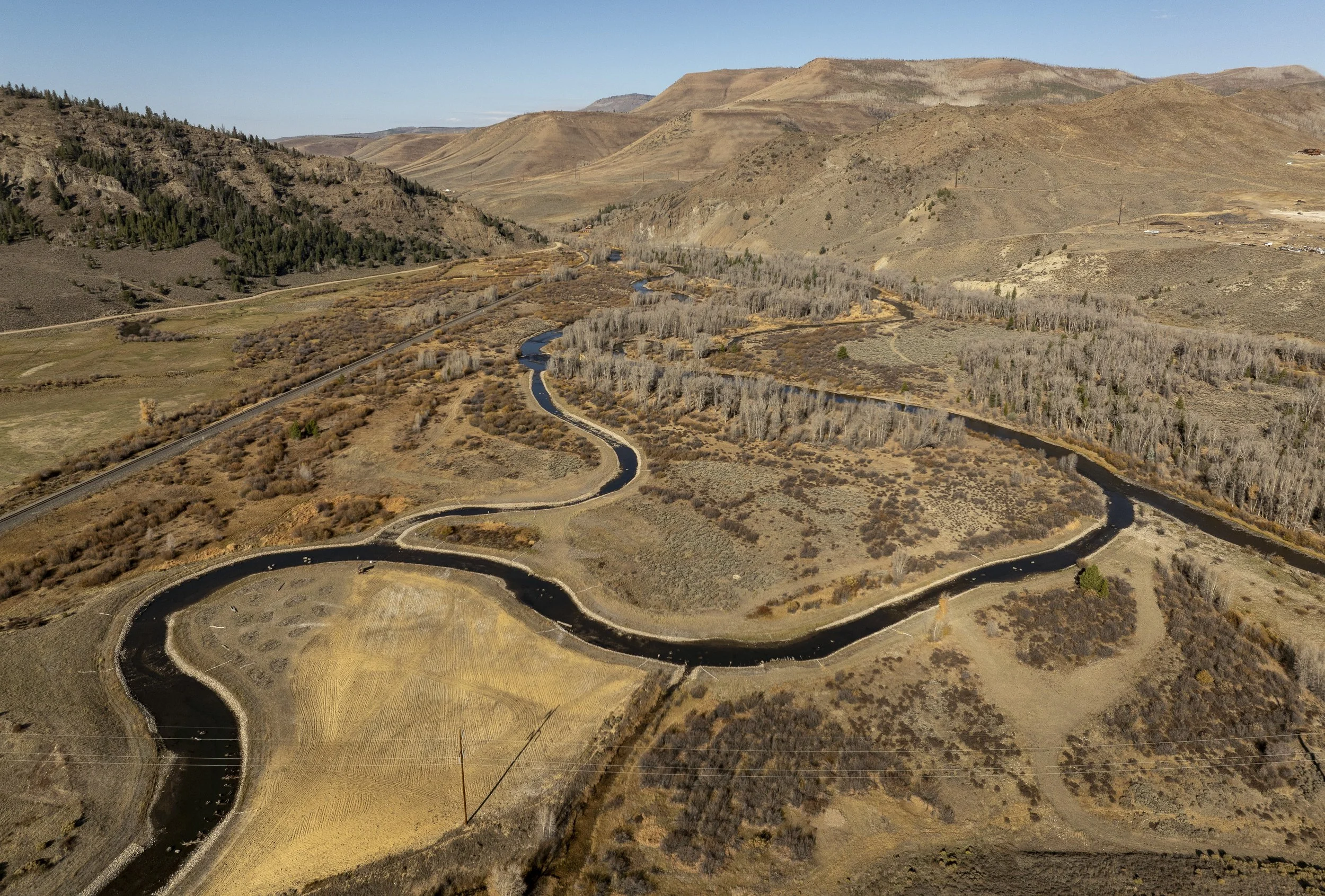
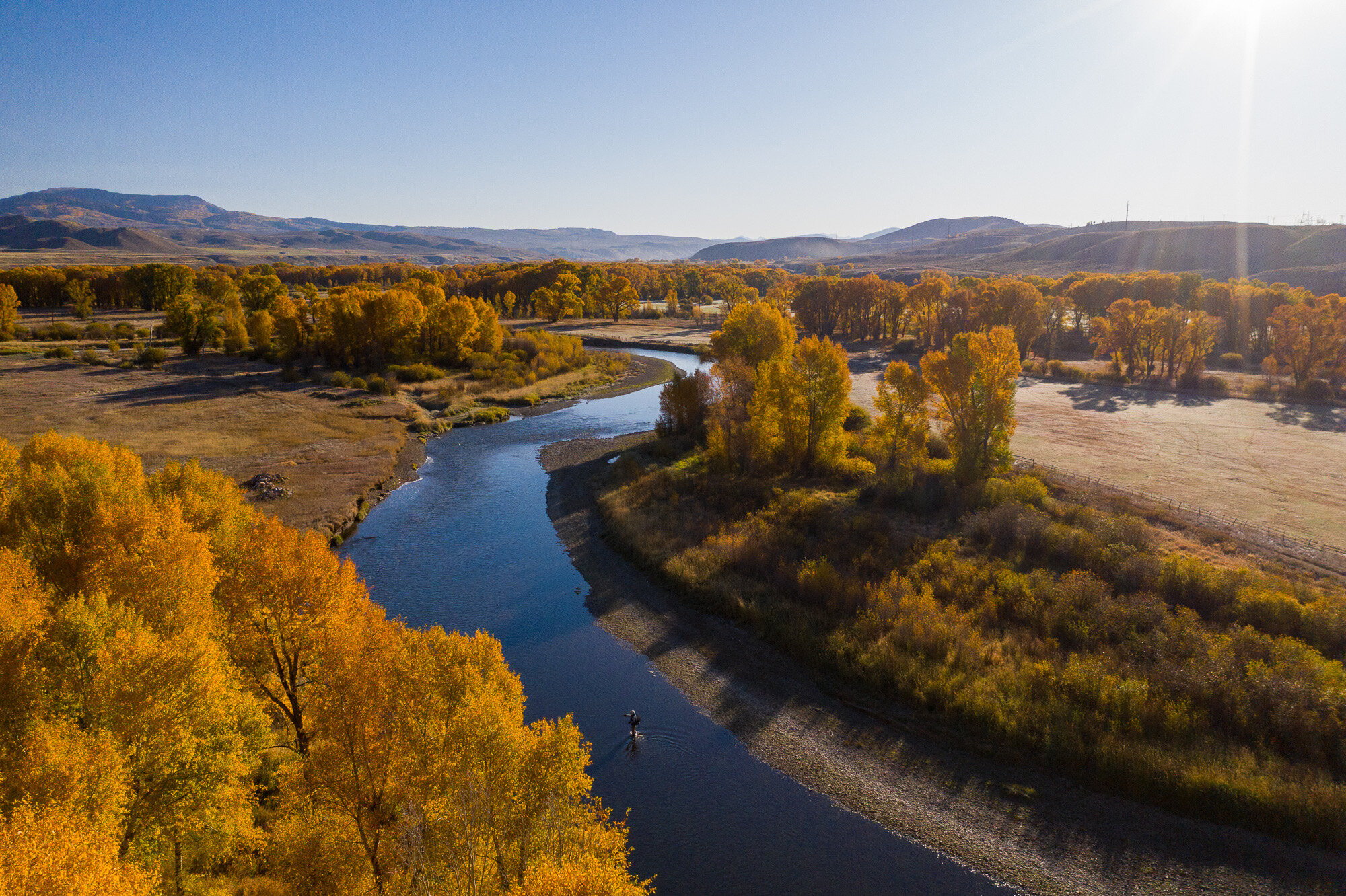
On July 14th, a stretch of the Fraser River was dedicated as the Eisenhower Reach.

Named after President Dwight D. (I like Ike!) Eisenhower, a frequent visitor to the area and fishermen of the Fraser River, this dedication helps to keep the history of the Fraser alive.

However, the river's future continues to be in jeopardy. Colorado TU's David Nickum summed it up this way - "I would rather see a healthy Fraser Creek than a dead Fraser River."

Read more about the Fraser and TU's ongoing involvement in the Sky High Daily News.

Frontline to Focus on Pebble Mine 7/24

Tuesday, July 24 › 9pmon Rocky Mountain PBS

The Bristol Bay region of southwest Alaska is home to the last great wild sockeye salmon fishery in the world. It's also home to enormous mineral deposits – copper, gold, molybdenum – estimated to be worth some $300 billion. Now, two foreign mining companies are proposing to extract this mineral wealth by digging one of North America's largest open-pit mines, the "Pebble Mine," at the headwaters of Bristol Bay. "Frontline" travels to Alaska to probe the fault lines of a growing battle between those who depend on this extraordinary fishery for a living, the mining companies who are pushing for Pebble and the political framework that will ultimately decide the outcome.

View a promo: http://ow.ly/cmhEJ


A Deal to Smile About

Trout Unlimited offers free introductory women's membership.

For the next year, you'll receive all the benefits of a paid membership:

  • 1-year subscription to TROUT magazine
  • 16-month TU calendar (mailed in the fall)
  • official TU membership card
  • car rental & hotel discounts
  • TU decal
  • Local chapter membership

Click here to sign up.

Eisenhower Reach Dedication at Summer Meeting 7/14

Colorado TU's Summer Meeting will begin with dedication of the "Eisenhower Reach" of the Fraser River, at 9 am at Lions Park in Fraser. The Eisenhower Reach was established by a Colorado General Assembly legislative resolution earlier this year. After the dedication, the summer board meeting will re-convene at The Beavers Lodge in Winter Park (79303 Highway 40). The meeting is hosted by the Colorado River Headwaters Chapter.

Rooms are available at The Beavers for $60 per night; to make your reservation you can call: TF: 800.525.3561 x 0 / PH:  970.726.5741 x0

If you plan to attend the summer meeting, please RSVP to David Nickum to help us get an accurate head-count for lunch.


Groundbreaking water deal to boost Yampa flows

Here's an excerpt from Bob Berwyn's piece at Summit County Citizens Voice.

“We are testing totally new waters here,” trust director Amy Beatie said in an earlier interview when the program was announced. “We have our own cash we’re willing to put into the program and our goal is to raise $500,000...."

Read the entire story (3-4 minutes)

photo: courtesy Colorado Division of Parks & Wildlife: Kesha Hess

Thank You Patagonia!

Colorado TU has been awarded a considerable, unrestricted grant from the Patagonia Store in Denver.

Anyone who is around non-profit funding knows that unrestricted grants are usually the toughest to get because they don’t have ‘strings’ attached – they can be used for just about anything (within reason) - to promote or sustain the mission of the organization.

This grant is particularly appreciated, because we were nominated by the employees of the Patagonia store…that’s right, the people who work in our community and see our positive work for Colorado’s rivers are the ones who nominated us for this significant gift. THAT is much appreciated!

As always, I encourage you to consider spending your hard-earned dollars to support the companies who support who support Colorado TU. Patagonia has been a supporter of Trout Unlimited for many years, but this most recent award reinforces my belief that our mission is sound, our execution is good, and people take notice when you accomplish good things.

Thank you, Patagonia Denver!!

Sinjin Eberle Colorado TU President

Denver's Patagonia store is located at 1431 15th St. (15th & Blake)

Reprieve for the Roan

When BLM gave the green light for gas drilling on 54,631 acres on the Roan Plateau in 2008 it looked like a slam dunk. But a federal judge says there was a foul on the play.Judge Marcia Kreiger says the agency didn't look hard enough at alternatives such as directional drilling that might have reduced impacts on the Roan, which harbors genetically pure populations of Colorado River Cutthroat Trout. Here's an excerpt from a piece by Dennis Webb in the Grand Junction Sentinel:"

"In a 38-page ruling in a lawsuit by conservation groups, U.S. District Court Judge Marcia Krieger ruled that the agency failed to adequately address an alternative that would have kept drilling off the plateau top by making use of directional drilling from surrounding lands. It also failed to sufficiently consider cumulative air quality impacts in conjunction with anticipated development in the region, or to adequately address ozone impacts."

Read: Judge's ruling means second look for Roan drilling plan from the Grand Junction Sentinel.

Read more about the Roan at Sportsmen for Responsible Energy Development.

The Roan was featured by Field & Stream as one of its Best Wild Places in 2010. Read Part 1 of the 3-part series. Read Part 2. Read Part 3.

More Good News for the Roan

The National Fish and Wildlife Foundation has approved a $125,000 grant to Colorado TU to support continued restoration atop the Roan Plateau, including fencing, restoring native vegetation, removing non-native fish and reintroducing native cutthroat trout.

Senate Passes Farm Bill

TU Praises Senate Reauthorization of Farm Bill, Urges Swift House Passage. Conservation Programs a Proven Investment in Nation’s Outdoor Heritage and Rural Communities

Arlington, Va.-- Trout Unlimited today commended the U.S. Senate for voting to reauthorize the Farm Bill and ensure that its highly successful conservation programs continue to enhance the nation’s fish and wildlife habitat while sustaining sporting opportunity and the economies of rural communities.

Conservation Programs a Proven Investment in Nation’s Outdoor Heritage and Rural Communities

“The Farm Bill is one of the most effective conservation programs in our nation’s history,” said Russ Schnitzer, agriculture policy advisor for Trout Unlimited. “For decades, the conservation title programs have helped farmers and ranchers improve millions of acres of fish and wildlife habitat while boosting their operational efficiency and bottom lines. These programs work – for agricultural producers, for rural communities, for anglers and hunters, for all Americans who care about reviving our economy and keeping our lakes, wetlands, and rivers and streams healthy.”

TU praised Senate leaders who overcame budgetary and political pressures to pass the bill. “Chairwoman Debbie Stabenow (D-MI) and Ranking Member Pat Roberts (R-KS) showed great leadership in forging a bipartisan consensus on the Farm Bill, as did Senate Majority Leader Reid and Minority Leader McConnell,” said Steve Moyer, vice president for government affairs for TU. “They understand how important these programs are in rural America.”

Acknowledging the reality of budget constraints, Senate lawmakers approved significant reductions to the conservation title, but the cuts were reasonable and not crippling, said Moyer. “We appreciate that they used a scalpel, not a chainsaw.” He also praised new features that make the conservation title more efficient and user-friendly.

TU urged House lawmakers to follow the Senate’s lead and pass its version of the Farm Bill this year. “We have conservation challenges that can’t wait,” noted Schnitzer. In the West, an epidemic of aging irrigation infrastructure is a drag on the agriculture economy, and on water resources that fish, wildlife and sportsmen depend on. In the Midwest and East, farmers and ranchers need tools to control nutrient-loading and sedimentation of rivers and streams and ensure water quality in downstream lakes, rivers and bays.

The Farm Bill includes many effective programs to address these problems, such as EQIP, which provides funds to help farmers and ranchers manage the impacts of grazing by providing funding for fences to protect streams and by promoting irrigation efficiency to save water for fish and fishermen. Other programs include one that provides grant money to encourage farmers and ranchers to make their lands accessible to hunting and angling, and another that allows the Forest Service to reinvest accrued money in culvert replacement and other fish passage improvements.

“Farm Bill conservation programs encourage partnerships and collaboration among farmers, agencies, and conservation groups such as Trout Unlimited,” said Schnitzer. “The results speak for themselves—cleaner water, healthy soil, more abundant wildlife and fish populations, more viable farms and ranches, and stronger rural communities.” “Unless Congress acts, we are in danger of losing the hard-won gains we’ve made over decades,” said Schnitzer. “Our rivers and streams can’t wait. Our farms, ranches, and rural communities can’t wait. We need these programs working for America.” ###

Trout Unlimited is a non-profit organization with more than 147,000 members dedicated to conserving, protecting and restoring North America's trout and salmon fisheries and their watersheds.

CPW Issues Fishing Closure on Yampa

Extremely low flows and rising water temperatures have prompted Colorado Parks and Wildlife officials to implement a voluntary closure to all fishing in the Steamboat Springs section of the Yampa River. The closure will be in effect from the upstream boundary of the Chuck Lewis State Wildlife Area downstream through the city limits of Steamboat Springs, and anglers are asked to avoid this area.

News from Colorado Parks and Wildlife Contact Name: Mike Porras Contact Phone: 970-255-6162

Minimal spring snowmelt and lack of significant rain so far this year has led to very low flows and high water temperatures for many rivers and streams throughout the state. In Steamboat Springs, wildlife managers observed Yampa River water temperatures at 71 degrees on June 20 and the current flow of 81 cubic feet per second is well below the minimum 85 cfs established to trigger the voluntary closure.

In these conditions, already severely stressed fish weakened by warm waters often die when caught, even if they are quickly released back into the water.

"There appears to be little chance of precipitation adding measureable volume to the stream flow in the immediate future," said Senior Aquatic Biologist Sherman Hebein. "In this section of the Yampa River, median historical flows for this date are slightly over 1400 cfs, and the most current reading is well below that rate."

Diligent monitoring of rivers across western Colorado has been ongoing this year due to concerns about little to no moisture so far, and if current conditions continue, other rivers may see similar voluntary closures this summer.

"We ask the public for their cooperation to help us preserve our state's fisheries," said Northwest Regional Manager Ron Velarde. "We do not know how long this voluntary closure will remain in effect, but as soon as conditions are once again favorable, we will lift it and the public can once again enjoy world-class fishing in the Yampa River."

Velarde stresses that the Yampa River closure is voluntary for now and anglers are asked to avoid fishing there during the hottest part of the day, or preferably, to fish in other areas. However, if conditions worsen and several criteria established by regulation are met, a strict emergency closure enforced by law may become necessary.

For more information about the voluntary closure, please contact the Colorado Parks and Wildlife office in Steamboat Springs at: 970-870-2197

For more information about fishing in places not affected by extremely low flows, please visit: http://wildlife.state.co.us/Fishing/Pages/Fishing.aspx

Colorado Parks and Wildlife was created by the merger of Colorado State Parks and the Colorado Division of Wildlife, two nationally recognized leaders in conservation, outdoor recreation and wildlife management. Colorado Parks and Wildlife manages 42 state parks, all of Colorado's wildlife, more than 300 state wildlife areas and a host of recreational programs.

To learn more about Colorado's state parks, please see: http://www.parks.state.co.us

To learn more about Colorado's wildlife programs, please see: http://wildlife.state.co.us

For more news about Division of Wildlife go to: http://wildlife.state.co.us/NewsMedia/PressReleases

For more information about Division of Wildlife go to: http://wildlife.state.co.us.

Golden Milestones

In May 2009, West Denver Trout Unlimited dedicated its Golden Mile project---a $300,000 value-added improvement of a stretch of Clear Creek running through the city of Golden that greatly enhanced cold-water fishing for anglers living in the immediate area. It was lauded at the time by leaders of the City, Jefferson County, the Colorado Division of Parks and Wildlife, and the U.S. Fish and Wildlife Service as an exemplary public-private partnership.

The Clear Creek Comeback

Since the completion of the project, angler use and success is up markedly for the Golden Mile stretch, and is drawing national attention as an important urban fishery.

The Chapter believed that while it was extremely important to improve trout habitat on a section of the stream that runs through the city of Golden, a corresponding value of the Golden Mile project was to increase public awareness of Clear Creek's potential as a recreational resource, and to serve as a catalyst for new partnerships and future improvements.

WDTU also - correctly - envisioned successful completion of the Golden Mile as a means for angler conservation interests to secure a place at the table when future decisions were made that might impact Clear Creek.

Success Spawns Success

There has been a remarkable increase in trout habitat improvements on Clear Creek since the dedication of the Golden Mile, including a “Fishing is Fun” project just upstream of Idaho Springs, another habitat remediation project in downtown Idaho Springs, and plans for a large habitat enhancement effort as part of the CDOT's Highway 119 improvements below the town of Black Hawk. Although it may be a stretch to attribute these subsequent endeavors to the success of the Golden Mile, the chapter  is encouraged by the levels of commitment and cooperation among private and public entities.

Extending Their Reach

The success of the Golden Mile project encouraged WDTU to plan and execute a second, major Clear Creek restoration effort—the Canyon Reach project—west of Golden. This project, completed in September and dedicated in October, 2011, breaks new ground in its special attention to people with restricted ability to access and appreciate what the river has to offer.

The restoration was done in three sections, chosen especially to provide safe access to and from both the highway and river for young families and marginally mobile anglers. The downstream section is located at Mayhem Gulch, near the Highway 6 Mile Marker 262; the middle section is upstream at a large unpaved parking area near Mile Marker 261; and, the upper section is at a paved parking area further upstream near Mile Marker 260 (the top of the project is a short distance below the junction of Highways 6 and 119).

Classic structures like cross vanes, J hooks, and boulder clusters provide winter habitat, bank stabilization, feeding lanes, and improved access.

Two innovative toe-wood structures provide large organic masses to encourage riparian growth in extremely rocky terrain.

Major contributors to the Canyon Reach project include Jefferson County, the Colorado Parks and Wildlife’s “Fishing is Fun” program, the Alfred Frei and Sons quarry, the Colorado Water Conservation Board, Henderson Mine, the Trask Family Foundation, and a Colorado Trout Unlimited Gomo Grant (named for former Colorado TU staffer Leo Gomolchak). Capital outlay to date is approximately $300,000, exclusive of both past and future volunteer hours and planned signage.

The reality is that Clear Creek is becoming a respectable urban fishery. In this economic climate, with high gas prices, high unemployment and people who may be working extra hours or holding down two jobs to make ends meet, many people simply don’t have the time or the wherewithal to travel long distances to fish. They’re looking for fishing opportunities in close proximity to where they live. And, if they live along the northern Front Range, those opportunities may reside in Clear Creek.

West Denver believes there’s value in providing an improved, accessible fishery to a very large urban demographic group. And, the Chapter is hopeful that the success of the Canyon Reach project serves as a rallying point for community pride as well as a testament to Clear Creek's potential that inspires further efforts on the river.