Conservation

Support the San Juan Wilderness

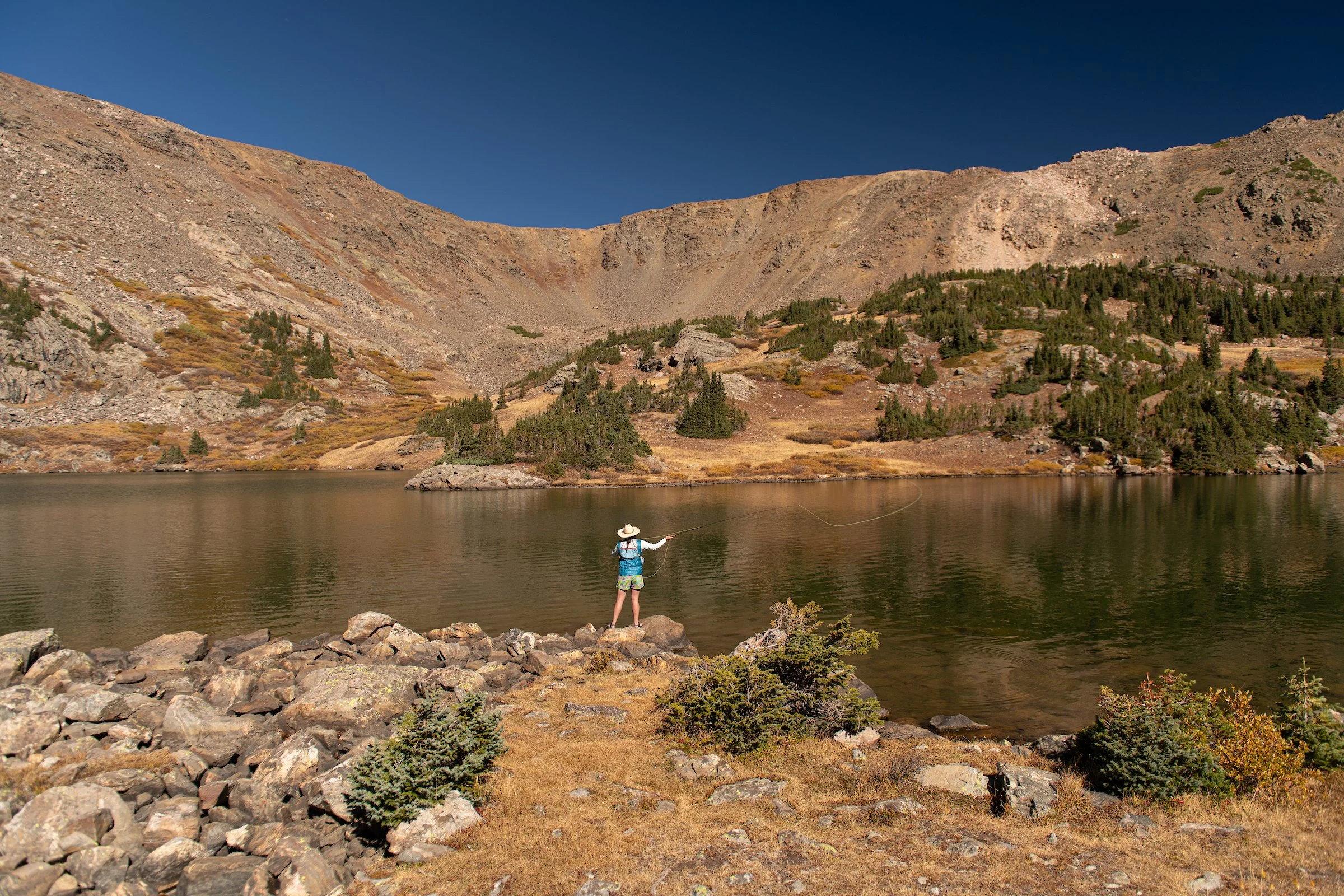
Durango, Colo. — Trout Unlimited announced today its strong support for S. 1635, the San Juan Mountains Wilderness Act of 2011. The bill, authored by Sen. Mark Udall and co-sponsored by Sen. Michael Bennet, would conserve more than 60,000 acres of outstanding fish and wildlife habitat on public land in Southwest Colorado, and with it, countless opportunities for sportsmen and women to hunt, fish and provide sustainable economic benefits to the communities in the region. “This is a beautiful, high-altitude area that is heavily used by both local sportsmen and visitors to our area,” said Marshall Pendergrass, current president of TU’s Gunnison Gorge Anglers chapter and resident of Montrose. “It’s the key to the tourism economy of Telluride and Ouray.”

Local TU members worked with fellow residents and several conservation organizations to help craft the legislation, which has the support of a wide variety of stakeholders in the area.

“I’ve attended meetings on this proposal from the beginning, and this bill is not a surprise coming down on this area from federal officials. This bill was crafted from the grassroots,” said Ouray resident Tony Chelf, an active member of the Gunnison Gorge Anglers chapter. “It wasn’t easy, but now that the work is done, the bill ought to be passed quickly.”

Both Pendergrass and Chelf, joined by the 10,000 members of Colorado Trout Unlimited, called on Colorado Rep. Scott Tipton to support a twin measure in the House of Representatives to ensure the bill’s speedy passage through Congress.

“This isn’t a partisan measure,” Chelf said. “It’s not only what the majority of people in this area want to see, it’s a win-win for everyone.”

See also:

Roadless Areas Win Big Victory – But Future for Colorado Still at Risk

Those who care about roadless areas nationwide can rest a bit easier, knowing that the law is indeed on their side.  As reported in the Denver Post, on October 21, the 10th Circuit federal appeals court issued a ruling affirming the 2001 roadless rule and reversing and injunction against the rule that had been issued in the District Court.  The ruling puts the national roadless rule back on firm legal ground.  However, the US Forest Service and Colorado Department of Natural Resources intend to continue forward with a Colorado-specific rule, so we still do not know the protections that will ultimately apply to 4.2 million acres of outstanding Colorado backcountry. Forest Service Chief Tom Tidwell said that while the Obama Administration "strongly supports [the] court decision … we also remain committed to moving forward with the Colorado Roadless Rule for National Forests there."

The most recent draft of the Colorado Rule, while improved from earlier drafts, still is weaker on balance than the 2001 rule which was just reaffirmed in court.  To offset parts of the rule that weaken backcountry protection – such as allowances for coal mining and ski areas – Colorado TU and other sportsmen have called for a number of changes that would strengthen the rule and help it reach a balance that is as strong or stronger than the 2001 rule.  Specific points of concern include:

  • Since some areas enjoy weaker protections, other areas should receive stronger, “Upper Tier” protection.  This status needs to be meaningful, with extra protections such as no surface occupancy stipulations to ensure that energy development takes place without harming habitat, and needs to apply to more of Colorado's backcountry than in the current proposal.
  • Protections need to be strengthened so that Colorado’s native cutthroat trout, which depend heavily on habitat in roadless areas, are adequately protected when activities (such as logging or building of temporary roads) are allowed within roadless backcountry.
  • “Linear construction zones” – a euphemism for a temporary road along the path of a linear facility such as power lines or a pipeline – need to be more tightly restricted to ensure that they do not become a huge loophole that undermines backcountry protection.

Colorado TU has called on the Forest Service to adopt changes to address these concerns and ensure that any Colorado rule is as strong on balance as the 2001 rule.  The fish, wildlife, and recreational economies that rely on healthy Colorado backcountry should enjoy protections every bit as strong as those that apply throughout the rest of the country.

While Colorado’s roadless future remains uncertain, for roadless areas nationwide there is reason to celebrate.  The 10th Circuit decision is a clear rejection of Wyoming's legal arguments against the rule -- the appeals court simply disagreed with the lower court's conclusion that Wyoming's legal arguments were valid. For those who like reading legal decisions, the “money” quote from the decision is:  "Wyoming failed to demonstrate that the Forest Service's promulgation of the Roadless Rule violated the Wilderness Act, NEPA, MUSYA, or NFMA."

Fraser River gets a boost

by Bob Berwyn Summit County Citizen's Voice

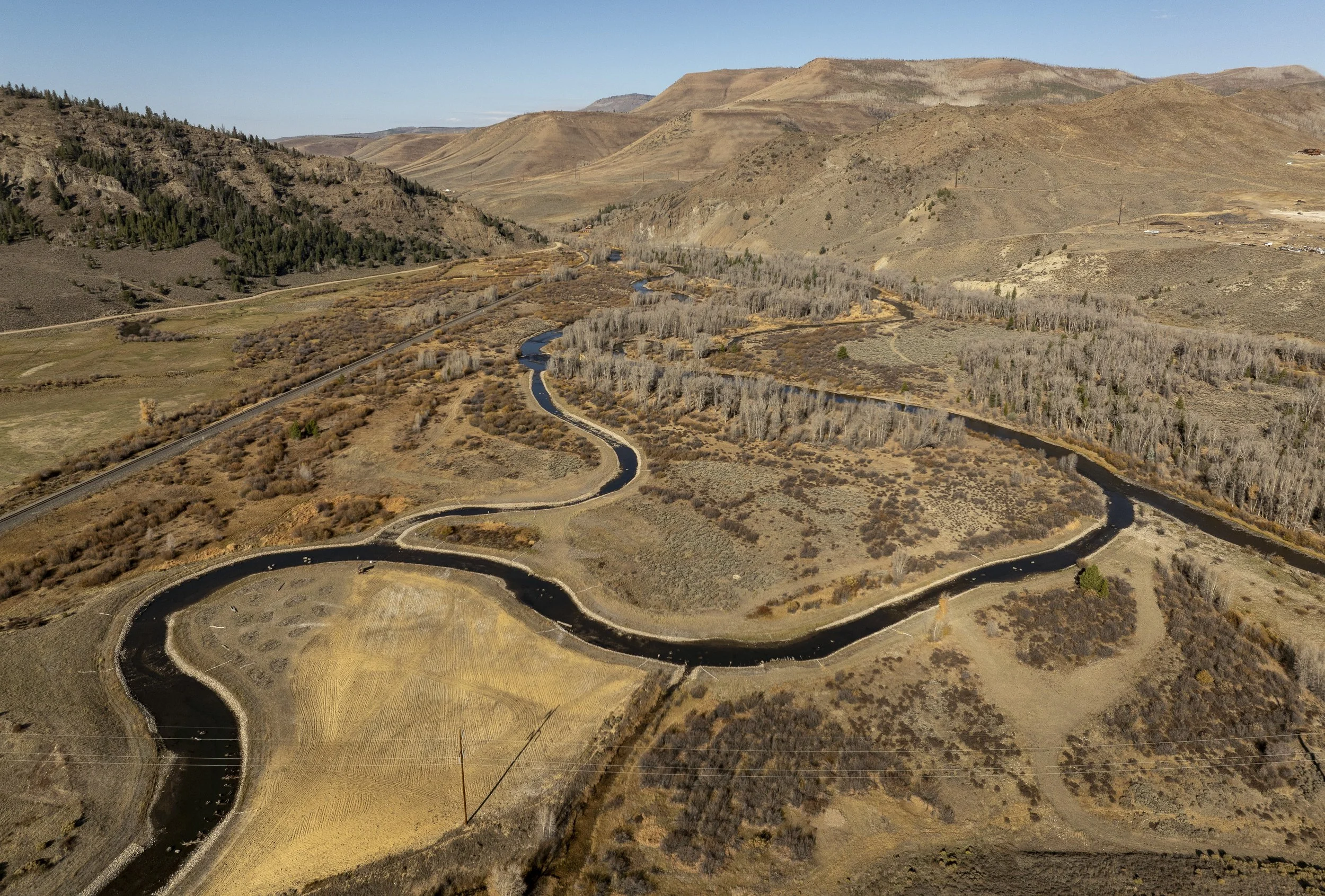
SUMMIT COUNTY — With its flows reduced by upstream tributary diversions, and its river-bottom cobbles choked by highway traction sand, the Fraser River has long been a symbol of the imbalance between resource protection and other uses of water in Colorado.

But the Grand County stream will soon get partial relief, as various agencies from both sides of the Continental Divide teamed up to construct a settling pond near the entrance to the Mary Jane ski area in a project tha symbolizes an emerging spirit of tran-smountain cooperation.

Better maintenance and capture of highway sand can help reduce impacts to tiny aquatic organisms that form the base of the food chain in the river, helping to sustain healthy fisheries. The larvae of the aquatic insects need a coarse bed of rocks at the bottom of the stream to thrive. When the sand fills in all the gaps between the rocks, the bugs have nowhere to go.

The settling pond will also protect municipal and resort water infrastructure and equipment.

Read more

U.S. Senate honors Fraser's Kirk Klancke

By Tonya BinaSky-Hi News

U.S. Sen. Mark Udall, D-Colo., recognized Fraser resident Kirk Klancke on the senate floor in Washington D.C. on Oct. 12 for Klancke's “commitment to preserving our environment and making Colorado a better place to live, work and play.” In his speech to members of the 112th Congress, Udall highlighted the fact that Klancke, president of Grand County's chapter of Trout Unlimited, was recently selected a finalist for Field and Stream's “Heroes of Conservation” Award. “Both Kirk and I have spent time enjoying the natural beauty of our state while appreciating the value of preserving it for future generations,” Udall stated. “His work embodies what I have long held to be true — we don't inherit the Earth from our parents; we borrow it from our children and the generations that will follow.”

Read the full article

Learn more about Colorado TU's efforts to Defend the Colorado River

Guest Commentary: We don't need to drill it all

Denver Post Bill Fales and Auden Schendler

What a thing it was. Seven green John Deere​ tractors, buckets skyward, hundreds of thousands of dollars in farm ordinance, rolling down Main Street in Carbondale on a beautiful Saturday earlier this month. The tractors, in the height of fall roundup, were on the way to ... a street protest.

Really.

These tractor owners are not Occupy Wall Street types. They wear crushed and filthy felt cowboy hats. They have no iPhones. They don't use Soft Soap. Lotion is as foreign an idea as complaining. And yet here they were, in these fractious times, going to meet their friends -- 300 of them, in fact: the hippies and the hunters, the drummers and the Republicans, the women in long flowing dresses, the businessmen and the children, fellow cattlemen and grandparents.

They gathered under the name the Thompson Divide Coalition (TDC), organized more than three years ago to protect 221,000 acres of Forest Service land just outside of Carbondale from gas drilling. Thompson Divide is a place for all people: It's the town's viewshed; it hosts a popular climbing area; offers five months of grazing for cattle owned by local ranchers who provide an important and growing source of healthy local food; it includes hiking trails around a pristine creek; an incredible nonprofit Nordic ski area; one of the best game management units for hunting elk and deer in the nation; and a vast system of snowmobile trails.

Because these uses touch everyone, it's hard to find anyone in the Crystal or Roaring Fork Valleys who doesn't support the coalition. The signs speak to that: Tractors for Thompson Divide. Ranchers for Thompson Divide. Save It For the Kids. Cows Need Grass, Not Gas. Clean Air, Clean Water = Priceless.

And the message from this group was, in short, that we don't need to drill it all. While gas is useful and necessary, and the business provides jobs and food for families, we don't have to drill every square inch. Today, Western Colorado is seeing some of the highest wellhead density in the West. And we as a state are going to town on our bountiful reserves, no question.

Read more here...

Bill Fales is a rancher and owner of Cold Mountain Ranch. Auden Schendler is a vice president at Aspen Skiing Company​.

Study: Climate Change Threatens Trout Habitat

  From Colorado Public Radio - Please take a moment to listen:

Drive past a river in Colorado’s mountains and there’s a good chance you’ll see someone trying to land a trout. But now, scientists say, Colorado’s best trout-fishing rivers are in jeopardy because of climate change. A new study says trout habitat in the West will shrink by about half over the next 70 years. Kurt Fausch is a professor of fish biology at Colorado State University, and a co-author of the study. He speaks with Ryan Warner.

Click here to visit CPR and listen to the podcast.

FERC Finds Million Application Deficient

An application for an environmental review of the proposed Flaming Gorge pipeline, submitted by Aaron Million's Wyco Power and Water Inc., has been found deficent by the Federal Energy Regulatory Commission. In requesting that Mr. Million provide greater specificity in his plans and fill-in gaps in information, the agency also appears to question the appropriateness of being the lead agency for the project's review: "Because the Commission would only have jurisdiction with regard to the proposed hydroelectric development, which is only one component of the proposed 501-mile-long water supply pipeline project, construction of substantial parts of the overall project may require permits from other federal agencies. For the 3,212 acres of federal land you identify in exhibit 3, please identify the responsible federal agencies that manage those lands."

The Flaming Gorge Pipeline, estimated by the Colorado Water Conservation Board to cost nearly $9 billion to build, is known by its detractors as the "most expensive water in Colorado history."

See complete coverage of the Flaming Gorge Pipeline by Western Resource Advocates.

See the actual FERC letter to Wyco Power and Water.

See the video about the Flaming Gorge Pipeline shot by Pete McBride.

Not as bad as climate change models predict

Robin Knox, CoordinatorWestern Native Trout Initiative

It is a risky proposition to try to predict outcomes in nature based solely on a single environmental event or external consequence. We should remember America’s Draconian views on fire suppression and U.S. Forest Service's fire policy before and after the great fire in Yellowstone National Park in 1988.

We were reminded of “unpredictable nature” once again after reviewing the recent report published in the Proceedings of the National Academy of Sciences (Wenger et al.,2011) discussing the potential effects of various climate change models on the future distribution of four trout species in the western United States.

In the worst case scenario, under a University of Washington climate change model-MIROC3.2 (Liittel et al. 2010), the Wenger report predicts a possible 47 percent decline in all trout habitat and a 58 percent decline in native cutthroat trout habitat due to increased water temperatures and negative interactions with non-native rainbow, brook and brown trout.

While the comprehensive report provided valuable insight into the precarious future of western trout populations due to factors related directly to climate change, it’s important to remember there are many other variables involved with coldwater native trout fisheries.

Climate change and its predicted impact notwithstanding, native trout fisheries will continue to face the realities of an expanding human population across vast stretches of the West. Regardless of your belief in the predictability of climate change models, the status of native western trout hangs in the balance for many reasons. In addition to the changing weather patterns, fisheries will continue to be negatively impacted by the demands for water and energy, drought and forest fires, and competition with introduced non-native species. The good news is that these negative impacts can be reduced and altered by sound conservation policies at the local, state and federal levels.

So it was unfortunate that the authors of this paper focused solely on the predicted decline and demise of these fish species without factoring in potential remediation efforts. Among these are better resource management practices, habitat protection and conservation initiatives to help protect these valuable fish species. It’s interesting to note that brook trout, for example, one of the main competitors of other native trout species, may suffer even greater negative impacts from climate change and thus reduce the competition for habitat with cutthroat trout where they coexist.

Since 2006, the Western Native Trout Initiative (WNTI) has been working to protect, restore and enhance the habitats of western native trout, and reduce the competition with non-native fish species. The fundamental goal of WNTI is to speed the implementation of conservation strategies for native trout across the West. The intent is to have conservation and management actions focus on common themes that include (but are not limited to) water quantity and water quality improvements, improving fish passage and connectivity of watersheds, developing in-stream and riparian habitat to cool waters, and conducting non-native fish removals. These actions are supported by WNTI’s designation as a National Fish Habit Partnership under the auspices of the parallel National Fish Habitat Action Plan (NFHAP).

Taking corrective actions to conserve and protect the 19 species of native trout and char here in the West and other important trout habitats across the country from environmental threats such as climate change and water loss comes with a cost, of course. Action by trout anglers across the country to help financially support the programs of trout-related Initiatives like WNTI or the Eastern Brook Trout Joint Venture is sorely needed. Sound habitat management practices for trout can result in lowered water temperatures, stronger resilience to drought, flood and fire events, all of which are expected to become more common as weather patters change in the future.

Anglers and the greater conservation community in general have always supported worthwhile efforts like these in the past. They need to step up to the plate once again for the future. For more information on how to help, visit www.westernnativetrout.org and www.fishhabitat.org.

Orvis & Conservation

  Did you know? Orvis donates one of the largest amounts to conservation in the fly-fishing industry.

At Orvis, we live by the mantra, "If our company is to benefits from our customers' enjoyment of our natural environment, we must act to preserve it." Thus, we donate 5% of our pre-tax profits to the support of worth-while projects that protect nature. Each year, a number of renowned conservation organizations apply for matching grants from our company.

~ Perk Perkins, Chief Executive Officer

In fact, Orvis has recently donated a large amount to the Western Native Trout Initiative, and has also donated a new Superfine Touch 804-4 rod, a Battenkill Bar Stock II reel, and a WF Trout Wonderline for The Greenbacks to raffle at the Colorado premier of CONNECT next week.

Orvis' dedication to protecting our environment for future generations is greatly appreciated. Please visit their conservation blog for more information on the projects they are currently helping by clicking the image below.


White River Best Wild Places - Part II

By Aaron Kindle Finishing the tale from yesterday's post - White River Best Wild Places - Part I

Day three we headed downstream to examine the impacts of oil and gas development and to see some of the little known wild gems of the lower White.  We began on Piceance Creek road, the center of most energy development in the basin. We saw a large pipeline being constructed, many oil and gas facilities and rigs, and a few streams that have been altered from both grazing and energy development.  Fortunately, we had the pleasure of bringing Scott Warner along for this portion of the trip. Scott is a member of the newly formed TU chapter in Steamboat and has hunted the lower White for 15 years. He offered lots of perspective, explained how energy development had changed the area, and told us hunting stories.


Here I took the chance to explain our efforts regarding energy in the basin including the Sportsmen’s Conservation Vision that I recently submitted to the BLM. The document was created in hopes of helping the BLM craft the appropriate stipulations and other safeguards for energy production to ensure the permanent existence of hunting and fishing on BLM lands in the basin. It calls for a prudent and common sense approach to development and offers guidance for developing in a responsible manner that is compatible with land and stream conservation.

As the tour continued, we traveled high onto the Cathedral Bluffs and had the chance to gaze down into Lake and Soldier Creeks. These two creeks hold some of the last remaining pure populations of cutthroat trout in the lower White River Basin. One can tell why these streams hold the elusive creatures – they are pristine, mostly unroaded, and undisturbed by most people. TU is working on several fronts to keep these creeks and others like them in the basin protected and restored where necessary.

The last morning we wrapped up the trip with some small creek fishing for Colorado River Cutthroats on a small tributary to the White River. In only a couple hours we all had caught several fish and I was even lucky enough to land a big cutthroat/cutbow after some thoughtful coaching from Kirk Deeter and Chris Herrman.


We ended the trip by visiting a ranch where Chris has been working on an easement. We met with the ranch manager, a Rio Blanco County Commissioner, and a fishing guide. After listening intently to their perspectives and ideas about how to move into the future in the basin, a sense of both satisfaction and melancholy came over me. While I am happy about our work in the basin and the success we are starting to find, it is always hard to leave such a great area and to say goodbye to great folks dedicated to keeping wild places wild. The White River Basin is a great wild place. May it always stay that way.

Look for more from Field and Stream in the coming weeks about the tour.

Best regards, Aaron Kindle       akindle@tu.org