Conservation

Help Defend the Upper Colorado

Soon, up to 80% of the Upper Colorado could be diverted to the Front Range. Take action today!

Problem

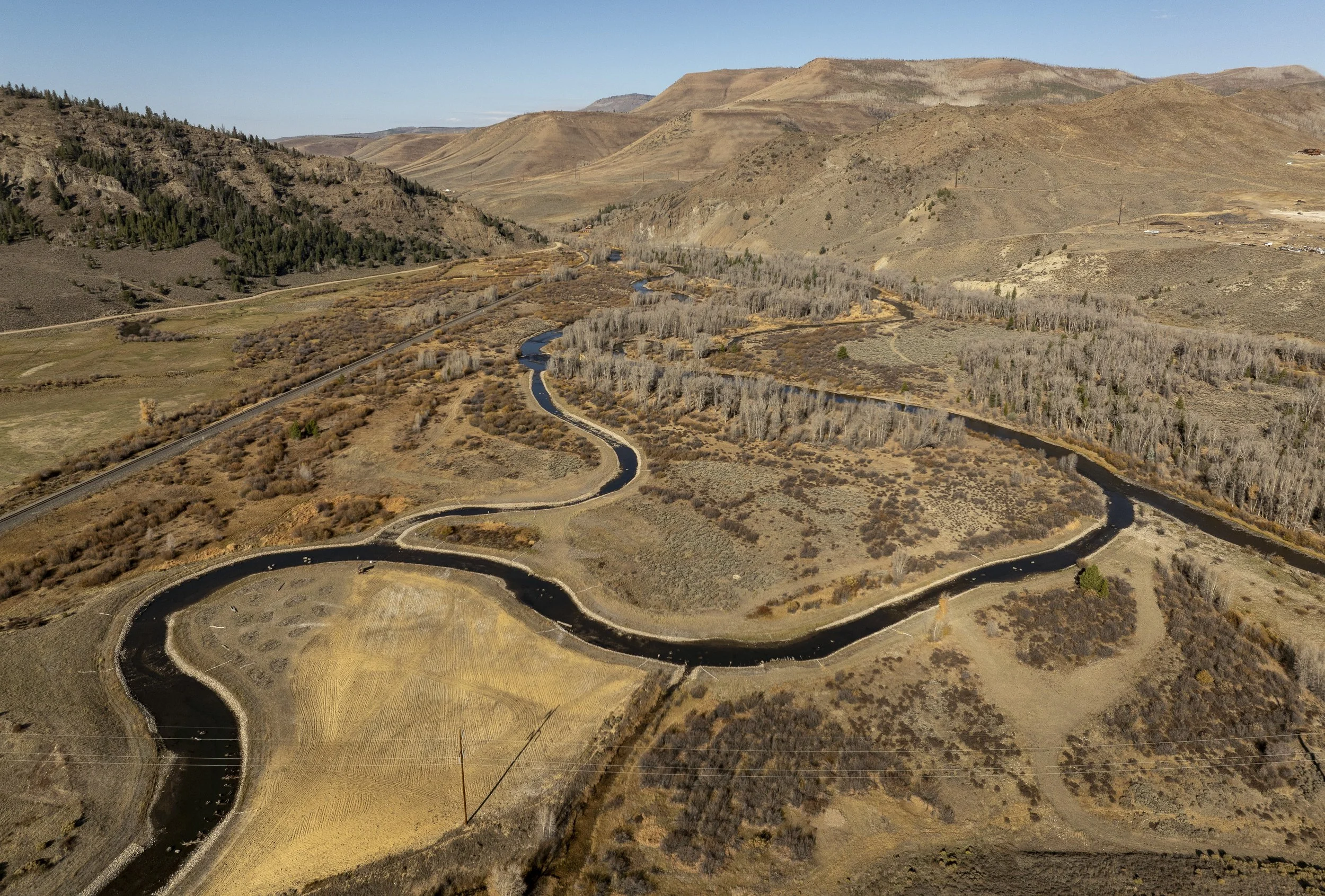
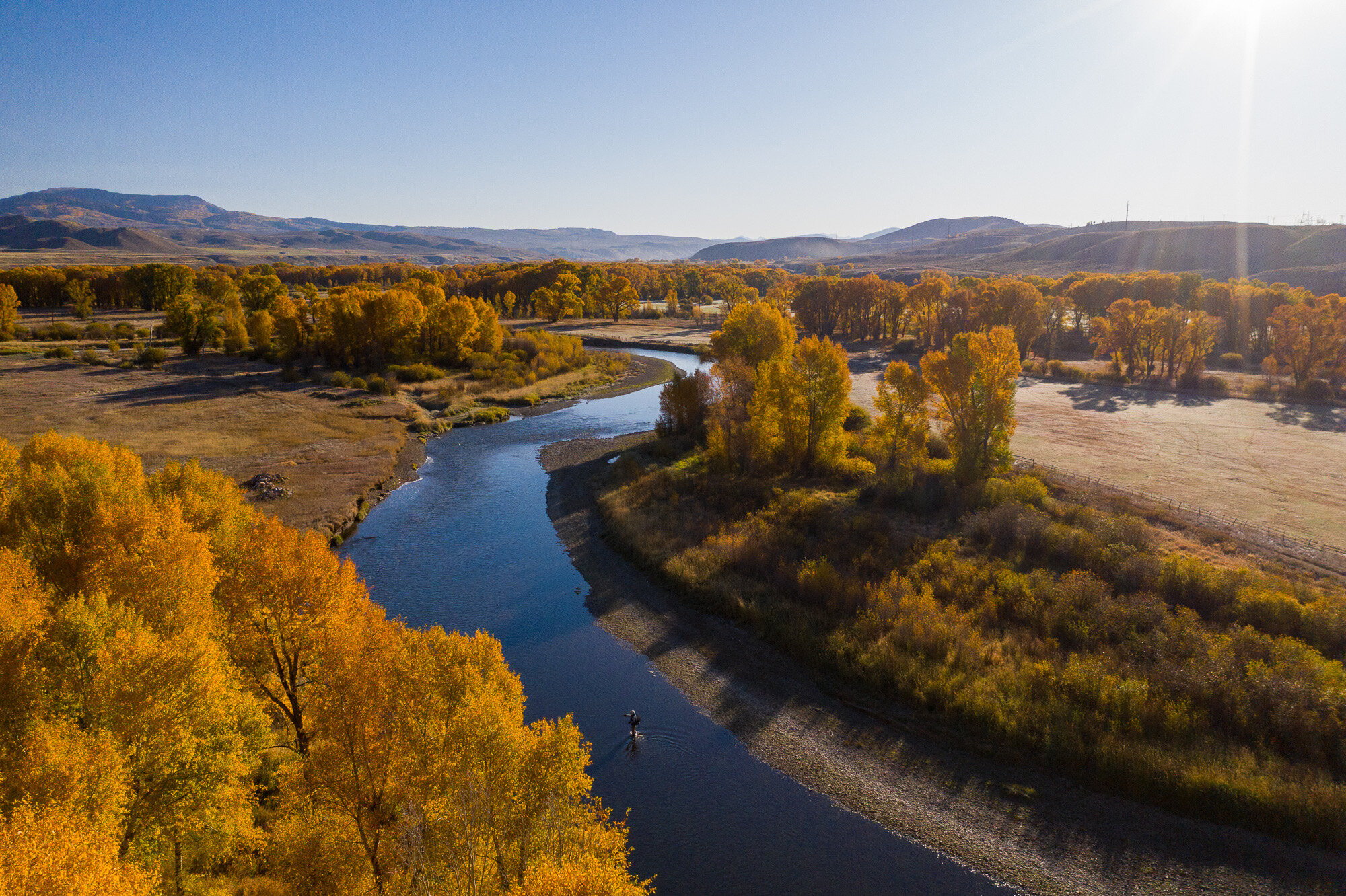
The Upper Colorado River is one of the west’s most iconic - and most at-risk - rivers. Today, over 60% of the Colorado River's native flows are permanently removed at its headwaters and diverted to cities and suburbs across the Front Range, leaving behind a trickle for fish and wildlife, recreation, agriculture, and the local communities that depend on the Colorado River and its tributaries.

And now, despite severe impacts to fish and recreation and public outcry, water providers want to take more through the Windy Gap Firming Project and Moffat Tunnel expansion, putting the Upper Colorado River and key tributaries like the Fraser River at risk for a system-wide collapse.

Solution

The Upper Colorado River and its major tributaries like the Fraser River can be saved for future generations if and only if water providers commit to doing the right thing - developing water projects in a way that keeps the river flowing and cool. The following must be included in each project:

  • Intensive monitoring of fish populations, water temperature, water quality, and flows on creeks and tributaries that supply water to both projects to determine if and when rivers and streams decline.
  • A commitment to change when and how much water is diverted if the river shows signs of collapse. Warm water temperatures, water quality problems, and fish population or macroinvertebrate declines are all conditions that warrant changes in the amount and timing of water diversions.
  • Funding set aside to restore and repair the river. In cases where the river becomes too shallow to support fish and/or meet the state's water quality standards, funds should be invested in an Endowment to cover the costs of necessary restoration. This could include deepening the channel or adding willows and other plants to create shade and keep water temperatures within an acceptable range for fish.

Take Action

If you care about the Colorado River, please consider taking the following actions to keep the river and its fish and wildlife alive:

About the Moffat + Windy Gap Firming Project

The following is intended to provide a brief overview of both water projects that threaten the healthy of the Upper Colorado River and its tributaries like the Fraser River:

  • Windy Gap Firming Project. Water provider Northern Colorado Water Conservancy District has proposed to increase the amount of water they currently pump from Windy Gap Reservoir to the Front Range from 50% to 80% of the river's native flows and storing it across the continental divide in a new reservoir (Chimney Hallow). The river below Windy Gap is already in serious decline with documented losses in trout, stoneflies, sculpin, and water quality. Colorado TU is calling for a comprehensive mitigation package including protections for water temperature and flushing flows, a “bypass” to help reconnect the Colorado River where Windy Gap’s dam has severed it, and funding for river restoration.
  • Moffat Expansion Project. Water provider Denver Water has proposed to significantly increase its diversions from the Fraser and Williams Fork Rivers to provide additional supply its Denver-metro customer base. While Denver’s recent west slope agreement promises some help in addressing existing river problems, it does not address the impacts of the new project on fish and river health. TU is advocating for a responsible mitigation package including protections for flushing flows and stream temperature, as well as funding for river restoration as an “insurance policy” to ensure healthy flows and fish continue to exists within the Colorado, the Fraser, and key tributaries like Ranch Creek.

Questions? Contact Erica Stock, Colorado TU Outreach Director.

Land and Water Conservation Fund sees broad support

2011 has been a wild year, to say the least, with regards to the number of direct assaults on many of the laws and funds that protect open space, clean air and water, and other environmental concerns.  Under the guise of deficit reduction and job creation, many of the bedrock conservation laws that protect the natural resources we all need are being targeted. The Land and Water Conservation Fund, which was originally designed by Congress to dedicate a small portion of royalties from oil and gas development on Federal lands and offshore drilling to open space and land conservation, is arguably the target most severely impacted by these cuts.  Congress is currently trying to divert more than 90% of its mandated royalty funding to other non-conservation purposes.

However a new study illustrates the public's appreciation for the fund and the benefits that it provides to all Americans as a payback for some of the world's largest companies to be allowed to profit from our public trust.  Are we ok with giving away our great outdoors for a short term financial task?

NewWest did a great article on this study...click here to read more.


Trout, Climate, and You!

Sometimes in the chaos, there is opportunity to step up and take the bull by the horns - make a difference and all that. A recent study suggests that trout will be heavily impacted by climate change - here is an excerpt that should shake every conservationist or angler (or angler-conservationist) to the bone...

Today’s paper, in the peer-reviewed Proceedings of the National Academy of Sciences, also predicts that by 2080, rainbow trout, whose native habitat includes Idaho in the Rocky Mountain states, could be reduced by 35 percent. Two introduced trout species in the study will not do well, either: Brook trout habitat could decline by an estimated 77 percent, and brown trout by 48 percent.

That stinks...we gotta do something!  (See the full article here)

Well, we are. As recently as a couple of weeks ago, a team of volunteers descended upon the Roan Plateau to work on a tiny section of Trappers Creek - a place they have been working for around 20 years! Climate change or not, these native cutties are important, and ColoradoTU and Grand Valley Anglers have been busting it to keep that stream intact and cool.

In the Steamboat Springs area, TU is working on Elk Creek on a major restoration project. In Durango, the 5 Rivers Chapter has been driving the Hermosa Creek restoration for years, and is collaborating with state and federal agencies to make change happen. And there are many, many more places TU is working to conserve, protect, and restore.

Its worth it. You can pitch in to - there is plenty to do!

Clear Creek restoration project underway: Trout Unlimited West Denver hopes to improve fish habitat, sense of stewardship

Building on past success, the Trout Unlimited West Denver chapter is about to begin restoration on about three-quarters of a mile of Clear Creek, northwest of Golden.

The Canyon Reach project, with multiple funding sources, will begin near Jefferson County Open Space Park’s Mayhem Gulch development then continue upstream to the vicinity of the park’s paved turnout just below the Colorado 119 and U.S. 6 junction.

Glen Edwards, Trout Unlimited West Denver’s local project director, said the restoration of Clear Creek habitat as a fishery resource is one goal, along with building a sense of stewardship in the community for the entire Clear Creek watershed.

“(We’ll) go down in the stream, move some of the natural rocks to make for better winter habitat — deeper holes and feeding lanes and just places for fish to survive the winter,” he said.

The major portion of the nearly $264,000 in funding came from the Colorado Division of Wildlife’s Fishing is Fun program, to the tune of $168,700. Some $60,000 will come from Jefferson County Conservation Trust Fund allocation, and the Water Conservation Board added more than $20,000. Trout Unlimited West Denver is contributing funds and volunteer work.

Read more:

Clear Creek restoration project underway: http://yourhub.denverpost.com/golden/clear-creek-restoration-project-underway/flTVkh3U7FBtcYiSnEb2VK-story

Guest Commentary: Congress should halt threat to outdoor economy

Colorado's outdoor recreation industry and our very way of life could be lost forever if some members of the U.S. House of Representatives have their way.

Earlier this month, the U.S. House of Representatives Appropriations Committee voted 28-18 in favor of an Interior spending bill that shreds protections for the public lands, parks and rivers that support Colorado's recreation economy and way of life.

Loaded with detrimental policy changes aimed at undercutting the Clean Water Act and the Environmental Protection Agency's ability to keep our rivers, streams and drinking water clean, the 2012 spending bill poses a unprecedented threat to conservation efforts, the economy and the environment.

This Interior appropriations bill represents an extreme agenda to eliminate decades of protections for the air, water and parks Colorado's economy depends on. The outdoor recreation industry generates $10 billion annually right here in Colorado, according to the Outdoor Industry Association. It's an economic engine in our state that supports over 100,000 jobs and accounts for almost a half-billion dollars in state revenues for our schools and roads.

Visitors travel from across the country and across the world to fish our gold medal streams, raft and kayak our free-flowing rivers, ski picturesque mountain peaks and hunt the elk, moose and waterfowl found in abundance throughout our national forests and public lands.

But House Interior appropriations bill threatens all of that. Currently, it includes damaging efforts to:

  • Gut programs that protect our drinking water and preserve parks like the Black Canyon of the Gunnison National Park and fuel a $730 billion outdoor national recreation industry.
  • Clear the way for new uranium mining at the Grand Canyon, threatening the Colorado River water supply for 25 million Americans and a $700 million tourism industry.
  • Undo 40 years of efforts to clean up America's polluted waterways, returning to the days when industry dumped toxic sludge into our drinking water and oil-soaked rivers caught fire. The move comes as the Yellowstone River, a treasured waterway that provides drinking water for Montana residents, was contaminated with spilled oil.

While Colorado's economy is showing slow signs of recovery, we cannot afford to lose what little progress we have made. The Interior appropriations bill will permanently alter the condition of the places that support our families and our way of life.

Congress has a choice: support the long term economic benefits provided by places like the Black Canyon of the Gunnison National Park, Rocky Mountain National Park and the thousands of American jobs that they support, or do away with the protections for places where we hunt, fish and recreate.

Continuing to cut critical funding and protections for our nation's rivers, lakes and public only robs our children, grandchildren and local communities of the recreation opportunities we've enjoyed and depended on for generations. Without protections that keep our rivers clean, our parks, local water supplies, gold medal fisheries, wildlife and local economies face a sad future. Programs like the Land and Water Conservation Fund -- funded through offshore drilling royalties, not taxpayer dollars -- could be slashed by 80 percent.

As passionate anglers and sportsmen, we encourage our Congressional Representatives in Colorado -- especially Rep. Cory Gardner, who sits on the Congressional Sportsmen Caucus, and Rep. Scott Tipton, who sits on the Natural Resources Committee -- to recognize the recreational, economic, and lifestyle benefits of protecting our water and rivers when they vote on the Interior appropriations bill and amendments.

Sinjin Eberle is president of Colorado Trout Unlimited. John LeCoq is the founder of Fishpond USA.

http://www.denverpost.com/opinion/ci_18546134

Environmental groups rally in Denver against bill in U.S. House

Colorado hunting, fishing, bird-watching and other environment groups rallied Friday to oppose federal legislation that they say would hurt Western economies and natural resources.

The legislation — a spending bill pushed by House Republicans and up for a full House vote next week — would allow uranium mining on public lands near the Grand Canyon, limit the government's ability to set standards for controlling greenhouse-gas pollution and grant exemptions from laws to protect air and water. It would cut $2.1 billion from Forest Service, Environmental Protection Agency and Department of Interior programs that heavily affect Western states.

"What we have here is a recipe of toxic ingredients that'll make for a very foul stew," Colorado Wildlife Federation director Suzanne O'Neill said at the event in central Denver.

Colorado Trout Unlimited president Sinjin Eberle said the bill would weaken protection for rivers and landscapes, including the Black Canyon, just when they need greater protection. "This is a giveaway of our great outdoors," he said.

Supporters of the bill have targeted the EPA, in particular, accusing the agency of regulatory zeal that kills jobs. They contend the legislation is necessary to reduce spending, increase certainty for companies and encourage creation of jobs.

http://www.denverpost.com/news/ci_18534177

Proceeds of Upslope Craft Lager to support Colorado TU

Boulder-based Upslope Brewing recently launched its long-awaited Craft Lager. The label on the can features the Colorado TU logo and the phrase "1% for Rivers," demonstrating the brewery's support of rivers in Colorado. Upslope will be donating 1% of the revenue from sales of the lager to Colorado TU. "Upslope Brewing is the perfect partner with whom to start the 1% for Rivers program," said Sinjin Eberle, President of Colorado TU. "Our organizations are deeply rooted in Colorado, our members and their customers share an appreciation of the outdoors and the role that healthy rivers play, and our marketing strategies are complementary."

Daily Camera: Upslope Brewing Reels in Refreshing Craft Lager

Westword: Upslope Brewing Toasts Its New Tap Room and Cans a New Beer

TU Says the Colorado River is “Dying”

Erica Stock Angling Trade Magazine The Colorado River is Dying … and the fly fishing community must help save it. If this doesn’t upset you, I don’t know what would. As you may or may not be aware – at its headwaters in Grand County, over 50 percent of the Colorado River’s historic annual flows are removed and diverted across the Continental Divide to Front Range cities like Denver, Broomfield, Arvada, and Longmont through the Moffat Tunnel and Colorado Big Thompson Project (aka, the “CBT”). Once it reemerges through spigots and spouts, OVER HALF of that water is used outdoors to sustain lawns and thirsty landscaping.

Read the full article here: http://www.anglingtrade.com/2011/05/25/tu-says-the-colorado-river-is-%E2%80%9Cdying%E2%80%9D/

Willoughby: Colorado water projects raise concern

Scott WilloughbyThe Denver Post

Representatives from Grand County, Trout Unlimited, Northwest Colorado Council of Governments, Colorado River Landowners and Western Resource Advocates expressed concerns over the proposals by the Northern Colorado Water Conservancy District to annually draw thousands of acre-feet more water from Windy Gap Reservoir for Front Range storage and by Denver Water to increase diversions through the Moffat Tunnel to an enlarged Gross Reservoir near Boulder.

http://www.denverpost.com/willoughby/ci_18036814

Colorado River: ‘It shouldn’t be about power and money’

Summit County Citizens Voice
By Bob Berwyn

One challenge is measuring the effectiveness of proposed enhancement and mitigation, said Mely Whiting, of Trout Unlimited. “There are some minimum things that need to go into adaptive management,” she said. “Right now, there are no requirements for baseline monitoring. If you’re going to use (adaptive management) as a vehicle for mitigation, you have to have minimum elements … you need to have an enforcement mechanism that becomes part of the federal permit and you have to have public accountability. The public has to have the ability to say, “‘Hey, you’re not doing it right.’ You have to up the ante,” she said.

Trout Unlimited also says there needs to be more money in the mitigation pot to address future impacts and to ensure adequate resources for the long-term monitoring that will be needed. Read this Colorado Trout Unlimited blog post by Whiting to get a good overview of the issues from the conservation group’s perspective.

http://summitcountyvoice.com/2011/05/07/colorado-river-it-shouldnt-be-about-power-and-money/