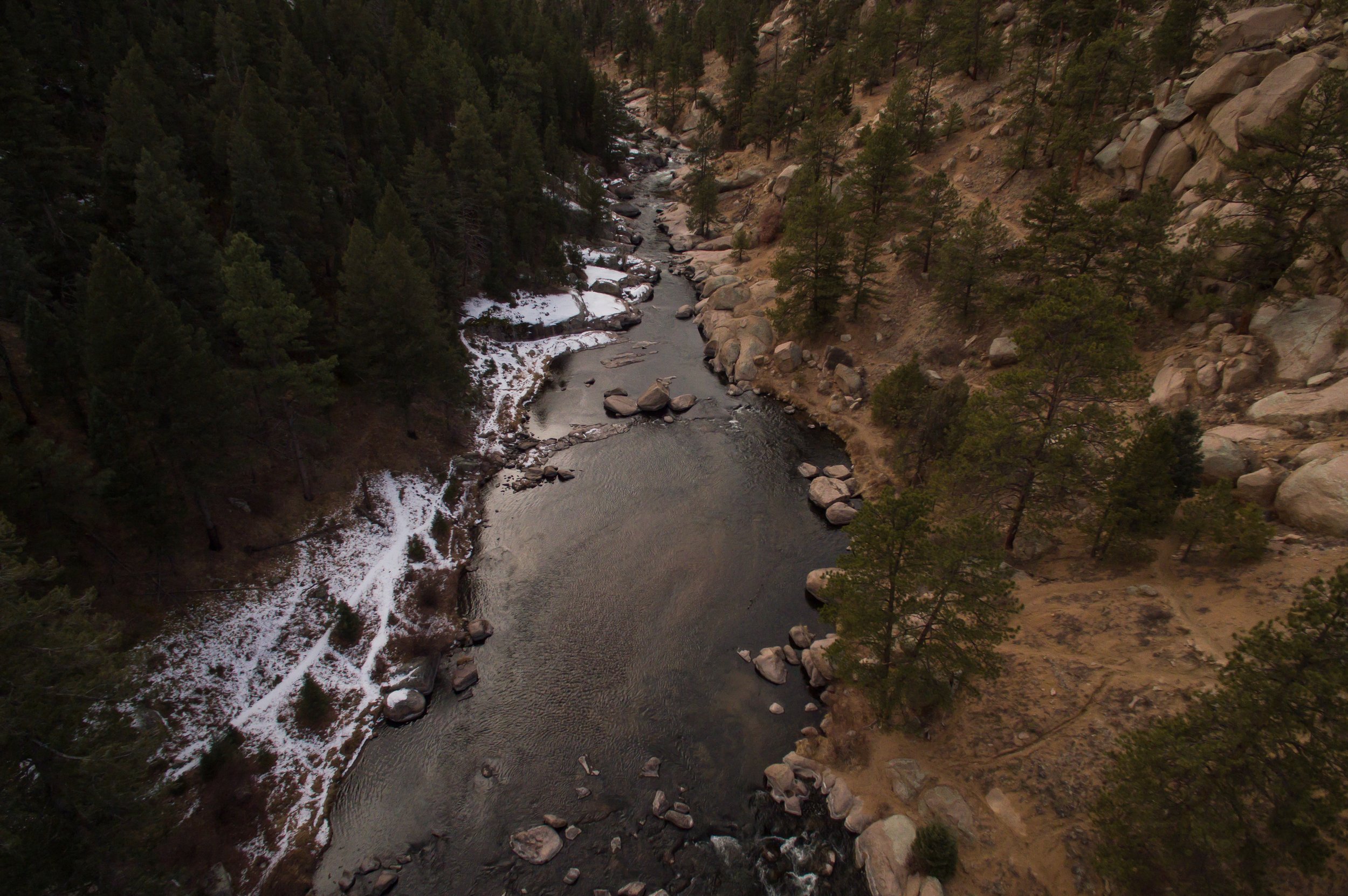
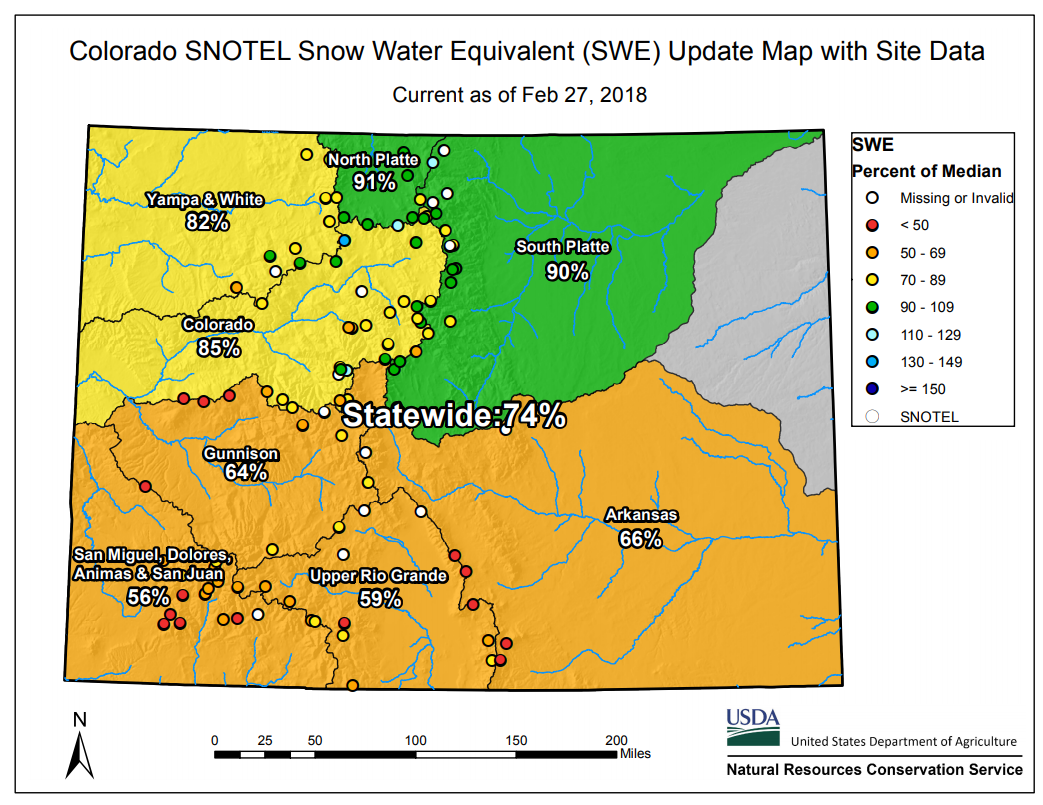
 This winter we have been bombarded with countless news reports and articles warning Coloradoans about the harrowing levels of snowpack we are seeing this year. We too are guilty of broadcasting the doom and gloom, but it's because we are also feeling nervous about the amount of water that will be available during the warmer months. We know that our mountains act as storage for our water by collecting feet upon feet of snow that will slowly feed our streams, rivers, lakes, and reservoirs. So, when scientists and reporters are both saying that certain parts of Colorado are averaging at about half or less their usual snowpack levels - that's an issue.
The word snowpack is part of every Coloradoans common vocabulary because we pretty much use it as a way to measure the well-being of our state. It determines whether Colorado will have successful seasons in skiing, rafting, fishing, and hunting. Not to mention our ranchers and farmers depend heavily on that snowpack for their livelihoods. Snowpack levels affect almost every outdoor business in Colorado.

A new clip from the short film, The End of Snow, addresses those issues that we are having in the west as they relate to snowpack. In Colorado, you meet the "Snow Guardian" a man who has lived in the mountains for years - collecting snow data to pass the time. That data has become a living testament to the changes in climate that scientists have been piecing together. Jane Zelikova, "ecologist with a Ph.D. from CU Boulder has an active project at the University of Wyoming [that] looks at the impacts of dust deposition on snowpack and in her film, The End of Snow, she focuses on the effects of dust deposition in mountainous regions." [1]
The message that the "Snow Guardian" clip emphasizes is one of adaptation. It's much harder and practically impossible to just reverse the path we are on and we probably will end up falling down. But, if we do fall, we must land on our butts because falling face first is much harder to get back up from. Collaboration and adaptation are how we will be able to address the changes in our climate and ultimately Colorado's outdoor economy.



 In his remarks, Colorado TU executive director David Nickum lauded Hickenlooper’s long record of bringing people together to find solutions on river health issues:
 Board—leaders like Tom Gougeon, Penfield Tate, and the late George Beardsley, who encouraged Denver Water to engage with other interests to find cooperative, collaborative solutions – not simply continue the old water fights of the past.” The resulting landmark 2013 Colorado River Cooperative Agreement was groundbreaking and spawned the present Learning by Doing partnership that is meeting water needs while improving the health of the Colorado River watershed.
 Nickum noted that Gov. Hickenlooper had pulled together “the right people, at the right place and time, and with the right support and encouragement, to make these remarkable accomplishments possible. He has done nothing less than create the climate in which river stewardship can thrive in Colorado. And that is the essence of great leadership.”
 to raise over $80,000 for Colorado TU’s conservation efforts throughout the state. Funds from the River Stewardship Gala go towards CTU’s work in youth education, protecting statewide instream flows and temperature, reintroducing and protecting native trout, and preserving and restoring the state’s fisheries and their watersheds.