Gunnison River Festival Hosts Fly Fishing Competition

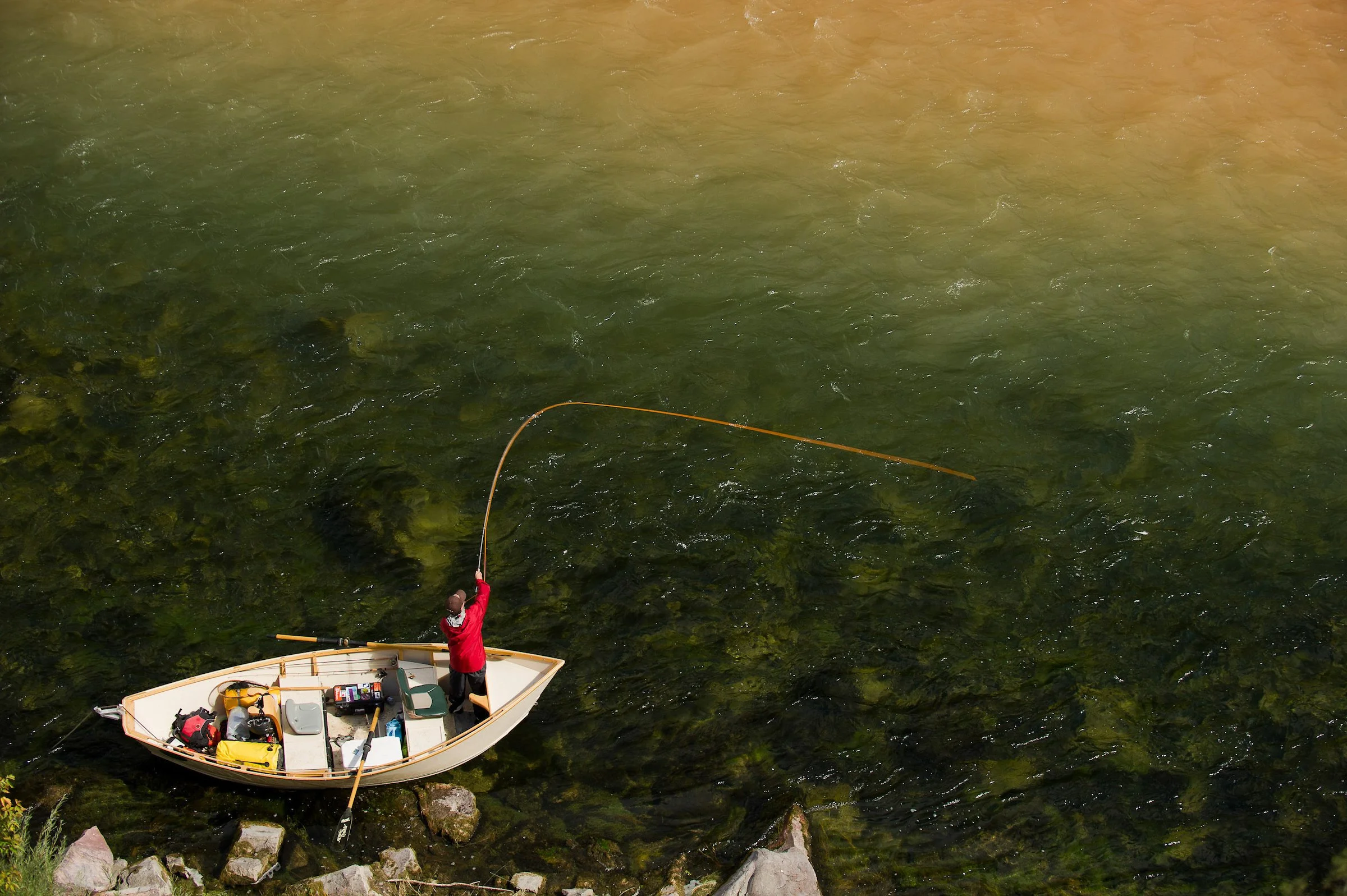
This weekend Gunnison will be hosting their annual river festival in which they embrace the Gunnison river basin through water and stream activities. As part of this year’s festival, there will be a Bridge to Bridge fishing competition. Starting at 9am on Sunday, June 22, boats will depart into the Taylor River and are allowed to float for 2 hours. It will cost $80 per team to register with cash prizes being awarded to the first place team. For second and third place, other great prizes will be offered.Gunnison B2B

Along with the Bridge to Bridge float competition, the river festival will host an open water swim in addition to an array of kayak events, including competitive races and kayak freestyle competitions. There will be an interactive kid’s zone as well.

To register for the Bridge to Bridge float competition or any of the events this weekend, you can contact Jesse Kruthaupt at jkruthaupt@tu.org or at the I Bar Ranch Thursday, June 19 at 6pm.

Check out the Gunnison River Festival website for more information on any of the events including dates and times for each event.

Colorado Stream Explorers Release Trout

With help from Colorado Trout Unlimited (CTU) and Suncor Energy, on June 5, 2014, students from Academy High in the Mapleton School District released approximately 85 fish into the South Platte River for their Trout in the Classroom (TIC) program. As part of Suncor LogoCTU’s South Platte River Explorers program, students raised and cared for rainbow trout in their high school classroom.  

Taught by teacher, Mike Sanchez, students received about 200 fertilized eggs in October of 2013. From then on, students raised the fish into the “fry” stage. To ensure ideal conditions, the class would monitor the fish daily by recording and analyzing the water quality. 

Before releasing the trout into the wild, the students first needed to acclimate the fish to their new waters. Students slowly replaced the water the fish were kept in with river water. “A change of a couple of degrees is a lot for the fish,” said Garrett Hanks, Colorado Trout Unlimited Youth Education Coordinator. “If we just dump them into the river, they could go into shock.”

The release took place at Carson Nature Center in Littleton, Colorado. While at the park, students learned a brief history about the park and the conservation efforts the park is currently undergoing; including a change to the flow and landscape of the river that will improve overall aquatic health, according to South Platte Park supervisor, Skot Latona.

As part of the South Platte River Explorers Program, students also collected macroinvertebrates to test under a microscope in class to get a better understanding of all the species living in the water. This will give the students a better understanding of the aquatic ecosystem and environment.

Students from Academy High take one last look at their fish before releasing it into the wild.

Prior to the release, students tested the water quality to learn about the pH levels, nitrate, dissolved oxygen and coliform levels. This data will help the students understand the environmental needs for fish and other species that rely on the water, which includes people. From the data collected, students can learn how to keep the waters cleaner to achieve maximum aquatic health.

Due to the whirling disease testing in Colorado, TIC is relatively new. It wasn't until a few years ago that the program was approved by the state and Colorado Parks and Wildlife. Thanks to the advocacy efforts of former CTU President, Sharon Lance, who wouldn't take ‘no’ for an answer, The South Platte River Explorers was approved by the state and is currently involved with 10 different schools.

This is the first year Sanchez and Academy High have been involved with TIC and the South Platte River Explorers. As a former seasonal fisheries biologist for Colorado Parks and Wildlife Sanchez was thrilled with the idea of the program when approached from his director and he plans to have the program on his curriculum in the fall of next year.

With funding and support from Suncor Energy, the South Platte River Explorers program offers Stream Explorers and RiverWatch programs along with the Trout in the Classroom. Through these programs, with help from their teachers, students learn a basic understanding of the beauty, complexity, and dynamics of aquatic ecosystems in addition to basic fishing skills and techniques.

Starting in middle school and continuing through high school the program integrates the curriculum through different subjects and different years. With the success the program has already achieved, according to Brandy Radey, Senior Adviser at Suncor, the energy company is looking to continue the South Platte River Explorers program as well as other conservation efforts.

Trout in the Classroom is just one of the programs offered with the South Platte River Explorers program and CTU is looking to continue with the program along with more programs dedicated to youth conservation education.

For more information on the release, look for the free, July/ August edition of High Country Angler magazine from your local fly shop or check out the Denver Post article on the event.

TU calls on Army Corps to include protections for Fraser River

Trout Unlimited and its grassroots members today called on the Army Corps of Engineers to include a river protection package recently approved by stakeholders in the final federal permit for Denver Water’s Moffat project. For more than a decade, Trout Unlimited has closely monitored the water diversion project, concerned about potential impacts on Colorado River headwater streams and their valuable wild trout fisheries. In March, TU, Denver Water and Grand County announced agreement on the Mitigation and Enhancement Coordination Plan (MECP) for Moffat. All sides hailed the stakeholder agreement as a breakthrough that balances municipal needs and environmental health.

At the time, TU emphasized that the effectiveness of this agreement depends on its formal incorporation into the final permit—a point reiterated by TU and its grassroots member during the recent public comment period for the Final Environmental Impact Statement for Moffat, which ended Monday, June 9.

“We believe that implementation of the MECP, as a whole, provides the best opportunity to prevent impacts and improve conditions in the areas most impacted by the Moffat Project,” wrote Mely Whiting, counsel for TU, in TU’s comment letter to the Corps.

The multiparty agreement offers several protections that TU says need to be included with this project. The key features include:

  • Water is made available to address elevated stream temperatures on the Fraser and Ranch Creek;
  • Denver uses its operating flexibility to provide flushing flows to cleanse streams;
  • Ongoing monitoring of stream health, and adaptive management using water and financial resources provided by Denver Water – and leveraged by other partners;
  • Commitment to this monitoring and management program—called “Learning by Doing”—through the project’s federal permit.

The centerpiece of the agreement is the Learning by Doing program, overseen by a management team that includes Denver Water, Grand County, Trout Unlimited, Colorado Parks and Wildlife, the Colorado River District and the Middle Park Water Conservancy District. Upon the project permit being issued, the management team will implement an extensive monitoring program to assess stream health based on specific parameters including stream temperature, aquatic life and riparian vegetation health. Water, financial and other resources committed by Denver Water through project mitigation, the Colorado River Cooperative Agreement and other agreements will be deployed to prevent declines and improve conditions where needed.

In recent weeks, hundreds of TU members have written to the Army Corps, calling on the agency to formally include the MECP agreement in the permit requirements.

“Though I now live in Georgia, I have spent much of my life in Colorado trout streams, and I can attest first hand that further damage to the Fraser will destroy a national treasure,” said Richard Tatem.

“This agreement, the Mitigation and Enhancement Coordination Plan, will protect a river which has been allowed to deteriorate for the past decade,” wrote Jim Belknap, a TU member and Colorado native who grew up in the Fraser Valley. “I have witnessed water temperatures reach dangerous levels while fishing the river the past few years; I have also seen more dead fish in the river—most likely due to the stress of being caught and released in too warm of water. This is a tragic misuse of Colorado's resources, and is resulting in the loss of one of the most beautiful river systems in Colorado. Please help restore the Fraser River to a healthy, thriving river-the type of attribute of Colorado's natural beauty, which has always been one of the state's greatest attractions and economic strengths.”

“I have fished the Fraser River for 20 years and the new Moffat Tunnel would be disastrous unless you make the Mitigation and Enhancement Coordination Plan (MECP) part of the federal permit,” wrote Tom Ciaglo of Louisville, CO.

Several other conservation groups—including Western Resource Advocates, American Rivers, the Sierra Club, and Conservation Colorado—have joined TU in calling for inclusion of the MECP in the final record of decision for the Moffat permit.


Shane Cross, Western Energy Counsel, Sportsmen's Conservation Project

Howdy folks. I am Western Energy Counsel for Trout Unlimited. I work on energy issues, and primarily I work with oil and gas companies and policy makers to promote and support oil and gas development that protects the places we love to hunt and fish. When I tell people I am a lawyer, they often think that my job is to litigate or try cases. While that used to be true, here at TU I think that if I’m litigating I’m not doing my job very well. We believe that fish and wildlife and oil and gas development can all thrive together in the West. And it’s my job to help figure out how we can achieve high value in all three areas while working cooperatively.

We work with oil and gas companies in three primary ways. First, we communicate and collaborate on the front end of planning and policy. For example, when I’m going to submit comments on a Resource Management Plan, I’ll call up the operators I know in the area and identify my concerns before I submit the comments. More often than not, the operators can relate to our concerns and offer suggestions of how we can strengthen our comments while not putting unreasonable prohibitions on industry. This helps to build trust with industry and to identify ways we can work together. For instance, we recently co-signed a letter with the Colorado Oil and Gas Association asking the COGCC to prioritize inspections of wells near riparian areas.

Second, we partner with energy companies on restoration and reconnection projects.  Oil and gas companies often want to contribute to wildlife projects in the area they are operating or are required to undertake mitigation as part of a development. We can identify and provide opportunities for companies to contribute to these projects. In Routt and Moffatt County, Shell Oil recently contributed to and volunteered on two of Brian Hodge’s restoration projects, and we are evaluating a third project with XTO Energy.

Third, we seek to collaborate with oil and gas companies to recommend BMPs and areas to project during development projects. For example, in Lake Canyon, Utah, we worked with Berry Petroleum to identify and evaluate road access routes and BMPs for a development near a CRCT brood fishery. Berry was responsive to our concerns, implemented a closed loop drilling system, and communicated with us throughout the construction process. We are currently seeking similar partnerships in the Thompson Divide, Northwest Colorado, and Eastern Utah.

Energy companies also support our educational programs. Suncor contributes to Garrett’s Trout in the Classroom projects in Colorado, and ConocoPhillips has funded Conservation and Culture programs in New Mexico. Fish and wildlife and energy production are both vital to the West.

As a lifelong rancher, I understand that both energy development and fish and wildlife are vital to our way of life in the West. I am fortunate to work for an organization that recognizes the importance of collaboration, and am looking forward to working with you to continue to identify opportunities to partner with industry to protect our hunting and fishing.

--- Shane Cross, Western Energy Counsel, Sportsmen's Conservation Project scross@tu.org, 307.359.3080

Why Colorado's headwaters matter

There is a bedrock natural law that anglers and most people understand as common sense-all waters are connected. If we trash or pollute a creek upstream, it could affect downstream conditions as well. That's why the newly proposed rule from the Environmental Protection Agency and Corps of Engineers to restore the coverage of the Clean Water Act is so important to Colorado's quality of life...

Colorado is a headwaters state and we understand that these headwater creeks, while small, are vital to the health of our watersheds, wildlife, and water supply. Their health shapes the condition of everything else downstream. They serve as the lifeblood of Colorado's recreation economy.

In Colorado alone, about 75 percent of rivers and streams-some 76,000 miles of waterways-are seasonal or ephemeral in nature and thus could fall outside the net of CWA protection, putting them at the mercy of filling and dredging operations, oil spills, toxic industrial waste and unregulated development...

Our waters, large and small, are interconnected-and to pretend otherwise is to invite disaster. When we allow polluters to dump toxins or trash upstream waters, we can expect pollution and devastation downstream, in our most prized rivers and streams.

Let's support the Clean Water Act's commonsense protection of our most precious heritage-our home waters.

To read the rest of David Nickum's Guest Commentary, please visit The Denver Post.

Help Save the Fraser - Take Action Today!

The Fraser River is a tributary to the Colorado River and an outstanding wild trout river in its own right.  It is also a stream that has been impacted by years of diversions, with Denver Water taking about 60 percent of its natural flows to supply water to the Front Range. They’ve proposed to take another 15 percent of the river through an expansion of their Moffat Tunnel diversion. For the last 8 years, Trout Unlimited has been working hard to make sure that approval of Denver’s Moffat expansion project only happens if the Fraser River and its tributaries are protected and their degraded condition improved. Recently, TU, Grand County and Denver Water agreed on a long-term package of protections for the Fraser basin. Under the plan, Denver would provide funds and water to help address impacts based on an ongoing monitoring and adaptive management program called "Learning by Doing".

This agreement offers the promise of a healthy Fraser River far into the future. Now we need the Army Corps to lock in these protections by including them as requirements in their federal permit for the Moffat Project.  You can help by clicking here and submitting comments through our online action alert.  It is quick and easy - and your voice will make a difference!

Getting Kids Outdoors

The second ever Outdoor Mentors Festival hosted by Colorado Trout Unlimited took place at Chatfield State Park on May 3rd. Fly fishing, bait fishing, canoeing, rock climbing, nature walk, laser shot, air rifle and archery activities were all available for kids to experience at no cost to participants. These activities were provided by our partners at Colorado Bow Hunters Association, Pheasants Forever, Colorado Trout Unlimited, American Canoe Association, Avid4 Adventure and Colorado Parks & Wildlife. OMpic2In an effort to provide experience in outdoor activities to children who may not have that chance in other settings, the event focused on local mentoring groups. There were over 100 participants from Big Brothers Big Sisters, Denver Kids, Inc., and Denver Sports Buddies, along with other organizations. It was often the case during the May 3rd event that it was a child and mentors first time fishing, shooting, canoeing, or rock climbing. Not only was the event at Chatfield a success in that the children had a great time, the mentors also saw how easy and fun it is to take part in some of the activities. Colorado’s great outdoors, and locations such as Chatfield State Park, are meant to be shared by all. We hope events such as this will get more youth outside and caring about our natural resources.

The Colorado Outdoor Mentors are a coalition of conservation organizations, state agencies, youth development organizations, and other key outdoor recreation stakeholders engaged in a sustainable, coordinated effort to expand opportunities for non-traditional audiences to participate in traditional outdoor recreational activities and learn the importance of preserving our conservation heritage.

Whatever outdoor pursuit interests a child, there are organizations providing an outlet for that activity. The Colorado Outdoor Mentors and CTU hope to make those connections and provide those opportunities. By encouraging mentors to share their enjoyment of the outdoors with a child on a regular basis, we can make a significant impact on that child’s perception of the outdoors.

Check in to the events section of www.coloradotu.org to stay up to date on upcoming youth education events throughout the summer.

***Let’s Fish! Day Camp - July 12th, July 19th, and a night of camping on August 3rd - 4th

Colorado Parks and Wildlife’s Angler Outreach Program and Colorado Trout Unlimited are offering a special youth family fishing program for Denver and the surrounding areas. These fishing clinics are designed to recruit and encourage youth participation in fishing and camping. Fishing activities will build upon the skills learned the previous weekend and include: •    Warm Water and Fly Fishing Techniques •    Wildlife Management and Fish Ecology •    “Leave no trace” Camping in Golden Gate Canyon State Park Apply for the Let's Fish Day Camp here.

***Fall Outdoor Mentors Festival - August 16th at Barr Lake State Park

Contact Garrett Hanks at ghanks@tu.org for more information about Colorado Outdoor Mentors and how to participate in future events.

Time to seal the deal on protecting Hermosa Creek

Hermosa Creek in Southwest Colorado is beautiful in many ways. To anglers, it is trout heaven. To mountain bikers, it is an awesome place to ride. To miners, it is a limited but valuable source of minerals. In some circumstances, these constituencies would fight over the future of this wild piece of U.S. Forest Service land just outside Durango.

But that's not the story that has played out.

No, these interests came together in 2007 and began talking and compromising until they had a plan everybody could live with.

And now they're asking Congress to pass the watershed protection bill that is the result of their work. And it needs to happen soon, before elections become the sole focus of Washington, D.C., and a lame-duck Congress presides.

"All the concessions were made in the community," said Ty Churchwell, a Durango resident who is backcountry coordinator for Trout Unlimited. "There's nothing for them to do in D.C. but vote it forward."

Read the rest of the article in The Denver Post.

11,000 and growing!

It's time to celebrate!  Trout Unlimited now has over 11,000 members in Colorado! We are thrilled to have reached this milestone and see it as a testament to the great work of our Chapters and staff all across our beautiful state.  From the Upper Colorado to the Dolores, the South Platte to the Rio Grande, the Blue and beyond, Trout Unlimited works hard to protect our rivers and fish!

Thank you to all of our members for your continuing support of TU in Colorado!

Vote for TU's Own Rebel Melinda Kassen

Rebel With a Cause is an evening full of celebration, laughter, drinking and honoring conservation heroes, hosted by Conservation Colorado - who Trout Unlimited has worked with on a variety of conservation issues throughout the years. Every year they honor a "Rebel" who has in some way been a hero to the environment. This year they are changing it up a bit and YOU can help choose this year's "Rebel with a Cause". They have selected five different Rebel nominees this year and opened up voting from the public to allow all of us to chose the 2014 honoree. While all of the nominees for the award are truly conservation heroes, we are proud to support one of Trout Unlimited's own Rebels, Melinda Kassen. Melinda has devoted her whole career to becoming a "Water Wonk" (self proclaimed) and has fought some of the biggest fights to protect our streams.  At the Environmental Defense Fund, Melinda served as the legal counsel for the conservation opponents of Two Forks Dam.  After a stint on Congressional committee staff in Washington, DC, Melinda returned to Colorado in 1998, to launch the Colorado Water Project program for Trout Unlimited.  She directed that program until 2010, working to improve stream flows and protect fish habitat. Read more about Melinda here.

Because of all she has done for Trout Unlimited and for Colorado's rivers we hope that you will support Melinda and vote for her to be this years' Rebel With A Cause.

Go to this page to vote: http://conservationco.org/rebelvoting/