Lawmakers want reclamation bureau to oversee Leadville tunnel

The [Colorado Springs] Gazette

On Thursday, U.S. Sen. Mark Udall, D-Colo., and Rep. Doug Lamborn, R-Colorado Springs, held a conference call with reporters to announce legislation that would give responsibility for the tunnel to the U.S. Bureau of Reclamation. That agency runs the treatment plant at the tunnel's mouth but has disputed that it is responsible for maintaining the tunnel or removing backed-up water.

Udall, Rep. Salazar back Colorado roadless plan

Vail Daily - Associated PressDenver, CO Colorado

Conservation, hunting and angling groups recently asked Colorado's congressional delegation to urge Gov. Bill Ritter to delay completion of the state's plan while the Obama administration considers a long-term policy for 58 million acres of roadless forests nationwide. Read more

Denver’s Water Conundrum: Balancing Rapid Growth/Diminishing Supply

Washington Park Profile - by Ben Gerig Despite our sophisticated water delivery systems, demand both in Denver and downstream is an escalating drain on the availability of water for posterity “Future needs for water are beyond what the current supply is,” claims Bob Steger, Manager of Raw Water Supply at Denver Water. Read more

California Gives Desalination Plants a Fresh Look

Process to Make Seawater Drinkable Gains Traction, but Environmentalists Object to Heavy Energy Use, Harm to Marine Life Wall Street Journal By SABRINA SHANKMAN

Desalination is most commonly used in such places as Saudi Arabia and northern Africa, where fresh water is scarce.

But in Southern California, authorities are increasingly desperate. Huntington Beach, in Orange County, is planning to break ground on its own desalination plant in 2010. Another plant is in the works at Camp Pendleton, just north of Carlsbad, in San Diego County. Read more

Wild and scenic river study creating tensions

Landowners worried about effects on property, water rights on parcels adjoining protected riversBy LE ROY STANDISH/The Grand Junction Daily Sentinel - Tuesday, July 07, 2009

The Bureau of Land Management is moving forward with a plan that could ask Congress to set aside up to 155 miles of rivers and creeks on BLM areas in northwest Colorado as wild and scenic. Read more

Trout Unlimited plans 'party' for Fraser River

Sky-Hi Daily News Imagine the Fraser River Valley without a river running through it. Imagine the Fraser River without trout swimming in it. Imagine a way to ensure that we always have our rivers and our trout. The Colorado River Headwaters Chapter of Trout Unlimited is holding "A Party for the River" on Saturday, July 18, an invitation to help them help the rivers.

TU will host its annual banquet at Gasthaus Eichler in Winter Park with cocktails beginning at 5:30 p.m., Silent Auction at 6 p.m., and dinner at 7:30 p.m. The $35 tickets can be purchased at Winter Park Optical in the Safeway Center, at Mo' Henry's on Hwy. 40 in Fraser, or by calling 726-5652.

Don't think of this as a party just for fishermen — think of it as a party for people who care about our Grand County environment. The mission of Trout Unlimited is to conserve, protect, restore and enjoy our cold water fisheries and the watersheds upon which they depend, including the already endangered Upper Colorado and the Fraser River.

http://www.skyhidailynews.com/article/20090709/NEWS/907099998/1067

Colorado & Western Water Project Notes

We had a great WWP staff retreat in Wyoming, with: a guest presentation on how the media in the Rockies report on climate change and water; a field trip and slide shows of WY restore/reconnect projects; good discussions about strategic issues as well as upcoming grant applications and reports; a cancelled telemetry tagging opportunity due to high, muddy water conditions (which also meant "challenging" fishing that resulted in two rods broken); and inspiring camaraderie with hard working folks who love their jobs. WWP staff on tour led by WY Water Project Manager Cory Toye


We attended and spoke at the Natural Resources Law Center's Annual water law conference.

The Denver Post published an oped commentary by the WWP Director about why the Clean Water Restoration Act matters for Colorado: http://www.denverpost.com/guestcommentary/ci_12736157

We have been working several other conservation groups on an analysis of the gap between water supply and demand on Colorado’s Front Range. We hope to offer an alternative to a future, additional diversion of water from Colorado’s Western Slope.

The water judge referred Shell’s water rights application to a water referee to preside over preliminary, informal proceedings in the case. The first status conference before the referee will be held mid July.

TU’s Dry Gulch oral argument to the Colorado Supreme Court was held in June. We await a decision from the Court.

Scoping comments on the forthcoming environmental impact statement for Aaron Million’s proposed Flaming Gorge Pipeline project are due to the Army Corps of Engineers at the end of July.

We are performing an analysis of barriers to Colorado River cutthroat trout in the Yampa basin. An aerial survey of barriers was made last week, identifying nearly 400 potential barriers. The next phase of the effort is to narrow our focus to a more workable number of barriers and then perform ground-level surveys.

We Can't All Be in the Same Boat - So Why Not Win Your Own?

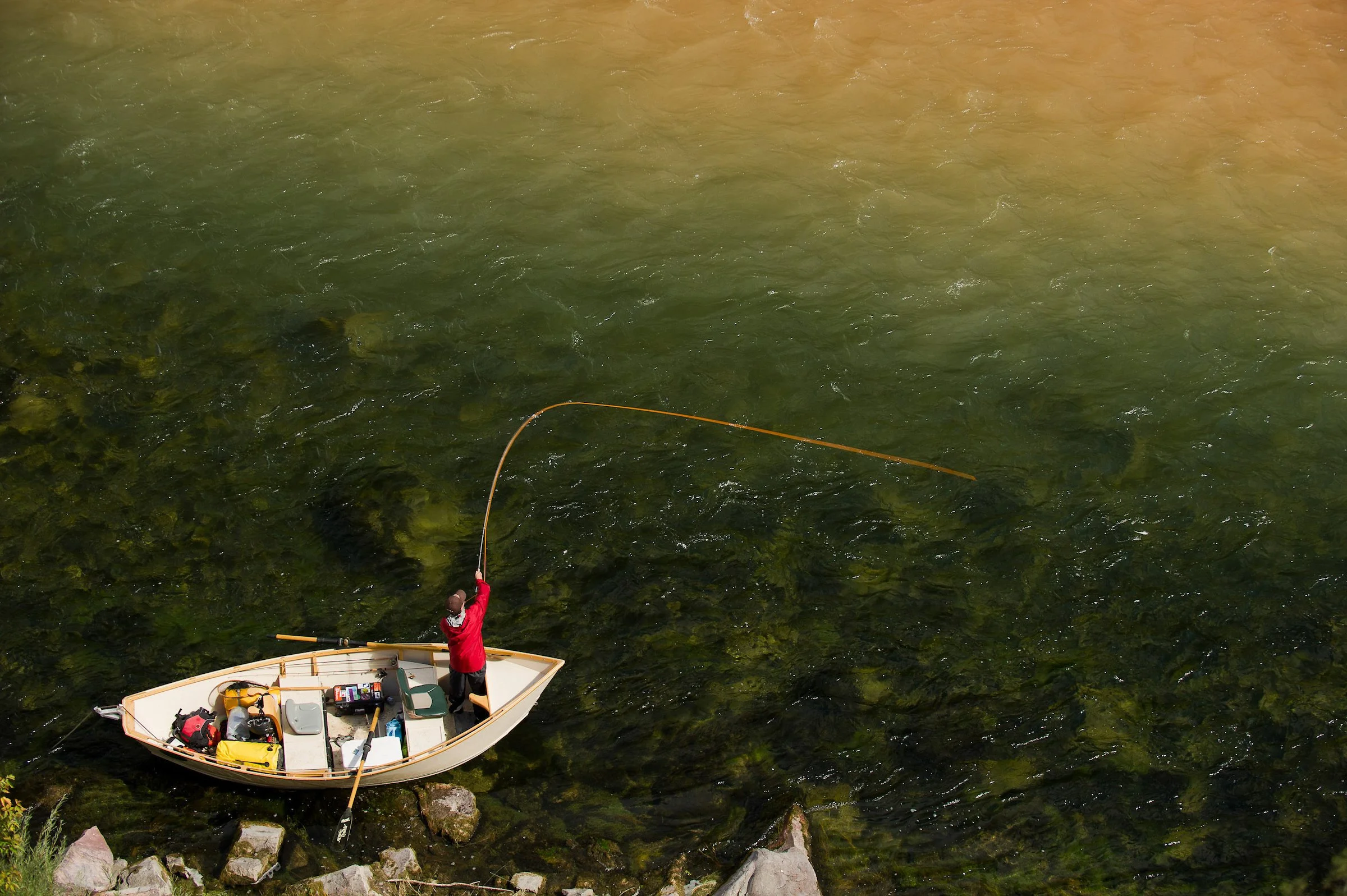
DON'T MISS YOUR OPPORTUNITY to own a TU 50th Anniversary edition ClackaCraft 2009 LP Fly Pod drift boat valued at $9,500. Raffle tickets are $100 each. Drawing will be held August 22, 2009. This is no ordinary driftboat. Click here to take a look.

Restore the Clean Water Act

By Melinda Kassen The Denver Post - Opinion

Many people may not remember what America's waters were like before the Clean Water Act. The Cuyahoga River caught fire. Lake Erie was a dead zone. Rivers and streams across the country were foaming, foul-smelling dumps for industrial waste. Reckless development destroyed hundreds of thousands of acres of wetlands and wildlife habitat each year.

 The sorry state of our waters was more than a national disgrace — it also was a clear and present threat to public health. Then, in 1972, Congress passed the Clean Water Act. The law ushered in a new era of stewardship of all "water of the United States," and it was widely understood to protect every stream, river, marsh and lake in the nation.

For almost 30 years, the CWA worked to make America's waters clean, fishable and swimmable. And our country moved from an ethic of "out of sight, out of mind," to "everyone lives downstream." Now that ethic is under assault — and so again are our rivers and streams.

In recent years, the Supreme Court has issued confusing and muddled rulings that have distorted the original language of the Clean Water Act and drastically narrowed its scope. Worse, the justices themselves have not agreed on what the law means, with four justices suggesting that only rivers that flow year-round and can float logs or boats deserve protection. As a result of this legal confusion, some 20 million acres of our country's wetlands and millions of miles of rivers and streams have been stripped of protections.

In Colorado, about 75 percent of rivers and streams — some 76,000 miles of waterways — run either seasonally during spring runoff or after summer rains, and thus may no longer qualify for CWA protection from dredging operations, oil spills, discharges of industrial waste or sewage, construction or unregulated development.

That's why Congress must pass the Clean Water Restoration Act. Critics portray CWRA as a federal power grab, but the bill does precisely what it says — it restores the original scope of the Clean Water Act, no more and no less. A key clarification at the heart of the bill — changing the phrase "navigable waters" to "waters of the United States" — follows the interpretation used in the original Clean Water Act and applied by the Army Corps of Engineers and Environmental Protection Agency for decades. The bill also continues existing exemptions for farm and ranch operations. Even small, seasonal streams have immense biological value as fish habitat. Field and Stream magazine recently called CWRA a top legislative priority for sportsmen, citing its protection of wetlands that are "among the most important habitats for waterfowl and a host of other wildlife."

The Clean Water Act is based on a commonsense truth: Our waters, large and small, are interconnected — and to pretend otherwise is to invite disaster. When we allow polluters to dump toxins or trash upstream, we can expect pollution and devastation downstream, in our most prized rivers and streams.

Colorado Sen. Mark Udall and Sen. Michael Bennet expressed opposition to CWRA when it was introduced, calling its language overly broad. But their concerns about impacts on agriculture have been directly addressed in the compromise bill approved June 18 by the Senate Environment and Public Works Committee.

It is time for both senators to support the bill. The Clean Water Restoration Act protects Colorado's streams and rivers from polluters who want the right to trash our state's waters. Melinda Kassen of Boulder is director of Trout Unlimited's Western Water Project.