A little help please for Headwaters TU!

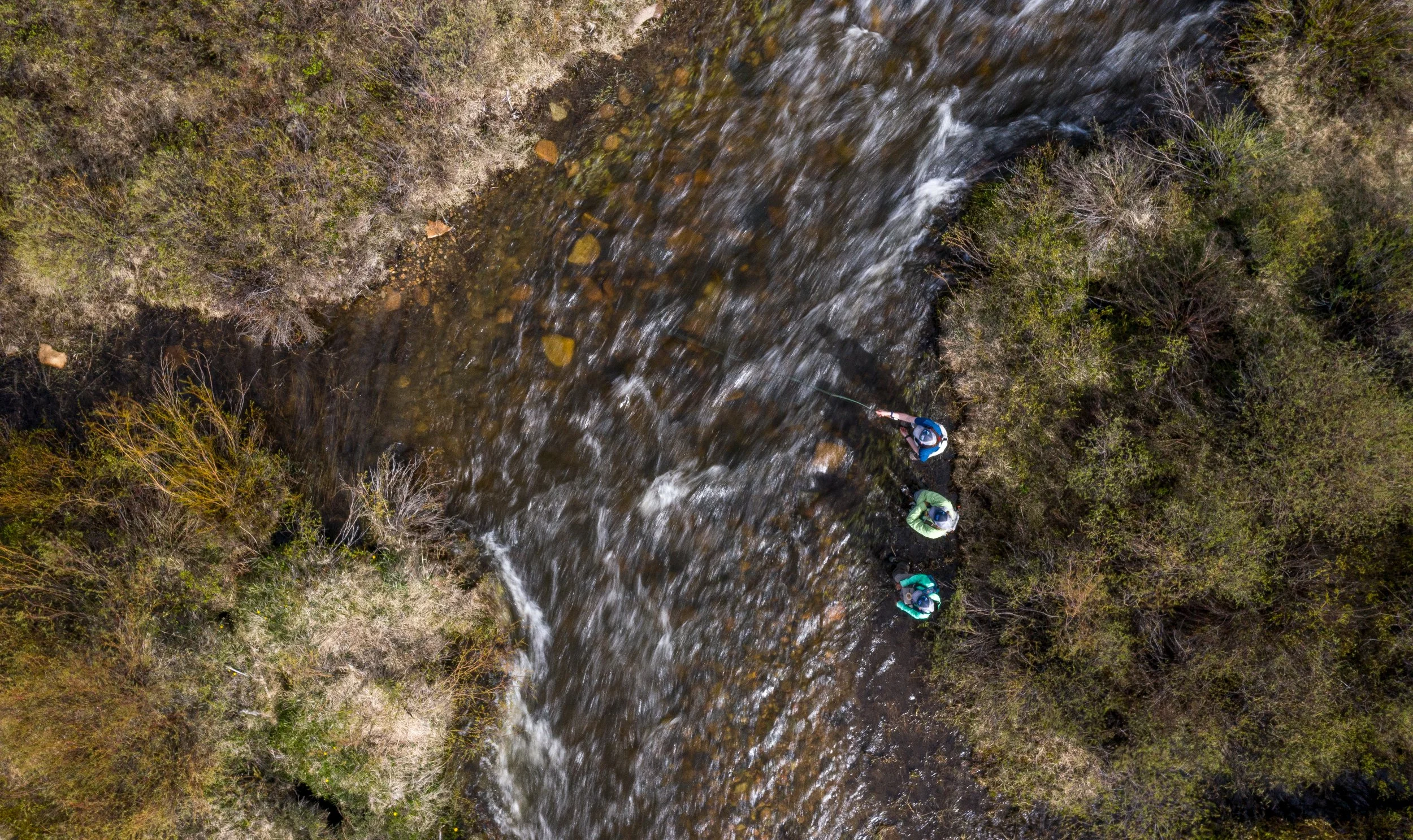
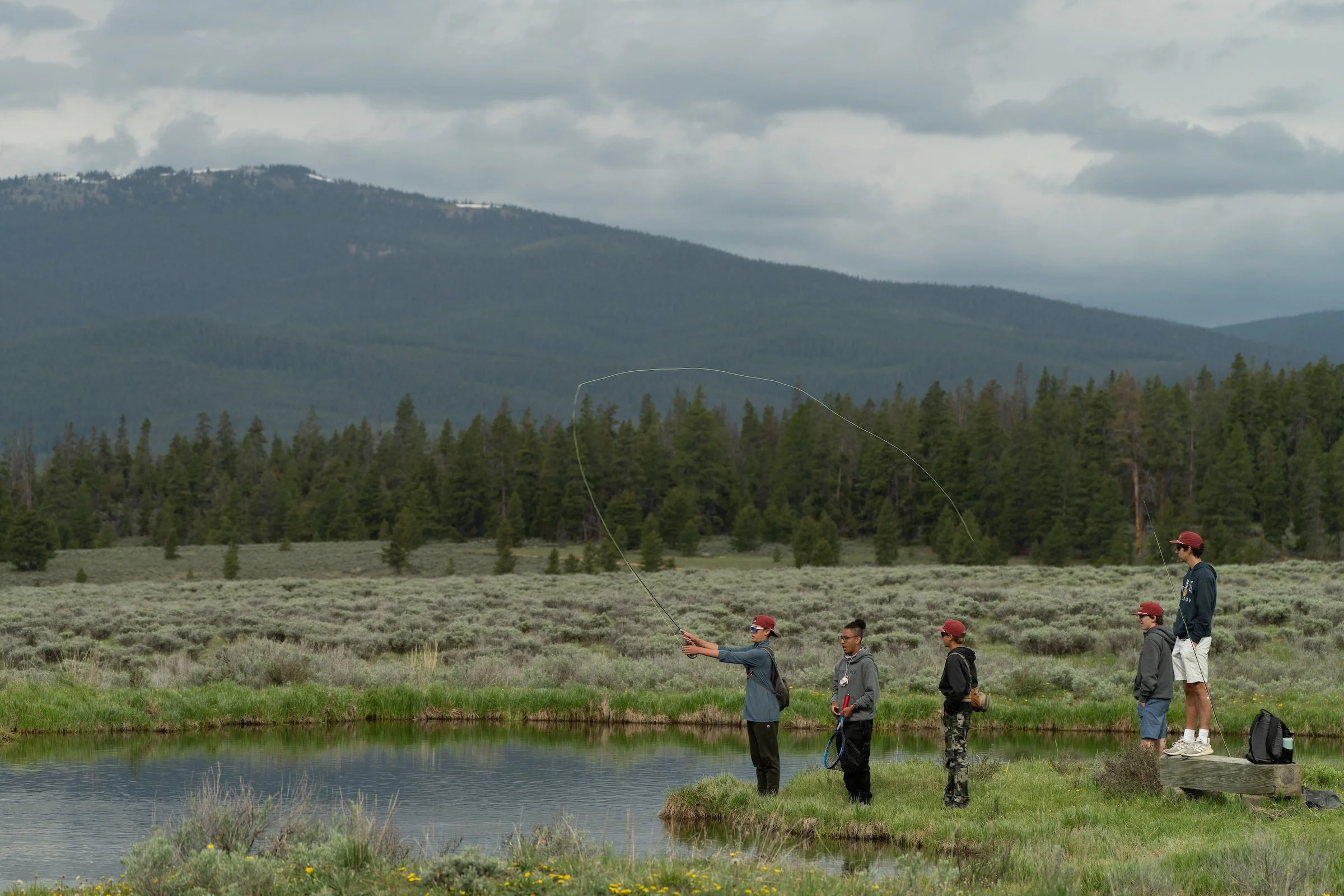
Colorado Headwaters TU is looking for a few volunteers for a couple of fun and worthwhile causes…. (1). Teach fishing to East Grand Middle School students and (2). Support BLM public land day.We need volunteers to help teach fishing to the East Grand Middle School as part of our Headwaters Outreach Initiative. Volunteers will teach the students about fish and insects, their habitat, where to find them and how to catch them. (Info on what to say is provided if you are not comfortable with the topics).We need volunteers for Monday the 17th and Wednesday the 19th at the Fraser ponds from 8:30 till 3:00. Thursday the 27th in Rocky Mountain National Park not sure on time yet.

BLM Public Lands Day Saturday Sept 29th. Trail building from the Strawberry Road into the Fraser River Canyon. This project will enhance current trail and parking areas, add an information kiosk and revegetate certain areas. Volunteers can meet at the trail head on the Strawberry road at 8:30am or at Snow Mountain Ranch at 7:30 with transportation provided. A Party will be held for volunteers back at Snow Mountain Ranch that afternoon with free food and beer.

Interested volunteers can call Scott for more info W 726-5652 or H 887-1657. Please considering helping with these important projects.

CTU Leads Great Colorado Rivers Cleanup Sept. 15

http://denver.yourhub.com/Boulder/Stories/Environment/Cleanups/Story~358219.aspx BOULDER, Colo. - Sept. 6, 2007 - Colorado Trout Unlimited (CTU), a nonprofit organization dedicated to conserving, protecting and restoring Colorado's coldwater fisheries, will lead the fourth annual Great Colorado Rivers Cleanup on Saturday, September 15, to remove trash and debris from river banks and channels throughout the state. CTU members and volunteers will scour designated river stretches near Aspen, Basalt, Boulder, Buena Vista, Carbondale, Colorado Springs, Denver, Durango, Evergreen, Fort Collins, Glenwood Springs, Idaho Springs, Granby, Leadville, Lyons, Pueblo, Silverthorne, Salida and Winter Park to remove trash and elevate the health of Colorado's water sources.

"We rely on Colorado's clean water supply everyday - it is one of our most precious natural resources," said David Nickum, executive director of Colorado Trout Unlimited. "It is vital for people to work together to keep Colorado's rivers clean. The Great Colorado Rivers Cleanup is a way for people in the community to get involved and make a difference. By picking up trash along the rivers, volunteers can help restore and protect the water sources we use everyday."

The majority of the Great Colorado Rivers Cleanup events are planned for the morning of Saturday, September 15, with a few events taking place on September 8, September 29 and October 13. With most of the cleanup efforts on a single day, CTU hopes to attract hundreds of volunteers for a large-scale, coordinated cleanup effort. CTU plans the Great Colorado Rivers Cleanup for the fall season because river flow is generally lower, making access to the rivers and cleanup efforts easier and safer.

"Last year, the Great Colorado Rivers Cleanup attracted hundreds of volunteers," said Nickum. "We have no doubt that this year will be an even bigger success. We encourage people to find the event in their local community and get involved."

Fifteen CTU chapters across the state will host cleanup events on 13 Colorado river stretches, including: Animas River, Arkansas River from Leadville through Salida, Arkansas River near Pueblo, Bear Creek, Blue River, Boulder Creek, Cache la Poudre, Clear Creek, Roaring Fork River (in cooperation with Roaring Fork Conservancy), South Platte near Elevenmile Canyon, South Platte in Denver (in partnership with the Greenway Foundation), St. Vrain River and the Upper Colorado River. For more information about the Great Colorado Rivers Cleanup or Colorado Trout Unlimited, visit www.cotrout.org.

About Colorado Trout Unlimited

Colorado Trout Unlimited is dedicated to conserving, protecting and restoring Colorado's coldwater fisheries and their watersheds. The statewide organization has nearly 10,000 members and is part of the national Trout Unlimited organization. Colorado Trout Unlimited fulfills its mission through advocacy and education efforts regarding the impact of drought and pollution on water-based ecosystems, and by engaging volunteers in hands-on projects to improve and rehabilitate Colorado's river systems. For more information about Colorado Trout Unlimited, visit www.cotrout.org.

Wild, scenic and free

"I think the notion of trying to get people to sit down and come to an agreement about a vision for the future of a river is a good thing to do," said David Nickum, executive director of Colorado Trout Unlimited. "It gets people out of the mode of drawing battle lines. http://www.rockymountainnews.com/drmn/local/article/0,1299,DRMN_15_5692976,00.html

By Jerd Smith, Rocky Mountain News

September 8, 2007

Hundreds of Colorado streams are being analyzed for possible protection under the federal Wild and Scenic Rivers Act, the largest such review in more than 30 years.

The study comes as cities and water districts race to develop water in many of those same streams, efforts that will be much more difficult - and, in some cases, impossible - once the federal protective process is under way.

In the decades since Congress passed the law, Colorado water utilities and the Colorado Water Conservation Board have often fought use of the scenic rivers act because they fear it will limit their ability to deliver much-needed water to cities and farms.

Since its passage in 1968, just one stream segment in the state - on the Poudre River north of Fort Collins - has been formally protected under the act.

Several other streams have been recommended for wild- and-scenic status but have never been formally listed by Congress in part because of Colorado's opposition.

But the state's position may be shifting, said Mike King, deputy director of Colorado's Department of Natural Resources.

"It is not this administration's perspective to say carte blanche that wild and scenic is not something that should be considered. We think, under some circumstances, it is appropriate," King said. "We think you need site-specific analysis on potential impacts . . . and we will be involved closely in those discussions."

Water utilities, though, are deeply worried about the reviews by the Bureau of Land Management - particularly about a provision that says stream segments initially identified as eligible have to be managed to protect stream flows and shorelines until Congress makes a decision on whether or not to include them under the act.

And Congress can delay action for decades, creating what water providers view as a hellish, legal limbo.

River advocates, however, believe the reviews will provide much-needed stream protection, as Colorado seeks water projects to offset the effects of chronic droughts, global warming and population growth.

"I'm hopeful that we'll get some new (wild-and-scenic) designations in Colorado," said Andrew Fahlund, vice president of conservation programs at Washington, D.C.-based American Rivers.

"When folks think about Colorado, they think about its outstanding, remarkable values and its rivers. Designating a few of them shouldn't be as controversial as it has been."

Water crunch

Still, the reviews have begun at a time water demands in the state are skyrocketing. Studies indicate Colorado will need 53 percent more water in pipelines and reservoirs by 2030.

Last year, Russell George, then director of the Colorado Department of Natural Resources, urged the BLM not to do reviews in the Yampa River Basin until the state had finished its own water planning, a process that may result in a new water project on the Yampa.

But the BLM is required by law to do the studies.

As a result, a segment of the Little Snake River, a tributary of the Yampa, is now close to being listed as suitable by the BLM, a move that water utilities, including the Northern Colorado Water Conservancy District, adamantly oppose because it could hamper any new project there.

Roy Smith, who is spearheading the BLM reviews, said the wild-and-scenic analyses don't automatically mean rivers can't be tapped for additional water supplies.

"People need to understand that we've gone through this process in lots of places and the world did not blow up," he said.

Colorado's water utilities are on edge, though, because the reviews are under way in critical Western Slope hot spots such as the Blue and Colorado rivers, as well as segments of the Eagle and Yampa rivers.

All have potential water projects that will require federal permits if they move forward.

"We share a concern that a lot of water users share about what a designation means for the future management of that stream," said Eric Wilkinson, manager of the water conservancy district, which serves Greeley, Fort Collins and Boulder, among other cities.

"What we need for the future is as much flexibility as we can get. Our chief concern on the Yampa is the development of water supplies that are available right now. This really could bind our hands."

Last week, water utilities from the Front Range met with the BLM to urge a slower approach to the reviews and looking at other ways to protect the streams rather than designating them as wild and scenic.

"This puts us in a challenging position," Smith said. "It may be a couple more years before the state and the water utilities decide where they want to build projects. In the meantime, we have our own deadlines to meet. It puts us in a really, really challenging position."

Alternatives are possible

In the meantime, river advocates say they're willing to consider alternatives to wild-and- scenic designations if strong protections for stream flows and shorelines can be negotiated with the water utilities.

"I think the notion of trying to get people to sit down and come to an agreement about a vision for the future of a river is a good thing to do," said David Nickum, executive director of Colorado Trout Unlimited. "It gets people out of the mode of drawing battle lines.

"When Congress passed the act," Nickum said, "it said it was to establish a national protection policy for rivers to balance the policy of dam building. The idea was to not look at these rivers as workhorses only. But we've had so much development on these streams that it's important to look at the best of what we have while we still have it. That the Poudre River is the only one that's ever been formally designated in our state is a sad statement."

This month, more talks are planned among the state, water utilities and the BLM to look at, among other things, how to preserve what's left of the Colorado River as it flows through Grand County, Gore Canyon and down into Glenwood Springs.

Few expect solutions that satisfy the federal law and Colorado's water utilities to emerge quickly.

"This process is always controversial in the West," said Steve Glazer, president of the High Country Citizens Alliance, an environmental group active on the Western Slope.

"The only place it ever goes smoothly is east of the Mississippi."

Rebuttal aimed at misinformed

http://www.denverpost.com/charlie/ci_6801667 By Charlie Meyers
Denver Post Outdoors Editor

Article Last Updated: 09/04/2007 10:54:03 PM MDT

It's not often that an outdoor column is spawned by the editorial pages, particularly where it involves a letter to the editor.

In this case, inspiration came in response to last week's musings of a partially misguided soul named Marcy Anne Roeder of Nederland. Ms. Roeder kicked off squarely enough, defending the contributions of nonconsuming watchers to the welfare of wildlife.

Not satisfied, she then wandered onto the shaky ground that so often swallows the logic of those who harbor - overtly or not - resentment toward hunting and fishing.

"I don't contribute to Ducks Unlimited or the National Wildlife Federation, which work primarily to expand populations of 'game' animals that hunters like to kill."

Then the earth really begins to tremble.

"I spend weekends maintaining hiking trails and improving animal habitat (which includes taking down unsightly deer platforms and duck blinds and removing animal carcasses that hunters leave in the woods)."

Oh, my. What a woman. As one who wanders the woods regularly both in and out of hunting season, I can't recall finding an animal carcass that hadn't been well-masticated by a predator, most likely a mountain lion. How Ms. Roeder determines that all these carcasses she removes (she also must be exceptionally strong) have been "left by hunters" is beyond me.

Such shallow vitriol has become the misinformed mantra of those who allow a hatred of hunting to cloud the realities of the management of wildlife and who truly contributes most to its welfare.

Roeder's disdainful mention of Ducks Unlimited is particularly worthy of rebuttal. Coincidentally, her letter came in concert with a salute to the wetlands conservation organization on the front page of USA Today.

In conjunction with its 25th anniversary, the newspaper recognizes what it determines to be the nation's top 25 charities. Not incidentally, Ducks Unlimited is the first mentioned - scarcely surprising when one considers that it converts an astonishing 86 percent of contributions to actual on-the-ground wetlands restoration. DU projects benefit not only the waterfowl that hunter/contributors pursue, but hundreds of other nongame wildlife species.

So it is with all other hunting and fishing conservation organizations: Trout Unlimited, Rocky Mountain Elk Foundation, Mule Deer Foundation and Pheasants Forever, to name a few. Members collectively contribute hundreds of millions of dollars that not only directly preserve habitat, but finance effective campaigns against destructive development.

But, alas, they never seem to find the money or time to remove animal carcasses.

Those who harbor hatred for hunting make much of their eagerness to contribute to wildlife. Statistics don't bear this out. For example, the inauguration of the Colorado Habitat Stamp last year was hailed as an opportunity for wildlife watchers and the like to subscribe to various Division of Wildlife environmental initiatives.

During 2006, the sale of 665,608 stamps netted almost $3.4 million. Nonlicense buyers - those like Ms. Roeder - purchased just 4,902 stamps and spent $34,115, a smidgen over 1 percent of the total. It appears the nonlicense percentage will increase slightly in 2007, but scarcely enough to reflect this claim of undying dedication to wildlife.

Maybe this reluctance is because none of the money will be spent to tear down duck blinds.

Groups launch ads for ban on Roan drilling

http://www.aurorasentinel.com/main.asp?SectionID=8&SubSectionID=8&ArticleID=17013&TM=6344.481 By The Associated Press

DENVER | With Congress back in session, groups opposed to gas drilling on top of the Roan Plateau were ready to launch a TV ad backing a provision in the federal energy bill to bar development on public land atop the western Colorado landmark.

The 30-second spot was set to start airing on western Colorado television and cable stations Wednesday, Sept. 5. The ad, paid for by the Colorado Environmental Coalition, thanks Colorado Reps. Mark Udall and John Salazar, both Democrats, for sponsoring an amendment in the House version of the energy bill that would bar energy development on federal land on the plateau's top.

The Senate didn't include the provision, which will be part of the discussion as Congress reconciles the differences between the two chambers' versions.

"Thanks to Congressmen John Salazar and Mark Udall, we're on track to protecting the Roan for generations to come," the spot's narrator says.

The ad features a family from Glenwood Springs, Ken Neubecker of the Colorado chapter of Trout Unlimited and Silt Mayor Pro Tem Tod Tibbetts.

"Protecting the Roan Plateau means our economy and quality of life stay in balance," the narrator says.

A plan approved by the U.S. Bureau of Land Management in June would open some of the 73,602 acres of federal land on and around the plateau to oil and gas development. The plan, issued after about six years of study, hearings and comments, projects 193 well pads and 1,570 wells over 20 years, including 13 pads and 210 wells on top.

There's already drilling on private land on top of the plateau about 180 miles west of Denver.

Energy industry officials say the plan is the most restrictive ever issued by the BLM. It calls for drilling to be done in stages, limiting disturbance to 1 percent of the federal land at any time, and no disturbance of the surface in other areas.

But environmentalists, hunters, anglers and area residents say the energy development would endanger the millions of dollars communities reap from hunting, fishing and recreation on the Roan Plateau. Some critics of drilling on top say improving technology will allow companies to reach the gas from the bottom while others argue against any more development on federal land around the Roan because the bottom is crucial winter range for elk and mule deer.

Curves ahead in roadless debate

“The state told us they essentially wanted to move forward with a very protective rule that would safeguard roadless area values and character,” said Chris Wood of Trout Unlimited, a member of the Roadless Area Conservation National Committee, which reviews each state’s roadless petition and recommends to the USDA whether to accept or reject the state’s desires for the fate of its roadless areas. http://www.gjsentinel.com/news/content/news/stories/2007/09/02/090207_1B_Roadless_areas.html

By BOBBY MAGILL The Daily Sentinel

Sunday, September 02, 2007

Another round of wrangling over roadless areas is in store for Colorado.

The U.S. Department of Agriculture has approved how Colorado wants some of its most pristine wildlands to be managed in the event a federal court ruling protecting 58 million acres from development is ever overturned.

Colorado has about 4 million acres of roadless areas in its national forests. The bipartisan Colorado Roadless Area Review Task Force has debated the fate of those areas for the past year.

The task force, and later Gov. Bill Ritter, recommended that most of that land be protected from road building and other development, with some exceptions. Those roadless areas include swaths of land on the Uncompahgre Plateau, Battlement Mesa and the Flat Tops and other areas throughout western and central Colorado.

The task force’s final recommendations were accepted with some modifications by the USDA this past week. The next step is for the government to create a rule for managing Colorado’s roadless areas, a planning and public comment process that could take more than a year.

A Colorado roadless rule would turn out to be unnecessary should a federal court decision protecting all the nation’s roadless areas withstand legal challenges and not be overturned by a higher court. The court decision upheld then-President Bill Clinton’s roadless rule for the 58 million acres nationwide.

“The state told us they essentially wanted to move forward with a very protective rule that would safeguard roadless area values and character,” said Chris Wood of Trout Unlimited, a member of the Roadless Area Conservation National Committee, which reviews each state’s roadless petition and recommends to the USDA whether to accept or reject the state’s desires for the fate of its roadless areas.

Trout Unlimited supports the Clinton roadless rule “100 percent,” Wood said.

Former Roadless Task Force member Sen. Josh Penry, R-Grand Junction, called the USDA’s decision to accept Colorado’s roadless petition “a rare bipartisan win.”

Penry credited former Gov. Bill Owens for allowing Coloradans to speak out about roadless areas when it would have been just as easy to ditch the Clinton rule altogether. Penry also credited Ritter for sticking with the task force’s recommendations despite “strident voices” in the environmental community.

Former task force member Steve Smith, assistant regional director of the Wilderness Society, said roadless areas should remain protected by the Clinton rule.

But, he said, “I think any effort that leads toward enduring protection for roadless areas is a good thing.”

Western Water Project Staff Notes, August 2007

Attended more IBCC meetings, including one to consider whether Colorado has adequately assessed its upcoming consumptive water needs and another where we discussed non-decisional items, giving feedback on a report from a group of business leaders and the possibility of state redoing a proposed scope of work for determining how much water Colorado is entitled to use that it isn't actually using. We also had a good internal TU conversation about the energy-water nexus.

Spoke to Regional Forest Service hydros and biologists about Western Water Project and TU's approach to stream protection-reconnection-restoration in the region.

Colorado Water Project

Clean Water Restoration Act: Worked to gain support of Congressman John Salazar and Governor Ritter. Activities include communications with the Congressman as a member of his Water Advisory Committee, development of talking points for a letter-writing campaign by Colorado conservation groups, and co-writing a letter to Governor Ritter with Colorado Council's executive director. TU also participated in a Clean Water Restoration Act conference in Albuquerque, co-sponsored by TU, DU and NWF.

Regulation of CBM Wells: In a recent decision, a Colorado water court ruled that coalbed methane wells may no longer operate without obtaining water pumping permits from the State Engineer and going to water court for approval of measures to prevent injury to surrounding water wells or surface streams. The decision is expected to be appealed to the Colorado Supreme Court and will likely be the target of legislative efforts by both the State and industry in the upcoming session. TU is also working to gain support from local and regional governments on both the judicial and legislative fronts.

Colorado River Headwaters: As part of the CWP's effort to get the State's instream flow leasing program off the ground, TU continued a series of meetings with key irrigators and other key entities in the area, to promote the program, explore future specific transactions, and seek support for CWP's legislative efforts to improve the program in the upcoming session.

Met with Northern Colorado Water Conservancy District, the east slope beneficiary of the C-BT project, to discuss cooperative solutions to the chronic low flows of the Colorado River headwaters below Granby Reservoir. TU discussed our efforts to increase flows through leasing. Northern said it is exploring possible operational scenarios that may assist the river.

Colorado River Basin: TU focused on temperature monitoring in the Colorado River Basin. In cooperation with the Roaring Fork Conservancy and the Eagle River Watershed Council, we deployed loggers These loggers will contribute to the wealth of temperature data being collected in the Colorado River Basin in anticipation of the basin-wide standards hearing this winter.

Gunnison River Basin: Worked with the Colorado Division of Wildlife to collect discharge data on a couple of streams in the Gunnison River Basin. These data will serve as the basis for recommendations to the CWCB for instream flow appropriations on these streams. TU plans to collect additional data on these and other streams so that we can continue to recommend trout streams for instream flow rights.

Shoshone Call: As the most senior Colorado River water right within Colorado, the Shoshone hydropower plant diversions control the administration of the river. In late June, an upset shut down the plant for the immediately foreseeable future, threatening the delicate administrative balance achieved over decades of operations. From an environmental standpoint, the absence of the call has a potential to impact ESA listed fish a few miles above the state line as well as cold water fisheries at its headwaters. From a recreational standpoint, the shut down could threaten a $20 million industry. TU has been participating in a series of conference calls among affected entities to discuss a cooperative administration agreement in lieu of the Shoshone call. TU has been working to assess what the impact of the Shoshone shut down will be on flows in the Colorado River and how various efforts to keep water in the river might impact fish, especially if winter flows are severely curtailed.

Shoshone Generating Station to be back online by next spring

“The group Trout Unlimited has expressed concern over what will happen to water levels after Oct. 31.”

http://www.postindependent.com/article/20070817/VALLEYNEWS/108170053

Glenwood Springs, CO Colorado August 17, 2007

Xcel Energy announced Thursday the Shoshone Hydroelectric plant won't be back online until the beginning of spring.

The Shoshone station, located in Glenwood Canyon, produces 14 megawatts of power.

The 98-year old plant was shut down on June 20 after one of the large pipes that delivers water to the plant ruptured and caused water and debris to flood the plant area. Approximately eight feet of water and several tons of rock and soil rushed into the station.

The rupture didn't result in a loss of service for residential customers. Xcel Energy has determined the rupture was caused by corrosion on the exterior of the section of pipe that was buried underground.

Repairs are estimated to cost about $12 million, and will include repairing and upgrading both large penstocks. Crews will begin construction in September.

"The Shoshone station is a key part of our fleet, providing 14 megawatts of economical, clean, renewable power for our Colorado customers," said Lou Matis, vice president of operations. "We appreciate the patience of other Colorado River water users, and the cooperation of the Colorado Department of Transportation and emergency responders during the event."

The Colorado River District announced a plan to keep enough water in the Colorado River to benefit rafting companies and endangered fish this summer.

Water flows of 1,200 cubic feet per second in Glenwood Canyon will be kept through Labor Day and 810 cfs for endangered fish in the Grand Junction area through October.

The group Trout Unlimited has expressed concern over what will happen to water levels after Oct. 31.

Once the plant resumes operations, an important balance will also be restored among Colorado River water users. The generating station does not consume water, but commands important flows in the Colorado River, which benefit fish, rafters and a multitude of other Western Slope water users.

The plant is one of seven hydroelectric power plants owned and operated by Xcel Energy in Colorado.

DENTRY: Antero fish kill leads to tougher limits, halving catch

Regardless of the cause, all those dead trout floating belly up at Antero Reservoir lately should be called what they were: a fish kill.In the four weeks since it opened, the crowds have loved - and some have cheated - Antero to death, or at least to the point where wildlife commissioners felt obliged to pass emergency regulations Monday, halving legal limits.

A gasoline tanker didn't roll over in the popular South Park reservoir, but it might as well have.

Thousands of trout died, not counting those that went home in coolers. The decomposing floaters, most of them former rainbow trout 18 to 22 inches long, drifted ashore abundantly.

The culprit was hooking mortality exacerbated by too many people fishing, sloppy fish-release techniques and water temperatures too high for trout to play the angling game.

"It's unacceptable," said Eddie Kochman, retired fisheries chief for the Division of Wildlife. He described dead fish with "gills torn apart, torn mandibles and bleeding gill filaments. Two had monofilament sticking out of their mouths where it had been cut."

Culling trout, the practice of swapping out smaller kept trout for bigger ones, is part of the problem.

"Culling is illegal," South Park district wildlife manager Mark Lamb said.

"A lot of people put fish in live wells, which I've renamed death wells because trout don't do well in them. Some of them catch a 22-inch fish and think they can let the 19-incher go.

"Mostly, what it comes down to is people are not releasing fish properly," he said.

"That life or death struggle trying to keep from being pulled out of the water takes so much of their energy and reserve that the extra stress of being out of the water puts the nail in the coffin.

"No matter how much time you spend trying to revive them, they might swim away, but five minutes later you've got a fish belly up. It's ugly."

Nature has intervened in the past few days with water so warm and poor in oxygen that Antero's fish appetites have waned.

Neil Sperandeo, recreation manager for Denver Water, Antero's owner, said bank fishing has turned sour. Wildlife division biologist Jeff Spohn said there are fewer floaters now that fishing success has sagged.

Sperandeo said overwhelming attendance created most of the problems when Antero opened July 17 after being closed for five years.

"We're getting pounded," he said. "We expected it to subside after the opening weekend, but it hasn't."

He laments that Antero has been overrun with trucks, trailers and RVs, is overflowing with trash despite Denver Water's best efforts and smells of dead fish.

But he hesitates to shut the reservoir down, which Denver Water could do.

Meanwhile, concerned anglers and fish managers met with wildlife commissioners Monday and hashed out the emergency regulations.

For 90 days, bag and possession limits at Antero are reduced from four fish to two. Length restrictions formerly allowing only one fish over 16 inches are dropped.

"Doing away with the tape measure saves time and saves stress on the fish," said Commissioner Brad Coors, who led the charge to bring some relief to Antero's prize trout.

Commission votes to cut trout limit at Antero

By Charlie MeyersDenver Post Staff Writer

Meeting in emergency session, the Colorado Wildlife Commission on Monday cut the trout limit at Antero Reservoir to two fish, any size.The emergency rule, for 90 days, came in response to what was perceived as excessive fish mortality in the wake of the celebrated July 17 reopening of an impoundment drained since 2002 after the Hayman fire.

The previous regulation - four fish, only one more than 16 inches in length - was viewed as a major factor in the inadvertent loss of many large trout, many seen floating dead in the reservoir. Denver Water, which owns the impoundment, had expressed particular concern about additional abuses that included overcrowding, trespassing, parking and trash.

Colorado Division of Wildlife staff Monday proposed an alternative regulation of four fish, two more than 16 inches, but a half-dozen citizens delivered opposing testimony supporting the eventual commission ruling.

The unanimous 5-0 commission vote means the regulation becomes effective immediately. The DOW also will take action to post signs to assist anglers on the proper handling and release of trout.

Dark goose limit raised

Responding to more liberal guidelines released by the U.S. Fish and Wildlife Service, the commission also approved a boost in the dark goose daily bag limit for eastern Colorado to four - one more than a year ago.

The commission also added eight days to the length of the season, adding the dates Oct. 8 and Nov. 17-23.

In a separate move, the commission allowed western Colorado to have two canvasback ducks in the daily bag of seven.