
by Jason StarrMail Staff Writer
Anglers can expect a trout fishing revival in Twin and Turquoise lakes this summer as the Leadville National Fish Hatchery resumes stocking after a 12-year hiatus.
The hatchery, one of the oldest in the West, was declared free of whirling disease in January after a costly and time-consuming battle to rid its facilities of parasites causing the disease.
have a clean bill of health, the hatchery will begin delivering 10- to 13-inch rainbow and cutthroat trout in May to reservoirs in Lake and Chaffee counties. Local fishermen are excited about the prospect.
"It's good news for the valley," said Mark Cole, president of the Collegiate Peaks Anglers chapter of Trout Unlimited. "People will again be able to catch fish in these lakes. For the last 10 years it's been pretty poor."
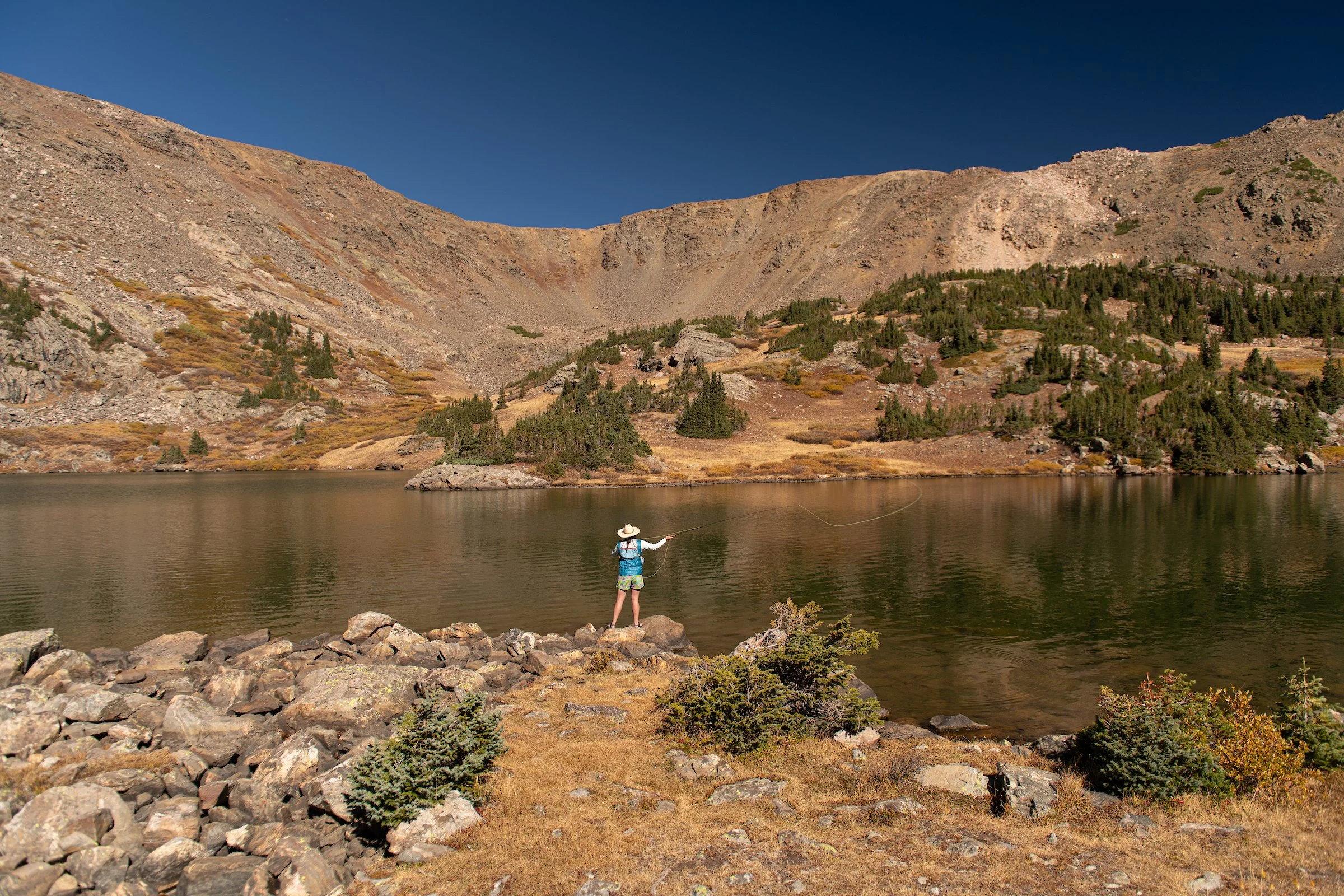
The hatchery will stock Clear Creek Reservoir in northern Chaffee County as well as Twin and Turquoise lakes and Mount Elbert Forebay in southern Lake County.
Twin and Turquoise will receive the majority of the 100,000 trout the hatchery plans to distribute this summer. They "are very good places to fish," Cole said. "They have good access all the way around and they are in beautiful settings."
Leadville fishery biologist Carlos Martinez expects the improved fishing will boost the valley's economy.
"When people realize Twin Lake is being stocked every couple weeks when it wasn't stocked before, the economic impact will be in the millions of dollars per year," Martinez said.
The local economy has been without that influx since the Leadville hatchery was forced to stop stocking local reservoirs in 1995 when it was diagnosed with a whirling disease problem.
Trout contract whirling disease through a parasite produced by worms. Infected fish become deformed and lose equilibrium, making it difficult for them to evade predators and catch food.
The disease affects young trout more than adults and can decimate populations.
"The facility was in danger of shutting down," Martinez said. "It was very upsetting to a lot of people because of the historical significance and the economic impact it has in the Upper Arkansas Valley."
The hatchery continued to send fish to lower reservoirs in the valley such as Pueblo, John Martin and Fort Carson, where infected fish are less of a threat to nearby streams. But, after receiving $2 million in federal funding in 2003, the hatchery began the process of freeing itself from the disease.
It designed an extensive filtration and ultraviolet zapping system to clean its water before it entered the fish-rearing system. It also decommissioned its earth-bottom rearing ponds.
"It's probably overkill, but it's better to be overpowered than underpowered," Martinez said of the system. "It pretty much cleans our water of everything."
The Colorado Division of Wildlife certified the facility as whirling disease free in January. The hatchery plans to increase trout production from 100,000 this summer to as much as 180,000 in coming seasons.
"The Leadville National Fish Hatchery has a long, proud history of providing trout for Colorado waters," hatchery manager Ed Stege said in a press release. "We are pleased that we can fully continue that mission now that the hatchery is certified free of whirling disease."
The U.S. Fish & Wildlife Service will perform an annual fish health inspection to ensure the hatchery remains free of whirling disease. The hatchery hopes to eventually establish a greenback cutthroat broodstock population to go along with its cutthroat and rainbow populations.