Habitat

Energy bill language would limit Roan Plateau drilling

Ken Neubecker, vice president of Colorado Trout Unlimited, welcomed the restrictions in the energy bill.

http://www.summitdaily.com/article/20070731/NEWS/107310068

BY THE ASSOCIATED PRESS July 31, 2007 DENVER - The U.S. House could vote this week on a provision that would ban gas-well drilling on federal land atop the Roan Plateau, a western Colorado landmark prized for both its abundant energy and its backcountry.

Colorado Democratic Reps. Mark Udall and John Salazar inserted the provision into the Energy Independence Act, which was introduced in the House late Monday.

Salazar spokesman Eric Wortman said a vote could come by Friday night.

The Bureau of Land Management has proposed a 20-year plan allowing up to 210 natural gas wells from 13 sites on federal land on the plateau top. The plan envisions up to 1,360 other wells on the sides of the plateau.

Some wells have already been drilled on private land on the plateau.

The plateau, about 200 miles west of Denver, is home to some of Colorado's largest elk and deer herds, mountain lions, bears, peregrine falcons and genetically important native cutthroat trout. The area generates an estimated $5 million a year for the local economy from hunting, fishing and wildlife watching, according to state wildlife officials.

It also holds enough natural gas for 4 million homes for the next 20 years and could generate hundreds of millions of dollars in badly needed tax revenue for the state, according to industry estimates.

Environmental and outdoor-sports groups protested the plan to drill atop the plateau, saying its natural qualities and abundant wildlife should be protected.

Udall and Salazar have been pushing for a moratorium, and Gov. Bill Ritter, who took office in January, has asked for more time to study the plan.

Salazar's brother, Democratic Sen. Ken Salazar, last week blocked Senate confirmation of James Caswell, President Bush's nominee to head the BLM, in hopes of forcing federal officials to accommodate state officials' objections.

The BLM announced its plans in June after seven years of study, hearings and comment from state agencies.

Ken Neubecker, vice president of Colorado Trout Unlimited, welcomed the restrictions in the energy bill.

"This is really gratifying," he said.

An industry representative did not immediately return a call.

Bill would ban drilling on Roan

Leasing would be allowed, but without disturbing plateau’s surface

“It’s very significant,” Trout Unlimited spokesman Chris Hunt said. “It’s been a long, hard battle to have this in the bill.” Western Slope residents finally got what they asked for, he said, but there’s no guarantee the provision will survive the scrutiny of committee hearings and the Senate.

http://www.gjsentinel.com/news/content/news/stories/2007/08/01/8_1_1a_Roan_Plateau.html

Wednesday, August 01, 2007

A new energy bill before Congress includes a provision banning energy development on public lands atop the Roan Plateau.

Reps. John Salazar and Mark Udall, both Colorado Democrats, added the provision Monday to the pending Energy Independence Act of 2007.

“We can still have the public lands leased, but the minerals can be accessed only from other locations,” Udall said Tuesday. “It means we’re not going to disturb those public lands on the surface of the plateau.”

Specifically, the provision would prohibit any “surface occupancy” for oil and gas exploration and development on the Roan Plateau, requiring energy companies to directionally drill from adjacent private land if they want to access the natural gas beneath the plateau.

That way, the Bureau of Land Management will receive the royalty and bonus bids from energy development and give industry the chance to exploit the Roan Plateau’s minerals, according to a Salazar news release.

Salazar spokesman Eric Wortman said the provision protecting the plateau breaks with the Bureau of Land Management’s definition of a “no surface occupancy” stipulation, which allows for pipelines to be built, but not natural gas well pads because the ground disturbance created by a well pad lasts more than two years.

The Roan Plateau plan approved by the BLM in June allows for areas under such stipulations to be disturbed by energy development as long as those areas are reclaimed and revegetated in less than two years. A well pad, according to the plan, would exist longer than two years and would be prohibited, unless the BLM grants an energy company an exception. A pipeline, however, is fair game.

“This is different than what’s in the original plan,” Wortman said. “If this passes the House and the Senate, they wouldn’t put anything on the surface of the public land.”

The public is being cheated by the congressmen’s efforts to prevent drilling rigs from marring the top of the Roan Plateau, said Marc Smith, executive director of the Independent Petroleum Association of Mountain States.

“Don’t bother attending town hall meetings. Congressmen John Salazar and Mark Udall will tell you what’s best for your community,” he said. “It’s a shame after (Western Slope residents) would spend so many years of their lives engaged and working through these issues, at the 11th hour, Salazar and Udall would secretly insert into the bill a provision to essentially rewrite the plan.”

Smith said domestic energy production and consumers will suffer because of the congressmen’s meddling.

Environmentalists and sportsmen’s groups are hailing the provision.

“It’s very significant,” Trout Unlimited spokesman Chris Hunt said. “It’s been a long, hard battle to have this in the bill.”

Western Slope residents finally got what they asked for, he said, but there’s no guarantee the provision will survive the scrutiny of committee hearings and the Senate.

“It’s certainly going to take a positive vote from the House itself, as it looks like on Friday,” Udall said. “I’m optimistic that the provision will stay in the bill.”

Udall said in a news release he had his hand in other provisions of the bill that address water protection and oil shale.

The bill removes the 2005 Energy Policy Act-mandated deadline by which the BLM must issue an environmental review of the agency’s fledgling commercial oil shale and tar sands development program. It gives the BLM a year to create commercial oil shale leasing regulations after the environmental review is issued. The Energy Policy Act stipulates that the regulations be created in six months.

Udall said he also helped add a provision establishing a fund in the U.S. Treasury to help local governments pay for oil shale development’s effects on roads and other infrastructure. The fund would receive bonus bids offered for commercial oil shale leases and some of the royalties garnered from those leases.

Additional money would go directly to counties affected by oil shale development, including Rio Blanco, Mesa and Garfield counties, Udall said.

The bill also includes reclamation and water protection provisions requiring oil and gas producers to restore the land they develop so it will be able to support the types of uses the land saw before drilling rigs moved in. The producers would have to submit to the federal government a water management plan before they file for a drilling permit.

Energy producers who contaminate a water source would have to fix the problem or provide replacement water for water users.

Salazar presses Interior on Roan drilling

By Anne C. MulkernDenver Post Staff WriterWashington — Sen. Ken Salazar demanded today that Interior Secretary Dirk Kempthorne detail in writing how the federal government will address Colorado's concerns about a plan to allow more oil and gas drilling atop the Roan Plateau.

Salazar, D-Colo., met with Kempthorne today as part of the senator's ongoing skirmish with Interior and the Bureau of Land Management over new drilling on the plateau. Salazar has placed a hold on Senate confirmation of President Bush's nominee to head the BLM, James Caswell.

"I said that we are essentially heading to a point of collision with the federal government" and with BLM, Salazar said. "I told him it was up to him to help avoid that train wreck."

Kempthorne's office did not immediately respond to a request for comment.

Salazar said he told Kempthorne he would make a decision about lifting that hold after seeing the letter requested of Kempthorne.

Salazar also conceded, however that Bush could install Caswell without Senate confirmation during the Senate's planned recess next month.

The Roan Plateau in northwestern Colorado has become a battleground for environmentalists, hunters, recreation lovers and those who argue that retrieving stores of energy in the mountain is essential to meeting the nation's energy needs. Money from drilling leases — estimated at between $500 million and $1 billion — would partly go to the state. The revenue would be split 50-50 between the state and federal governments.

Gov. Bill Ritter wants 120 days to review the BLM's Roan Plateau drilling plan. The agency gave him less than 30 days.

Salazar said he wants Kempthorne to give Ritter more time as well as answer questions about technology that could allow oil and gas retrieval without drilling on the top. There are technologies that allow for vertical drilling, retrieving the energy sources from lower down on the 9,000-foot mountain.

BPR Project Partners

dscn3081-red.jpg Just received word of more support on the Buffalo Peaks Ranch project, which is great news. The Coalition for the Upper South Platte has pledged assistance with the project. Their experience with volunteer programs and stream restoration will be a big help with pulling off the Buffalo Peaks restoration. Be sure to check out their website at http://www.uppersouthplatte.net/ and let them know how much we appreciate their assistance!

On this subject, I would be remiss to express thanks to our other partners as well. Especially Park County, who has pledged a significant financial contribution - you can check them out at http://www.parkco.us/main_page.htm and the beneficiary of their county-wide stream improvement projects, which is the South Park Fly Fishers service at http://southparktrout.com/ This is a great program - if you are itchin to fish some new private waters, be sure to check this source out and support stream restoration in Park County.

Finally, the DOW/USFS for the Fishing is Fun grant, and the City of Aurora for assisting us in this project.

We begin construction on August 27th and look forward to 6 weeks of great weather to get the project done! I hope to see you all there for the Volunteer Weekends September 22nd and 23rd and October 13th and 14th!

Sign of things to come on the Roan

Two staff members with Trout Unlimited (TU) had filled an SUV with journalists to show them what's at stake on the Roan Plateau, and the drive along its ridges had led to the opportunity to fish in the creek.

http://www.postindependent.com/article/20070716/VALLEYNEWS/107160043

Dennis Webb
Glenwood Springs, CO Colorado
July 16, 2007

As the waters of the East Fork of Parachute Creek tumbled over a 200-foot falls Thursday, storm clouds hovered ominously at the far end of the broad canyon that opens up below this scenic landmark of the Roan Plateau.

The clouds' threat was only temporary, but below them could be seen a more serious concern for advocates of keeping the plateau as it is. In the canyon bottom perhaps a mile downstream of the falls, a drilling rig plumbed for the riches of the natural gas formation thousands of feet below.

The rig is on private land, but is one of several edging ever closer to the public lands of the plateau. And now that the Bureau of Land Management has decided to allow drilling on the plateau top, those seeking to protect the plateau worry that the forested landscape of its upper slopes is about to undergo an industrial transformation.

Keith Goddard, who has a hunting outfitting business on the plateau and has fought for years to keep rigs off the top, worries that those in a position to make a difference "have written this area off."

Goddard kicked up dust with his cowboy boots as he led the way down a stock trail to the creek above the falls Thursday. Two staff members with Trout Unlimited (TU) had filled an SUV with journalists to show them what's at stake on the Roan Plateau, and the drive along its ridges had led to the opportunity to fish in the creek.

It's one of a couple of creeks on the plateau known to hold populations of almost genetically pure populations of Colorado River cutthroat trout. A sizable population is on Trapper Creek, where the anglers were to visit the next day.

On this afternoon brook trout were far more in evidence, but they were skittish and required patient stalking. Before long, Corey Fisher, a Montana resident and energy field coordinator for TU, had taken off his striped shirt because it was spooking a 12-inch brookie. He slowly pursued the fish on hands and knees almost at creek level before catching and then releasing his prey.

It was a relaxing break for Fisher and Chris Hunt, an Idaho resident and TU's communications director on public lands issues. But Thursday's media tour was being conducted for more serious reasons, the same ones that had U.S. Sen. Ken Salazar, D-Colo., grilling James Caswell in Washington that day over his nomination to be director of the BLM.

Like Goddard, Salazar and TU object to the BLM letting drill rigs on top of the Roan. Salazar has said he would place a Senate "hold" on Caswell's nomination until the Department of Interior gives Colorado Gov. Bill Ritter, a fellow Democrat, the 120 days he has requested to review the Roan plan.

Far from a wasteland Hunt's hope for Thursday's tour was to show that the Roan isn't the "desert wasteland" that he says some energy industry representatives have described it as being.

Certainly, the view from below, down in Rifle, can be deceptive. From there, the plateau presents itself as a steep, stark cliff running to the north and west and climbing thousands of feet. And the drive on the JQS Road up those cliffs starts out in a landscape of piñon and juniper trees and sagebrush. But the vegetation begins to change after several switchbacks, until pines and aspen are encountered even before reaching the plateau top.

Beyond the Roan's rim, the desert gives over entirely to rolling, lush country full of wildflowers and aspen trees, and valleys running with spring-fed streams. Grouse, red-tailed hawk, elk and other animals make appearances in a place where deer, bear and mountain lion also abound.

"You get up here and it's a totally different world," Hunt said, before admiring the size of the aspen trees. "This is signature Colorado stuff, you know?"

The question is whether gas development could make the plateau look more like the heavily drilled landscape in the Colorado River Valley below. Some of the ridge-top jeep roads would be widened to accommodate drilling traffic, and already drill rigs can be seen along ridgelines of private lands just outside the BLM part of the plateau. A puff of black smoke issued from one of them Thursday.

Although no rigs have reached BLM lands, the traffic impacts have. Williams Production was using the road following the plateau rim to reach drilling sites on private lands on the plateau - something it no longer needs to do now that it has opened a new road of its own on those lands. Goddard is glad Williams took that step. He is concerned about the impacts of future drilling traffic on big game.

Watershed worries The drilling plan for the plateau calls for rigs to operate from ridge tops, to protect watersheds. But Goddard thinks the quarter-mile buffer zones around creeks are insufficient because many of the creeks are fed by springs that are farther away.

"All you've got to do is screw up one spring and you've lost the whole creek," he said.

Fisher, of TU, shares such concerns. He said a drilling-related spill in Wyoming wiped out one cutthroat trout population.

"Poor land management flows downhill," he said.

Susan Alvillar, of Williams Production, said the company already has numerous environmental protection programs in place for its drilling, including for protecting against spills.

"We've got a myriad of regulations that we follow every day," she said.

She said Williams has 14 wells on top of the Roan now, and three rigs that are currently drilling.

"We've operated up there since the '80s, and certainly it's on our radar screen that everything that we do needs to be in accordance with all those regulations and make sure that we don't impact any of our precious resources up there," she said.

Alvillar said many who work for Williams are avid hunters and anglers who understand the importance of protecting the environment. She also noted that the Roan plan is "very prescriptive" in aiming to reduce the impacts of drilling.

But that's not assurance enough for Goddard. He said he gets probably 50 calls a year from hunters hoping to find a place to go where they can enjoy their experience without seeing lots of people, traffic and drilling rigs. For years, he has been able to offer the Roan as one such place.

But with rigs looming on nearby horizons like storm clouds, and the BLM ready to invite them in if its plan withstands political challenges, he knows that may be about to change.

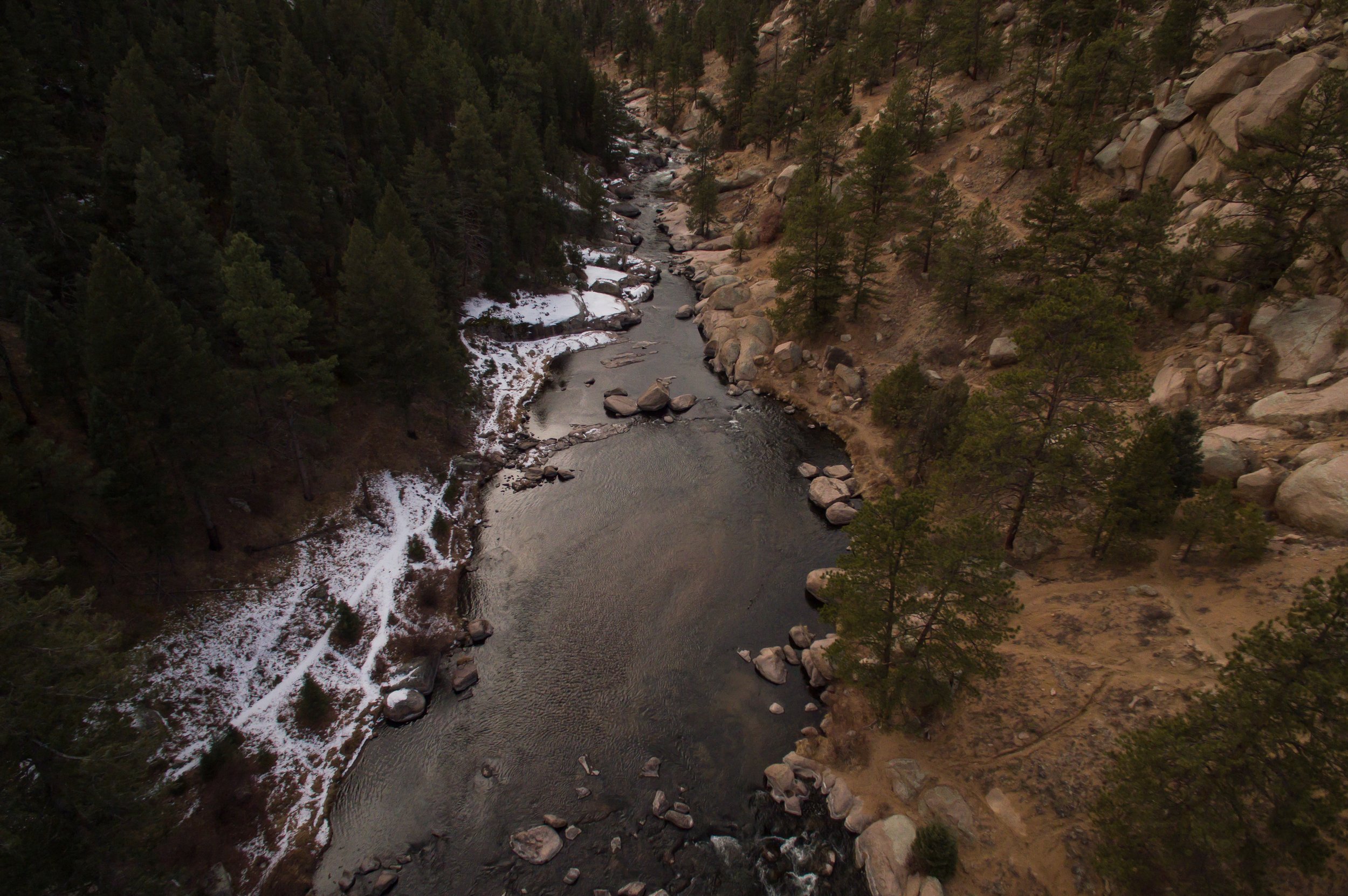
Ritter, Salazar urge slowdown on Roan

Environmental groups including Trout Unlimited released a poll Tuesday that they said shows nearly a quarter of voters in Colorado's 3rd Congressional District, which includes western Colorado, oppose any more drilling on the Roan.

http://www.summitdaily.com/article/20070704/NEWS/107040049/0/FRONTPAGE

http://www.postindependent.com/article/20070704/VALLEYNEWS/107040046/0/FRONTPAGE


GARFIELD COUNTY - With as many as 5,000 wells already drilled in northwest Colorado and another 55,000 possibly on the way, two of Colorado's top elected officials are questioning the rush to pursue natural gas drilling in unique landscapes such as the Roan Plateau.

Gov. Bill Ritter and U.S. Sen. Ken Salazar, both Democrats, got a bird's-eye view of northwest Colorado's dramatic landscapes and intensive energy development Tuesday morning. Pilot Doug Sheffer, owner of DBS Helicopters, flew the two over the plateau, and they also touched down in Moffat County's Vermillion Basin, another area of controversy when it comes to energy development on federal lands.

In a press conference afterward at the Garfield County Regional Airport, Salazar said some 4,000 to 5,000 natural gas wells already have been drilled in northwest Colorado, and a total of 60,000 eventually may be drilled in the region. With so much development coming, it shouldn't be a problem for the federal government to honor Ritter's request for 120 days to review the Bureau of Land Management's plans for drilling on the Roan, Salazar said.

An opponent of drilling on top of the Roan, Salazar said he recognizes that the BLM has decided to allow gas development there and elsewhere in the region.

"But as it moves forward with leasing of those areas .... it is a perfectly reasonable thing for the governor of this state to want to make sure that we don't destroy our natural resources, our sustainability, along the way," he said.

The BLM worked with the state in developing its Roan plan, but Ritter took office this year and said his new administration should be given a chance to offer input. The federal government denied that request.

"We just want a productive conversation with the BLM," said Ritter.

He said he never has come out in opposition to drilling on the Roan, but it is one of the last places that drilling should be allowed to occur. He is hoping that directional drilling eventually might allow development to occur without well pads having to be placed on the plateau top.

Like Salazar, Ritter questioned the federal government's push for more drilling in a region where so much already is occurring.

"We don't need to be gluttons about this. We need to be thoughtful and prudent about how we go about that extraction, and we need to consider the air, water, wildlife as other resources that compete," Ritter said.

Salazar said he would use every means at his disposal to try to persuade the Interior Department to grant Ritter's request for more time. Already, he has placed a Senate "hold" on President Bush's nomination of James Caswell to be the new BLM director until Interior Secretary Kirk Kempthorne agrees to the time extension. Salazar said he plans to further press his case in an upcoming meeting with Kempthorne.

In a news release later Tuesday by state Senate Republicans, state Sen. Josh Penry of Fruita said Ritter and Salazar were engaging in "Democratic election politics" rather than developing any constructive alternative for managing the Roan Plateau.

He noted that the BLM's current plan is based in large part on a state proposal crafted under the leadership of Rifle resident Russell George, who was director of the state Department of Natural Resources under previous governor Bill Owens. George, a Republican, is now Ritter's transportation director. Penry called George's proposal "the most restrictive, environmentally minded production plan in the history of the American West."

Harris Sherman, who is Ritter's DNR director and joined in on Tuesday's overflight, said he has talked previously to George about issues such as the Roan, but not recently.

"This is a new administration. We are talking about a fresh look at past policies and practices," he said.

Ritter suggested Tuesday that Penry might be politicizing the Roan issue himself. Penry and state Rep. Al White, R-Winter Park, have proposed using much as $1 billion or more in revenues from drilling on the Roan to create trust funds to help meet higher education needs and pay for local impacts of energy development. Ritter said he wouldn't rule out that idea. But he questioned how far natural gas revenues from the plateau could go toward meeting long-term higher education needs, and said it's important not to let state budget discussions become focused on the Roan when so much other gas development is occurring.

"I think making it about the Roan Plateau is a way of introducing really a distraction into the conversation about whether we need to rush to the Roan or rush to the Vermillion" to drill, he said.

Mary Ellen Denomy, a petroleum accountant who attended Tuesday's press conference, said that another reason to slow down is that the region lacks sufficient gas pipelines serving other markets. That means local producers are having to sell for less than the national average, which reduces state and local government revenues.

Environmental groups including Trout Unlimited released a poll Tuesday that they said shows nearly a quarter of voters in Colorado's 3rd Congressional District, which includes western Colorado, oppose any more drilling on the Roan. Another half, including 47 percent of Republicans, want further drilling restricted to existing sites near its base, the groups said.

Protecting Good Samaritan mine cleanups a wise move

"We think it's a step in the right direction. We need a step further to make it really effective," said Elizabeth Russell, watershed-restoration coordinator for Trout Unlimited, who has been working with local focus groups seeking ways to clean up mine drainage in places such as Peru Creek near Keystone.

www.denverpost.com/opinion/ci_6283643

By The Denver Post Editorial Board

Dotted across Colorado are hundreds of silent polluters that, drip by drip, have fouled our streams and watersheds for more than a century.

They should be everybody's concern, but most are nobody's responsibility.

They are among the 23,000 abandoned Colorado mines and mining sites that are the legacy of our state's first economic boom in the 19th and early 20th centuries.

Across the country, there are an estimated 500,000 abandoned mines. By some calculations, 16,000 miles of Western waterways are tainted by mine waste.

Mines were built quickly and went out of business just as fast, victims of pinched-out veins, undercapitalization and fluctuating ore prices. Their useful lives are long in the past, and their owners are long gone, so there's no one responsible for cleaning them up. But the chemicals used to process ore - like cyanide, arsenic and mercury - and other substances released by mining remain.

With no owners to hold responsible, and with the estimated cleanup bill of $32 billion way beyond the capabilities of the federal or state governments, Westerners long have wrestled with how to even start cleaning up.

One promising answer, interestingly enough, is volunteers.

Many conservation and community groups have been interested in cleaning up mines and streams, but the threat of liability has hampered such efforts.

Cooperation between private groups and government agencies has permitted some citizen cleanup of old mines on federal land, but liability concerns continue to hamper other cleanups.

The U.S. Environmental Protection Agency last month took a step toward solving that problem by approving procedures under which private groups can do limited cleanup - such as removing waste rock and diverting runoff - under agency supervision without fear of being sued and held liable for cleanup of an entire mine site. But the procedures don't apply to work that might be covered by the Clean Water Act. Congress needs to take care of that problem.

"We think it's a step in the right direction. We need a step further to make it really effective," said Elizabeth Russell, watershed-restoration coordinator for Trout Unlimited, who has been working with local focus groups seeking ways to clean up mine drainage in places such as Peru Creek near Keystone.

Colorado Rep. Mark Udall introduced legislation in 2005 that would protect "Good Samaritan" cleanups. It didn't pass. He called the EPA's move a "harbinger" of full reforms needed to allow mine-site cleanups. Udall has been studying the issues with Western governors, and we hope he continues to make a run at the problem.

Washington lawmakers also ought to give a serious look to another proposal that would impose royalties on hard-rock mining and use the revenue to help pay for reclamation.

Snake River sampling stepped up

Feds, state agencies to test for metals, study fish populations

On a larger scale, Summit Water Quality/Quantity expert Lane Wyatt and Trout Unlimited’s Elizabeth Russell will use the information to fill in the gaps in a proposed watershed plan for the Snake River Basin.

http://www.summitdaily.com/article/20070703/NEWS/70703002

SUMMIT COUNTY — An ambitious round of water sampling this summer in the Snake River Basin will help lay the groundwork for a comprehensive watershed plan. One key goal is treating polluted drainage from the abandoned Pennsylvania Mine, near Peru Creek, where toxic zinc, cadmium and other dissolved metals are leaching into the water. Combined with pollution from other sources and naturally occurring minerals in the drainage, concentrations of metals in the Snake are so high that fish can’t survive.

The sampling this summer includes EPA tests, as well as more work by state health and water quality officials, while the U.S. Forest Service will take a close look at the status of aquatic insects, the macro invertebrates that form the base of the food chain. Among the agencies doing tests is the U.S. Geological Survey (USGS), which has been sampling the Snake and its tributaries for three years as part of a larger assessment of the environmental effects of historical mining in Central Colorado. The USGS has sampled at six sites, including the relatively untainted North Fork of the Snake (flowing down from Loveland Pass), Peru Creek above and below the Pennsylvania Mine, Deer Creek and Sts. John Creek (above Montezuma) and the Snake River in Keystone.

In an e-mail to the Snake River Task Force, USGS researcher Stan Church explained that preliminary results confirms a previous study by biologist Andrew Todd, showing fish will not survive in the contaminated stream segments. Zinc is directly toxic to trout and also affects the aquatic bugs that form the base of the food chain.

Church said the USGS is compiling a paper on their work and emphasized the preliminary nature of the results, but wanted to give the task force a heads up so that nobody is surprised when the results are published, perhaps by the end of the summer.

Some of the tests scheduled this summer include EPA water sampling and Forest Service macroinvertebrate research next week. The Colorado Division of Wildlife will do some fish population studies later in the month, while state environmental experts will test mine waste piles and do some low-flow sampling in August.

As concentrations of metals vary widely with flows in the streams, the EPA will return to do yet another round of low-flow sampling in late September, repeating some of the early July tests. A full sampling report is expected sometime this coming winter. Using the data, state experts will set new water quality standards for some of the affected Snake River segments, with public comment on those proposed changes to take place in June and July 2008.

On a larger scale, Summit Water Quality/Quantity expert Lane Wyatt and Trout Unlimited’s Elizabeth Russell will use the information to fill in the gaps in a proposed watershed plan for the Snake River Basin.

Wyatt and Russell said previously that a treatment facility for the toxic water from the Pennsylvania Mine could be under construction as soon as 2008, barring any unforeseen pitfalls.

For more Snake River info, check out the task force web site at http://instaar.colorado.edu/SRWTF/.

EPA awards Trout Unlimited for Good Samaritan clean-up of American Fork site

Award cites trail-blazing effort, significant environmental benefit (Denver, Colo., June 29, 2007) -- U.S. Environmental Protection Agency officials will present the EPA Environmental Achievement Award to Russ Schnitzer at the EPA Region 8 Headquarters in Denver on Monday.

Carol Rushin, EPA Assistant Regional Administrator, will present the award to Russ Schnitzer, formally Trout Unlimited's Field Director for Abandoned Mines, now of The Nature Conservancy.

Assistant Regional Administrator Rushin said, "Russ is one of several individuals who took extraordinary steps to clean up a polluting, abandoned mine site, helping to save a watershed and in the process blaze a trail for other good samaritans to follow."

The effort being recognized constitutes a national, precedent-setting accomplishment, requiring dedication and persistence in overcoming liability and technical environmental barriers, she noted.

Carol Russell, Region 8 Tribal Water Quality Team Leader, formerly the Region's Mining Coordinator, said, "In completing this effort and other efforts relevant to the Hard Rock Mining initiative, Trout Unlimited has been a model for other organizations."

"They have demonstrated the significance of this environmental issue so critical to the West and how important it is for others to step forward as Good Samaritans to clean up abandoned mine sites," she said, noting, "these awardees are representatives of an army of watershed protection and restoration volunteers."

The Forest Service and Trout Unlimited implemented a series of cleanup activities at the site, which is located on both private and public land and lies between Provo and Salt Lake City in the Utah Lake watershed, Utah. The mine site is adjacent to the American Fork River which now, thanks to the cleanup, can support the rare, native cutthroat trout in a 10-mile stretch downstream of the mine.

In 2003, the Forest Service performed a clean-up, removing tailings and restoring public lands. In 2005, Trout Unlimited, a Good Samaritan, working with Snowbird Ski Resort, the owner of adjacent private property, and Tiffany & Co. Foundation, spearheaded the cleanup of 33,000 cubic yards of waste rock and tailings with elevated levels of heavy metals at abandoned mines on private property. These wastes are now safely encapsulated in a permanent repository constructed near the Pacific Mine on Snowbird Ski Resort's property. Tiffany & Co. Foundation provided financial support for the project. Additional funding was obtained through Congressional appropriations, and NRCS managed the federal grants to perform the cleanup.

The American Fork site is one of more than 500,000 orphaned mine sites throughout the West. These sites profoundly impact the affected land and water resources downstream. At many orphan mine sites and processing areas, disturbed rock and waste piles contain high levels of sulfides and heavy metals. These piles, when exposed to air and water, undergo physical and chemical reactions that create acid drainage. As this drainage runs through mineral-rich rock, it often picks up other metals --such as arsenic, cadmium, lead, mercury and zinc -- in solution or in suspension as sediment. When this runoff enters local streams and rivers, it can severely degrade water quality, damage or destroy insect, plant and animal life.

The Good Samaritan Initiative is an Agency-wide initiative to accelerate restoration of watersheds and fisheries threatened by abandoned hard rock mine runoff by encouraging voluntary cleanups by parties that do not own the property and are not responsible for the property's environmental conditions.

EPA recently announced its release of Good Samaritan administrative tools for helping interested stakeholders to clean up abandoned mine sites. These tools are intended to facilitate many more Good Samaritan cleanups.

When releasing the Good Samaritan Tools, EPA Administrator Stephen L. Johnson said, "President Bush is clearing legal roadblocks that for too long have prevented the cleanup of our nation's watersheds. Through EPA's administrative action, we are reducing the threat of litigation from voluntary hardrock mine cleanups and allowing America's Good Samaritans to finally get their shovels into the dirt."

http://yosemite.epa.gov/opa/admpress.nsf/8beba1896692bb31852572a000655942/26b44e3f31057b99852572f20060be92!OpenDocument

http://www.epa.gov/water/goodsamaritan/

http://www.coloradoconfidential.com/showDiary.do?diaryId=2204

http://yosemite.epa.gov/opa/admpress.nsf/e87e8bc7fd0c11f1852572a000650c05/fce61d72c91cc8d1852572f2006a7448!OpenDocument

Award winners from other locations associated with the American Fork project have previously received awards and will receive further awards in the near future.

EPA Region 8 presents awards in four categories to individuals and groups external to the regional office. This award recognizes significant achievements in protection of public health or the environment, or in advancing the Agency's current strategic goals. Among the criteria is an outstanding contribution to environmental protection through a single action, or by an ongoing action over an appreciable period of time.

ACTION ALERT

Please take action online and tell your Representative to support a bi-partisan bill (H.R. 1507) that will give Congress the information they need to make sound salmon and steelhead recovery decisions in the Pacific Northwest.  All it takes is one click to make your voice heard and give salmon and steelhead a fighting chance.

WHY WE CARE The Columbia and Snake Rivers were once home to the world’s most abundant salmon and steelhead runs. The historic center of North American salmon production, the Columbia-Snake River Basin fed ecosystems and human communities, sustained local economies from Idaho to Alaska, and provided world-renowned fishing opportunities.

Today, however, every species of wild salmon in the Snake River is endangered, threatened, or extinct.

Federal efforts have been largely ineffective, wasting millions of dollars each year on unsuccessful recovery actions. Providing the best available information to Congress and the region is the first step in developing a successful federal salmon policy. To move forward with effective efforts, all viable recovery options should be given fair and full consideration.

A bi-partisan bill in the House of Representatives (H.R. 1507), the Salmon Economic Analysis and Planning Act (SEAPA) would authorize credible, independent studies from the National Academy of Sciences and the Government Accountability Office. The Act will provide Congress with the information it needs to make sound decisions about the future of endangered salmon while ensuring the efficient, smart investment of taxpayer dollars, and providing economic benefits to Pacific Northwest communities.

Tell your local Representative to support SEAPA.  This bill impacts all who care about the recovery of a heritage species, Pacific Northwest communities, appropriate use of public funding, and salmon and steelhead fishing opportunities.

WHAT YOU CAN DO

1.) Take action online and then follow up with a call to your local representative. Let them know you’re counting on them to ensure Congress is provided with the best information available to develop an effective salmon recovery effort.

2. Visit WhyWild.org and learn about consumer efforts to promote wild Pacific salmon, and please sign our salmon consumer’s bill of rights .

3. Visit Wildsalmon.org to learn about Save Our Wild Salmon (SOS). SOS is a nationwide coalition of conservation organizations, commercial and sport fishing associations, businesses, river groups, and taxpayer advocates - all joined in a commitment to restore Pacific Northwest wild salmon and the communities that depend on them.

4. Learn more about the Salmon Economic Analysis and Planning Act and Pacific salmon conservation, by contacting Robert McCormick at 703-284-9429 or rmccormick@tu.org

Thank You, Steve Moyer Vice President for Government Affairs and Volunteer Operations Trout Unlimited