Habitat

The BFC Flagship Project

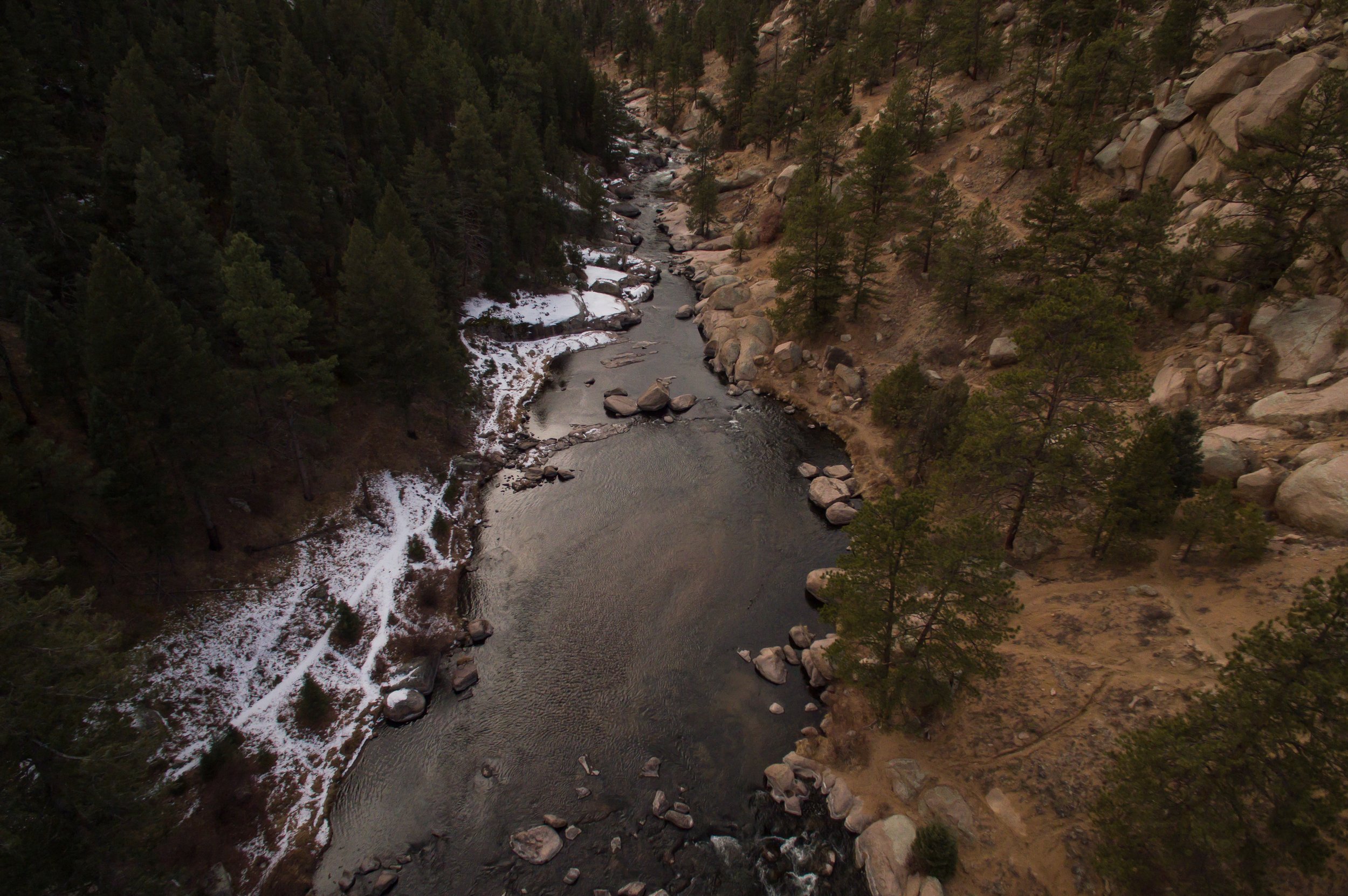
On May 15, 2007 a presentation was made to the Department of Wildlife Fishing is Fun Committee for a $169,330 grant on the $235,030 project to restore one-half mile of Middle Boulder Creek nine miles from the City of Boulder and four miles from Nederland. The presentation can be seen on our website.

Rogers Park

Fishing Is Fun program funds come from federal excise taxes collected on the purchase of fishing equipment, boats, motor boat and vehicle fuels. Those funds are subsequently distributed back to the states for sportfish programs.

According to the DOW, projects totaling more than $20 million have been selected through the Fishing Is Fun program to receive grants ranging from $1,000 to $400,000. The 250 FIF projects in nearly every county in Colorado have increased annual angler recreation days by an estimated 1,800,000 days.

The Project committee headed by Roger Svendsen has expended a considerable amount of time on bringing this project forward. The partnership with the City of Boulder, Boulder County Parks and Open Space, and the Colorado Department of Transportation has been of significant help.

We believe our chances for approval in June with a 2008 start date are excellent.

In our recent membership survey there was a fair amount of input concerning the BFC commitment to improving local fisheries. For those of you who are concerned about this issue and want to make a difference on both Middle and South Boulder Creek I’d suggest you get in touch with me to translate that concern into action.

Remember that getting DOW approval is only part of the way – there are significant funds that will need to be raised.

I think that the same Chapter that made the Boulder Creek Path happen, can step up to the challenge and get the community at large behind this phase of improving Boulder Creek.

Paul Prentiss

Hearing to look at Fry-Ark impacts

Congressional subcommittee meets today at Pueblo Community College.

Scheduled to testify at the hearing are: Drew Peternell, Boulder, director of the Colorado Trout Unlimited Colorado Water Project.

http://www.chieftain.com/metro/1180683495/2

A congressional subcommittee will meet today in Pueblo to review the 45-year history of the Fryingpan-Arkansas Project.

The water and power subcommittee of the House Natural Resources Committee, chaired by Rep. Grace Napolitano, D-Calif., will meet at 9 a.m. today in the Pueblo Community College Ballroom to look at the project that brought water from the Colorado River basin into the Arkansas River basin.

Two members of the subcommittee, Reps. Doug Lamborn, R-Colo., and Mark Udall, D-Colo., will attend today’s hearing. Reps. John Salazar and Rep. Ed Perlmutter, both Colorado Democrats, also plan to be at the hearing.

The hearing is not intended to debate current legislation regarding the Fry-Ark Project, although most of the speakers intend to discuss projects of concern to them, such as the need for more storage, the Arkansas Valley Conduit and the Southern Delivery System.

In Congress, there are competing water storage bills.

Salazar’s Fryingpan-Arkansas legislation would authorize a $10 million state study of the impacts of Arkansas basin water transfers, as well as a $4 million feasibility study that would include looking at enlargement of Lake Pueblo.

Lamborn is sponsoring a different version of the bill, nearly identical to former Rep. Joel Hefley’s failed version of a PSOP bill in 2004. It would authorize the $4 million study along the lines of PSOP.

A fundamental difference in the two bills is the authority of the Bureau of Reclamation to enter contracts with out-of-basin entities such as Aurora. Salazar’s bill specifically prohibits such contracts, while Lamborn’s specifically allows them.

The public will not be given an opportunity to testify, but may observe.

Scheduled to testify at the hearing are:

Bill Long, president, Southeastern Colorado Water Conservancy District.

Mike Ryan, Great Plains regional director for the Bureau of Reclamation.

Harris Sherman, executive director of the Colorado Department of Natural Resources.

Lionel Rivera, mayor of Colorado Springs.

Terry Scanga, general manager, Upper Arkansas Water Conservancy District.

Bill Thiebaut, Pueblo district attorney.

Jay Winner, general manager, Lower Arkansas Water Conservancy District.

Sandy White, La Veta water lawyer.

Ed Tauer, mayor of Aurora.

Drew Peternell, Boulder, director of the Colorado Trout Unlimited Colorado Water Project.

Chris Treese, external affairs manager of the Colorado River Conservation District.

Wally Stealey, rancher and former president, Southeastern district.

Snake River cleanup plan eyed; possible treatment

http://www.summitdaily.com/article/20070530/NEWS/105300061

SUMMIT COUNTY - State and federal water quality experts will take a close look at the polluted water leaking from the abandoned Pennsylvania Mine into Peru Creek this summer, eying designs for a treatment plant that could remove some of the toxic heavy metals.

Zinc and cadmium oozing from the mine taint the creek all the way to its confluence with the Snake River and beyond - creating a dead zone, where trout don't survive for long. The collaborative Snake River Task Force has been working for years to develop a cleanup plan for the drainage, and will meet today for an update.

The biggest question marks include what sort of technology is best suited for the remote site, how to fund construction and operation, and how to deal with potential Clean Water Act liability of taking action, said Summit County environmental planner Brian Lorch.

Along with treating the water coming out of the mine, state experts will also try to determine other ways of improving water quality in Peru Creek and the Snake River, maybe by moving some of mine waste material or re-routing surface flows away from the polluted tailings piles.

Similar tactics were used at the Shoe Basin Mine last summer, where the county completed a remediation project that will reduce the amount of zinc reaching the water.

Snake River cleanup plans have started to look more promising since Trout Unlimited, a cold-water fisheries conservation group, took a lead role in the process. Fresh from a model mine cleanup in Utah, the organization hopes to bring a similar approach to table for Peru Creek.

Along with site-specific projects, the task force will also get an update on a watershed approach to stream health in the Snake River Basin, as well as the potential for re-evaluating water quality standards in the basin.

The task force meetings are the best way for citizens in the Snake River Basin to find out the latest on the status of the cleanup plans.

Information is also available at http://instaar.colorado.edu/SRWTF/.

State of river ‘fairly good’

“Scott Linn, president of the Headwaters Chapter of Colorado Trout Unlimited, said Trout Unlimited fully encourages that the EIS for both firming projects not be finalized until the county’s stream management plan is complete.”

http://www.grandcountynews.com/mondaydailytribune/mondaydailytribunestories.html#news1

This year’s snowpack is similar to last year — slightly below average and melting quickly, according to last week’s State of the River meeting in Granby, presented by the Colorado River District.

But compared to other watersheds in the state, the northern Colorado River basin is having a fairly good year, with reservoirs such as Green Mountain Reservoir, located near Kremmling, expected to fill by early July, and Wolford Reservoir, located just north of Kremmling, “spilling probably right now,” said Colorado River District Water Resources Engineer Don Meyer, who spoke at the meeting.

In fact, many reservoirs are expected to fill this spring. The South Platte River Basin, Denver Water’s primary water supply, is doing better than it has in at least 10 years, according to Marc Waage of Denver Water, who said the South Platte collection system is expected to fill soon. On the west side of the Continental Divide, Denver Water’s Williams Reservoir is 88-percent full, and Dillon Reservoir is 95-percent full, he added.

Gross Reservoir and Ralston Reservoir, two reservoirs off the Fraser System Operation on the east side of the mountains, are expected to fill “easily,” Waage said, which lessens the amount of water taken from the Fraser River this spring.

“We’re already limiting the amount of water we’re getting through the Moffat Tunnel,” Waage said. It is hoped that the extra spring runoff will help flush out some of the sediment that has been building along the Fraser River.

The only reservoir not expected to fill this year is Granby Reservoir. Asked if Granby would ever fill again, one official said, “It goes in cycles . . . We haven’t seen it (fill) in a while, but that doesn’t mean it won’t happen.”

While Tuesdays’ meeting was generally more positive than say, during a drought year, numerous graphs shown that night depicted an alarming trend: Less snowpack and quicker runoffs. This past winter’s snowpack was less than last year’s, and warmer temperatures were causing snowmelt to be about a week ahead of schedule.

Alan Martellaro of the Division of Water Resources said last winter was “decent” compared to 2002 and 2004. Lake Irene, located in Rocky Mountain National Park, was said to have below average snowpack, tracking close to last year’s, and its snowmelt progression was about a week and a half ahead of schedule in runoff.

Berthoud summit’s snowpack was a little less than the previous winter (although two winters ago it was slightly above average). Runoff was “a little ahead of schedule.”

Things are certainly different in the lower part of the basin, Martellaro added. In fact, the more south one goes in the state of Colorado, the worse it gets, due to the warm temperatures this spring and a below-average snowfall this past winter. Heavy demands are expected on Green Mountain Reservoir, for example, due to Western Colorado needs this year.

Updates on projects

A packed room of various water and environmental representatives and concerned citizens listened carefully as updates were given on the two upcoming firming projects.

One is the Windy Gap Firming Project, a project to “firm up” water rights that belong to the Municipal Subdistrict of the Northern Colorado Water Conservancy District (Northern). The subdistrict currently stores its water at Windy Gap, but due to insufficient storage space, it loses out on some of its water rights. A plan to build a new reservoir near Carter Lake on the Front Range would allow for more storage, and for the subdistrict to have access to 30,000 acre feet of water to be diverted to users on the Front Range.

A draft Environmental Impact Study (EIS) is to be completed sometime this fall by the Bureau of Reclamation (Reclamation). (The Windy Gap Firming Project would tie into the federally owned and managed Colorado-Big Thompson Project, therefore Reclamation is the lead agency on the EIS for this project.)

The draft EIS will give a chance for the public to respond and give feedback. Designs for the project, if approved, could start in 2012 or 2013.

Grand County representatives are concerned that the Windy Gap Firming Project will take more water out of the Colorado River and cause more shortages on the already-strained stretch below Windy Gap.

Last fall that concern became a major reality when Reclamation dropped its flows to 20 cubic feet per second (cfs) and Denver Water stopped releasing out of Williams Fork Reservoir; that combination caused flows to reach dangerously low levels, and ranchers were forced to stop irrigating their crops for fear of drying out the river completely.

Grand County commissioners are currently undertaking a stream management plan to study all the shortages and water rights in Grand County, and find a way for entities — mainly Northern, Denver Water and Reclamation — to work together so that everyone can have water without drying out sections of the river.

The plan incorporates a scientific approach by measuring and monitoring various sections of the Colorado River, the Fraser River, Vasquez Creek and other tributaries. The plan is currently going into its second phase, and is expected to be completed sometime in 2008.

Unfortunately for Grand County, the draft EIS for the Windy Gap Firming Project will most likely be completed before the stream management plan, even though many representatives of the county feel the stream management plan is an important component and should be incorporated into the EIS.

One resident in the audience asked if Northern would support and incorporate Grand County’s stream management plan into its EIS before it’s completed.

“I don’t know what the timing will be,” said Don Carlson, Northern’s deputy general manager. “ . . . Guess it would depend on what’s in it. We’re working with (the county). I think it’s a good idea they’re doing that. (But) we are obligated to our participants, so it would depend on how it would affect operations.”

The Moffat Firming Project, a project to develop 18,000 acre-feet of water per year for users in the Front Range, is also a major concern among Grand County citizens. The firming project would allow for more water to be taken from the Fraser River’s collection system during high-flow (spring) conditions. Many feel the health of the Fraser River, listed as the third most endangered river in the U.S., will further deteriorate if the firming project is approved. A draft EIS by the U.S. Corps of Engineers is expected to be completed early next year.

Population growth, a trend in warmer temperatures and a harsh reality check in 2002 — a drought year — are the driving forces behind the two firming projects proposed by Northern and Denver Water; if both projects are approved, the combined effect will most likely be devastating on Grand County’s already dwindling water supply. That is why many hope the Grand County Stream Management Plan will be taken into consideration in both projects.

Scott Linn, president of the Headwaters Chapter of Colorado Trout Unlimited, said Trout Unlimited fully encourages that the EIS for both firming projects not be finalized until the county’s stream management plan is complete.

“Trout Unlimited implores that the environmental impact statements not come out until the stream management plan is completed,” Linn said. “Fishing below Windy Gap is still very bad . . . the fish are suffering from low flows . . . Without coordinated bypass flows, otherwise known as a stream management plan, our river is going to die a slow choking death.”

Other updates

Linn added, however, that he was happy to hear about the temperature monitoring below Windy Gap, a section of the river prone to low flows, sedimentation and high temperatures. The Colorado River District installed 10 temperature gauges up and down a section of the Colorado River below Windy Gap. The gauges will give data on temperatures on real-time basis.

The county still faces major challenges, however, such as low flows on the Fraser River, and not enough water below Windy Gap to flush out the growing amount of sediment, Linn said.

Carlson gave some updates on local concerns such as Whirling Disease, a parasitic infection caused by a microscopic parasite that causes fish to swim in circles and eventually die, is essentially obsolete in the Windy Gap Reservoir.

Carlson also spoke about the draw down on Shadow Mountain Reservoir, which he said will “hopefully help water quality problems.” He added that it is being monitored closely in the next couple of years to see how successful it will be.

Tuesday’s State of the River meeting, an annual meeting put on by the Colorado River District, was generally positive this year. Two strong winters are helping replenish some badly needed water supplies, and various local projects — such as restoration projects along the river by Trout Unlimited, and a major watershed project led by Carolyn Schott — are making some positive headway toward maintaining the health of local fisheries and rivers.

But nobody in the room that night was lulled into a false sense of security. The threats to Grand County’s water supply are very real, and things are bound to start heating up once the draft EIS is completed for the Windy Gap Firming Project, expected this spring. Grand County commissioners are also pushing for the county’s stream management plan to be taken into consideration by all entities and held a meeting the following Thursday with representatives of Northern, Reclamation and Denver Water.

A story about that meeting will be printed in this week’s Manifest.

Aspinall Operation Meeting

I attended the Aspinall Operations Meeting held here in Grand Junction on April 26th.  The purpose of operation meetings-- held in January, April, and August-- is to gather input for determining upcoming operations for Blue Mesa, Morrow Point, and Crystal Reservoirs. This input is used in Reclamation’s development of specific operations for the Aspinall Unit.  Operation of the Aspinall Unit considers projected inflows to its reservoirs, hydropower needs, flood control needs, existing water rights, minimum instream flows, target elevations for reservoirs, flow needs for endangered fish and other resources, recreation, and other factors. In addition, the meetings are used to coordinate activities and exchange information among agencies, water users, and other interested parties concerning the Gunnison River.  Dan Kowalski of the CDOW had a flow request to conduct his annual fish survey in the Gorge the first week of April.  The Gunnison Basin snow pack is only 57% of average and dropping so the runoff could be minimal.  Flows through the Black Canyon will continue to be around 500 cfs until later in June unless the basin receives significant moisture.  No peak flow will occur under the current forecast. 

~ Pat Oglesby

State of the River Meeting Tuesday night - 5/15

Streamflow conditions and reservoir operations in Grand County will be the leading subjects at the annual Grand County State of the River meeting set for 7 p.m., Tuesday, May 15, at Granby Town Hall.   The public meeting is sponsored by the Colorado River District, which includes Grand among its 15 member counties. Grand County Commissioner James Newberry sits on the Colorado River District Board of Directors.At the meeting, the Bureau of Reclamation will update operations of the Colorado-Big Thompson Project (C-BT). The Northern Colorado Water Conservancy District (NCWCD), the Front Range beneficiary of the C-BT, will discuss its operations. The Municipal Subdistrict of the NCWCD will provide updates on the Windy Gap Project and plans to firm up its yield from the project. Denver Water will discuss it Moffat Tunnel Project and its plans to firm up the project’s yield. An official from the State Engineer’s Office will talk about water administrative issues in the county. Also, county officials will address the goals behind a proposed streamflow management plan for the Colorado River, a plan that found new urgency during low river flows last Labor Day Weekend.

Additional updates will be given for the state of the trout fishery in Grand County and on watershed planning in the county.  For more information, call Jim Pokrandt at (970) 945-8522, ext. 236, or e-mail edinfo@crwcd.org. To learn more about the Colorado River District, celebrating its 70th anniversary in 2007, visit www.ColoradoRiverDistrict.org.

CHAPTER, NTU HELP MILLSAP TAILINGS PROJECT MOVE FORWARD

A major reclamation project lead by the Colorado Division of Reclamation, Mining and Safety will begin in May at the Millsap Tailings, located outside of Victor, Colorado.  The Cheyenne Mountain TU chapter, as well as national TU’s Colorado Mine Restoration Coordinator, Elizabeth Russell, helped in the effort to raise money for the $750,000 project.  The chapter hopes the effort will improve trout habitat in Four Mile Creek.  This is a showcase project that brings together a diverse group of state, federal and local agencies, land owners, water rights holders, and non profit organizations to address one of the most prolific problems in the West. 

The Millsap Tailings ponds were created in the 1940s to hold slurried material from a nearby gold processing plant.  The original dams that were constructed to hold the tailings were breached several decades ago and the tailings are continually eroding downstream during storm events, in some cases reaching over 10 miles from their original location.  The site contains 60 to 80 foot highwalls and covers 65 acres.  A jar of water collected below the tailings in Millsap Creek during a storm usually contains 20-30 percent sediment load.  This siltation has caused wild trout habitat to become significantly degraded in Four Mile Creek downstream, and has eliminated the possibility of Millsap Creek being a fishery.  During heavy rain events, this sediment also reaches the Arkansas River.  The goal of this project is to stop the massive erosion, reestablish native vegetation on the restored acres, and ultimately improve and protect the downstream wild trout habitat.  Once finished, the reclaimed land will also be able to support grazing and provide for wildlife habitat.

Brookie Education

Courtesy of Cheyenne Mountain Chapter TU Brook trout (Salvelinus fontinalis) are part of the trout and salmon (Salmonid) family and the Char (Salvelinus) genus that include Bull Trout, Lake Trout and Artic Char. 

Brook trout are native to Eastern North America, from Labrador and Newfoundland south to the southern Appalachian mountains of Georgia and South Carolina, west to Iowa and Minnesota and north to eastern Manitoba. 

Brook trout require cold, clean, highly-oxygenated water.   Brook trout, like other salmonids, have developed a rich life history diversity over time.  This means that they have evolved the capacity to take advantage of a variety of aquatic environments.   Brook trout can live in river and stream systems, tiny first order tributaries, small ponds, large lakes and estuaries.  Like other trout and salmon, brook trout can migrate from fresh to salt water where they live in estuaries and the ocean close to shore, called "salters."  As a char, brook trout spawn in the fall among loose gravel in streams and rivers, or on groundwater upwellings in ponds and lakes.

Because brook trout are so sensitive to water quality and water temperature, they serve as a classic "indicator" species of the larger aquatic ecosystem and the watershed draining into the water body where they live.

The reason that brook trout serve as such good "indicators" of aquatic health is that they have very specific water chemistry requirements.

Temperature - Studies have determined that brook trout cannot tolerate sustained water temperatures exceeding 77 F0 and prefer water temperatures less than 68 F0.  Brook trout are less tolerant of warmer water temperatures than brown or rainbow trout.  Research has documented that brook trout can migrate many miles for spawning or to find thermal refuge. 

pH - this is a measure of the concentration of H+ ions in water.  pH ranges from 0 (very acidic) to 14 (very basic) with 7 being neutral.  Water with a pH lower than 6.0 can cause metals found in soil and rocks to dissolve in solution and suffocate and poison aquatic organisms. 

Brook trout have evolved to be the most tolerant of the trout species to acidic conditions, and adult fish can tolerate pH levels as low as 5.0.  However, acid mine drainage and acid deposition often produce pH levels below this threshold, and currently render lifeless thousands of miles of former brook trout streams and hundreds of lakes and ponds across the East. 

DO - Brook trout require relatively high concentrations of oxygen dissolved in water compared to other fish and even other trout species.  Water temperature is inversely related to dissolved oxygen concentrations, so as water warms, it holds less oxygen.  In nutrient-rich systems with high biological activity (high densities of plants and algae) or where diffusion rates between water and the atmosphere are relatively slow (stagnant ponds), levels of DO can fluctuate widely over the course of 24 hours.  During the day, photosynthesis produces high concentrations of oxygen, but at night photosynthesis stops and plant, algae and bacteria respiration continues to use oxygen, causing DO levels can drop to dangerously low levels.  High levels of nutrients also can cause algal blooms.  As algae dies, bacteria consume available oxygen as they decompose the algae, reducing oxygen levels. This is referred to as BOD or Biological Oxygen Demand.

Source: www.brookie.org

Leadville Hatchery

by Jason StarrMail Staff Writer

Anglers can expect a trout fishing revival in Twin and Turquoise lakes this summer as the Leadville National Fish Hatchery resumes stocking after a 12-year hiatus.

The hatchery, one of the oldest in the West, was declared free of whirling disease in January after a costly and time-consuming battle to rid its facilities of parasites causing the disease.

have a clean bill of health, the hatchery will begin delivering 10- to 13-inch rainbow and cutthroat trout in May to reservoirs in Lake and Chaffee counties. Local fishermen are excited about the prospect.

"It's good news for the valley," said Mark Cole, president of the Collegiate Peaks Anglers chapter of Trout Unlimited. "People will again be able to catch fish in these lakes. For the last 10 years it's been pretty poor."

The hatchery will stock Clear Creek Reservoir in northern Chaffee County as well as Twin and Turquoise lakes and Mount Elbert Forebay in southern Lake County.

Twin and Turquoise will receive the majority of the 100,000 trout the hatchery plans to distribute this summer. They "are very good places to fish," Cole said. "They have good access all the way around and they are in beautiful settings."

Leadville fishery biologist Carlos Martinez expects the improved fishing will boost the valley's economy.

"When people realize Twin Lake is being stocked every couple weeks when it wasn't stocked before, the economic impact will be in the millions of dollars per year," Martinez said.

The local economy has been without that influx since the Leadville hatchery was forced to stop stocking local reservoirs in 1995 when it was diagnosed with a whirling disease problem.

Trout contract whirling disease through a parasite produced by worms. Infected fish become deformed and lose equilibrium, making it difficult for them to evade predators and catch food.

The disease affects young trout more than adults and can decimate populations.

"The facility was in danger of shutting down," Martinez said. "It was very upsetting to a lot of people because of the historical significance and the economic impact it has in the Upper Arkansas Valley."

The hatchery continued to send fish to lower reservoirs in the valley such as Pueblo, John Martin and Fort Carson, where infected fish are less of a threat to nearby streams. But, after receiving $2 million in federal funding in 2003, the hatchery began the process of freeing itself from the disease.

It designed an extensive filtration and ultraviolet zapping system to clean its water before it entered the fish-rearing system. It also decommissioned its earth-bottom rearing ponds.

"It's probably overkill, but it's better to be overpowered than underpowered," Martinez said of the system. "It pretty much cleans our water of everything."

The Colorado Division of Wildlife certified the facility as whirling disease free in January. The hatchery plans to increase trout production from 100,000 this summer to as much as 180,000 in coming seasons.

"The Leadville National Fish Hatchery has a long, proud history of providing trout for Colorado waters," hatchery manager Ed Stege said in a press release. "We are pleased that we can fully continue that mission now that the hatchery is certified free of whirling disease."

The U.S. Fish & Wildlife Service will perform an annual fish health inspection to ensure the hatchery remains free of whirling disease. The hatchery hopes to eventually establish a greenback cutthroat broodstock population to go along with its cutthroat and rainbow populations.