Conservation

Summit a green light for alliance

The times they are a-changing. How rapidly the process occurs in Colorado depends in large part upon the initiative that could go far toward uniting the diverse elements keen on protecting our eroding wildlife resources.

Activists anxious over various issues vital to the state's fish and game have proposed a Wildlife Conservation Summit, perhaps in early autumn when all the Democratic dust has washed out of Denver.

http://www.denverpost.com/avalanche/ci_9019321

Congress revisits the Clean Water Act

Denver Post guest commentary

By Darrell Gerber and Myrna Poticha


As spring's welcome beauty flows to summer's sun, their climate cousins flood, drought and storms will likely be paying us a call as well. So whether you fish, swim or just drink it, April is a good time to be thinking about water and that's what the U.S. Congress is doing.

http://www.denverpost.com/headlines/ci_8934105

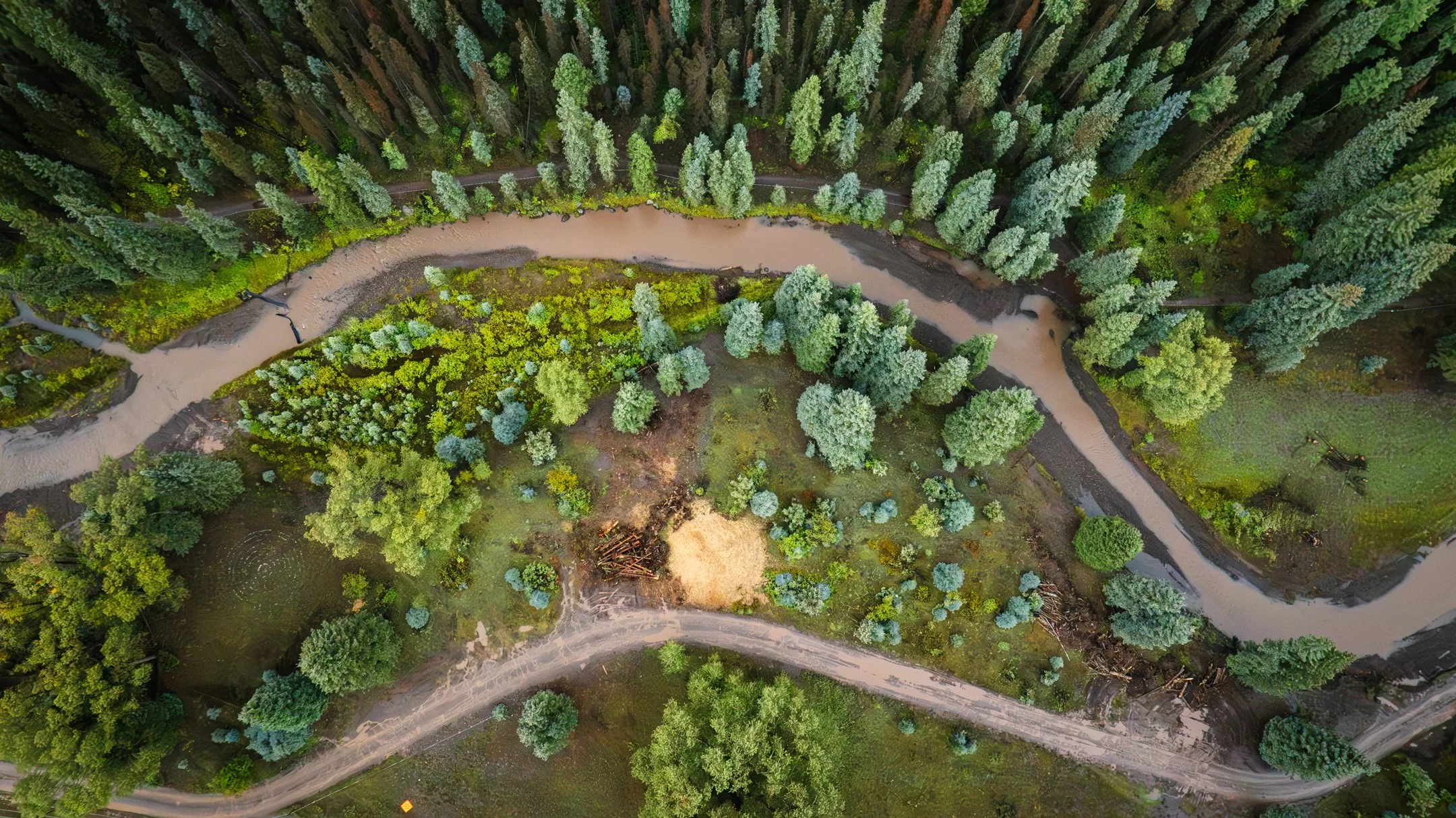
Fraser River sediment will be cleared with grant funds

By Katie LoobySky-Hi Daily News April 10, 2008

   “We have to be really careful about any sediment getting in the water,” Klancke said. “We live on an extremely depleted river. The more water you remove from the river, the less velocity the river has and the less capability of carrying sediment.”

    Sediment covers spawning beds and smothers bug life, he said.

    “It really has killed off the aquatic habitat,” Klancke said. “You just can’t cover a habitat without killing everything in that habitat. … Trout won’t lay eggs in anything but gravel.”

http://www.skyhidailynews.com/article/20080410/NEWS/886432213

Groups want an extension for pipeline comments

Pueblo Chieftain Chris Woodka

The letter is signed by representatives from the Colorado Environmental Coalition, Western Resource Advocates, Trout Unlimited’s Colorado Water Project, Sierra Club, High Country Citizens Campaign, Environment Colorado and the Colorado Progressive Coalition.

http://www.chieftain.com/metro/1207634400/2

Spills on Roan Plateau highlight need to safeguard important fish and game habitat

Impacts of 1.2 million gallons of drilling mud in stream drainage not yet known

 RIFLE—Accidental spills of at least 1.2 million gallons of industrial drilling mud into Garden Gulch and eventually West Parachute Creek on the Roan Plateau demonstrate the importance of protecting the Roan’s sensitive watersheds containing native Colorado River cutthroat trout from future industrial drilling, according to Sportsmen for the Roan Plateau, a coalition of hunters, anglers and sporting organizations from all over Colorado.

“Accidents unfortunately happen, and we’re lucky this spill didn’t occur in a more sensitive drainage that contains important populations of native cutthroat trout,” said Corey Fisher, a field coordinator for Trout Unlimited and a member of the coalition. “This just makes it all the more important to carefully approach the development of the Roan, particularly those portions that contain irreplaceable habitat for fish and wildlife and, by extension, hunters and anglers. What’s more, it highlights weaknesses within existing federal energy regulations that need to be shored up, and shored up quickly.”

Fisher referenced existing laws that exempt the energy industry from stormwater runoff regulations within the federal Clean Water Act. Had industry not been exempt, it’s possible more care would have been taken with the fluids on the sites of the spills, and they would not have been allowed to enter the stream drainage.

In total, four separate spills occurred on private land on the western portion of the Roan Plateau. While drilling is occurring within the Roan Plateau Planning Area, there is no drilling where genetically pure Colorado River cutthroat trout live in Trapper Creek, Northwater Creek and the East Fork of Parachute Creek, all of which eventually end up in the Colorado River. However, the Bureau of Land Management has announced plans to lease and drill the planning area, and its own documents predict an acute impact on those native fish populations. The planning area is also home to trophy deer and elk herds, as well as healthy populations of ruffed grouse, blue grouse and huntable populations of black bear and mountain lion.

“These large spills should completely dispel any notion that natural gas drilling can be done in sensitive wildlife habitat without the risk of an accident that causes drastic harm,” said Suzanne O’Neill, executive director of the Colorado Wildlife Federation. “If an area of the Roan Plateau rim has to be drilled at all, it should be limited to an area where a spill would present the least amount of risk to wildlife, such as Corral Ridge outside of cutthroat trout watersheds.”

The spills were announced by the Colorado Oil and Gas Conservation Commission on Thursday—two were reported to the commission, and two were not. The spills took place between November 2007 and February 2008. Apparently, the largest spill of about 30,000 barrels of drilling mud—or 1.2 million gallons—occurred in Garden Gulch, a tributary to the West Fork of Parachute Creek. According to the commission, some of the spilled mud is still frozen in a waterfall.

“Drilling mud is really more of a mixture of water or oils and certain other contents, like bentonite or barite, as well as other unknown chemicals,” said John Trammell, a geologist by trade and a member of Grand Valley Anglers in Grand Junction. His organization has put thousands of volunteer hours and invested thousands of dollars into a project on Trapper Creek to protect the stream’s headwaters, which provide critical spawning and rearing habitat for native trout. “Barite gives the ‘mud’ weight, and bentonite is expandable clay that fills in fissures and seals formations. The other ingredients area usually proprietary and depend on the energy company.”

Of particular interest to sportsmen, Trammell said, is the bentonite, which, when released in large amounts, can coat the bottom of a trout stream, smothering spawning gravels and kill off insects on which trout feed. The other ingredients in the concoction, while unknown, “are certainly not things you want in a trout stream.”

Efforts by sportsmen continue, not only to protect the Roan, but to reform federal energy regulations that allow the industry to skirt stormwater runoff rules that apply to other industrial operations.

“We need better energy legislation from Congress,” Fisher said. “We can develop our oil and gas resources responsibly, but the industry needs to be held accountable to elementary clean water and clean air laws. After all, water flows downhill, and while fish and game are the immediate victims of accidents like this, people will eventually be affected, too.”

Additionally, according to David Nickum, executive director of Colorado Trout Unlimited, the spills should demonstrate the need to move forward with an ongoing rulemaking effort that would govern how the state Oil and Gas Conservation Commission reviews energy drilling within Colorado.

“The pace and scale of development now being experienced, and the increased movement into areas of higher environmental significance, makes it vital that Colorado take a hard look at the rules and update them to ensure public health, fish and wildlife, and other key values are protected,” he said.

Oil shale report angers Western Slope officials

“It would be devastating to above-ground trout fisheries,” Trout Unlimited spokesman Chris Hunt said. “They could be lost forever with this type of development.”

Friday, January 04, 2008

Unrealistic and there is too little time to respond.

Those are just two of the complaints some local government officials are leveling at the Bureau of Land Management regarding its draft report on the possible impacts of a commercial oil shale industry.

“If we’re worried about global warming, what’s this whole thought that we’re going to have to build a whole bevy of coal-fired power plants to extract oil shale resources?” Rio Blanco County Commissioner Ken Parsons said, adding the BLM created the report using unrealistic assumptions about oil shale companies’ technology and how it might impact the Western Slope.

The BLM’s draft Oil Shale and Tar Sands Programmatic Environmental Impact Statement, issued in late December, paints a scenario of a radically changed Western Slope in the face of widespread commercial oil shale development in the Piceance Basin. However, the effects are possibly still decades away.

The report says oil shale would supplant all other uses of public land, have a dramatic impact on air and water quality and urbanize small towns, while bringing many thousands of new workers to the region.

The report says little about using other energy sources, such as natural gas, to power oil shale development, Parsons said.

The county hopes greater environmental awareness in the United States will be enough to encourage Congress to scrap the commercial oil shale program until energy companies can prove their technology works and the BLM’s oil shale research leasing program has run its course, he said.

Grand Junction Utilities Manager Greg Trainor said the scenarios outlined in the report don’t make sense because companies researching oil shale don’t know how or if they’ll extract it commercially.

The BLM’s public-comment period, which expires in March, isn’t enough time for cities with limited resources to respond to the 1,400-page report, he said.

Considering the report’s impact, “why are we being given only 90 days to comment on it?” Trainor said, calling the report “imposing.”

“It’s just going to take us a while to dig through this thing,” he said.

The report is proving tough to wade through for others, too. Royal Dutch Shell spokesman Tracy Boyd, state Sen. Josh Penry, R-Grand Junction, and Club 20 Executive Director Reeves Brown all declined to comment on the report because they had not finished reading it.

Environmental groups praised the BLM for being thorough in its account of how oil shale will “devastate” the region.

“It would be devastating to above-ground trout fisheries,” Trout Unlimited spokesman Chris Hunt said. “They could be lost forever with this type of development.”

He said the report shows oil shale development will create an industrial zone out of northwest Colorado and defy the BLM’s mandate for allowing multiple uses of public land.

Wilderness Society Assistant Regional Director Steve Smith called oil shale’s potential impacts outlined in the report “overwhelming” and harmful to the region’s water and energy supply and air quality.

“We are not enhancing our energy security if we are burning up energy resources of one type to produce energy resources of another type,” Smith said. “It would not make us more secure. It would make our whole energy mix much more brittle than it is.”

Green activists unite at Capitol

A coalition of Colorado environmental groups said Thursday that it will concentrate in the upcoming legislative session on passing bills designed to promote healthy rivers, solar energy and smart growth.

Elsie Jones, executive director of the Colorado Environmental Coalition, which represents more than 100 organizations, said the group wants to ensure "smart growth" by making sure state transportation dollars are used more effectively to reduce traffic and to assure there are sustainable water supplies.

David Nickum, executive director of Colorado Trout Unlimited, said the effort to promote healthy rivers and streams will be done by "providing more freedom for water-right holders to be able to put water back into rivers."

Nickum said healthy rivers are among the state's most valuable assets, preserving water quality for a variety of uses, providing a healthy habitat for fish and wildlife and helping the economy by promoting recreation and tourism.

"There are rivers that, because of the growing demand associated with Colorado's rapid growth over recent years, are de-watered and some that are completely dried up at certain times," he said.

Nickum said a fair way to help get water back into the streams and rivers and to keep them flowing is to work with "willing water-right holders to help them put water back in the streams and compensate them for that." Under current law, he said, water-right holders don't have incentive to do that and "actually face potential penalties for doing so."

Pam Kiely, legislative program director for Environment Colorado, said an ambitious "Go Solar" package of legislation calls for a standard rebate for the installation of a home solar system and a state tax credit for new construction and retrofits to existing homes that meet efficiency levels.

The coalition also is proposing legislation that would require municipal utilities and rural electric co-ops to invest 2 percent of their retail receipts on cost-effective energy programs for their customers starting in 2010.

"The bottom line is that it is time for Colorado to go solar by continuing to be smart about how we use our current energy resources and use them more efficiently," said Kiely.

House Minority Leader Mike May, R-Parker, said he considered the broad proposals "wonderful" as long as they don't get into mandates and taxes.

"We want to be as green as anyone, but we also need to measure the costs and impact on individual liberty," he said.

Rep. Cory Gardner, R-Yuma, said he was concerned about the term "smart growth."

"When you say smart growth, that is telling people how to live," said Gardner. "I don't think that is appropriate."

Howard Pankratz: 303-954-1939 or hpankratz@denverpost.com

What's that sludge?

DAILY NEWS STAFF REPORTSsummit daily news Summit County, CO Colorado December 30, 2007

Boo. Our history is still coming back to haunt. A surge of toxic metals washing out of Peru Creek into the Snake River killed hundreds of trout in August, showing why local officials are putting a focus on cleaning up abandoned mines.With some new initiatives from the federal government and the involvement of Trout Unlimited, there was some progress in tackling the Pennsylvania Mine in Peru Creek, one of the worst sites in the county. A model agreement covering volunteer cleanups could help speed a remediation project at the Pennsylvania Mine.

In the Blue River drainage, Breckenridge and Summit County have started construction of a water treatment facility at the site of the Wellington-Oro mine. When it's finished, the plant will remove zinc from French Gulch and improve water quality downstream in the Blue River.

And in another cleanup project, the EPA and the Forest Service removed tons of rock tainted with high levels of lead from the federal Claimjumper Parcel along Airport Road. The material was moved to a repository in French Gulch, where it will remain indefinitely.

The project stirred local opposition, as residents of the French Gulch area questioned why they should have to live with new mine waste in addition to the large piles of tainted rock already present near their neighborhood.

But federal officials touted the Claimjumper cleanup as a win-win, citing improved environmental conditions in both locations.

DENTRY: Hunters and fishers fight for public land

Tuesday, December 25, 2007

To the hunters and anglers whose hackles are up, may you enjoy even more successes in 2008 sticking up for America: the place, the land and our descendants' heritage.

While mega- corporations have ravaged public lands in the West with hurricane force and the blessing of big government, many sportsmen have rallied to the defense.

Hunters, fishermen, ranchers and other guardians of the scraps of America's wild lands and hunting and fishing heritage have lost much in the past seven years.

But they also have formed coalitions that have won battles recently against public lands abuse.

Some examples:

* The Valle Vidal, New Mexico. A coalition of more than 400 organizations, including sportsmen and outfitters, protected the 100,000-acre basin in the Sangre de Cristo Mountains from coal bed methane drilling. Congress passed the Valle Vidal Protection Act in December 2006.

The coalition (ValleVidal.org) also saw to it that the wildlife- rich valley was added to Gov. Bill Richardson's 2006 petition seeking federal roadless protection.

* The Wyoming Range. The coalition Sportsmen for the Wyoming Range is gaining ground in the fight to keep the 100-mile-long mountain range in western Wyoming in its natural state.

In October, U.S. Sen. John Barrasso, R-Wyo., introduced the Wyoming Range Legacy Act. It would withdraw 1.2 million acres from energy development.

Coalition members include The Mule Deer Foundation, Backcountry Hunters and Anglers, Wyoming Backcountry Horsemen of America, Wyoming Wildlife Federation, Trout Unlimited and the Wyoming Game Wardens Association. See WyomingRangeSportsmen.org.

* Rocky Mountain Front, Montana. Conservation groups including sportsmen and ranchers won a congressional ban on future leasing on the treasured Front, where the shortgrass prairie meets the Rockies. See SavetheFront.org.

* North Platte River, Colorado and Wyoming. This autumn, the Bureau of Land Management withdrew thousands of acres proposed for headwaters energy leasing after protests from sportsmen's groups, rural residents, wildlife officials and Wyo. Gov. Dave Freudenthal.

* Roan Plateau, Colorado. The above victories against unbridled industrial invasion of public lands should serve as inspiration to a new Colorado coalition.

Sportsmen for the Roan Plateau announced its formation this month. Composed of more than 20 groups, it calls for no new leases on public lands on the Roan until a plan is developed allowing "continued, responsible drilling on existing leases and private industry lands," including wildlife winter range at the base of the Plateau.

'ABSOLUTELY' ROAN: Mike Gould says he's not an activist, but he sings like one. The third-generation western Colorado native and hunting guide has written a song about greed destroying western Colorado.

Gould, a songwriter and performer, guided grouse hunters on the Roan until an energy company broke his lease in the early 1990s, sending him packing to Idaho, where he famously trains Labradors and writes books.

The song, Absolutely, introduces an overheard conversation between a congressman and an energy developer who make much of their fortunes and little of the "common country people."

"I would love it if every single ranching family in Colorado could hear this song," Gould said in a telephone interview Sunday.

"Nowadays, when I cruise through (the Grand Valley) . . . I just see greed," he said. "I see the amazing natural intricacies of what used to be western Colorado are being sold out. And it's permanent. It's forever and it's gone."

Gould dedicated the song to Keith Goddard, the Rifle-based big-game hunting guide who has been very much an activist on behalf of sparing the Roan.

Absolutely is on Gould's DVD, Look In My Eyes, $12, available from him by e-mail at GrandRiverWebster@comcast.net.

To people like these - with roots in the land, wildlife, hunting and fishing - Happy New Year.

Stick to your guns.

Let them drill, Ritter says

Roan Plateau proposal includes expanded wildlife protection areas