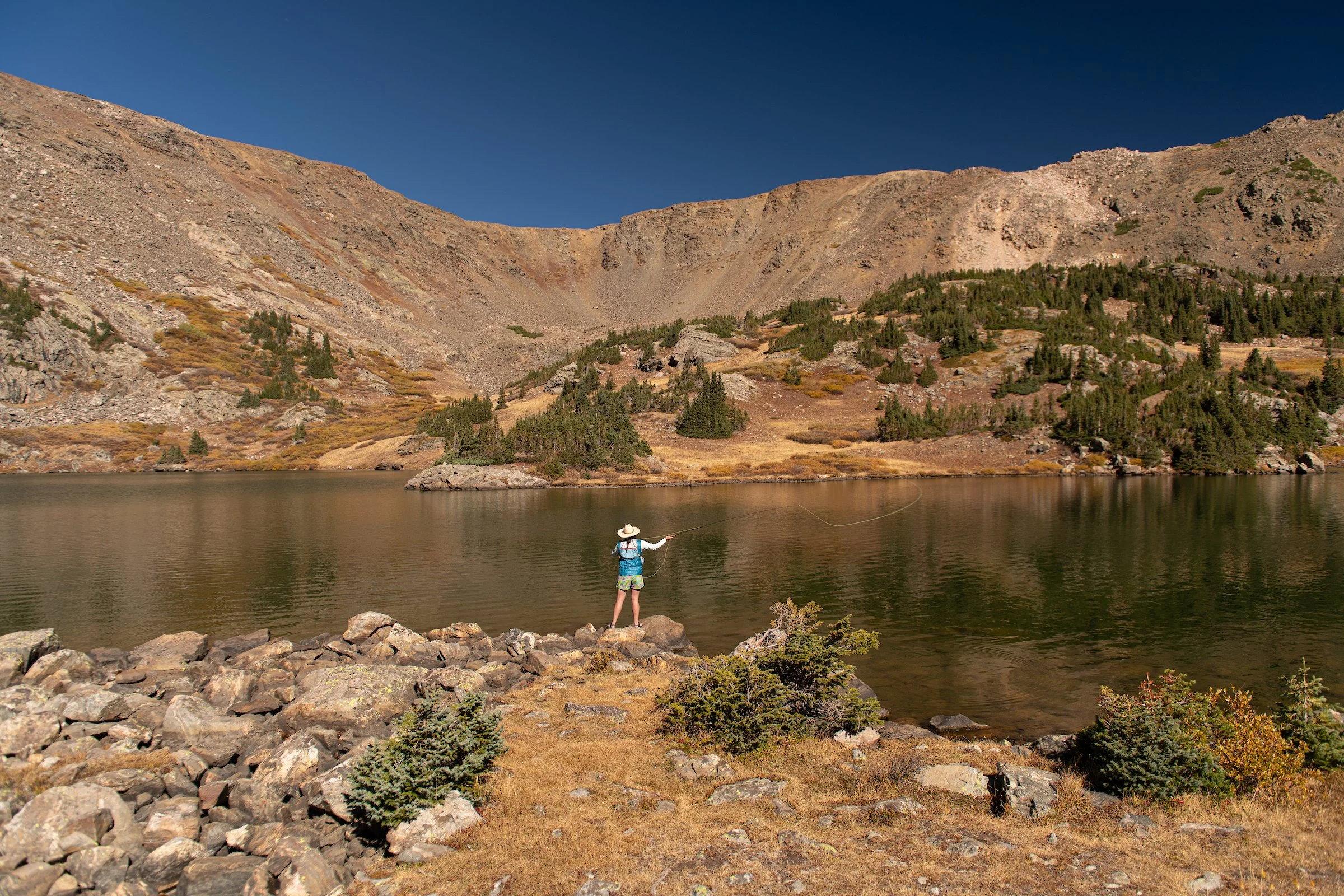
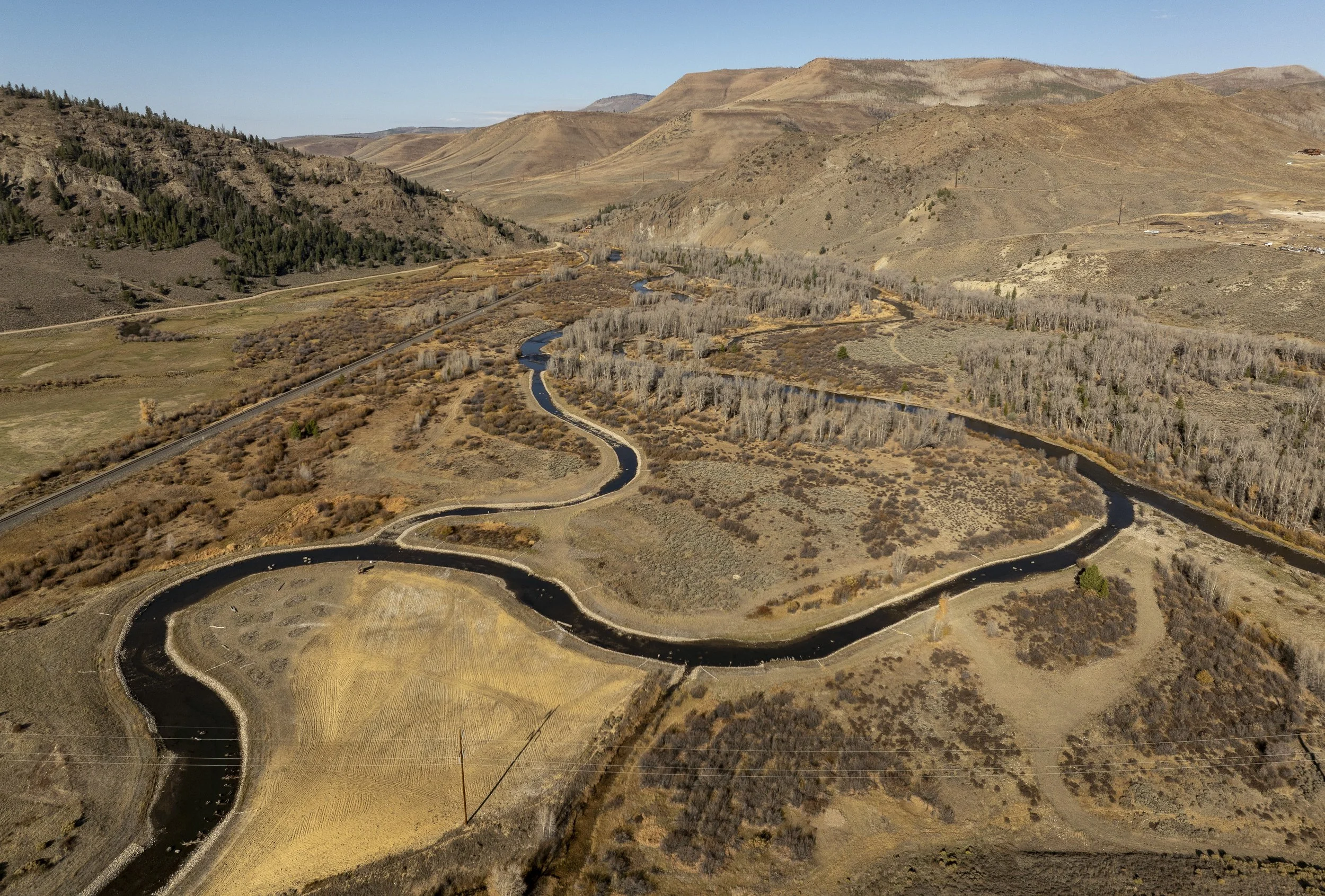
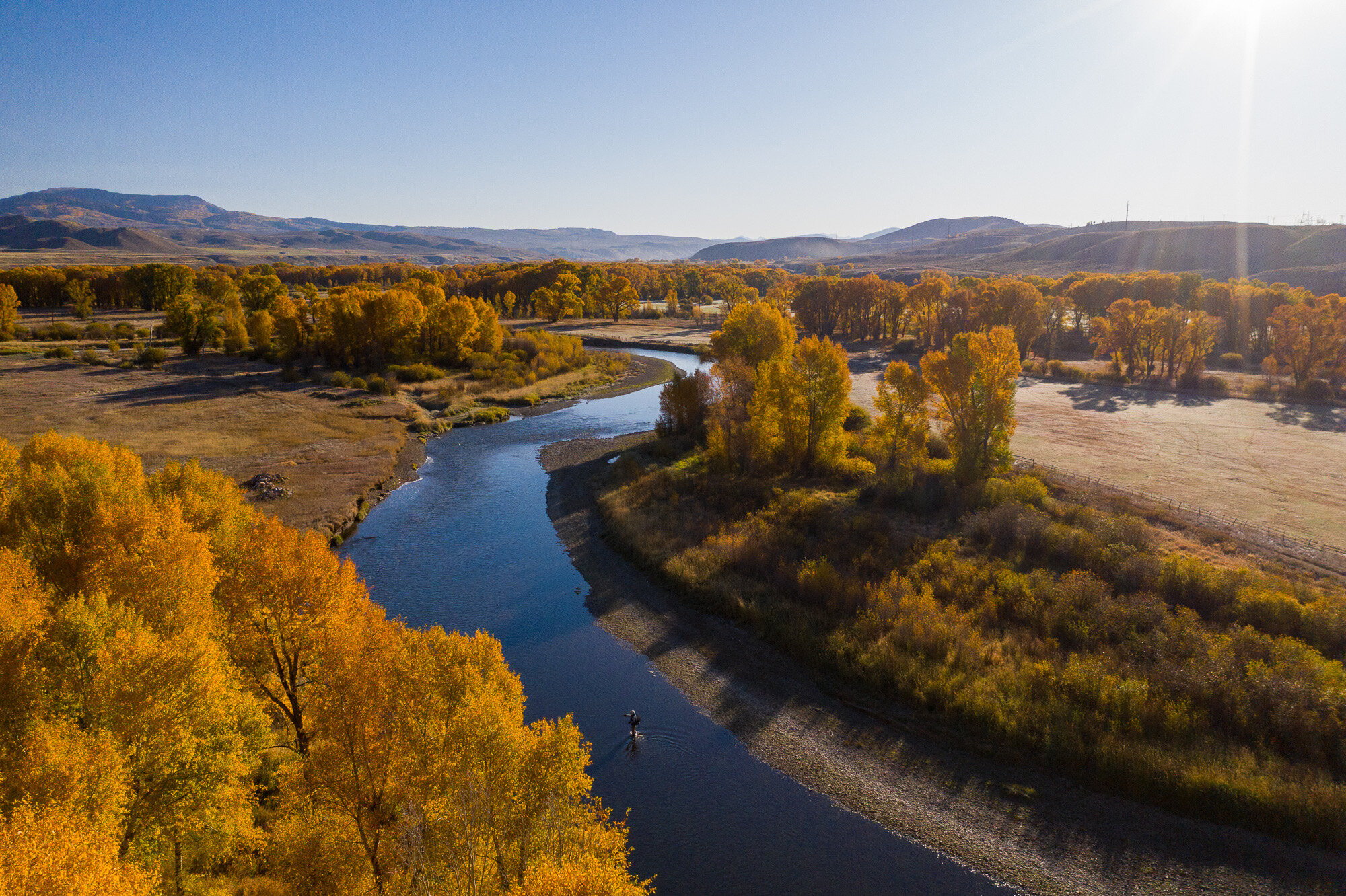
Many rivers and streams in Colorado are heavily depleted and lack the flows necessary to sustain healthy coldwater fisheries. Since its inception in 1998, Trout Unlimited’s Colorado Water Project has worked to address this problem. The Water Project has defeated water diversion and storage projects that would diminish river flows, has helped to pass several pieces of legislation expanding the state instream flow program, and has created dialogue among water providers regarding ways to develop water supplies without damaging Colorado’s rivers and fisheries. Trout Unlimited is the only group in Colorado dedicated to conserving, protecting and restoring stream flows and rivers.
Given Colorado’s population growth and weak laws and policies protecting rivers and fish, top priorities for the Colorado Water Project are to ensure that current legal protections for our rivers are not weakened or eliminated and to require new water development to proceed only if it will conserve, protect or restore the rivers that would otherwise be adversely affected. While much of the focus of the Colorado Water Project involves defending the state’s rivers from new water withdrawals and expanding the tools and incentives to conserve the state’s rivers, TU also focuses on on-the-ground protection and restoration efforts. These projects broaden the coalition of interests that support instream flows and act as an incubator for building stronger communities with more interest in river protection. In a state where the competing demands for limited water resources are enormous and continually growing, building political support for instream flows is critical. The public, elected officials and agencies need to understand how important healthy rivers and fisheries are to Colorado’s economy and quality of life. We are optimistic that our work will provide a roadmap to healthier rivers with abundant flows, and healthier communities that are vested in the long-term protection of their watersheds.
Dry times, Growing water crisis seen in West
COLORADO SPRINGS - Rocky Mountain states are growing faster than the rest of the nation and get less rain, stressing its water supply, which is already overtaxed in many places. Climate changes are projected to reduce the amount of water available in the future.
Finally, transfers from agriculture, which still uses most of the water, to growing cities are evolving with innovative strategies, but the ultimate price might be the quality of life in the West, not just the sustainability of the water supply.
Those are conclusions reached in Colorado College’s 2007 State of the Rockies Report Card, released and discussed last week at a three-day conference.
The report looks at water issues of concern to the Arkansas Valley, including Aurora’s water rights purchases in the Arkansas Valley, water banking and a proposed water lease management program.
“The ultimate question is, ‘Can small farms and the communities around them thrive with continued water transfers?’ ” said Tyler McMahon, a Colorado College senior who spent nearly a year researching water issues. McMahon and Matthew Reuer, technical director for the Report Card, wrote a chapter on water sustainability in the report.
McMahon presented the report on a panel that included Gary Bostrom, Colorado Springs Utilities projects manager; Melinda Kassen, Trout Unlimited Western Water Project managing director; and Kay Brothers, deputy general manager for the South Nevada Water Authority.
A crowd of about 100 peppered the panel with questions about growth, development and sustainability of the West’s water supply.
The Rocky Mountain states - Arizona, Colorado, Idaho, Montana, Nevada, New Mexico, Utah and Wyoming - receive less rain and withdraw more water than any other region of the United States, McMahon explained.
Overall, water withdrawals - through diversions, transfers or wells - peaked in 1980. Since then, agricultural use has decreased slightly, power generation has remained steady and urban use has climbed.
Unlike the rest of the country, the Rocky Mountain and Pacific states use most of the withdrawn water for irrigation. In the rest of the country, most is applied to electric power generation. The amount withdrawn for cities is the second-leading use in the West, but a distant third in most of the country. The problem is, the growth is not always occurring where the water is. Coupled with pressures on the agricultural communities - the loss of about 150,000 acres of irrigated land every decade - urban growth and revised estimates of how much water is available, changes could be devastating for rural communities, McMahon said.
“I was impressed by the amount of water used by irrigation and the effect moving that kind of water could have, especially on areas that are less diverse economically, like the Lower Arkansas Basin,” McMahon said.
Outside of Pueblo, about 6 percent of the valley’s economy is driven by farm income, a high percentage for the state.
The ray of hope may be ways to share water, including water banking, interruptible supply, alternative crop patterns or lease agreements.
In the Arkansas Valley, the Upper Arkansas Water Conservancy District is looking at reviving a water bank concept. A water bank in Idaho has worked successfully since 1930 and could be a model, McMahon said.
Meanwhile, the “Super Ditch,” a rotational fallowing, lease management program being studied by the Lower Arkansas Valley Water Conservancy District could bring seven mutual ditch companies together in a groundbreaking program that would allow irrigators to lease water to cities on their own terms.
“Concepts like the Super Ditch show that the water can still be shared and are a very positive trend,” McMahon said.
Still, the West will struggle as each state deals with different water laws, supply needs and conservation strategies to cope.
Las Vegas pays cash for grass, Tucson has the steepest block rate structure in the West and Denver is combing its system for leaks to recover unaccounted water.
The report also talks about climate change. Snowpack in the Rockies could decrease by 50 percent in the period from 1976-2085, while average temperatures rise and rainfall, at least in Colorado, stays roughly the same.
“Conservation and creative water sharing methods can potentially benefit the Rockies’ people, land and environment, but the demands of a growing population will likely create new tension,” McMahon wrote in the report. “How this limited, variable and potentially shrinking supply is managed . . . will largely determine not only the sustainability but also the livability of the Rockies so valued by millions of residents and visitors alike.”
Ritter says roadless petition won’t supersede current protections
By BOBBY MAGILL The Daily Sentinel
Sunday, April 15, 2007
Gov. Bill Ritter on Saturday reiterated his support for broad protections now in place for Colorado’s roadless areas.
Ritter said the intent of a letter he sent to the U.S. Department of Agriculture last week was to ensure the areas remain protected if the 2001 Roadless Rule gets struck down in federal court.
Ritter sent a petition to the U.S. Department of Agriculture last week asking the agency to protect Colorado’s roadless areas while also honoring the work of the Colorado Roadless Area Review Task Force, which recommended last year that some exceptions be made to some roadless protections, allowing for some coal mining, wildfire prevention and some other activities.
The 2001 Roadless Rule, which now protects all of the nation’s 58.5 million acres of roadless land, is being challenged in federal court.
“I didn’t mean to presume that (the 2001 Roadless Rule) wouldn’t be upheld,” said Ritter, who was in Palisade for the unveiling Saturday of a memorial to Wayne N. Aspinall. “I just think that on the chance that it’s not, and I think there’s some chance that it’s not, that we must do all we can to try and get interim protections (for roadless areas) in place and agreed upon if that rule might be struck down.”
Ritter said the Colorado roadless rule he proposed in his letter to the USDA will not supersede the 2001 Roadless Rule if it prevails in court.
Some conservationists, including Brian O’Donnell of Trout Unlimited, said last week they feared Ritter was asking the USDA to weaken protections for roadless areas even if the 2001 rule remains in effect.
“The 2001 Roadless Rule, if it’s upheld by the courts, that’s the law of the land,” Ritter said.