Speak Out to Oppose or Limit the CPW Commission’s Fur Ban

At the March 2026 Colorado Parks and Wildlife (CPW) Commission meeting, the Commission approved on a 6-4 vote advancing into rulemaking on a citizen petition calling for the ban of sale, trade or barter of furbearer fur and products. The petition was promoted by many of the same interests who brought forward the Denver Fur Ban ballot measure in 2024. The petition lacked scientific evidence showing that furbearer harvest or sale of fur in any way jeopardized sustainability of furbearer populations, and CPW staff recommended against the petition. Unfortunately, they were overruled by the Commission in a hearing and vote marked by significant confusion.

“Furbearers” under CPW regulations refer to the species traditionally hunted or trapped with fur of commercial value, such as mink, badger, beaver, coyote and fox. The petitioners’ proposal includes an exemption for finished hand-tied flies, but not for artificial lures nor for fly tying materials. As written, the proposal would ban something as simple as a legal hunter trading harvested fur with a fly-tying friend in exchange for some of the completed flies, or a Colorado fly-tyer purchasing a strip of mink fur sourced from out-of-state to use in tying streamers.

CPW is now working on an issue paper to present to the Commission as the first step toward adopting final rules for the fur ban. The paper will be presented at the Commission’s July meeting, with the final rulemaking hearing potentially taking place in September. To inform the issue paper, CPW is seeking public comment through May 3, through their web portal at: https://engagecpw.org/commercial-fur-sales

CPW staff have suggested that the fur ban be limited to the sale of furs hunted or trapped in Colorado and not applied to imported fur or materials. Consistent with statutory requirements allowing trapping and sale of fur from ‘nuisance’ animals taken by or on behalf of landowners to protect their property (under Title 35 and section 33-6-107(9) of the Colorado Revised Statutes), CPW also suggests that the rule not apply to fur harvested under those authorities.  Unfortunately, it does not appear that the Commission is inclined to accept these recommendations so public comment on these matters is very important. 

CTU opposes the proposed fur ban rule as it represents an anti-hunting, angling and trapping position without any basis in science and sound wildlife management. The ban is not needed to support sustainable furbearer populations, as Colorado’s harvest levels are an order of magnitude below those that the scientific literature indicates are sustainable. Simply put - the rule is not based on the conservation needs of Colorado wildlife. If the rule proceeds, however, we support the limitations proposed by CPW staff, and also suggest that the exemption for finished flies be broadened to include artificial lures and the materials used in making flies and lures.

You can weigh in with CPW through their Engage CPW portal to offer your comments. Points to consider raising:

·         CPW staff indicate that best available science shows that harvest is not threatening sustainable furbearer populations in Colorado, making this rule unnecessary and inappropriate

·         Natural furs have a long history of use in flies and lures used in fishing, and those uses should be exempted from any ban on sale of fur and fur products

·         Any CPW restriction on the sale of fur should be limited to fur harvested in Colorado; applying it to imports would do nothing to benefit Colorado wildlife

·         A fur ban cannot legally be applied to animals taken under Title 35 and section 33-6-107(9) of the Colorado Revised Statutes; asking wildlife officers to distinguish between fur taken under those authorities and those taken under recreational licenses poses an impossible enforcement challenge for CPW staff

·         In your comments, include any personal experience you have with furbearer furs and products as an angler or fly-tyer


Born in the Classroom, Back to the Current

By Haley Collinsworth, Colorado Western TIC Coordinator

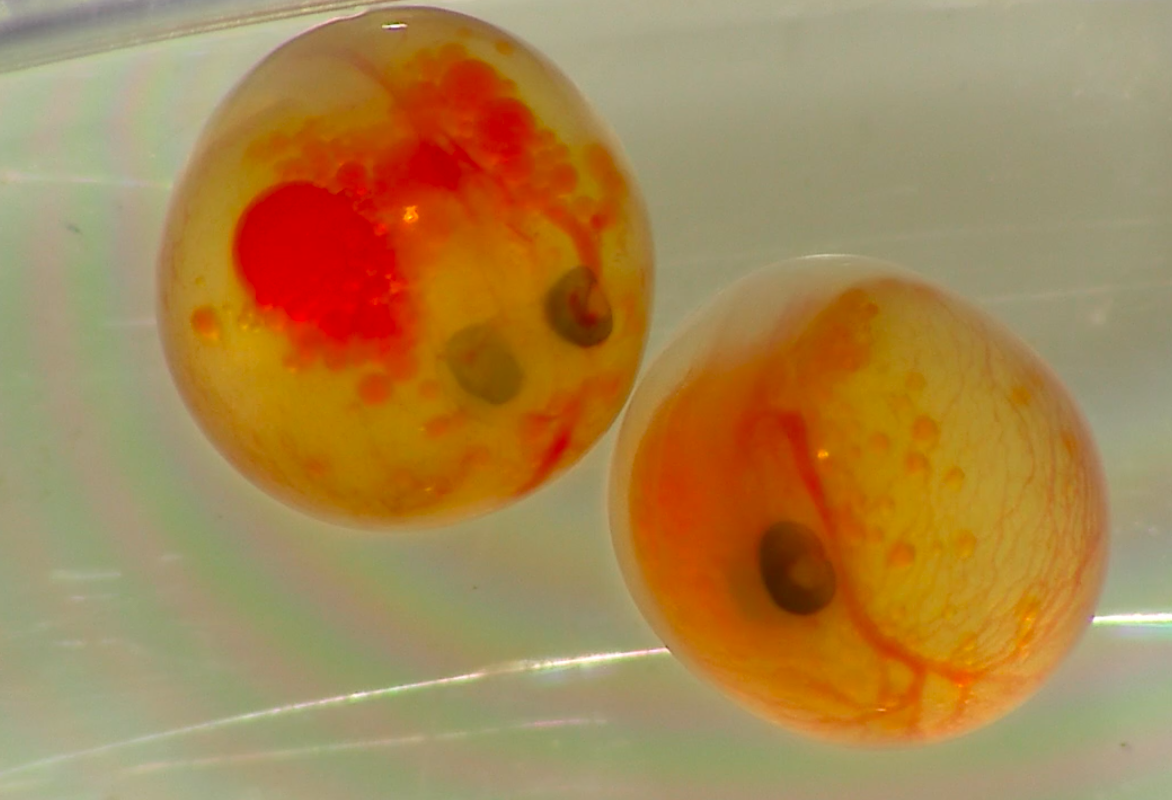
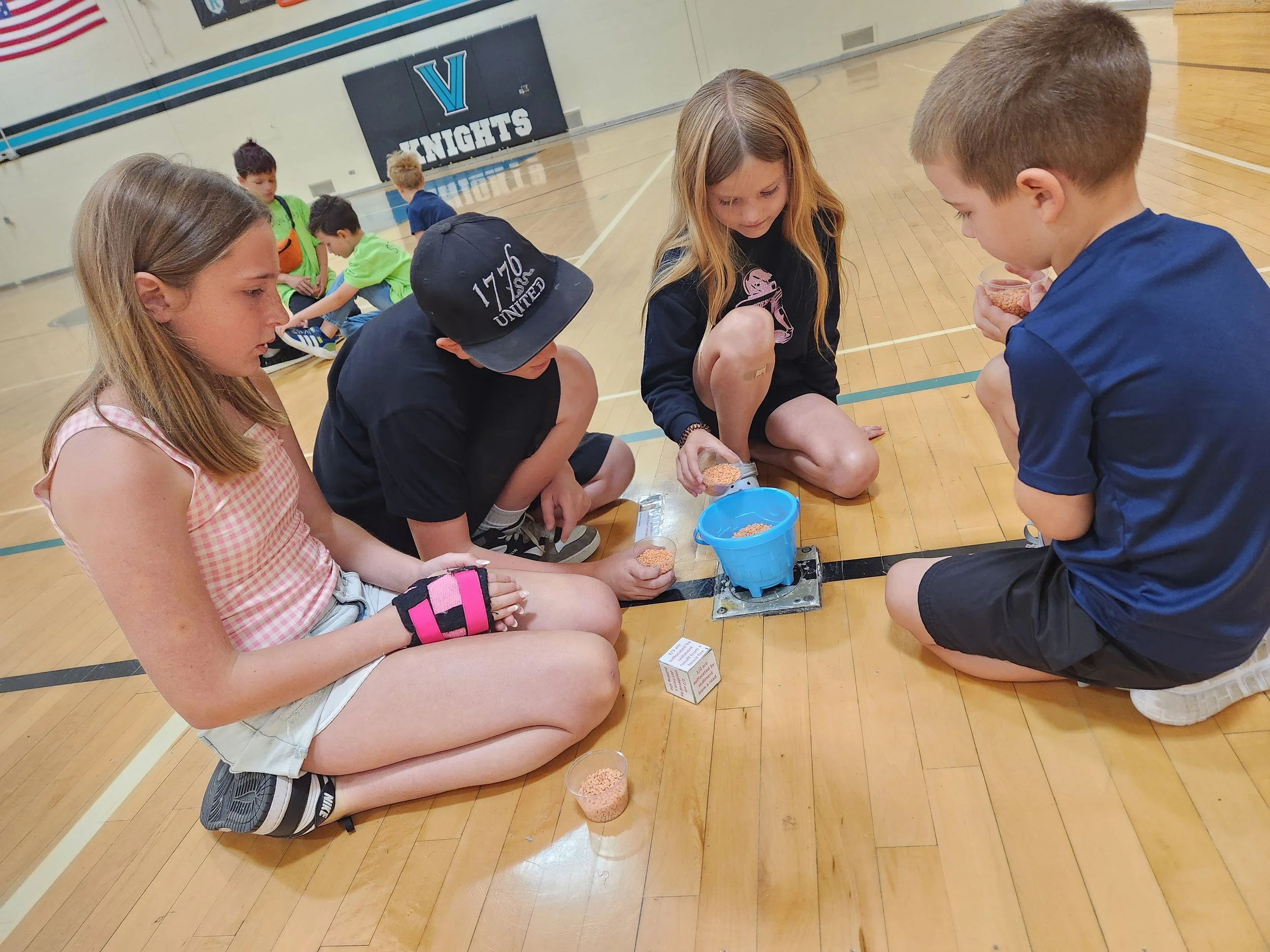
The Trout in the Classroom program is more than just a science project. It is a first step for students toward stewardship that is supported by passionate volunteers from local Trout Unlimited Chapters. As students raise trout and release them into local streams, they experience the responsibility of protecting something real and fragile. In that moment, learning becomes personal and students begin to see themselves not just as participants but as the next generation of river champions.

Students gather at the CSU Spur to get one last look at their trout before releasing them back into their local stream.

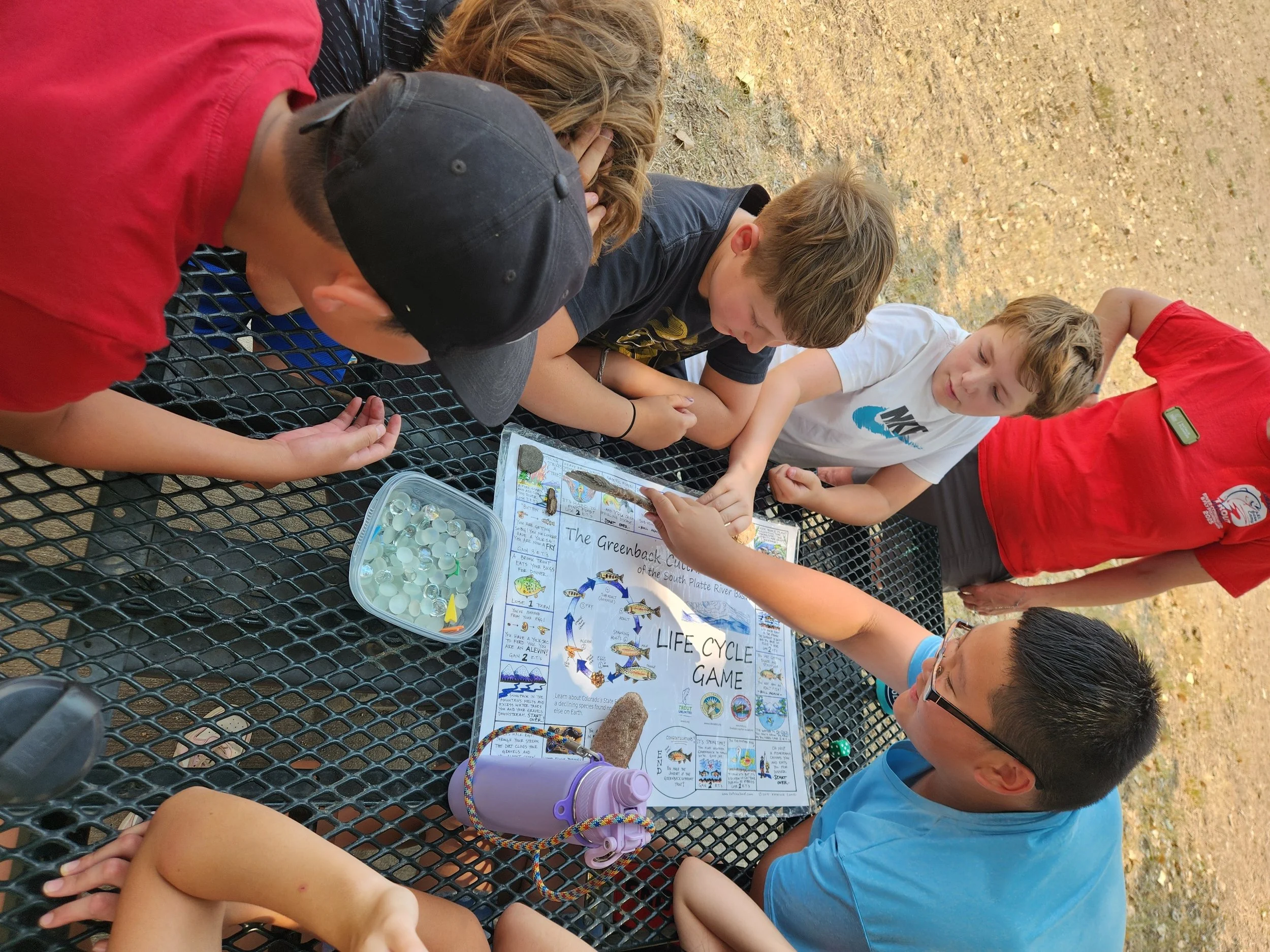
The March 12 release event at CSU Spur centered on engaging homeschool students and families in hands-on environmental learning. CSU Spur’s Water Education Coordinator, Stefan, led interactive discussions that helped participants better understand conservation practices and aquatic ecosystems. Members of the Denver Trout Unlimited Chapter were also on hand to support the event and share their expertise. The on-campus trout tank, which is open to the public, serves as an ongoing educational resource and is surrounded by informative displays highlighting the importance of Colorado’s headwaters.

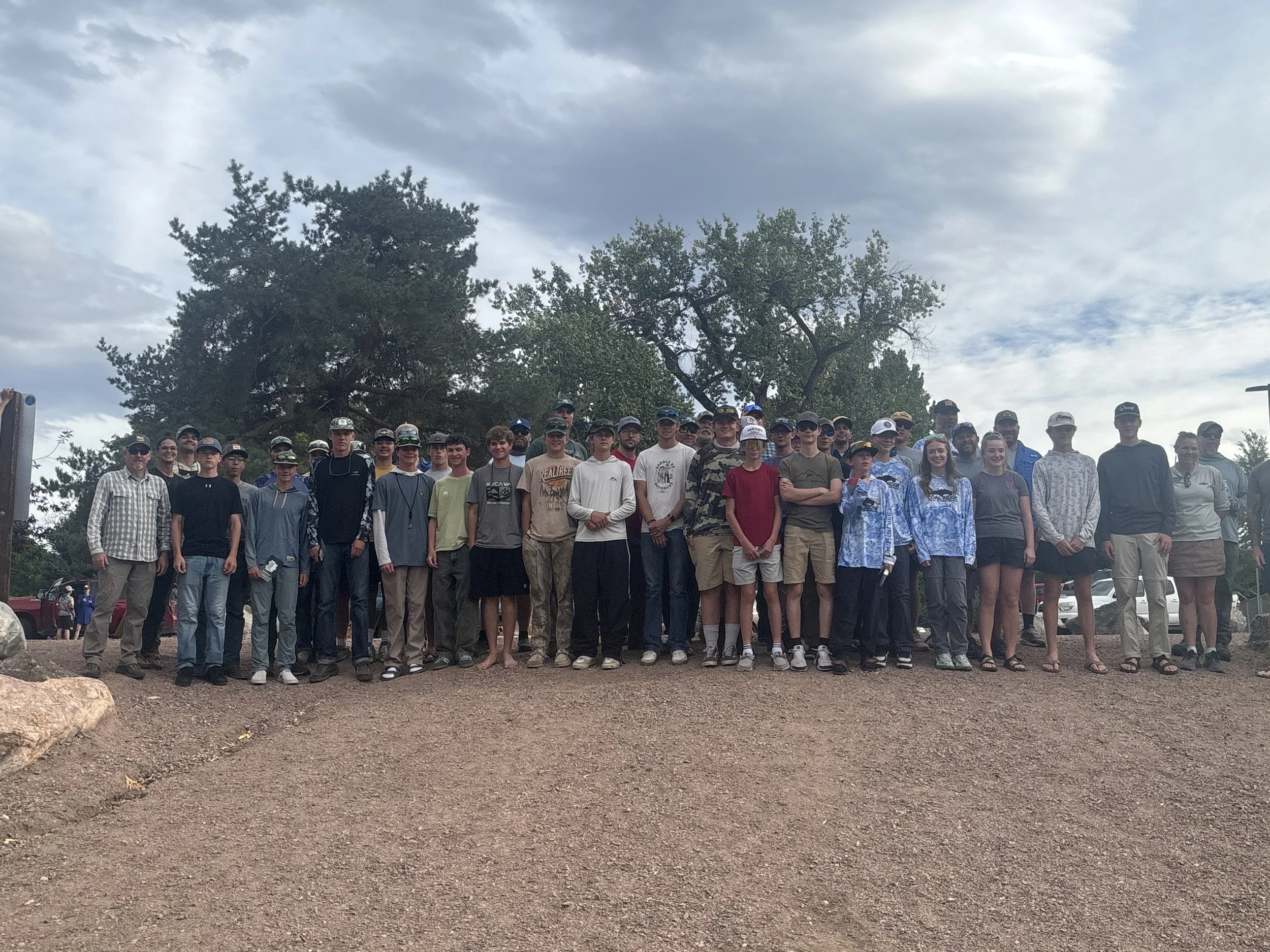
Students from across the San Luis Valley gathered March 12 at Del Norte Town Park to release almost 800 fish.

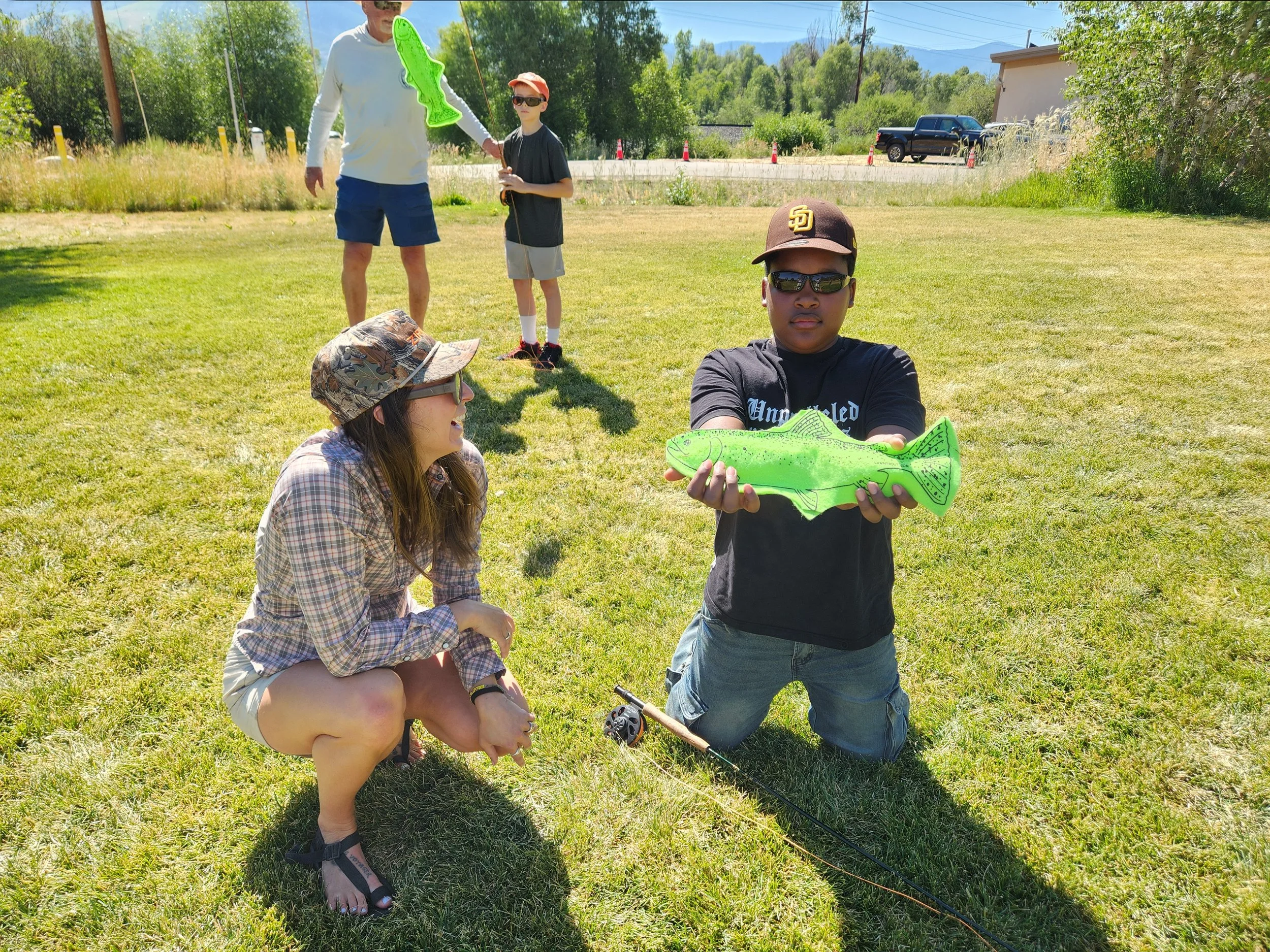
The March 12 fish release in the San Luis Valley brought together a strong network of community partners, including Rio Grande Hospital, Colorado Parks and Wildlife, the Division of Water Resources, the U.S. Forest Service, Rio Grande Headwaters, and the Rio Grande Water Conservation District. Watershed Ambassadors played an important role throughout the day, guiding younger students in fly casting and offering hands-on support during activities. Watching high school students mentor younger participants highlighted the growing conservation leadership pipeline the program is working to build. Kevin Midler the Youth Education Chair in the San Luis Valley chapter said, “Programs like Trout in the Classroom go far beyond raising fish they are helping cultivate the next generation of conservationists in the San Luis Valley.”

A student from Independence Academy reads his goodbye letter to the trout.

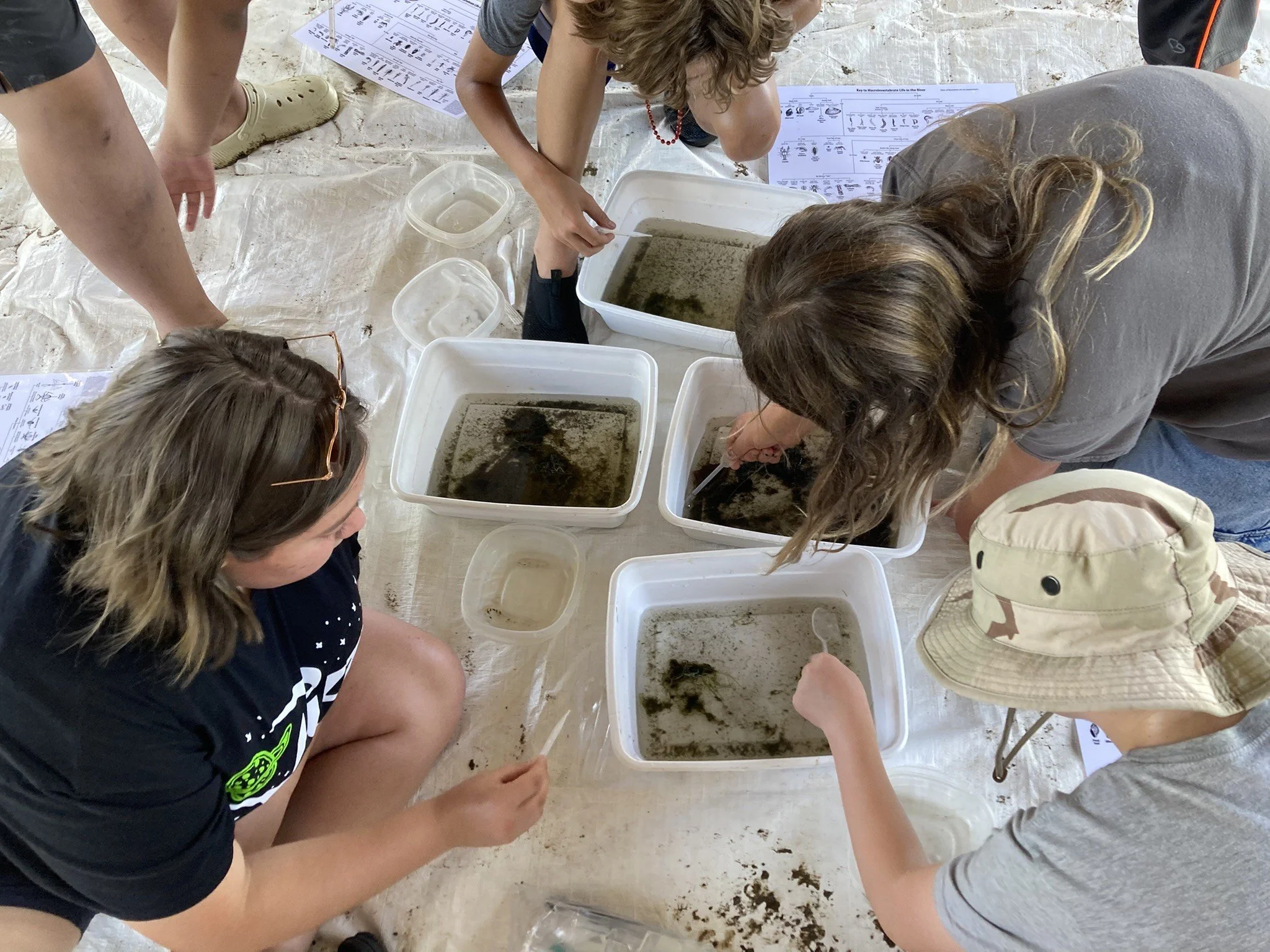
On March 5, we held our first school release of the year at Corn Lake in Grand Junction. Students from Independence Academy released 271 trout into their local pond. Members of the Grand Valley Anglers joined the event, bringing a hands-on macroinvertebrate kit that helped students explore the ecosystem their fish would be entering. While saying goodbye was difficult, it was also a rewarding and meaningful conclusion to their time with the trout.

Trout in the Classroom continues to expand across the state, with release events taking place from Denver to the San Luis Valley and west to Grand Junction. This growth is fueled by dedicated teachers, supportive Trout Unlimited chapters, and, most importantly, the students who become deeply connected to the experience. Throughout the school year, classrooms raise trout while collecting data, studying life cycles, and gaining a deeper understanding of aquatic ecosystems. Along the way, they create lasting memories that help shape how they see and care for the natural world. Keep Trout in the Classroom on your radar—you may soon find the next generation of conservation leaders making an impact in your own community.

The New Spring 2026 Issue of High Country Angler is Live!

The New Spring 2026 Issue of High Country Angler is Live!

Check out the Winter 2026 issue of High Country Angler e-zine, including these stories:

  • Landon Mayer with Still Water Seasons Greetings;

  • Brian LaRue with Cimmaron River;

  • Hayden Mellsop with A Great Day for the Birds;

  • Colorado TU Staff with Colorado’s Water Story Starts With Snow;

  • Other columns by Barbara Luneau, Timothy Gablehouse, Colorado TU Staff, and Joel Evans.

Colorado’s Water Story Is Taking Shape This Spring

Much of Colorado’s water starts as snow in the mountains.

Each winter, snow builds up at higher elevations and stays there until spring. As it melts, that water feeds rivers, refills reservoirs, and supports communities, agriculture, and recreation across the state. That cycle is what most of Colorado depends on year to year.

This year, there is a lot less snow to work with.

Statewide snowpack is sitting around 22 percent of average heading into the time of year when it usually peaks. Snow accumulated slowly through the winter, and recent warm temperatures have reduced what was already a limited snowpack. In some places, it has also peaked earlier than usual, which changes how that water moves through the system.

Snowpack isn’t just a winter metric. It’s the water supply for the months ahead.

As it melts, that water moves through entire watersheds, flowing into streams and rivers, recharging groundwater, and eventually reaching reservoirs and communities across Colorado. That same system supports drinking water, agriculture, local economies, ecosystems, and the ways people spend time on the water.

When there is less snow stored in the mountains, there is less water moving through that system. You don’t see that all at once. It plays out over time, affecting how much water runs off in the spring, how long flows hold into the summer, and how rivers look and feel later in the season.

This year is also about timing, not just total snowpack. Snow has started melting earlier and more quickly than usual. When that happens, runoff can move through the system faster, which can lead to a longer stretch of lower water later in the summer if conditions continue.

The data reflects that pattern. Snowpack is well below average across all basins in Colorado, with some areas at a fraction of what is typical for this point in the year. Drought conditions are also expanding across the state. All of this points to the same thing: less water moving through the system.

Spring weather will still play a role in how things develop. Additional precipitation and cooler temperatures can help, and conditions will vary depending on where you are. But the starting point going into runoff is lower than usual, and that shapes what comes next.

Snowpack, rivers, and water supply might feel like separate issues, but they’re all connected. What happens in the mountains carries through watersheds, into rivers, and across communities statewide.

That connection also shows up in how people experience rivers. Lower or shorter runoff can change the timing of boating, fishing, and other recreation. Conditions will vary from place to place, but they all tie back to the same source.

Colorado’s water story will continue to develop through the spring and into summer. We’ll keep sharing updates that help connect what’s happening in the mountains to what people are seeing across rivers and communities throughout the state.

Understanding how that system works is one of the most important steps in taking care of the places we all rely on.

In Memory of Cheyenne Gililland

We are heartbroken to share the news that Cheyenne Gililland, Colorado Trout Unlimited’s Philanthropy Director, passed away last week.

Cheyenne was a friend and a deeply valued part of this community. Her loss is devastating, and it is hard to put into words how much she meant to so many people across Colorado TU.

She cared deeply about conservation and was passionate about fundraising that helped support healthy rivers, clean water, and the people and communities connected to them. She believed in the mission, in the people behind it, and in the importance of bringing others into that work in meaningful ways. She built real relationships across our community and brought so much care, warmth, and dedication to everything she did.

In her role, Cheyenne helped build the relationships that sustain this work, connecting donors, partners, chapter leaders, and supporters to the care and recovery of Colorado’s rivers and streams. She had a genuine gift for making people feel welcome, valued, and part of this community.

Cheyenne also had an infectious personality and a presence that lit up the room. She brought joy, humor, and heart to the people around her, and she made this community better simply by being part of it.

Our thoughts are with Cheyenne’s family, friends, and everyone who had the privilege of knowing her. She will be deeply missed.

Front Range Fly Fishing Expos, March 2026

Late winter and early spring is when local fly fishing communities really come alive, and Colorado Trout Unlimited chapters are right in the middle of it. If you have been meaning to meet local volunteers, pick up a few new patterns, or just spend a day around people who care about rivers and the fish that live in them, these chapter expos are made for you. Two great events are coming up in March, each with its own flavor, but both are built around the same thing: community, education, and support for local conservation and outreach.

West Denver Fly Tying Clinic, March 7 in Golden

The West Denver Chapter’s Fly Tying Clinic is back on Saturday, March 7, and it is set up as an all-day, hands-on fly tying and gear event for every kind of angler. Expect a big bucket raffle, fantasy raffle, silent auction, and plenty of ways to support the chapter while you are there. New to fly tying or stuck on a pattern? Stop by the Learn to Tie area and get face-to-face help.

A highlight returning for its second year is the Build a Box promotion, where you can put together a fly box from your favorite tiers. You will also have the rare chance to watch top fly tyers demonstrate their signature flies up close. Entry is required, and hand-tied flies are available for purchase by coupon only. Coupon tickets are sold to support the West Denver Chapter and are used to “buy” flies from the tiers, twenty-five coupon tickets for $20.

Details
Date and time: Saturday, March 7, 2026, nine am to three pm
Location: Jefferson County Fairgrounds, 15200 West sixth Avenue, Golden, CO 80401
Admission: $20 adult or teen at the door; $30 family (three or more). Active military and kids twelve and younger are free.


Rocky Mountain Flycasters Northern Colorado Expo, March 28 in Loveland

On Saturday, March 28, the Rocky Mountain Flycasters are hosting the Northern Colorado Expo in Loveland, and it is a bigger “all-things-fly-fishing” format with something for everyone, especially families. The expo features over thirty exhibitors including local fly shops, fishing equipment suppliers, outfitters, watershed coalitions, and Rocky Mountain Flycasters conservation and education programs.

Fly tying is a major draw here too. You will find demonstrations from twenty-five well-known expert tyers, plus a kids tie-a-fly table. There are also signature fly tyer sessions in a small group setting with Pat Dorsey, Rick Takahashi, and Marty Staab. Throughout the day, you can catch expert speakers, including guides, tyers, authors, and filmmakers, with featured names including Pat Dorsey, Jeramie Prine, and the Braker Bros.

If you are bringing kids, there is a lot to keep them engaged: tie a fly, the Lawn Trout casting game, and even live stream bugs. Add casting demonstrations and games, prize drawings, and silent and live auctions for fly gear and trips, including new and lightly used items at a wide range of price points. You will also find RMFTU-branded merchandise for sale, and attendees receive a free “Trout Hero” mesh bag to help keep streams clean while supplies last. Bonus: vintage and classic rods, reels, and memorabilia will be on display, presented by nationally known antique dealer and author John Sollo. Free parking is available, and there may even be live llamas in the afternoon, weather permitting.

Watch The Video

Details
Date and time: Saturday, March 28, 2026, ten am to three pm
Location: The Ranch Events Complex, Pedersen Toyota Center Building, South Hall, 5280 Arena Circle, Loveland, CO
Admission: Adults $10 online in advance or $20 day-of; families $20 online or $30 day-of (one or two adults plus children). Teens, military, veterans, and first responders $5 online or $10 day-of. Kids twelve and under and disabled attendees are free. Free parking.


Support your local Trout unlimited community

These events are fun, but they also do real work. Raffles, auctions, admissions, and chapter fundraising help power the volunteer energy behind river restoration days, youth education, community events, and the local relationships that keep conservation moving. If you have been looking for an easy on-ramp to get involved, this is it: show up, meet people, and leave with new skills, new flies, and a stronger connection to your local fly fishing community.

If you are attending either event, bring a friend who is curious about fly fishing or conservation. Chapter expos are one of the best ways to turn curiosity into community.

Looking for more ways to plug in this season? Colorado TU chapters host fly tying nights, conservation projects, socials, and on-the-water events across the state, and there’s something on the calendar for every schedule and experience level. Check out the full chapter events calendar to find what’s coming up near you.

Colorado’s Water Story Starts with Snow

Colorado’s rivers support our communities, our ecosystems, and the ways people connect with water across the state. Every river needs people willing to pay attention to what’s happening upstream and why it matters, especially in low snow years.

This winter, Colorado has seen unusually low snowpack. According to data from the Natural Resources Conservation Service, statewide snowpack is currently about 58 percent of median levels. Conditions vary across the state, but overall snow accumulation is well below what is typical for this time of year. These conditions raise important questions about what this year may mean for rivers, watersheds, communities, ecosystems, and recreation as the season unfolds.

Snowpack is not just part of winter. It is the foundation of Colorado’s water system.

Colorado snowpack as a percent of the 1991–2020 median, February 18, 2026. Source: NRCS.

Why Snowpack Matters

Snowpack acts as Colorado’s natural water storage. It holds water through the winter and releases it gradually as temperatures rise, sustaining rivers and streams through spring and summer.

When snowpack is low, there is less water stored for later in the year. That can mean reduced runoff, lower river flows, and warmer water during the hottest months. Those changes affect more than rivers alone. They influence drinking water supplies, agriculture, wildlife habitat, energy production, and the local economies and recreation that depend on healthy rivers.

Low snow years make these connections more visible across the state.

Rivers Reflect Watershed Health

Rivers tell the story of the watersheds around them. When conditions change across the landscape, rivers often show it first.

Scientists monitor watershed health in many ways, including tracking macroinvertebrates, the small aquatic insects that live in streams and rivers. Because they respond quickly to changes in flow and water quality, shifts in these communities can offer early insight into broader watershed stress.

Healthy watersheds support clean water, resilient ecosystems, and more reliable water supplies for communities across Colorado. Caring for rivers means paying attention to the systems that support them.

Statewide snow water equivalent trends in Colorado, February 18, 2026. Data shown relative to the 1991–2020 median.

What This Means for Communities and Recreation

Low snow years can change how rivers function across Colorado. Lower flows and warmer water later in the season can affect river conditions and influence when and where people recreate.

These impacts are not limited to one activity. Boating, paddling, angling, and other river uses can all be affected, depending on location and timing. Conditions vary widely across the state, and staying informed about local river conditions helps people make thoughtful decisions throughout the season.

At the same time, low snow years can place added pressure on water supplies that support communities, agriculture, and local economies. Rivers connect all of these uses.

What Comes Next

Snowpack sets the stage, but river conditions continue to change through spring and summer. Colorado Trout Unlimited will be monitoring snowpack, watershed conditions, and river health as the season unfolds and sharing updates to help members and local communities better understand what’s happening and why it matters.

This work will focus on clear, science-based information that supports public understanding and shared stewardship across Colorado.

Being a River Champion This Year

Being a river champion does not always mean taking action on the ground. In low snow years, awareness itself matters.

Understanding where our water comes from, how snowpack supports rivers, and how watershed health connects to daily life helps build shared responsibility for Colorado’s water future. Informed conversations and thoughtful choices support healthier rivers over the long term.

Healthy rivers support Colorado communities, wildlife, and recreation. Especially in low water years, understanding Colorado’s water story is one way we can all help care for the rivers we depend on.

New Venue – Same Fur Ban Attack.

Many of the same interests who brought forward the Denver Fur Ban ballot measure in 2024 are back – this time supporting a petition to the Colorado Parks and Wildlife (CPW) Commission to ban the sale of furbearer fur and products. “Furbearers” under CPW regulations refer to the species traditionally hunted or trapped with fur of commercial value, such as mink, badger, beaver, coyote and fox.

The petition contains an exemption for finished hand-tied flies, but notably does not exempt the sale, trade or barter of the fur used in tying flies. As written, the proposal would ban something as simple as a legal hunter trading harvested fur with a fly-tying friend or neighbor in exchange for some of the completed flies to use in fishing, or a Colorado fly-tyer purchasing a strip of mink fur sourced from out-of-state to use in tying streamers.

The petition will be considered by the Commission at its March 4-5 meeting, at the Doubletree by Hilton Hotel in Westminster. You can weigh in on the issue by submitting your comments online through the Commission’s public comment form at this link. The deadline for comments to be included in the Commission briefing books is noon on February 27.

While precise furbearer population estimates are difficult to obtain, available information suggests that populations are healthy. The petitioners present no information demonstrating that furbearer populations are declining and that harvest in Colorado is unsustainable; they only state that CPW’s data is not comprehensive. Yet their proposed solution is not to bolster data collection to inform science-based wildlife management; it is a political move against traditional outdoor recreation activities of which they disapprove. Indeed, the petition was filed at a time when CPW was beginning a stakeholder engagement process, to be informed by best available science, on the management of furbearer species. The petition is a pre-emption of that effort.

Notably for one major furbearer species, beaver, CPW is finalizing a statewide management plan aimed at increasing beaver on landscapes across the state. Colorado TU alongside other wildlife conservationists encouraged CPW in developing that plan, recognizing that beaver help improve watershed health and resiliency and provide vital fish habitat, especially in droughts. The new beaver plan includes a proposed mandatory sealing requirement for beaver harvested by recreational trappers and hunters – a step that will ensure more comprehensive information on harvest of the species. The beaver plan takes a comprehensive approach in promoting beaver – from coexistence strategies for “problem” beavers impacting key infrastructure, to introduction guidance, to management of harvest by sportspeople – and offers promise for promoting this keystone species in more watersheds across the state.

CPW’s approach on the beaver management plan is an example of how the science-based management of fish and wildlife should work to benefit species and habitat in Colorado. In contrast, the furbearer fur ban petition is an attack on science-based fish and wildlife management. Colorado TU urges the Parks and Wildlife Commission to reject the petition, and to allow CPW staff to continue using sound science as their guiding star for fish and wildlife management.

Please add your voice – submit respectful comments to the Commission through their online comment page and ask them to support science-based fish and wildlife management and to reject the fur ban petition.

Colorado Trout Unlimited at the Denver Fly Fishing Show (Feb. 6–8, 2026)

Colorado Trout Unlimited is excited to return to the Denver Fly Fishing Show, happening February 6–8, 2026, at the Gaylord Rockies Resort & Convention Center.

The Fly Fishing Show is one of the best weekends of the year for anglers and conservation-minded communities. It brings together manufacturers, guides, educators, fly tyers, nonprofits, and thousands of passionate fly fishers, all under one roof.

This year, Colorado Trout Unlimited and our chapters will be hosting a shared space behind the Pond 2 casting area. Whether you’re already involved with TU or brand new to the organization, we’d love to connect.

Stop by to learn how we’re protecting clean water, restoring habitat, and ensuring a future for wild and native trout across Colorado.

What to expect at the Fly Fishing Show

The Fly Fishing Show offers a full weekend of gear, learning, and community.

Highlights include:

  • Exhibits: Hundreds of vendors showcasing the newest fly fishing gear, equipment, and travel options

  • Seminars: Free educational sessions covering techniques, strategy, and conservation topics

  • Demos: Live fly tying and casting demonstrations throughout the show

  • Learning Center: Hands-on instruction including knot tying, rigging tips, and fly selection

  • Consumer Choice Awards: Vote for favorite products and explore what’s trending

  • Traveling Rod Show: A special exhibit featuring rare fly rods and fly fishing history

Visit our shared space behind Pond 2

Colorado Trout Unlimited and our chapters will be stationed together throughout the weekend in a shared space.

Find us behind the Pond 2 casting area to:

  • Meet volunteers and members from across Colorado

  • Learn about current projects and local chapter work

  • Explore ways to get involved in conservation and community events

  • Talk about how to support Colorado’s rivers and coldwater fisheries

Call for volunteers

We’re looking for volunteers to help staff our shared space throughout the Fly Fishing Show.

Volunteer shifts are available each day:

  • Morning shift

  • Midday shift

  • Afternoon shift

Each volunteer will receive:

  • Free access to enjoy the Fly Fishing Show before or after their shift

  • A chance to connect with other TU members and volunteers

  • An opportunity to help share our mission with thousands of anglers


Clean, Drain, Dry

Clean, Drain, Dry: Tools and Resources for Colorado Anglers

Photo Courtesy Colorado Parks & Wildlife

If you fish in Colorado, you’ve probably heard “Clean, Drain, Dry.” It’s simple. It works. And it’s one of the easiest ways anglers can help prevent aquatic invasive species (AIS), including invasive mussels, from spreading into new waters.

Colorado Trout Unlimited has been coordinating with Colorado Parks and Wildlife (CPW) on AIS education and outreach. CPW has a strong set of angler-focused materials that are designed to be shared through fly shops, chapter meetings, events, and local outreach.

This post lays out what’s available, where to find Clean, Drain, Dry gear you can purchase, and where to find CPW resources for outreach and gear cleaning awareness.

Why Clean, Drain, Dry matters

AIS can spread when we unknowingly move plant material, mud, and standing water from one place to another, especially through boots, waders, nets, boats, and other equipment that comes into contact with rivers, lakes, and reservoirs. The best defense is prevention, and anglers play a huge role in that.

Clean, Drain, Dry doesn’t take long. But it can save a lot of trouble down the road.

CPW outreach materials available for anglers

CPW has several outreach resources that are ideal for fly shops, chapters, and community events:

  • Angler-targeted rack cards that walk through Clean, Drain, Dry in a clear, practical way

  • A wide variety of stickers, including many sourced from the Invasive Species Action Network (ISAN) out of Montana, plus some sticker designs CPW created in-house

  • Outreach signage posted at access points in areas of known risk or concern, including new needs along the Colorado River corridor as conditions evolve

If your chapter or shop wants educational materials to share locally, these are great tools.

CPW also has a publicly available ANS media package with outreach language and reference material specifically aimed at gear cleaning and awareness. This page is packed with information and is designed to be shared widely:

Fly shops: Clean, Drain, Dry pledge poster

CPW also has a pledge poster designed with fly shops in mind.

The idea is simple:

  • anglers sign a Clean, Drain, Dry pledge

  • if they sign, they can receive a custom sticker featuring Colorado river basins

  • it’s a quick, low-effort way to encourage better habits and keep Clean, Drain, Dry visible in the shop

Photo Courtesy Colorado Parks & Wildlife

Want boot brushes or towels? Here are the best places to buy them

A lot of anglers ask about Clean, Drain, Dry gear, things like boot brushes and towels that can live in your rig, boat, or gear bag.

CPW isn’t able to sell CPW-branded merchandise directly, but they recommend these nonprofit organizations where you can buy similar Clean, Drain, Dry gear and support invasive species prevention work in the process:

Wildlife Forever (towels, boot brushes, and other prevention tools):
https://www.wildlifeforever.org/product-catalog#!/AIS-Prevention-Tools/c/149166476

NAISMA (North American Invasive Species Management Association) (handheld boot/shoe brushes, including hoof-pick style brushes identical to some CPW distributes):
https://shop.naisma.org/collections/hand-held-boot-shoe-brushes

ISAN (Invasive Species Action Network) (merch + stickers, we source many of our AIS stickers from them, and their products use the same branding as the stickers):
https://www.bonfire.com/store/invasive-species-action-network/

Request materials for your chapter, shop, or event

If you’re part of a Colorado TU chapter, a fly shop, or a local fishing group and want Clean, Drain, Dry outreach materials, the best place to start is CPW’s public ANS outreach package and gear cleaning resources here:

https://cpw.state.co.us/news/04282025/be-pain-ans-new-gear-and-watercraft-cleaning-stations-available-fight-against-aquatic

Thanks for helping protect Colorado waters, and for doing your part to keep Clean, Drain, Dry normal and expected everywhere we fish.